
Super Bowl 2011: Comparing the Green Bay Packers' 1996 and 2010 Seasons
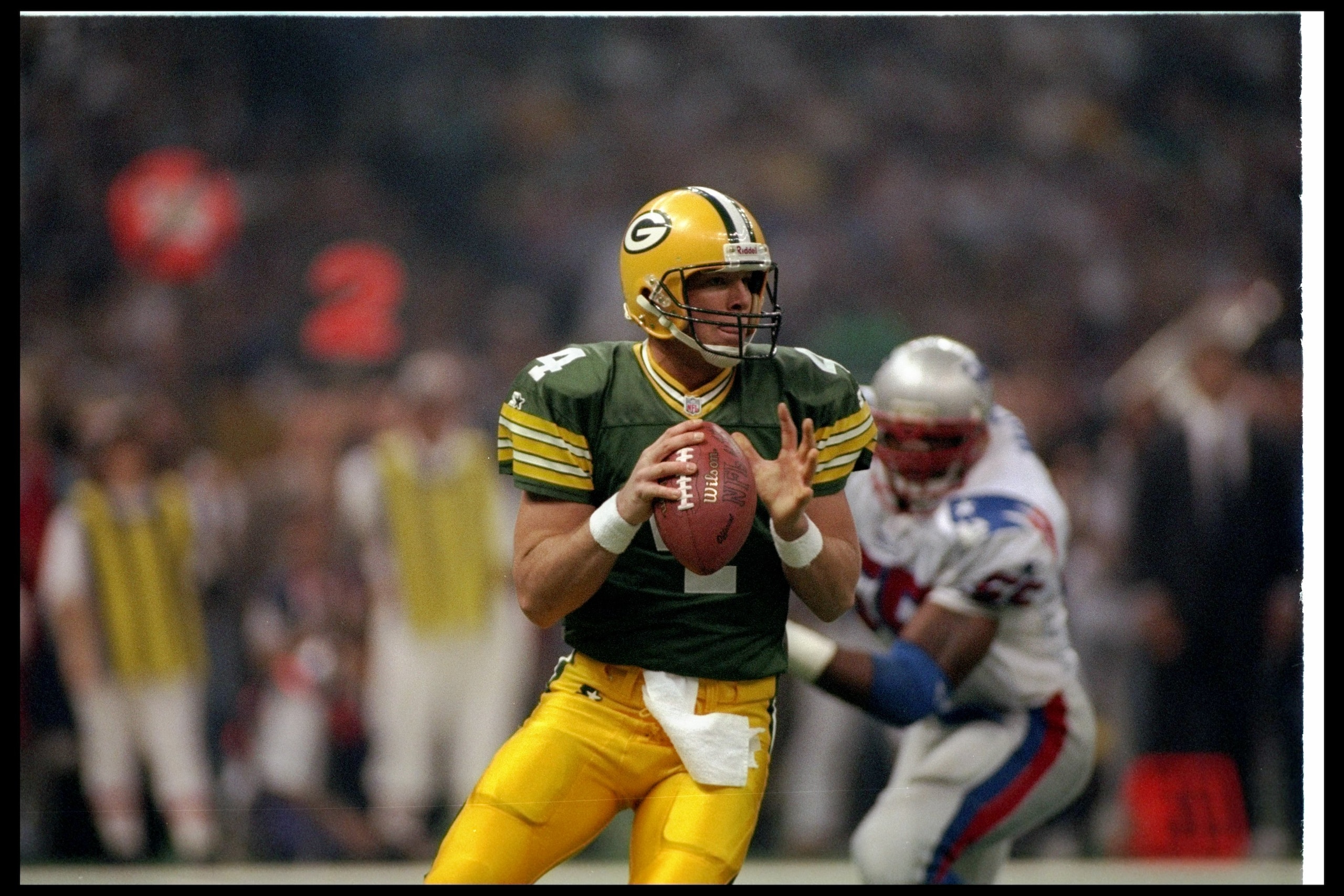
For a lot of Green Bay Packers fans around my age (22), the 1996 Super Bowl season is your first true memory of the team.
The likes of Brett Favre, Reggie White and Desmond Howard during that special year still probably gives you chills down your spine.
Now that the Packers are back in the Super Bowl, how does the 2010 version compare to the '96 bunch?
Let's break down the two teams position by position to find out.
Quarterbacks
1 of 10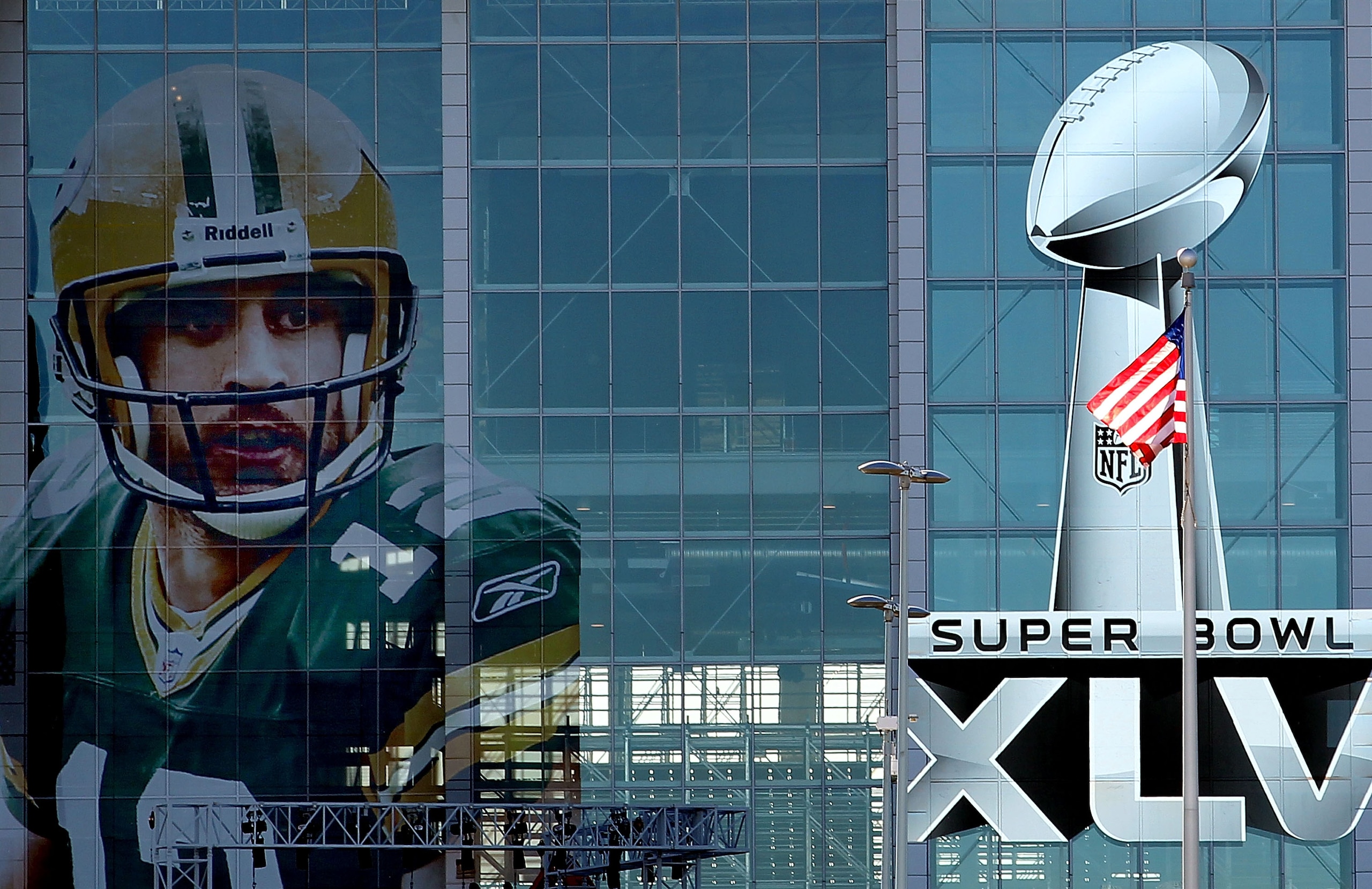
Brett Favre (1996): 325-of-543 passes for 3,899 yards, 39 TD's, 13 interceptions, two rushing TD's
Aaron Rodgers (2010): 352-of-541 passes for 3,922 yards, 28 TD's, 11 interceptions, four rushing TD's
The quarterback comparison between Favre and Rodgers is one of the tougher matchups to decide.
While Favre had his second straight MVP season in 1996, and his 39 touchdown passes are still a team record, his Packers weren't as reliant on him as the 2010 Packers are on Rodgers.
And yet even though Rodgers threw for more yards, a higher completion percentage, fewer interceptions and more rushing touchdowns, you can't discount that Favre led the NFL's highest scoring offense that year.
Hate him or love him now, Favre of '96 is the choice here.
Advantage: 1996
Running Backs
2 of 10
Edgar Bennett ('96): 899 rushing yards, 2 TD's; 31 catches, 176 yards, 1 TD
Dorsey Levens '(96): 566 rushing yards, 5 TD's; 31 catches, 226 yards, 5 TD's
Brandon Jackson ('10): 703 rushing yards, 3 TD's; 43 catches, 342 yards, 1 TD
James Starks/Jon Kuhn ('10): 382 rushing yards, 4 TD's; 17 catches, 112 yards, 2 TD's
The '96 Packers had a better rushing attack than this year's team, but each team lacked a sure-fire No. 1 back and neither relied too heavily on the ground.
Bennett and Jackson are both similar players; underwhelming running threats but solid out of the backfield and essential in pass protection.
While Starks has burst onto the scene in the playoffs, and Kuhn remains a crowd favorite, Levens is the deciding factor.
He's far and away the best runner of the five players listed, and Levens' ability as a receiver was vital to the '96 Packers (117 yards receiving in the NFC Championship game).
Advantage: 1996
Receivers
3 of 10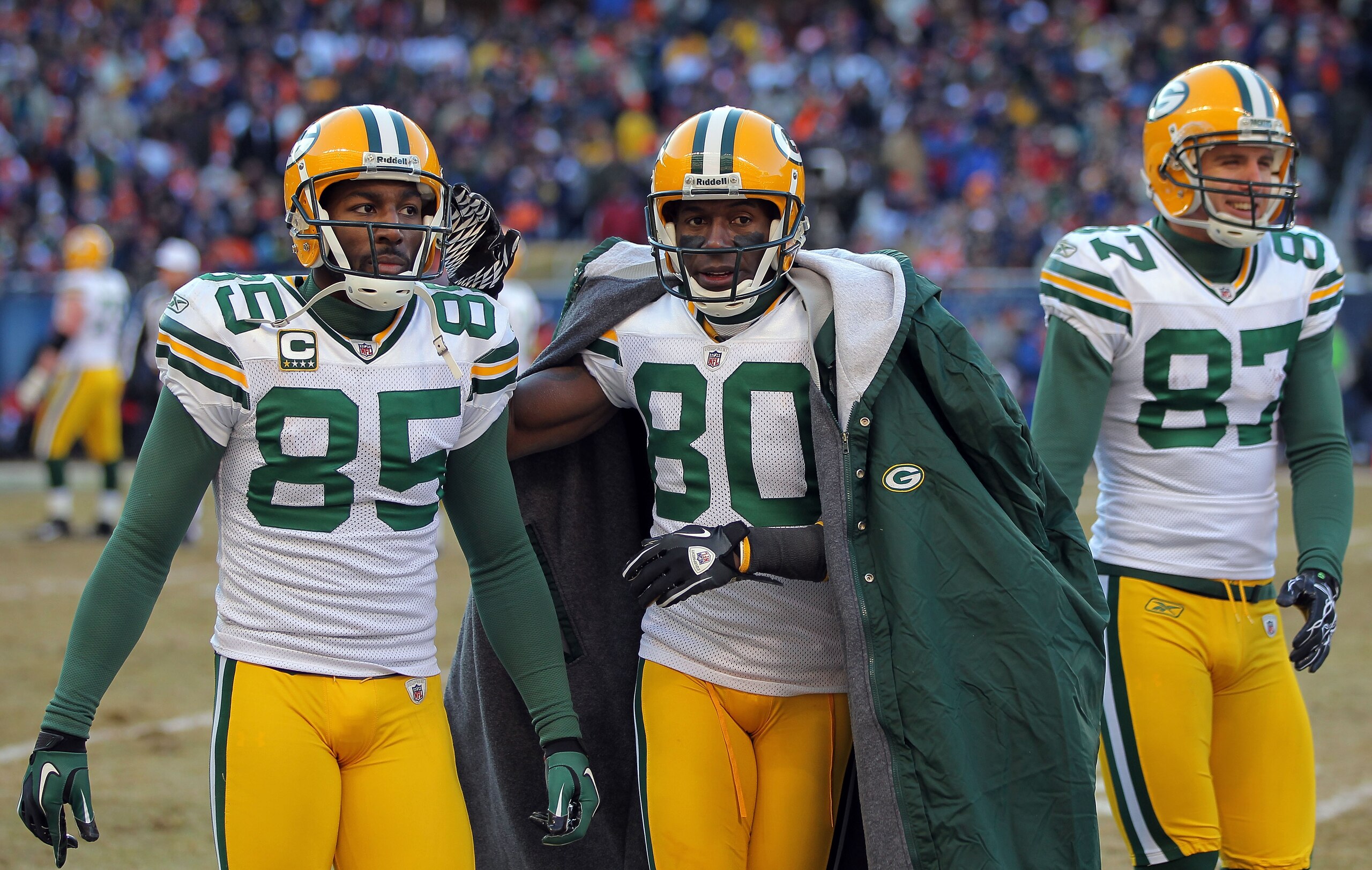
Antonio Freeman ('96): 56 catches, 933 yards, 9 TD's
Don Beebe ('96): 39 catches, 699 yards, 4 TD's
Keith Jackson/Mark Chmura ('96): 68 catches, 875 yards, 10 TD's
Greg Jennings ('10): 76 catches, 1,265 yards, 12 TD's
James Jones ('10): 50 catches, 679 yards, 5 TD's
Donald Driver/Jordy Nelson ('10): 96 catches, 1,147 yards, 6 TD's
Both teams suffered potentially devastating injuries (Robert Brooks and Jermichael Finley), but both found suitable replacements.
Beebe had 220 yards in an overtime win over the 49ers, and Andre Rison was an important contributor for the '96 team down the stretch and in the playoffs.
This year's receivers clearly get the edge, however. Jennings had his finest season as a pro, and with three other explosive and reliable receivers in Driver, Jones, and Nelson, the 2010 squad hardly missed a beat without Finley.
Advantage: 2010
.jpg?w=2560 "Colts Football")
.jpg?w=2560)
.jpg?w=2560 "Commanders 49ers Football")
Offensive Line
4 of 10
'96 line: 40 sacks, 6.9% sack percentage, 1,838 yards rushing
'10 line: 38 sacks, 6.6% sack percentage, 1,606 yards rushing
To be quite honest, neither team had a dominant offensive line.
The '96 team featured a rookie at left tackle (John Michels, 9 starts), and two second-year guards (Aaron Taylor and Adam Timmerman). Earl Dotson held down right tackle, and popular center Frank Winters anchored the line.
This year's team features a rookie at right tackle (Bryan Bulaga), a second-year guard (Josh Sitton), and a fourth-year guard (Daryn Colledge). Veteran Chad Clifton made the Pro Bowl at left tackle, and sixth-year pro Scott Wells started all 16 games at center.
Neither team was that proficient in protecting the passer, but both teams also relied heavily on the pass. The final rushing tallies give the '96 team a slight edge.
Advantage: 1996
Defensive Line
5 of 10
'96 defensive line: 24.5 sacks, 9 forced fumbles, 5 fumbles recoveries
'10 defensive line: 19 sacks, one forced fumble, one fumble recovery
To be fair, the '96 team had a schematic advantage playing in the 4-3 defense. More linemen on the field, more opportunities to make plays.
However, it's hard to ignore some of the names on the '96 defensive line.
Reggie White had 8.5 sacks and dominated the playoffs. Sean Jones contributed just five sacks but forced three fumbles.
And you can't forget Gilbert Brown (the Gravedigger) and Santana Dotson clogging up the middle of the line.
B.J. Raji is a budding star on the 2010 line, and Cullen Jenkins and Ryan Pickett are established playmakers, but '96 is the easy pick.
Advantage: 1996
Linebackers
6 of 10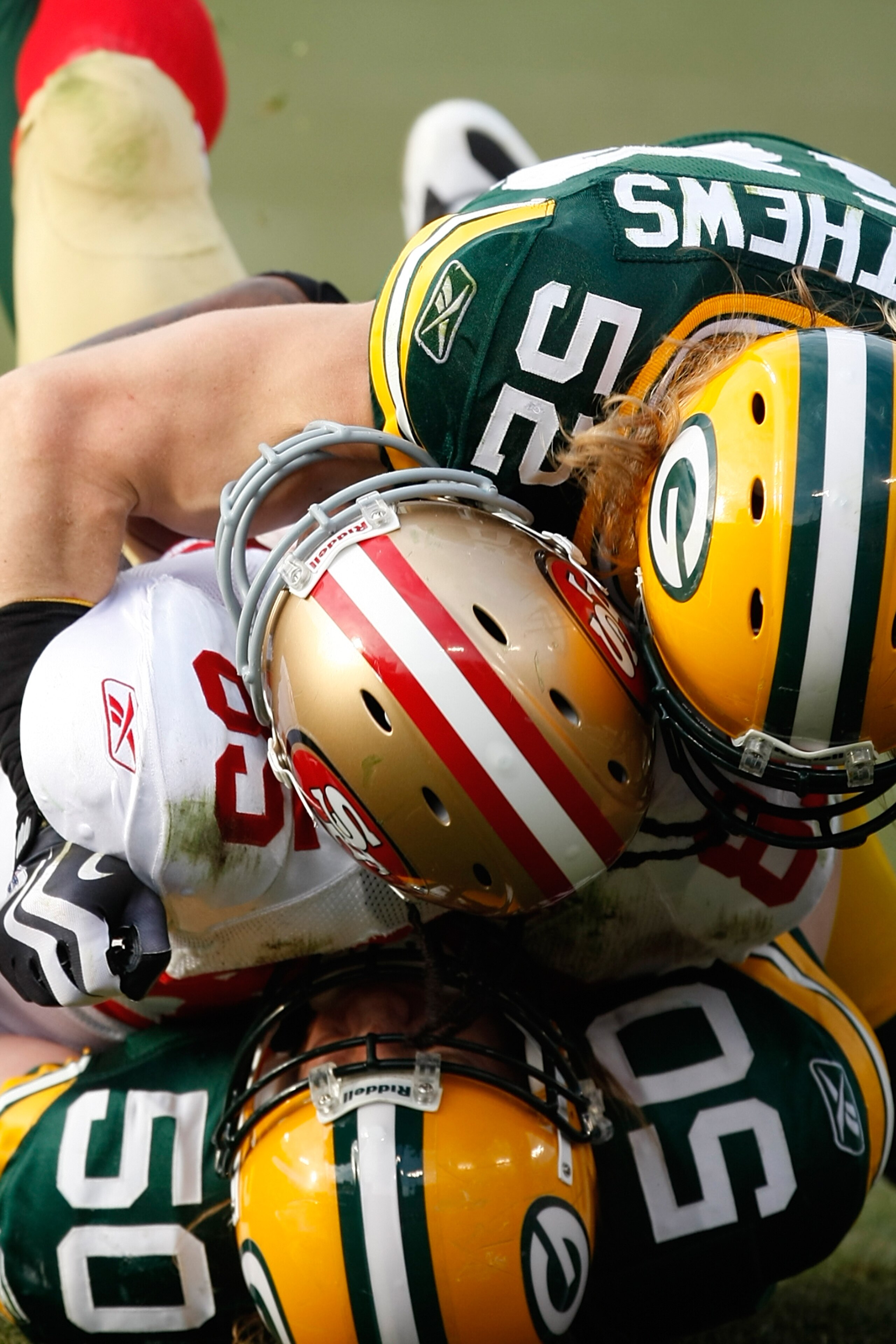
'96 linebackers (starters): 246 tackles, three sacks, four interceptions, two forced fumbles, four fumbles recoveries
'10 linebackers (starters): 346 tackles, 25 sacks, six interceptions, six forced fumbles, one fumble recovery
While the stats are overwhelmingly in favor of the 2010 team, it's closer than you think.
The '96 trio of George Koonce, Brian Williams, and Wayne Simmons anchored a defense that was No. 1 in points, yards and first downs, and No. 4 against the rush.
With that said, the 3-4 gives the '10 team a schematic advantage. Clay Matthews (13.5 sacks) might win NFL defensive player of the year, and the emergence of Desmond Bishop has solidified the defense.
Because they create more havoc for opposing offenses than the '96 team did, this year's linebackers get the slight edge.
Advantage: 2010
Defensive Backs
7 of 10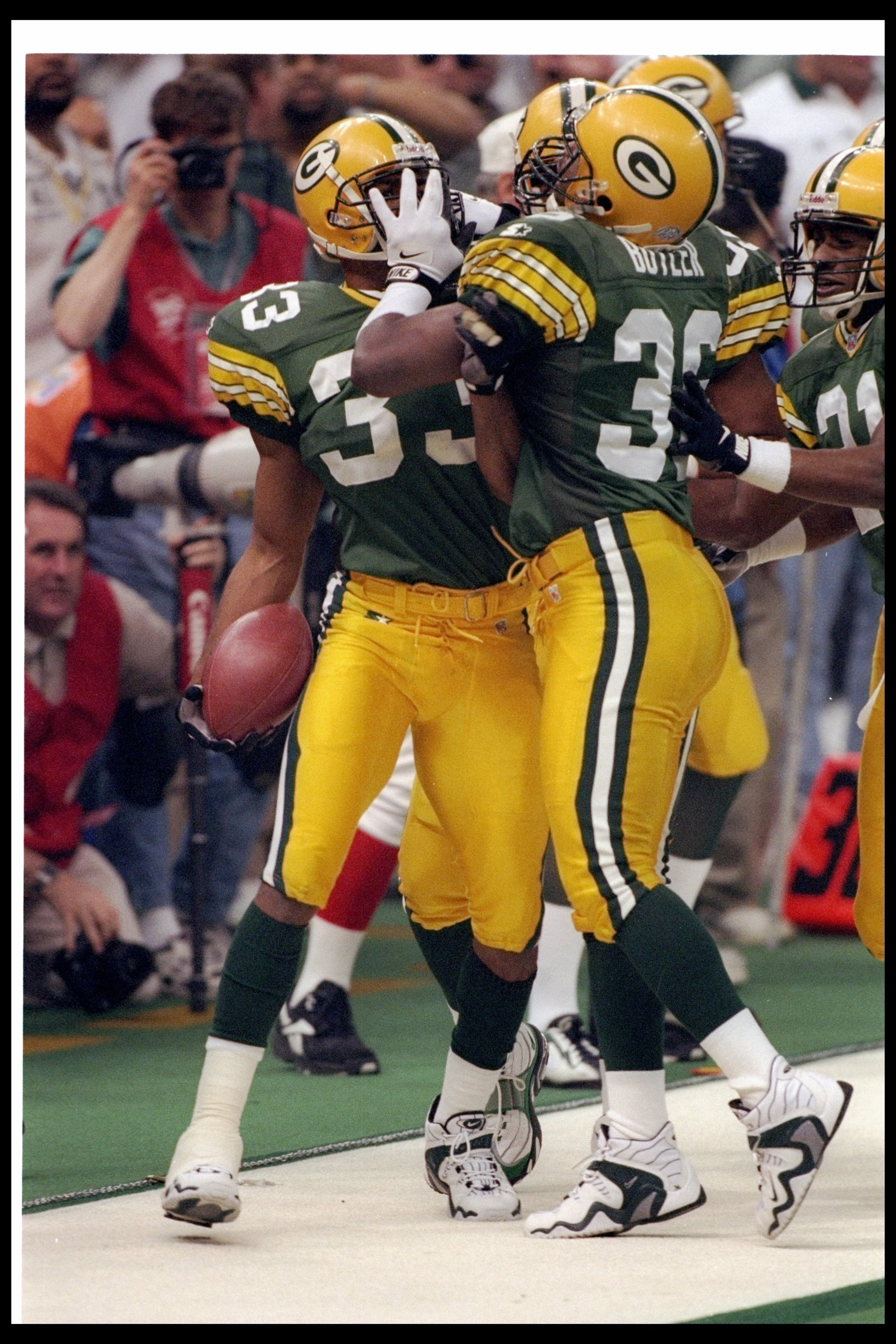
'96 defensive backs: 6.5 sacks, 20 interceptions, two TD's, four forced fumbles, six fumble recoveries
'10 defensive backs: 3 sacks, 18 interceptions, two TD's, seven forced fumbles, seven fumble recoveries
Defensive back was easily the hardest position to decide a winner between the two Super Bowl teams.
The '96 team featured All-Pro safety LeRoy Butler (6.5 sacks, 5 interceptions), Doug Evans (5 interceptions), Eugene Robinson (6 interceptions), and Craig Newsome (2 interceptions).
This year's team counters with Charles Woodson (5 forced fumbles, 2 interceptions), Nick Collins (4 interceptions) and Tramon Williams (6 interceptions).
With productive and star-studded secondaries on both squads, you have to go to the numbers to make the call on which is better.
The '96 secondary gave up the least amount of passing yards (2,740) and just 12 touchdowns. This year's secondary gave up the fifth-least passing yards (3,107), and 16 touchdowns.
Both teams were second in the NFL in interceptions during their respective seasons.
The numbers give just the slightest edge to the '96 secondary.
Advantage: 1996
Special Teams
8 of 10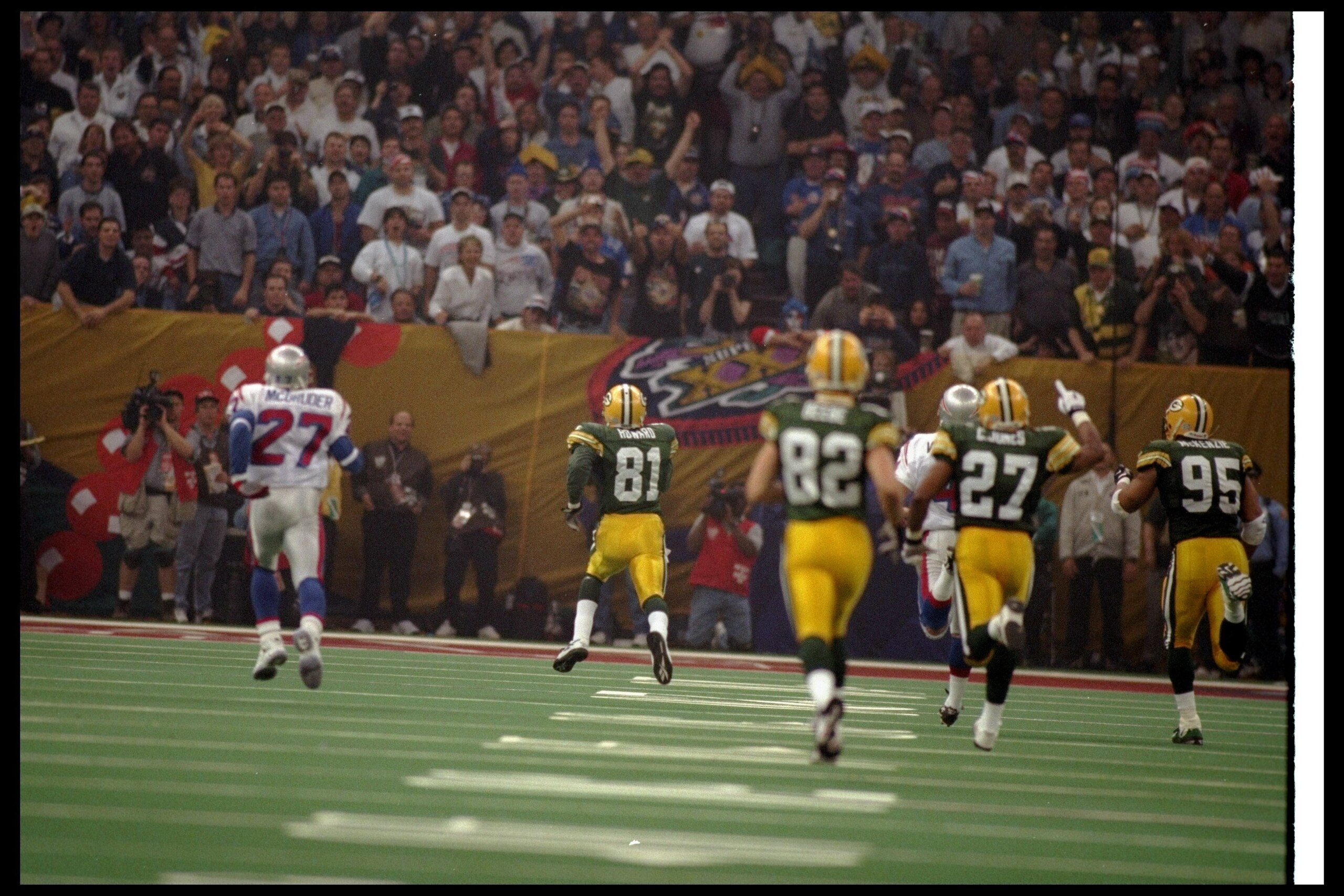
Desmond Howard ('96): 3 punt return TD's, 15.1 yards/punt return, 99-yard kickoff TD in Super Bowl XXXI
Don Beebe ('96): 90-yard kickoff return TD, 26.1 yards/kick return
Chris Jacke ('96): 21-of-27 FG's, 51-of-53 XP's
Tramon Williams ('10): 326 punt return yards, 8 yards/punt return
Mason Crosby ('10): 22-of-28 FG's, 46-of-46 XP's
Tim Masthay ('10): 43.9 yards/punt, 25 inside the 20
Of course, this year's Packers have a distinct advantage in special teams over their '96 counterparts.
Just kidding.
The '96 Packers were a clinic in special teams efficiency, and Desmond Howard was a major factor in the Packers both getting to the Super Bowl and eventually winning it.
Chris Jacke even won a game on a 53-yard field goal in overtime against the 49ers.
This year's Packers have had their struggles in special teams, but they've steadily improved. Punter Tim Masthay was crucial down the stretch in beating the Chicago Bears and Devin Hester.
Even so, this matchup isn't even close. '96 in a special teams romp.
Advantage: 1996
Coaching
9 of 10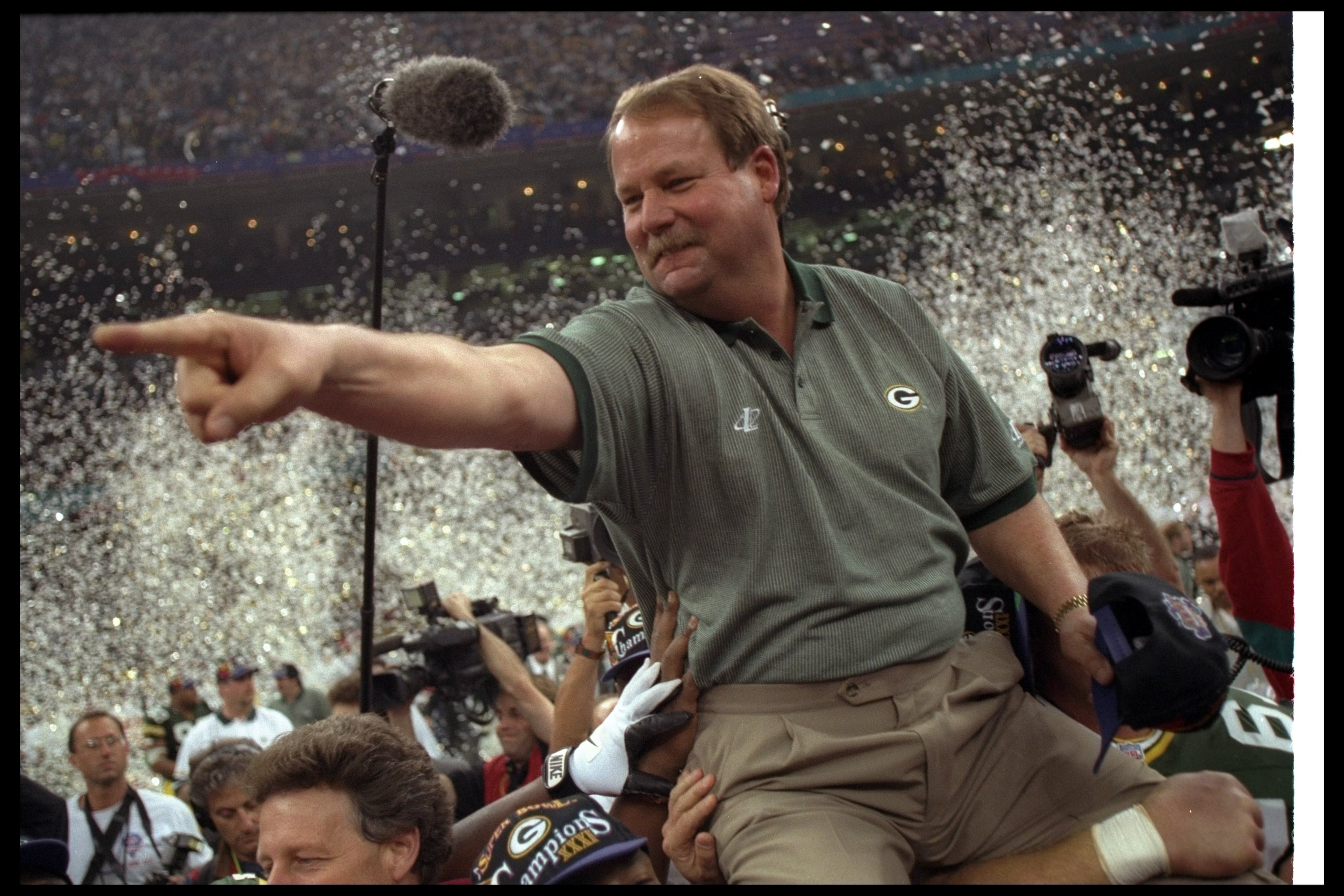
Mike Holmgren ('96): 13 regular season wins, three playoff wins, No. 1 offense and defense
Mike McCarthy ('10): 10 regular season wins, three playoffs wins, No. 5 offense and No. 2 defense (points)
Coaching was another tough decision, despite the dominance of the '96 Packers statistically and in the win column.
While both teams have fought through injuries, this year's Packers have been consistently hit with team-rattling personnel losses.
The '96 Packers lost their best receiver (Brooks), and both Freeman and Chmura missed time during the year, but the defense remained nearly intact.
The '10 Packers are without their second-best receiver in Finley, starting running back (Ryan Grant), starting right tackle (Mark Tauscher) and starting middle linebacker (Nick Barnett).
Factor in what defensive coordinator Dom Capers has done with the 3-4 defense, and this year's coaching staff gets a slight edge in what they've accomplished.
Advantage: 2010
Final Decision
10 of 10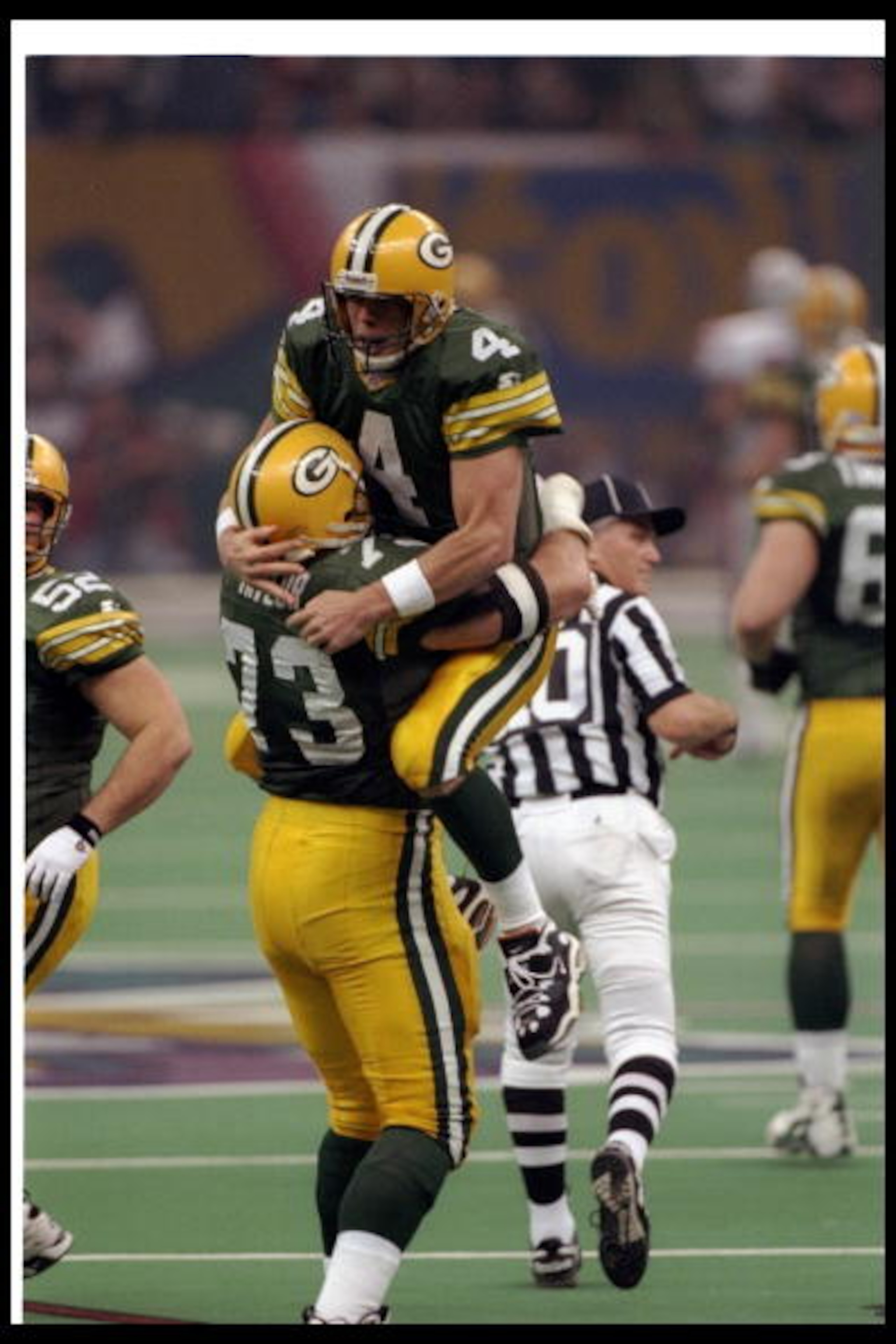
When comparing the Packers' Super Bowl teams of 1996 and 2010, it's striking how similar the two squads actually are.
Both are led by young quarterbacks playing in their prime and at the top of their games.
Both relied heavily on the pass and had no clear No. 1 running back.
Both suffered tough injuries to their receiving crew but overcame the losses.
Both had somewhat young and shaky offensive lines.
Both defensive lines had stars that laid the foundation of the defense.
Both secondaries were the driving force of really good passing defenses.
Both had coaches that overcame adversity and led their team to the final game.
In the end, however, the '96 Packers are the choice. As good as this year's defense is, the '96 Packers had one of the NFL's most underrated defenses in NFL history. The offense, led by Favre, was no slouch, either.
However, regardless of which team was better, hopefully the 2010 Packers can make one final comparison to the 1996 team:
The title of Super Bowl Champions.
We'll have to wait until Sunday to find out the validity of that last comparison, but there's no doubt that this years' Packers have a lot in common with the '96 team that won it all.
.jpg?w=2560 "Ravens Browns Football")
.jpg?w=2560 "DOLPHINS-AIKMAN")

_0.png?w=2560 "Unranked Teams Cause Chaos in Rankings 📊")
.png?w=2560 "Week 8 Winners & Losers 📊")





