Sparky Anderson: Legendary MLB Manager Reportedly Suffering from Dementia
The word has just come that legendary MLB manager Sparky Anderson is reportedly very ill, and has been placed in hospice care at his home in Thousand Oaks, CA.
Coming less than two days after the end of the World Series, the news of Anderson's fading health will undoubtedly hit the baseball world pretty hard, as it seems the sport is going to lose one of its all-time greats pretty soon.
The news has hit us fans pretty hard as well, and we're scrambling to remember Sparky Anderson in our own way.
Ahead of you is just about all you need to know about the great Sparky Anderson.
Sparky Anderson Placed In Hospice Care
1 of 12
We'll start by filling you in on the latest news.
According to reports, the 76-year-old Anderson has indeed been placed in hospice care at his home in Thousand Oaks, CA due to complications from dementia.
In a statement, Anderson's family expressed gratitude to Anderson fans everywhere.
"The Anderson family... wishes to express appreciation to all friends and fans for the support and kindness they have shown throughout Sparky's career and retirement," reads the statement. It goes on to say, "The family is particularly grateful for the respect for privacy the national and local media has demonstrated during this trying period."
Anderson's last public appearance was at the Hall of Fame induction ceremonies in July, and it is generally agreed that Sparky's health officially took a turn for the worse about a month ago.
Statement from the Reds
2 of 12
Anderson is perhaps most well known for managing the Big Red Machine in the 70s, leading the Cincinnati Reds to back-to-back championships in 1975 and 1976.
Current Reds president Robert Castellini has already issued a statement.
"We are very sad to hear the news of Sparky's failing health," said Castellini. "Every day here we are reminded of his contribution to the success of this proud franchise. The Reds' family offers its prayers and support to Sparky and his family during this difficult time."
Sparky's 2010 Summer
3 of 12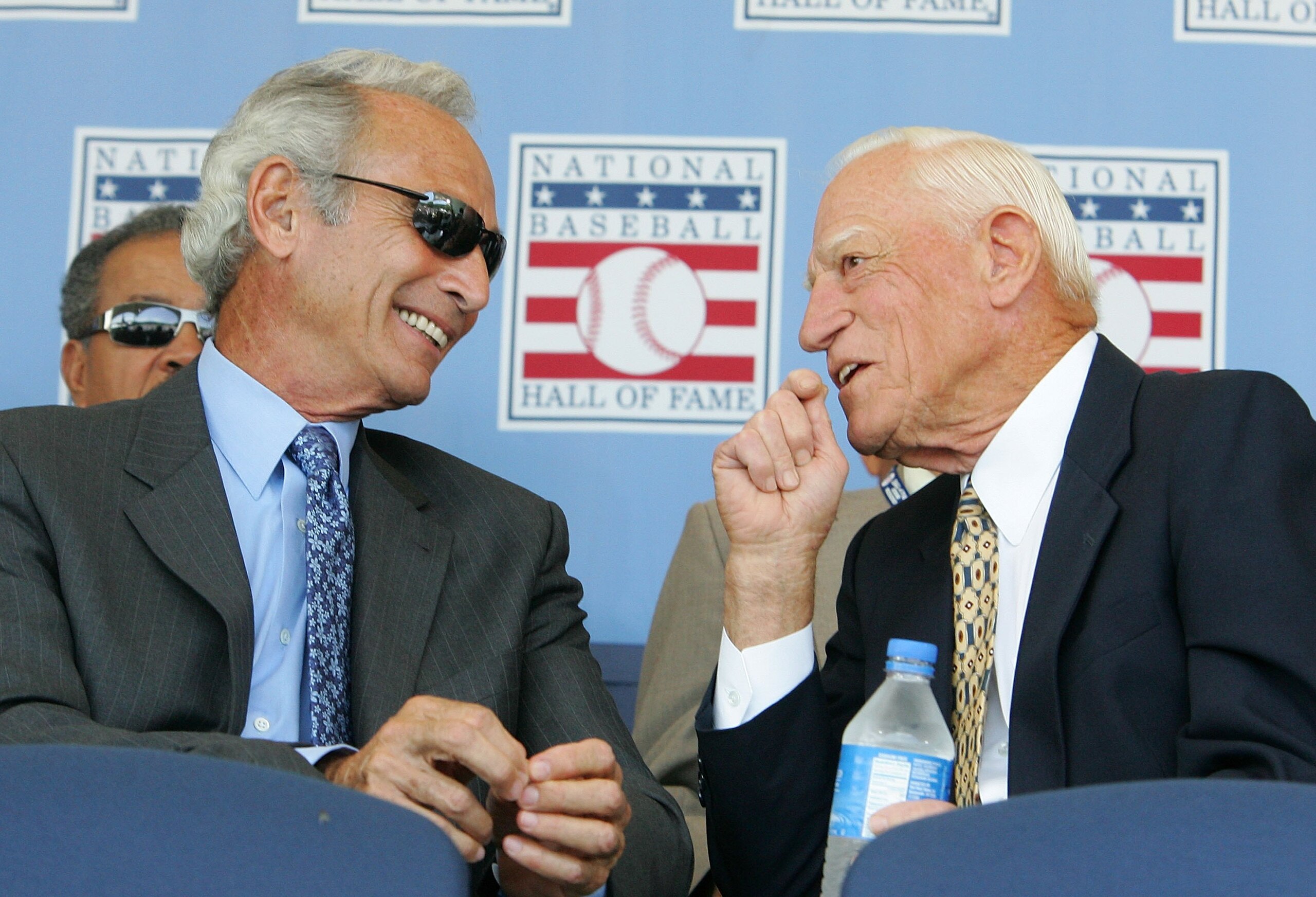
About 11 weeks ago, Sparky held a meeting at his home with Pete Rose. The two of them talked baseball for several hours.
But Rose was really there to apologize to Sparky for betting on baseball and not owning up to it. A close friend said that Anderson, who has always supported Rose's reinstatement and induction into the Hall of Fame, was very moved by Rose's visit.
Anderson's Hall of Fame trip this past summer went very much according to his own tradition. He flew from Los Angeles to Detroit, did some work for his charity, and then he and a friend drove all the way to Cooperstown.
In Cooperstown, the line for Sparky's autograph was apparently out the door and around the block.
Recent Appearances
4 of 12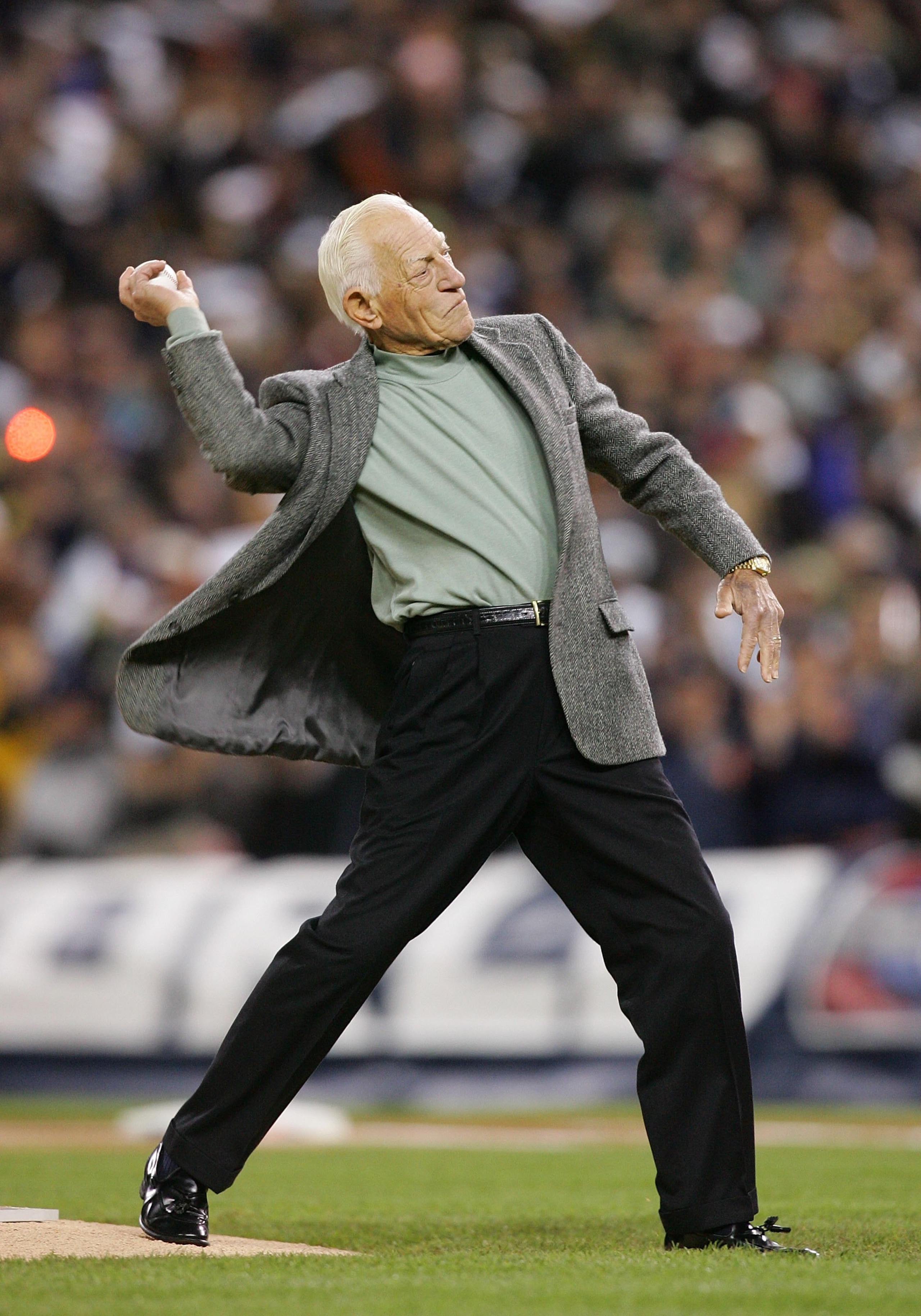
In addition to the Hall of Fame ceremony this past summer, Anderson made an emotional appearance in Detroit to celebrate the 25th Anniversary Celebration for the Tigers' last championship in 1984, a team that was managed by Anderson.
While he was there, he acknowledged that he was certainly a part of a fading legacy.
"Think about this now, there will be four or five of these guys together again, maybe, but never all together again," he said, "I'm 75. I know I ain't going to make it."
With that in mind, we look back at a brilliant career.
Sparky's Early Life and Playing Career
5 of 12
The man called "Sparky" was born George Lee Anderson in Bridgewater, South Dakota on February 22nd, 1934.
Anderson became interested in baseball mainly through his father, who played on a semi-pro team.
As a ballplayer, he was a light-hitting middle infielder who was first signed by the Dodgers, but he never made it to the show with the team. In 1958, he was traded to the Phillies, and played one whole season as the team's starting second baseman in 1959. He hit .218 in 152 games, with no home runs and 34 RBIs.
He would return to the minor leagues the next season, and he never played in the major leagues again.
Remembering Sparky's Reds Career
6 of 12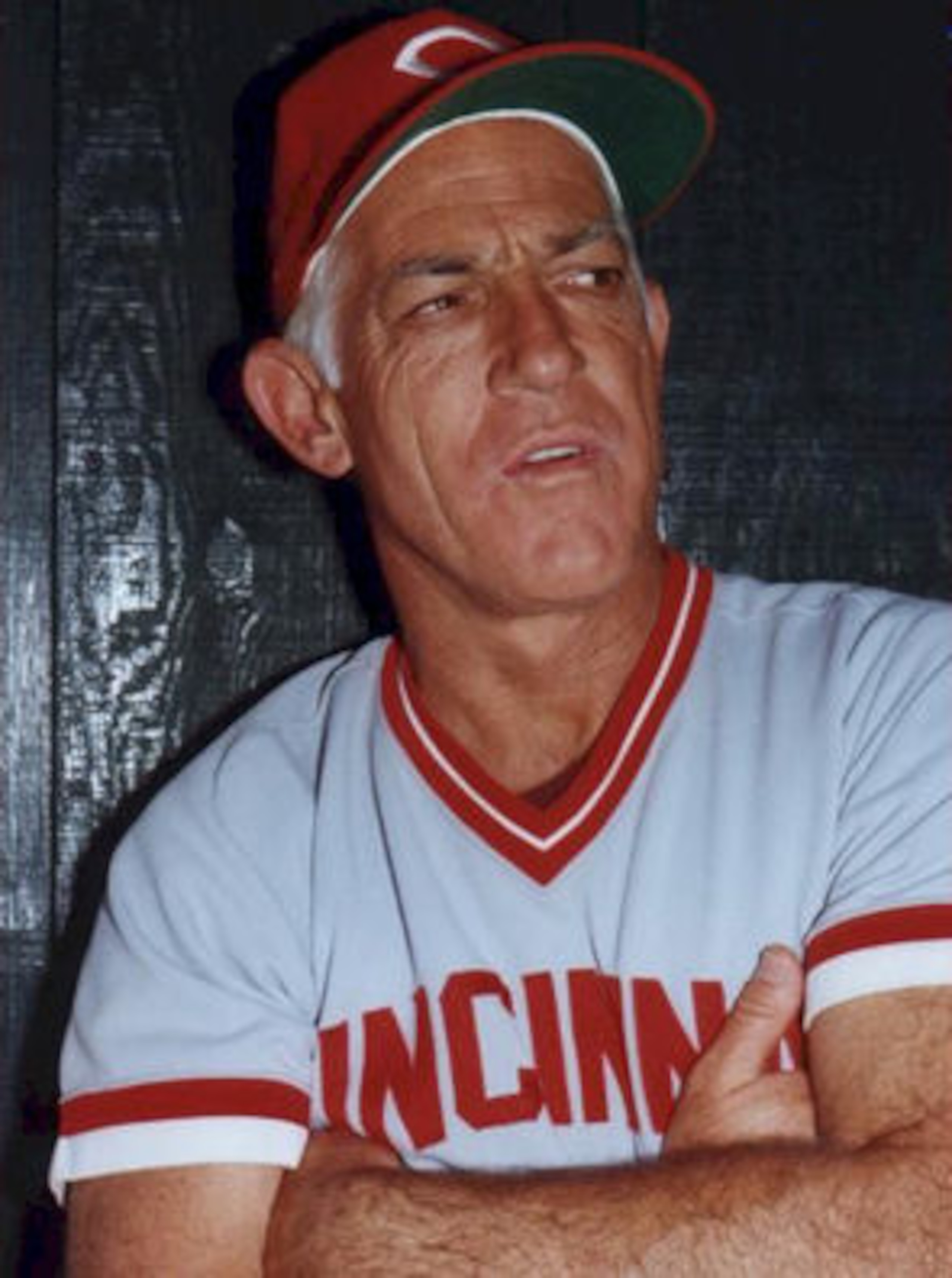
Anderson got his first coaching job with the San Diego Padres in 1969, and then moved on to coach with the California Angels before 1970.
But just before he was about to be hired by the Angels, he was offered the opportunity to succeed Dave Bristol as manager of the Cincinnati Reds.
Needless to say, the Reds chose the right guy.
Surrounded by such players as Johnny Bench, Dave Concepcion, Tony Perez, Bernie Carbo and Pete Rose, Anderson led the Reds to a 102-win season in 1970, eventually losing to the Orioles in the World Series.
The Reds went again in 1972, this time losing to the A's.
But in 1975, things finally came together. The Reds won 108 games, and then beat the Red Sox in one oif the greatest World Series in baseball history.
The Reds won 102 games in 1976, and swept the Yankees in the Fall Classic to win their second World Series in a row.
He was fired by the Reds after the 1978 season, ending his tenure with a record of 863-586.
His No. 10 was retired by the Reds in 2005.
Remembering Sparky's Tigers Career
7 of 12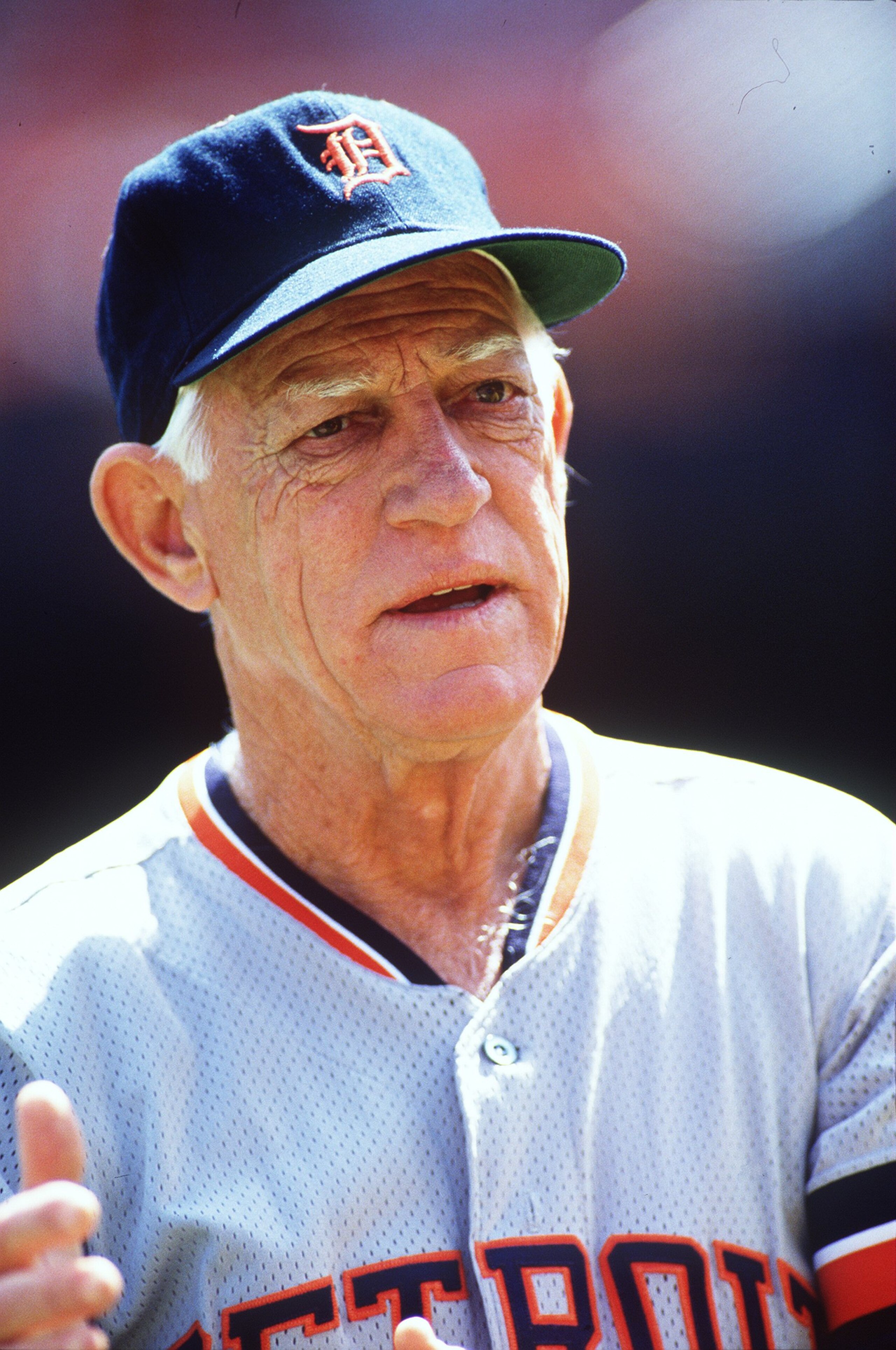
Anderson was immediately picked up by the Detroit Tigers in June of 1979.
The Tigers were successful behind Sparky in his first seasons at the helm, but things did not truly culminate until 1984. The team was dominant during the regular season, finishing with a franchise record 104 wins. They beat the San Diego Padres in five games to win the World Series, making Sparky the first manager to win a World Series in both the American and the National League.
He would go on to win Manager of the Year honors in 1985 and 87.
Anderson would not retire as a manager until after the 1995 season, partially due to his disillusion with the league following the strike season of 1994.
He finished his Detroit career with a record of 1,331-1,248.
Though not formally retired, Sparky's No. 11 has been vacant since his retirement.
All totaled 2,194 wins over his 26-year career, the sixth best total all time for managers.
Sparky's Best Baseball Wisdom
8 of 12
As with most longtime baseball managers, Anderson was certainly a source of some pretty good quotes regarding the nature of the game.
Here are just a few.
"I can't believe they pay us to play baseball—something we did for free as kids."
"If a team is in a positive frame of mind, it will have a good attitude. If it has a good attitude, it will make a commitment to playing the game right. If it plays the game right, it will win...unless, of course, it doesn't have enough talent to win, and no manager can make goose-liver pate out of goose feathers, so why worry?"
"People who live in the past generally are afraid to compete in the present. I've got my faults, but living in the past is not one of them. There's no future in it."
And, of course, "A baseball manager is a necessary evil."
There are undoubtedly many more. If one of your favorites isn't here, please leave a comment.
Sparky's Legacy
9 of 12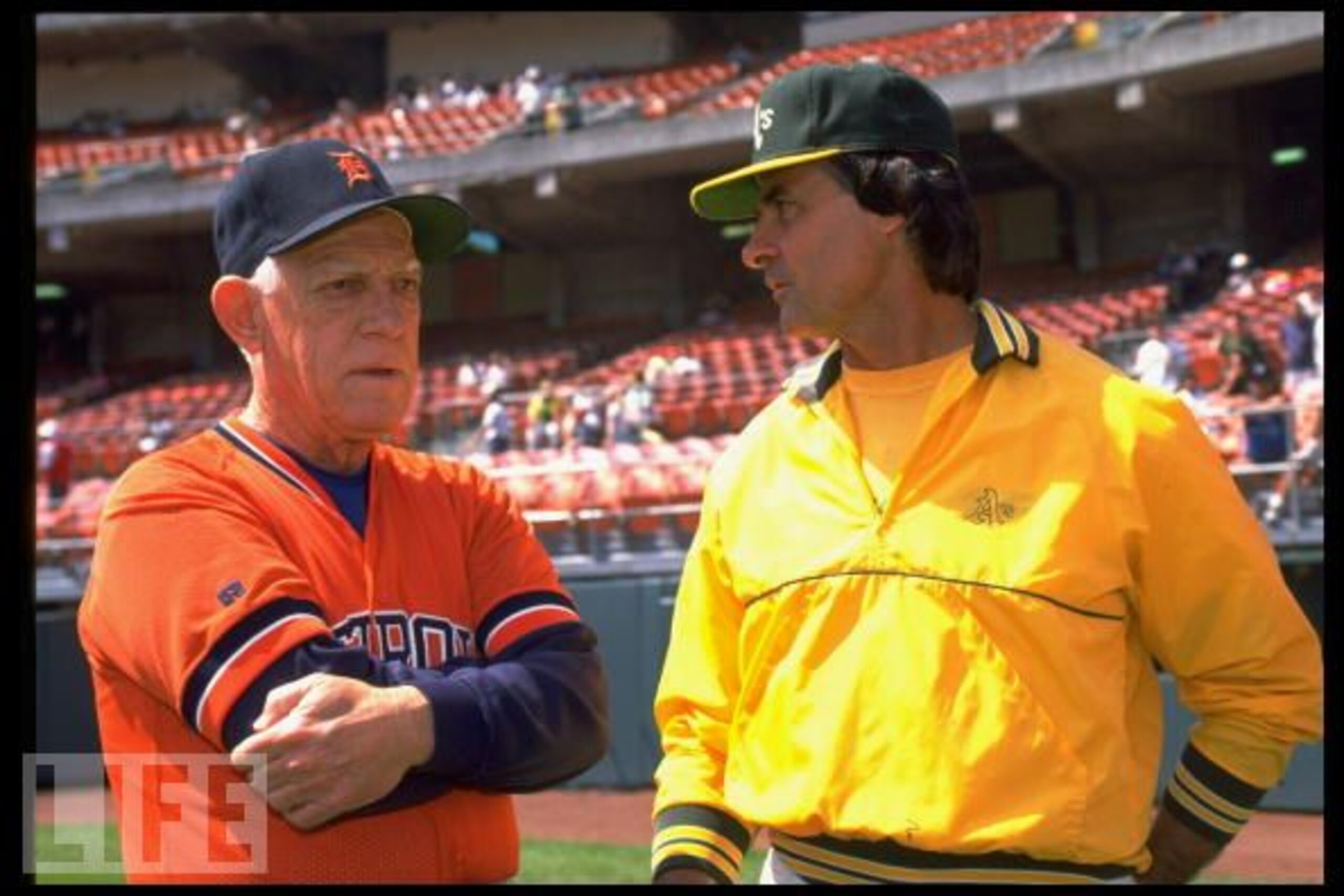
While Anderson has often been accused of being a "button pusher" manager, he is renowned for his ability to keep his house in order.
As he once said, "Players have two things to do. Play and keep their mouths shut."
As such, he had a couple clashes with Dave Concepcion, who rather fancied himself as a superstar, in his time as manager of the Reds.
Anderson also earned the moniker of "Captain Hook" for being quick to pull relievers if they weren't getting the job done, and he also would not allow his pitchers to speak during mound visits.
Several of Sparky's players would go on to become managers themselves, among them being Tony Perez, Pete Rose, Hal McRae, and Alan Trammell. Current St. Louis Cardinals manager Tony La Russa credits Anderson as his mentor.
Sparky's Life Outside Baseball
10 of 12
Sparky had a pretty colorful career outside of baseball even while he was still active in the sport.
He once appeared in a 1979 episode of WKRP in Cincinnati. Anderson played a talk show host who eventually gets canned, causing him to utter the famous line, "I must be crazy. Every time I come to Cincinnati I get fired!"
Anderson also had a successful career as a color analyst, first with Jack Buck during the postseason in the 80s and 90s, and then for the Angels from 1996-1998.
In 1987, he found the CATCH charity, which has a "goal to improve the quality of life for sick, injured and at-risk pediatric patients who receive care from local hospitals."
He published an autobiography, titled They Call Me Sparky, in 1998. In it, he rationalizes his 1995 retirement by saying, "I ain't no martyr. I ain't no hero. And I don't want no bowl of chocolate ice cream, whipped cream, and cherries just for doing the right thing."
Anderson's Hall of Fame Induction
11 of 12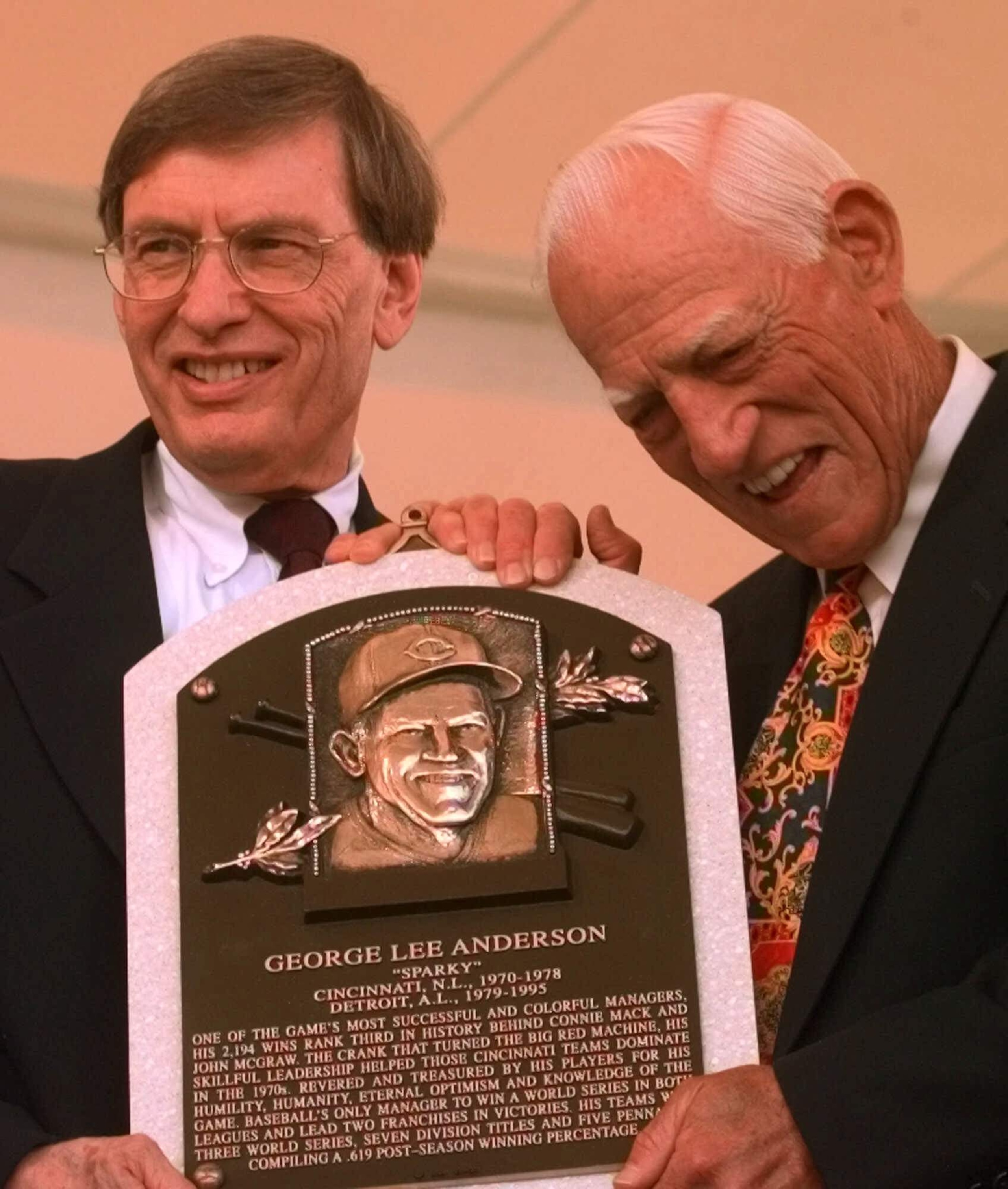
Sparky Anderson was inducted via the Veterans Committee into the Baseball Hall of Fame in 2000. His plaque shows him in a Cincinnati Reds cap, acknowledging the club with which he achieved most of his success.
His Hall of Fame speech was laced with equal parts sadness and nostalgia.
"This will be the last time I ever get to speak," he began, "because when I walk away from here today, I'll never win another game, and I'll never lose another game, and I know that."
But then he went on to make a profound expression about his appreciation for the game, and how he wants people to share it.
"I want you to take a look at the people behind me and put it in your brain, when you look at 'em," he said. "The people that came before them, and these people, and the people that will come after them. That is baseball...Those people made this game, and they will protect this game."
Voice Your Support
12 of 12
If you're looking for a proper way to voice your support of the great Sparky Anderson, the Detroit Free Press is looking to help.
They're looking for fans to express their get-well wishes via a letter to the editor.
They are also calling for people to honor Sparky by making a donation to CATCH, the former manager's charity.
If you have anything else to say about Sparky Anderson, whether it be a memory or a simple get well statement, please feel free to share it in the comments section.
.jpg?w=2560 "OBJ Calls Out Giants After Release")