U.S. Open Tennis 2010: Rafael Nadal Reaches New Heights with Ninth Grand Slam
The U.S. Open doesn’t do anything by halves.
It’s the last-of-the-season, unique-in-its-schedule, tough-on-the-body one.
It’s the final-set-tie-break, day-and-night-session, biggest-of-all one.
And it’s the heat-of-the-sun, wind-in-your-hair, drench-the-court-wet one.
But even by New York standards, the 2010 edition had more than its fair share of weather.
Week 1 had debilitating temperatures pushing toward 110 degrees Fahrenheit. Week 2 had winds that brought flags to attention and whipped debris into a frenzy.
And in an appropriate climax, the final-day set piece of the tournament fell foul of the elements, too.
The heavens opened and the world waited. The men’s final was delayed to a third Monday for the third successive year.
One man in Flushing Meadows must have sent a small prayer up to those iron-grey saviors. Only 20 hours before, Novak Djokovic won what he described as one of the most memorable matches of his career. At the fourth attempt in consecutive years, he beat his U.S. Open bête noir, Roger Federer, in a pulsating three-and-three-quarter hours of gripping, blood-on-the-court tennis.
He craved every minute of recovery time he could squeeze from the inclement weather.
For he faced the ultimate tennis challenge: Rafael Nadal.
Waiting for the Moment
1 of 10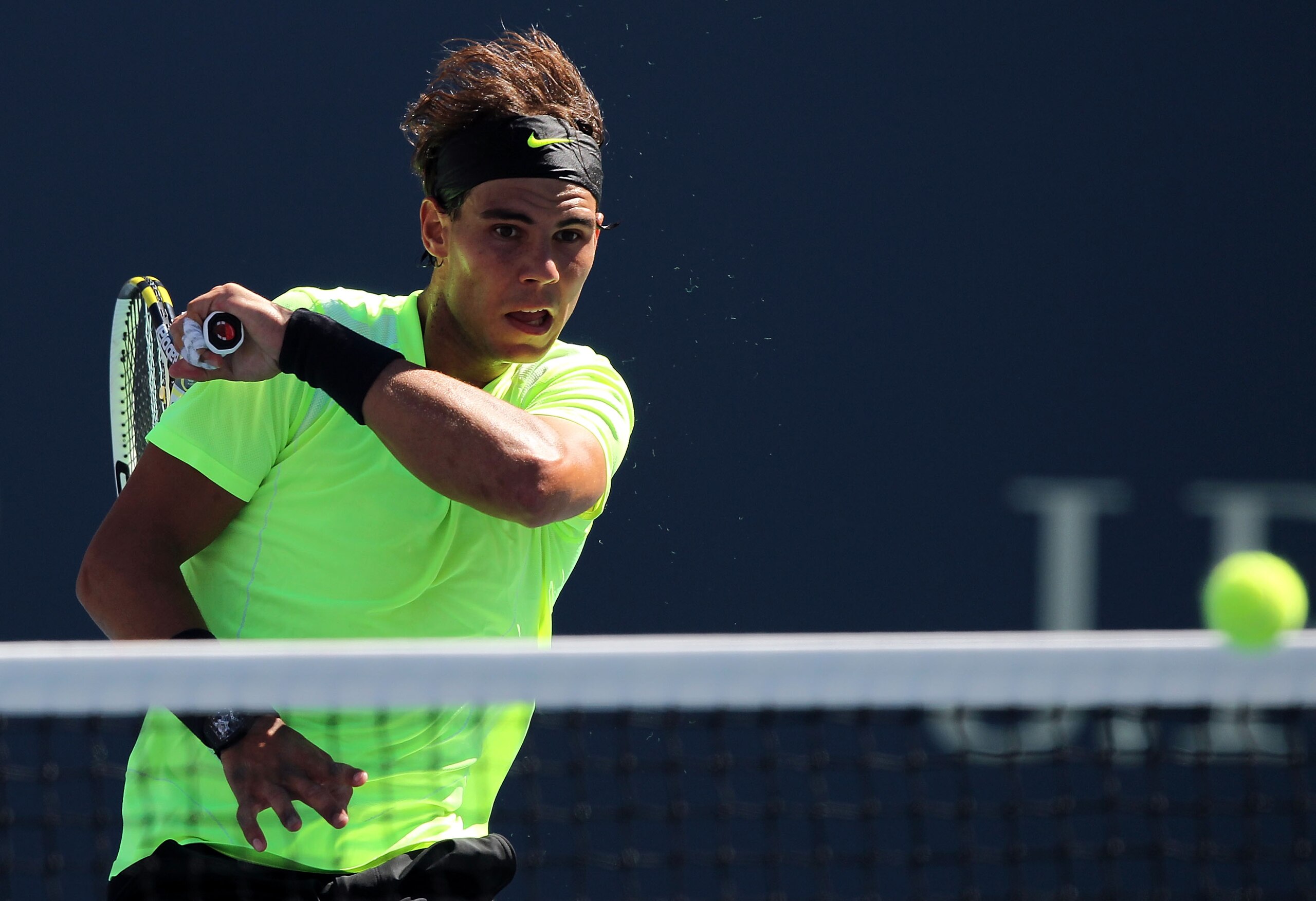
Compare the stats
Sets lost by Nadal, none: by Djokovic, four.
Breaks of serve suffered by Nadal, two: by Djokovic, 13.
Games lost by Nadal, 70: by Djokovic, 86.
Waiting with Djokovic in the locker room—and, one might imagine, pacing restlessly—was the bundle of nervous energy, the coiled spring, the caged-animal-tense Nadal.
He had not only been on and off court before Djokovic embarked on his tortuous journey to the final. Nadal had dispatched Mikhail Youzhny in straight sets in just two and a quarter hours.
The last person on the tennis tour who needs to conserve his energy is Nadal, yet that is precisely what he’d done. No Andy Murray to detain him, nor the towering Tomas Berdych. No meeting with David Nalbandian nor with Ernest Gulbis. Nadal aimed straight as an arrow to the final.
But the odds that had favored Nadal—his easier progress, his earlier and shorter semi, the dominant player of 2010—were tempered along with the temperature, the wind, and the schedule.
Djokovic had gained a little time: to adjust to his victory over Federer, to regain his equanimity, and to restore his body.
What did the two men contemplate as they sat out the rain?
What It Means
2 of 10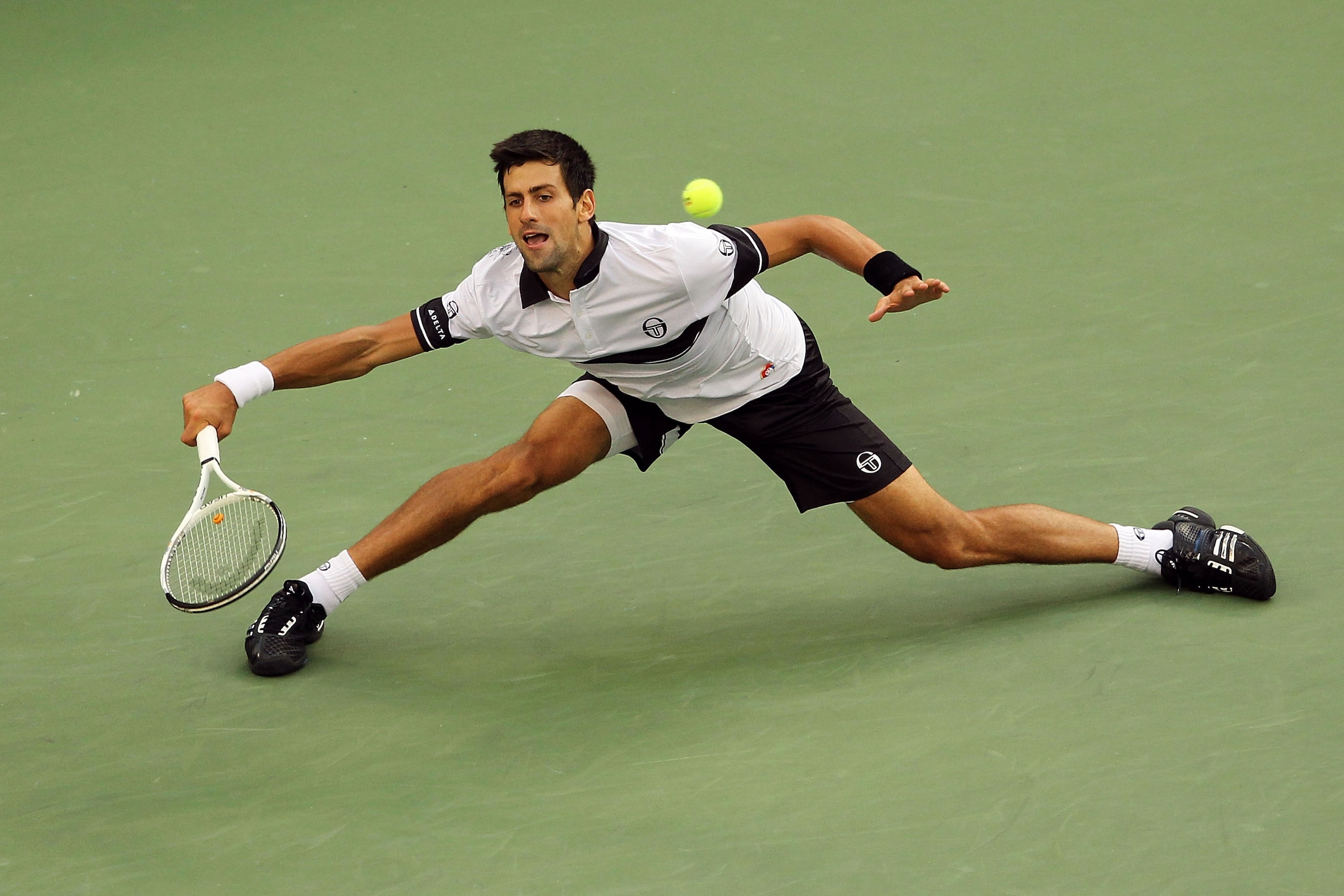
Compare the stats
If Nadal won the final in straight sets, he would be the first man since 1960 to win the title without dropping a set.
If Djokovic won, he would be the first man since 2003 to do so after a five-set semi.
Nadal's average serve speed increased from 107 in 2009 to 119 in 2010.
Djokovic’s first serve reached 74 percent in his quarterfinal against Gael Monfils.
For Nadal, this title—his first in New York—would anoint him the seventh man to complete a career Grand Slam. Only two men had done it younger: Don Budge in 1938 and Rod Laver in 1962.
He would also become one of just six men to reach all four Slam finals and only the fourth to win three consecutive Slams in the Open era.
Pressure? What pressure?
For Djokovic’s part, winning in New York had rather different significance.
It had not been a great year for titles—only Dubai back in February. After breaking into the top ranks, aged just 20, with his first Slam title in Australia in 2008, he had failed to reach the final of any more.
Now was the time to fulfill his fulsome talent.
The History
3 of 10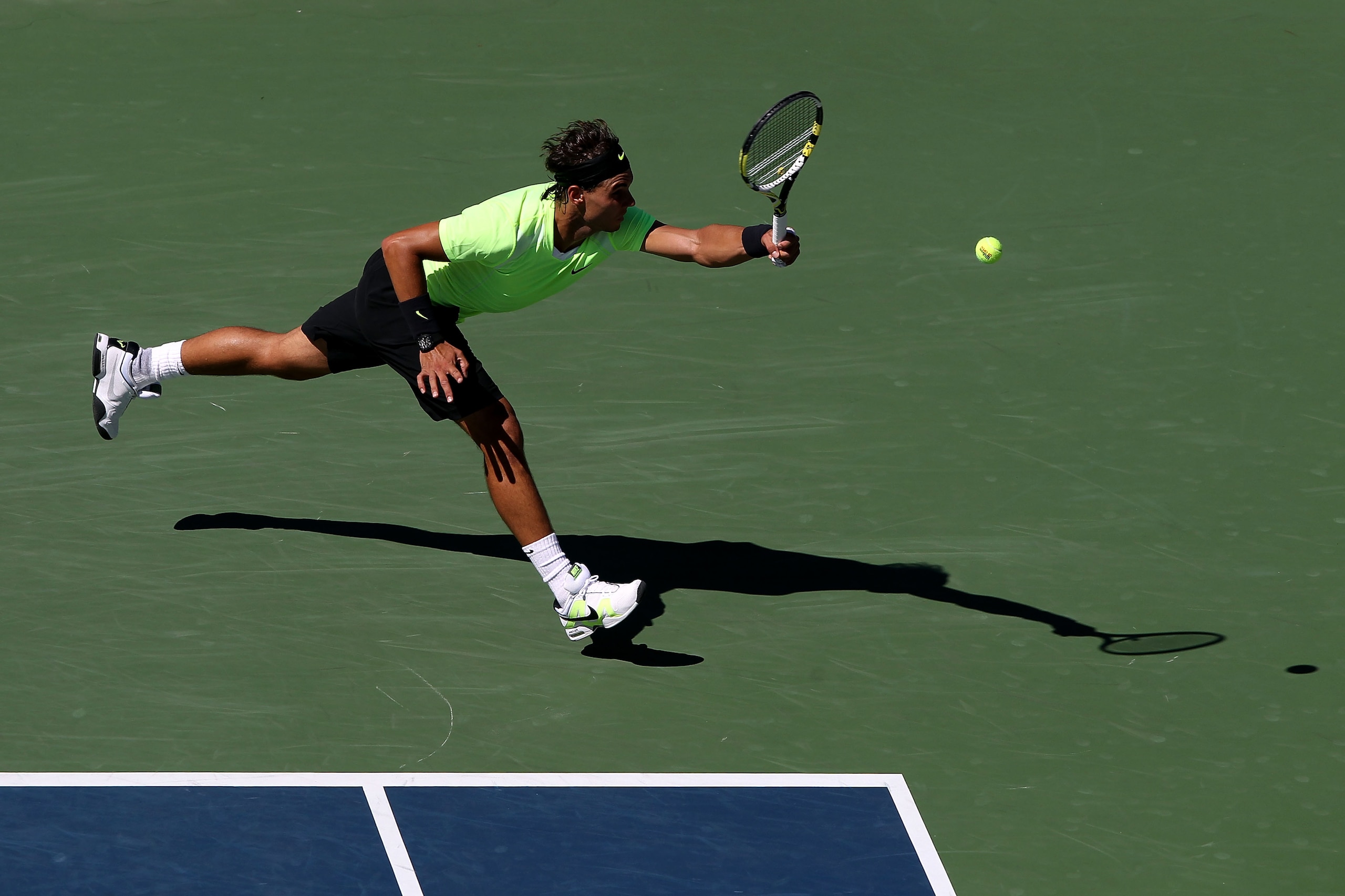
Compare the stats
Nadal had a 14-7 head-to-head advantage.
Djokovic achieved all his seven wins on hard courts.
Djokovic won each of their last three meetings.
No player had ever beaten Nadal four times in a row.
The two men had an intense history: Though the Federer-Nadal duopoly saturates the headlines, the Djokovic-Nadal duel had seen just as many matches but in a shorter time. This was their 22nd meeting in four and a half years.
That record, combined with the rain delay, the Federer defeat, and the patience, was changing the dialogue.
The talk that had been of Nadal’s tennis—his movement, speed, improved serve, desire to win—was intercut by talk of Djokovic’s near-faultless ground strokes, his confidence, his touch at the net, his composure, and focus.
Both had hit their best form at the right time, were injury free, hungry. Djokovic had already leapfrogged Federer—in the space of one match—to the position of world No. 2.
The final was, in fact, what every final should be: a fight between the best.

.jpg?w=2560 "NBA Gambling Charges")
Set One
4 of 10
It was immediately hammer and tongs.
The first point on Djokovic’s opening serve was a rally full of action: drop shots, lob, passing drives. But the remaining points were slashed by a full-throttle Nadal firing off drives down the line and passing shots. It was an intimidating opening.
And more worrying still, Djokovic flexed his knees, ankles and thighs: The semifinal clearly still lingered. But the languid limbs of the Serb loosened, and he held his second serve.
The tactics already were clear. Both hit deep and wide and clean, with Djokovic showing occasional signs of attacking the net. He summoned his backhand to the fight, both flat shots with slices used with patience and penetration. He forced errors from Nadal to square the match, 2-2.
Straight away, Nadal hit back to go 40-0 up, but Djokovic responded. The rallies were long, the tennis brutal. They had reached only the fifth game, but the clock ticked over to half an hour.
Djokovic saved yet more break points but succumbed, as many have, to the biggest of forehands from Nadal. Both Djokovic and his racket were broken.
Nadal’s serve remained strong with no sign of a break. Clad in threatening, figure-clinging black, he attacked like a panther. The set was done and dusted, 6-4.
Nadal cast a dark glance at the growing gloom above Arthur Ashe. Things looked stormy indeed for Djokovic, the one ray of light being a first-serve percentage of 76. That had to remain the Serb’s benchmark.
Set Two
5 of 10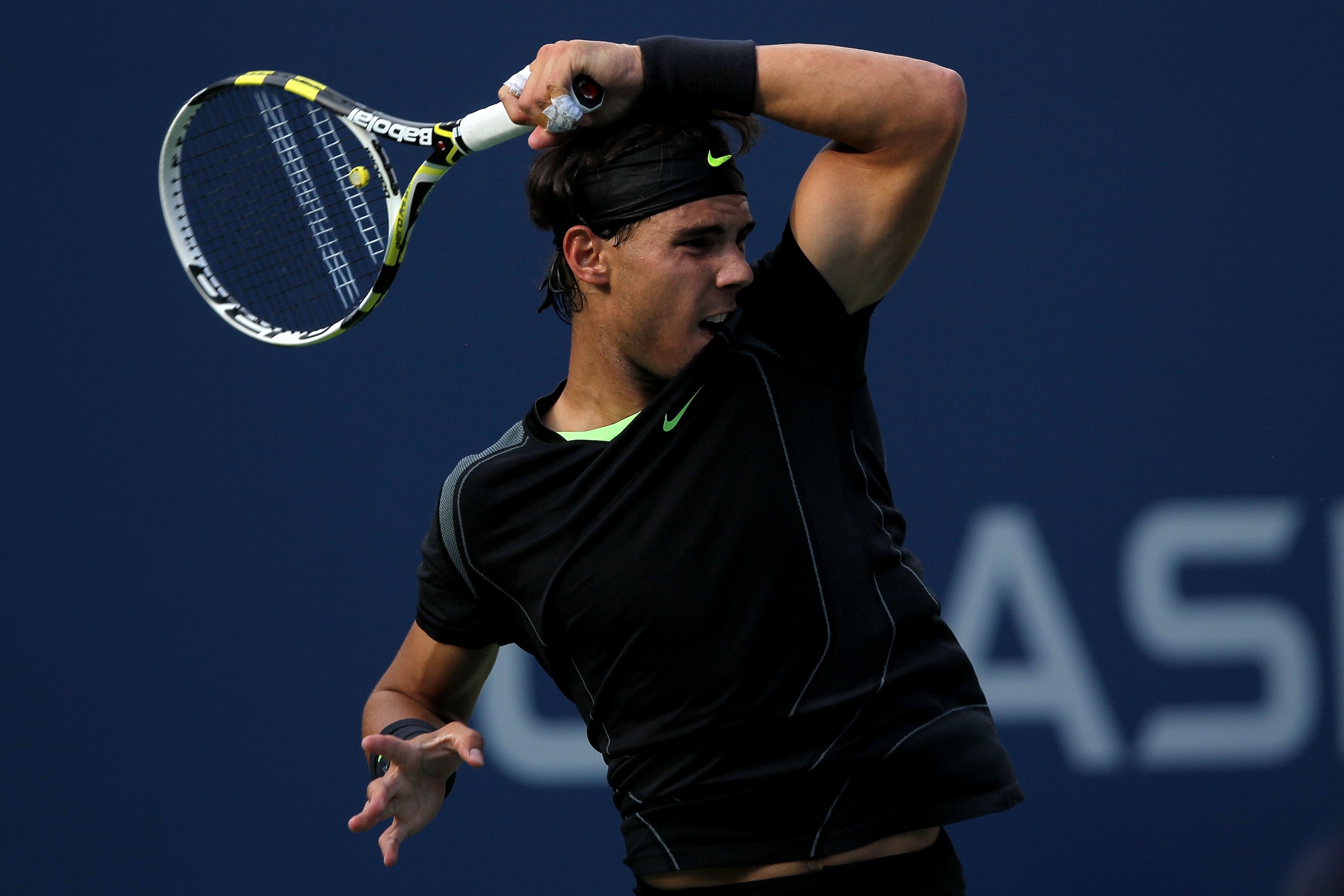
The opening games were fought as though the entire match was at stake, both men battling from deuce to hold serve. The play was deep, wide, and bullet-fast, and the groans of effort reverberated around the arena.
Suddenly a glimmer of hope appeared for Djokovic in the fourth game. Nadal made three errors to offer up break points, the Serb began to find the baseline, and was rewarded with a break.
The Djokovic shoulders relaxed, the backhand began to let rip, and the momentum shifted. He served out to love to go 4-1 up.
Black looks again appeared beneath the Spanish brow. It was time to try something different. His serve found a bit more venom, and he used it to attack the net and break the rhythm.
The intensity rose several levels on Djokovic’s next service game. Nadal found yet more power on both wings that drew equally fiery hitting from the Serb.
The killer blow, deployed several times over, was Nadal’s vicious off-forehand, cross-court bullet: an outright winner. Djokovic conceded the break back despite having done little wrong.
All square, and the crowd sensed another turning point in what already felt like a bare-knuckle fight: A black warrior, tinged with sulphur, facing the enveloping coils of a monochrome serpent. With the score poised precariously at 4-4, 30-30, the weather took control again as a rainstorm hit Flushing Meadows.
The set was already the same length as the first, the points shared equally: 57 each.
Almost two hours later, play resumed, and Djokovic rose to the tricky challenge of resuming his service mid-game. He made a gutsy hold after a couple of deuce scares.
The first two points of game 10 had the crowd on its feet: one a running forehand down the line from Nadal, the other a similar shot from the Djokovic backhand. Both men had returned into the cool evening with fire in their bellies, and the standard of play took off. Passing shots, cross-court running forehands, delicate drops, high smashes, and the second set was still not decided.
After two hours, however, it was. Djokovic applied the pressure deep into Nadal’s court, powered his shots to alternating corners, and forced some errors from Nadal. It brought a break of serve and the set, 7-5.
Set Three
6 of 10
Djokovic opened the set as he had closed the second, with free and powerful hitting, and he looked ready to storm ahead, but Nadal had other ideas.
His forehands rocketed across the court, his serve cranked up to 130 plus mph, and the eyes sparkled like black jet. The cleanness and pace of the hitting was almost superhuman, the energy he exuded demoralising. He broke Djokovic in minutes—the fastest phase of the match thus far—and followed by a love hold of serve to lead 3-1.
Nadal continued to look effortlessly dominant, even when chasing down a lob and following it up with a huge forehand: another love service game.
Djokovic almost fell then and there, facing five break points, but the Serbian spirit was strong enough to produce another forehand winner. He held his next service game with more panache and the more balletic backhand.
Time for one last push to save the set, and Djokovic stretched himself and his opponent across every inch of the court to reach 30-30 but Nadal’s serve—now topping 71 percent for the set—ripped the game, and with it the set, from Djokovic’s grasp: 6-4.
Set Four
7 of 10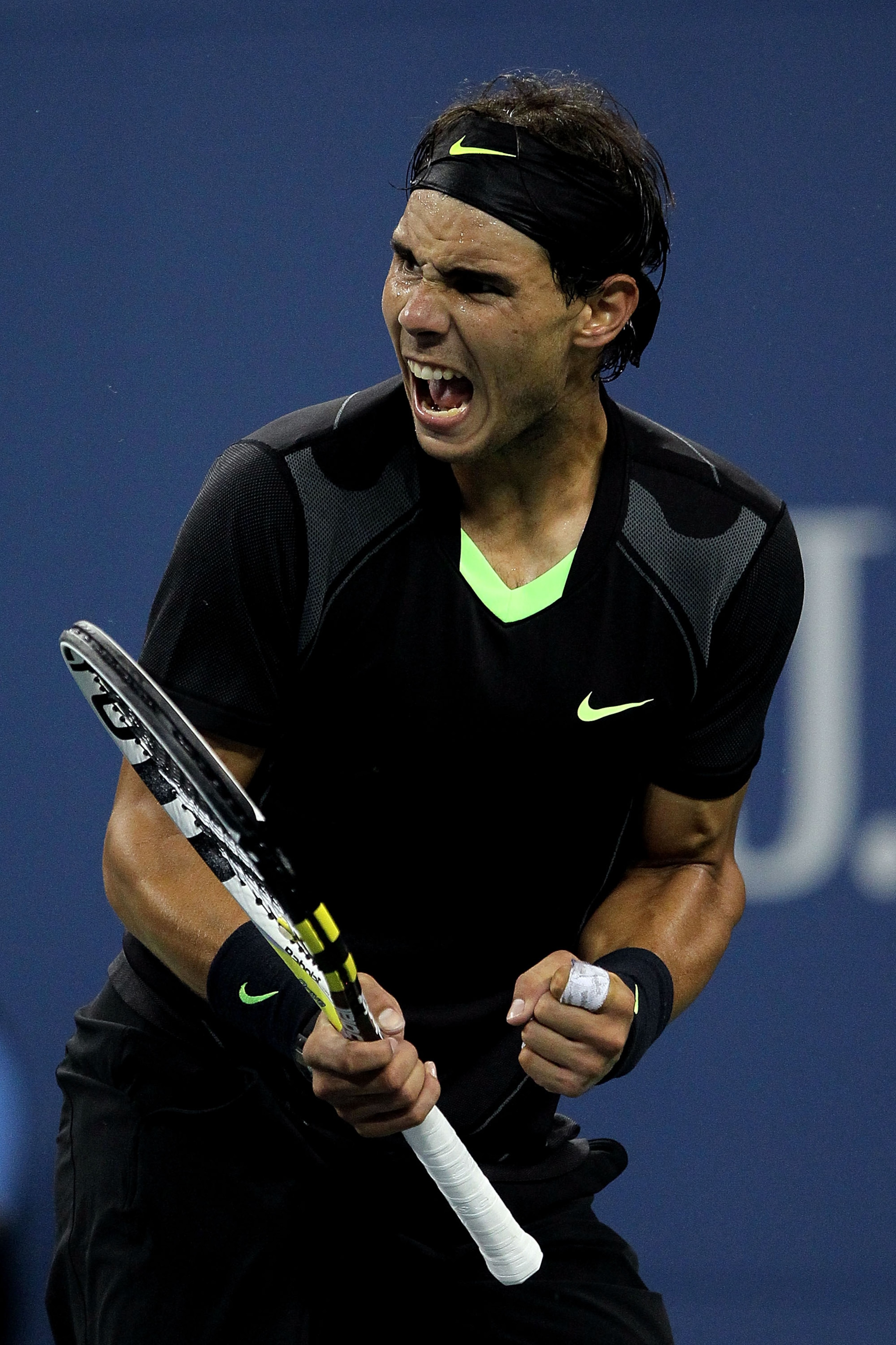
Djokovic came under pressure immediately in the fourth, saving a break point in the first game. He fought to keep pace in his second service game, too, falling behind 15-40. He saved one point but not the next.
The Djokovic batteries seemed to leach away their power under the growing impact of Nadal’s weaponry. The Spaniard held to love on his own serve and his ace tally mounted.
With clinical ruthlessness, Nadal won three more break points and a 4-1 lead. For Djokovic, it was a blow to the solar plexus. He summoned a last brave challenge in the next game, stealing a break point and half a dozen deuces. But he was hitting an immovable object: 5-1.
The manner in which Nadal finished off the bombardment only served to gild his performance. Not content with playing an entire match of accurate, intense, and athletic baseline tennis, Nadal reached match point with a bouquet of drop-shot pickups, a volley and—how appropriate—his distinctive looping forehand. He left it to the bedazzled Djokovic to place his head on the block with a wide forehand.
An ecstatic New York roared its pleasure for surely one of their most gladiatorial of champions. The 6-4, 5-7, 6-4, 6-2 win ensured Nadal’s name will forever appear on every Grand Slam trophy.
Those rainstorms that fell like a prayer from heaven for Djokovic were not enough to quench Nadal, but they were enough to ensure this was one of the highest quality U.S. finals of the Open era.
The Result
8 of 10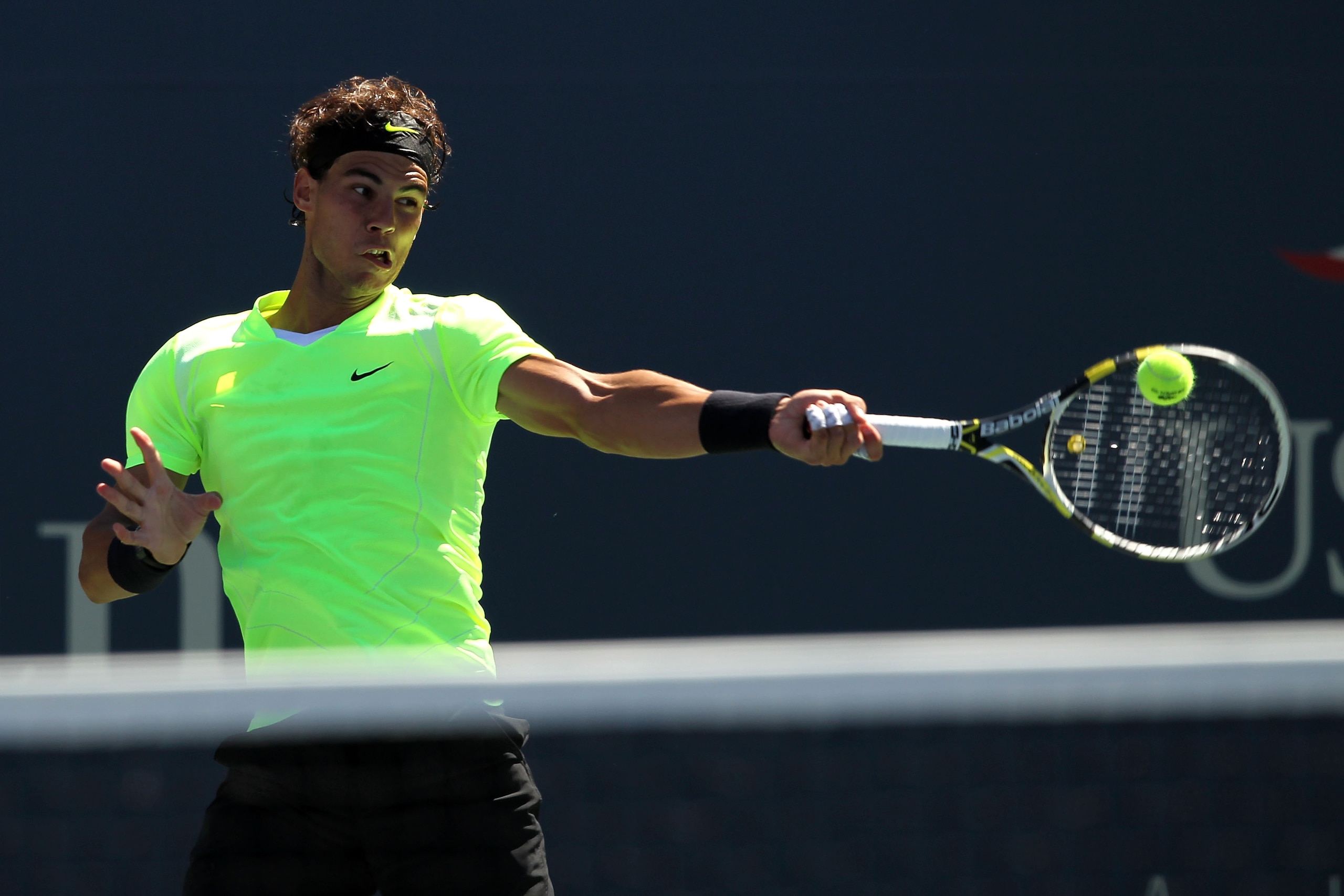
Compare the stats
Rafael Nadal, No. 1 with 12,025 points: tournaments played 19
Novak Djokovic, No. 2 with 7,145 points: tournaments played 21
Roger Federer, No. 3 with 6,735 points: tournaments played 21
At the end of March—that’s fewer than six months back—Nadal was ranked fourth in the world with 6,800 points. Federer topped the charts with more than 11,000.
Nadal had fought his way back from a rough 2009 blighted by knee problems, a poor performance at the World Tour Finals, and retirement from the quarterfinals of the Australian Open, again with a knee injury.
At that moment, the prospect of one, let alone three, Grand Slams for Nadal in the remainder of the season looked doubtful.
But Nadal is the last tennis player in the world to doubt. He has the spirit of a thoroughbred racehorse, the heart of a panther, and the drive of a salmon fighting its way upstream to its birthplace.
He is also blessed in his family, his upbringing, and his common sense. It was a case of "back to the drawing board" not just to fix his body but to preserve it, to make it stronger, to re-sculpt it.
The new Nadal became leaner, lighter, and more agile. He learned to serve better, to cope with the net better, to smash an overhead to smithereens as the occasion demanded. He developed shots to break his opponent’s rhythm—sliced backhands, drops, and flat forehands.
And this is a man who already owned six majors at 23 years of age.
Just as significant, he and his astute uncle—the Nadal bedrock—trimmed down his schedule and prepared his campaign.
Now with three more Slams, the question is not about whether his knees will see him through another season but how anyone else can beat this epitome of determination.
The Future
9 of 10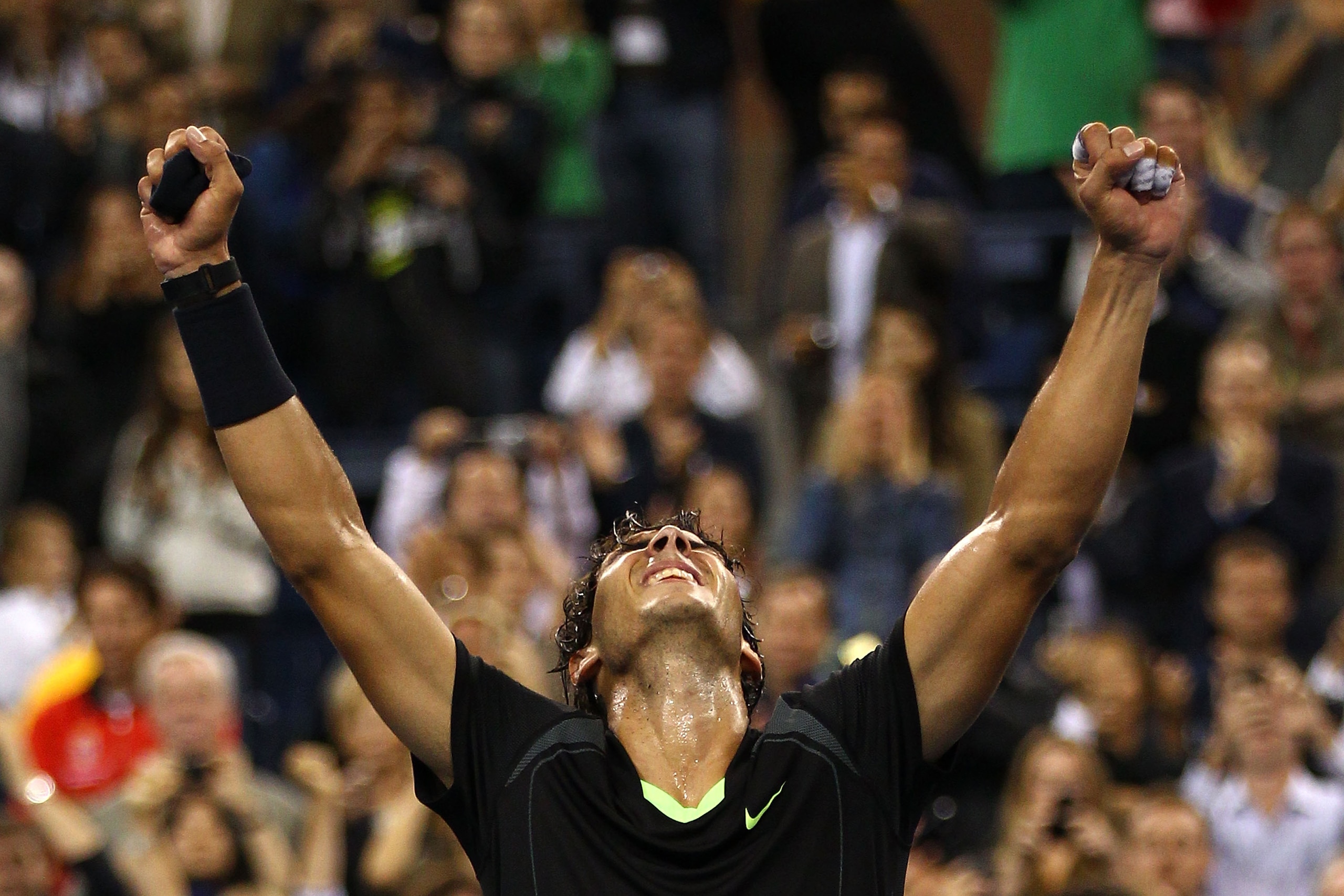
Nadal’s body looks in better shape than at any time since his first title in Paris.
His game is multifaceted, his tenacity unquestioned, his capacity for evolution still clear.
He barely attacked the net at all against Djokovic, yet his speed, serve, and volley skills make this a natural play should he seek more solutions.
For now, he is guaranteed to be No. 1 until Monte Carlo without lifting a finger. He will be favorite to take the WTF title in London. If he can go on to win the Australian title, he would be that very rare beast: a man who has held all four Slam titles at the same time.
And to top it all, no one has a bad word to say about him.
Now that’s class.
And in Conclusion
10 of 10
So the U.S. Open ended its 2010 run bathed in the sunshine of a champion who lights up the crowd with the brightest and coyest of smiles.
He’s the top-of-the-pops one, the best-in-the-world one, the cream-of-the-crop one.
He’s the sultry-in-black one, the sulphur-bedecked one, the Heathcliff-demeanored one.
And he’s the credit-to-tennis one, the admired-to-the rafters-one, the shining-example one.
Rafael Nadal.

.jpg?w=2560 "Jonathan Taylor Landing Spots")

.jpg?w=2560 "Aikman Blasts Cowboys WR 🫣")