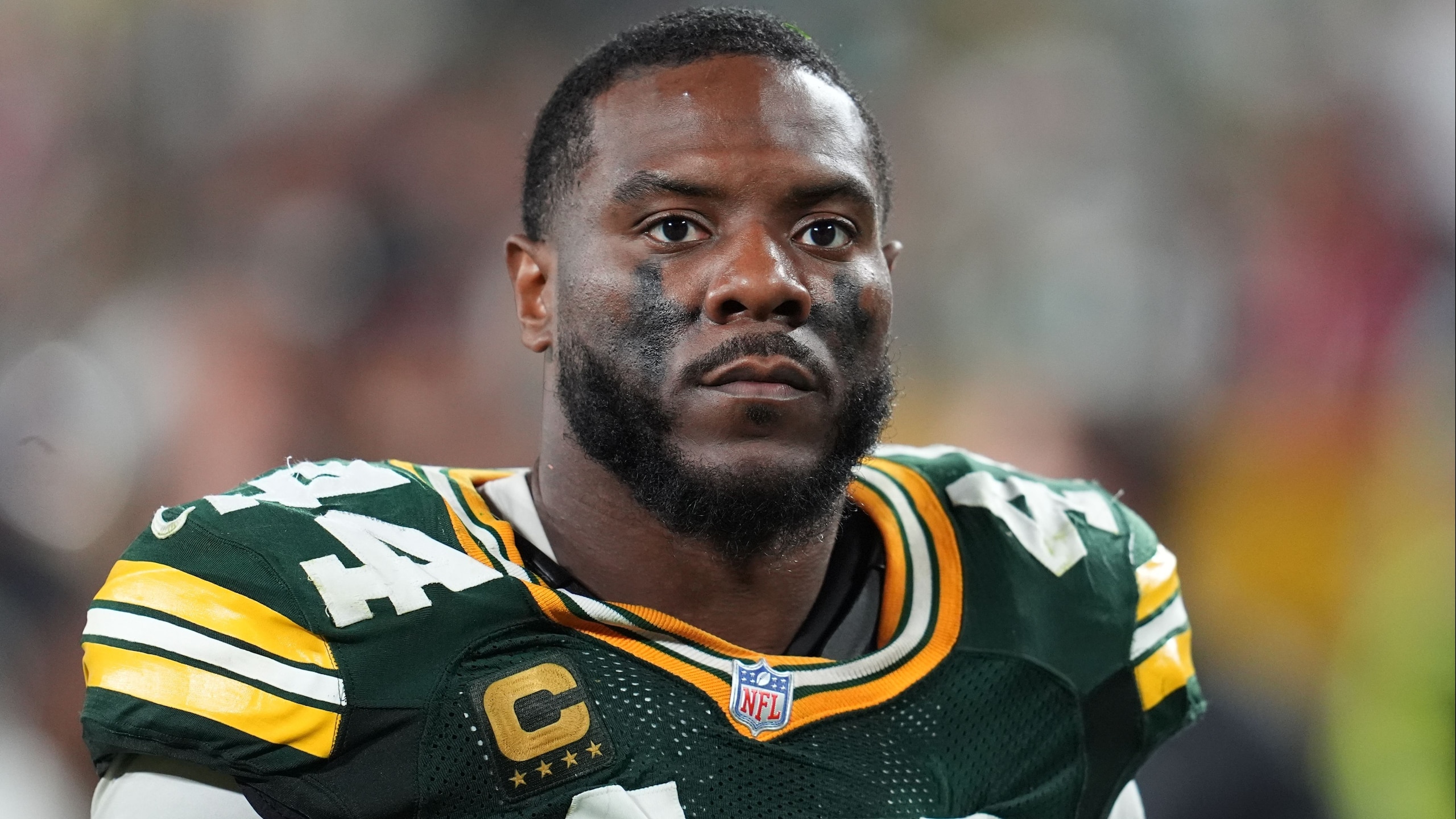
Every NFL Team's Best Move from the 2020 Offseason
Every year, the NFL offseason is full of suspense, excitement and no shortage of heavily hyped moves. From big-name free-agency signings and draft-day shockers to blockbuster trades and headline-grabbing coaching hires, there's always a reason for a franchise to find hope in the offseason.
Not every big move yields big results, though, and sometimes an under-the-radar decision in April can prove critical in December. In short, a franchise's best offseason move can look much different in retrospect than it does in real-time.
With three-quarters of the 2020 NFL season now in the rearview, it's a perfect time to look back on the offseason that was. Here, you'll find each team's top offseason move with 13 weeks of action as evidence.
These are decisions that have produced positive results, either statistically or in the win-loss column. We'll focus primarily on what has already transpired—the future is always uncertain—though long-term implications will be considered.
We'll also be looking exclusively at on-field results, so while parting with an aging veteran or clearing out a bad contract may greatly benefit a franchise, such moves won't be appraised here.
So, what was your favorite team's best move of the 2020 offseason? Let's take a look.
Arizona Cardinals: Trading for DeAndre Hopkins
1 of 32
This is probably one of the most obvious additions to this list. The Arizona Cardinals' trade for wideout DeAndre Hopkins was a potentially career-altering move for quarterback Kyler Murray as it provided him with the sort of No. 1 receiver most quarterbacks dream of.
While opponents have figured out how to limit Murray and Hopkins in recent weeks—Hopkins has 158 yards and a touchdown in his last three outings—Arizona's new go-to target has been pretty special overall.
Through 12 games, Hopkins has caught 85 passes for 1,019 yards and five touchdowns. He has helped give Murray a security blanket on the perimeter while also serving as a big-play threat (12.0 yards per reception) in the passing attack.
Hopkins is likely headed to his fifth Pro Bowl this season, and at 28 years old, he is still in his playing prime. Considering Arizona didn't even have to surrender a first-round pick to get him, this is one of the best moves any team made in the 2020 offseason.
Atlanta Falcons: Trading for Hayden Hurst
2 of 32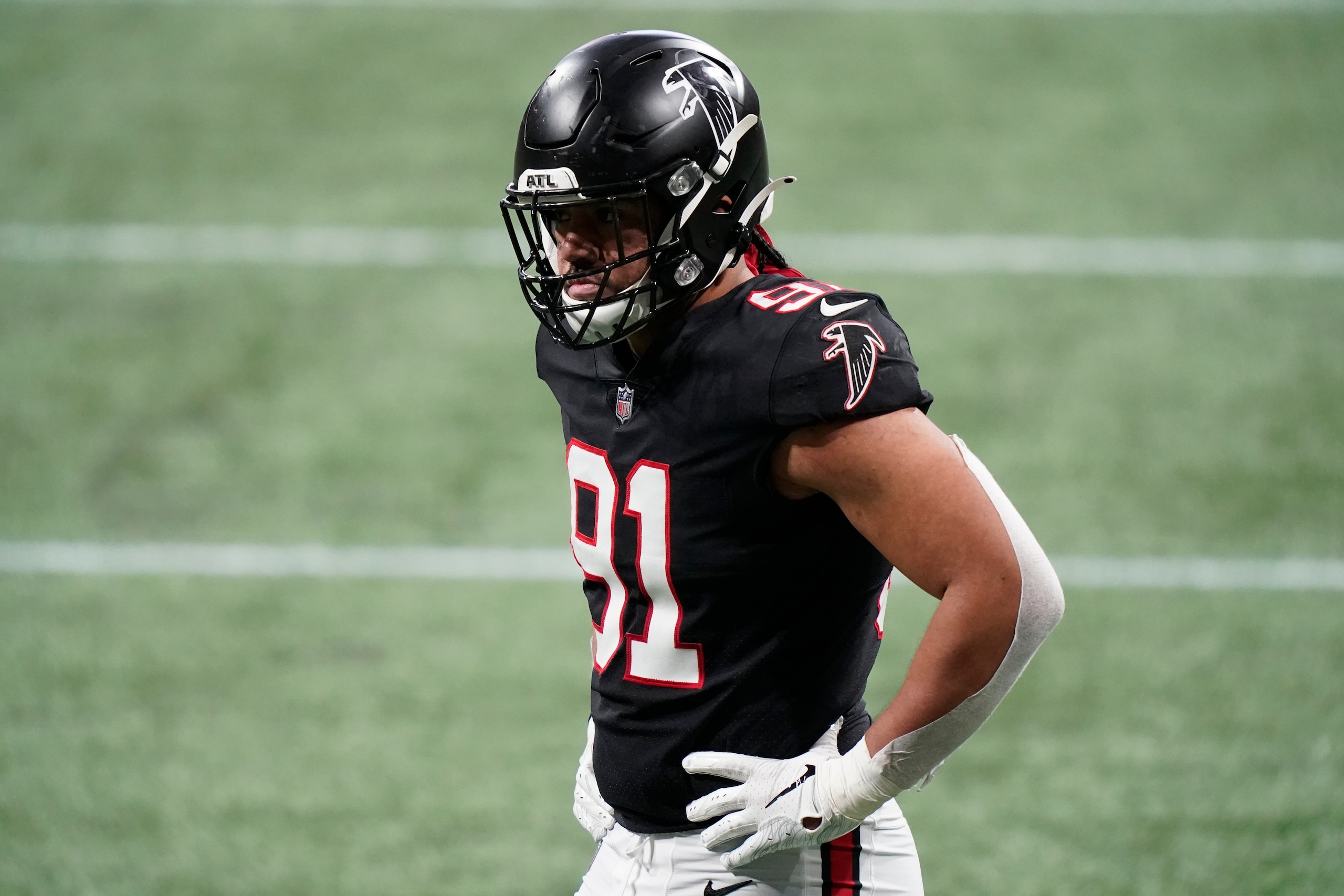
Bringing in Hayden Hurst didn't give the Atlanta Falcons a new No. 1 receiver like the addition of DeAndre Hopkins did for Arizona. However, with Julio Jones and Calvin Ridley on the roster, a new wideout wasn't what Atlanta needed. Following the free-agent departure of Austin Hooper, the Falcons needed a new tight end.
So, Atlanta sent second- and fifth-round picks to the Baltimore Ravens for Hurst and a fourth-rounder. It's fairly safe to say the Falcons are happy with their decision.
Hurst hasn't exactly produced eye-popping statistics, but he's been more than solid. He has 42 receptions for 468 yards and three touchdowns, and he has a bright future in Atlanta.
The addition has been especially impactful because Atlanta hasn't had Jones at 100 percent for the entirety of the season. The veteran wide receiver has missed three games and has been held below 50 receiving yards three different times.
At 27 years old, Hurst can be a long-term piece of Atlanta's offense.
Baltimore Ravens: Trading for Calais Campbell
3 of 32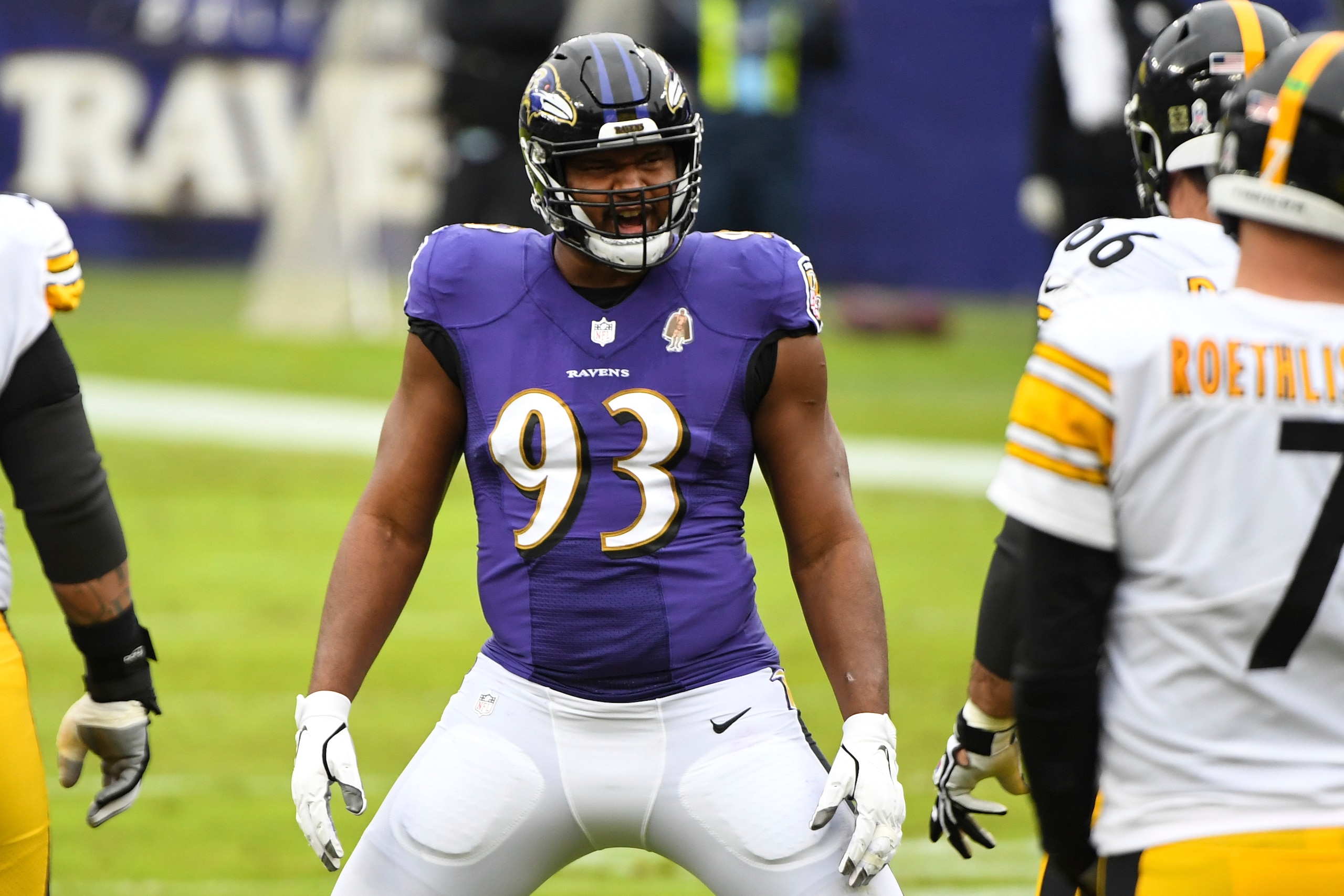
The Baltimore Ravens have taken a step back after going 14-2 one year ago. However, one area in which the team has improved is the pass rush. Baltimore had just 37 sacks in 2019 while often playing with the lead, but the team is currently on pace for roughly 40 sacks despite playing in tight contests or from behind far more often this year.
The trade to acquire Calais Campbell from the Jacksonville Jaguars has played a big role, and the Ravens have missed him the last few weeks since he hasn't played since suffering a calf injury in Week 9.
In eight games this season, Campbell has produced 4.0 sacks, 11 quarterback pressures and 24 total tackles. He has also helped other players, like Matt Judon, by drawing the attention of opposing offensive lineman.
Baltimore has logged just three sacks in three games without Campbell.
Ideally, Campbell will be available for the final month of the season as the Ravens push for one of the AFC's wild-card spots. If the Ravens are going to make it into the postseason, they must figure out how to get after opposing passers more consistently. Campbell is one of the few players on the roster who can do just that.
.jpg?w=2560 "Packers 49ers Football")
.jpg?w=2560 "Seahawks Cardinals Football")
.jpg?w=2560 "Steelers Browns Football")
Buffalo Bills: Trading for Stefon Diggs
4 of 32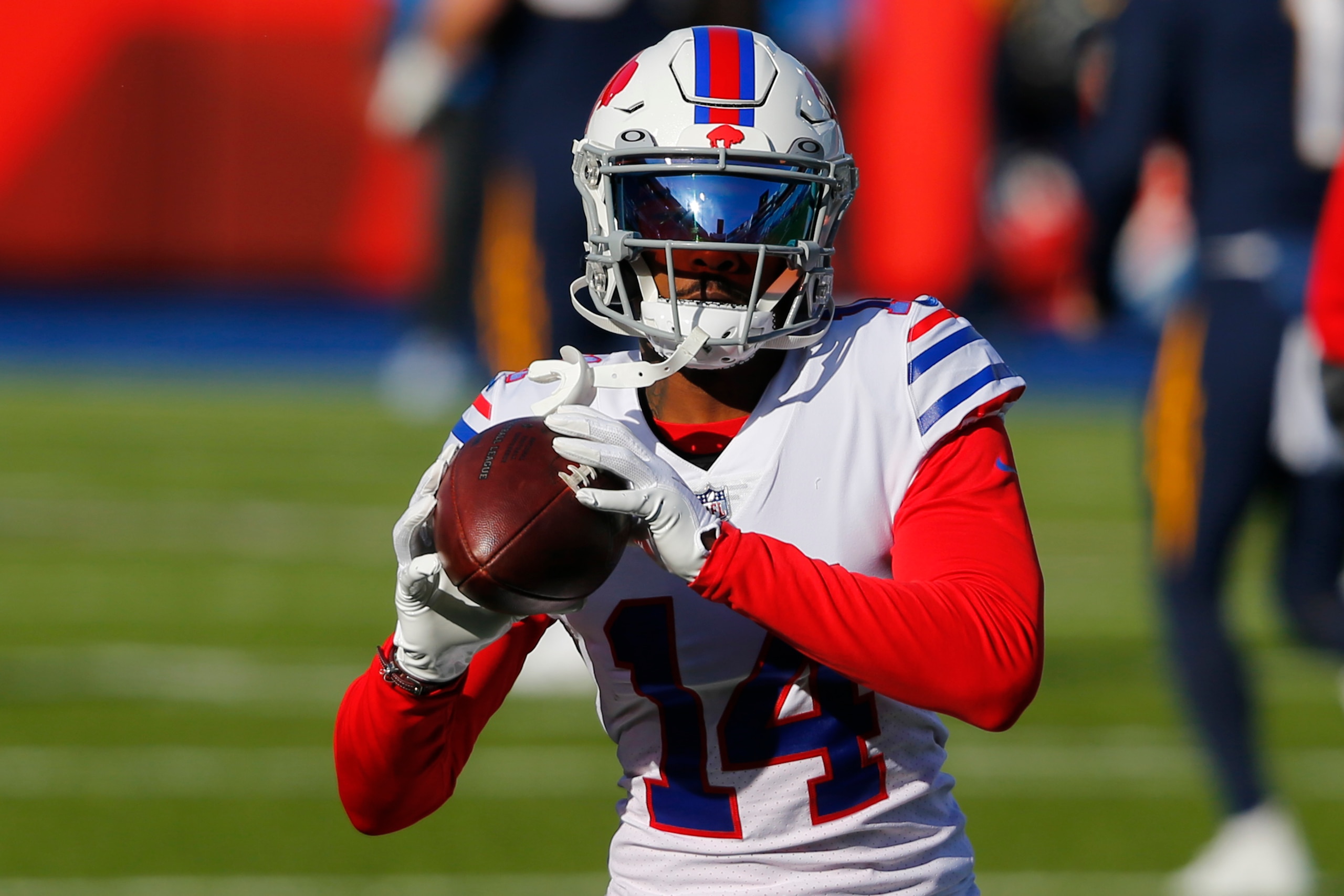
While the Cardinals didn't have to give up a first-round pick to acquire DeAndre Hopkins, the Buffalo Bills did have to surrender a first-rounder to acquire wideout Stefon Diggs. That's OK because his production and impact on the offense have been worth every proverbial penny.
Diggs has been the reliable No. 1 receiver Josh Allen had previously lacked in his young quarterbacking career. He's also helped open up the offense with his deep-threat speed and after-the-catch ability.
Through 12 games, Diggs has 90 receptions for 1,037 yards and four touchdowns. He has a real shot at setting new franchise records in receptions (100) and receiving yards (1,368), which would be remarkable given his circumstances.
Diggs took the field for Buffalo without a normal offseason or the benefit of the preseason. Yet he wasted little time developing chemistry with Allen and establishing himself as one of the league's most lethal pass-catchers.
Pulling the trigger on the Diggs trade was truly a brilliant decision for Buffalo.
Carolina Panthers: Signing Teddy Bridgewater
5 of 32
One could make a case here for signing running back Mike Davis, who has filled in remarkably well for Christian McCaffrey, for hiring head coach Matt Rhule and offensive coordinator Joe Brady or for adding wideout Robby Anderson. However, the decision to sign quarterback Teddy Bridgewater has allowed the Carolina Panthers to compete and has set them up for the foreseeable future.
Even without McCaffrey for most of the season, the Panthers have been a dangerous opponent. The defense, which ranks 16th in points allowed, certainly deserves some credit, but Bridgewater has helped stabilize the most important position in sports.
In 11 games, Bridgwater has thrown for 2,819 yards with 14 touchdowns and eight interceptions. He's added 208 yards and three scores on the ground and has a quarterback rating of 96.3.
While Bridgewater may not be the quarterback of the future in Carolina—he's under contract through 2022—he's young enough (28) and good enough that the Panthers won't enter the 2021 offseason desperate for a new signal-caller.
If a top quarterback prospect falls to Carolina in the draft? Great. However, the Panthers have a quality starter on the roster, and that's something plenty of other franchises cannot say in 2020.
Chicago Bears: Drafting Jaylon Johnson
6 of 32
Has rookie cornerback Jaylon Johnson been perfect? Of course not. The Chicago Bears' second-round pick has had his fair share of rookie struggles. He's allowed 548 receiving yards in coverage and an opposing passer rating of 96.0. However, he has also shown plenty of signs of his potential and playmaking ability.
Johnson is still searching for his first career interception, but through 12 games, he has had an absurd 15 passes defended. That's just five fewer than reigning Defensive Player of the Year Stephon Gilmore had in all of 2019, and he led the NFL in the category.
By drafting Johnson, the Bears landed a permanent starter at the cornerback spot—the Utah product has started every game—and perhaps a future Pro Bowler on the back end of the defense.
In a season full of miscues and disappointment for Chicago, the addition of Johnson has been one of the biggest bright spots.
Cincinnati Bengals: Drafting Joe Burrow
7 of 32
Cincinnati Bengals rookie quarterback Joe Burrow is done for the season, and that's a shame. The No. 1 overall selection and former LSU standout was thrilling to watch and was arguably the front-runner for Offensive Rookie of the Year before suffering a brutal knee injury in Week 11.
In his 11 starts, Burrow passed for 2,688 yards with 13 touchdowns and five interceptions. Given the lack of overall talent on the 2-9-1 Bengals' roster, that's impressive.
Cincinnati fans will have to wait until next year to see Burrow's promising NFL career continue. However, they can rest comfortably, knowing that while Cincinnati continues to cement a top-five draft selection, the pick won't have to be used on a quarterback.
As long as Burrow can return to pre-injury form, the Bengals will have their franchise quarterback. Now the process of building around him can truly begin.
Pulling the trigger on Burrow at No. 1 was the logical choice, but it's arguably the best decision the Bengals have made since doing the same with Carson Palmer back in 2003.
Cleveland Browns: Hiring Kevin Stefanski
8 of 32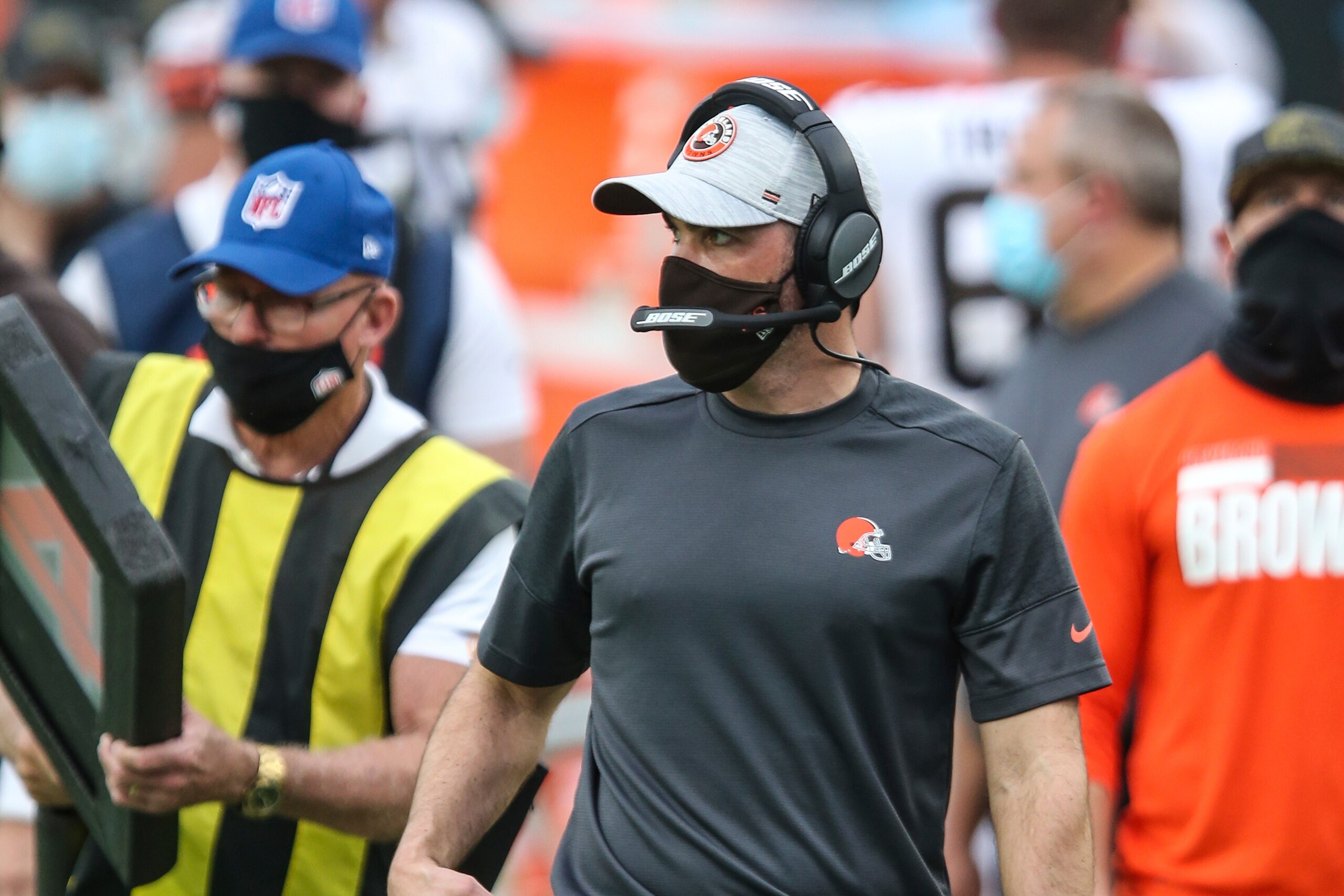
The Cleveland Browns deserve credit for bringing in contributors like veteran tackle Jack Conklin, rookie tackle Jedrick Wills Jr. and linebacker B.J. Goodson. All have helped Cleveland achieve its surprising 9-3 record. However, no one is more directly responsible for the Browns' first winning season in over a decade than head coach Kevin Stefanski.
Stefanski has navigated the lack of a typical offseason, the lack of a preseason and numerous injuries and reserve/COVID-19 absences. He has lost No. 1 wideout Odell Beckham Jr. for the season and endured absences from standouts like Nick Chubb, Myles Garrett and Denzel Ward. He's helped his team bounce back from tough losses against the Pittsburgh Steelers and Baltimore Ravens—Cleveland doesn't have consecutive losses in 2020—and has the Browns on the cusp of the postseason.
Perhaps most importantly, Stefanski has helped put quarterback Baker Mayfield in a position to succeed. The third-year signal-caller is still inconsistent and has room for growth, but he's thrown for 21 touchdown passes, tossed just seven interceptions, earned a passer rating of 97.9 and posted a 9-3 record as a starter.
No, Mayfield isn't slinging it as he did his rookie season, but he's been more efficient and has cut down on his mistakes as the season has progressed (no picks in the last five games). He's been a great complement to Chubb, Kareem Hunt and the running attack.
After years of failing to achieve relevance, the Browns can make the postseason this year. And after consistently making the wrong hires at head coach, Cleveland finally appears to have gotten it right.
Dallas Cowboys: Signing Aldon Smith
9 of 32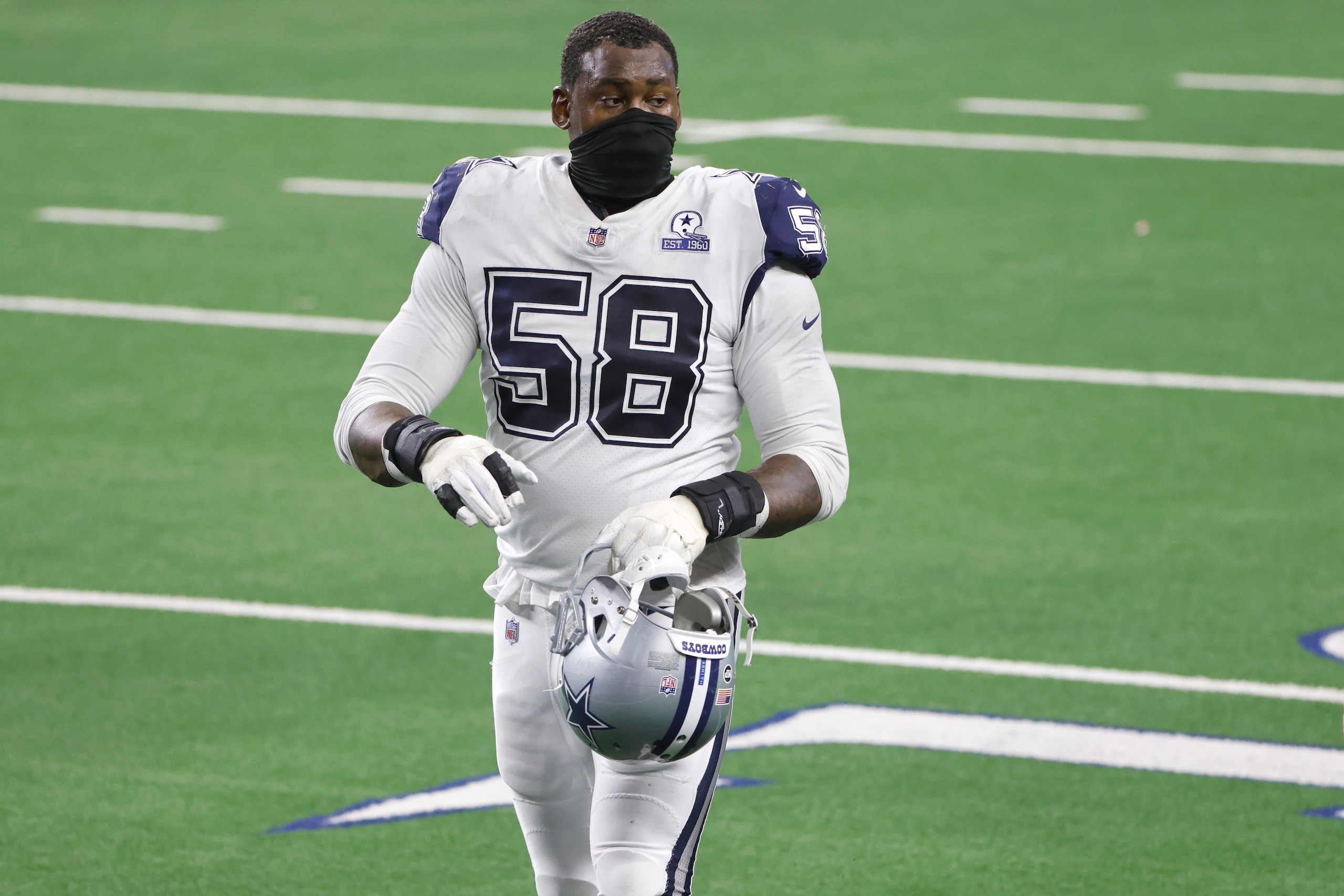
The Dallas Cowboys sit at 3-8, and while the loss of quarterback Dak Prescott has certainly played a large role in their struggles, the reality is that Dallas hasn't done much right this year. Two moves, however, have been solid.
First, the Cowboys used a first-round pick on wideout CeeDee Lamb, who looks to be a future star in the NFL. Secondly, Dallas decided to give pass-rusher Aldon Smith a chance to revitalize his career. Both moves have paid off, but the addition of Lamb was a luxury. The addition of a pass-rusher like Smith filled a need.
Dallas still has just 22 sacks on the season, but Smith is responsible for five of them. He also has 17 quarterback pressures and 44 total tackles—all after not playing football for four years.
While one could argue the Cowboys wouldn't have needed Smith had they re-signed Robert Quinn, bringing him in was still a smart move. Now, the trick will be locking him up for the long term at a fair value.
Detroit Lions: Drafting D'Andre Swift
10 of 32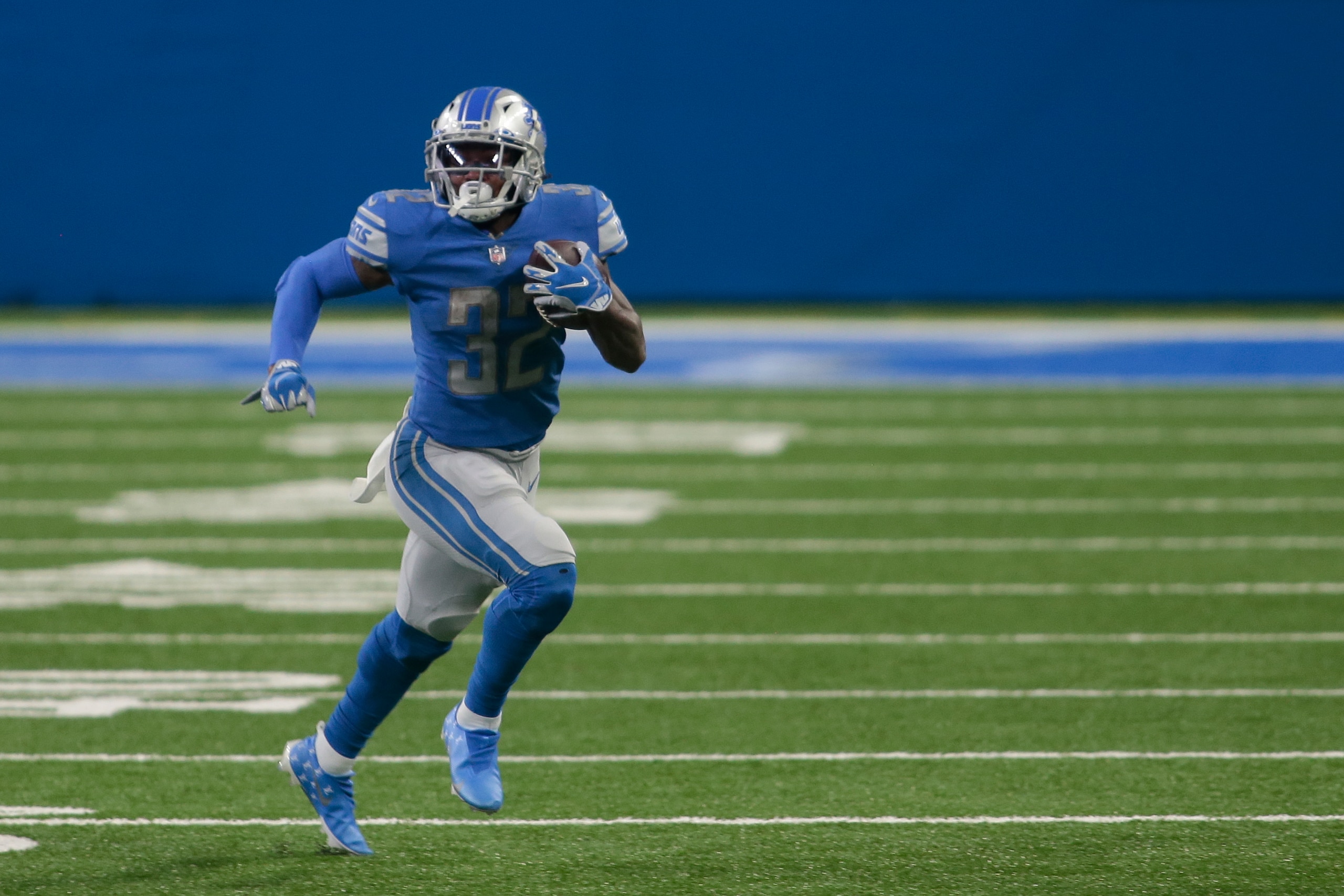
The Detroit Lions used the third overall pick on former Ohio State cornerback Jeff Okudah this April. While he has shown some promise, he hasn't lived up to the expectations a defender selected that high is going to carry. He's surrendered 594 yards and an opposing passer rating of 118.0 in nine games.
Okudah will have plenty of opportunities to rebound, but the draft value and production don't match. The same could be said about rookie running back D'Anre Swift, though that has more to do with his lack of usage early in the season and his injury-related absence over the last three weeks.
When given an opportunity, the former Georgia star has played like something the Lions haven't had in some time: a franchise running back.
"I was like, 'You guys should have did this two, three weeks ago, you know,'" veteran back Adrian Peterson said when Swift finally got the start in Week 10, per ESPN's Michael Rothstein.
In nine games, Swift has rushed for 331 yards and 4.7 yards per carry. He has also caught 31 passes for 275 yards and has scored six times. He's missed the last three games with a concussion but looks to be an offensive centerpiece for 2021 and beyond.
Denver Broncos: Drafting Jerry Jeudy
11 of 32
The Denver Broncos used their first two selections in the 2020 draft on receivers Jerry Jeudy and KJ Hamler. The thought process was that by surrounding quarterback Drew Lock with more pass-catching talent, Denver could set him up for success.
Jeudy, in particular, has helped achieve that goal. While he hasn't been as explosive as former Alabama teammate Henry Ruggs III or as prolific as Justin Jefferson, he has provided Lock with a reliable downfield target on the perimeter.
In 12 games with 10 starts, Jeudy has hauled in 38 passes for 594 yards and two touchdowns. He had his first career 100-yard game in Week 9 and has had three or more receptions seven different times this season.
Of course, the Broncos haven't had Lock healthy and under center all season, and there's still no guarantee he's going to be a true franchise quarterback. However, Jeudy can be a long-term building block for the passing attack regardless of what the future has in store for his quarterback.
Picking him at No. 15 overall was a smart move.
Green Bay Packers: Signing Rick Wagner
12 of 32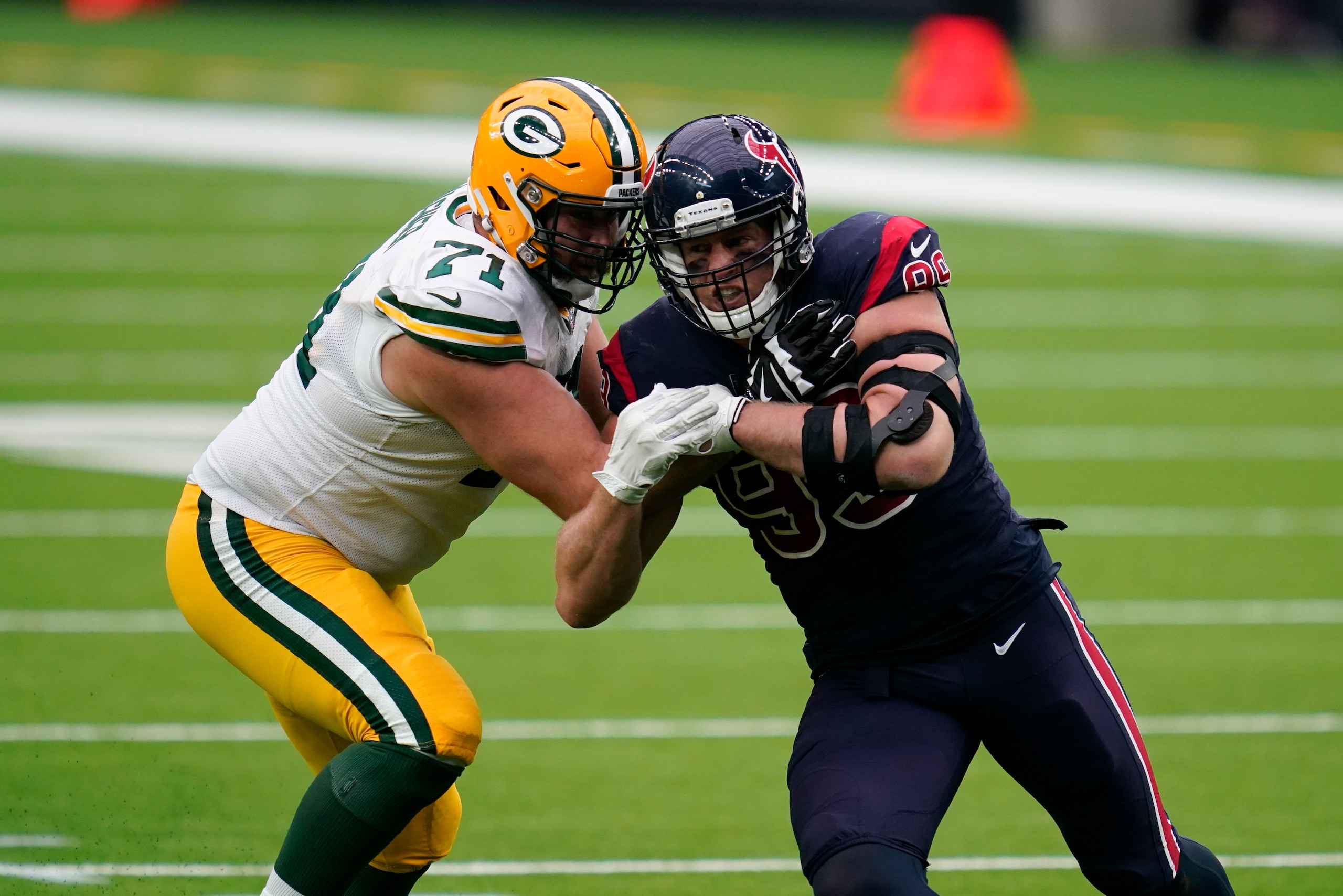
The Green Bay Packers didn't make many high-impact moves this past offseason. Wideout Devin Funchess was signed to bolster the receiving corps but opted out of the 2020 season. First-round pick Jordan Love remains the team's third-string quarterback. Second-rounder AJ Dillon? He's barely seen the field.
However, The Packers desperately needed a new lineman after Bryan Bulaga departed in free agency, and they signed Rick Wagner to a two-year deal to help replace him. Wagner has had an impact.
While Billy Turner has largely been the replacement for Bulaga, Wagner has spent time at right tackle when Turner has moved over to guard. He's been a fine rotational piece and has helped anchor one of the better offensive lines in the league. Quarterback Aaron Rodgers has been sacked just 13 times this season, while the Green Bay rushing attack ranks eighth in yards and 10th in yards per carry.
Wagner has started five different games and has allowed just one sack with no penalties in 392 offensive snaps, according to Pro Football Focus.
Houston Texans: Trading Brandin Cooks
13 of 32
Trading away wide receiver DeAndre Hopkins was unquestionably the worst move the Houston Texans made this offseason. However, former head coach/general manager Bill O'Brien redeemed himself somewhat by making a trade to acquire Brandin Cooks from the Los Angeles Rams.
The Texans sent a second-round pick to L.A. for Cooks and a fourth-rounder. To some degree, O'Brien swapped out Hopkins for Cooks and running back David Johnson. In that light, the deal doesn't look as good, but in a vacuum, Cooks has been a tremendous value.
Has he been the same dominant No. 1 receiver as Hopkins? No, but he's beginning to establish himself as a dangerous deep threat who has the trust of quarterback Deshaun Watson. Cooks has caught 57 passes for 784 yards and three touchdowns in 12 appearances.
The addition helped mitigate the disaster that was the Hopkins deal and has ensured that Watson has weapons around him with which he can thrive. His presence will be all the more important now that fellow pass-catcher Will Fuller V has been suspended for the rest of the regular season.
Indianapolis Colts: Signing Philip Rivers
14 of 32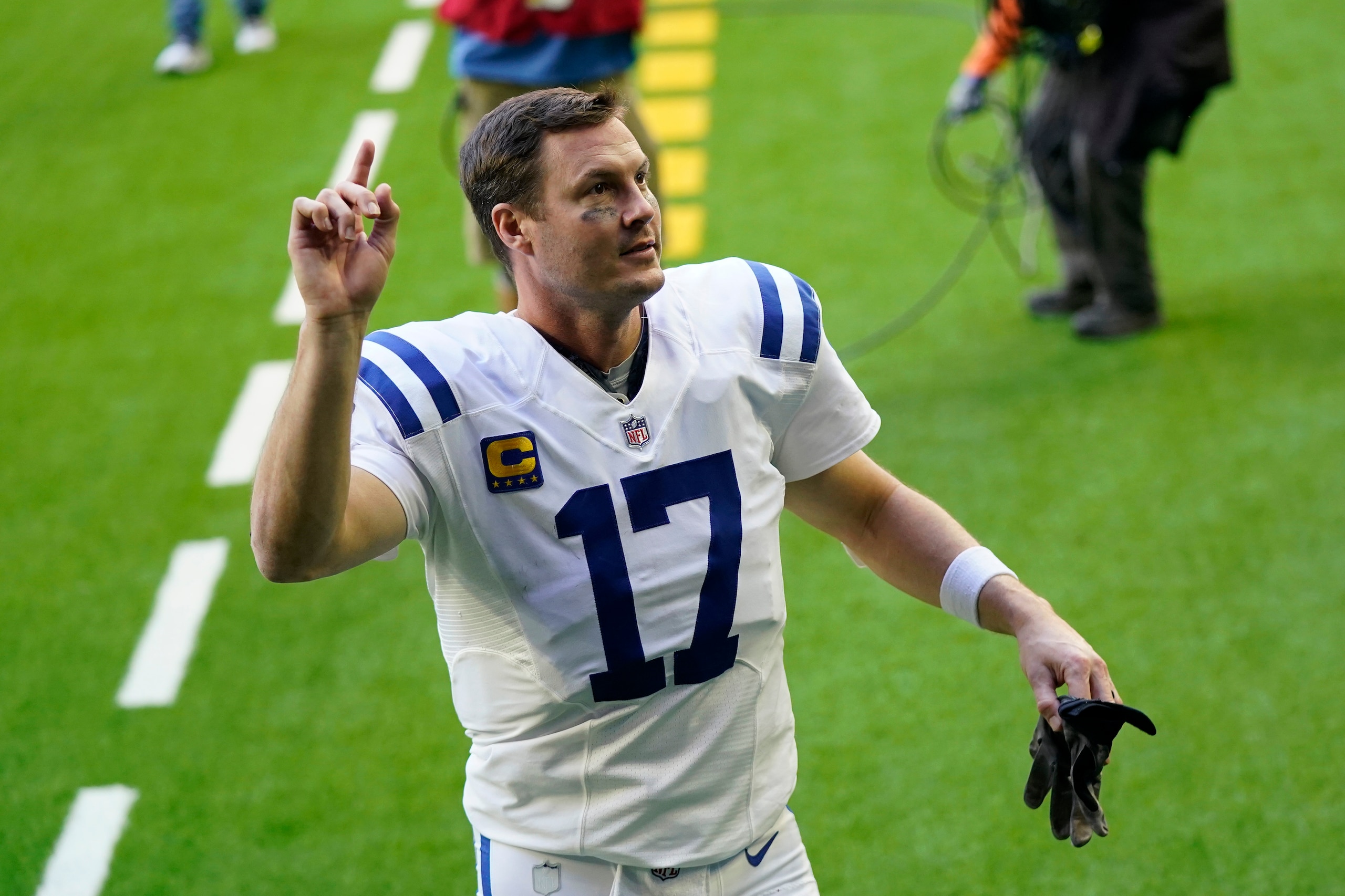
Quarterback Philip Rivers has been everything the Indianapolis Colts had hoped for. He's a seasoned, smart signal-caller who hasn't let a foot injury—one that will likely require surgery after the season—slow him down.
He's been the steady presence under center the Colts have lacked since Andrew Luck's surprise retirement during the 2018 offseason.
"He keeps the team up, he keeps the team going," nose tackle Grover Stewart said, per Joel A. Erickson of the Indianapolis Star.
Rivers has also been pretty solid statistically. He's had a couple of bad games, but he's already thrown for 3,263 yards with 18 touchdowns and nine interceptions. More importantly, he has the Colts on the cusp of a playoff appearance.
At 8-4, Indianapolis has a good shot at reaching the postseason. If it does, the offseason decision to sign Rivers will be a big reason why.
Jacksonville Jaguars: Signing James Robinson
15 of 32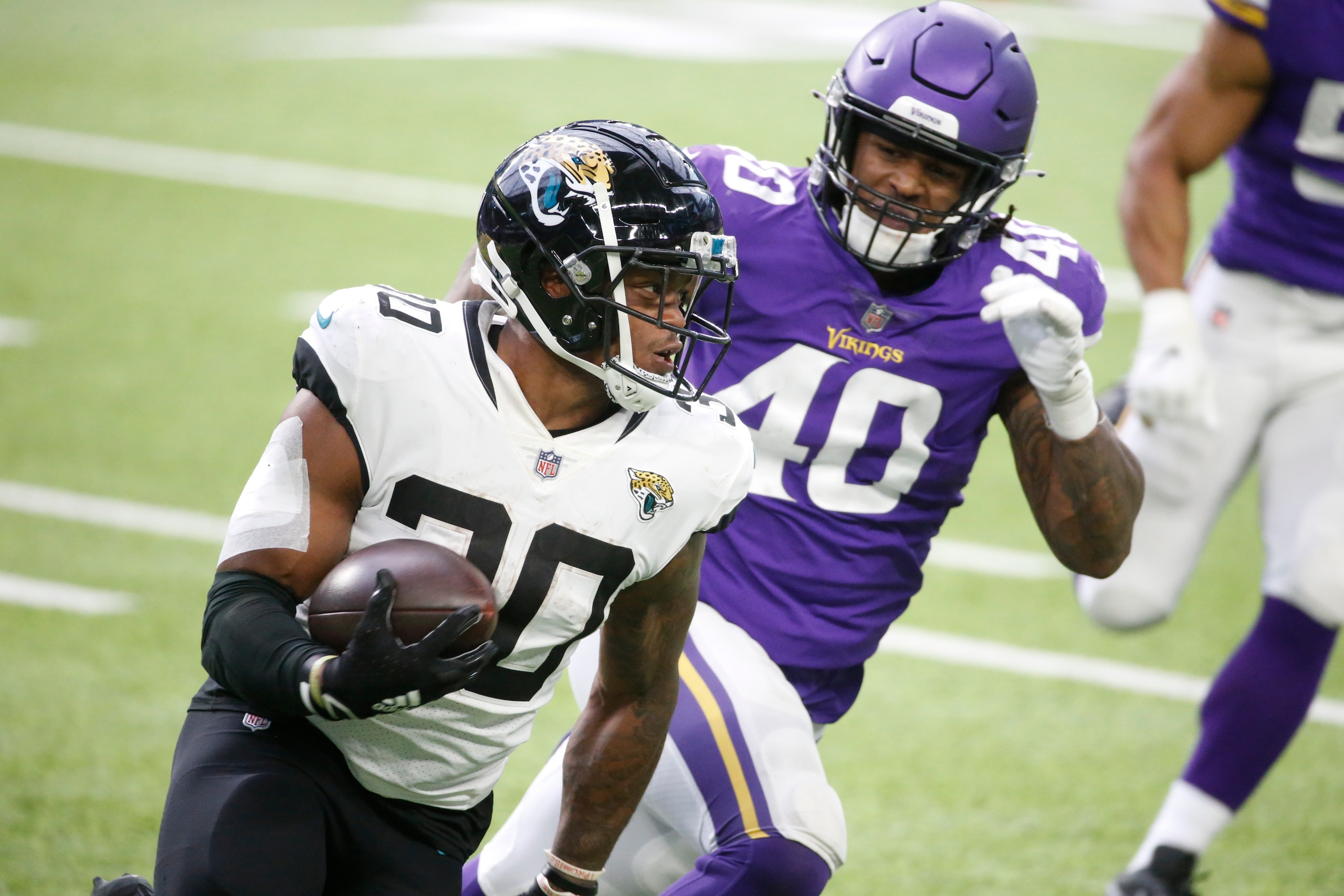
Former Illinois State running back James Robinson didn't hear his name called during the 2020 NFL draft. However, the Jacksonville Jaguars decided to take a chance on him as an undrafted free agent, and the rest, as they say, is history.
Robinson should have a long and fruitful career ahead of him, but he's already proving to be one of the best young backs in football. He hasn't missed a start this season and has already amassed 968 rushing yards, 310 receiving yards and nine total touchdowns.
With four games left, Robinson has a legitimate shot at averaging 100 scrimmage yards per contest for his rookie season. That's impressive, and he has been one of the few bright spots during a disappointing 1-11 campaign.
Moving forward, Robinson will be one of the Jaguars' offensive building blocks along with budding receivers DJ Chark Jr. and Leviska Shenault Jr. Giving him a chance is, hands down, the best decision they made in the offseason.
Kansas City Chiefs: Drafting Clyde Edwards-Helaire
16 of 32
Patrick Mahomes is the centerpiece of the Kansas City Chiefs, and their offense flows through the passing game. That's not going to change anytime soon, but the decision to draft Clyde Edwards-Helaire at the bottom of Round 1 was still a wise one.
The rookie running back out of LSU has added another dimension to the Chiefs offense with his rugged running style and reliable hands out of the backfield. In 11 games, the 32nd overall pick has amassed 692 rushing yards, 234 receiving yards and five touchdowns while averaging 4.6 yards per carry.
Detractors will argue that Kansas City could have gotten a quality running back later in the draft. That's accurate, and the rookie campaign of the undrafted James Robinson backs it up. However, Edwards-Helaire was the back the Chiefs wanted, so they pulled the trigger.
It was a smart move, especially with Super Bowl LIV hero Damien Williams deciding to opt out of the 2020 season. The presence of Edwards-Helaire has allowed the Chiefs running game to plug along while ensuring defenses that sell out to stop Mahomes will pay the price on the ground.
Las Vegas Raiders: Drafting Henry Ruggs III
17 of 32
The impact Henry Ruggs III has had on the Las Vegas Raiders offense cannot be measured by stats alone. The former Alabama standout has just 20 catches for 396 yards and two touchdowns on the season. However, his deep-threat ability has played perfectly into what the Raiders want to do offensively.
By using Ruggs' speed to back off opposing safeties, Las Vegas has been able to open up underneath routes for tight end Darren Waller and running lanes for Josh Jacobs.
With Jacobs out of the lineup in Week 13, Waller and Ruggs both played massive roles in Las Vegas' comeback win over the New York Jets. Waller had 200 receiving yards while Ruggs caught three passes for 84 yards and the game-winning touchdown.
The presence of the rookie first-rounder has allowed head coach Jon Gruden to open things up offensively, which has put the Raiders in contention for the postseason. Las Vegas has proved it can go toe-to-toe with offensive powerhouses like the Kansas City Chiefs, and Ruggs has played a huge role in its ability to do so—even if the raw numbers don't suggest it.
Los Angeles Chargers: Drafting Justin Herbert
18 of 32
If Joe Burrow was the favorite for Offensive Rookie of the Year before his injury, Los Angeles Chargers quarterback Justin Herbert is the favorite now—and he might even have claimed the award had Burrow played a full season.
Yes, Herbert hit a road bump against Bill Belichick and the New England Patriots. Numerous rookie quarterbacks have before him. However, he's been remarkable in almost every other game he's played this season, and he has a great shot to set a new rookie passing touchdown record.
Baker Mayfield set a new mark in 2018 with 27 touchdown passes. Herbert has 23 touchdown passes with four games to go. He's also thrown for 3,224 yards and rushed for 185 yards with three more scores on the ground.
The Chargers sit at just 3-9 and have been eliminated from the playoffs. They've found their franchise quarterback, though, and that's the best move any team can make in an offseason.
Los Angeles Rams: Drafting Jordan Fuller
19 of 32
The Los Angeles Rams might not have known they were getting a steal when they used a sixth-round pick on former Ohio State safety Jordan Fuller this April. They were, though, and Fuller has established himself as one of the best young defensive backs in the game.
The former Buckeyes standout has started all eight games in which he has appeared and has been nothing short of impressive. He has logged 35 tackles, three interceptions and five passes defended and has allowed an opposing passer rating of just 64.8.
When healthy, Fuller has been one of the steadiest presences on the Rams defense.
While Defensive Rookie of the Year will probably be awarded to a pass-rusher like Chase Young or a stat-racking linebacker like Patrick Queen, Fuller deserves to be in the conversation. He's a big reason why Los Angeles ranks second in total defense and why the Rams are probably going back to the playoffs after missing them in 2019.
Fuller was a huge offseason get even if he was largely viewed as an afterthought on draft weekend.
Miami Dolphins: Drafting Tua Tagovailoa
20 of 32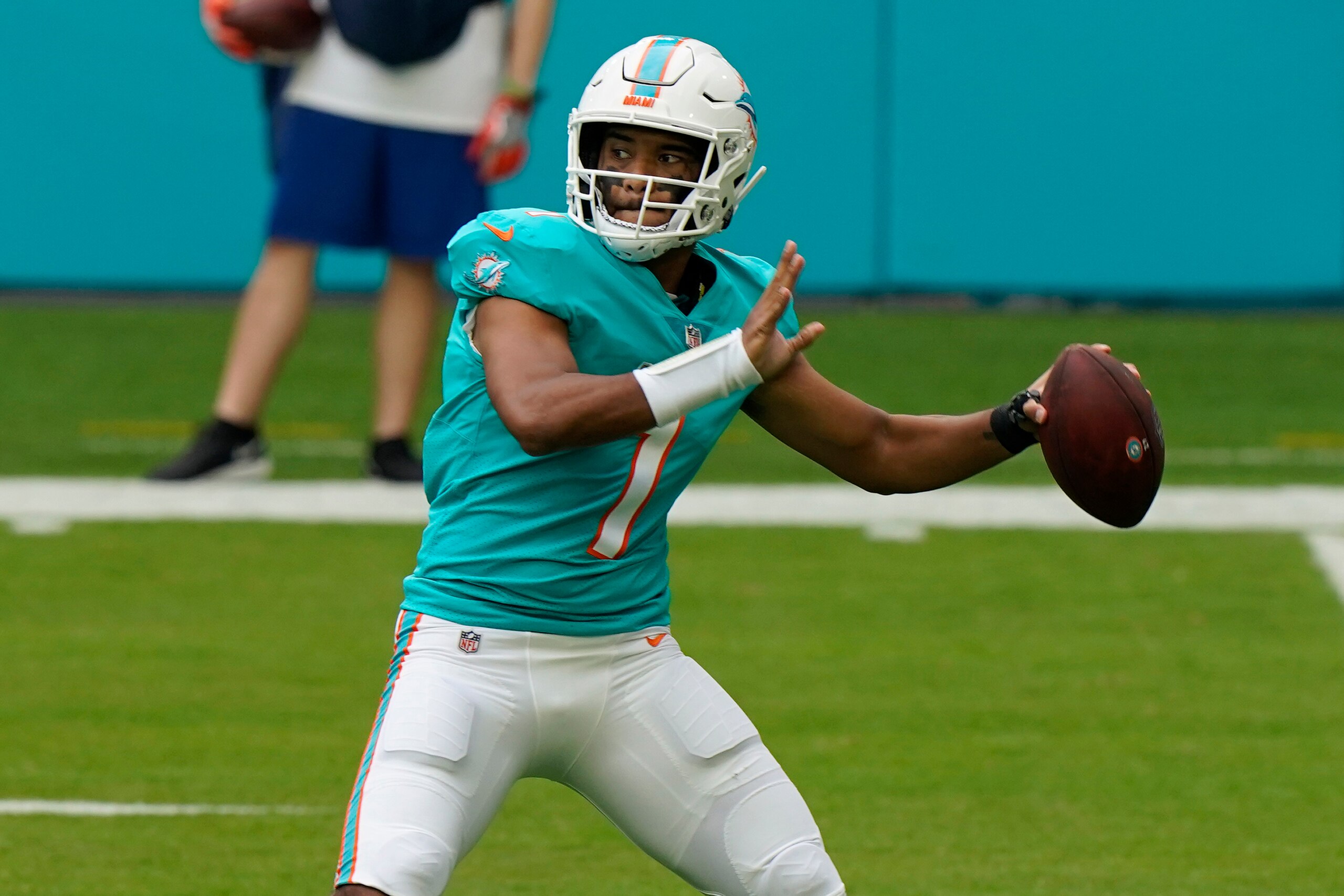
Miami Dolphins rookie quarterback Tua Tagovailoa hasn't been quite as impressive as Joe Burrow or Justin Herbert, but he has given plenty of reasons to believe he can be the team's long-term solution at quarterback.
While the former Alabama star has been up-and-down as a rookie, he's had a couple of stellar games, like his 296-yard, one-touchdown performance in Week 13. In six appearances, Tagovailoa has thrown for 898 yards with seven touchdowns, zero interceptions and a passer rating of 99.4.
More importantly, Tagovailoa is 4-1 as a starter and has helped the Dolphins achieve an 8-4 record. He's played well enough that when healthy, he's recently gotten the start over journeyman Ryan Fitzpatrick, even with the playoffs a distinct possibility.
There's still plenty of football to be played this season, and Tagovailoa does have room for improvement. He looks like he can be a future star in this league, though, and that's something the Dolphins faithful haven't seen at quarterback in some time.
If Tagovailoa proves to be a franchise quarterback, the decision to pick him at No. 5 will be the best one Miami has made in the past 20 years or more.
Minnesota Vikings: Drafting Justin Jefferson
21 of 32
If anyone is going to beat out Justin Herbert for Offensive Rookie of the Year, it's probably going to be Minnesota Vikings wideout Justin Jefferson. The former LSU star has made Vikings fans forget all about Stefon Diggs—both with his on-field prowess and his businesslike approach.
"I just come out here and get the job done," Jefferson said, per Dane Mizutani of the Pioneer Press.
Jefferson has already passed the coveted 1,000-yard mark with four games to go. He's sitting at 1,039 yards and seven touchdowns on 61 receptions. He has a good shot at surprising the 1,313 yards Randy Moss had as a rookie back in 1998, though Moss' 17 touchdowns are almost assuredly out of reach.
The Vikings didn't have to draft a wide receiver in April—they could have simply kept Diggs—and they didn't have to take Jefferson. Brandon Aiyuk, Tee Higgins, Michael Pittman Jr. and Chase Claypool were on the board.
The Vikings did take a chance on him, though, and it's a move they're going to feel good about for the foreseeable future.
New England Patriots: Signing Cam Newton
22 of 32
Has Cam Newton been a perfect quarterback for the New England Patriots? No. He's been bafflingly inconsistent at times as a passer and has now had three different games with under 100 passing yards. Is he the future at the position? Again, probably not.
However, Newton has been solid more often than not and has helped keep New England competitive. The Patriots sit at 6-6 and still have an outside shot at the postseason. While Newton hasn't always been the cause of the victories, he's done enough to put New England in position to win.
In 11 games, Newton has thrown for 2,053 yards with five touchdowns and nine interceptions. Those aren't great numbers, but he has supplemented them with 435 rushing yards and 11 more scores.
Replacing Tom Brady under center was always going to be a massive challenge for the Patriots. So was competing in 2020 without opt-out players like Dont'a Hightower, Patrick Chung and Marcus Cannon. Signing Newton to a one-year "prove-it" deal was a gamble, but it's paying off as New England continues to navigate the most difficult season of its recent history.
New Orleans Saints: Extending Taysom Hill
23 of 32
When the New Orleans Saints inked backup quarterback Taysom Hill to a two-year, $21 million extension in the offseason, it was a move that seemed to be about the future—a future without Drew Brees.
However, Brees has been sidelined with multiple rib fractures over the past three weeks, and New Orleans has had to rely on Hill for the present. While the passing numbers haven't always been pretty, he has delivered three wins in his three starts and has the Saints barreling down on the NFC's No. 1 seed.
Hill had his best game as a passer in Week 13, finishing 27-of-37 for 232 yards and two touchdowns. He also carried the ball 14 times for a season-high 83 rushing yards. If those are the sorts of numbers the Saints can regularly expect, then perhaps he is indeed their quarterback of the future.
For now, the future can wait.
New Orleans sits at 10-2 and is headed to the playoffs despite losing Brees for an extended period. Fortunately for the Saints, they prepared for just such a scenario in the offseason by extending Hill and bringing in Jameis Winston.
New York Giants: Hiring Joe Judge
24 of 32
The New York Giants got off to a disastrous start to the 2020 season and didn't notch a win until Oct. 18. However, rookie head coach Joe Judge kept a calm and focused demeanor through the early turbulence.
"I'm not a rainbows-and-sunshine type of guy," Judge said in October, per Jordan Raanan of ESPN. "I'm also not a brow-beat-you-and-rub-your-nose-in-it guy, either. It's 'this is what it is.' Understand what we're doing good that we can build on. Understand what we have to do that we have to correct and clean up.'"
With Judge guiding them, the Giants stayed collected and continued to fight hard. Then the results started to show. New York has won its last four games, and after a tremendous upset victory over the Seattle Seahawks on Sunday, it's looking every bit like a playoff team.
The Giants have played the vast majority of the season without star running back Saquon Barkley. They played Sunday's game without quarterback Daniel Jones. The one consistent has been Judge, who has his defense playing at a top-10 level and who continues finding ways to remain competitive.
Judge should be considered a viable candidate for NFL Coach of the Year, especially if he guides New York to the postseason. The jury is still out on Jones as a franchise quarterback, but there should be no doubt the Giants have found the right head coach.
New York Jets: Drafting Mekhi Becton
25 of 32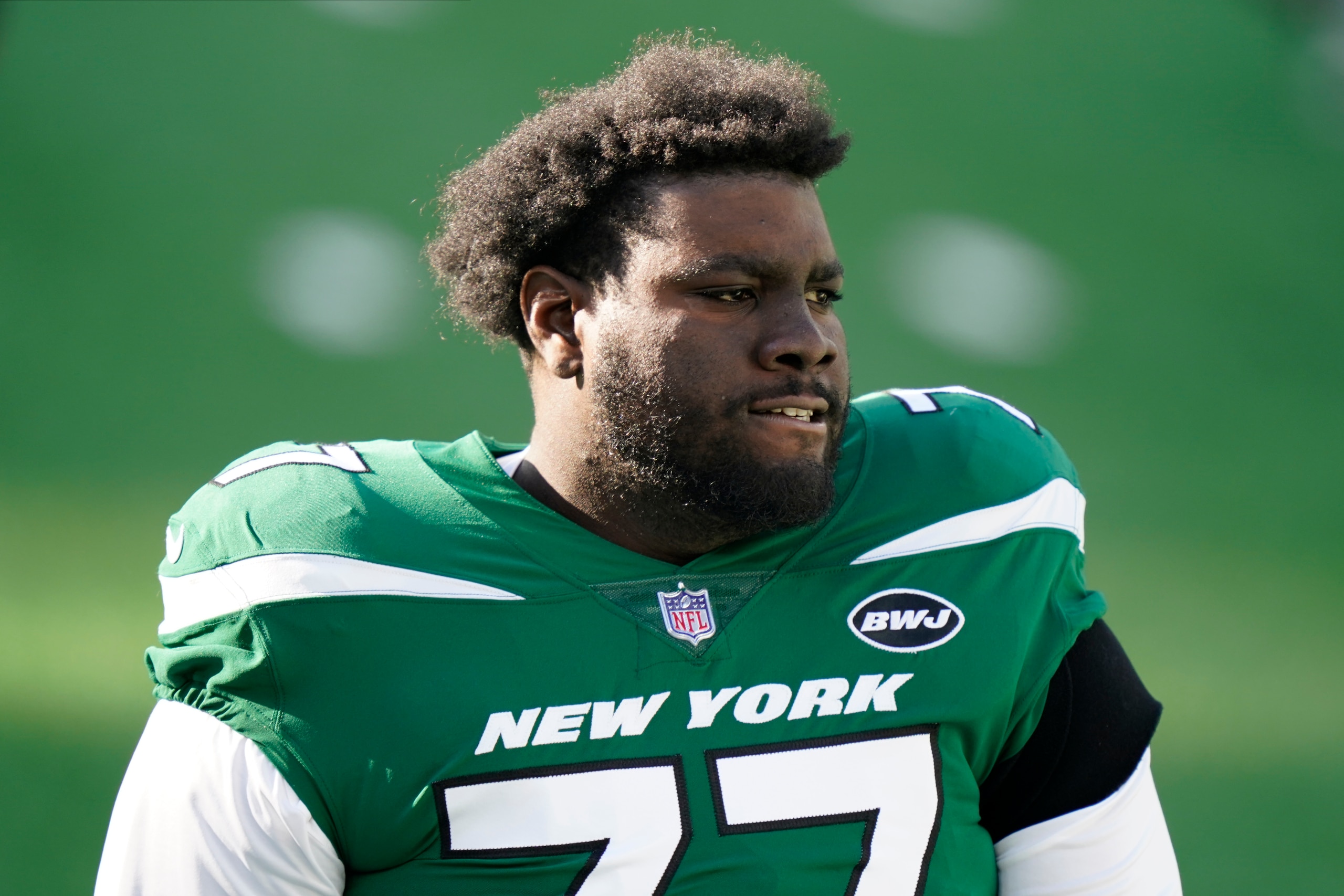
It's been a rough season for the New York Jets, to say the least. They're sitting at 0-12 and found a new way to lose in Week 13 after giving up the go-ahead touchdown with less than 20 seconds remaining. (Defensive coordinator Gregg Williams got fired for that one.)
In fact, it's been a rough few years for the Jets, who have repeatedly failed to make the right decisions in the offseason. This past April, though, New York appeared to make the right call by using the 11th pick in the draft on Louisville offensive tackle Mekhi Becton.
Injuries have limited Becton to 10 games. But when he's been on the field, the rookie has been solid, if unspectacular. While he has been responsible for four penalties and five sacks, per Pro Football Focus, he's been a mauler in the ground game and hasn't appeared overwhelmed in pass protection.
Becton has a bright future ahead of him and should anchor the Jets' line for years to come. Whichever quarterback they select at the top of the 2021 draft will be grateful this franchise finally nailed an early selection.
Philadelphia Eagles: Drafting Jalen Hurts
26 of 32
Unfortunately, the selection of quarterback Jalen Hurts in Round 2 is looking like a brilliant move for all the wrong reasons. When the Philadelphia Eagles first took the Oklahoma product, he was expected to be a backup with some gadget-player potential. He's only seen sporadic opportunities in the latter role, but there's a chance he'll be a future starting option.
Carson Wentz has been that bad in 2020.
Wentz has passed for 2,620 yards with 16 touchdowns and a league-leading 15 interceptions. He has repeatedly made bad decisions, been uncomfortable under pressure and fumbled away the ball six times. He was finally benched in favor of Hurts during Sunday's loss to the Green Bay Packers.
While Hurts wasn't spectacular in relief duty against Green Bay, he did provide the offense with a spark. He rushed for 29 yards, threw for 109 yards and had a touchdown with one interception.
Head coach Doug Pederson hasn't committed to either Wentz or Hurts as the Week 14 starter, but given the team's 3-8-1 record behind the veteran, it certainly feels like the rookie deserves a shot.
Drafting Hurts was always a smart move because of Wentz's lengthy injury history. Now, it's a smart move because even when healthy, Wentz hasn't played like the Eagles' franchise quarterback.
Pittsburgh Steelers: Drafting Chase Claypool
27 of 32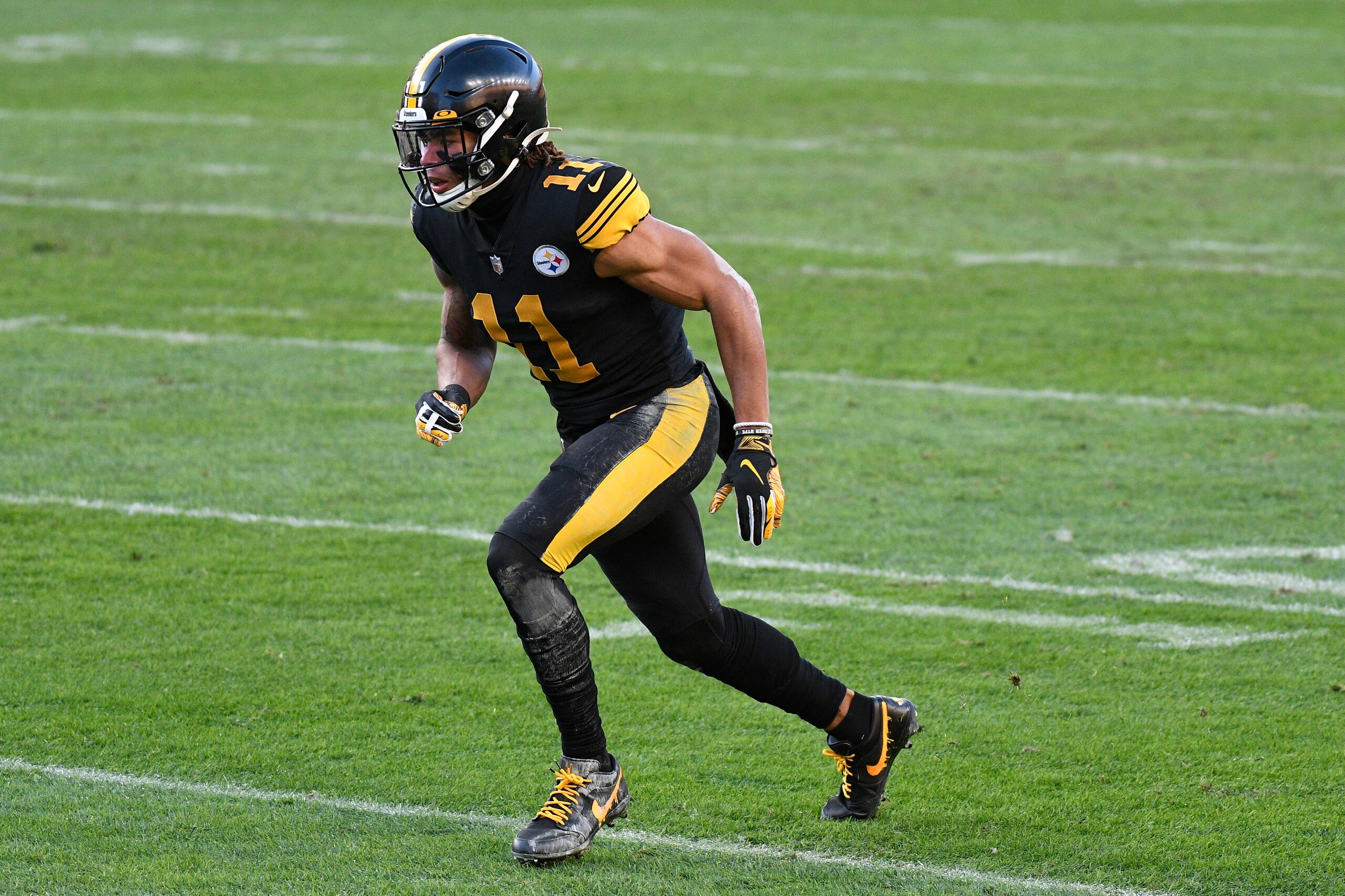
The biggest development of the Pittsburgh Steelers' offseason was the return of a healthy Ben Roethlisberger at quarterback. He has helped steady the offense and has played a big role in Pittsburgh's 11-1 start to the season.
The decision to franchise-tag pass-rusher Bud Dupree, who is now out for the season, was huge. So was drafting former Notre Dame pass-catcher Chase Claypool.
We're going to give the edge to Claypool in this one.
Pittsburgh's defense is still going to be formidable without Dupree, while Claypool has helped add a much-needed explosive element to the offense. We saw last season that an elite defense alone wasn't enough to get the Steelers to the postseason. They needed more big plays offensively, and Claypool is helping to provide that.
Through Week 13, he has 649 receiving yards, 22 rushing yards and 10 total touchdowns. He has helped keep the offense and the Steelers rolling even without the benefit of a strong and consistent running game.
Pittsburgh is going to need explosive offensive plays if it hopes to make it past teams like the Kansas City Chiefs and Buffalo Bills in the postseason. It's going to need a weapon like Claypool.
Thanks to the decision to draft him in Round 2, the Steelers have one.
San Francisco 49ers: Drafting Brandon Aiyuk
28 of 32
Injuries have decimated the San Francisco 49ers offense in 2020 as players like Jimmy Garoppolo, George Kittle and Raheem Mostert have all missed time. Fortunately, an April decision to use a first-round pick on former Arizona State receiver Brandon Aiyuk has helped them stay competitive on that side of the ball.
In nine games, Aiyuk has caught 40 passes for 541 yards and four touchdowns. He has also carried the ball five times for 61 yards and another two scores.
What's really impressive is the way he has come on as of late. In the three games heading into Week 13's Monday Night Football appearance, Aiyuk had 21 receptions on 31 targets for 281 yards and two touchdowns. He added another five catches for 95 yards and a touchdown Monday.
The 49ers probably aren't getting back to the Super Bowl without a healthier roster this season, but they'll have the foundation of a championship squad heading into 2021. They'll also have three dangerous receivers to build around in Aiyuk, Kittle and Deebo Samuel.
If San Francisco can sprinkle a few pieces around them, it could have one of the most prolific offenses in the NFC next season.
Seattle Seahawks: Drafting Jordyn Brooks
29 of 32
The Seattle Seahawks' two biggest moves have come after the start of the regular season. They traded for safety Jamal Adams and pass-rusher Carlos Dunlap during the year, and both have made a significant impact.
However, rookie first-round pick Jordyn Brooks is also beginning to have an impact on Seattle's defense. He had a slow start to the season—in part due to a knee injury—but has taken on a large role in recent weeks.
Brooks has played at least 45 percent of the defensive snaps in four of his last seven games and has produced multiple tackles in each of them. He even had an impressive 11 tackles in Week 13. He's also been solid in pass coverage. While he has allowed 11 completions on 15 targets, he's given up just 98 yards and no touchdowns.
Seattle's defense was historically bad at the start of 2020, but it has begun to round into form over the last month or so. The presence of Brooks has played a role in that, and he's proving to be one of the best pickups the Seahawks made during the spring.
Tampa Bay Buccaneers: Signing Tom Brady
30 of 32
When the Tampa Bay Buccaneers signed quarterback Tom Brady to a two-year contract in the offseason, it was supposed to be the move that put them over the top as a potential title contender. They haven't played like a Super Bowl team in recent weeks, but they've been far more consistent with Brady under center than they were last year with Jameis Winston at quarterback.
Has Brady been perfect? Far from it. He's thrown multiple interceptions in four different games and has a good-not-great passer rating of 95.1. However, he has also thrown for 3,300 yards with 28 touchdowns and 11 interceptions.
Most importantly, Brady has helped Tampa get to 7-5 and position itself to claim an NFC wild-card berth.
Expecting perfection from Brady in his first season with a new team and in a new system was always a fool's errand. Mistakes were going to come, and they have. However, this doesn't mean Brady won't be his usual dangerous self in the postseason, and the playoffs are a very real possibility this year.
The Buccaneers haven't been to the postseason since 2007. They're poised to make an appearance there this year thanks to the addition of TB12.
Tennessee Titans: Extending Ryan Tannehill
31 of 32
During the offseason, the Tennessee Titans granted extensions to both quarterback Ryan Tannehill and running back Derrick Henry. An argument could be made about which player is more vital to the franchise's success.
While the offense continues to revolve around Henry and the ground game most weeks, Tannehill plays the game's most important position, and he's doing so at a high level. Through 12 games, he has thrown for 2,997 yards with 26 touchdowns, five interceptions and a passer rating of 106.5.
Looking past raw statistics—and it's worth noting Henry leads the NFL with 1,317 rushing yards—one must consider that Tannehill can have an impact in every game. During games in which the Titans are playing from behind—as they were against the Cleveland Browns in Week 13—Henry is far less of a factor.
Tannehill nearly completed an epic comeback against Cleveland, throwing for 389 yards and three scores while turning a 39-7 deficit into a close 41-35 loss. If the Titans are down big in the postseason, it'll be Tannehill, not Henry, who will be asked to shoulder the load.
Most importantly, Tannehill has blossomed into a legitimate franchise quarterback. It's something for which every team hungers and something that, as good as Henry is, a running back can never be.
Washington Football Team: Drafting Chase Young
32 of 32
One could argue that picking Ohio State pass-rusher Chase Young second overall was a common-sense choice for the Washington Football Team. One could also argue that Washington should have passed on Young to take a new franchise quarterback in Justin Herbert. That's certainly valid given Herbert's success and Washington's benching of Dwayne Haskins Jr.
Still, the decision to take Young and build a strong defense around the front is paying off. The Football Team has a shot at winning the NFC East, largely because of a defense that came into Week 13 ranked second against the pass, fourth overall and ninth in points allowed. The front seven held Pittsburgh to 21 rushing yards Monday night and helped knock off the previously undefeated Steelers.
Young has been a huge part of that defense. In 11 games, he has 4.5 sacks, 10 quarterback pressures and 29 tackles, and he has been a nightmare for opposing offensive coordinators.
"I'll tell you what, it's been amazing to watch," Washington head coach Ron Rivers said, per The Athletic's Rhiannon Walker.
The Football Team has itself a franchise pass-rusher thanks to the decision to scoop up Young with the No. 2 pick this April.
Contract information via Spotrac. Advanced statistics from Pro Football Reference unless otherwise noted.
.jpg?w=2560 "Lions Cardinals Football")

.jpg?w=2560 "Cam Ward Says He's Not A Loser")