

NFL Rookies Struggling to Meet High Expectations
Success is far from a guarantee for notable NFL rookies right out of the gate, a notion that seemed to ring even truer for the 2020 season after a preseason-less summer.
Granted, Cincinnati Bengals quarterback Joe Burrow or Los Angeles Chargers quarterback Justin Herbert might have a hard time believing that.
But for a handful of promising top-50 prospects, the results haven't been as rosy by comparison. Whether it's a defender consistently struggling to match NFL speed or offensive players not producing in opportunistic spots, some slow starters stick out more than others.
Here are the most notable NFL rookies struggling to meet expectations to start 2020—not yet busts by any means, but the bar may be a tad too high.
Jeff Okudah, CB, Detroit Lions
1 of 6
On one hand, the pro transition for cornerbacks is one of the more difficult of any position merely because of the sudden uptick in size and speed of NFL pass-catchers compared to the collegiate game.
On the other, the Detroit Lions probably expected more from third overall pick Jeff Okudah early.
Per Pro Football Focus, Okudah received a stunningly poor 29.3 grade through three games (which could partially explain the slow start, too). He's allowed 15 completions on 20 targets (75 percent), good for 225 yards, and picked off a single pass.
Context matters, of course. The Lions are asking a lot from the rookie after offloading Darius Slay and head coach Matt Patricia, a defensive guru, ran his record to 10-25-1 after a 1-3 start.
There is still plenty of time for Okudah to emerge just fine from a chaotic environment. But while there have been some flashes, the full body of work so far has underwhelmed.
Isaiah Simmons, LB, Arizona Cardinals
2 of 6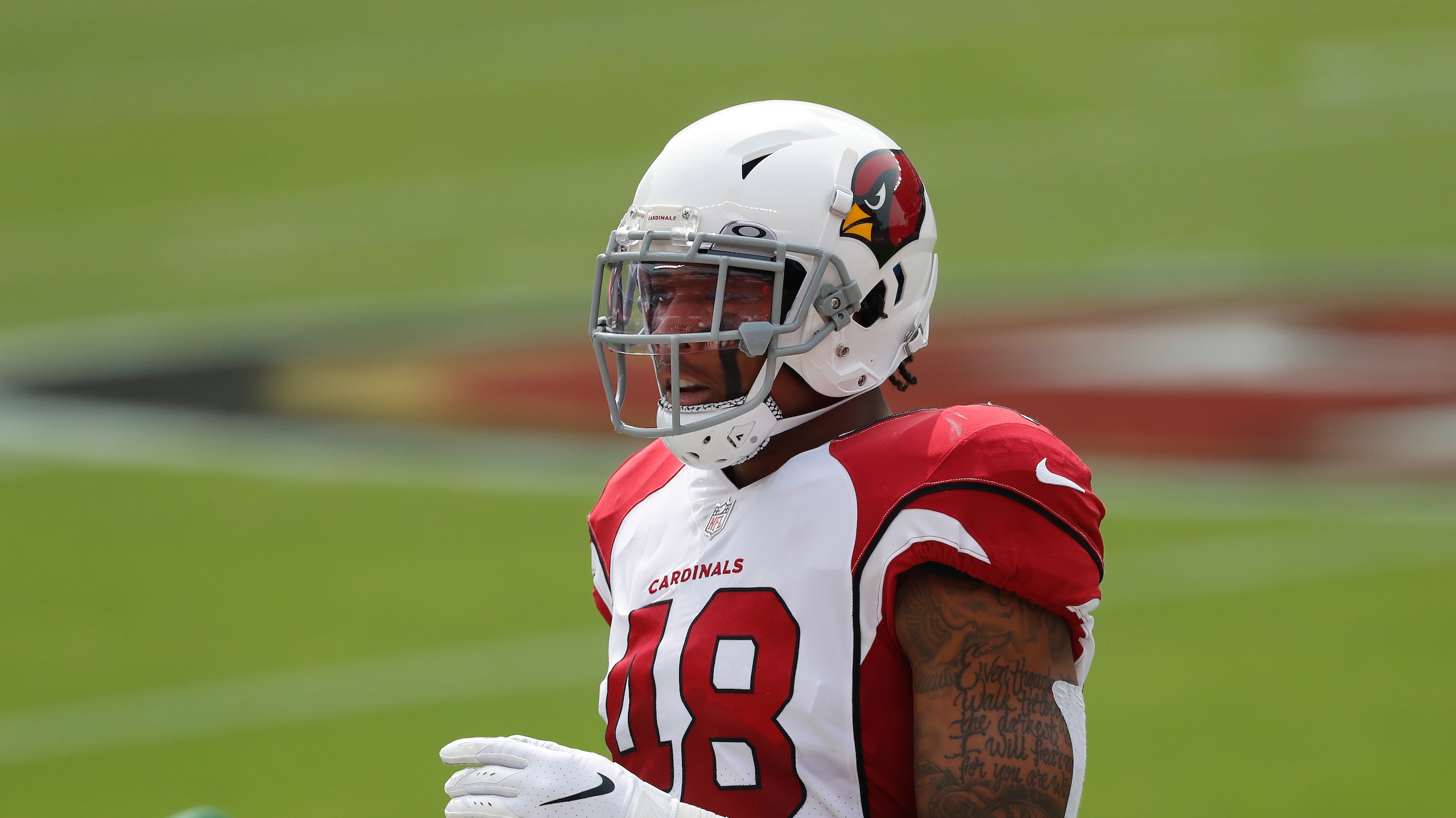
The Arizona Cardinals were already under the microscope for helping to author the draft-bust story of Haason Reddick.
Arizona seemingly took another stab at it in this year's draft with Isaiah Simmons at No. 8 overall.
And through five games, Simmons has made just seven total tackles and earned a PFF grade of 38.2. He's had a smaller role, playing 17 percent of the defense's snaps so far and 23 percent of snaps on special teams. In coverage, he's allowed completions on each of his three targets, including one touchdown.
It's already concerning that the Cardinals don't want to utilize one of the draft's most versatile defensive weapons more, never mind simply getting a top-10 prospect valuable in-game experience. This is especially the case since Simmons didn't get a notable bump in playing time while injuries hurt the roster in key areas, such as at safety when Budda Baker missed time and Jalen Thompson went to injured reserve.
The lack of a preseason was going to hurt some rookies more than others, and the coaching staff likely deserves some blame here, too, but Simmons hasn't been the impact defender his resume would suggest.
D'Andre Swift, RB, Detroit Lions
3 of 6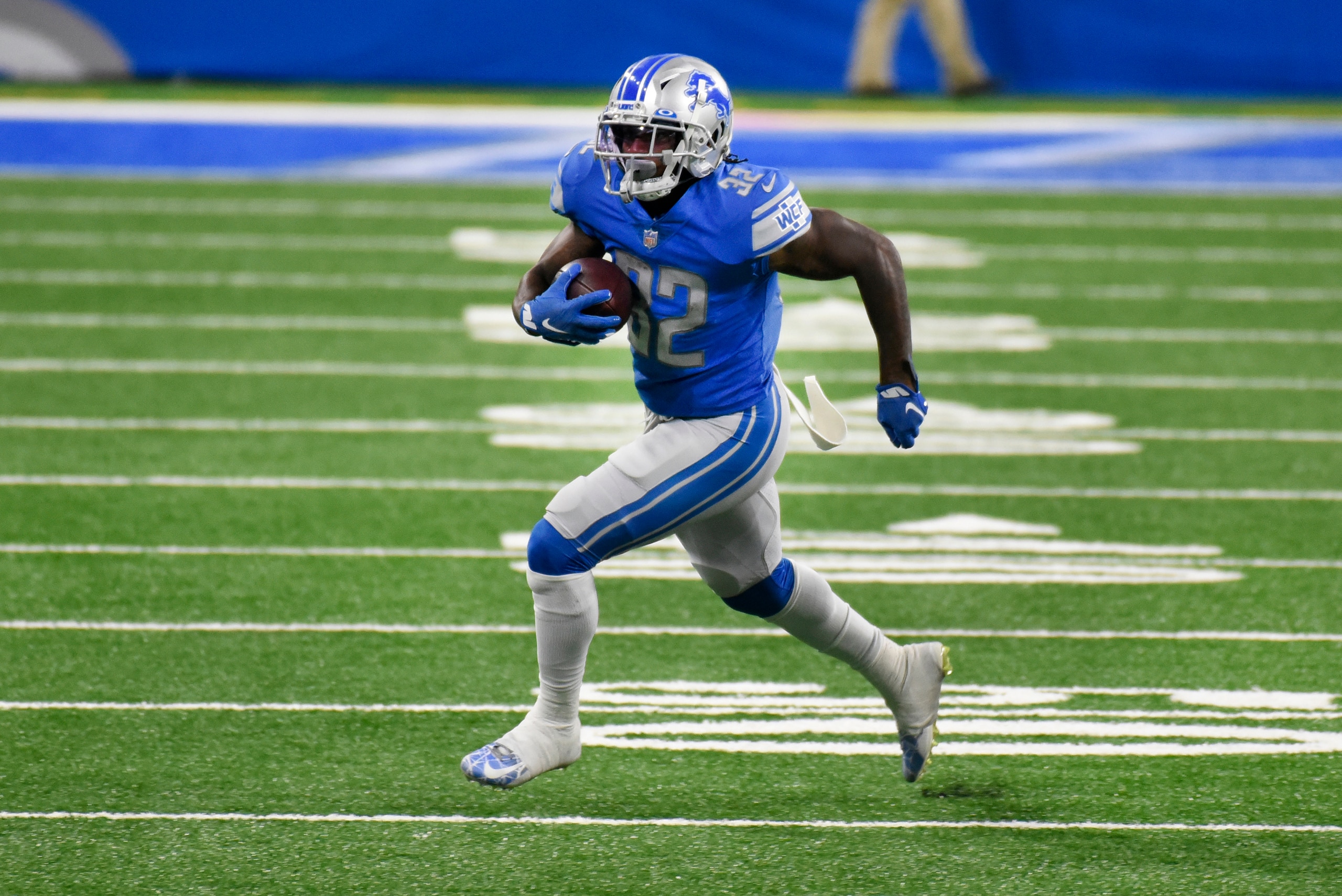
D'Andre Swift seemed like a shoo-in to be one of the most productive rookie running backs, if not potentially one of the most productive running backs outright.
Running back, after all, has long been perceived as the missing piece in the Matthew Stafford-led Detroit Lions offense. After flashing big three-down upside in college and going 35th overall, Swift seemed destined for big things given the fit.
Instead, Swift had just 12 carries over the first four games of his career, totaling 42 yards and a touchdown on 3.5 yards per carry. And while he did catch 13 passes and score through the air as well, he's merely fourth on the team in rushing—behind even Stafford. Instead of being a workhorse, he's been shoved aside by the late arrival of 35-year-old Adrian Peterson, who has 54 carries for the 1-3 team.
The jury still very much remains out on Swift, but it's jarring the Lions haven't used him more after spending a high second-round pick on what has blatantly been an area of need for years. Maybe he'll break out in the coming weeks and months, but he's wildly underperformed compared to fellow draftees like the Indianapolis Colts' Jonathan Taylor.
.jpg?w=2560 "Packers 49ers Football")
.jpg?w=2560 "Lions Cardinals Football")
Kenneth Murray Jr., LB, Los Angeles Chargers
4 of 6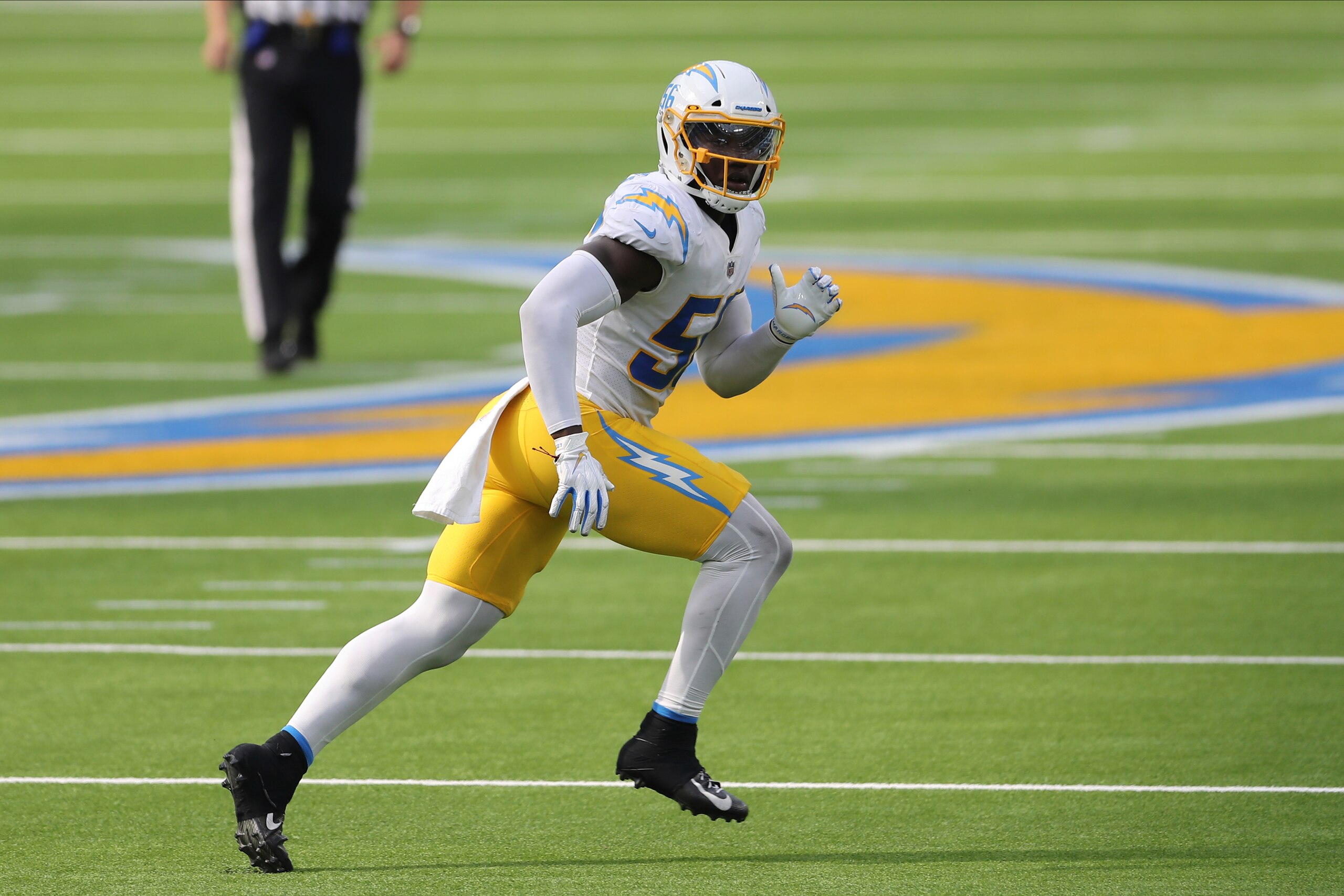
Kenneth Murray Jr. out of Oklahoma was one of the draft's most electric linebackers, hence why the Los Angeles Chargers grabbed him with the 23rd pick.
But the elite athleticism and playmaking ability just hasn't materialized consistently, which would at least partially explain the 46.8 PFF grade. He's played no fewer than 83 percent of defensive snaps in each of his five games so far, tallying 38 total tackles but yielding 17 completions on 22 targets (77.3 percent) for 192 yards and two touchdowns while missing 9.5 percent of his tackles.
With a prospect as talented as Murray, these lapses are likely nothing more than minor growing pains. But opposing offenses have already zeroed in on him in the passing game, and for every splash tackle, it seems like there is a costly mistake.
For now, Murray hasn't met the hype of a borderline top-20 pick with the benefit of playing behind a line that boasts names like Joey Bosa.
Cole Kmet, TE, Chicago Bears
5 of 6
The Chicago Bears used a top-50 pick on Notre Dame tight end Cole Kmet with the expectation that an offensive guru like Matt Nagy would put the 6'6" weapon to work right away to help mask their iffy quarterback play.
Through five games, quarterbacks have looked Kmet's way three times and he's caught one ball.
Kmet, who graded out at a 57.0 at PFF, hasn't played more than 34 percent of offensive snaps in a game, and 10 players on the offense have more targets than him.
Some of this has to do with a small resurgence for the 33-year-old Jimmy Graham, owner of 17 catches and four touchdowns. But this might (somewhat unfairly) have Bears fans already thinking about Adam Shaheen, a second-round bust the Bears drafted in 2017 and traded to Miami for a conditional seventh-round pick before this season. It's also worth noting Chase Claypool, Kmet's college teammate taken just six picks later by Pittsburgh, is already up to 13 catches and five total touchdowns over just four games.
Andrew Thomas, LT, New York Giants
6 of 6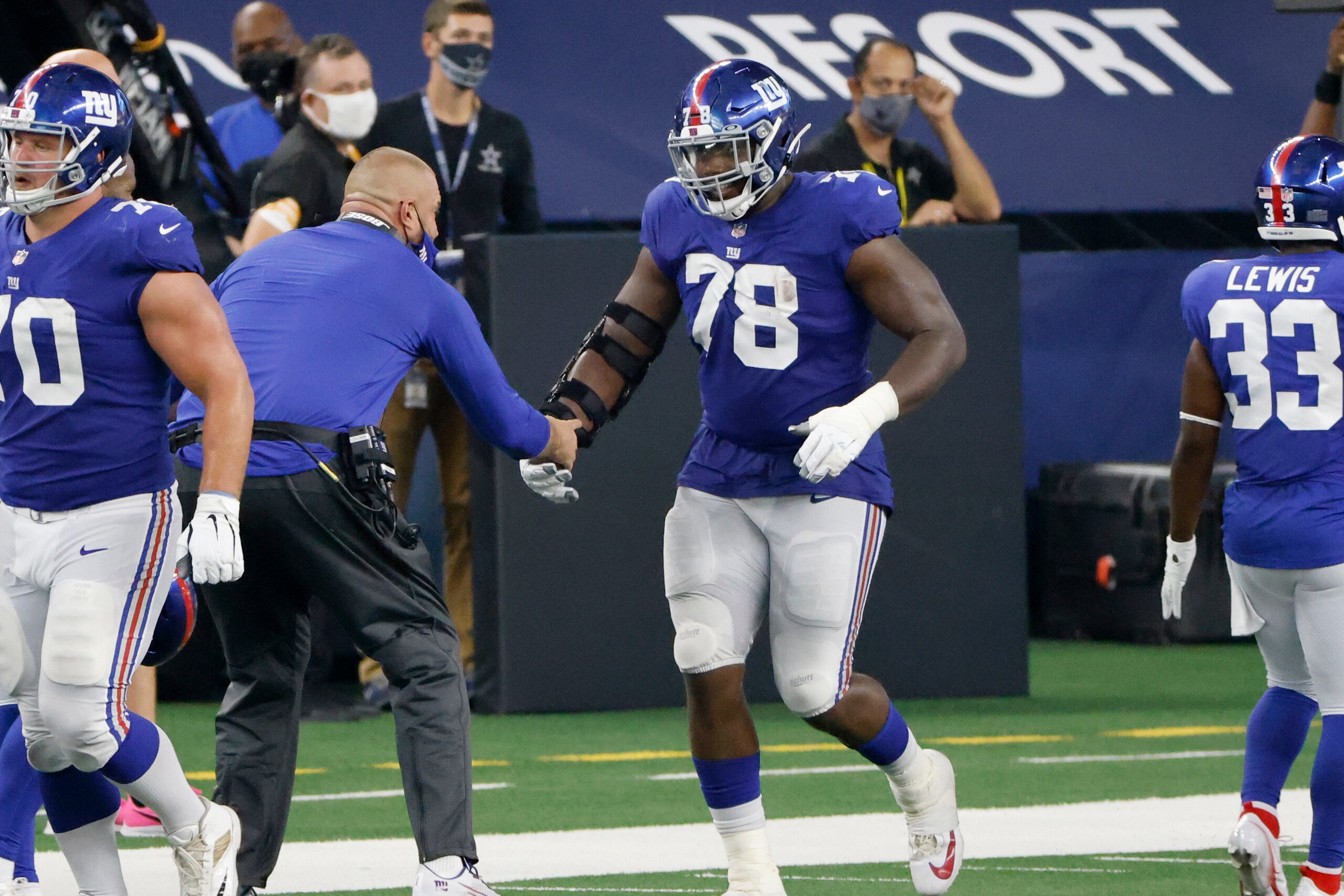
The New York Giants made offensive tackle Andrew Thomas the fourth overall pick with the intention of righting a major wrong in front of quarterback Daniel Jones.
While Thomas made a funny highlight in Week 5 by catching a two-point conversion against the Dallas Cowboys, it shouldn't mislead onlookers into thinking he's been excelling in all areas.
In fact, Thomas has very much looked the part of a rookie on the edge, struggling to a 57.0 PFF grade with four sacks permitted.
PFF's Michael Renner added the following about Thomas' performance in Dallas: "He allowed an egregious nine pressures in what was likely his worst outing of the season. The signs of improvement you'd hope to see from a youngster as the season goes on weren't there in this one."
Thomas was thrown to the wolves by an organization that has made repeated mistakes at left tackle, including paying big money for previous starter Nate Solder, who opted out of this season. It probably wasn't the plan to have him occupy the left side so soon, and he'll have a chance to work through this rough patch as a result, but the early returns have been problematic for an 0-5 team and a quarterback with ball security issues.
.jpg?w=2560 "Steelers Browns Football")
.jpg?w=2560 "Texans Titans Football")
.jpg?w=2560 "Buzz: MHJ Hired Agents for Trade")
.jpg?w=2560 "Chargers Fall to 0-5 🤢")
