Fantasy Football 2020 Cheat Sheet: Mobile Rankings for Last-Minute Drafters
Guess what, football fan! The start of the 2020 NFL regular season is just days away. On Thursday, the Kansas City Chiefs and Houston Texans are going to kick things off—which, of course, means that fantasy football will be back as well.
Those of you scrambling to prepare for a last-minute fantasy draft might be looking for a little help. Well, we're here to provide a quick-reference cheat sheet for each fantasy-relevant position.
Here, you'll find points-per-reception (PPR) rankings for each position, along with a quick look at some guidelines for drafting in various formats.
TOP NEWS
NFL Season Shaping Up To Be Unpredictable 🗣️
.jpg?w=2560 "Lions Cardinals Football")
Viral Dan Campbell Presser 💙
.jpg?w=2560 "Packers 49ers Football")
AD Trolls Bears WR on IG 😂
Quarterbacks
1. Patrick Mahomes, Kansas City Chiefs
2. Lamar Jackson, Baltimore Ravens
3. Russell Wilson, Seattle Seahawks
4. Dak Prescott, Dallas Cowboys
5. Kyler Murray, Arizona Cardinals
6. Deshaun Watson, Houston Texans
7. Matt Ryan, Atlanta Falcons
8. Josh Allen, Buffalo Bills
9. Drew Brees, New Orleans Saints
10. Tom Brady, Tampa Bay Buccaneers
11. Carson Wentz, Philadelphia Eagles
12. Matthew Stafford, Detroit Lions
13. Aaron Rodgers, Green Bay Packers
14. Ben Roethlisberger, Pittsburgh Steelers
15. Baker Mayfield, Cleveland Browns
16. Daniel Jones, New York Giants
17. Jared Goff, Los Angeles Rams
18. Cam Newton, New England Patriots
19. Ryan Tannehill, Tennessee Titans
20. Joe Burrow, Cincinnati Bengals
Kansas City Chiefs quarterback Patrick Mahomes and Baltimore Ravens signal-caller Lamar Jackson should be the top two options in fantasy this season. Which one you should value first depends on the scoring format for your league.
It's fair to value Jackson above Mahomes if your league puts a heavy emphasis on quarterback rushing. However, you're not likely to go wrong with either quarterback, regardless of format.
For those drafting for dynasty leagues, it's smart to downgrade quarterbacks Tom Brady and Drew Brees. while an older player like Russell Wilson (31) or Matt Ryan (35) should still provide a sizable fantasy-championship window, Brees and Brady are in their 40s and likely looking at their last season or two of playing in the NFL.
Feel free to bump up the value of rookies like Joe Burrow in dynasty, but don't overvalue an unproven player. Wilson could have another 10 years of playing prime in the tank. Burrow might have 15-plus years left, but he could also be a bust.
Running Backs
1. Christian McCaffrey, Carolina Panthers
2. Saquon Barkley, New York Giants
3. Alvin Kamara, New Orleans Saints
4. Ezekiel Elliott, Dallas Cowboys
5. Dalvin Cook, Minnesota Vikings
6. Derrick Henry, Tennessee Titans
7. Nick Chubb, Cleveland Browns
8. Joe Mixon, Cincinnati Bengals
9. Clyde Edwards-Helaire, Kansas City Chiefs
10. Josh Jacobs, Las Vegas Raiders
11. Miles Sanders, Philadelphia Eagles
12. Aaron Jones, Green Bay Packers
13. Austin Ekeler, Los Angeles Chargers
14. Kenyan Drake, Arizona Cardinals
15. Todd Gurley, Atlanta Falcons
16. Chris Carson, Seattle Seahawks
17. James Conner, Pittsburgh Steelers
18. David Johnson, Houston Texans
19. Melvin Gordon III, Denver Broncos
20. Mark Ingram II, Baltimore Ravens
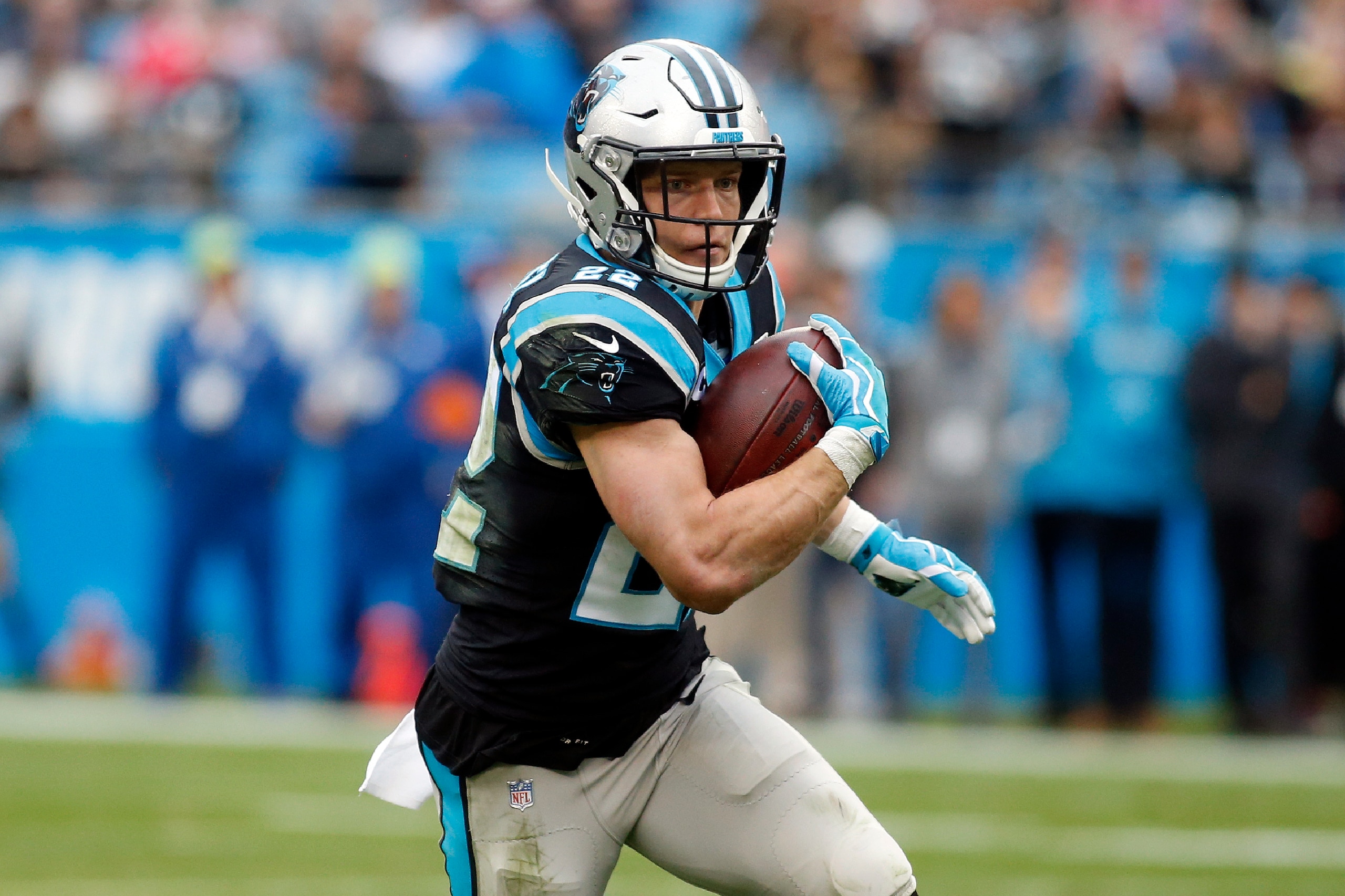
Running backs are still kings in fantasy, though not all backs are created equal. In PPR formats, dual-threat backs like Christian McCaffrey and Saquon Barkley belong at the top of the pick order. Run-heavy backs are still valuable, though not as much as they are in standard-scoring formats.
Derrick Henry, for example, led the NFL with 1,540 rushing yards in 2019 to go with 16 rushing touchdowns. However, he also had just 18 receptions for 206 yards and two more scores.
Henry's 1,746 and 18 touchdowns make him an obvious target for Round 1. However, he is very carry-dependent and doesn't have quite the same PPR floor of a player like Alvin Kamara—who has caught 81 passes in each of his three pro seasons.
If you're drafting for a PPR league, try to prioritize running backs who average at least 3-4 receptions per game. This adds a big boost to their weekly fantasy floor and limits the risk of them busting for a big matchup.
Wide Receivers
1. Michael Thomas, New Orleans Saints
2. Davante Adams, Green Bay Packers
3. Julio Jones, Atlanta Falcons
4. Tyreek Hill, Kansas City Chiefs
5. Chris Godwin, Tampa Bay Buccaneers
6. Kenny Golladay, Detroit Lions
7. DeAndre Hopkins, Arizona Cardinals
8. Mike Evans, Tampa Bay Buccaneers
9. A.J. Brown, Tennessee Titans
10. DK Metcalf, Seattle Seahawks
11. Adam Thielen, Minnesota Vikings
12. Odell Beckham Jr., Cleveland Browns
13. D.J. Moore, Carolina Panthers
14. Allen Robinson, Chicago Bears
15. Calvin Ridley, Atlanta Falcons
16. JuJu Smith-Schuster, Pittsburgh Steelers
17. Robert Woods, Los Angeles Rams
18. DeVante Parker, Miami Dolphins
19. Amari Cooper, Dallas Cowboys
20. Terry McLaurin, Washington Football Team
21. Tyler Lockett, Seattle Seahawks
22. DJ Chark Jr., Jacksonville Jaguars
23. Jarvis Landry, Cleveland Browns
24. Keenan Allen, Los Angeles Chargers
25. Courtland Sutton, Denver Broncos
26. Cooper Kupp, Los Angeles Rams
27. Stefon Diggs, Buffalo Bills
28. T.Y. Hilton, Indianapolis Colts
29. Michael Gallup, Dallas Cowboys
30 .A.J. Green, Cincinnati Bengals
Wide receiver is the deepest position in fantasy football because No. 2 receivers on good teams regularly top the 1,000-yard mark. While backup running backs are rarely worth drafting early, complementary receivers can and will provide starting-caliber fantasy value.
Therefore, there are only a handful of wideouts who should be targeted before to-tier running backs in Round 1. They are the target-dominant focal points of their respective offenses—most notably, Michael Thomas, Davante Adams and Julio Jones.
DeAndre Hopkins has traditionally been a target-dominant receiver and a safe pick in Round 1. However, he's with a new team this year, and there's no telling exactly what role he'll play or how he'll respond statistically.
We've seen fantasy studs become relative flops in new environments before, as Odell Beckham Jr. did with the Cleveland Browns last season.
Tight Ends
1. Travis Kelce, Kansas City Chiefs
2. George Kittle, San Francisco 49ers
3. Mark Andrews, Baltimore Ravens
4. Darren Waller, Las Vegas Raiders
5. Zach Ertz, Philadelphia Eagles
6. Hunter Henry, Los Angeles Chargers
7. Hayden Hurst, Atlanta Falcons
8. Jared Cook, New Orleans Saints
9. Austin Hooper, Cleveland Browns
10. Evan Engram, New York Giants
11. Tyler Higbee, Los Angeles Rams
12. O.J. Howard, Tampa Bay Buccaneers
13. Noah Fant, Denver Broncos
14. Jack Doyle, Indianapolis Colts
15. T.J. Hockenson, Detroit Lions

When it comes to tight ends, the trick is not to overvalue the second and third tiers. Travis Kelce and George Kittle can be valued like No. 1 wide receivers. However, the next tier—consisting of Mark Andrews, Darren Waller and Zach Ertz—is a sizable step below.
Don't draft a tight end from tier two before the back half of Round 3, and don't draft any other tight end until all of your receiver and running back slots have been filled. Once you get past the second tier, most of your mid-level tight ends are going to hold similar value. There's no real reason to be the first manager dipping into tier three.
Don't even draft a second tight end as a flex starter. You should be looking with a player with a higher floor than a TE2.
Defense/Special Teams
1. San Francisco 49ers
2. Pittsburgh Steelers
3. Baltimore Ravens
4. Buffalo Bills
5. Chicago Bears
6. New England Patriots
7. Kansas City Chiefs
8. New Orleans Saints
9. Minnesota Vikings
10. Philadelphia Eagles
11. Denver Broncos
12. Los Angeles Rams
Kicker
1. Harrison Butker, Kansas City Chiefs
2. Justin Tucker, Baltimore Ravens
3. Wil Lutz, New Orleans Saints
4. Greg Zuerlein, Dallas Cowboys
5. Robbie Gould, San Francisco 49ers
6. Matt Prater, Detroit Lions
7. Jake Elliott, Philadelphia Eagles
8. Younghoe Koo, Atlanta Falcons
9. Ka'imi Fairbairn, Houston Texans
10. Zane Gonzalez, Arizona Cardinals
11. Jason Myers, Seattle Seahawks
12. Dan Bailey, Minnesota Vikings
.jpg?w=2560 "Texans Titans Football")
.jpg?w=2560 "Broncos Chargers Football")
.jpg?w=2560 "Report: Steelers WR to Miss 'Weeks'")