


Major League Baseball is responsible for many of the greatest moments in the history of professional sports, but the game also has provided more than its fair share of ignominious memories from the past two decades.
One big asterisk before we dive in: Deaths are not included. Shannon Stone falling to his death trying to catch a ball from Josh Hamilton was absolutely heartbreaking. As was Linda Goldbloom's death, days after getting struck by a foul ball at Dodger Stadium. And the list of players who died in car/plane/boat crashes or from heart attacks in the past 20 years is devastatingly long.
Without question, those were infamous moments in baseball's recent past. But I cannot justify trying to intersperse those tragedies with more frivolous stuff like a pitcher being robbed of a perfect game or people getting mad at a fan for interfering with a foul ball.
Along a similar line of thought, instances of hate speech—Yuli Gurriel's racial gesture toward Yu Darvish in the 2017 World Series, slurs aimed at Adam Jones by fans at Fenway Park in 2017, the homophobic slur on Yunel Escobar's eye black in 2012, etc.—were also excluded from consideration.
One smaller asterisk: We're looking for specific moments. For instance, the steroid era isn't a moment, but the Mitchell Report's release was. The recent negotiations between the owners and the MLBPA don't exactly qualify as a moment, either.
The following infamous moments are listed in chronological order.
Roger Clemens Hurls Bat at Mike Piazza
1 of 10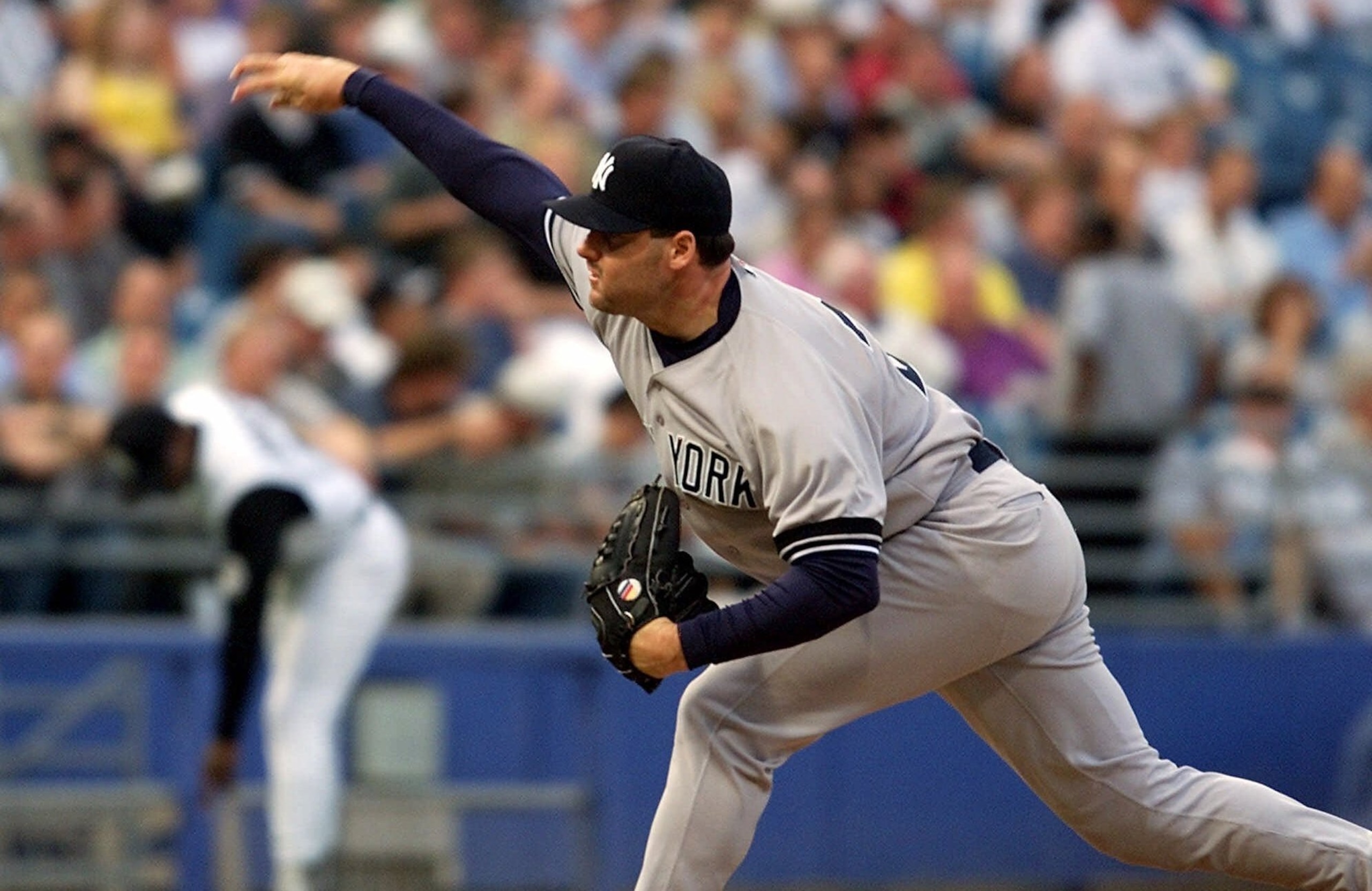
Roger Clemens and Mike Piazza weren't exactly the best of friends.
Piazza hit well against Clemens in their limited interactions early in his career. According to B/R's Zachary Rymer, Piazza entered 2000 with five hits in nine at-bats against Clemens. Two of those hits were home runs. (He ended his career with four homers off Clemens.) Not one of the four outs was a strikeout. There aren't many players who were that successful against The Rocket.
And perhaps that's why Clemens drilled Piazza in the head with a pitch in July 2000.
Or maybe that pitch was an accident. Clemens was never shy about pitching guys inside throughout his career, hitting 159 batters. Who's to say which of those bean balls was intentional? All the same, it was a frightening moment. Piazza suffered a concussion and missed the All-Star Game. But he returned in short order and played a huge part in leading the New York Mets to the World Series to face Clemens' Yankees.
Clemens was on the mound for Game 2 of the "Subway Series" on October 22, 2000, which meant toeing the rubber against Piazza for the first time since hitting him in the helmet.
In the top half of the first inning, Clemens jammed Piazza with an inside fastball, which he fouled off, shattering his bat into several pieces. The barrel of the bat careened toward Clemens and bounced up into his midsection. He caught the large shard and in one fell swoop whipped it into the ground in the direction of Piazza, who was jogging down the first base line.
Even if there weren't history between the two, it would have been a bizarre situation. But considering it was an at-bat baseball fans had been waiting to watch for more than three months, it is remembered as one of the most infamous moments of the past two decades.
The 2002 All-Star Game
2 of 10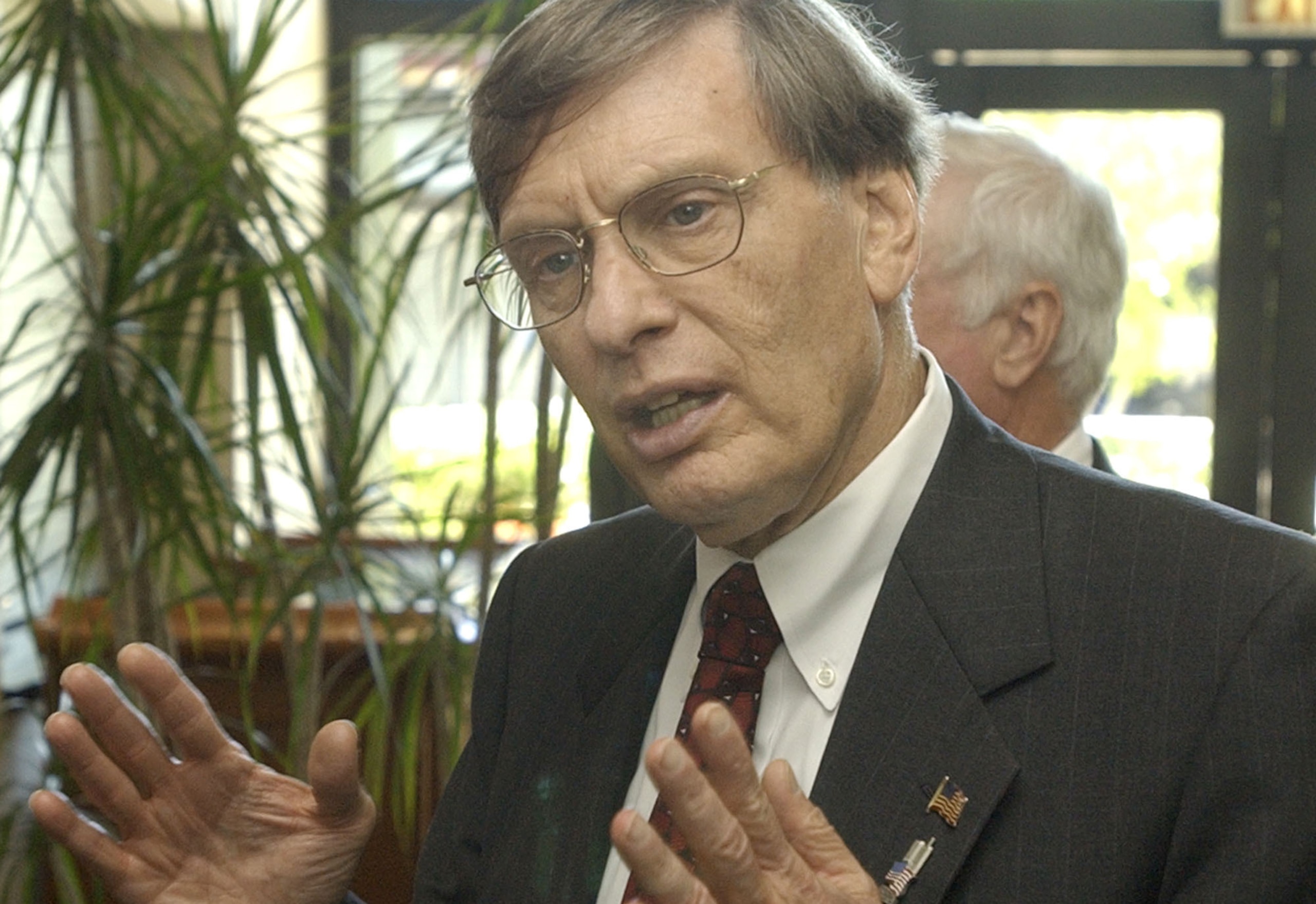
MLB games ending in a tie used to be commonplace. Heck, the Detroit Tigers had 10 ties in the 1904 season alone. But between the combination of extra innings and lights in stadiums allowing games to be played until a winner is crowned, ties have been few and far between for many decades—pretty much only arising as a possibility when a meaningless late-regular-season contest is postponed because of rain with the score tied in the fifth inning or later.
But the 2002 All-Star Game will forever live in infamy for ending in a 7-7 draw after 11 innings.
Had it been because of rain, fans would have understood. After all, you can't control the weather, and you can't very well postpone the All-Star Game to a later date.
However, ending the game because both sides had used up all of their available pitchers—and didn't want to risk upsetting the teams of the last pitchers (Philadelphia's Vicente Padilla and Seattle's Freddy Garcia) by leaving them out there for an indefinite number of innings—was a load of crap.
Let position players pitch, just like in any regular-season game when a team runs out of pitchers or is getting blown out so badly it doesn't matter anymore. And bend the rules a little bit by letting each team put an already used position player back in the game so it wasn't a situation in which Padilla and Garcia had to play left field.
Or let them play left field. Whatever. Nobody (aside from gamblers) cared who won the game. All we wanted was for someone to win.
Instead, we got a tie and a whole lot of fans realizing the MLB All-Star Game didn't matter.
Having the All-Star Game in his hometown of Milwaukee was supposed to be one of the proudest days for then-MLB Commissioner Bud Selig. Instead, it turned into one of the most embarrassing moments of his career.
The worst part was Major League Baseball's drastic overreaction to the immediate blowback, voting the following January the silly exhibition game should determine which team gets home-field advantage in the World Series from 2003 to 2016.
It took almost a decade for the change to matter, but in 2011, the 90-win St. Louis Cardinals were awarded home-field advantage over the 96-win Texas Rangers, and they ended up rallying from a 3-2 series deficit to win both Games 6 and 7 at home. (At least Texas partially had itself to blame for not getting home-field advantage. Rangers ace C.J. Wilson gave up a three-run home run to Prince Fielder in an All-Star Game the American League lost 5-1.)
Pedro Martinez vs. Don Zimmer
3 of 10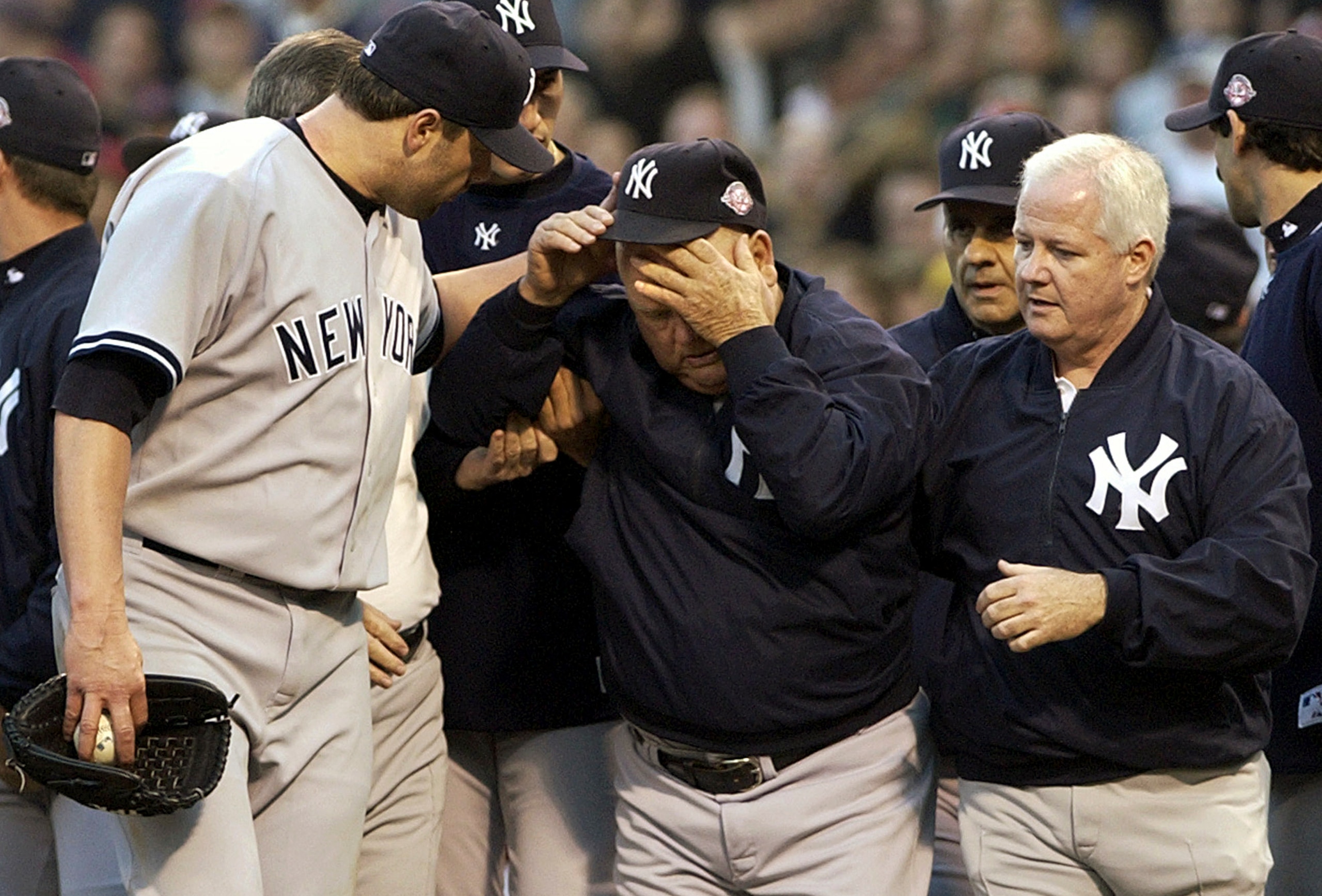
The 2003 league championship series were a ratings gold mine for Major League Baseball.
In the National League, you had the Chicago Cubs trying to end a World Series drought of nearly 100 years. (More on that shortly.) In the American League, the Boston Red Sox were attempting to break an 85-year World Series curse of their own—and against the loathed New York Yankees, no less. Making matters even better, both series went to seven games.
But they also each featured one of the most infamous moments of the last 20 years.
The first moment came during Game 3 of the ALCS. In the top half of the fourth inning, Boston's Pedro Martinez hit New York's Karim Garcia in the upper back with a pitch. Given the situation—two men on with no out in a 3-2 postseason game—it probably wasn't intentional. But let's just say Martinez and the Yankees always had a "no love lost" type of relationship. Tempers flared, but all that transpired was a warning to both benches.
Alfonso Soriano grounded into a double play two pitches later, on which Garcia executed a pretty dirty slide at second base. More words were exchanged, Martinez escalated matters by pointing at his head a couple of times. Still, nothing major happened.
Manny Ramirez led off the bottom half of that inning, though, and took exception to a high-and-a-little-inside 1-2 pitch from Clemens. And this time, the benches cleared.
For the most part, it was a chorus of "Why I oughtas." No punches were thrown. No ejections were made. But 72-year-old Yankees bench coach Don Zimmer beelined it for Martinez, who sidestepped him, put his hands around his head and tossed him to the ground.
Joe Buck and Tim McCarver channeled their inner Jim Ross and Jerry Lawler by acting like Martinez threw Zimmer off the top rope and through a table. However, short of planting his feet and taking a charge from a man who easily outweighed him, what other recourse did Martinez have in that moment?
It was an ugly scene, but it could have been a whole lot worse. Martinez didn't hit him or kick him while he was down. That said, it's easily the most notorious bench-clearing-brawl type of moment since 2000.


Bartman's Blunder
4 of 10
The Chicago Cubs' billy goat curse finally ended in 2016 when the North Siders won the World Series for the first time in 108 years.
For more than a decade, though, one poor fan had to live with the wrath of a city that blamed him for not allowing that curse to end in 2003.
The Cubs held a 3-2 lead over the Florida Marlins in the 2003 NLCS, and they were up 3-0 in the eighth inning of what should have been the decisive Game 6 at home in Wrigley Field. With one out in the inning, Florida's Luis Castillo lifted a slicing foul ball down the left field line. Chicago's Moises Alou tracked it to the wall, leaped to make the grab, reached into the stands and came to the ground screaming at a fan who interfered with his ability to make the catch.
That fan—who did exactly what any other fan would have done in that situation, mind you—was Steve Bartman.
Had Alou calmly returned to his spot on the field without throwing a fit, no one would know Bartman's name.
If Mark Prior had gotten Castillo out instead of throwing a wild pitch on ball four, no one would know Bartman's name.
If Fox hadn't repeatedly shown the replay and panned back to him sitting there dejectedly in his goofy headphones, no one would know Bartman's name.
If Alex Gonzalez hadn't botched an easy ground ball...if Dusty Baker hadn't left Prior out there way too long...if things hadn't completely unraveled in an eight-run inning for the Marlins...
But all those things happened, and it led to security escorting Bartman from the stadium through a shower of boos and booze. Had the Cubs rallied to win Game 7, all would have been forgiven. Instead, Bartman was a pariah in Chicago for the next 13 years.
He did get a 2016 World Series ring, though, which was an awesome gesture by the Cubs organization.
The Mitchell Report
5 of 10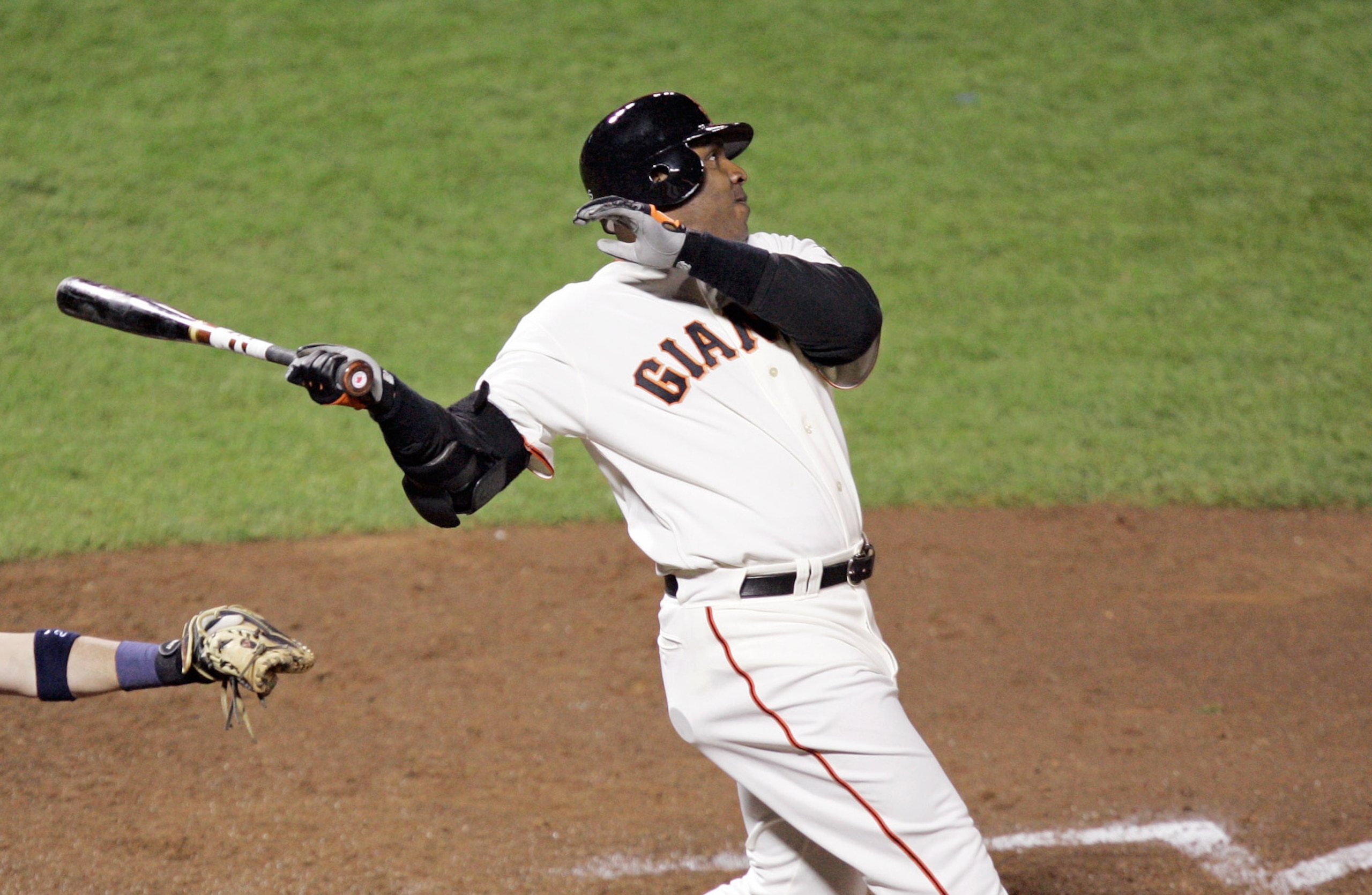
Steroids and rumors of steroids hung over baseball like an ominous cloud for nearly a decade, and that storm may never fully pass.
We blissfully devoured the Mark McGwire and Sammy Sosa home run battle throughout the summer of 1998, but by the time Barry Bonds reeled off four consecutive immaculate seasons (2001-04) in his late 30s, the public was beyond skeptical about all feats of strength accomplished on the diamond.
McGwire, Sosa and Rafael Palmeiro testifying in front of Congress in 2005 was just the tip of the iceberg.
The 409-page document written by former U.S. Sen. George Mitchell—aka the Mitchell Report—was the Titanic sinking into the frigid Atlantic Ocean.
When it was released on December 13, 2007, it rocked the baseball world to its core. Nearly 90 current and former players were implicated in the Mitchell Report, including Bonds, Roger Clemens, Andy Pettitte, Jason Giambi, Gary Sheffield, Miguel Tejada and Jose Canseco—the latter of whom had already published in 2005 his own tell-all account of steroid usage within the sport.
Not every player was juicing, but certainly more than enough of them to plant seeds of doubt about stats in years recently past and in many more yet to come.
It got to the point where, rather than assuming only a few players took performance-enhancing drugs, a lot of fans hung their hats on a select few players they believed to be virtuous. For me, they were Ken Griffey Jr., Derek Jeter and Albert Pujols. If any of the three had ever tested positive, I probably would have stopped watching baseball for good.
Frankly, it's a stain on the sport that will probably never wash away. More than a decade later, any time a player has a breakout year or a late-career renaissance, the natural assumption by a not-so-tiny percentage of baseball fans is that he must be taking 'roids or something similar. Many Hall of Fame voters still refuse to cast ballots for players either known or suspected to have cheated.
Armando Galarraga's 'Imperfect' Game
6 of 10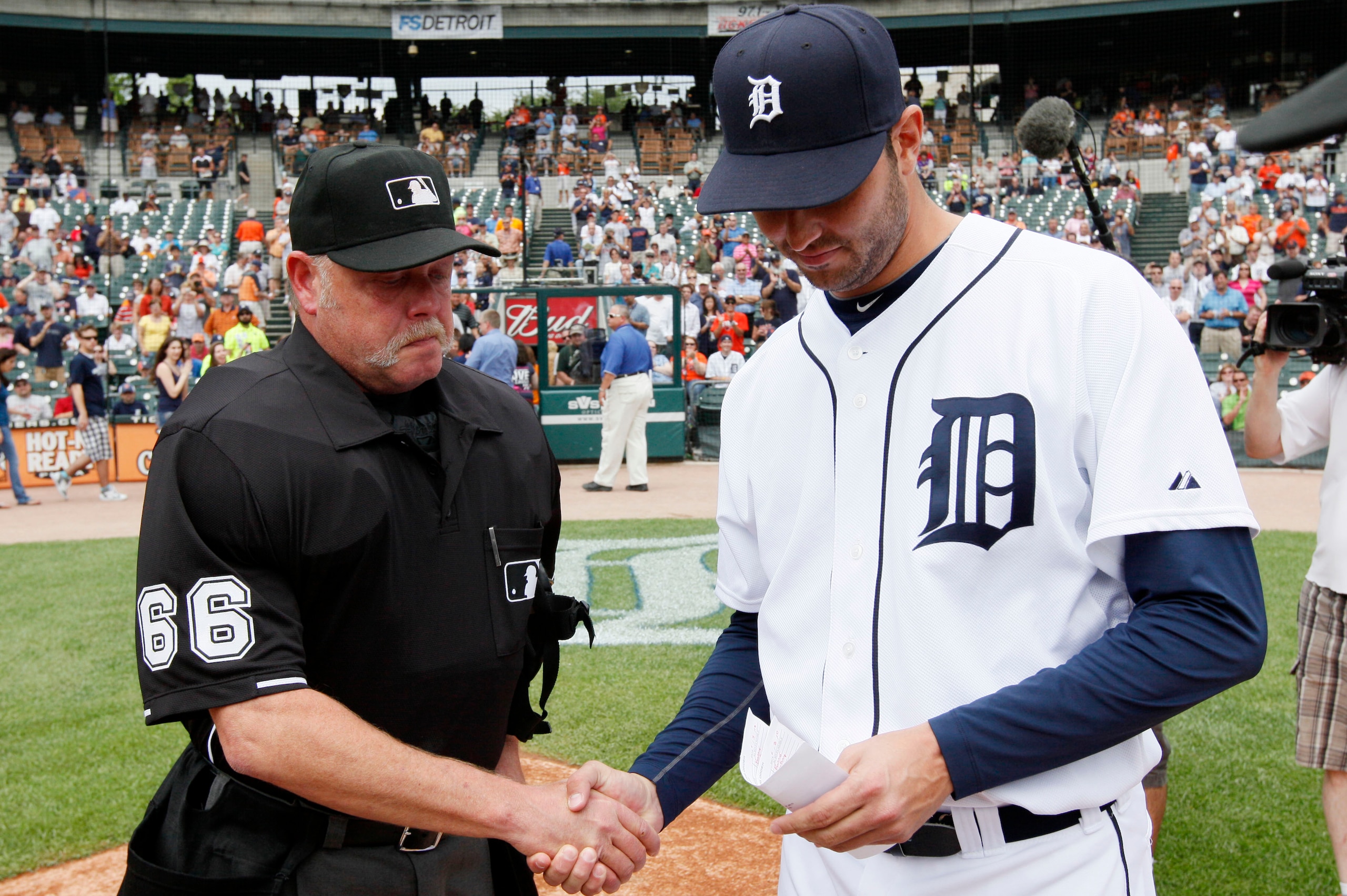
There have been 23 perfect games in Major League Baseball history, seven of which were thrown in the past two decades.
But it's impossible to have a discussion about perfect games without also mentioning the one that should have been.
On June 2, 2010—a mere four days after Roy Halladay tossed a perfecto—Armando Galarraga came one terrible, indefensible call away from joining the elite club.
With help from an exceptional, over-the-shoulder catch by center fielder Austin Jackson to begin the ninth inning, the Detroit Tigers hurler had retired each of the first 26 Cleveland Indians he faced. He then got the 27th batter of the game, Jason Donald, to hit a weak grounder toward the gap between Miguel Cabrera and Carlos Guillen on the right side of the infield. Cabrera ranged to his right to make the play, scooping and tossing to Galarraga, who beat Donald to the bag by half a step.
Unfortunately, the only person in the world who didn't see it that way was the one person whose opinion mattered in that moment. First base umpire Jim Joyce ruled Donald safe, eliminating both the perfect game and the no-hitter from history.
Perhaps most impressive of all, Galarraga maintained his composure and got the next batter (Trevor Crowe) to ground out to end what some like to call the 28-out perfect game.
Beyond just the bad call, the messed up part is that MLB had implemented instant replay by this point, but only in a limited capacity for home run-boundary rulings. It wasn't until 2014 that we got (for better or worse) the current system of managerial challenges and more extensive replay. Had Jim Leyland been allowed to challenge the ruling, there's no question Galarraga would have been credited with a perfect game.
Instead, he settled for what proved to be the only shutout of his career.
For what it's worth, both parties took it in stride. Once he had seen the replay, Joyce was tearfully apologetic about missing the call, while Galarraga was impressively not apoplectic, forgiving the error in judgment by simply saying, "Nobody's perfect." It was still one of the most painfully unforgettable moments in baseball's recent history.
Sam Holbrook's Very Liberal Interpretation of the Infield Fly Rule
7 of 10
2012 was the first year Major League Baseball expanded its playoff format to include a wild-card game, pitting the two winningest non-division winners from each league against each other in a one-game playoff.
2012 was also (presumably) the first year in which an umpire decided the infield actually extends a good 75 feet beyond the infield.
Under the 2011 format, the Atlanta Braves wouldn't have even needed to face the St. Louis Cardinals in this new wild-card game. Atlanta finished six games ahead of St. Louis, so it would've gone straight to the NLDS to face the Washington Nationals.
Instead, the Braves were down 6-3 in the bottom of the eighth inning, but they were rallying. Freddie Freeman drew a lead-off walk, and David Ross hit a one-out single, bringing Andrelton Simmons to the plate with men on first and second and one out.
On the sixth pitch of the at-bat, Simmons lifted a pop fly into no-man's land. Pete Kozma drifted back from shortstop while Matt Holliday casually jogged in from left field. Kozma called for the ball and seemed to have a bead on it. But at the last second, he took two steps in away from the ball, and it dropped between the Cardinals fielders for a base hit.
Or, it would have been a base hit if left field umpire Sam Holbrook had not made the extremely questionable and controversial interpretation of the infield fly rule. (And before you go there, I'm not a Braves fan. Nationals, actually, so I was rooting against the Braves, and even I know that was a horrible call.)
For some people, the real infamy of this moment came when the Braves fans responded to the garbage call by throwing garbage all over the field, causing a delay of nearly 20 minutes. However, it's hard to blame them for being upset about being robbed of a spot in the NLDS.
Braves manager Fredi Gonzalez officially put the game under protest, but to no avail. The Cardinals won 6-3 and went on to upset the Nationals in the NLDS.
The Biogenesis Scandal
8 of 10
While it didn't implicate anywhere near as many players who used performance-enhancing drugs as the Mitchell Report did, the Biogenesis Scandal was no joke.
Biogenesis of America was an "anti-aging clinic" in Florida owned by Anthony Bosch, where (at least) 14 players received banned PEDs or human growth hormones from 2009 to 2012.
Barely half a decade had passed since the Mitchell Report when the Miami New Times broke the story on January 31, 2013. That's what we're considering the infamous moment, even though the suspensions weren't levied until late July and early August.
Front and center on the list of marquee Biogenesis clients was three-time American League MVP—and previous admitted PED user—Alex Rodriguez. But A-Rod was hardly the only All-Star involved. Ryan Braun, Nelson Cruz, Jhonny Peralta and Everth Cabrera also faced lengthy suspensions and irreparable damage to their careers/legacies.
After months of speculation and waiting for MLB to dole out punishments, Braun's penalty came first. On July 22, the 2011 NL MVP was suspended without pay for the remainder of the regular season, amounting to 65 games. (Braun had previously escaped punishment for a positive drug test in October 2011 on a technicality that the test collector didn't follow proper procedure.)
The much larger bombshell dropped two weeks later on August 5 when 12 players (some in the majors, some in the minors) were suspended for 50 games, while Rodriguez received a 211-game suspension (the rest of 2013 and all of 2014.)
Rodriguez had spent the first two-thirds of the season rehabbing a torn labrum and didn't take kindly to the decision. He appealed the ruling and made his 2013 season debut on the very day his suspension was announced and continued to play up until the Yankees were eliminated from playoff contention in late September. He did eventually accept the suspension for the entire 2014 season, though.
The Chase Utley Rule
9 of 10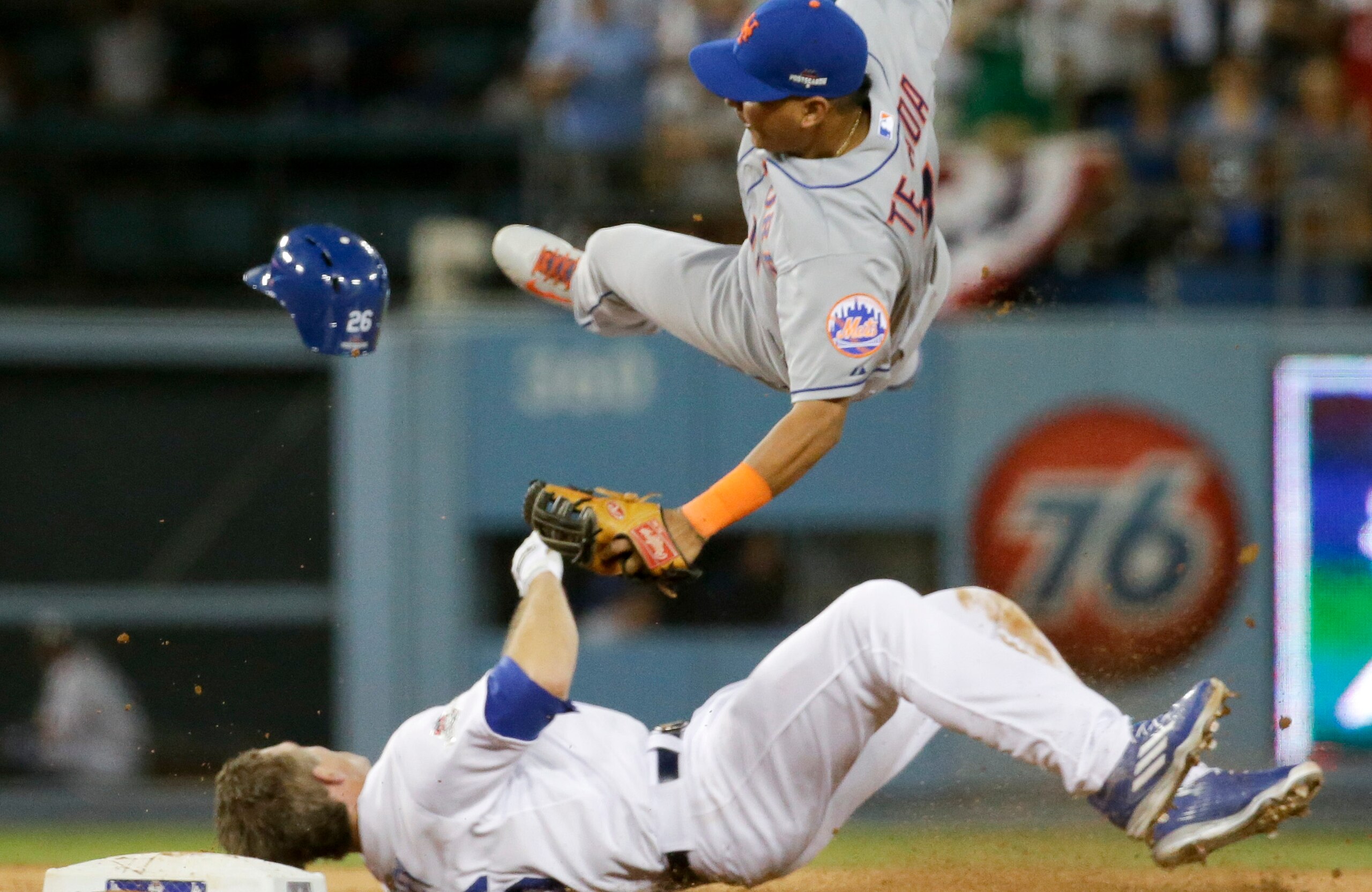
This one is an infamous moment which actually resulted in a much greater good.
But, like, maybe don't try to tell that to Ruben Tejada, who had his leg broken and his career derailed by the type of dirty takeout slide that used to be taught in little leagues across the country.
The slide in question took place during Game 2 of the 2015 NLDS between the Los Angeles Dodgers and the New York Mets. After a pinch-hit single in the bottom of the seventh inning, Chase Utley attempted to break up a double play on a ground ball up the middle with a reprehensibly late slide.
The result was a broken leg for the young Mets shortstop, and, a few months later, a new rule requiring sliding players to attempt to reach and remain on the base while not flailing any limbs to try to break up double plays.
This has colloquially been referred to as the Chase Utley Rule.
Utley—who was involved in more than 1,000 double plays while spending almost his entire career as a second baseman—was no stranger to having to avoid the sliding runner on those breakup slides.
For most of his career, though, it was more easily avoided via the "neighborhood play"—an unofficial rule in which the fielder didn't necessarily need to be on the bag when he caught the ball to get the out, so long as he was in the general vicinity of the bag. But that went out the window when MLB expanded instant replay before the 2014 season, allowing umpires to rule the runner safe if frame-by-frame replay reveals the fielder was not in contact with the base and the ball at the same time.
Watch the replay of the Utley slide and you'll notice Tejada's awkward tap dance and pirouette while trying to make sure he touched the base before spinning to throw. (After a lengthy video replay, they still somehow ruled Utley safe.) Prior to instant replay, it would have been a much more fluid movement, and Tejada likely would have been able to avoid any sort of injury, much less a broken leg.
Frankly, it's a miracle that it took two full seasons after the expansion of replay for such an injury to happen. MLB had already done away with blocking the plate and home plate collisions in large part because of Buster Posey's broken leg suffered in 2011, but continuing to allow takeout slides at second base while taking steps to eliminate the neighborhood play was always a disaster waiting to happen.
Various Cheating Scandals of the 2010s
10 of 10
There were three significant cheating scandals in the past decade, each of which was committed by a team that won at least one World Series during that decade.
The first scandal came courtesy of a rogue hacker. From January 2012 through mid-2014, Chris Correa—an analyst within the St. Louis Cardinals organization who was promoted to scouting director in December 2014—hacked emails and documents within the Houston Astros analytics department dozens of times. Correa was fired, sentenced to nearly four years in prison and banned from baseball for life.
MLB's investigation determined no one else was involved in Correa's espionage, but the Cardinals still had to give $2 million and two draft picks to the Astros as compensation.
Another tech-savvy form of cheating was undertaken by the Boston Red Sox during the 2017 season. When it started and how often it happened is unclear, but they were punished that September for a sign-stealing system in which a trainer on the bench was tipped off to pitches via an Apple Watch, which he then relayed to batters. The Yankees also had to pay a fine for previous improper use of a dugout phone.
The Houston Astros took a less-subtle-but-still-technical approach to sign stealing during the 2017 and 2018 seasons. They used the video replay station to conduct their thievery. That part was subtle. But imparting that wisdom to the batter via the banging of trash can lids was considerably less so. (There were also allegations about buzzers on players' chests, although those theories were never corroborated.)
Former Astros pitcher Mike Fiers blew the whistle on that operation in November 2019, which resulted in a $5 million fine for Houston, forfeited first-round and second-round picks for 2020 and 2021, the suspension (and, shortly thereafter, termination) of general manager Jeff Luhnow and manager A.J. Hinch and what is sure to be at least a decade of wearing the scarlet letter for cheating.
The fallout also resulted in Alex Cora and Carlos Beltran losing their managerial jobs with the Red Sox and the New York Mets, because of their roles while with Houston in 2017.
Sign stealing is a practice as old as baseball itself, but using advanced technology to do so—or to snoop on a division rival's analytics—is just plain wrong. The Cardinals' hacking scandal may soon be forgotten, but the 2017 (Houston) and 2018 (Boston) World Series titles are at least somewhat tainted by widespread deceitfulness.

.png?w=2560)



.jpg?w=2560 "Jonathan Taylor Landing Spots 📍")




