2020 Offseason, NFL Draft Proves the Bears Are Headed in the Wrong Direction
Only about 18 months ago, it looked like the Chicago Bears had pulled off a coup. It looked like they had fleeced the then-Oakland Raiders for Khalil Mack, and it looked like they'd emerged as a perennial Super Bowl contender.
They gave up two first-round picks for Mack, and then they made him the highest-paid defensive player in NFL history. The superstar edge-defender was as dominant as ever for much of the 2018 season, and the Bears were one of just a handful of 12-win teams that year.
Everything was coming up Bears, and few were concerned that the team would lack draft capital and salary-cap flexibility moving forward.
.jpg?w=2560 "Packers 49ers Football")
.jpg?w=2560 "Seahawks Cardinals Football")
.jpg?w=2560 "Lions Cardinals Football")
But without first-round picks in 2019 and 2020, and with Mack, Allen Robinson II, Eddie Goldman, Akiem Hicks (and eventually Eddie Jackson, Kyle Fuller and Cody Whitehair) all making more than $10 million per year, the Bears left themselves with a razor-thin margin for error.
Previous first-round draft picks like Leonard Floyd, Mitchell Trubisky and Roquan Smith had to deliver, and they had to hit on a disproportionately high number of their limited picks and free-agent signings in the offseasons to come.
That's what happens when you go all-in. It's what happens when you mortgage the future.
Unfortunately for the Bears, they've made so many perplexing decisions and flat-out errors in recent years that even with Mack still dominating at a Pro Bowl level, they no longer look like a contender following an 8-8 campaign and another confusing run through free agency and the 2020 draft.
Floyd is a bust (he's already off the roster), as is Trubisky (he's already forced the front office to acquire veteran quarterback Nick Foles). Smith has yet to emerge as a difference-maker, and their only top-100 pick from 2019, running back David Montgomery, averaged just 3.7 yards per carry as a rookie.

Last offseason, they were forced to let talented defensive backs Bryce Callahan and Adrian Amos walk. Callahan's replacement, Buster Skrine, performed terribly in 2019. Amos's replacement, HaHa Clinton-Dix, has already moved on.
This offseason, they had to part with veteran pass-catchers Trey Burton and Taylor Gabriel, as well as steady cornerback Prince Amukamara, and they lost underrated linebacker Nick Kwiatkoski on the open market. Only Burton was truly replaced.
They did oddly invest in a declining 33-year-old tight end (Jimmy Graham) and a productive but inconsistent journeyman pass-rusher on the verge of his 30th birthday (Robert Quinn). Their best days are behind them, but the Bears will still owe those two a combined $22 million per year.
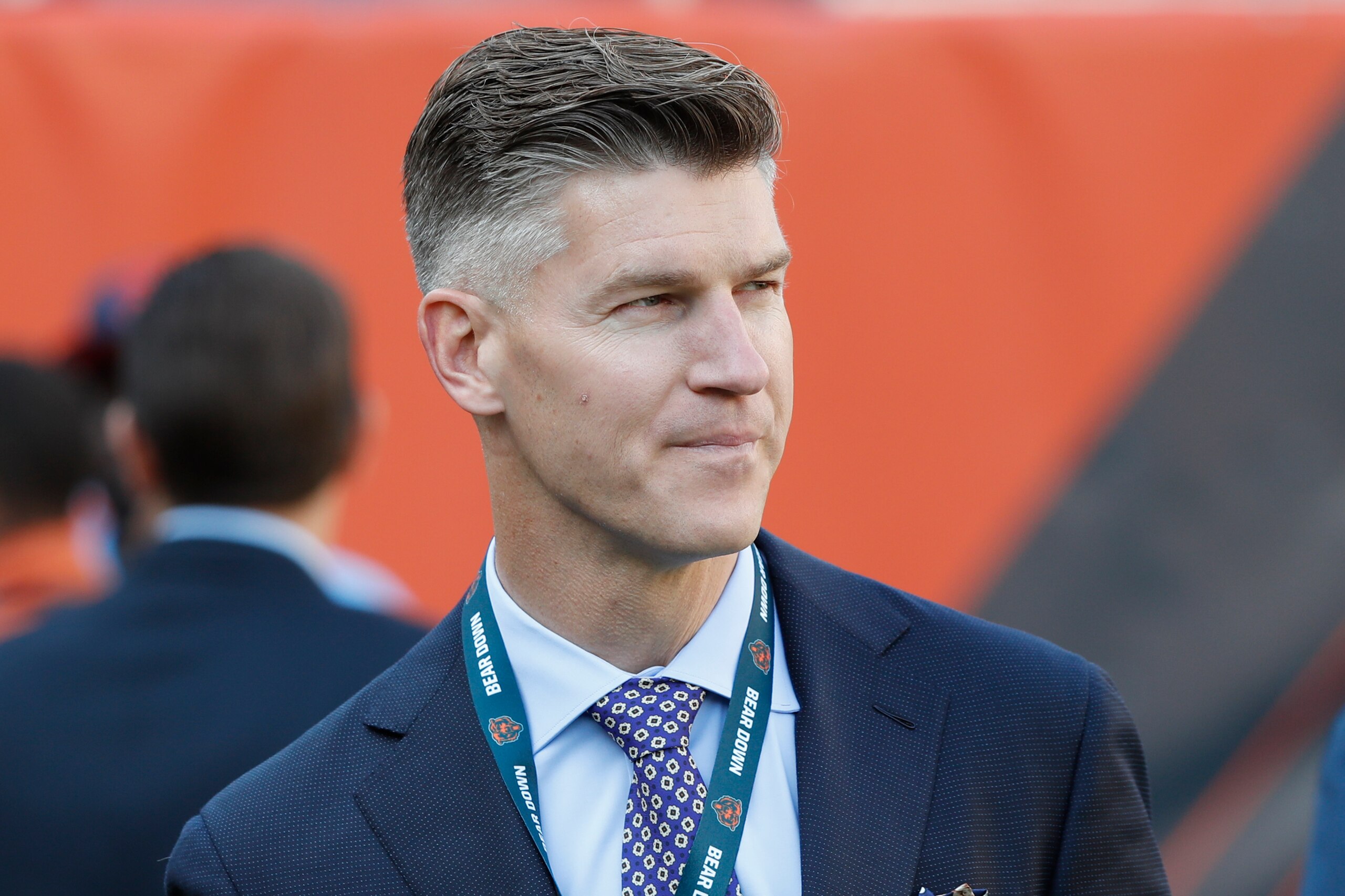
Chicago followed all of that with last week's dud of a draft, in which the team strangely used its first pick on another tight end, Notre Dame product Cole Kmet. General manager Ryan Pace did appear to get good value for former Utah cornerback Jaylon Johnson later in Round 2, but beyond that, the organization's hands were tied by the fact it had no selections in Rounds 1, 3, and 4.
The Bears have already blown past that minuscule margin for error.
They wasted money and roster space on Burton (signed a four-year, $32 million deal in 2018 and caught six touchdown passes in two seasons before becoming a cap casualty), Gabriel (signed a four-year, $26 million deal that same offseason and also caught six touchdown passes in two seasons before also becoming a cap casualty) and running back Mike Davis (lasted less than a season after signing a two-year, $6 million deal in 2019).
Meanwhile, the Graham signing was laughable even before a team with just two picks in the top 150 spent its first on Kmet. Now, the roster inexplicably contains 10 tight ends, none of whom inspires confidence. The defense, which took a tremendous step backward on paper last year, has been watered down, and there's no more support for whoever wins the starting quarterback job.
Of course, it's a problem that said job is even up for grabs.
Pace infamously spent a top-three selection, as well as two third-round picks and a fourth-rounder, on Trubisky, who averaged a league-low 6.1 yards per attempt while running the NFL's fourth-lowest-scoring offense in what was supposed to be a breakout third season.
Just a few months after Pace declared Trubisky would remain the starter, he traded a fourth-round pick in a deep draft for Foles and declared there'd be an open competition between the two. If Foles wins, they'll be wasting $9.3 million on Trubisky in a backup role. If Trubisky, wins, they'll have wasted that fourth-round pick and will still owe Foles at least $21 million over the course of the next two years.
And yet, there's a good chance that neither wins in the long term.
Trubisky doesn't look like a starting-caliber NFL quarterback, and Foles was a mess when healthy last season in Jacksonville. Just one year and four starts after he signed a massive contract to be their starter, it's not a good sign that the Jaguars were willing to swallow an $18.8 million dead-cap hit just to get the guy off the roster.
Outside of an outlier Pro Bowl season in 2013 and a couple of hot late-season runs with the Philadelphia Eagles in 2017 and 2018, Foles has been a below-average NFL quarterback. The 31-year-old has never experienced sustained success outside of Philly, and he lost all four of his starts in an injury-derailed and ineffective solo campaign in Jacksonville.
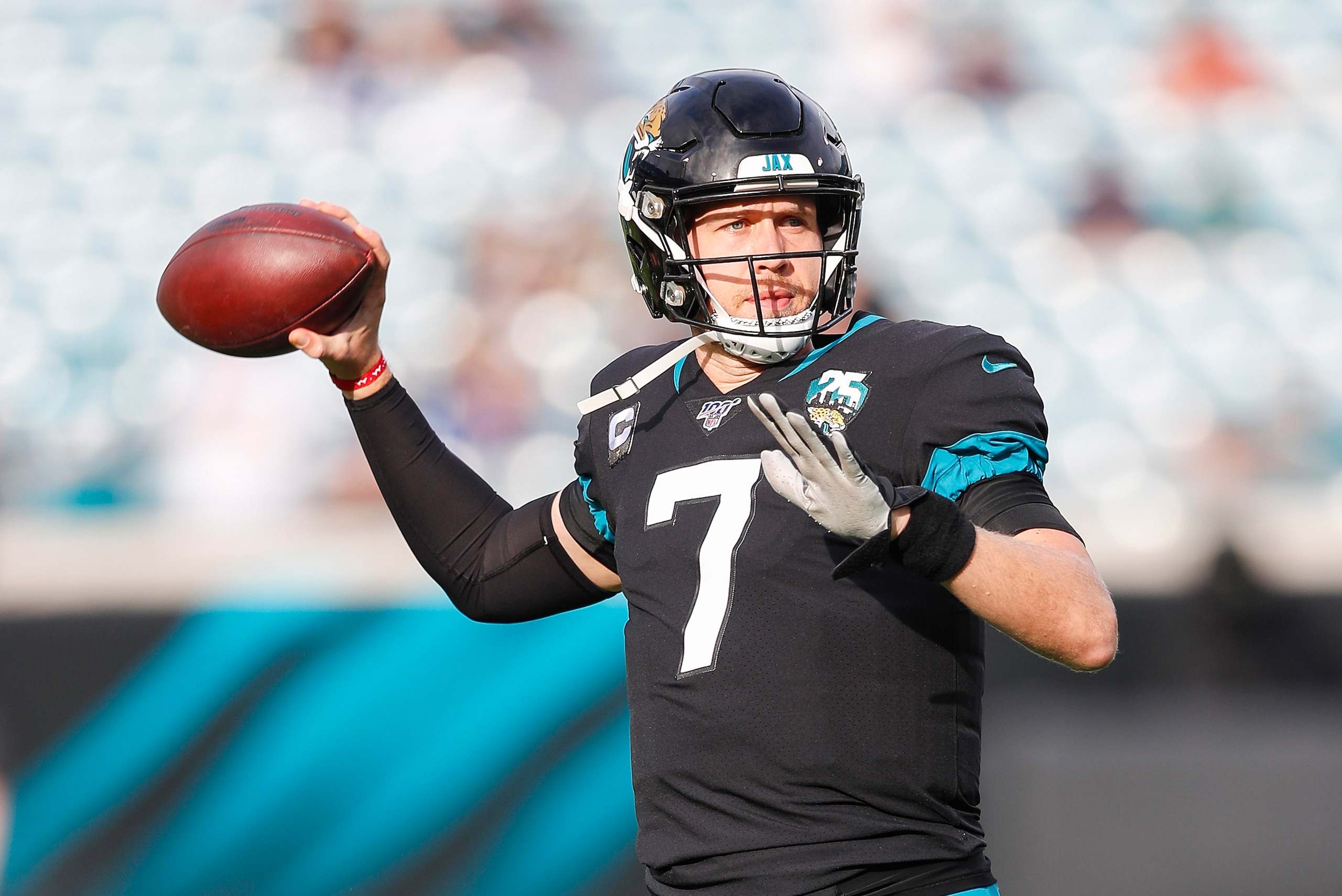
Acquiring Foles was a half measure. Pace would have been better off paying a slight premium for the younger, more promising Teddy Bridgewater or the more accomplished Cam Newton. Instead, the Bears are left with two unremarkable options and limited support beyond an unusually large pack of unaccomplished, over-the-hill or undistinguished tight ends.
The hole is about to get deeper.
The Bears at least have all their Day 1 and Day 2 picks in next year's draft, but they've already traded away their 2021 fourth-rounder and are slated to enter the 2021 offseason with less salary-cap space than all but four teams, all of whom are projected to have far more players under contract.
Mack will cost them $80 million over the course of the next three years, and his prime is slipping away. He's 29 now, and he's coming off his first season without double-digit sacks since he was a rookie in 2014. He'll only become more expensive, as will Jackson, Quinn, Fuller, Hicks, Goldman, Whitehair and left tackle Charles Leno Jr.
The Bears have yet to win a playoff game with that core in place. Don't expect that to change as they age and their support is further diminished by the team's continued mistakes.
Brad Gagnon has covered the NFL for Bleacher Report since 2012. Follow him on Twitter. Or don't. It's entirely your choice.
Salary-cap info via Spotrac.
.jpg?w=2560 "Steelers Browns Football")
.jpg?w=2560 "Cam Ward Says He's Not A Loser")