
5 2020 NFL Draft Picks Who Would Be Huge Round 1 Mistakes
We all make mistakes—even NFL talent evaluators who grind tape for months before the draft.
In 2017, the Chicago Bears moved up and selected quarterback Mitchell Trubisky with the No. 2 overall pick. Three years later, he'll battle Nick Foles in an "open competition" for the starting job. That's not ideal for a top-two player in his class.
For a variety of reasons, teams swing and miss on first-round picks. On many occasions, players don't perform at a level that matches their draft pedigree. General managers fall for traits, reach for need or overvalue potential with prospects they hold in high regard.
Every year, we see a Day 1 pick who takes us by surprise in a negative way, and that pattern will likely continue Thursday.
If team executives are reading out there, heed the warnings on five prospects who should be Day 2 picks but have some Day 1 buzz.
QB Jalen Hurts, Oklahoma
1 of 5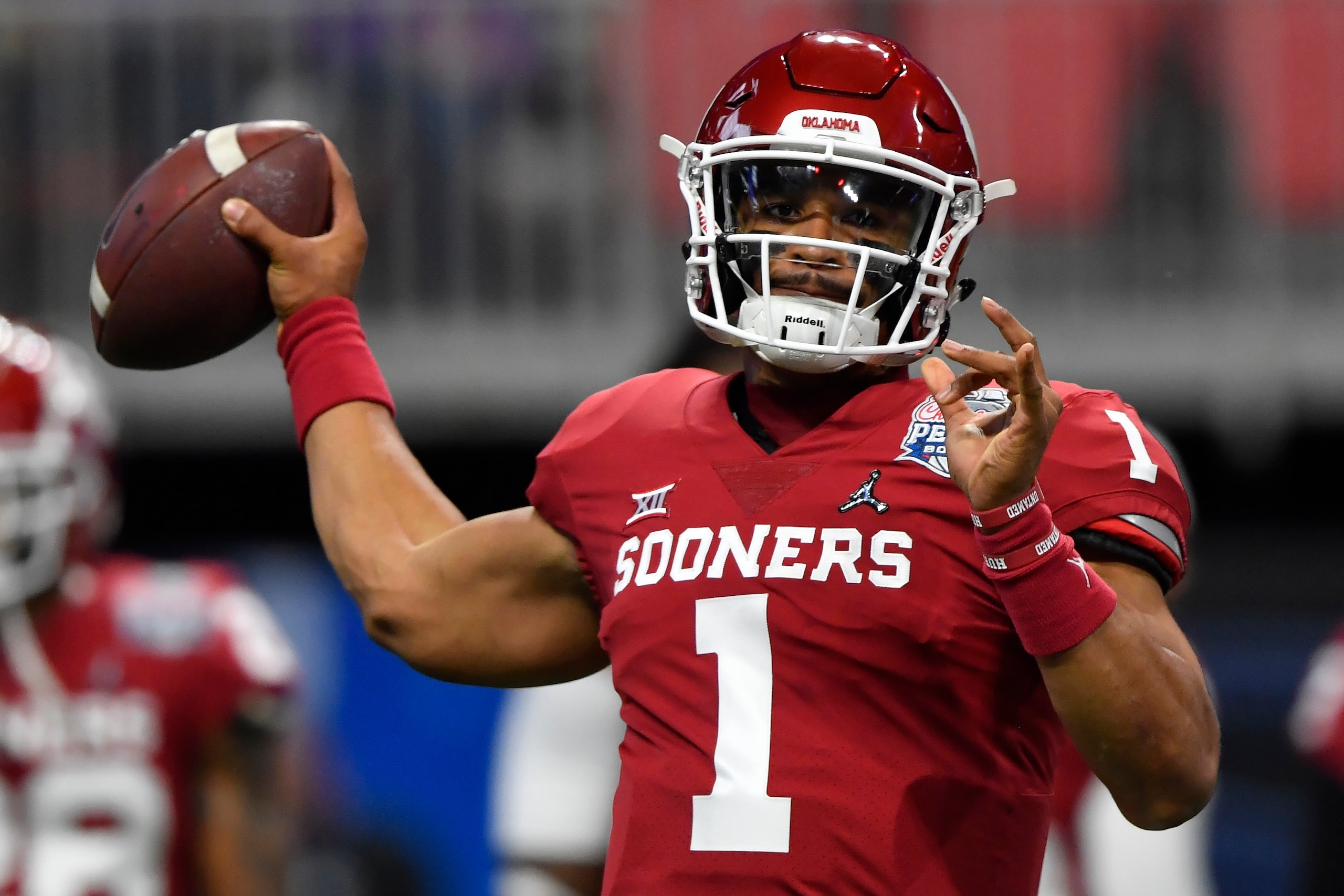
Is it possible that quarterbacks Joe Burrow, Tua Tagovailoa, Justin Herbert, Jordan Love and Jalen Hurts all go in the first round?
Well, The Draft Network's Trevor Sikkema caught wind of Hurts' first-round buzz. According to The Athletic's Vic Tafur, the Las Vegas Raiders locked eyes on the Oklahoma product after the NFL Scouting Combine:
"Speaking of the draft, there is growing buzz that the Raiders might draft a quarterback with their second first-round pick at No. 19. Utah State's Jordan Love is a possibility if the consensus fourth-best QB falls to No. 19, or the team could trade down from 19 and grab Oklahoma's Jalen Hurts, whom the team is very high on."
Hurts commanded the huddle as the primary signal-caller for three teams that went to the College Football Playoffs—two of those squads appeared in the national title game. Some may call him a winner because of his success with prestigious programs, but let's take a closer look at his playmaking abilities.
We're at the beginning point of an evolution at quarterback. Mobile signal-callers are the new trend, with Lamar Jackson, Deshaun Watson, Josh Allen and Patrick Mahomes leading the charge among players under 25 years old. Through four terms, Hurts ran for 3,274 yards and 43 touchdowns. He's a danger to defenses when using his legs.
However, the quarterback position still requires a consistent passer who sees the entire field. That's where Hurts' skill set falls short in the first-round discussion.
Despite Hurts throwing for 9,477 yards, 80 touchdowns and 20 interceptions in his career, he struggled in the College Football Playoffs against tougher competition. Bud Elliott of 247Sports tweeted out the quarterback's statistics through last season's Peach Bowl vs. LSU: "Jalen Hurts passing in the playoffs, including today: 42-91 (46%), 387 yards (4.5/attempt)."
In 2019, under center at Oklahoma, Hurts recorded 3,851 passing yards, 32 touchdowns and eight interceptions, but a skeptic may have valid questions about the level of competition he faced in the Big 12.
Before last season, Hurts hadn't eclipsed 2,780 passing yards or 23 touchdowns in a single term, and he posted those numbers as a freshman. The quarterback's production dropped during his sophomore campaign, and then he lost the starting job to Tua Tagovailoa before the 2018 season.
Hurts has athleticism in spades, which will likely boost his spot on big boards. On the other hand, he's still a question mark as a passer—a far more important aspect of the position.
RB D'Andre Swift, Georgia
2 of 5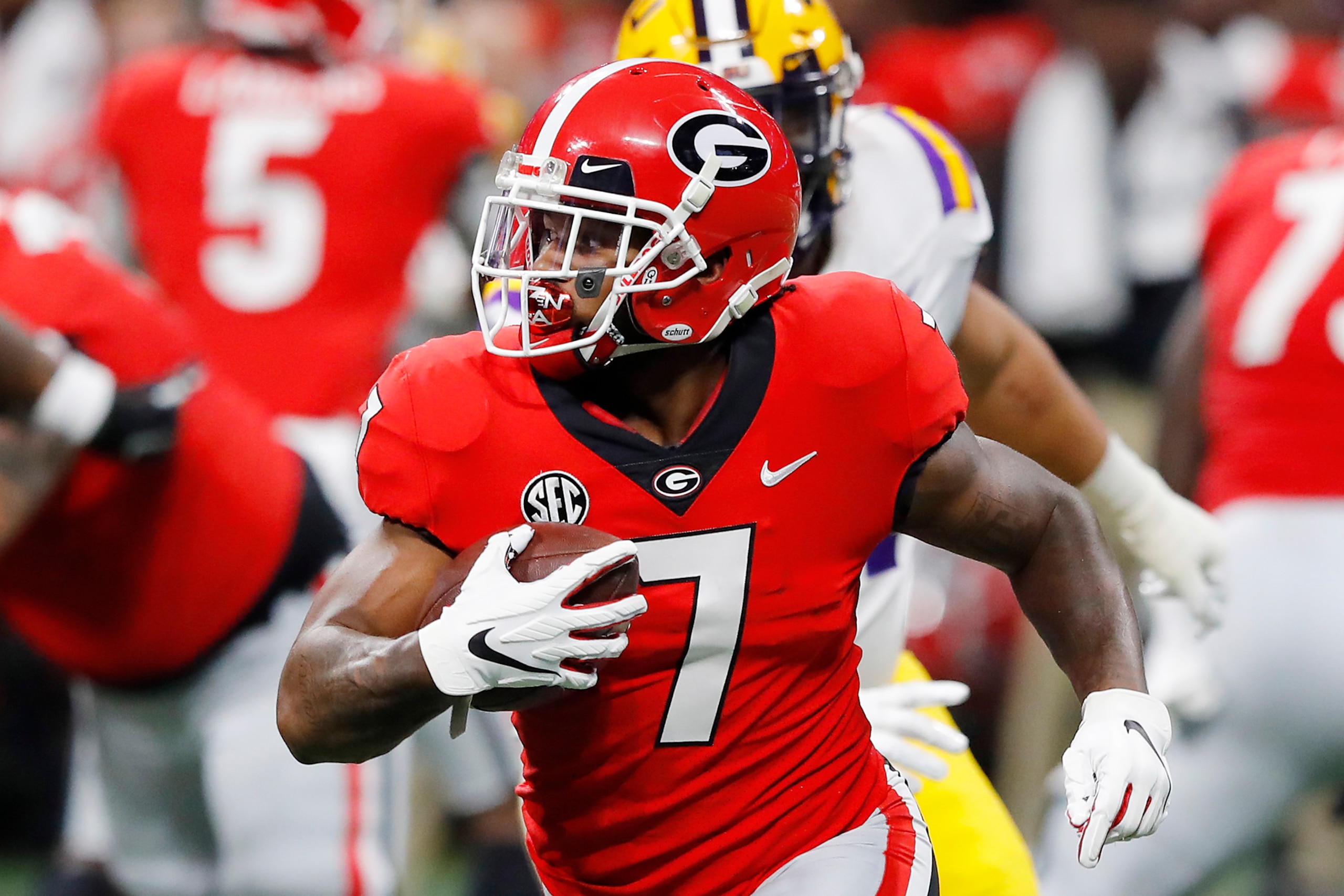
How big is the gap between the potential top running back and the third or fourth prospect at the position?
In terms of draft value, a good running back can go in the second or third rounds and make an immediate impact. Most teams use two or three backs in both the running and passing games.
If one guy goes down, his carries go to the second or third ball-carrier, who already has a role in the rotation.
According to NFL Network's Ian Rapoport, Swift's sweet spot is between pick Nos. 26 and 32, but teams at the end of the round could address bigger needs and still land a solid running back in the second or third rounds.
As a freshman, Swift contributed to a trio with Nick Chubb and Sony Michel and then shared the workload with Elijah Holyfield in 2018. He broke out in the lead role last year, logging 196 carries for 1,218 yards and seven touchdowns.
Even though Swift hadn't eclipsed 196 rushes in a single collegiate season, he fumbled seven times, which raises some concerns if the Georgia back is expected to take on a featured role on the pro level.
Any team that considers Swift in the first round should look at alternative options such as J.K. Dobbins, Jonathan Taylor or Clyde Edwards-Helaire on Day 2. Swift has the potential to become a solid pro, but he didn't look like an elite playmaker on the collegiate level and plays a highly disposable position.
In 2019, Dobbins (2,003), Taylor (2,003) and Edwards-Helaire (1,414) all ranked within the top 15 in rushing yards, while Swift ranked 27th. The former Bulldog can catch out of the backfield, but the other three tailbacks flashed decent-to-above-average hands as well, leaving no clear-cut separation among the four.
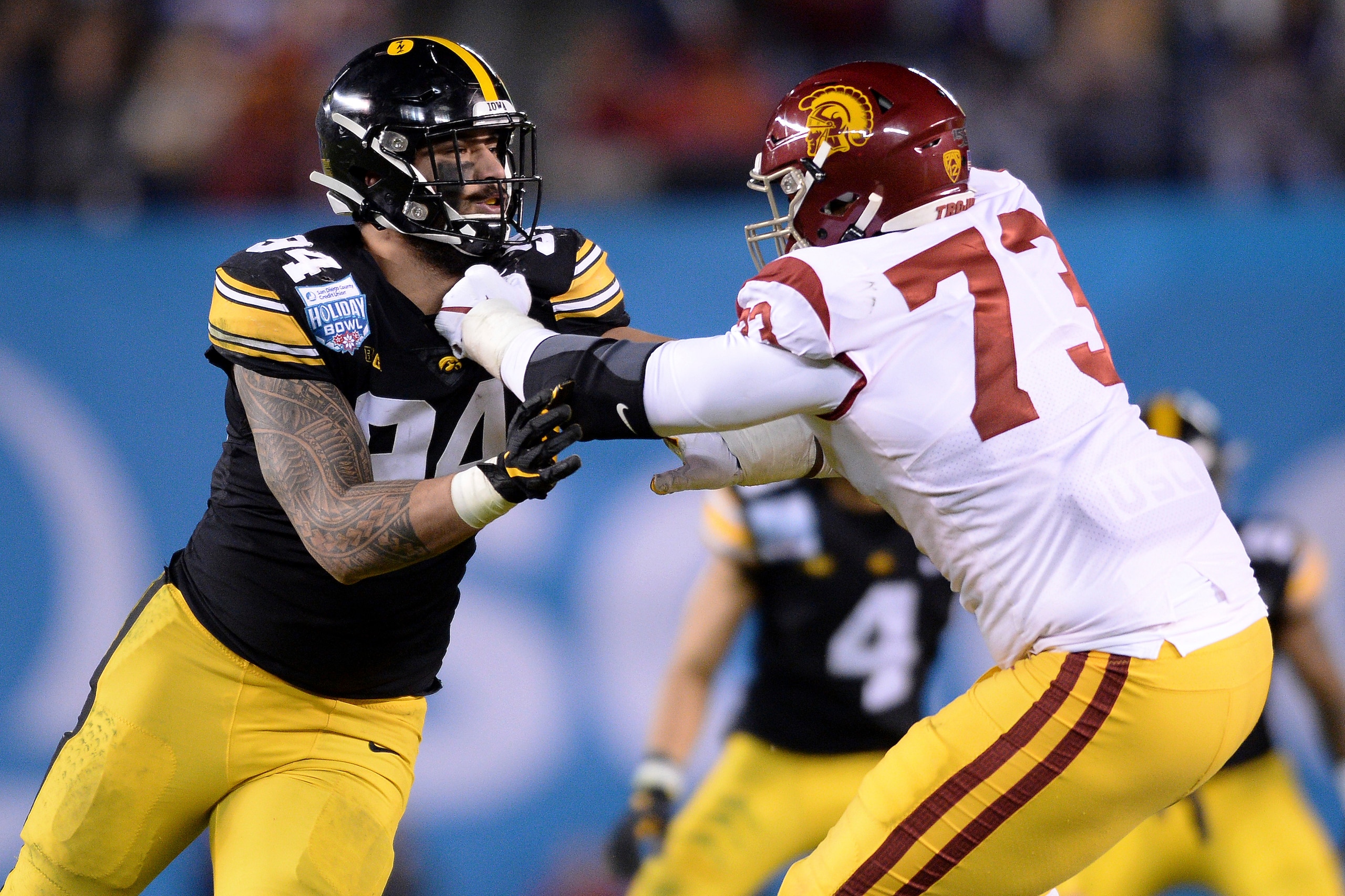
OT Austin Jackson, USC
3 of 5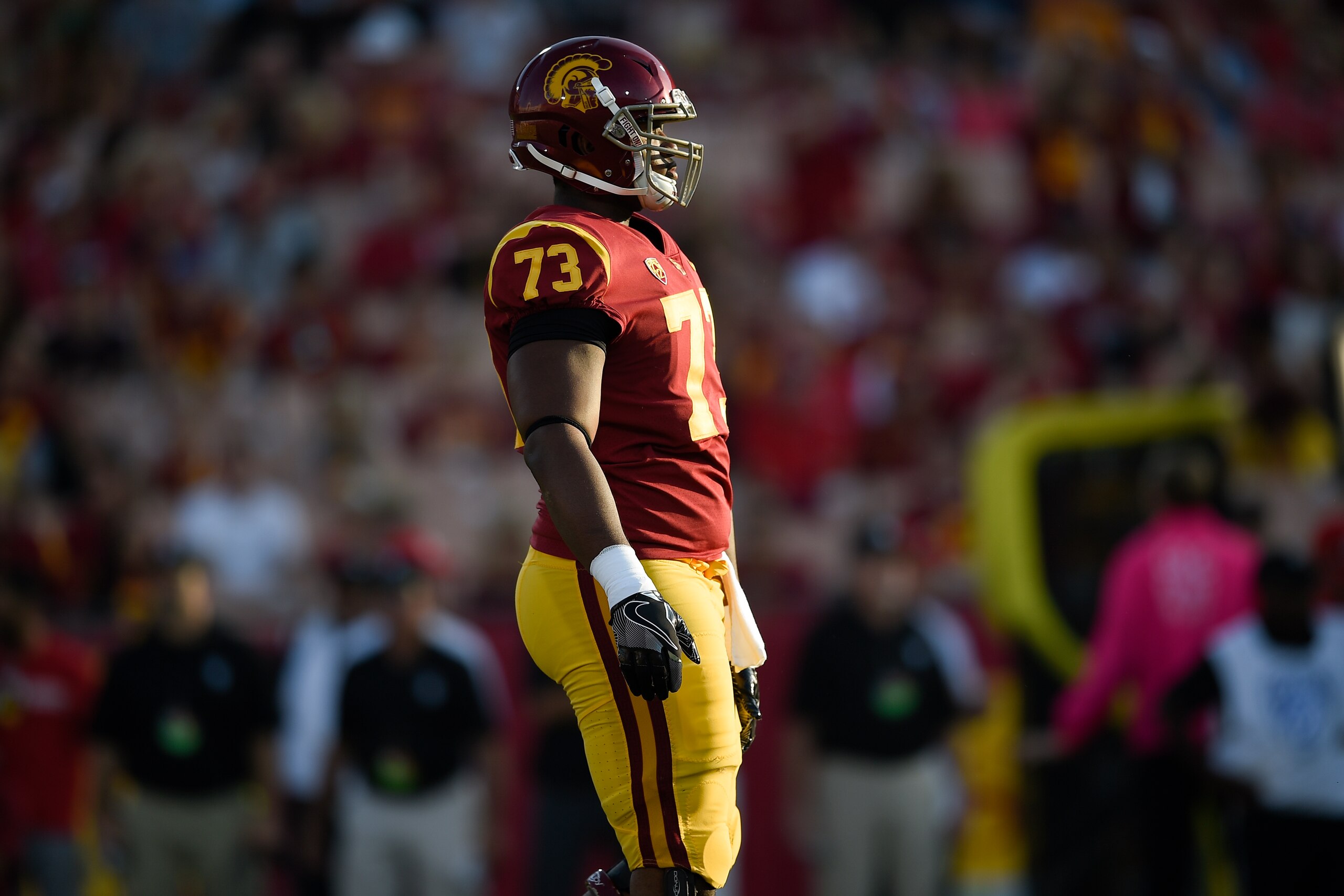
At times, teams will bump a prospect up several spots on the big board because of his raw traits. This year, Austin Jackson will likely fit into that category, though clubs should think twice about selecting him in the first round.
NFL.com's Daniel Jeremiah paired Jackson at 26th overall with the Miami Dolphins, who need help at tackle after Julien Davenport (six) and Jesse Davis (four) gave up a combined 10 sacks on the perimeter in 2019, per Pro Football Focus.
Although Jeremiah plugged Jackson into the 26th spot, he realizes the USC product will require some time to refine his game: "The Dolphins have can't leave the first rd without addressing OL. This is a good spot for a very talented player who needs a little time to develop. Big upside."
The Dolphins would be much better off with a tackle who can play now—perhaps Houston's Josh Jones is a more ideal fit. If Jackson has to play early, whoever takes him could have a pass-protection issue for the first year or two.
At 6'5", 322 pounds, Jackson has the size with the athleticism to mirror speed-rushers and kick out to block on the edge, but he's inconsistent with his hand placement and must work on setting his feet to handle power edge defenders.
Joe Marino of The Draft Network shared his perspective, which sounds concerning for a Day 1 prospect: "I think he is super raw with major body control issues. Soft anchor. Needs work. Profiles more as an eventual starter to me and not someone I would value high in the Draft."
Any club that takes Jackson in the first round and pushes him into the fray during his rookie season may soon regret it.
CB A.J. Terrell, Clemson
4 of 5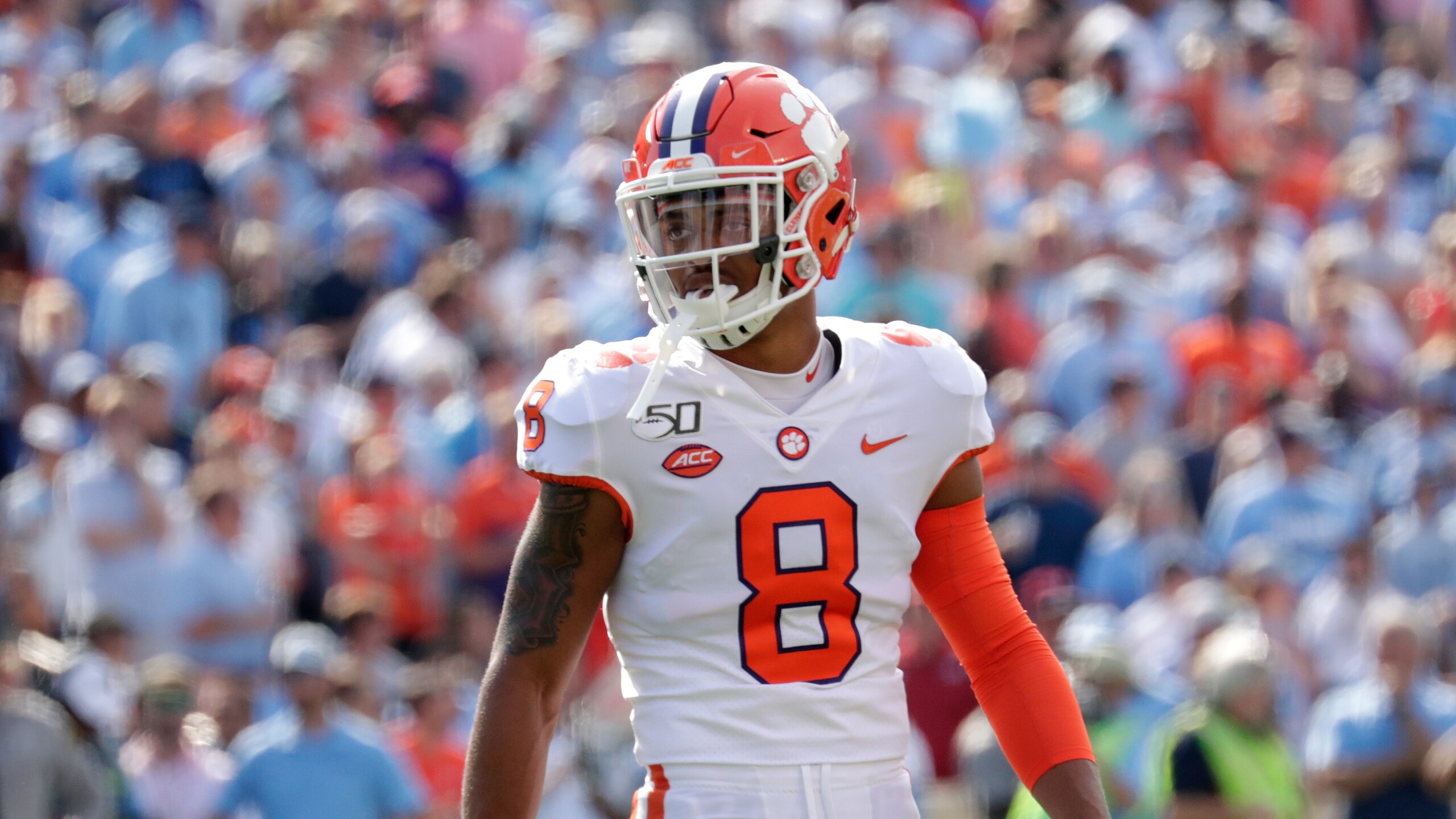
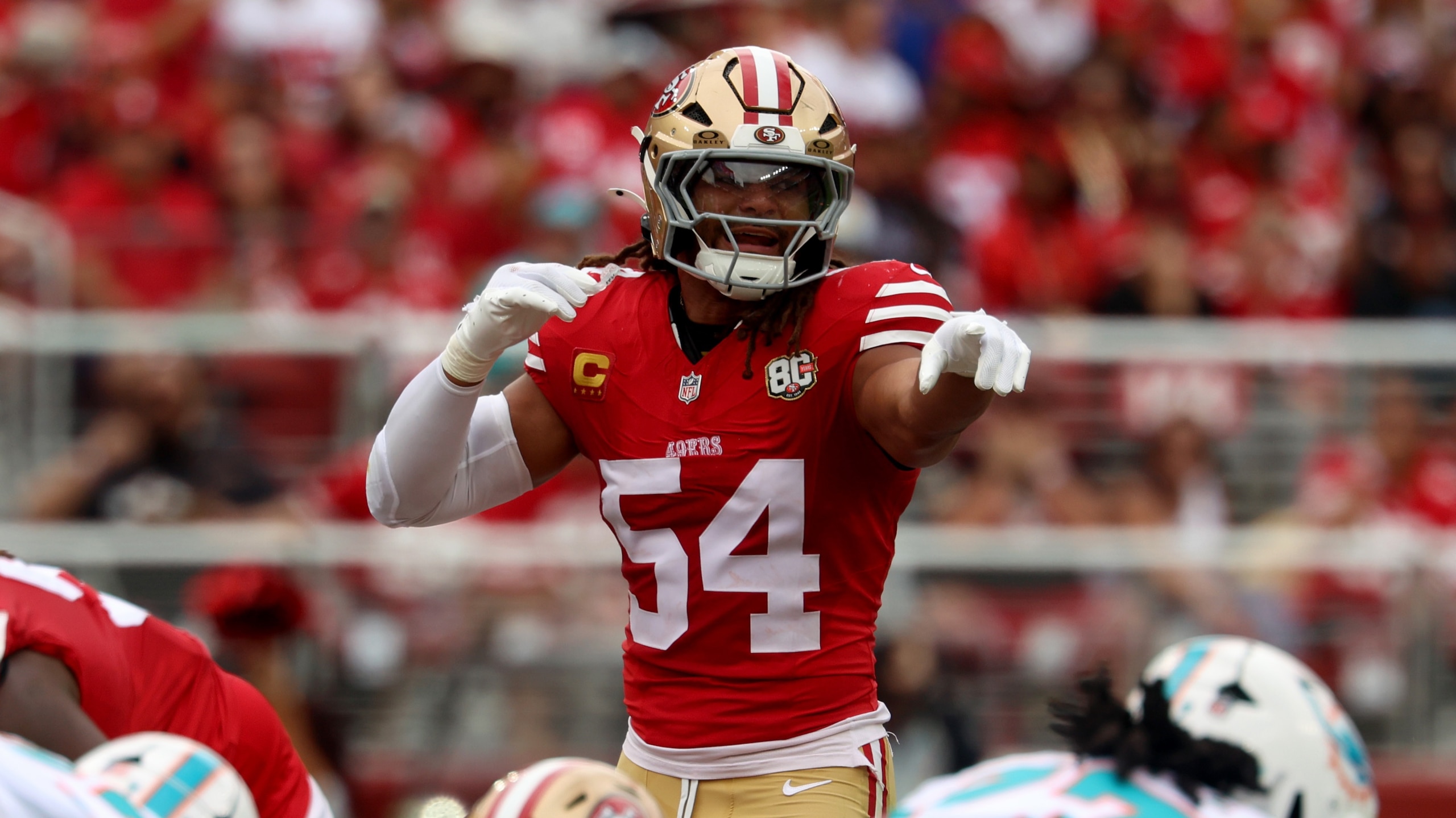
A.J. Terrell had a rough outing in the College Football Playoff championship game against wideout Ja'Marr Chase, but the hesitance to consider him in the first round runs deeper than that.
Terrell has a solid press-man technique, but he's not strong enough against bigger wide receivers even when he's in a position to make a play on the ball. Chase exposed that weakness during the title game, and before the big matchup, Pro Football Focus' Anthony Treash saw a pattern: "The red flag with Terrell thus far has been his inability to win on a consistent basis in contested situations, but as said, he has shown he is worthy to be taken at least in Round 2."
As a first-round pick, Terrell would likely match up against high-end wide receivers like Chase on the pro level. Can you trust him to win those battles? That's up for debate.
At 6'1", 195 pounds, Terrell has good size for the position. As he spends time at an NFL facility, the Clemson product can add strength and a few more pounds, but he must clean up his tackling. He whiffed twice going downhill to stop the run against LSU in his last outing.
The Athletic's Dane Brugler reported Friday that teams within the top 16 want Terrell. If he's thrust into early action against the best wide receivers in the league because of his draft status, the cornerback may struggle early and lose his confidence.
CB Jaylon Johnson, Utah
5 of 5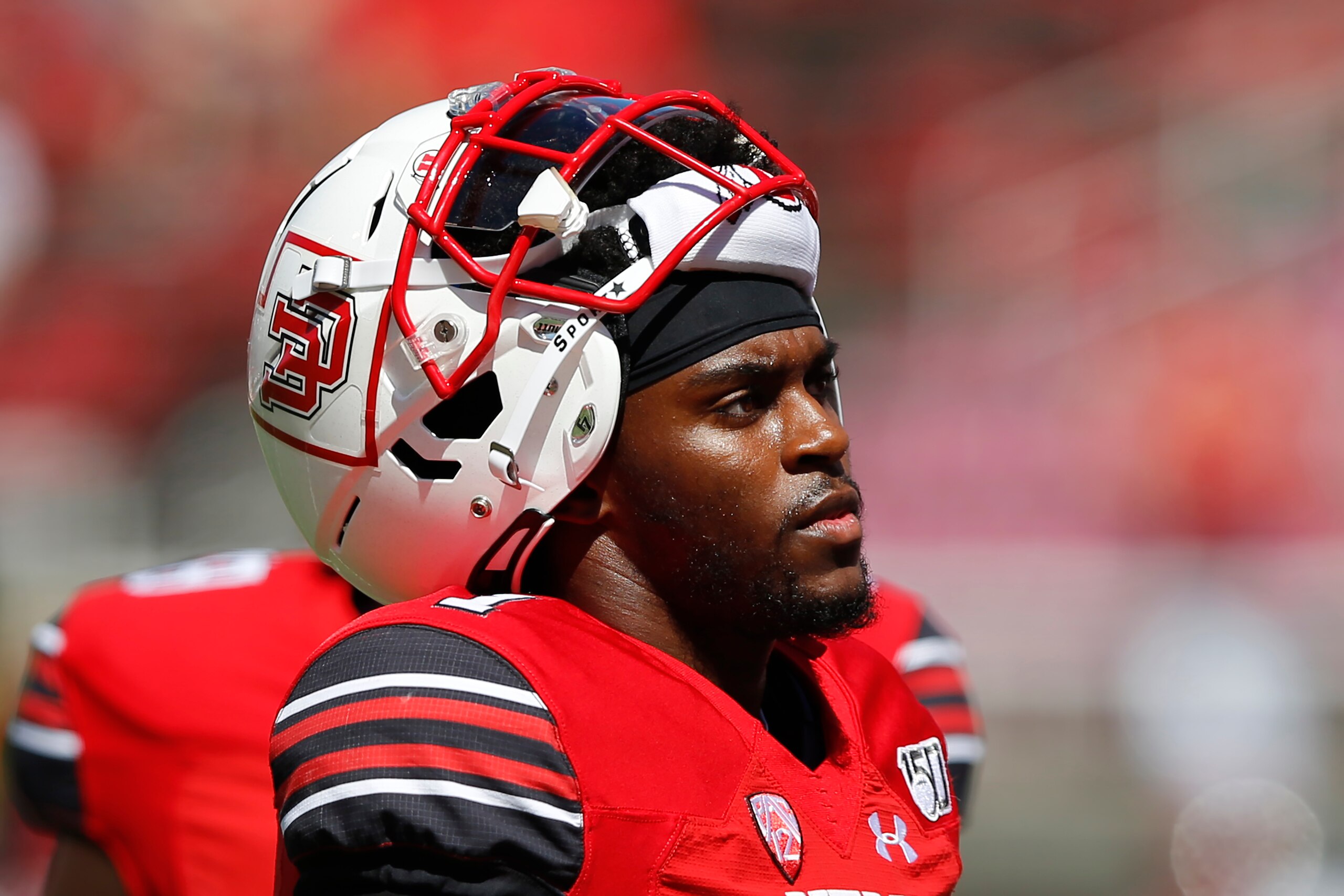
Jaylon Johnson has the coverage ability and physical component to his skill set to garner first-round consideration.
According to NFL Network's Tom Pelissero, Johnson was set to undergo shoulder surgery after the NFL Scouting Combine but would be ready to start his rookie season.
While that timetable sounds encouraging, Johnson has battled shoulder ailments since his senior year in high school. In 2017, he missed the Heart of Dallas Bowl because of a second operation.
Despite Johnson's undeniable ball-tracking skill—he logged 21 pass breakups and seven interceptions through three collegiate terms—teams should have concerns about his durability following a third shoulder surgery. A Day 2 pick would be a forgivable gamble, but he's a high-risk choice in the first round.
Johnson plays a hard-nosed style of football that could lead to more injuries. Although he played through an ailment last season, teams can't expect that trend to continue in a physical environment against bigger, stronger athletes.
The ban on in-person predraft visits amid the coronavirus pandemic, and the resulting inability for teams' medical staffs to conduct their own investigations, could make general managers less likely to pick players with injury histories on Day 1.
Typically, a prospect who's banged up on the collegiate level will have a similar experience in the NFL.
.jpg?w=2560 "Giants Rams Football")
.jpg?w=2560 "Patriots Chiefs Football")