2020 NFL Free Agency: Negotiating This Offseason's Toughest Contract Decisions
Free agency can be an exciting time for NFL franchises, but it can also be a stressful one. While the prospect of bringing in fresh new talent is something to be upbeat about, the thought of losing key internal free agents is not.
Unfortunately, teams cannot shell out cash to keep all of their core players—as much as they might like to. There comes a point when the price tag outweighs a player's value to his current team. The willingness of teams to outbid one another often forces a franchise to come to this conclusion rather quickly.
This can lead to difficult negotiations, even when players would like to stay put. Players must consider their financial security and fair market value.
Here, we'll examine some of the potentially more difficult contract negotiations of the 2020 offseason—based on what is realistically fair for the two parties involved—and how they might be resolved before the start of free agency on March 18.
Arizona Cardinals and Kenyan Drake
1 of 10
Player Should Be Asking for: $7 million per year
Team Should Be Offering: $3 million per year
Running back Kenyan Drake was phenomenal down the stretch for the Arizona Cardinals. He racked up 643 rushing yards and eight touchdowns in eight games and is now looking to parlay that success into a big payday. According to CBS Sports' Jason La Canfora, Drake is looking for something in the $8-10 million range per year.
$8 million is unrealistic for a back who has never been a 16-game starter or produced a 1,000-yard season. However, Drake could reasonably ask for $7 million per season from the Cardinals—which is still more than Mark Ingram II, Latavius Murray or Tevin Coleman got last offseason.
Arizona, meanwhile, should be targeting the $2.5-3 million range, which is what backs like LeSean McCoy, Theo Riddick and Carlos Hyde got in free agency last offseason.
Making things difficult is the fact that Arizona is essentially saddled with David Johnson's $14.2 million salary in 2020—releasing him would cost over $16 million in dead money. This means that exceeding $3 million for Drake could be tough against a projected $39 million in cap space. Arizona would essentially be spending 10 percent of its available cap space on a second running back.
However, the Cardinals also need a reliable starter to pair with quarterback Kyler Murray, and Johnson may not be that guy anymore. Therefore, it makes sense to overpay Drake for another "prove it" season. If he pans out as a 16-game starter, the team could move on from Johnson next offseason.
After flaming out with the Miami Dolphins, Drake could take the opportunity to again establish himself as a young up-and-coming tailback.
The Deal: One year, $6 million, fully guaranteed with added incentives
Cincinnati Bengals and A.J. Green
2 of 10
Player Should Be Asking for: $18 million per year
Team Should Be Offering: $13 million per year
The Cincinnati Bengals are widely expected to use the first overall pick in April's draft on LSU quarterback Joe Burrow. Burrow has made it clear he'd prefer the Bengals hang on to wide receiver A.J. Green.
"I think with any rookie quarterback, the more help you can get, the better, and A.J.'s been one of the best players at his position for a very long time," Burrow told reporters.
Cincinnati, it seems, will oblige. According to ESPN's Jeremy Fowler, the Bengals plan to use the franchise tag on the seven-time Pro Bowler.
This, of course, makes long-term negotiations a little difficult. Green has no reason to take anything less in 2020 than what he would earn on the franchise tag, which was just under $17 million for receivers last season. The Bengals shouldn't want to come close to that.
Yes, Green was once one of the top receivers in the NFL, but that time may be over. He's missed 29 games over the last four seasons—all 16 in 2019—and has posted just one 1,000-yard campaign in that span. Green will turn 32 before the start of the 2020 season, and there's no telling how much missing the 2019 season could hurt him.
A deal in the $13-14 million-per-year range would make more sense for Cincinnati. That's more than any wideout got in free agency last offseason—Tyrell Williams got just over $11 million per season—and would be a fair value given Green's recent injury history.
Unfortunately, the Bengals lost almost any leverage they might have had when Burrow publicly campaigned for Green. They will have to give him a front-loaded deal that offers more guaranteed money than the tag would provide and a potential team out after a couple of seasons.
The Deal: Four years, $64 million with $27 million guaranteed in first two seasons
Dallas Cowboys and Dak Prescott
3 of 10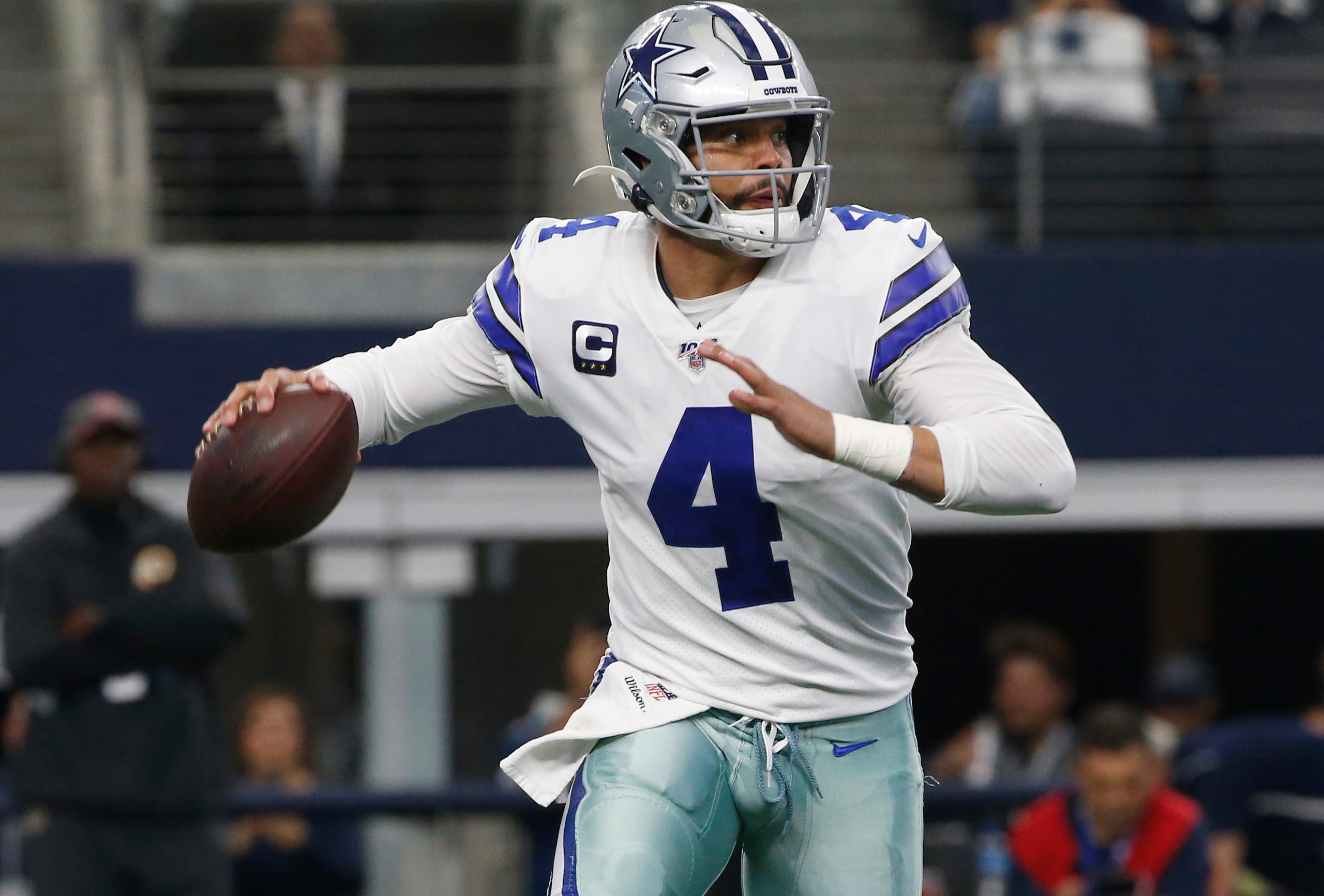
Player Should Be Asking for: $34 million per year
Team Should Be Offering: $29 million per year
Quarterback contracts are historically difficult to hash out. There's a next-man-up philosophy when it comes to quarterbacks getting paid. However, at some point, it doesn't make sense for a team to make its starter the highest-paid signal-caller in the league.
This puts the Dallas Cowboys in a tricky situation with Dak Prescott. On one hand, Prescott is a proven high-level starter entering his prime. On the other, he doesn't have the sustained success of Russell Wilson, who signed a four-year, $140 million extension last offseason.
For Prescott, a deal rivaling the four-year, $128 million extension signed by NFC East rival signal-caller Carson Wentz would make sense. The Cowboys should be looking to pay him south of that, as Wentz has a Super Bowl ring and Prescott does not.
A deal that exceeds the franchise-tag value—last year's number was just under $25 million—would be perfectly fair for the Cowboys, though.
This could still leave the two sides $5 million or more per season apart on a long-term deal. Perhaps the difference could be split on a shorter-term deal with more guaranteed money a la Kirk Cousins (three years, $84 million with all of it guaranteed).
According to ESPN's Dan Graziano and Jeremy Fowler, Prescott could prefer a short-term deal that allows him to hit free agency again before turning 30 years old.
A deal similar to the one Cousins signed with the Minnesota Vikings could allow Dallas to save valuable cap space while still giving Prescott some desired financial security.
The Deal: Three years, $91 million, fully guaranteed
.png?w=2560)
Dallas Cowboys and Amari Cooper
4 of 10
Player Should Be Asking for: $19 million per year
Team Should Be Offering: $17 million per year
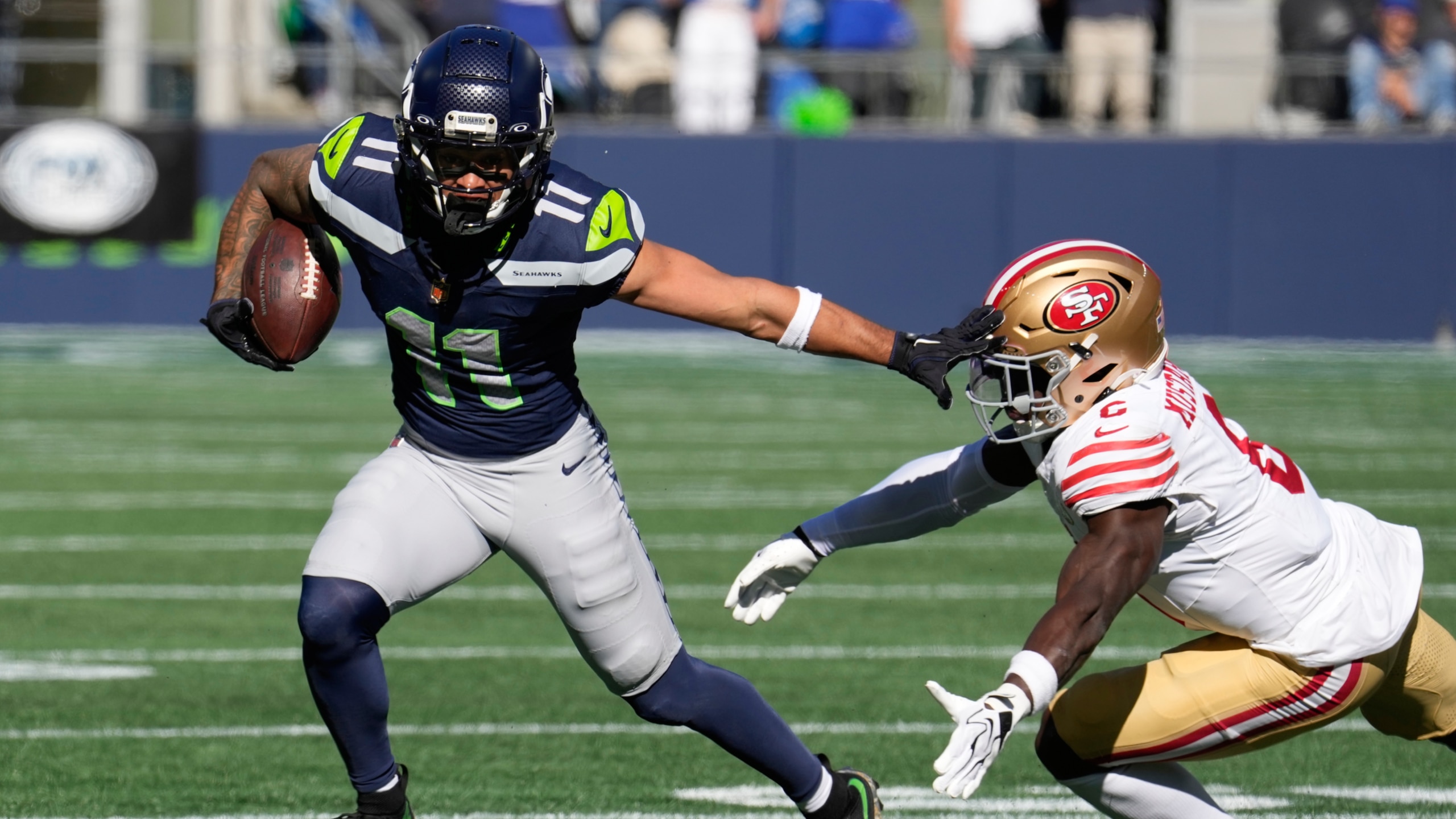
Unfortunately, Prescott is not the only notable impending free agent the Cowboys are negotiating with ahead of the new league year. Wide receiver Amari Cooper is also slated to hit the open market, something Dallas would like to avoid. Presumably, Cooper would like the same.
"I like it here, plain and simple," the receiver said at the end of 2019, per Mike Fisher of Cowboy Maven.
But Cooper will also want to be compensated handsomely—as No. 1 receivers usually do—and he could make a push to be one of the top-paid receivers in the NFL. Using Michael Thomas' five-year, $96.25 million contract extension as a guide, that could mean asking for more than $19 million per season.
Dallas should be looking to pay out a little less than that, as Cooper hasn't been as dominant as Thomas. However, the team cannot go too far below, as the franchise or transition tag wouldn't exactly be a bargain.
The difficulty lies in identifying a deal that feels fair to the Cowboys and still meets Cooper's likely desire to be paid like a top-five receiver—Cooper ranked eighth in receiving yards with 1,189 last season.
Giving Cooper a deal like the three-year, $54 million extension signed by Tyreek Hill in 2019 could meet both goals. Hill's $18 million annual salary ranks fourth among receivers, yet it isn't too much higher than Dallas might spend using the franchise tag.
Signing Cooper for the same amount of time as Prescott would allow the Cowboys to keep their offense intact while still giving the wideout a shot at another free-agency payday in the not-too-distant future.
The Deal: Three years, $55 million with $38 million guaranteed
Green Bay Packers and Bryan Bulaga
5 of 10
Player Should Be Asking for: $17 million per year
Team Should Be Offering: $13 million per year
The Green Bay Packers are staring down the possibility of losing longtime starting right tackle Bryan Bulaga. The 10-year veteran—nine, if you discount the 2013 season he missed with a torn ACL—is set to hit the open market and has yet to engage in contract talks with the Packers.
"There's been nothing. There's been no talk," Bulaga told ESPN Radio's Wilde & Tausch (h/t The Athletic's Jason Wilde).
While Bulaga will soon turn 31 years old, the Packers will be hard-pressed to find a suitable replacement for him internally or in free agency. This creates a position where Bulaga has plenty of leverage. He could ask to be paid more than Trent Brown, last year's free-agent market-setter at the position with a $16.5 million annual salary.
Green Bay should want to offer something more in line with the four-year, $51 million deal Ja'Wuan James signed with the Denver Broncos last offseason.
Bulaga is more accomplished than James, but he's also three years older.
Giving Bulaga a fair-market contract could prove difficult with a projected $19 million in cap space. However, Green Bay could come close to it by structuring a back-loaded deal with a large prorated signing bonus.
The Deal: Four years, $64 million with $32 million guaranteed, $20 million in bonuses
New Orleans Saints and Drew Brees
6 of 10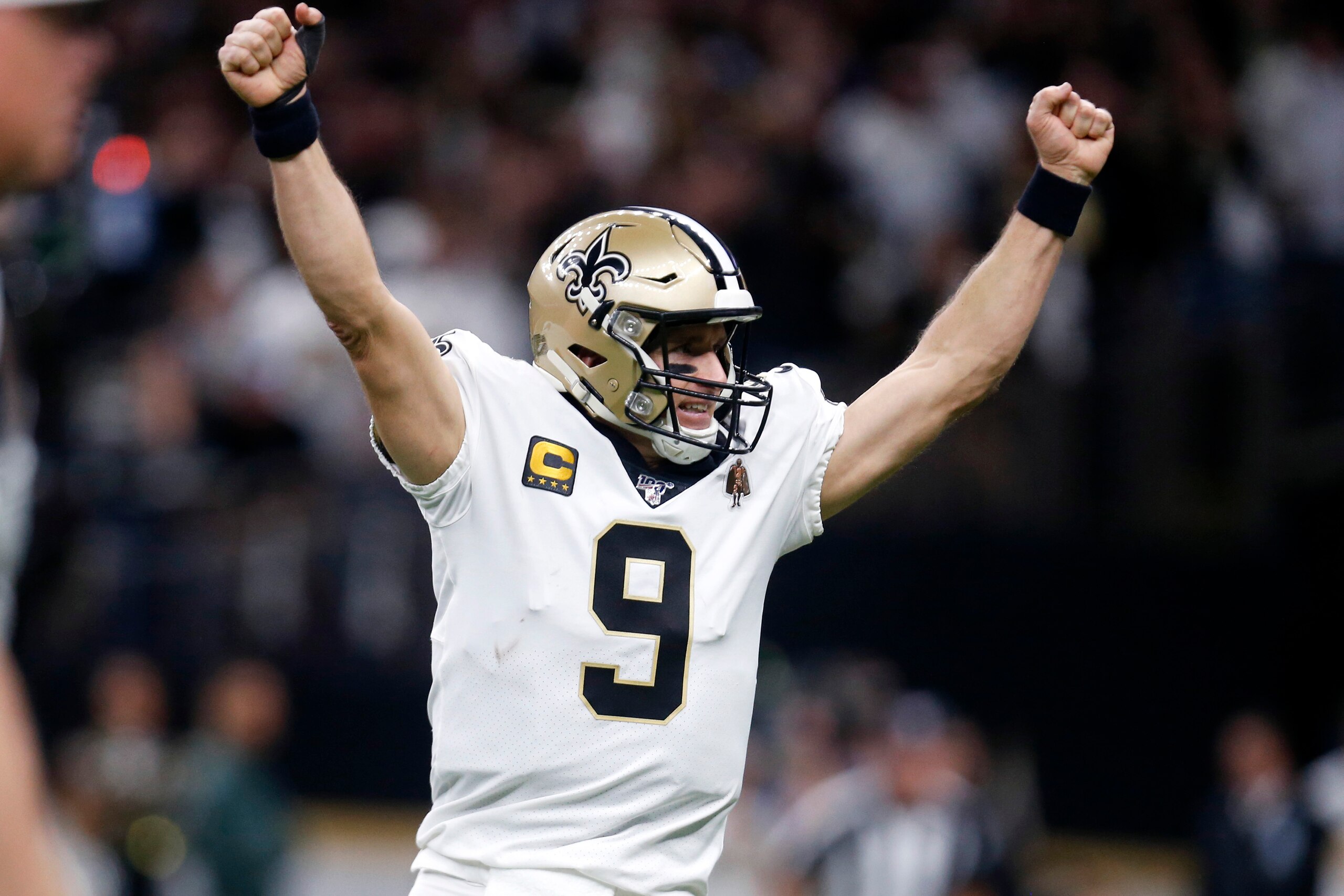
Player Should Be Asking for: $38 million per year
Team Should Be Offering: $30 million per year
For the New Orleans Saints and quarterback Drew Brees, it's less about getting a deal done than getting one done that works within the salary cap. New Orleans is already set to pay Brees almost $16 million for a year that automatically voids at the start of the new league year. Along with a 2021 cap hit of $5.4 million, Brees would still earn more than $21 million if he doesn't play another down for the Saints.
Brees has already announced he wants to play in 2020. Agreeing on a fair price will be difficult, though. Brees cannot realistically ask for an additional $30 million for one more season, though that's certainly a fair price for the Pro Bowler. Meeting that request would cost the Saints more than $50 million for a single season of quarterback play.
For the Saints, offering an additional $9-10 million for 2020 would be ideal—especially if much of that money is prorated to a phantom year in 2021. Doing so would put Brees in the $30-plus million club while still giving New Orleans a bit of flexibility for this offseason.
The Saints are projected to have just over $12 million in cap space as things currently stand.
Part of the plan this spring appears to be getting a deal done with backup quarterback and potential Brees successor Taysom Hill.
"That will probably take a little bit more work than the contract that [general manager] Mickey [Loomis] does with Drew," head coach Sean Payton said on WWL Radio.
The Saints and Brees will have to get creative to come up with a plan that is fair for both sides. A deal in the $35 million range spread over two or three years that void like in Brees' last contract could be the best way to get it done.
The Deal: Three years, $35 million, fully guaranteed with 2021 and 2022 years that automatically void next offseason
Pittsburgh Steelers and Bud Dupree
7 of 10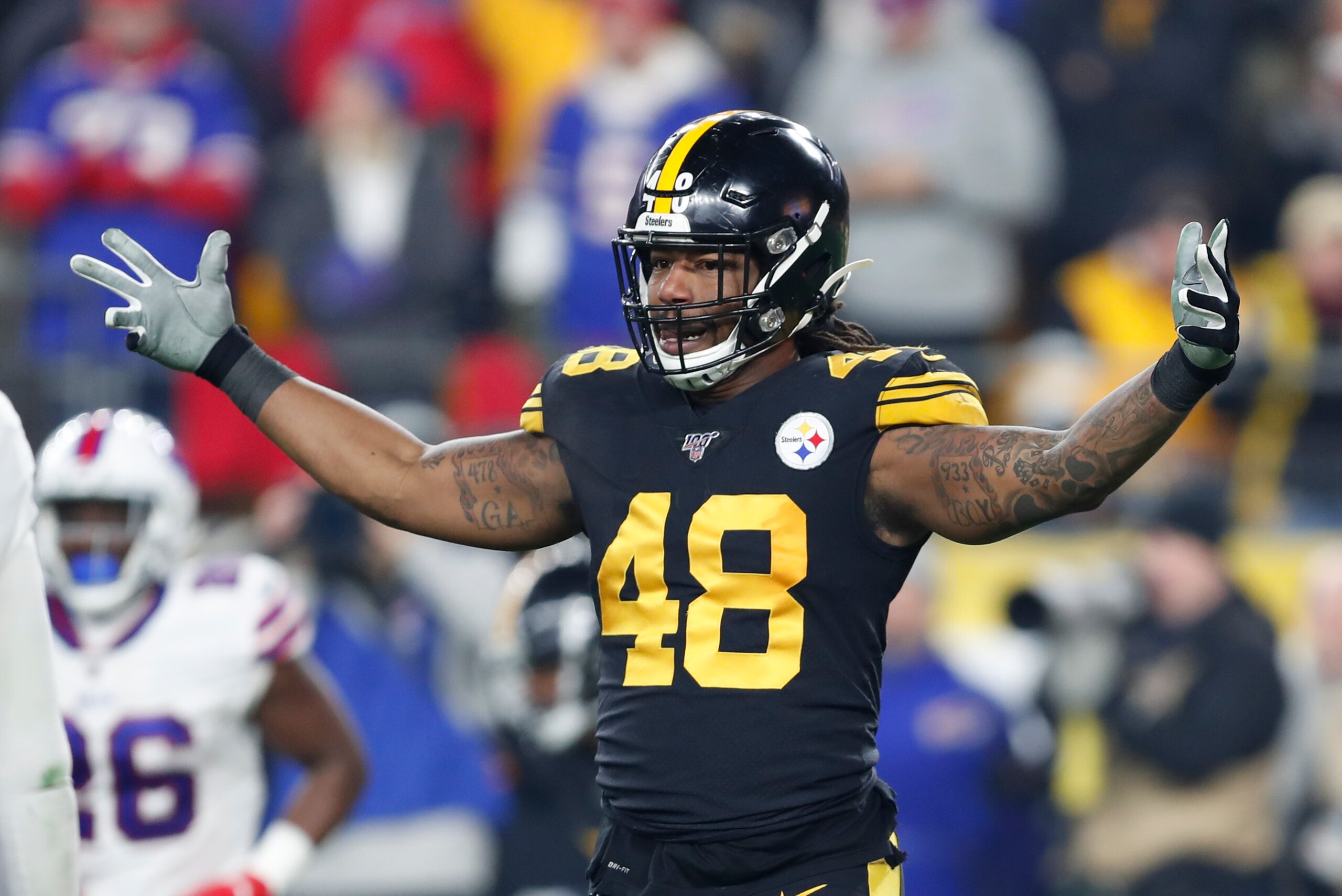
Player Should Be Asking for: $15 million per year
Team Should Be Offering: $9 million per year
According to ESPN's Jenna Laine, the Pittsburgh Steelers plan to use the franchise tag on edge-rusher Bud Dupree this offseason. This will ensure that Dupree doesn't hit the open market, but it isn't a realistic option for the 2020 season.
Last year's franchise-tag number for linebackers was more than $15 million. The Steelers are already projected to be over the cap as it is. Paying Dupree $15 million for the season isn't really an option.
There's also the fact that Dupree was largely a disappointment before the 2019 season. The 2015 first-round pick notched a mere 20 sacks in four seasons before breaking out with an 11.5-sack campaign in his contract year.
For the Steelers, a prove-it deal like the one-year, $9 million contract Ezekiel Ansah signed in Seattle last offseason would make the most sense. That isn't an option with the tag already on the table, though.
Dupree, meanwhile, should ask for a deal that pays him close to the tag number annually, or at least one that rivals the four-year, $52 million contract Preston Smith signed last offseason to join the Packers.
As the Packers did with Smith, the Steelers could arrange a back-loaded deal that allows them to move on from Dupree if he falls back to earth in the next couple of seasons. Giving Dupree, say, $20 million guaranteed over the first two years could keep his 2020 cap hit down while still leaving the edge-rusher more financially secure.
The Deal: Four years, $54 million with $20 million guaranteed and no dead money beyond 2021
Tennessee Titans and Derrick Henry
8 of 10
Player Should Be Asking for: $13 million per year
Team Should Be Offering: $10 million per year
The Tennessee Titans are in the rare position where their impending free-agent running back appears to be a bigger priority than their quarterback. According to ESPN's Matthew Berry, the Titans are expected to franchise-tag Derrick Henry if the two sides cannot reach a long-term deal and let Ryan Tannehill test the market.
This, along with Tennessee's heavy reliance on Henry in 2019, gives the running back the advantage.
Henry can and should ask for the $13 million per season Le'Veon Bell got from the New York Jets in free agency last year. Henry isn't the same dynamic runner and receiver that Bell was in his prime, but he's capable of carrying an offense and might just be the most important player on the Titans roster.
Of course, actually paying Henry that sort of cash would be a hard sell for Tennessee. He is largely a one-dimensional player, and his hard running style is not conducive to a long NFL career. Henry hasn't shown his wear and tear yet, but with 804 carries in four seasons, that time could be coming.
Tennessee should look to give Henry something in the range of $10 million per year. This would still make him the fifth-highest-paid back in the league annually but would only cost Tennessee roughly 20 percent of its projected $48 million in cap space.
Ideally, the Titans and Henry could agree on a back-loaded deal that includes a lot of up-front guaranteed money. This would give Henry more guaranteed money than he'd earn on the franchise tag alone while still giving Tennessee some flexibility if Henry does start to break down after a couple more seasons.
The Deal: Four years, $44 million with $20 million guaranteed in first two seasons
Los Angeles Chargers and Melvin Gordon III
9 of 10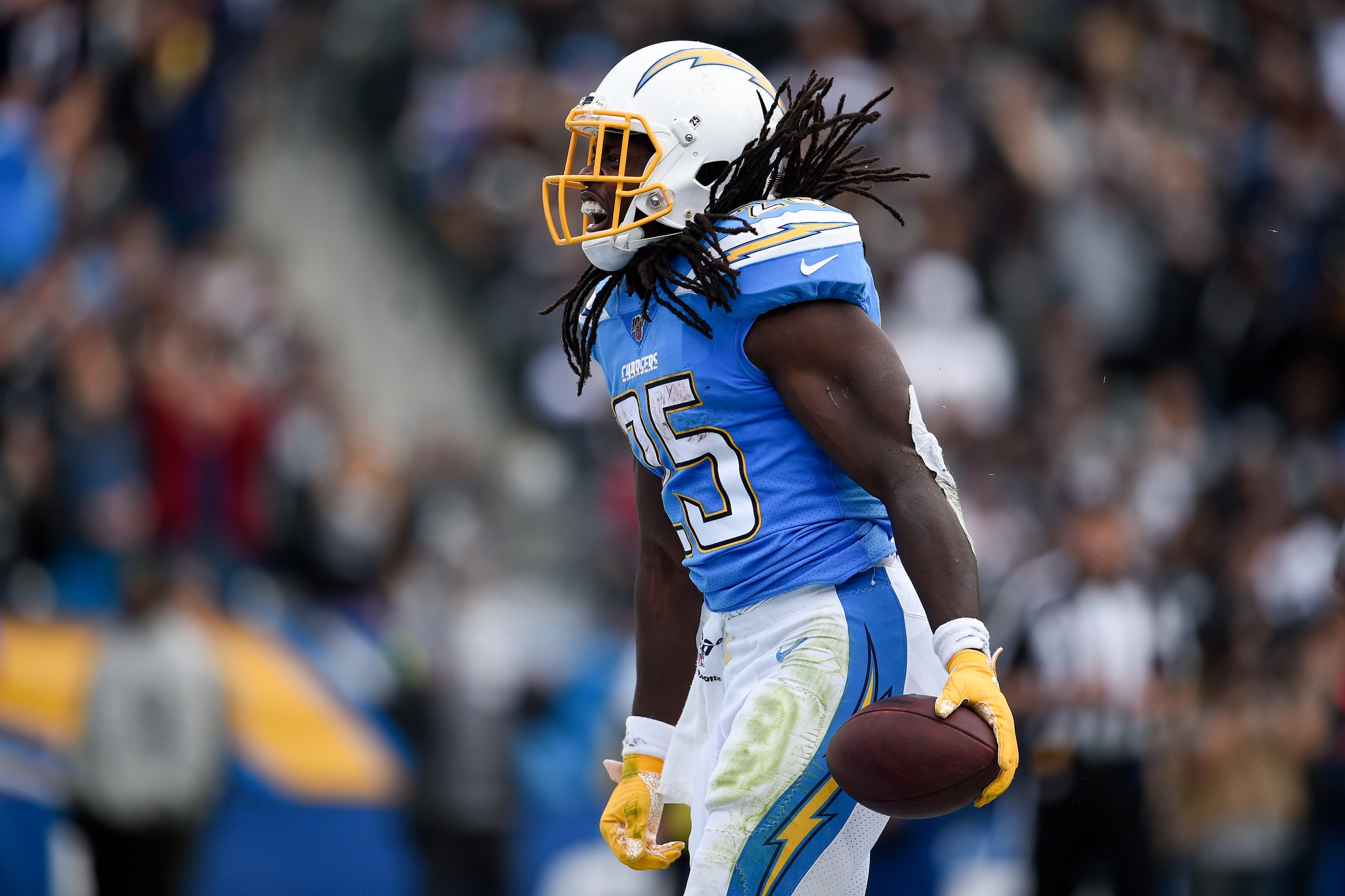
Player Should Be Asking for: $13 million per year
Team Should Be Offering: $8 million per year
Unlike Henry, Los Angeles Chargers running back Melvin Gordon III is a dynamic dual threat. However, while Gordon does a little bit of everything well, he isn't elite at any one thing. Henry is a special runner; Gordon is not.
In his five pro seasons, Gordon has only topped the 1,000-yard rushing mark once. He's surpassed 4.0 yards per carry the same number of times and has averaged exactly 4.0 yards per carry for his career.
One could argue that Gordon is more valuable as a pass-catcher than purely as a runner. The problem for Gordon is that the Chargers already have a premier receiving back in Austin Ekeler. Therefore, while L.A. would prefer to bring Gordon back, it isn't likely to overpay to do so.
"We'd like to have him back, but it's free agency and you never know what's going to happen," head coach Anthony Lynn said on Pro Football Talk Live.
For the Chargers, a deal in the $7-8 million range—roughly what guys like Devonta Freeman and Jerick McKinnon have received in recent years—would make sense. However, Gordon will almost certainly be seeking something closer to Le'Veon Bell's deal or even more.
Todd Gurley II, taken in the same draft as Gordon, is making an annual salary in excess of $14 million.
Coming to an agreement here could be especially difficult given what Gordon believes he is worth—he wanted to be one of the league's highest-paid backs last offseason, according to ESPN's Adam Schefter. Striking a balance between a team-friendly figure and player-friendly guaranteed money could get the job done, however.
The Deal: Four years, $40 million with $24 million guaranteed
New England Patriots and Tom Brady
10 of 10
Player Should Be Asking for: $30 million per year
Team Should Be Offering: $30 million per year
After two decades and six Super Bowl victories, New England Patriots quarterback Tom Brady should expect to be the NFL's highest-paid quarterback.
He probably won't go that high, but whatever he wants, the Patriots should be willing to pay. That's not the tricky part of this negotiation; the challenge is getting a deal done that allows the Patriots to make other moves in free agency and via trade to bolster the offense.
"Just talked to someone I trust. He doesn't believe that Brady is demanding $30 million or more a year. The weapons add is a priority, however," NFL Network's Michael Giardi tweeted in early February.
If the Patriots want to keep Brady, they need to convince him that his best shot at another Lombardi Trophy is in New England. To do that, they need to upgrade his supporting cast. With just under $44 million in projected cap space, that could require some creative math with Brady.
It may be time for Brady to go the Brees route and agree to a deal that includes phantom years on the back end.
If New England believes that Brady has two more good years in him, then perhaps a three-year deal that automatically voids after two would do the trick. Brady could still earn more than $30 million per year for the seasons he actually plays while giving the Patriots the financial flexibility to go out and get those aforementioned weapons.
The Deal: Three years, $62 million with $50 million guaranteed and a 2022 season that automatically voids
*All contract and cap information via Spotrac.
.jpg?w=2560 "Bills Rams Football")
.jpg?w=2560 "Grading WWE Raw 🔠")