
NFL1000: Ranking the Best Defensive Schemes
When it comes to schematic innovation and effectiveness, you’ll generally hear more about the things done on the offensive side of the ball.
There will be occasional odes written to the greatness of Buddy Ryan’s old 46 defense, for example. But you’ll hear far more about the West Coast offense and the development of the three-digit passing game from Sid Gillman to Don Coryell to Mike Martz than you will about the zone blitz or the advent of the nickel defense as a base concept.
It’s time to change that and give the NFL’s best defensive minds the credit they deserve. Because for every offensive innovation, there has been an equal and opposite defensive invention to counter it. And in today’s NFL, when offenses are more diverse and explosive than ever before, defensive coaches are required to pull more from their playbooks than at any time in the game’s history.
It used to be easy, really. Even in the 1990s, you’d put a base defense or two on the field with a few interesting blitzes, and it would be enough against the fairly static offenses of the time. Now, it’s much more complicated. If a defensive coach were to put a vanilla 3-4 or Cover 2 formation up against Bruce Arians’ double-slot concepts or Kyle Shanahan’s pre-snap wizardry, the result would not be pretty.
As a result, modern defensive coaching is less about one philosophy or another and more about grabbing every scheme that works for your personnel and adjusting accordingly. More and more, you’ll hear defensive coordinators talking about how they scheme for a particular opponent in a particular week than the old-school "make them adjust to us" stuff.
These 10 defenses and their coaches are perfect examples of those who have gone above and beyond to match wits with the realities of the league’s ever-changing offensive structures.
10.Kansas City’s Odd Defensive Fronts
1 of 10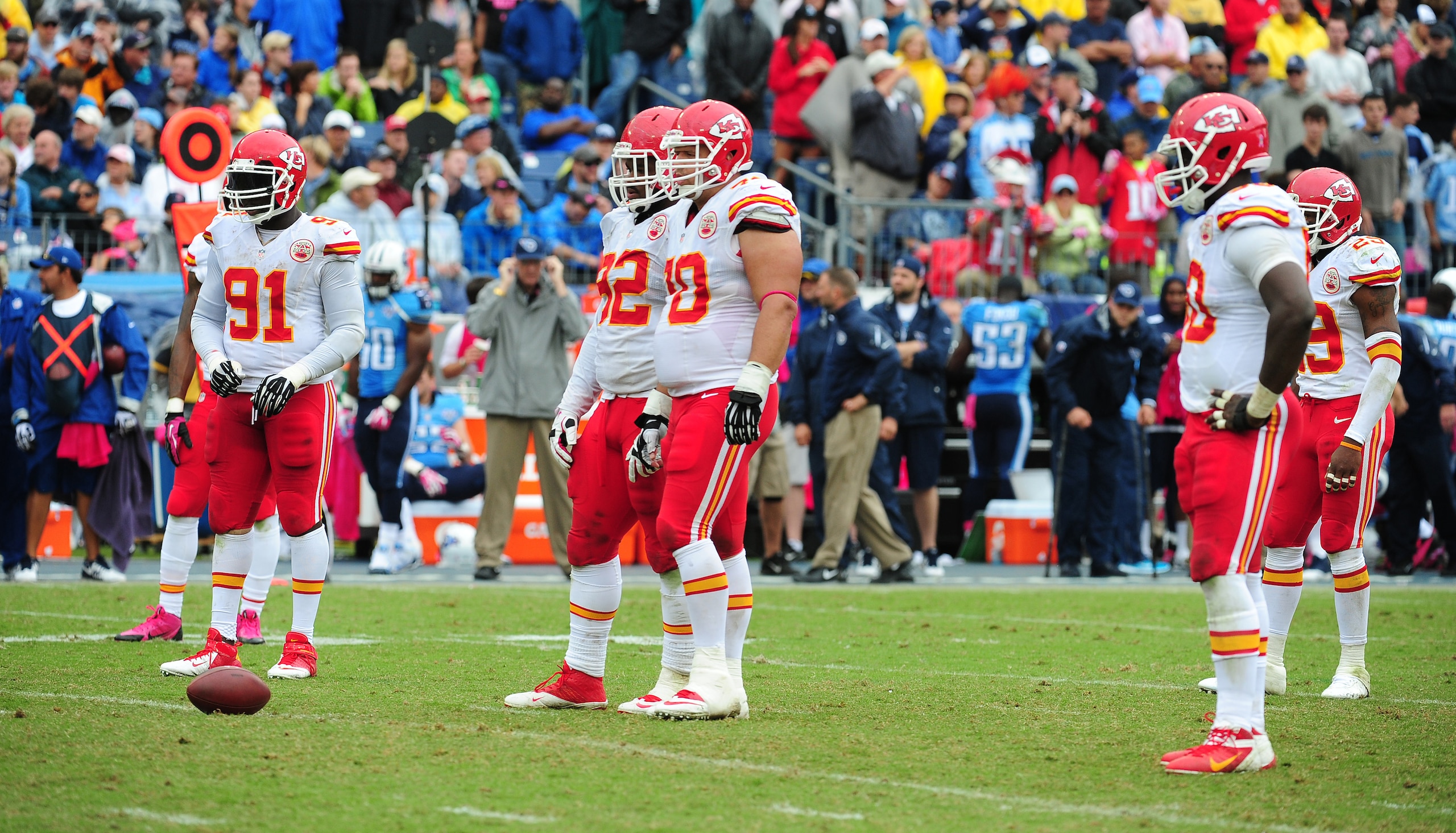
Pass-rushers Justin Houston and Tamba Hali, safety Eric Berry and cornerback Marcus Peters are the stars of Kansas City’s defense. However, a lesser-known name that’s been just as important to that defense’s success since 2013 is defensive coordinator Bob Sutton. Sutton does have an estimable roster at his disposal, but he’s also expanded and enhanced the Chiefs’ defensive fronts with as many different front concepts as you’ll see in the NFL these days.
Sutton learned a lot about switching up his personnel between linemen and linebackers with their hands on and off the ground when he was the Jets’ defensive assistant and linebackers coach under Rex Ryan from 2009-2012.
What Ryan has always liked to do, and what Sutton does so well with the Chiefs, is to show different fronts to a quarterback and offensive line to make their pre-snap reads more difficult. As a result, you’ll see Kansas City’s defense lining up in all sorts of odd fronts that allow linebackers and defensive backs to do different things.
On one play, he might throw a 1-4-6 alignment with a down lineman, four linebackers and a dime defense in which the linebackers and safeties may or may not be blitzing from any angle. Or, a base 2-4-5 in which Sutton’s defensive backs can patrol the field in nickel coverage.
Sutton’s philosophy is simple and effective: The more looks you throw at an offense, the more confusion you create, and the better your potential to limit the passing game.
Sutton doesn’t talk much about his defensive concepts—he’s known as a “Zen thinker” who speaks more about his players and their motivations—but when you watch the Chiefs on the field, you’ll see a defense that has its roots in other disruptive and diverse defensive ideas while still bringing original schemes to the table.
9. Gregg Williams’ Dime Defense
2 of 10
Throughout his career as a generally effective and sometimes controversial defensive coordinator, Gregg Williams has relied on multiple schemes. But one that has defined his recent tenures with the St. Louis/Los Angeles Rams and the New Orleans Saints before that is the use of dime defense as a base defense with a movable safety/linebacker as the fulcrum on which the dime coverage can turn into nickel quickly.
He did this with Roman Harper in New Orleans, and with Mark Barron on the Rams. Now that he’s the Browns’ defensive coordinator, he’ll no doubt use former Michigan safety Jabrill Peppers, one of the team’s three first-round draft picks, in that role.
When I analyzed Peppers’ tape in April, I saw a player who could do everything from playing outside and slot cornerback, to aligning as a deep safety, to coming down to help stop the run at linebacker depth. With his skill set, it was going to be a matter of a team deciding Peppers fit in their defense. The second the Browns took him with the 25th overall pick, I knew Peppers had found his niche.
Much like Barron did in Williams’ defense, Peppers will likely be tasked with reading the running backs pre-snap, only to break off and cover a tight end based on the offensive formation. And at linebacker depth, Peppers could also blitz, or back off into deep coverage.
Williams has said there’s more Buddy Ryan than anyone else in what he does, which would lead you to believe he’s a blitz-heavy coach with an eye on bringing as much pressure as possible. That’s changed to a large degree, as Williams has accepted and adjusted to the fact that the NFL is now a matchup league. It’s more about spacing your defenders against the pass than it is rushing the passer with basic coverage behind.
From his dime defenses, Williams can call all the safety blitzes and inverted coverages he’s always preferred, but make no mistake: The defensive backs rule the roost in the defenses he calls now.
8. Jim Schwartz’s Wide Nine Attack Front
3 of 10
When former Detroit Lions head coach Jim Schwartz took over the Bills’ defensive coordinator position in 2014, Buffalo’s defense went from 20th in points allowed the year before to fourth in Schwartz’s one season there. And when the Eagles hired him to replace Bill Davis as their defensive coordinator in 2016, that defense progressed from 28th in points allowed to 12th.
Schwartz obviously has effective schemes for his entire defensive roster, but the one thing he’s best known for is the "wide nine" attack front that puts his defensive ends slanted at an angle far outside the tackles (in the nine-gap, hence the name), allowing them to take after the offensive tackles in different ways. It was a staple during his time in Detroit, and Schwartz took it with him to Buffalo and Philadelphia.
When the defensive ends are aligned that far outside the tackles, it forces the tackles to fan out to block more quickly, eliminating the potential for those outside blockers to come back in to counter linebacker blitzes and defensive tackle stunts. Once the tackles are out there, they’re committed. And when you can get consistent pressure with four linemen (which Schwartz prefers, as he’s not generally a big proponent of the blitz), it allows your linebackers and defensive backs to affect coverage more clearly.
Since the days of the Steel Curtain, teams have looked for the best ways to get the most possible pressure without blitzing to better avoid taking defenders out of their depths to help with the pass rush. The wide nine is Schwartz’s version, and it’s been highly effective.
7. Arizona’s Moneybacker Defense
4 of 10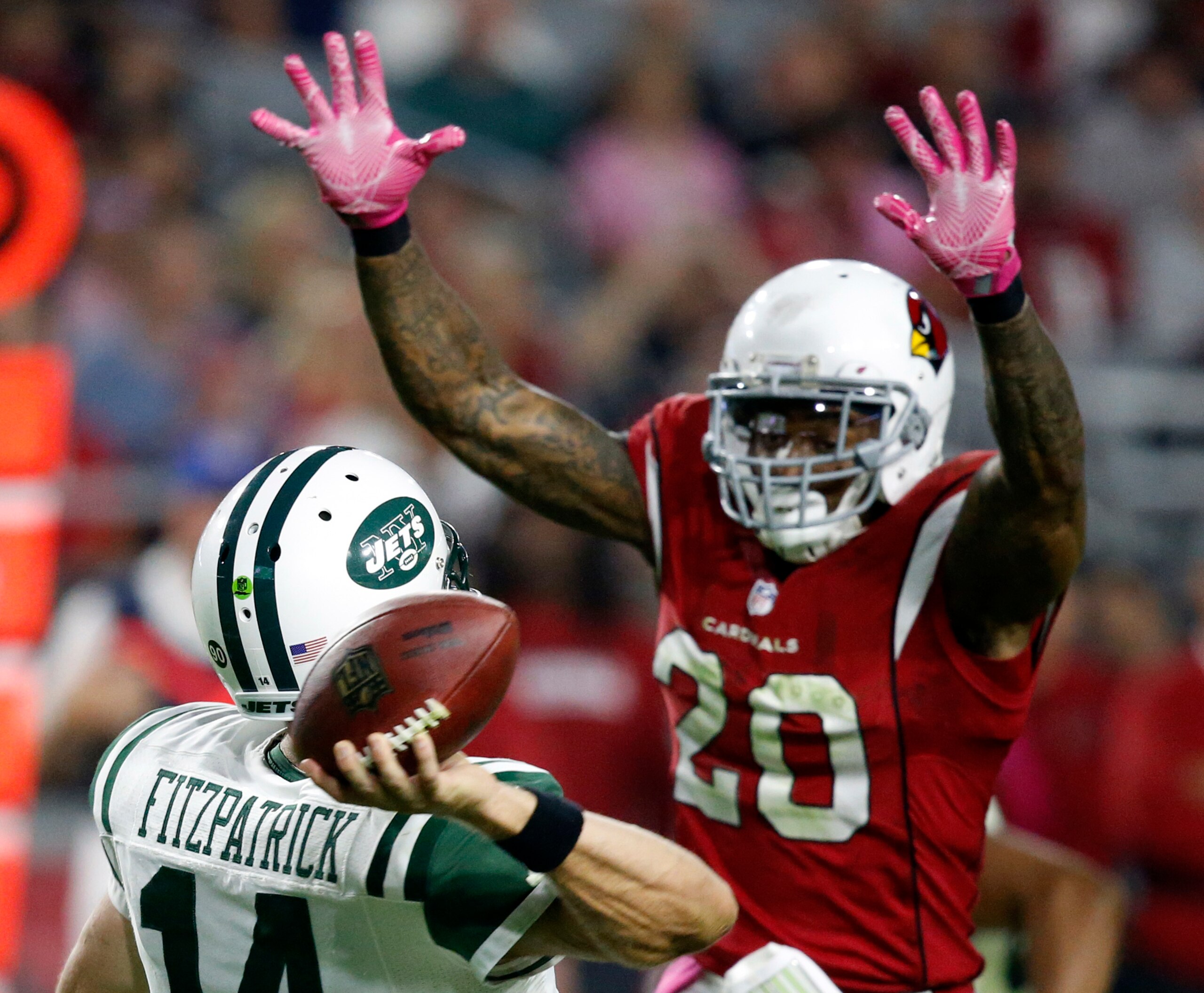
Throughout the Bruce Arians era, the Arizona Cardinals have made it a priority to be as diverse in their defensive formations as possible. Arians is the team’s offensive mastermind and play-caller, so he’s turned to defensive coordinator James Bettcher to put a unit on the field that is just as effective as it is diverse.
Over the last few seasons, the Cardinals have drafted players to reflect his philosophy; Tyrann Mathieu, taken in the third round of the 2013 draft, has the ability to play everything from slot cornerback to deep safety.
But things got really interesting when Arizona selected Washington State safety Deone Bucannon in the first round of the 2014 draft and started to see a new ideal position for him. A strong safety for most of his rookie season, Bucannon was switched to a 210-pound linebacker (or "Moneybacker" in the team’s terminology) in 2015 to help replace the sheer athleticism of Daryl Washington after Washington faced multiple suspensions.
Bucannon’s success there forced the Cardinals to make a few schematic adjustments, as Arians told me in December 2015:
"We put him in the nickel package, and he really took off. He was too good to take off the field, so we basically kept our nickel package in and adjusted it to play against regular [personnel]. It’s always been that way, and it goes back to when I was a head coach at Temple—we’d recruit skinny defensive ends, hoping they’d grow into tackles, outside linebackers would grow into defensive ends, and safeties that would grow into outside linebackers. It’s one of those things that ... the more position-flexibility you have, the more valuable you are to us."
Valuable indeed. Bucannon is less a coverage guy than a run-stopper and field rover at this point, though he can still take short and intermediate coverage responsibilities depending on the call. He’s also an excellent blitzer, and his position switch reflects the Cardinals’ belief that their players must be as versatile as possible.
"I think it's important to have hybrid players at all levels,” Cardinals general manager Steve Keim told me at the 2017 NFL Scouting Combine. "You've got Deone from a matchup standpoint who can potentially cover tight ends, can cover at times slot receivers to an extent. To have a guy like Tyrann Mathieu who can invert, play in the slot, play in the nickel for you, the more flexibility you have, the more you can do. Those guys have become so valuable, because this game has become a matchup situation."
The Cardinals have been ahead of the game when it comes to recognizing the new matchup realities.
6. Mike Zimmer’s Moving Linebackers
5 of 10
Minnesota Vikings head coach Mike Zimmer has long been one of the NFL’s best defensive minds. With a 4-3 defense as his base, Zimmer found success as a defensive coordinator in Dallas and Cincinnati before the Vikings nabbed him to be their head man in 2014. It should come as no surprise that Minnesota has assembled one of the league’s best young defenses in that time.
Zimmer prefers versatile safeties and cornerbacks who disrupt routes with aggressiveness at the line of scrimmage. And while he would optimally prefer that his defensive linemen get pressure without blitzing, Zimmer’s use of the double A-gap blitz has been a staple of his defense for years. Most Cover 2 and Tampa 2 teams have utilized it throughout the years, but Zimmer has advanced the concept to do more than just pressure quarterbacks: He’ll confuse them, as well.
In a base A-gap blitz, you will see the middle linebacker and one of the outside linebackers rush right through the A-gaps between the center and either guard. It’s a great way to create pressure against linemen already occupied by the front four, especially on delayed blitzes. But when you watch Minnesota’s defense use it, you’ll notice that often, though two linebackers will either rush the gaps from linebacker depth or start at the line, creating a six-man blitz look, one linebacker will peel off into coverage. And because Zimmer doesn’t give away his post-snap intentions with pre-snap looks, quarterbacks and linemen are not always sure which line calls to make.
Zimmer might also send both linebackers and drop a lineman into coverage, or drop one linebacker into coverage and blitz a safety. Whatever he calls, it’s the double A-gap blitz looks that are the key to Minnesota’s defensive versatility.
5. Baltimore’s Disguised Coverages
6 of 10
The Ravens went 8-8 last season and missed the playoffs for the second straight year, which obscured the outstanding job defensive coordinator Dean Pees did. Baltimore ranked sixth in Football Outsiders’ opponent-adjusted metrics for team defense and 10th against the pass, which was especially impressive given the fact that top cornerback Jimmy Smith struggled to stay healthy.
One thing that has elevated Baltimore’s pass defense is Pees’ use of disguised coverages. It’s something every NFL team does to some degree, but the Ravens are especially good at showing one coverage pre-snap and then altering it as the defensive backs start to move.
Safeties Eric Weddle and Lardarius Webb are big parts of that disguise, as each can play both strong and free positions. And the addition of free-agent veteran safety Tony Jefferson will add additional wrinkles. Jefferson comes from an Arizona defense in which safeties are asked to play multiple positions and help with different disguised coverages.
Whether it’s an invert—where the quarterback expects a shallow cornerback and deep safety and gets the opposite—or a two-deep man coverage look that somehow shifts to Cover 2 zone after the snap, Pees’ disguise concepts are among the league’s most advanced and effective.
No less an expert than Bill Belichick has said that Pees, his defensive coordinator in New England from 2006-2009, does a "good job of keeping you off-balance."
"They’re not going to sit there in one thing all day," Belichick said last December, per Ryan Mink of BaltimoreRavens.com. "They’ve never done that. They’re going to change up the looks on you."
4. New England’s Big Nickel
7 of 10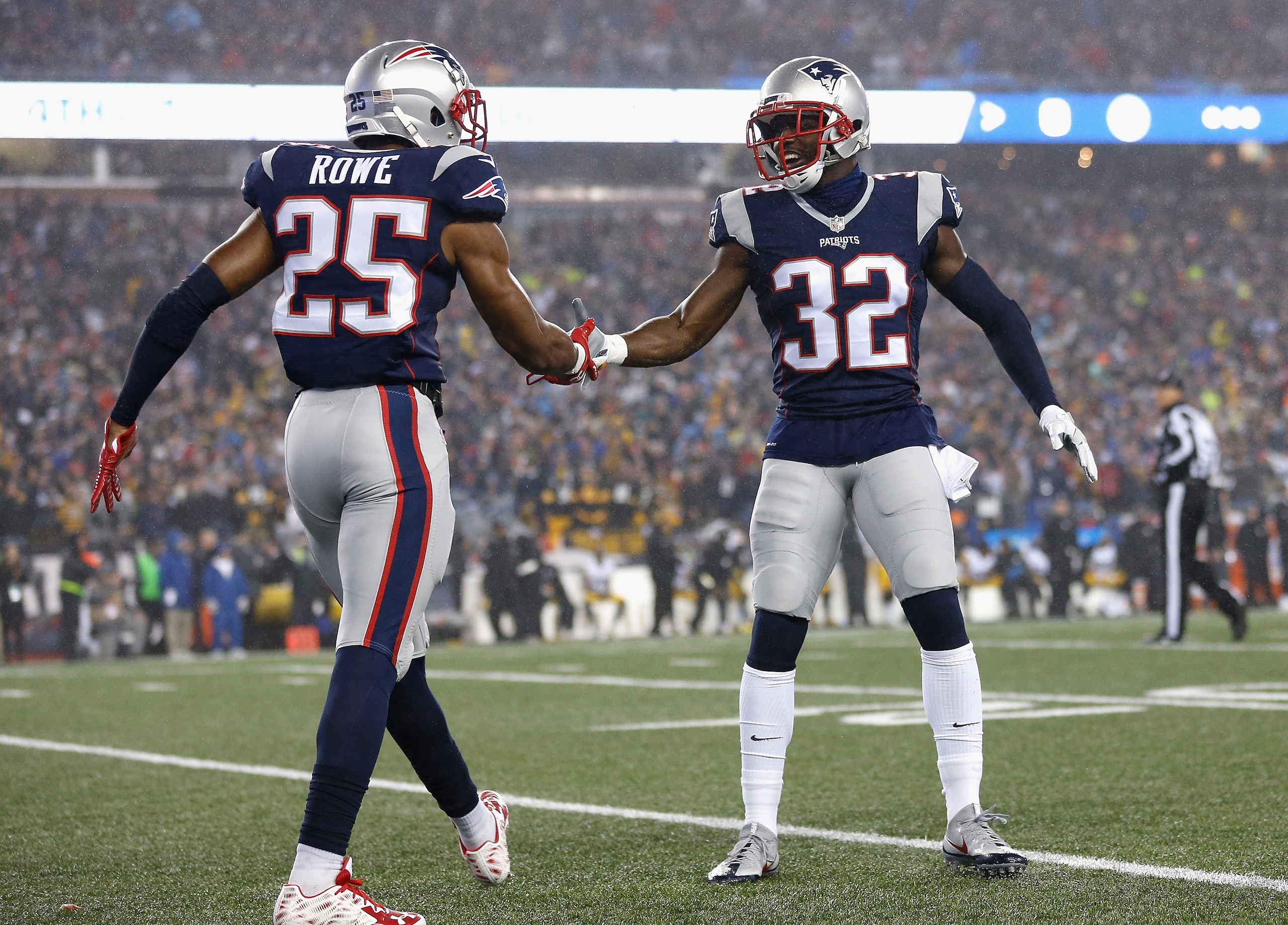
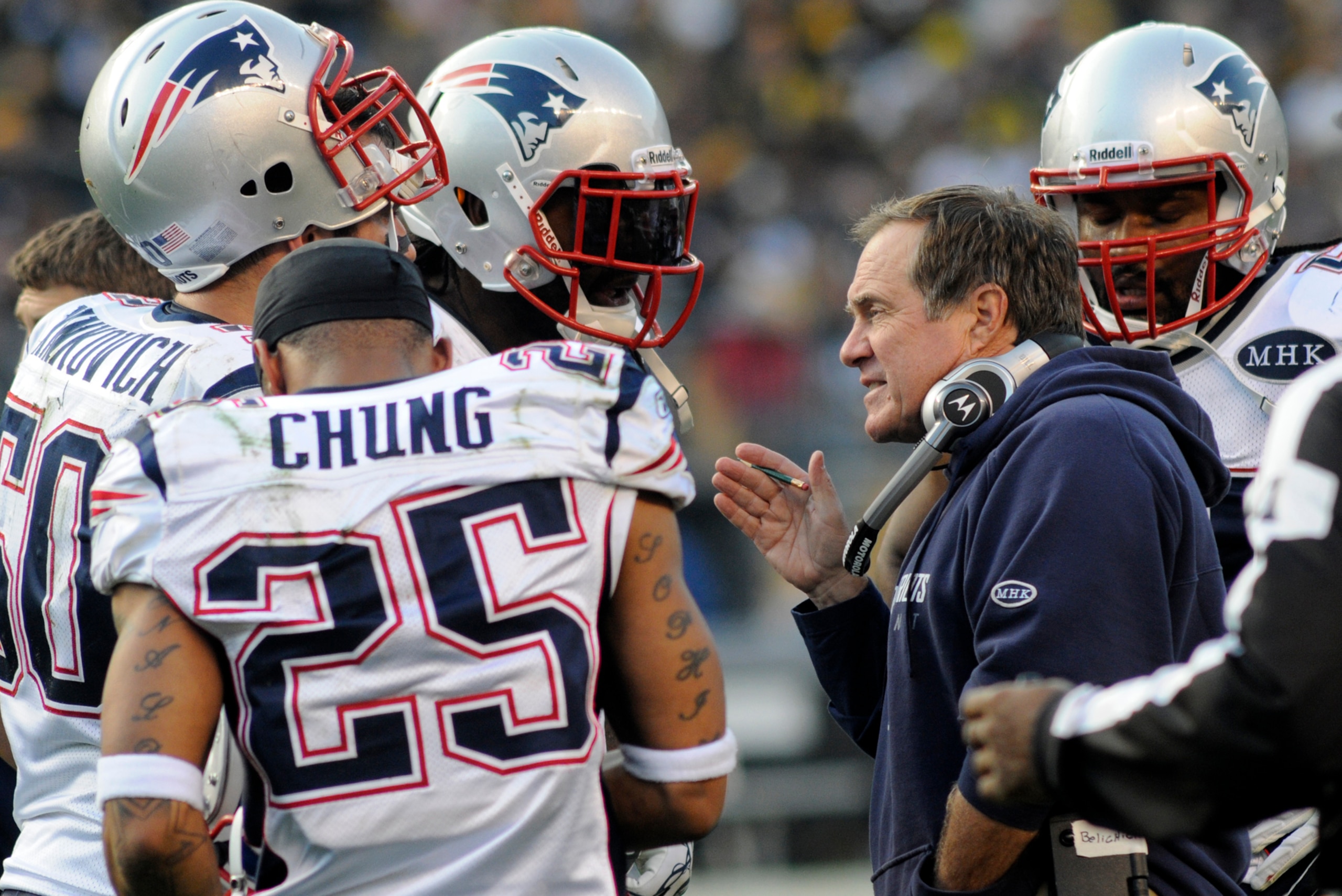
To state the obvious, Bill Belichick has become the NFL’s greatest adaptive mind. Through his time as the Patriots' head coach, Belichick has switched up his offensive and defensive schemes more than any other head coach—always to match the personnel he has—and he’s been wildly successful with all iterations of his philosophies.
When the Patriots usurped the Seahawks as the NFL’s leader in scoring defense last season after Seattle’s four-year run, it was the result of one of Belichick’s best coaching jobs. In conjunction with defensive coordinator Matt Patricia, Belichick had made a few adjustments on the field that allowed his team to present a dominant defense without a clear shutdown cornerback.
In 2016, per Pro Football Focus, Malcolm Butler allowed four touchdowns to go along with his four interceptions, and he had an opponent passer rating of 78.2. Not bad, but not exactly top-10 material. Eric Rowe and Logan Ryan were similar in overall effect—good, but not great, players.
What made the difference in New England’s defense, especially against more advanced route combinations, was the deployment of a "big nickel" package in which the Patriots would put three safeties on the field as opposed to the usual three cornerbacks you see in a nickel defense.
Belichick didn’t invent this idea—it’s been around since at least the 1990s, when Packers defensive coordinator Fritz Shurmur installed it—but he used it to great effect with safeties Patrick Chung, Devin McCourty and Duron Harmon. So, while several NFL teams use it now, we’ll focus on New England’s version because it’s become a key part of a great defense.
And in this version, each safety has specific responsibilities. Chung is the underneath defender; he’ll usually play at linebacker depth, and it’s his job to take the first half of bracket coverages. Harmon would usually take the back half of bracket coverages as the deep man.
McCourty is the wild card that really makes it work, though. Drafted out of Rutgers as a cornerback in 2010, McCourty made the Pro Bowl in his rookie year at that position after grabbing seven interceptions. But Belichick started transitioning him to a hybrid role in 2012, and now, he’s the deep patrolling safety who still has the specific coverage skills to take elite deep receivers one-on-one downfield.
There are times when the Patriots will put McCourty on the opponent’s No. 1 receiver, and he allowed just 19 catches on 31 targets last season, per Pro Football Focus.
When Belichick’s history is written, it will be full of great examples of his ability to match player to scheme. New England’s recent safety deployments should be written in bold.
3. Seattle’s Deep-Safety Defense
8 of 10
When Pete Carroll became the Seahawks head coach in 2010, the NFL was alternating between a couple of primary defenses. The Cover 2/Tampa 2 schemes of the Tony Dungy era were still popular, and the hybrid concepts popularized by Bill Belichick, Dick LeBeau and Dom Capers were gaining traction.
Carroll had a different idea, though.
He went back to the future, designing his base defense to look like something out of the 1970s or early '80s: a four-man front with aggressive pass-rushers, a linebacker group versatile enough to stack against the run or drop into coverage, a strong safety to patrol the intermediate areas, a free safety with the speed and acumen to cover the entire deep third of the passing zone and cornerbacks who were tall and physically gifted enough to disrupt receivers at the line of scrimmage as well as trail them through deep routes.
The players selected and signed by Carroll and general manager John Schneider in the first few years of the Carroll era proved uniquely attuned to what the former USC coach wanted to do. It was a perfect mix of players and scheme. Linebackers Bobby Wagner and K.J. Wright, safeties Kam Chancellor and Earl Thomas, defensive ends Michael Bennett and Cliff Avril and cornerback Richard Sherman all fit perfectly in Carroll’s concepts.
And for a defense so simple on its surface, it sure worked well. From 2012 through 2015, the Seahawks led the NFL in scoring defense, becoming the only team in the post-merger era to do so four years in a row. It’s an incredible feat considering today’s pass-heavy offenses and rules that are favorable to receivers while diminishing the effect of aggressive cornerbacks.
While Carroll’s main concepts are Cover 1 and Cover 3 defenses, where the secondary will split the deep coverages between the cornerbacks and deep safety, there are subtle wrinkles.
The Seahawks have used Carroll’s nickel package more and more in recent years. Under former defensive coordinator and current Falcons head coach Dan Quinn, Seattle would pin both Avril and Bennett to one side of the formation, making life very difficult for the offensive linemen on that side. Bennett has become one of the better multi-position defensive linemen in the NFL, playing about half of his snaps inside at tackle and disrupting from any gap.
Look to see some new tweaks to this unit in the years ahead, though. The success of any Cover 1 or Cover 3 defense is highly dependent on the deep safety, and when Earl Thomas was lost for the season with a broken leg in early December, that defense fell apart—in part because the Seahawks didn’t have the safety depth to adapt to a different scheme.
The signing of former Buccaneers safety Bradley McDougald and the selection of safeties Delano Hill, Michael Tyson and Tedric Thompson in this year's draft spoke to the need for more personnel, and perhaps more schematic diversity.
2. Dick LeBeau’s Zone Blitz
9 of 10
Dick LeBeau was finally inducted into the Pro Football Hall of Fame in 2010, an honor long overdue. Not only did he intercept 62 passes in 14 years for the Detroit Lions from 1959-1972 (a mark that still ranks 10th all-time), but he’s also been one of the game’s true defensive innovators as a head coach and assistant coach.
LeBeau has been responsible for more than one defensive revolution throughout his coaching tenure with the Bengals, Steelers and Titans since 1984—the hybrid fronts you see all over the NFL today have his mark on them as much as anybody’s. But if there’s one thing he’s known for developing to a higher level decades ago that still has a prominent effect on the league today, it’s the zone blitz.
Put simply, a zone blitz is when a lineman drops into coverage while a member of the secondary rushes the quarterback. It’s a great way to confuse a quarterback, upend a receiver group and create turnovers in different ways without vacating an area of the zone. Various zone blitz concepts have been sighted going back to the early days of the American Football League, but LeBeau was the one who moved the concept forward until it became an essential part of the modern NFL vocabulary.
LeBeau had toyed with the idea of the zone blitz when he was on the Bengals’ staff in the 1980s, and he devised blitz packages with safety David Fulcher as the pointman. But it was with the Steelers, the team he joined as secondary coach in 1992, where the idea really took hold. And now, you’d be hard-pressed to find an NFL team that doesn’t have at least a few zone blitz plays in its package.
"My hope was to make [the offense] read [the defense] as one thing and let the attack be something else," LeBeau told Geoff Hobson, then of the Cincinnati Enquirer, in 1997. "Show pressure and play zone. You have to be willing to take a guy who is usually a point of attack player and trust them to drop off the line a little bit. You wouldn't ask them to cover passes for a living, but they hold up in this defense."
Steelers linebacker James Harrison’s record-setting 100-yard pick-six in Super Bowl 43 was a zone blitz, and it’s illustrative of the scheme’s effectiveness. The Steelers were backed up in their own end zone as the Cardinals were driving to score, and when Arizona called a route combination to its left, LeBeau responded with a safety blitz and Harrison dropping into the short-zone area. He picked off the pass, and 100 yards later, the Steelers were off the hook.
The zone blitz is a perfect combination of complexity and disguise, and that’s why it’s still a key part of every NFL defense.
1. Wade Phillips’ One-Gap 3-4 Defense
10 of 10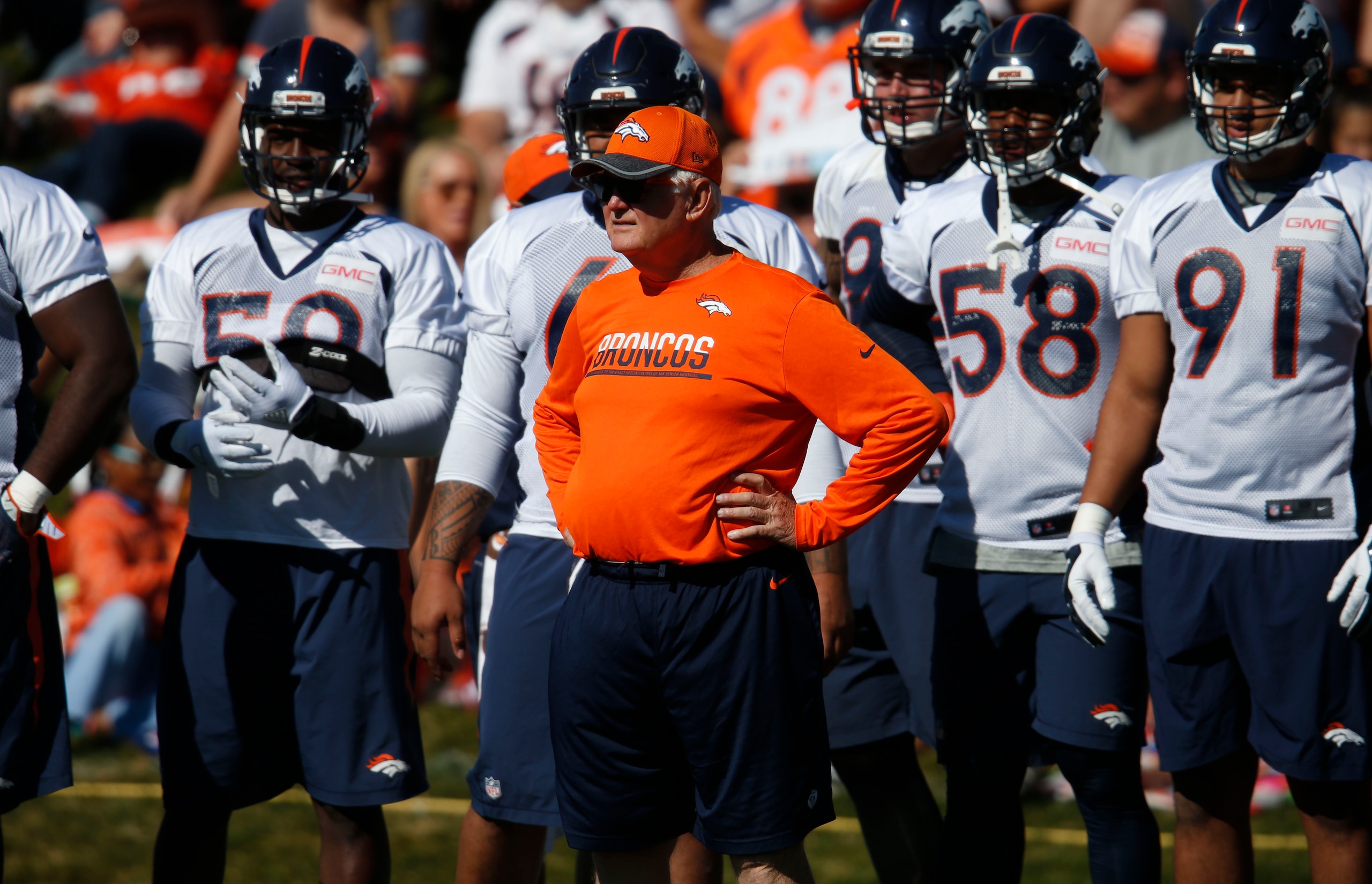
Wade Phillips got most of his defensive concepts from his father, Bum, a longtime NFL head coach and defensive genius.
Bum tried to bring the 3-4 to the American Football League in the late 1960s with the San Diego Chargers, but head coach Sid Gillman wasn’t having it, so Bum had to wait until he got the Houston Oilers’ head coaching job in 1975. Once there, Bum’s one-gap 3-4 defense became a highly effective strategy, and Wade—who started in the league as his dad’s linebackers coach in 1976—has taken his father’s philosophies and perfected them.
Wade has been a defensive coordinator in several NFL cities since 1981, and through his last few stops in San Diego, Dallas, Houston and Denver, his defenses have alternated between a 3-4 base and a four-man nickel rush with great effectiveness. He’ll be the Los Angeles Rams’ defensive mastermind in 2017, and the extent to which he’ll be able to take the Rams’ 4-3 personnel and excel should prove to any naysayers that in his case, the base 3-4 isn’t what you think it is.
Most 3-4 defenses alternate between two-gap fronts in which linemen are directed to react to offensive movement, or hybrid fronts in which one- and two-gap concepts merge together. However, Wade’s base defense brings 3-4 personnel—three defensive linemen, two inside linebackers and two outside linebackers—with an aggressive attack mentality. Phillips prefers lighter nose tackles and bigger ends, with outside linebackers optimized to rush the passer.
So, if there are concerns that Phillips is going to turn the great Aaron Donald into a passive two-gap tackle, or Robert Quinn into a reactive run-stopping end, there shouldn’t be.
"If he can’t fit in, you’re doing the wrong thing," Phillips said about Donald in February, per Myles Simmons of the team’s official site. "He can probably fit into any defense. We’re going to try to get him one-on-one as much as we can — no matter what he’s playing. No matter where he’s lining up, we’re going to try to get him one-on-one because he can beat people one-on-one. So that’s what we have to do as far as our scheme’s concerned, is utilize a guy like him — put him in position to make the plays he can make."
The one-gap base 3-4 should see Donald penetrating at both nose tackle and outside tackle, and he’ll have a more traditional four-man role when the Rams move to their nickel package. But wherever Phillips lines up his players, history tells us they’ll be in their best positions to succeed.
.jpg?w=2560 "Commanders Cowboys Football")
.jpg?w=2560 "49ers Seahawks Football")