

How Roger Federer and Rafael Nadal Can Once Again Rule Men's Tennis
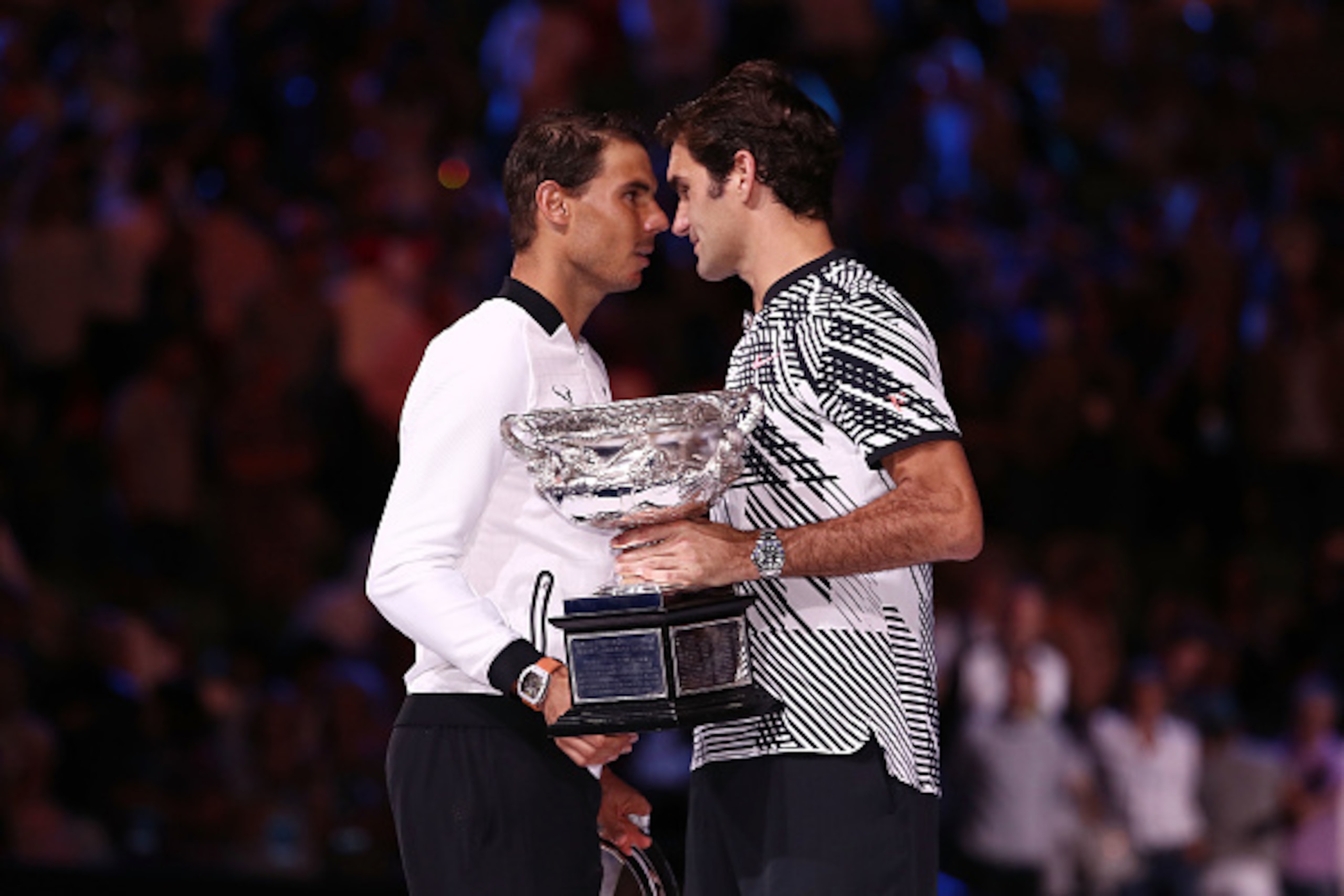
The instant classic featuring Roger Federer and Rafael Nadal in the finals of the 2017 Australian Open doesn't have to be one for the ages. It could be a new beginning for this old rivalry.
The fight, fitness and versatility displayed by Federer and Nadal work just as well in 2017 as they did in 2009.
Forget the throwback, Federer and Nadal can rule men's tennis today and tomorrow.
The two men went toe-to-toe for just over 3 1/2 hours, with Federer prevailing 6-4, 3-6, 6-1, 3-6, 6-3. What a fitting end to an incredible tournament that saw each man win two five-set matches before Sunday's final.
They looked young and energetic as they traded shots. Federer, 35, floated while flinging beautiful forehands and ferocious backhands. Nadal, 30, chased down balls and popped off winners from the baseline while releasing his signature "ehhhhhhh," grunt.
At times they looked weary, but never winded. Grigor Dimitrov, 25, and Kei Nishikori, 27, appeared far more depleted after their five-set losses than did Nadal.
The trick is sustaining that type of play.
Returning to No. 1 could prove difficult for Nadal or Federer. Right now, they trail Andy Murray and Novak Djokovic by a couple of seasons worth of ranking points. But as Murray proved in 2016, players can come out nowhere to take the top spot.
More likely, they could return to dominating Grand Slams the way they used to.
Between 2005 and 2010, Federer and Nadal accounted for 21 Grand Slam titles. Sunday's match was their first meeting in a Grand Slam final since the 2009 Australian Open.
On Monday, Nadal and Federer will be up to No. 6 and No. 10, respectively.
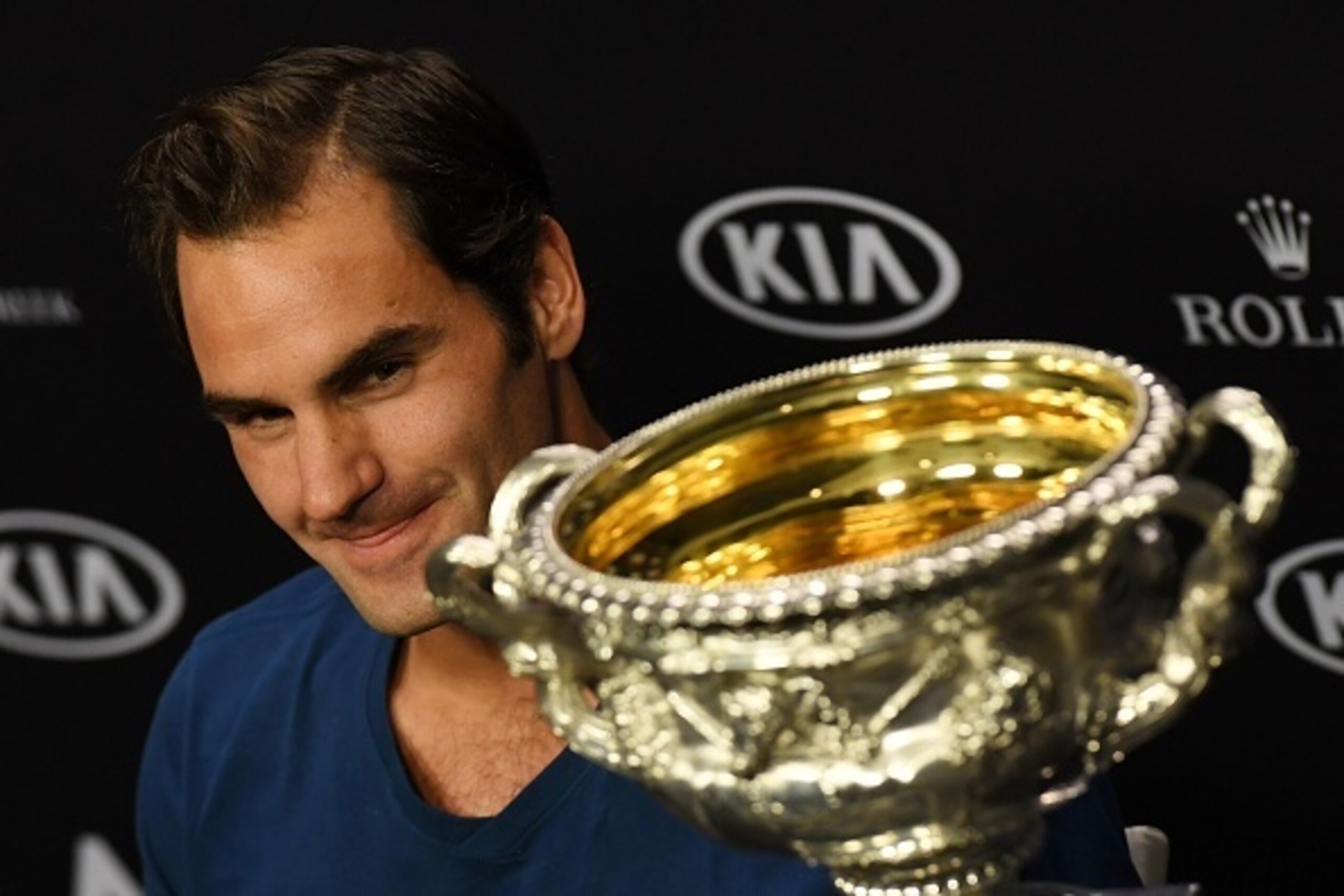
Their surprise meeting in the finals wasn't a throwback, wrote Tennis.com's Steve Tignor, "Federer and Nadal never went away. Rafa was ranked No. 1 as recently as 2014, while Roger finished 2015 at No. 2 and reached the finals of Wimbledon and the U.S. Open.”
Still, they weren't dominating the ATP World Tour. Djokovic was doing that, and Murray was a close second. Stan Wawrinka had won more Grand Slams over the past three years than Federer and Nadal combined.
The key for Federer and Nadal will be to rethink their approach to the schedule. Instead of grinding it out against healthier, much younger players, Federer and Nadal might consider scaling back, a la Serena Williams.
Williams has taken the entire second half of the year off the past two seasons. Although she is only a month younger than Federer, she's played 419 fewer singles matches over the course of her career.
She has already signaled she's cutting back her schedule this year. Her coach Patrick Mouratoglou told Reuters that Williams will play more tournaments than she did last year (eight) but fewer than she did the year before (11).
Including Davis Cup ties, in 2014, Federer played in 21 tournaments. Imagine how much more rested he'd be if he cut that in half.
Nadal is younger, but his style of play has left him with more injuries than Federer. He too could benefit from fewer tournaments. He could maximize his clay-court season and minimize time on the hard courts.
The Spaniard understands how fragile his fitness has been and that staying healthy is the key to winning more majors. "More than all these kind of things is being health enough to work the way I need to work, to fight for the things I want to fight. I'm going to keep trying to do and to work the same way," Nadal told reporters, after the final.
He also spoke about how this match could carry over into the rest of the season. "If I am able to play like this, to hold matches like I hold the other day, and recover well as I recovered, but on clay I recovered better than here, then the opponents don't get that many free points...If I made that happen, I think I can keep having success in hard courts, but on clay can be special."
Of course, Nadal and Federer need to play enough tournaments to avoid losing major ground in points and to make the year-end championships. But there is no need to chase the No. 1 ranking. Let the other guys beat themselves up doing that.
In an article for ESPN's FiveThirtyEight, Carl Bialik wrote that "Veterans have gotten smarter about diet, conditioning, practice and scheduling."
It's perhaps not a coincidence that both men are coming off extended times away from the game due to injuries.
In 2015, Federer spoke with Matt Cronin of Tennis.com about the importance of recuperation:
"I'm a big believer in rest and then working hard in the offseason whenever you get a chance...If I look now how no top player almost plays the week before a Grand Slam, I don't know if that's a positive thing that I guess I maybe created a little bit. But at the same time, it seems like top guys are more injury-free than they ever have been.
"
If the two can manage training and time off, who besides Djokovic would be favored to beat them at a Grand Slam? Who is better on grass than Federer? Nadal owns the clay.
So take more time off fellas. You've earned it. The injury-induced vacations certainly did your bodies good. You are clearly the best. All you need is the rest.

.jpg?w=2560 "49ers Seahawks Football")
.jpg?w=2560 "Commanders OL HEATED After Tie ▶️")
.jpg?w=2560 "Buzz: MHJ Hired Agents for Trade")
.jpg?w=2560 "AD Trolls Bears WR on IG 😂")