

What If the Selke Trophy Were Actually Awarded to Defensive Specialists?
The NHL has an award nominally for defensive specialists, the Frank J. Selke Trophy, which supposedly goes to "the forward who best excels in the defensive aspects of the game." Yet, no purely defensive forward has won the trophy in recent memory. Instead, it sometimes feels as though it’s awarded annually to the guy we can all agree is a good defensive player and who happens to be having a great offensive season.
That’s an exaggeration, but not much of one. This year, for example, it’s hard not to like Ryan Kesler’s chances of winning the award.
TOP NEWS
Re-Ranking Top Free Agents 🛒

Grades For Every Team's Prospect Pool 🔠
Coach Replacements for Tocchet
He meets both criteria. First, he’s one of the dozen or so forwards in the NHL whose two-way reputation has (rightly) become enshrined in hockey’s conventional wisdom. Second, he’s having a great offensive season. He’s presently on pace to score 30 goals for the first time since 2010-11; it isn’t a coincidence that the last time he topped that mark was also the year he won the Selke.
Anze Kopitar won last year in a season where his shot metrics were down (relative to his excellent career) and where he didn’t play particularly harder minutes than he had in the past. He did, however, have his best offensive season in five years. Pavel Datsyuk started winning them when he first topped the 90-point mark; Jonathan Toews’ Selke came in 2012-13, the year he had the best points-per-game mark of his career.
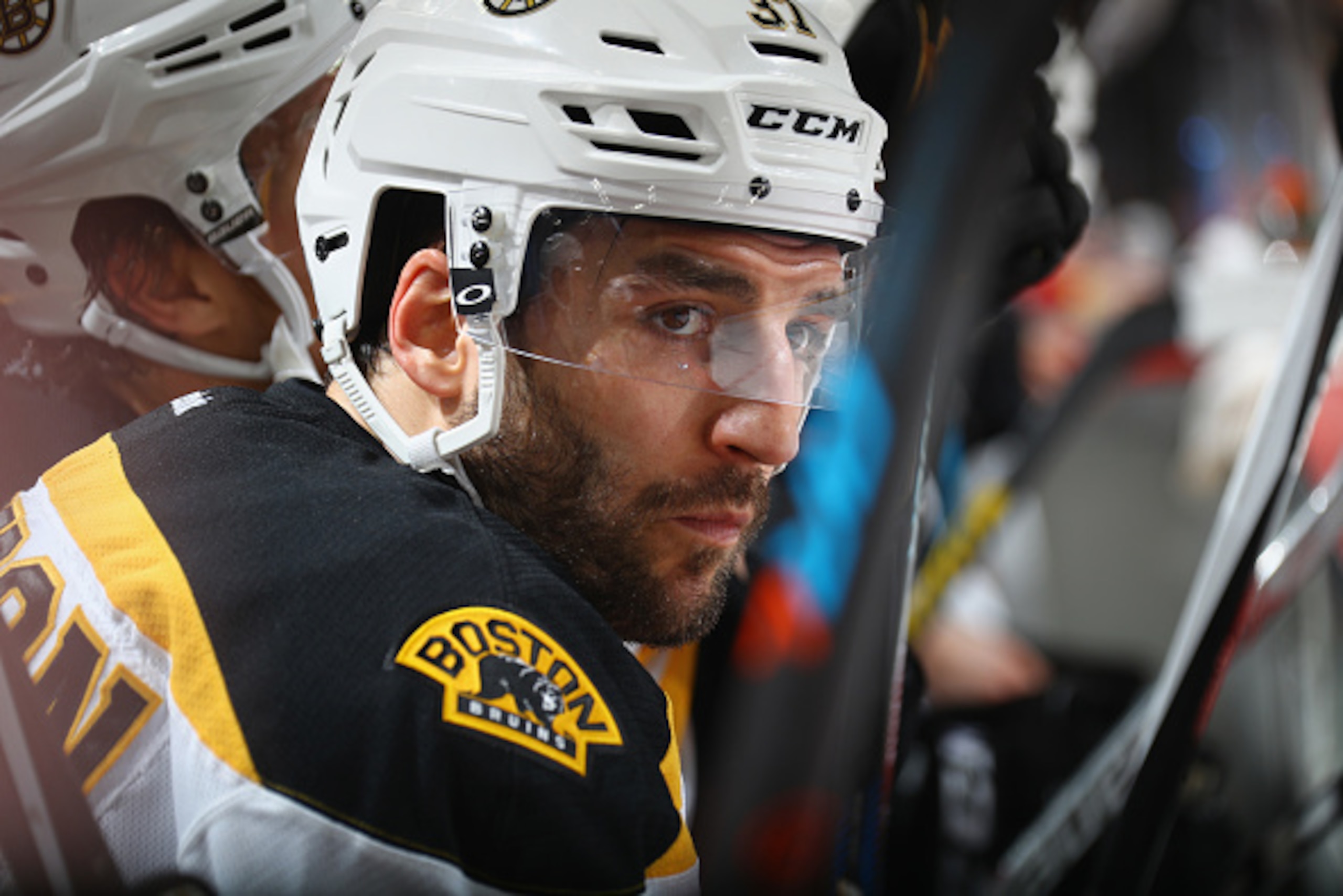
There are exceptions to the trend, such as 2014-15. Patrice Bergeron won the award in a bit of a low year offensively, and, incredibly, despite a mediocre plus/minus (which still carries more weight than it should). He played absolutely miserable defensive minutes, even for him, and had stellar shot metrics, again even for him.
Yet even Bergeron had 55 points that year, which is part of the recent trend of requiring offence as part of winning the best defensive forward trophy.
In the modern age, it’s hard to imagine someone like Bob Gainey—who won the first four Selke votes—getting a sniff at the award. Using Hockey-Reference.com’s era-adjusted point totals, we can see how offence snuck in and became a requirement for winners over time:

Between 1977, when the Selke was first awarded, and 1992 winners averaged just 40 era-adjusted points per season. Then came the mid-'90s and wins for Sergei Fedorov, Doug Gilmour and Ron Francis, all of them topping the 100 (era-adjusted)-point bar. Since then, no player has won the award while scoring 40-or-fewer points.
Even John Madden and Kris Draper, this era’s nods to true defensive specialists, won in what for them were career years. Draper’s victory came in the only season of his career that he hit 40 points; Madden’s win came the only year he scored more than 20 goals.
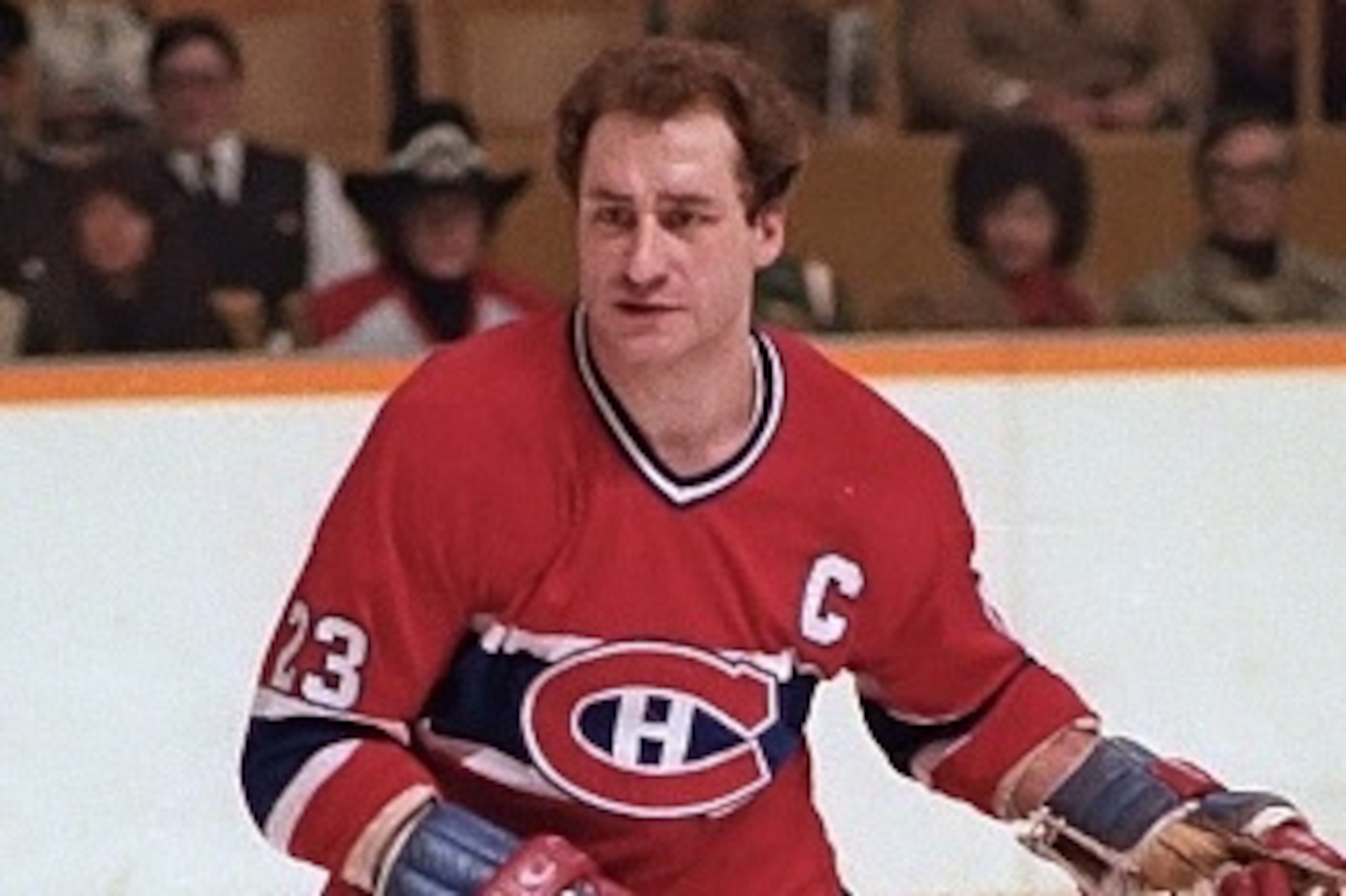
None of this is meant to discredit the winners of the Selke, all of whom have justified reputations for defensive excellence. It is meant to point out that this generation’s Gaineys and Craig Ramsays and Rick Meaghers have no shot at winning. Meagher won the award with just 25 points, which would be impossible today; even crazier he did it in 1989-90, a season where eight guys scored 50 goals and 13 topped 100 points.
What would it look like if we dropped the requirement that a Selke winner also be a prolific offensive contributor?
Let’s set some broad criteria to find out. To be considered, a player must meet each of the following thresholds:
- Must have played at least 40 minutes of 4-on-5 hockey (roughly one minute per game)
- Top-five on their team in percentage of shifts starting in the defensive zone
- Top-five on their team in terms of quality of competition (using Corsica’s ice-time based metric)
That’s all usage criteria—in other words, it’s based on a coach’s interpretation of performance, rather than the performance itself—but it’s all pretty vital. Defensive specialists kill penalties, play against good players and handle a lot of shifts in their own end of the rink.
Only 36 players in the NHL meet those filters. One of the things that jumps out on the long list is that it’s littered with names like Kopitar and Kesler, mostly because of Quality of Competition.
Coaches just don’t run checking lines the way they once did; more frequently they prefer to have their best players out against the opposition’s best. Someone like Marcus Kruger, an exceptional defensive forward, doesn’t qualify because the Jonathan Toews/Patrick Kane lines generally get matched up against the best opponents.
After thus narrowing down the list, I went further, looking at a team’s on-ice performance with each forward on the ice. To qualify, I required each skater to meet four additional performance-based criteria:
- Raw Corsi of 50 percent or better
- Raw Goal differential of 50 percent or better
- His team must allow fewer corsi events against with him than they do without him
- His team must allow fewer goals against with him than they do without him
That reduced the list to a magnificent group of seven (Kesler and Kopitar, mentioned earlier, narrowly missed the cut):
| Jakob Silfverberg | ANA | 50.7 | 64.3 | -2.2 | -0.7 |
| Ryan O'Reilly | BUF | 54.8 | 52.9 | -11.7 | -1.0 |
| Jordan Staal | CAR | 58.9 | 55.2 | -7.8 | -0.6 |
| Mikael Backlund | CGY | 54.2 | 52.6 | -2.2 | -0.6 |
| Radek Faksa | DAL | 51.3 | 53.3 | -3.7 | -0.5 |
| Paul Stastny | STL | 51.9 | 56.2 | -4.1 | -1.2 |
| T.J. Oshie | WSH | 52.7 | 71.0 | -1.0 | -0.6 |
Most of the players above are at least modest threats to score, even in their uber-defensive roles. There are however a few exceptions, players who fit the mold of a Ramsay or Gainey to at least some degree. Paul Stastny and Jordan Staal qualify this year, though they’re known as scorers; each has seen his point totals suffer even while excelling in a defensive role.
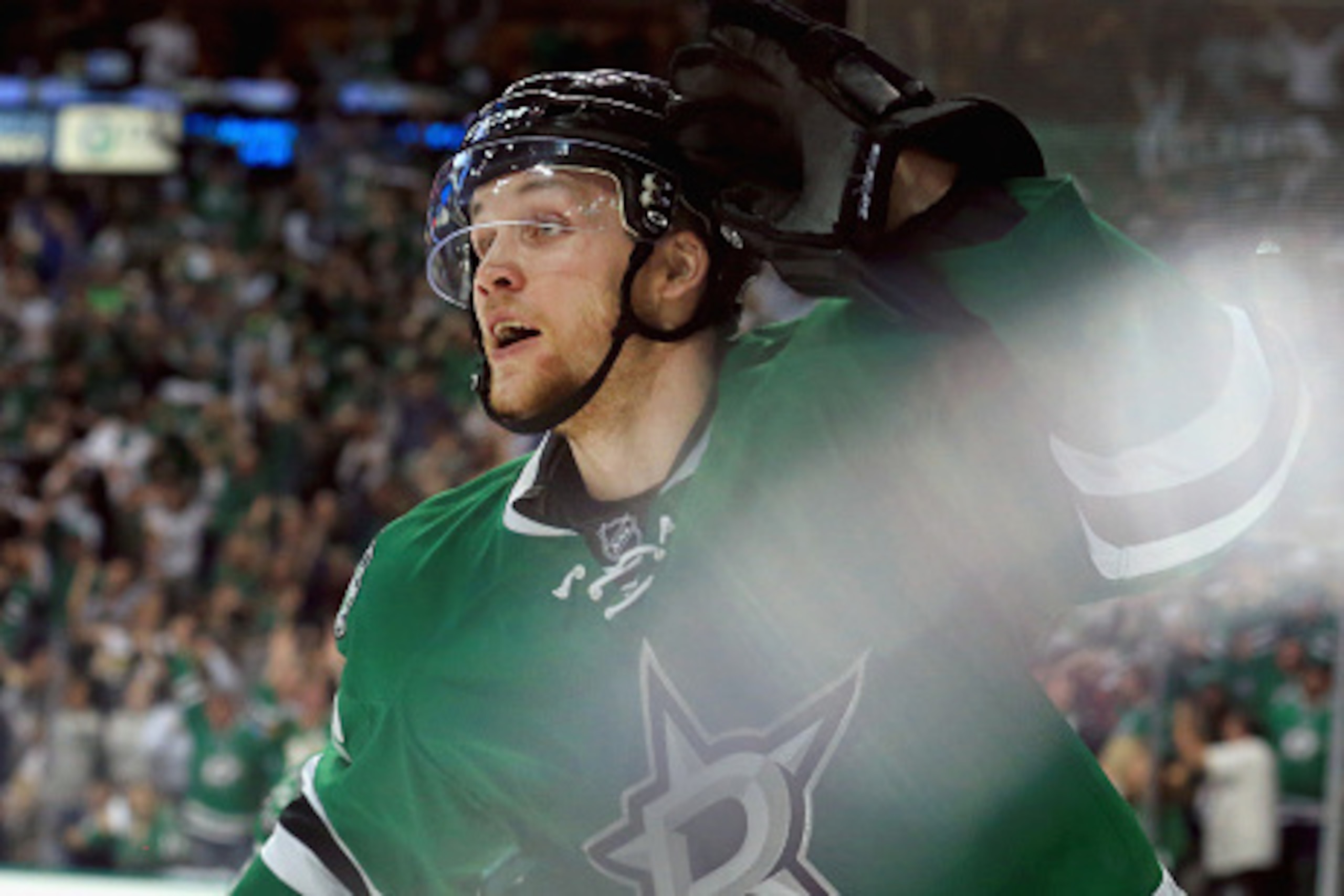
The closest thing to a pure defensive specialist on this list, though, is the wonderful Dallas Stars forward Radek Faksa. Faksa was a decent scorer in junior, took a while to find his way offensively in the AHL, and these days is on-pace for fewer than 30 points with Dallas. He kills penalties, he limits shots and goals against, and clearly helps drive play forward for his team.
He, though, is an exception. The pure defensive specialist is a rare thing in the league. Most coaches demand their tough matchup players to be able to score, too.
Statistical information courtesy of Hockey-Reference.com, Stats.HockeyAnalysis.com, Corsica.Hockey and TheAHL.com. Contract details via CapFriendly.com.
Jonathan Willis covers the NHL for Bleacher Report. Follow him on Twitter for more of his work.

.jpg?w=2560 "49ers LB Suspended for Headbutt")
.jpg?w=2560 "Commanders OL HEATED After Tie ▶️")
.jpg?w=2560 "Buzz: MHJ Hired Agents for Trade")
.jpg?w=2560 "AD Trolls Bears WR on IG 😂")