
Breaking Down the NFL Draft's Top Offensive Tackles
For the majority of fans, the deepest offensive line information comes from mock drafts. Even then, the descriptions of selections usually revolve around team needs more than the specific talents of individual linemen.
At the same time, most fans don't want to read gritty, jargon-filled 2,000-word breakdowns of a MAC bookend. In an attempt to find a happy medium, we'll give concise, but efficient, overviews of the top six offensive tackles in the draft class. These are players who are typically considered first-round picks, and they are the top six offensive tackles listed on Play the Draft, a site that tries to create consensus draft rankings through a user-based stock market approach.
Laremy Tunsil, Mississippi
1 of 6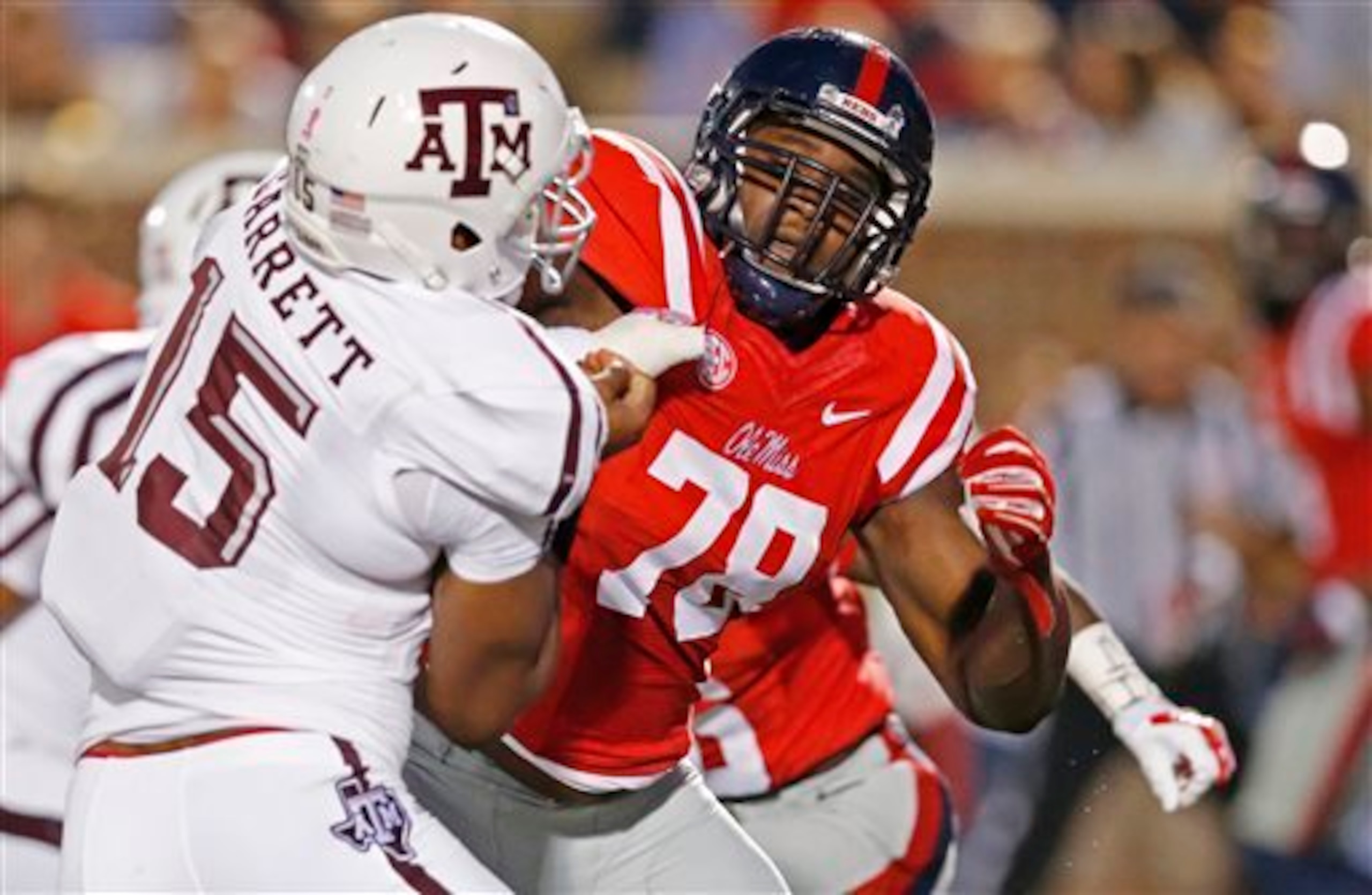
Laremy Tunsil is the best offensive tackle prospect we have seen since at least Joe Thomas. At 21 years old, he's ready to play in the NFL immediately. There are only a handful of players under the age of 25 who are quality tackles in the league. For where he is at his age, he looks like a slam-dunk All-Pro.
At Mississippi, he was a blue-chip recruit. He not only met expectations but exceeded them. In a battle-tested schedule against Southeastern Conference pass-rushers, he only surrendered two sacks in his entire college career.
Coming off an NCAA suspension revolving around illegal benefits, some thought he's be rusty. He had missed the first half of his 2015 junior season, entering conference play with no warm-up. The first two pass-rushers he faced back-to-back were Texas A&M's Myles Garrett and Auburn's Carl Lawson, who both could be top-10 picks in the 2017 NFL draft.
He shut them down completely.
He doesn't have the mean streak of La'el Collins or the raw athletic ability of Greg Robinson, but he knows how to work with what he has, and he doesn't have a single glaring hole in his game. Offensive line play can be ugly, but it's a functional position, and Tunsil sure can function.
Consistency is the most important trait for a left tackle. One slip-up can lead to a helmet in the back of your franchise quarterback, ending his season. Tunsil is up there with the most consistent bookends in college football history.
There are times when he drives guys five yards off the ball. Over and over, he set up Garrett, forced him to run the arch and the put him in the dirt. Tunsil did well in both big-on-big and slide protection. He should be in the running for the first overall pick.
Taylor Decker, Ohio State
2 of 6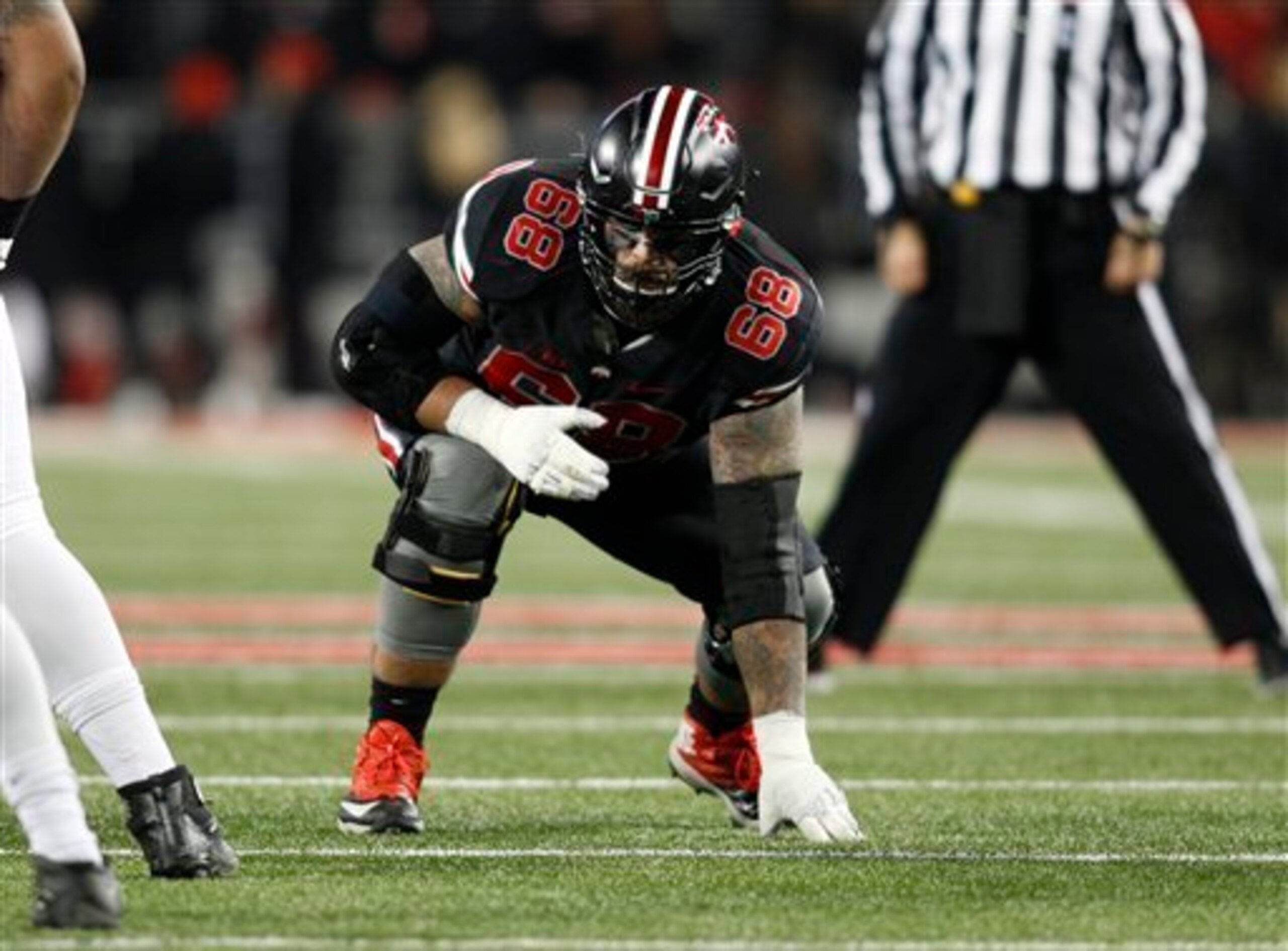
When you look at recent first-round "bust" offensive tackles, they've been the upside bookends. Long and strong players transition better to the NFL, but their positional versatility is usually the knock that leads to dancing bears being drafted before them.
In function, though, having five C-grade offensive linemen is better than having two A-grade offensive linemen, one C-grade lineman and two F-grade blockers rounding out the unit. If you don't have a hole on the offensive line in today's NFL, you're farther ahead than most franchises. You're only as good as your weakest link there.
On Day 1, Taylor Decker would be the weakest link on one team only: the Dallas Cowboys. Everyone else would get a quality tackle. Some may say that he's limited to right tackle at the next level, but the left tackle depth in the league is so poor that it's easy to imagine him starting his career at left tackle and only moving to the right side if he proves he can't hang as a blindside player.
If you're talking about Decker in terms of upside, the player you want to point to is Andrew Whitworth, the classic length-and-strength left tackle who was considered "limited" when he was drafted in the second round of the 2006 draft. Whitworth has made two Pro Bowls in his career, and at 34 years old, he was named an All-Pro in 2015.
Decker has grown since Khalil Mack destroyed him as a sophomore, and his bully mentality is one reason why he's the best run-blocking tackle in the draft class. He's consistent, and he finishes. Offensive tackles are practically human speed bumps, and Decker is quicksand.
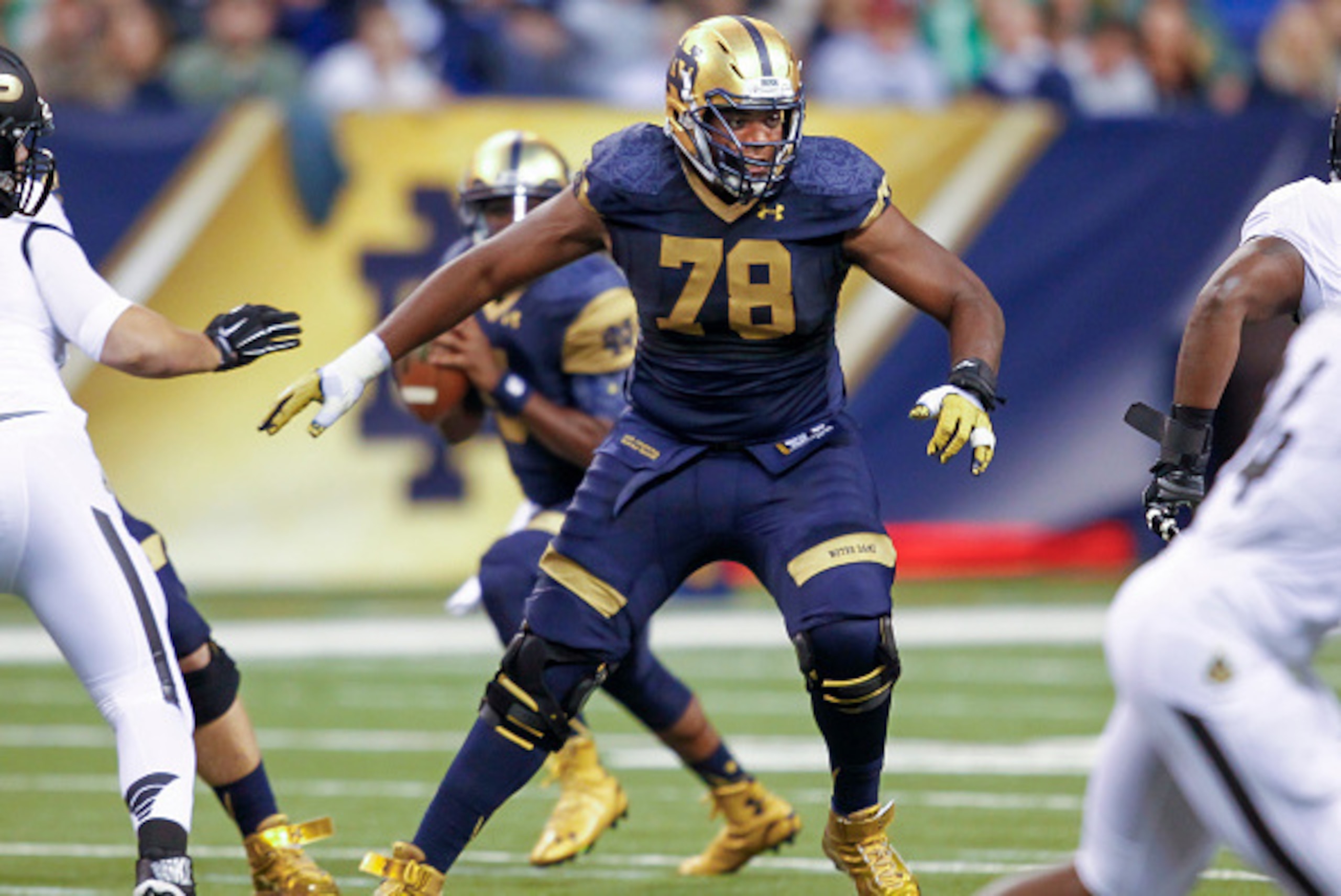
Ronnie Stanley, Notre Dame
3 of 6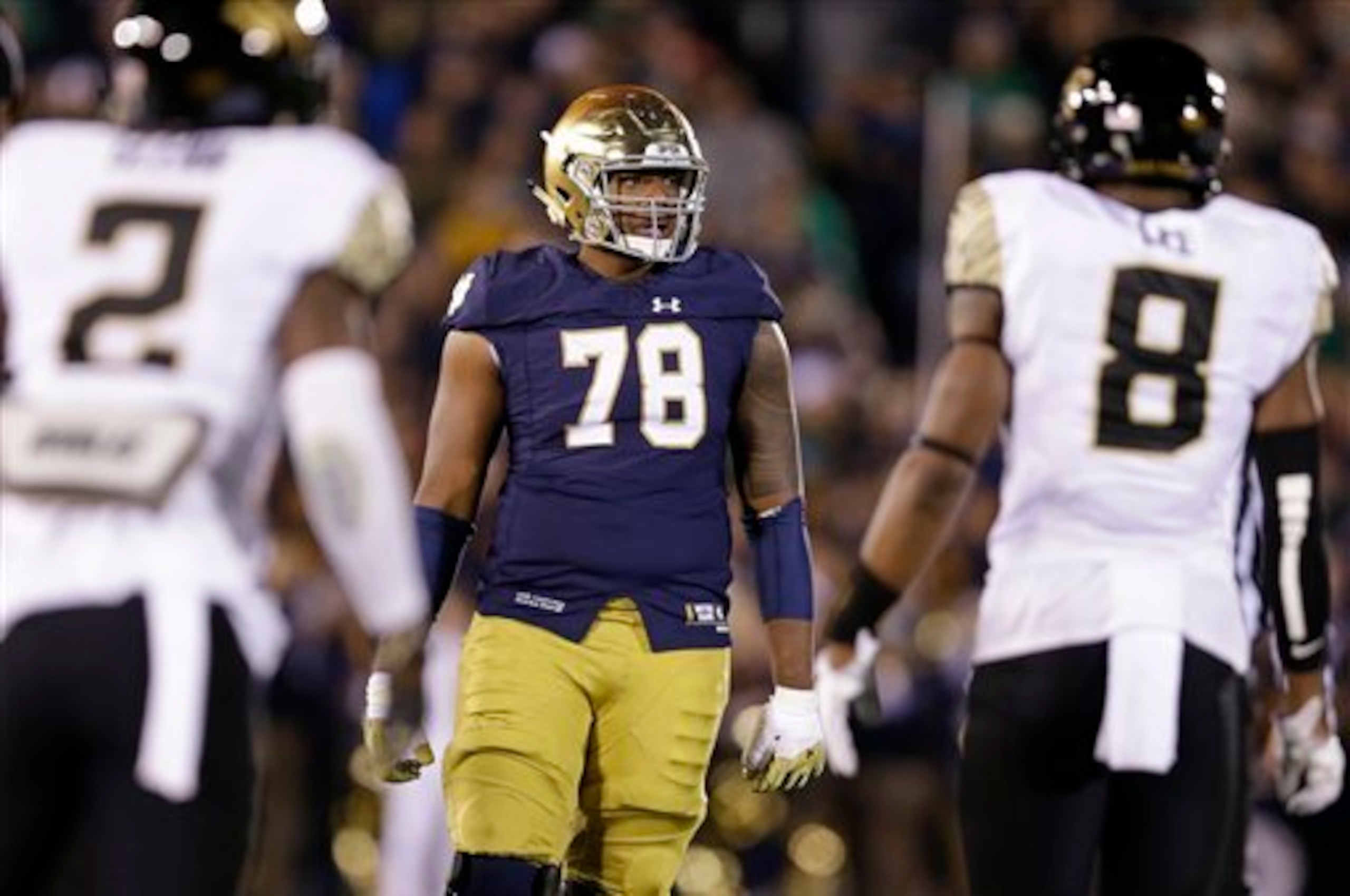
The last thing you want to do is question the toughness of a prospect, but there's a perception around Ronnie Stanley that he's not a "football guy." It's well-known that his first love was basketball, which is true for a lot of players in the league. At the combine, he acknowledged those questions exist.
"I think there's a big—I don't know—aura of people thinking I'm lackadaisical, I guess," Stanley said, per MLive.com's Justin Rogers. "I don't know, but I'm just really trying to show people how much football means to me and how much I do care about it."
Julius Peppers, for example, is a player whose first love was basketball. He's on track to be a Hall of Fame pass-rusher. It may be an overstated concept, but Stanley's off-and-on in-game effort can be correlated to it.
Another thing that doesn't help him is how slight he looks relative to other offensive tackles. He looks somewhere between a giant high school center and an NFL offensive tackle. In that way, he's similar to D.J. Humphries, who was drafted 24th overall in the 2015 draft by Arizona. The Cardinals took it upon themselves to redshirt their high-upside dancing bear during his rookie season.
Stanley is long and athletic, but his combine didn't do him any favors. In the two agility drills, per Mock Draftable, he ranked in the 26th percentile or lower, though he did have an above-average 40-yard dash.
Even in the unit-specific drills at the combine, he didn't sink his hips like Laremy Tunsil did. At times, Stanley doesn't get to the second level like the "dancing bear" label would suggest, either.
Because there are so few NFL-quality bookends and pass-rushers at the college level, when a pair does line up across each other, it should be weighted heavily. Against Clemson, Stanley went toe-to-toe with Shaq Lawson, who according to Tony Pauline of Walter Football is "universally" considered the second pass-rusher to come off the board in April off that Tigers line.
He was up-and-down against Lawson, which won't help his case. He's a project left tackle who is at least a short-term liability. If a coach can get it out of him, he'll be a franchise left tackle. He's only going to be as good as he's willing to be, though.

.jpg?w=2560 "Cowboys Texans Football")
Jason Spriggs, Indiana
4 of 6
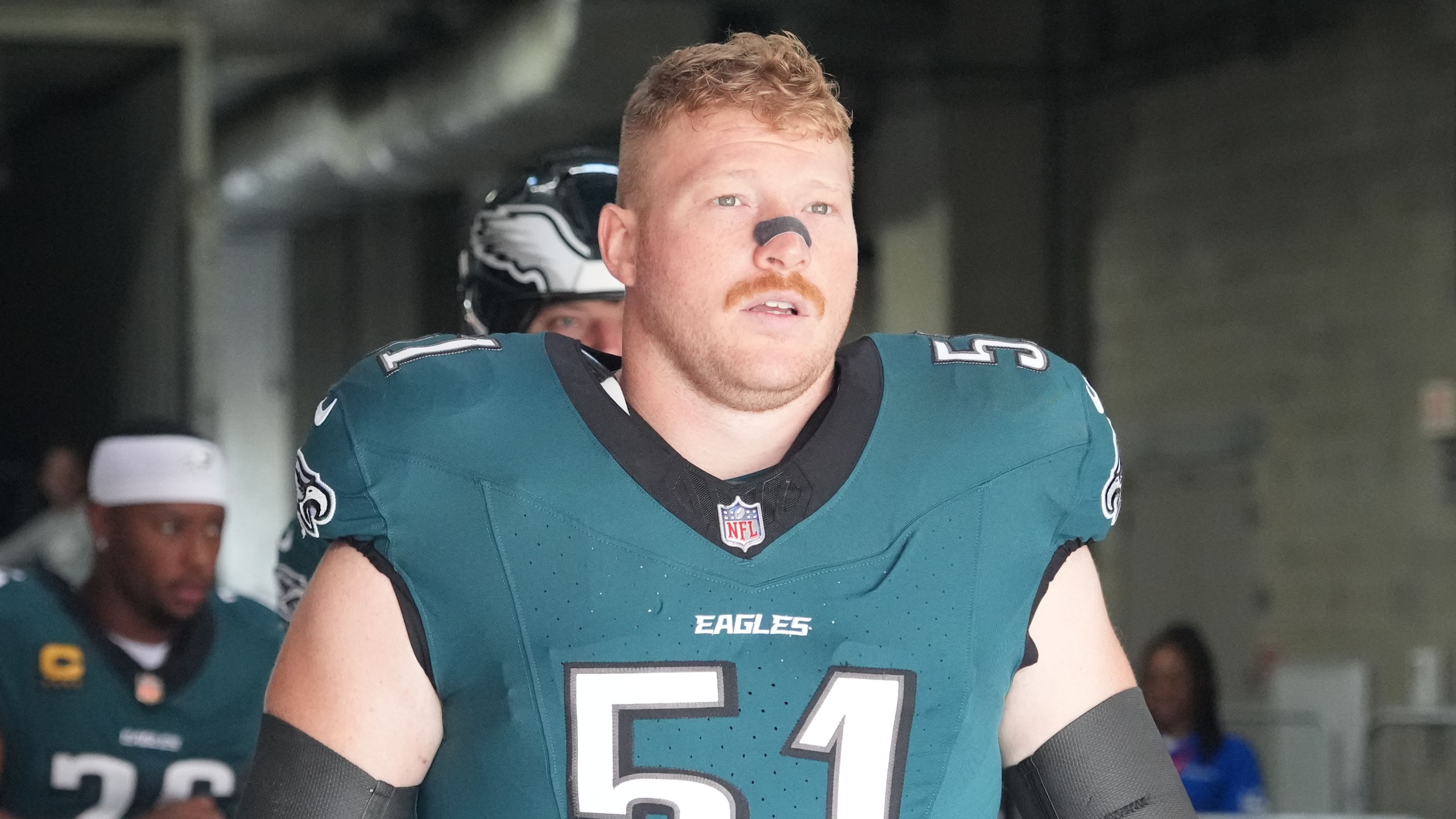
Jason Spriggs is often compared to Lane Johnson, who is the highest-paid right tackle in the NFL. Johnson was drafted fourth overall in 2013 by the Philadelphia Eagles and projects as the long-term left tackle solution to Jason Peters, who is 34 years old.
Those aren't fair expectations for Spriggs.
He's a solid tackle prospect and a talented mover, but he's somewhere between the Johnson-Jake Fisher plane in terms of talent coming out of college. Fisher was a second-round selection last year by the Cincinnati Bengals, who redshirted him as a starter and used him as a hybrid sixth offensive lineman and tight end in his rookie year.
If there's one knock that will hurt Spriggs on draft day, it's how he holds up to interior pressure. For any offensive lineman in big-on-big protection, his inside foot should be up front and strong. There are times when Spriggs has lapses of judgment and allows inside pressure, a straight line to the quarterback.
If he can work out those issues, though, he's going to be a quality left tackle. There are maybe five players in this class with the potential of even starting at left tackle at the next level, and considering the average left tackle is getting paid more than any right tackle in the league, other than Johnson, nabbing a player of that caliber on a rookie contract is valuable.
As a firsthand witness to the line play at the Senior Bowl, I can tell you he was the best bookend prospect in Mobile, Alabama, during practices. He's best as a zone-scheme tackle, as he has the mobile demands covered. His power and lingering hands make him a tougher projection into a gap scheme.
Jack Conklin, Michigan State
5 of 6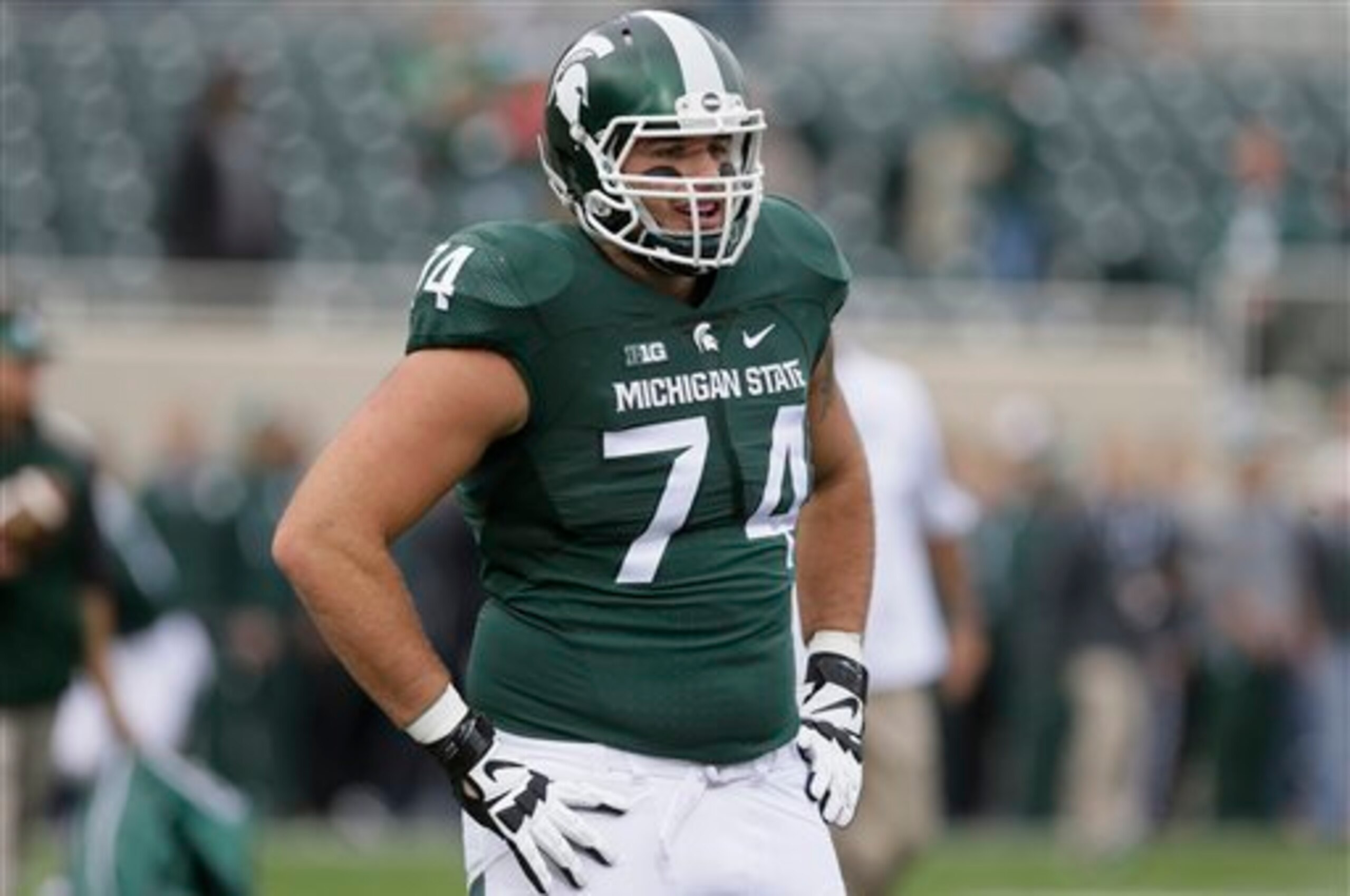
On paper, Jack Conklin is athletic for an offensive tackle. The bookend position is an odd one, though. In the ground game, forward movement is important, but the offensive line is one of two units, along with defensive backs, with premier traits for the position. For tackles, the duty is pass blocking, which is achieved via backward movement.
At least defensive backs get to flip their hips in terms of forward movement. If an offensive tackle flips his hips, his quarterback is probably getting nailed. Even on TV broadcasts, it's easy to see Conklin doesn't have the ideal kick-slide for a left tackle. There's a good chance he's a right tackle-only prospect, and he may even have to kick inside to guard at the next level. When you take that into account, the reason why he was a walk-on becomes clearer.
Conklin is a bit of a boom-of-bust prospect because of his limited athleticism. For a player who is limited in roles, is he worth taking early in the draft? NJ.com's Eliot Shorr-Parks, for example, believes the Philadelphia Eagles should take the Michigan State tackle at eighth overall. For a player who was effectively replaced by a 6'1" center, Jack Allen, when he was injured, a top-10 projection doesn't pass the sniff test.
Le'Raven Clark, Texas Tech
6 of 6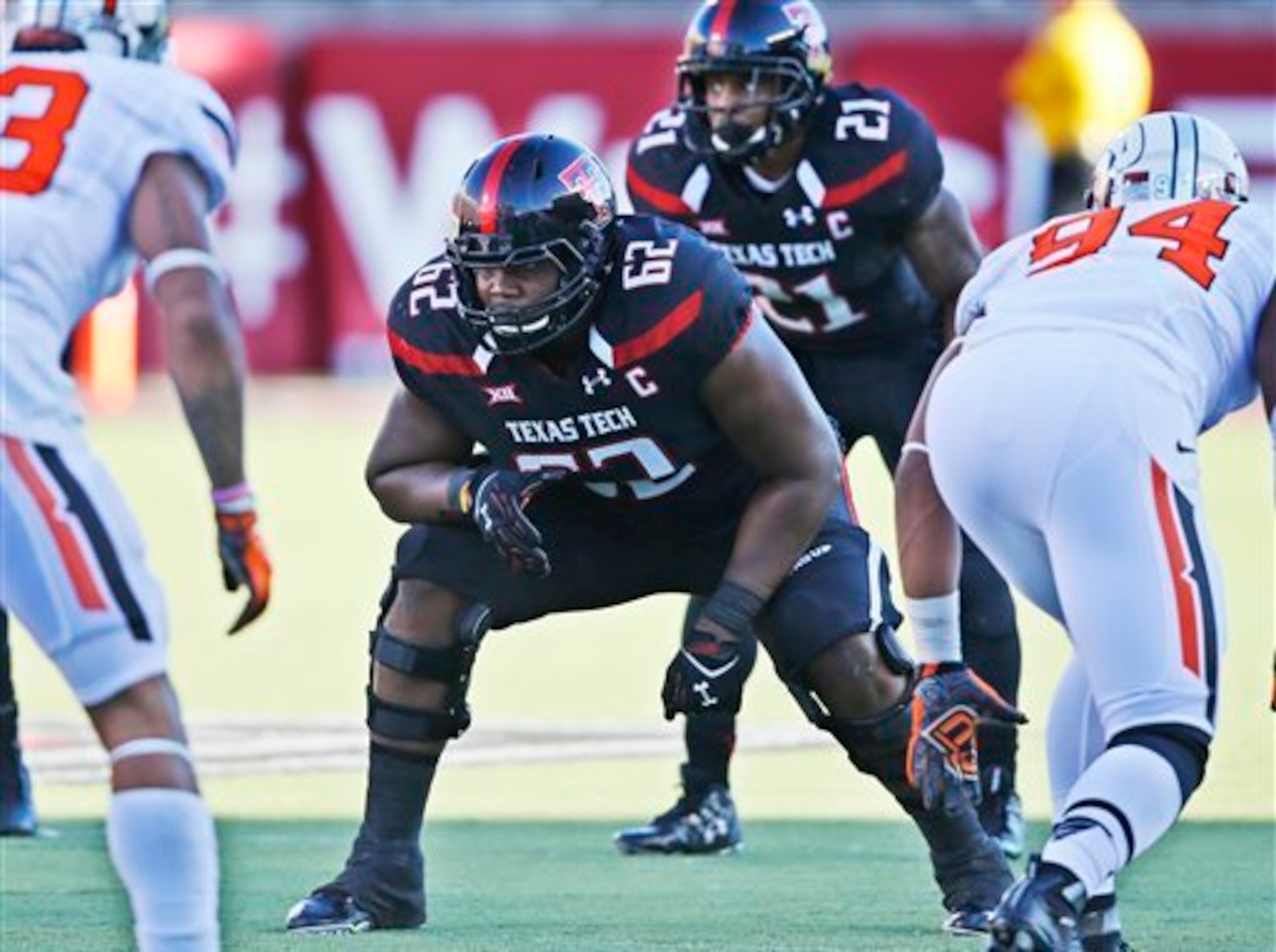
How good is your imagination? This will dictate how you feel about Le'Raven Clark from Texas Tech. From a pure "out of the box" standpoint, he isn't ready to play bookend in the NFL. That isn't totally his fault, though.
At Texas Tech, he was a freshman All-American. The issue with Clark is he never took significant steps past his teenage self. As a senior, he still had the same footwork inconsistencies as when he was a freshman.
Why did Clark never take that next step? The first thing I'd point to in attempt to answer that question is his system.
Air Raid offenses aren't similar in their pass protections to NFL systems. Because they are so wide-open, there isn't much help for those offensive linemen from tight ends and running backs. With a limited margin for error, Air Raid linemen have to drop far back enough into the backfield to force defensive linemen to declare their stunts and blitzes before they initiate contact.
When Clark's feet are set correctly, he displays a great anchor. There's hope in his tape. Between his anchor and his 36 ⅛" arms, there's a lot of upside to Clark, if a team is willing to put in the effort to rebuild a redshirt senior from the ground up. He's going to need a lot of reps early, and there are going to be growing pains.
.jpg?w=2560 "Browns Jaguars Football")