Former Ref: NFL's Catch Rule Isn't Too Vague, but There's a Need for Consistency
Have you mastered the fine art of frame-by-frame NFL catch analysis yet? Can you see when the second foot hits the ground, and when the ball has settled comfortably in a receiver's hands? What about when a pass-catcher has clearly become a runner, as defined by the rules?
Getting through a week without the need for Zapruder-style scrutiny of what, in theory, should be a simple football act has become difficult. And recently, two similar plays with opposite rulings have fueled the national nightmare of catch confusion.
The goal line and the rather important effort to score a touchdown was involved in both. First, back in Week 3, Cincinnati Bengals tight end Tyler Eifert had the ball knocked out after he put two hands on it and two feet on the ground, all while spinning to reach for the end zone.
TOP NEWS
.jpg?w=2560 "Colts Football")
Jonathan Taylor Landing Spots
.jpg?w=2560 "NFL Paris Football")
NFL House in Paris Closes for Protests (AP)
.jpg?w=2560 "Seahawks Chiefs Football")
Trevon Diggs Cut by Seahawks
That play was initially ruled a touchdown on the field, with officials deciding Eifert had properly demonstrated possession by going through the required checklist we're all far too familiar with now. He controlled the ball after two steps, and he established himself as a runner.
Then, after video review, another haunting word came into play: process.

Eifert failed to maintain control while going to the ground and therefore didn't complete the catch process. It's the same ruling that negated Dallas Cowboys wide receiver Dez Bryant's critical late-game reception during a divisional-round playoff loss to the Green Bay Packers last season.
Fair enough? We don't have to like the catch rule, even in its slightly revised form. But we can learn to accept it if the application is consistent. It's not, though, and Golden Tate's touchdown that shouldn't have been a touchdown is a fine example.
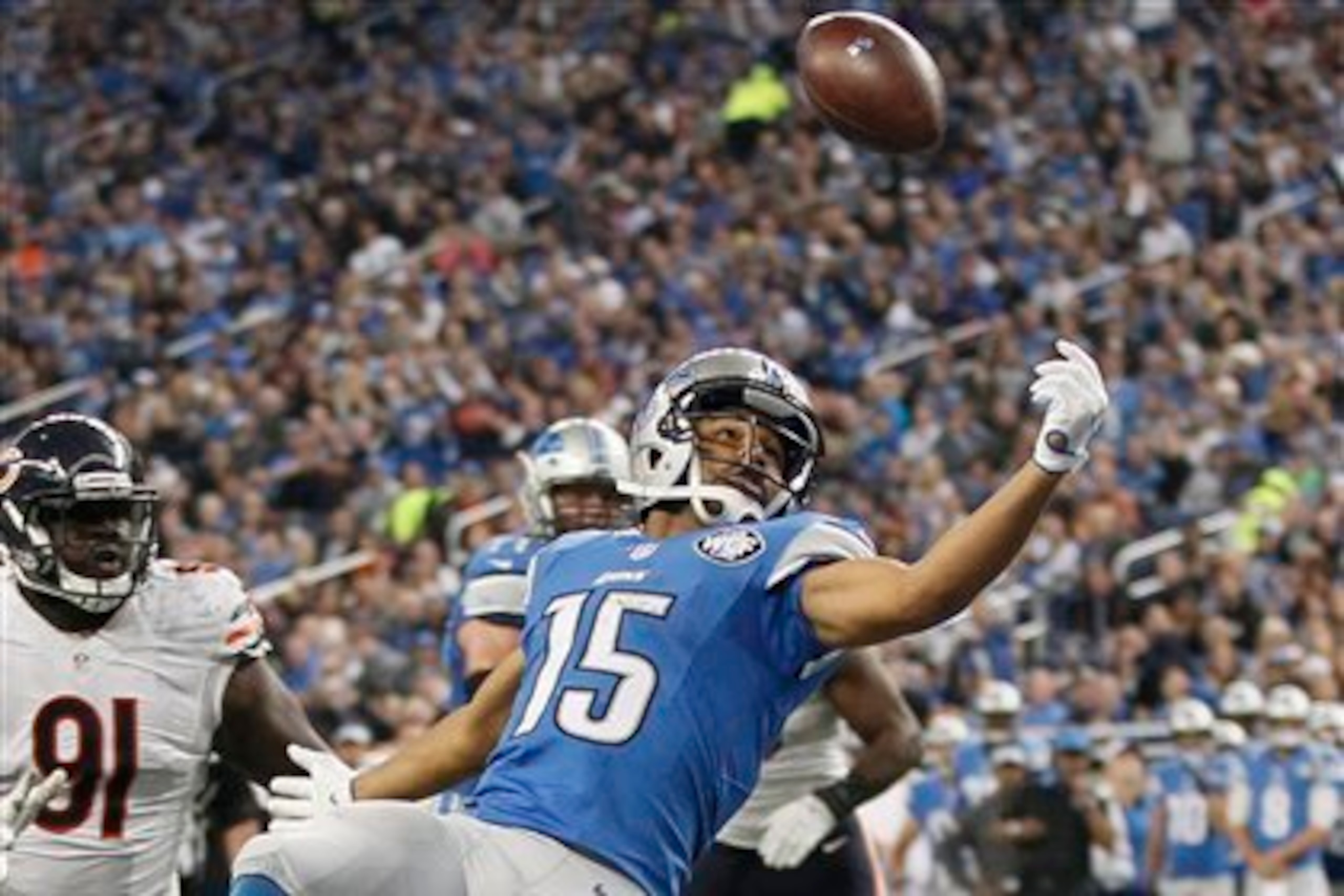
In Week 6 the Detroit Lions receiver caught a pass just shy of the Chicago Bears goal line. Or at least the ball was in his hands as he charged in that direction. One foot hit the ground, then a second as he crossed into the end zone. Touchdown? No, because while that was happening, Bears cornerback Kyle Fuller got his hand on the ball and ripped it loose.
Officials ruled the play an incompletion, followed by an interception when Bears outside linebacker Jonathan Anderson corralled the ball as it popped out of Tate's grasp.
On the Fox broadcast, rules analyst and former NFL vice president of officiating Mike Pereira agreed with that ruling. But then, strangely, despite what seemed like a lack of possession, the play was overturned and called a touchdown.
If you haven't shaken the feeling of bewilderment since Sunday, you're not alone. Current VP of officiating Dean Blandino's explanation didn't exactly help matters either (via NFL.com's Kevin Patra):
"The issue here is, did he become a runner before the ball came loose? Did he have control, both feet down, and then time enough to become a runner after the second foot is down?When you watch the play the ball comes loose, he is taking his third step, the third step is almost on the ground when the ball comes out. He had demonstrated possession, had become a runner, once the ball breaks the plane of the goal line in possession of a runner it is a touchdown and the play is over at that point.
"
After hearing Blandino's rationale behind overturning the call, I started wondering what officials think of the ongoing catch-rule quagmire. So I dialed up Gerry Austin, a retired referee who worked in the NFL for 25 years. He's now the coordinator of football officials for Conference USA and an ESPN rules analyst.
He detailed the on-field thought process of ruling on a questionable catch, emphasizing three important elements: consistency, patience and being deliberate.
Bleacher Report: Let's start off with the most recent play that generated questions and confusion. What did you think of the Tate ruling?
Gerry Austin: I thought it was an incomplete pass, followed by an interception. Instead of a touchdown it should have been an interception. He did not complete the process.
I don't know what kind of conversation occurred between the referee and New York when they were reviewing and looking at it that caused them to overturn the initial ruling. But the interpretation of the rule has not changed, and it should be the same in the end zone as it is in the field of play.
The Golden Tate ruling went against the philosophy and the interpretation of the rule. I don't think the league office has change its interpretation, which is that you get two feet clearly down—and I emphasize clearly—and then make a move.
Now, they've taken the term "football move" out, because it can be misinterpreted. But you have to do something else with the football. There has to be another action after you get two feet clearly down, and that did not occur.
B/R: But although it's designed to be broad and account for any situation, the language of the rule still feels vague despite recent tweaks. Do you think there's any way that vagueness can be improved?
GA: I don't think it is vague. I've worked with similar wording from the NCAA perspective, and the interpretation is nearly the same with both. You get two feet down and make a move. In college it's only one foot, but you still have to make that move. You need control of the ball, two feet clearly on the ground and then make a move.
I just think the football gods got into the communication system this past weekend and gave the Detroit Lions a little vindication from what had happened to them previously.
That's the only explanation I can put on it. Because the ruling went against what the interpretation has been, and in my conversations nothing has changed.
B/R: As an official, when you're on the field, what exactly are you watching during a play like that?
GA: The officials who get it right all the time approach the play like this: If you want me to rule it a catch, then show me clearly you completed the process.
There I am using the word "clearly" again. Clearly show me the process. Well, clearly, in Detroit they did not show that process, and you still have some officials who are too quick to make a catch ruling.
Let's go back to the mindset of an official. The mindset you want an official to have is to make both teams and all players earn what they get. If you do that in general, you don't throw any cheap or marginal flags. If you're throwing a flag it has to be solid, if you're going to rule possession it has to be solid and if you're going to rule a touchdown it has to be solid.
That's the philosophy you really want all officials to operate under. Otherwise, stay out of it.
B/R: As an official there also shouldn't be any rush to judgment. What would prompt you to huddle up with your fellow officials and have a conversation to see what they saw as an intricate play unfolded? Is doing that your first instinct?
Austin: If I have any doubt in my mind, I would bring everyone together and be sure of what we have.
It's interesting you use the term "rush to judgment." That's what they did Sunday. They're looking to see if a plane is broken. And boom, the plane is broken, and there's a touchdown.
It all comes back to being deliberate, which is how we teach officials. If you're going to call a foul, in your head you say, "It's a foul, it's a foul, it's a foul." If you can say it twice, and then on the third it's still a foul, then you throw.
You need to be deliberate. If it's a quick reaction, the percentage of errors and misses is much higher in officiating when you make the decision too fast. The play has to be processed first.
The official said in his mind Sunday, "It's a catch, it's a catch," then his third statement was, "No, it's out."
B/R: So as far as the catch rule is concerned on the field, you think patience is key?
GA: Yes, you have to be deliberate and patient, and don't be too quick while making a judgment. Then you'll get it right.
That's why the fans who saw the Tate play said, "Hey, wait a minute, they've been beating what a catch is into our heads, and this appears to be contrary to that."
B/R: There are so many variables for the football audience to have in mind, and we're constantly questioning plays where the outcomes initially seemed clear, but the eventual ruling went against popular opinion. Both the Tate play and the non-catch ruling on Cowboys receiver Dez Bryant in January are fine examples. If there's a lot for fans to be aware of now, then making those rulings in real time as officials must be difficult.
GA: Well, there are three parts to making a catch. Then there's also a fourth, but the fourth doesn't always come into play.
The three parts are controlling the ball, getting two feet clearly on the ground and then making a move. The fourth part is if you're going to the ground, keep it when you hit the ground.
Dez Bryant was already stumbling, so his feet may have hit the ground three or four times. But if he's going to the ground, it's not the number of steps that matters. He had to keep possession once he hit the ground, and he didn't.
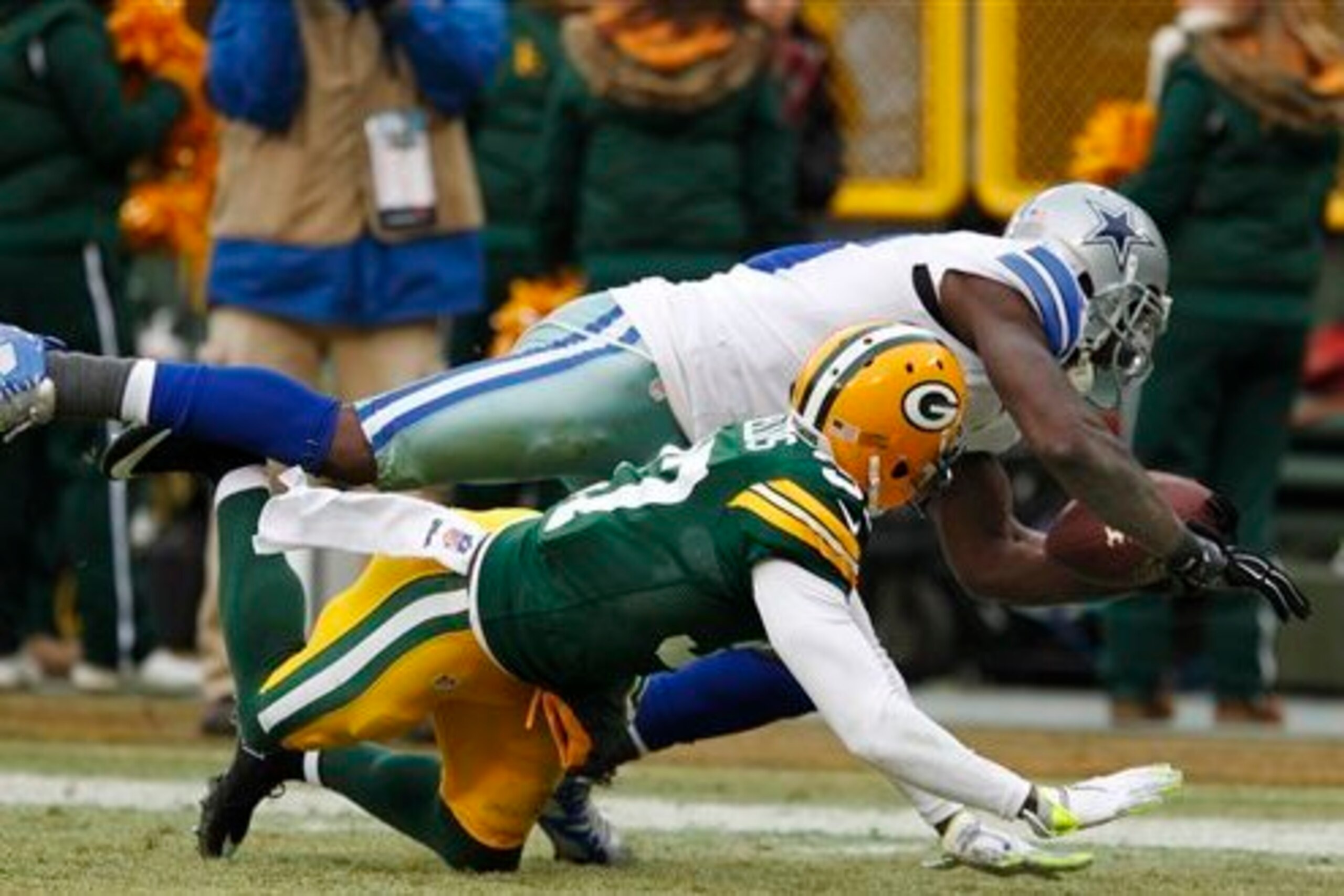
B/R: The counterargument, of course, is centered on that stumble. Was he stumbling, or did he going to the ground because he was reaching for the end zone? Maybe it was a bit of both, but that's the other factor: Should a player be punished for reaching toward the end zone?
GA: He's going to the ground. That's all there is to it.
I was at an officials clinic in Texas back in the spring, and I was asked about the Bryant play. I gave the same answer then and was booed.
B/R: Fair enough, but it seems there's recently been more confusion and uncertainty around a fundamental play.
GA: Well, it comes back to the terms. People will keep throwing out, "But what if…" And one thing an official has to do is maintain consistency no matter what those what-ifs are.
If the what-ifs become consistent in the same manner, then that's an indication a rule change might be needed. But with the what-ifs that come up on the catch rule, there always seems to be a different variable, if not a consistency. Take Bryant and Tate: Those plays don't have a connection really, other than how they were ruled in relationship to the rulebook.
You need to maintain the consistency until there is a consistent flaw showing it needs to be done differently.
B/R: And in your opinion, those three steps—and a fourth when going to the ground—that are required when making a catch cover every potential scenario and all those what-ifs?
GA: Yes, and we actually have guidelines that we never had 10 years ago. The rulings on a catch were so inconsistent all across high school to the pros.
Now there's so much consistency, and the fans have knowledge of the rule. They understand what the ruling should be. So then when they get one like Sunday, it's questioned immediately. They know it's not within what they've been told for the past decade.
.jpg?w=2560)




.jpg?w=2560 "Malik Beasley Negotiating Plea Deal (AP)")