Text Goes Here
Every sports fan knows not to expect perfection. In fact, it's just the opposite: The games we love come with cracks, blemishes, irregularities.
And that's OK. We're here for it anyway.
But that doesn't mean we can't strive toward the Platonic ideal—or at least wail into the ether about the cosmic injustices we're forced to witness with agonizing irregularity.
In that spirit, the B/R staff both pitched their own flaw-fixing ideas and scoured the digital landscape for creative thoughts from fans and other media members.
What resulted was a wide field of thoughts, from realistic to creative to galaxy-brained. We're not saying every one of these entries will be implemented by the sport in question, but it sure would be fun if they were.
All Leagues: Give Fans Veto Rights in Superstar Trades
1 of 49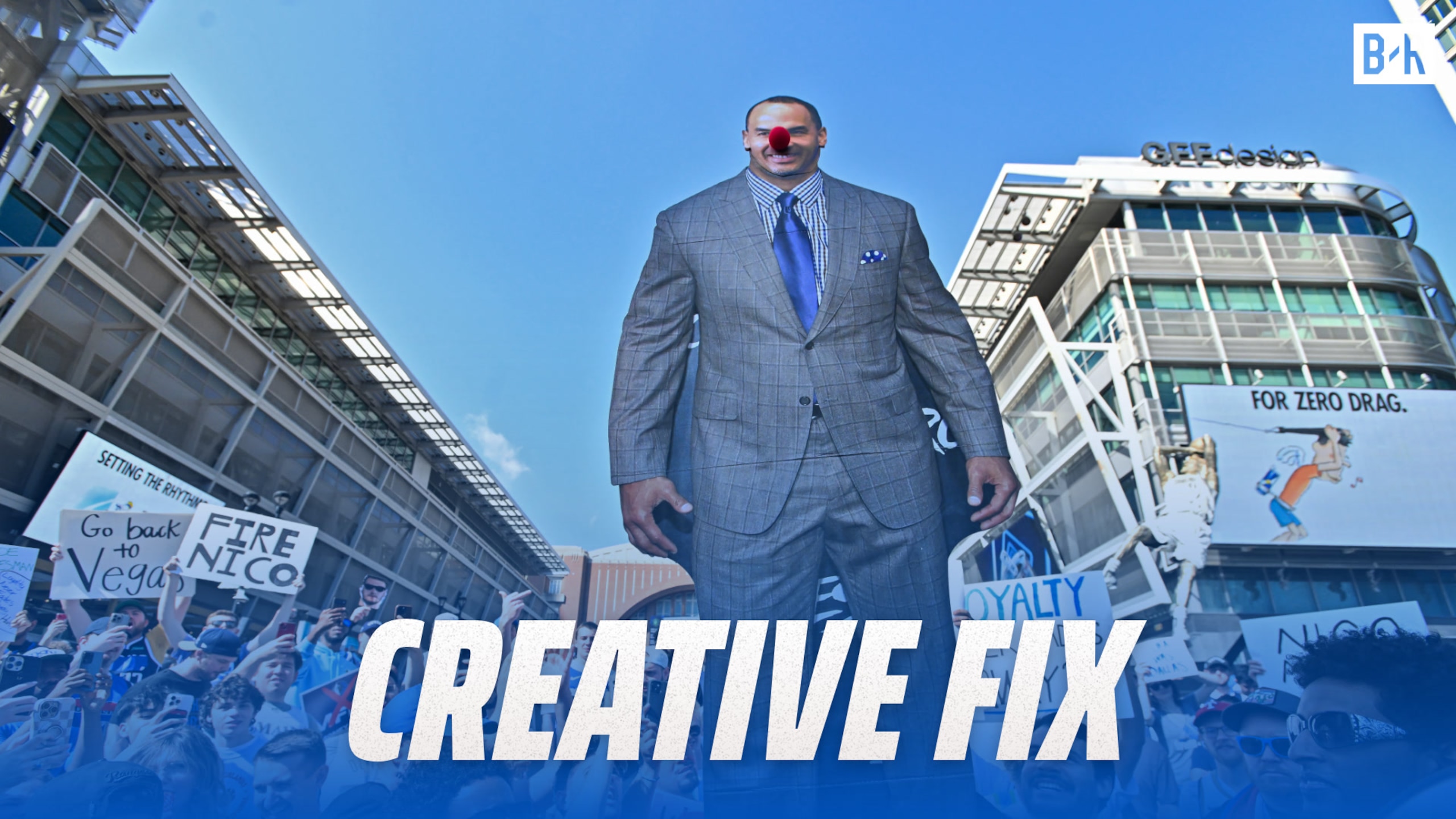
The Problem: We're all about direct democracy here at Bleacher Report. Power to the people, not the puppet masters. Download the B/R app, vote on the polls (they may or may not go right to the subject, we'll never say).
Bottom line: we think fans should have a bigger say in major decisions.
We think it's unacceptable a few high-ranking people can trade away beloved icons for future draft compensation. Nobody likes this.
The Creative Fix: Some pro teams—like the Green Bay Packers and some European soccer clubs like Barcelona and Real Madrid—have dipped their toes into a system of fan involvement in ownership and governance.
We imagine a world where players with a certain number of all-league selections or MVPs must be deemed expendable by fans, for a certain price. GMs and owners can try to sell fans on trade ideas, and players can still request trades.
But Luka's staying put if Luka wants to be there. Don't even @ us with the Micah trade proposal.
And no more crying kids in their obsolete Jaylen Brown jerseys.
—Chris Trenchard
All Leagues: Bring Relegation to US Sports
2 of 49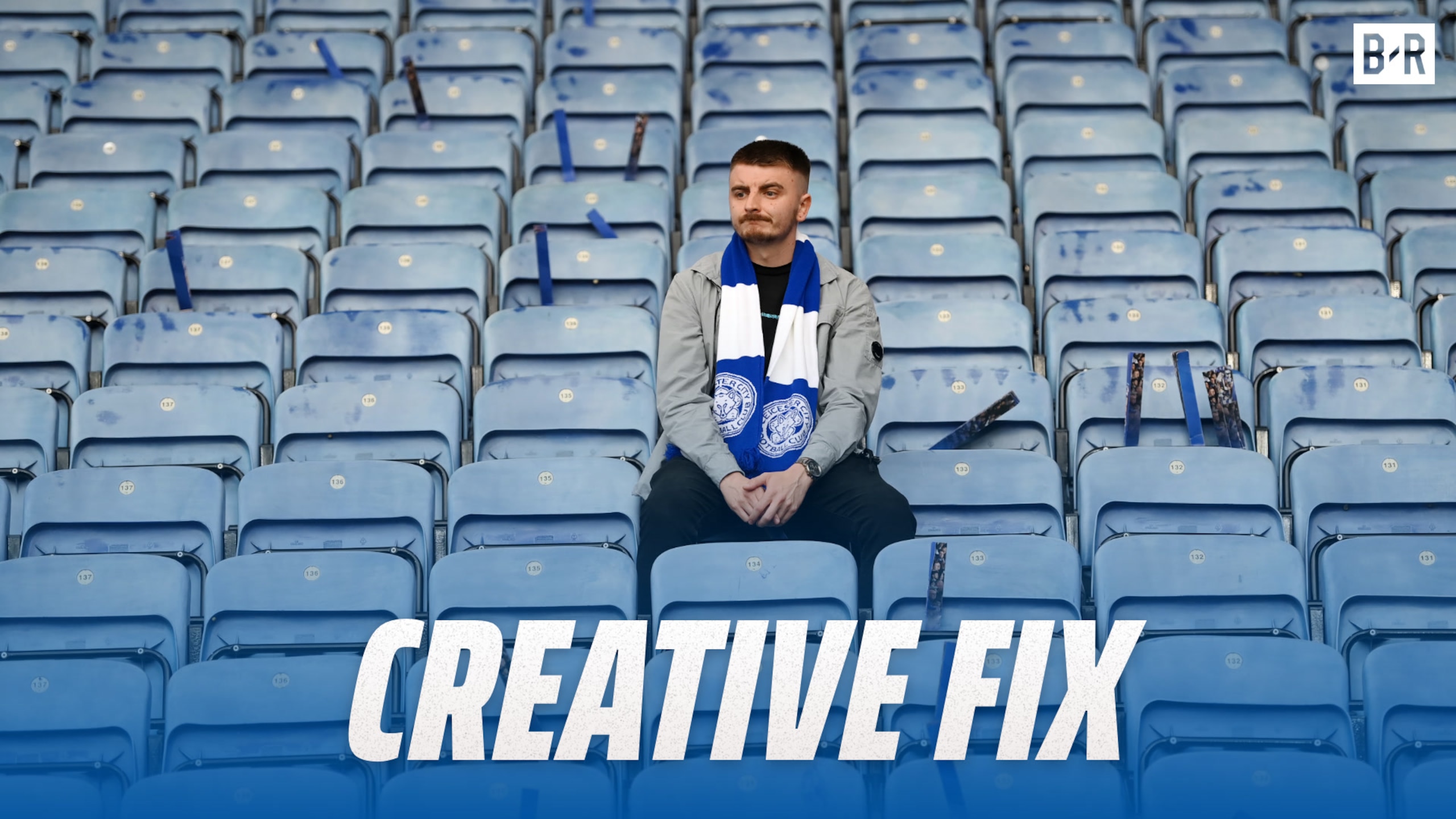
The Problem: Too many American sports fans are left with little or nothing to root for in any given year by midseason or sooner because of tanking or general ineptitude. European soccer fans don't have to deal with this, as even those stuck with loyalties to bottom dwellers experience the unparalleled tension and thrill of a relegation battle.
The Creative Fix: Expand all major American pro sports leagues and institute a first and second division where teams get promoted and relegated each year. In so many ways, this is better for fans and athletes.
Let's start with the ways this benefits fans. There would be more teams in more places, and thus more opportunities for fans to see games. Next, tanking is immediately a thing of the past, and no one has to put up with intentional losing. And lastly, there are rarely meaningless games, as nearly every team would either be fighting to get into a playoff spot or stay out of the relegation zone for the vast majority of the season.
All those things also benefit athletes. More teams means more jobs for players. And no more tanking and fewer meaningless games means those jobs are more interesting and exciting.
Now, let's get to who this might not be good for: owners. Relegation means owners aren't guaranteed the revenue that comes with a non-negotiable spot in the top division. It's hard to imagine American sports owners allowing this to happen because of that short-term loss, even though there's a good case to be made that it would have a long-term financial benefit to leagues.
But we're not here to get bogged down in what would or wouldn't make owners more money. Relegation would be fun for fans and athletes, and that's more than good enough for us to believe it should happen.
—Ben Chodos
All Leagues: Dynamic Beer Pricing
3 of 49The Problem: What's worse, tanking, or hearing everyone complain about tanking for the 40th straight year?
It's time for everyone to shut up a little bit.
The Creative Fix: Galaxy-brained redditor kelownafornia6969 (seriously) has a frothy solution: dynamic beer pricing to fix NBA tanking.
The idea went viral and it hasn't left our brains.
In kelownafornia6969's words: "The rule: set beers at $10 for all teams at the start of the season. Teams can increase prices by $0.35 per win and MUST decrease prices $0.20" per loss.
So last year, Wizards fans would've been paying $2.95 for a beer (we might need a limit), while OKC fans would've been paying close to $30 for one.
Honestly, hard to say which game I'd rather attend (and obviously, we'd endorse non-alcoholic solutions for the NA/underage crowd)
Now would a front office be persuaded by a beer subsidy? Probably not.
But remember, this is really about shutting up the yelling-at-cloud folks with a dose or two of beer/ice cream/whatever. Who says no?
—Chris Trenchard
All Leagues: Allow the No. 1 Seed to Pick Its Opponent
4 of 49
The Problem: Thanks to injuries, an otherwise-loaded team sometimes barely manages to sneak into the playoffs. It then becomes the vaunted lower seed that none of the top contenders wants to face. But is that fair to the No. 1 seed, who might have a tougher first-round matchup than lower-seeded teams?
The Creative Fix: Allow the No. 1 seed to pick its opponent in each playoff round. If the No. 1 seed has a bye, the highest-seeded team in that round gets to pick its opponent.
There are two clear benefits here. First, the No. 1 seed gets more fairly rewarded for being the best team in the regular season. It shouldn't have to rely on luck of the draw to avoid a would-be No. 4 seed that wound up being a No. 8 seed. By getting to pick its opponent, the No. 1 seed can choose the path that maximizes its chances of making it to the next round.
Or so it thinks, anyway. The other benefit here is the hilarity/slander factor. Whichever opponent the No. 1 seed picks gets instant bulletin-board material. If that opponent proceeds to pull off the upset, it'll be a top-five day on social media.
NBA teams have pitched this idea before, according to Zach Lowe, but it went nowhere. MLB recently proposed it as well as part of its ongoing negotiations over its next collective bargaining agreement.
Once one major league does it, don't be surprised if others are quick to fall in line. It's going to be electric.
—Bryan Toporek
NFL: Ban Punting Past Midfield
5 of 49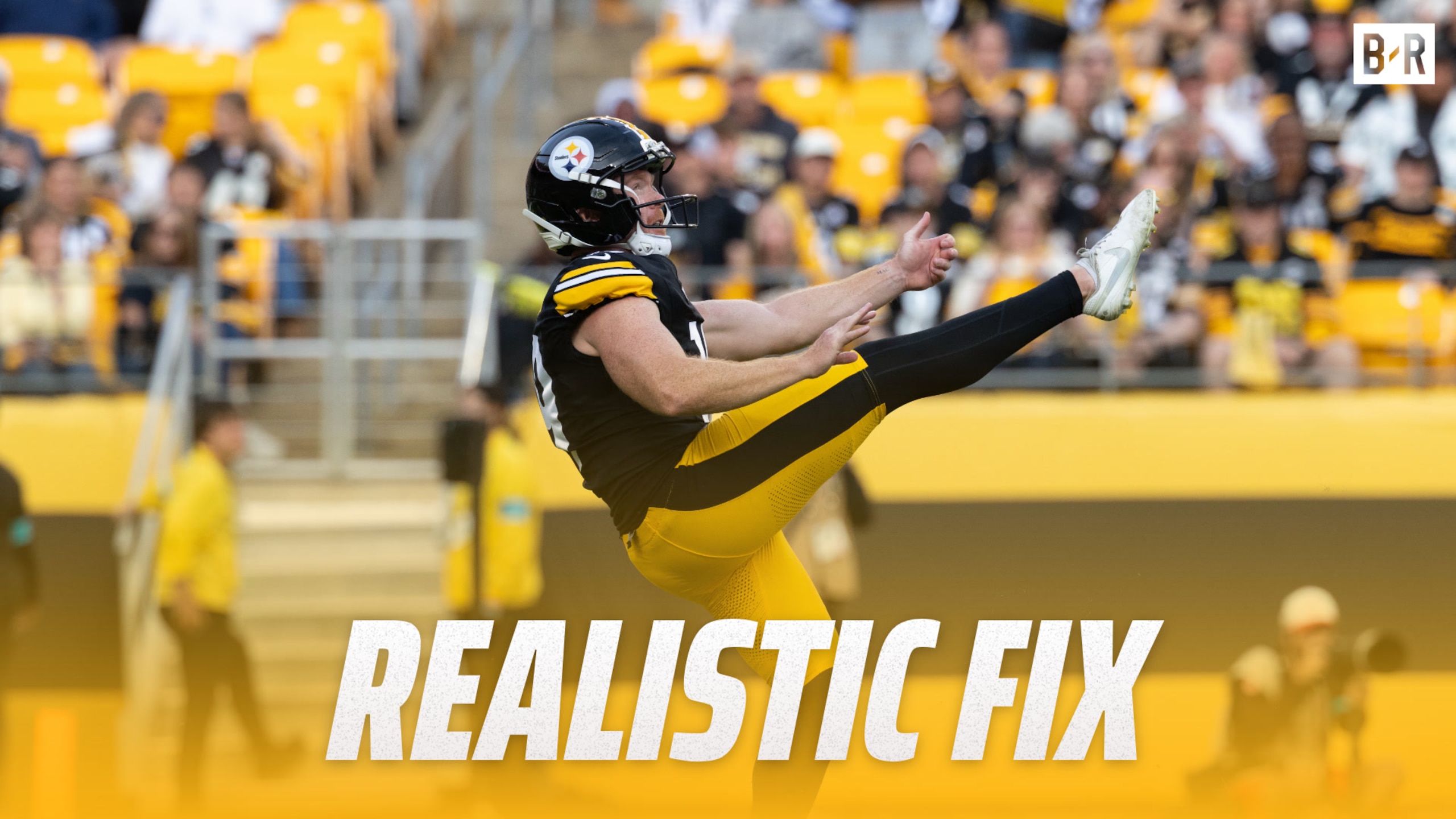
The Problem: Cowards, basically. With field-goal kickers now able to boot 60-plus-yard field goals with relative ease, teams should rarely (if ever) punt once they get past the 50-yard line. However, old-school Boomers like Andy Reid still haven't caught on yet.
The Realistic Fix: Look to the UFL for a solution. In 2026, it adopted a rule that prohibits teams from punting once they cross the 50-yard line, even if "a subsequent penalty or loss of yardage moves the ball behind the 50." (This rule does not apply in the final two minutes of either half, though.)
This would—or should, anyway—completely change play-calling around midfield. Once a team crosses the 50 and can't punt, getting stuck in a 3rd- or 4th-and-long would have far more downside. Teams might opt to run the ball more or favor shorter completions instead of attempting to air it out, at least until they got into field-goal range.
If a team has a turnover on downs right around midfield, its opponent would only need to travel 20 yards or so to get into reasonable field-goal range. Since the NFL appears to be in a constant hunt for ways to juice scoring, this would be one of the easiest changes to make, especially since it would reduce the likelihood of a team getting pinned inside its own 10-yard line after a punt.
The Surrender Index would be far less active on Sundays, but never underestimate the cowardly nature of NFL coaches. They'd find new ways to chicken out instead of improving their team's chances of winning games.
—Bryan Toporek
NFL: Swap the Onside Kick for 4th-and-15
6 of 49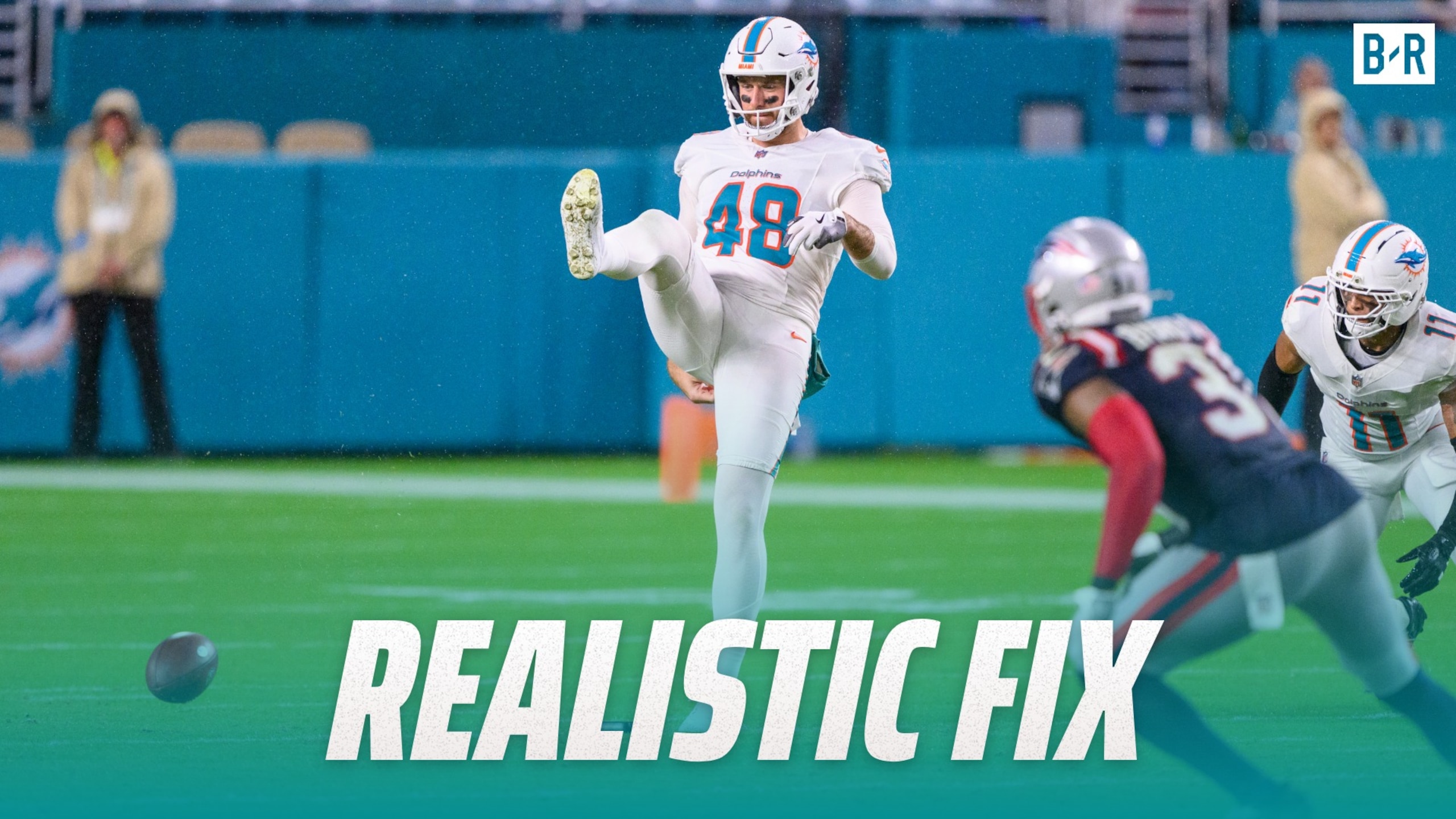
The Problem: The NFL's "dynamic kickoff" revitalized the kick-return game, but it ruined onside kicks. Teams now have to declare their onside attempt, removing the potential element of surprise. As a result, the success rate of those plays has plummeted in recent years.
The Realistic Fix: Scrap onside kicks entirely and replace them with a 4th-and-15 for the offense. That idea might sound gimmicky, but it's been floating around the NFL for years. (Hall of Famer Drew Brees is already on board.)
According to CBS Sports' Jonathan Jones, the NFL "would prefer" that teams have a 12 percent chance of success on onside kicks. Jones added that "NFL data suggests a 4th-and-17 play has a success rate around 12 percent, so that could be the sweet spot for such a play."
The United Football League also implemented a version of the NFL's dynamic kickoff ahead of the 2025 season. Concurrently, it eliminated onside kicks and gave teams the option to attempt a 4th-and-12 play from its own 28-yard line instead. Teams went 3-of-7 on such plays through the first eight weeks of the regular season, although two of those three conversions resulted from defensive penalties.
Leads have become far less safe in the NBA due to the volume of three-point shooting these days, which makes games more exciting. What once looked like an insurmountable deficit can now be overcome within a quarter or a half. Changing the onside kick rule to give offenses a better chance of coming back late in games would have a similar impact on NFL games. And when those 4th-and-?? attempts go awry, the opponent would take over possession in field-goal range.
—Bryan Toporek
NFL: Start 2-Point Tries From the 1
7 of 49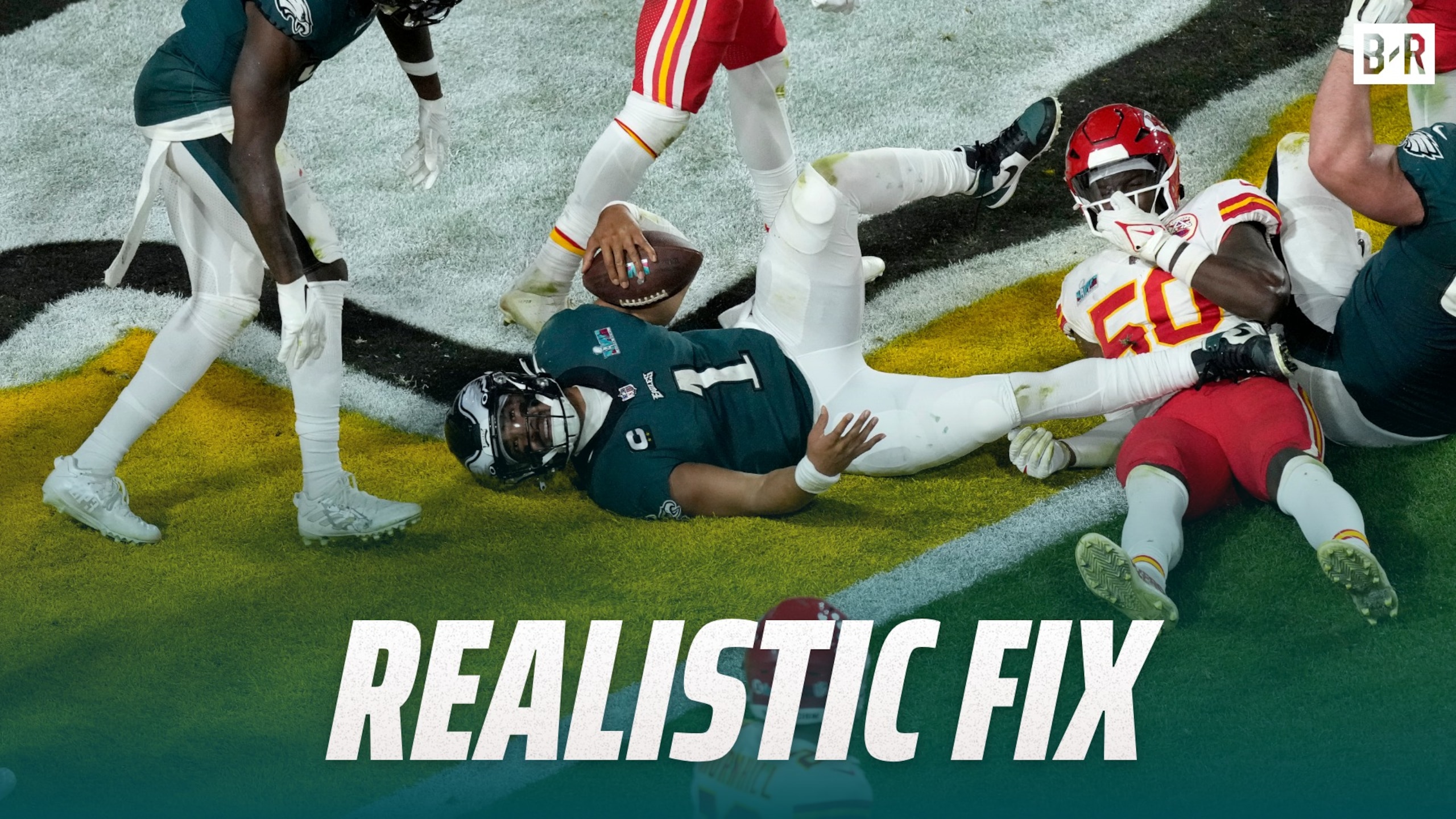
The Problem: NFL teams converted only 41 percent of their two-point attempts in 2024, according to Greg Auman of Fox Sports, which was a 15-year low. They also went for two-point attempts only 9.8 percent of the time after touchdowns, and 72 percent of those came in the fourth quarter, per Auman. A majority were passing plays, too.
The Realistic Fix: Right now, two-point attempts begin on the 2-yard line. Moving them up by a yard to the 1-yard line could increase teams' incentive to go for them more often, and it should increase the success rate on those plays, too.
NFL fans who've grown sick of the Tush Push might recoil at this proposal, but in general, two-point attempts are far more exciting plays than a kicker attempting a 33-yard extra-point kick. Besides, the Philadelphia Eagles have become far less adept at the Tush Push in recent years following the retirement of Jason Kelce and their offensive line injuries.
NFL teams converted their 4th-and-1 attempts at a 71 percent clip in 2024, according to Auman, so the math would heavily support going for it every time. But if teams did decide to eschew extra points entirely, defenses would spend more time figuring out ways to thwart those two-point attempts as well.
If nothing else, this would be a way for skill-position players to get extra fantasy football points. And who doesn't love more fantasy points?
—Bryan Toporek
NFL: Cap Pass Interference at 15 Yards, No Flags on Underthrows
8 of 49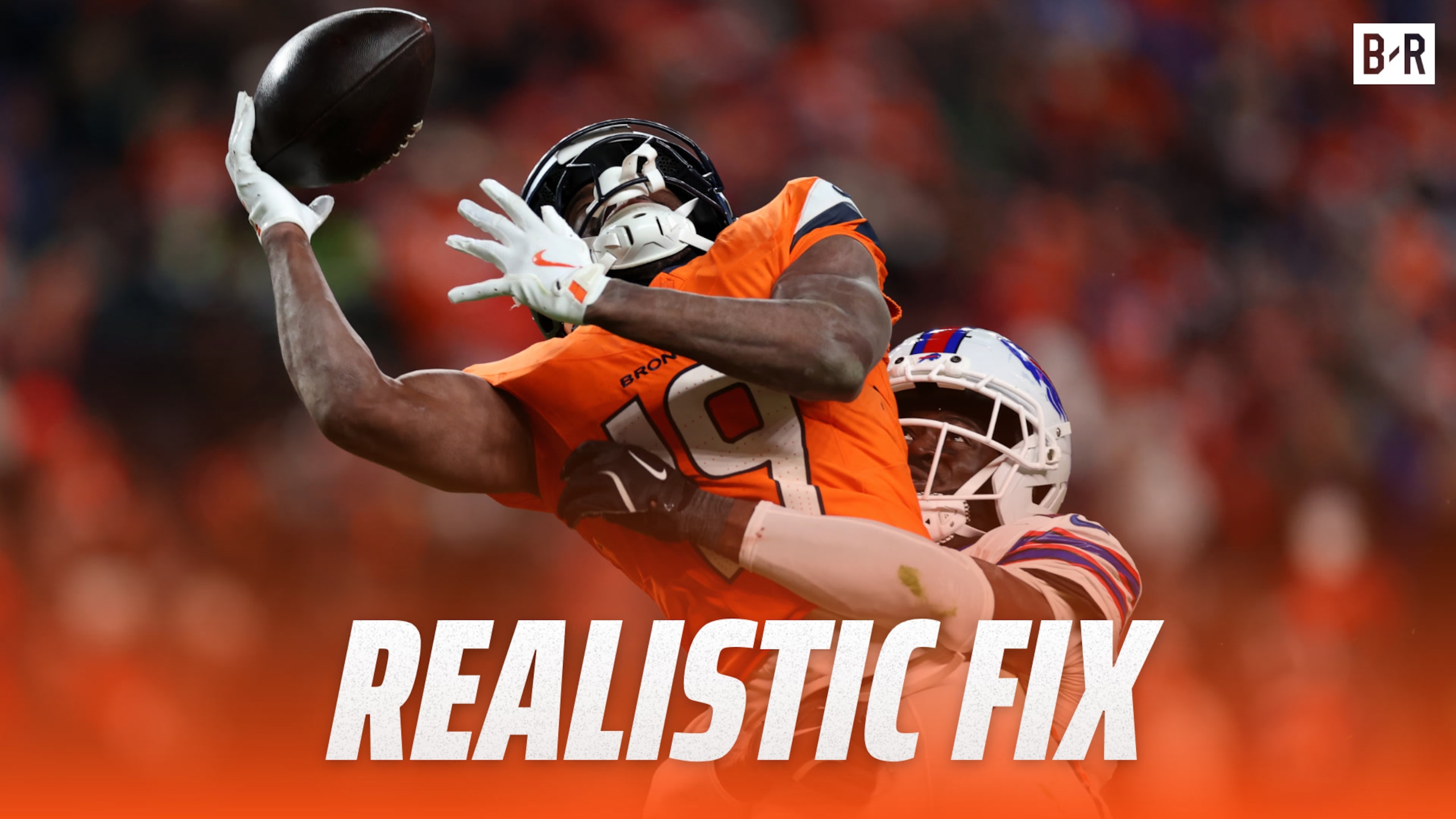
The Problem: Pass interference occurs when "any act by a player more than one yard beyond the line of scrimmage significantly hinders an eligible player's opportunity to catch the ball," according to the NFL's rulebook. If an offensive player commits pass interference, it's a 10-yard penalty. If a defensive player commits pass interference, the ball moves to the spot of the foul, which incentivizes quarterbacks to chuck deep balls and pray for a flag.
The Realistic Fix: The NFL doesn't have to look far to find a reasonable compromise to this problem.
In college football, if pass interference occurs within 15 yards of the line of scrimmage, the ball is placed at the spot of the foul and it's an automatic first down. If it happens more than 15 yards past the line of scrimmage, the ball gets moved 15 yards downfield and it's an automatic first down.
In 2018, the New York Jets proposed adopting a version of that rule, although pass interference would have remained a spot foul if the contact was "intentional and egregious." (The UFL adopted that version in 2024.) However, it did not gain enough support from the competition committee.
The NFL has already juiced scoring by moving touchbacks to the 35-yard line and making changes to the balls used for field goals. As much as we all love fantasy football points, defenses are increasingly at a disadvantage compared to offenses due to recent NFL rule changes. Switching to the college football PI rule would help restore some balance.
Also, if a quarterback throws a duck and a defender gets tangled up with a receiver trying to decelerate, that should be a no-call. Hit the gym and drink some protein shakes, bud.
—Bryan Toporek
NFL: Kill the Fumble Touchback
9 of 49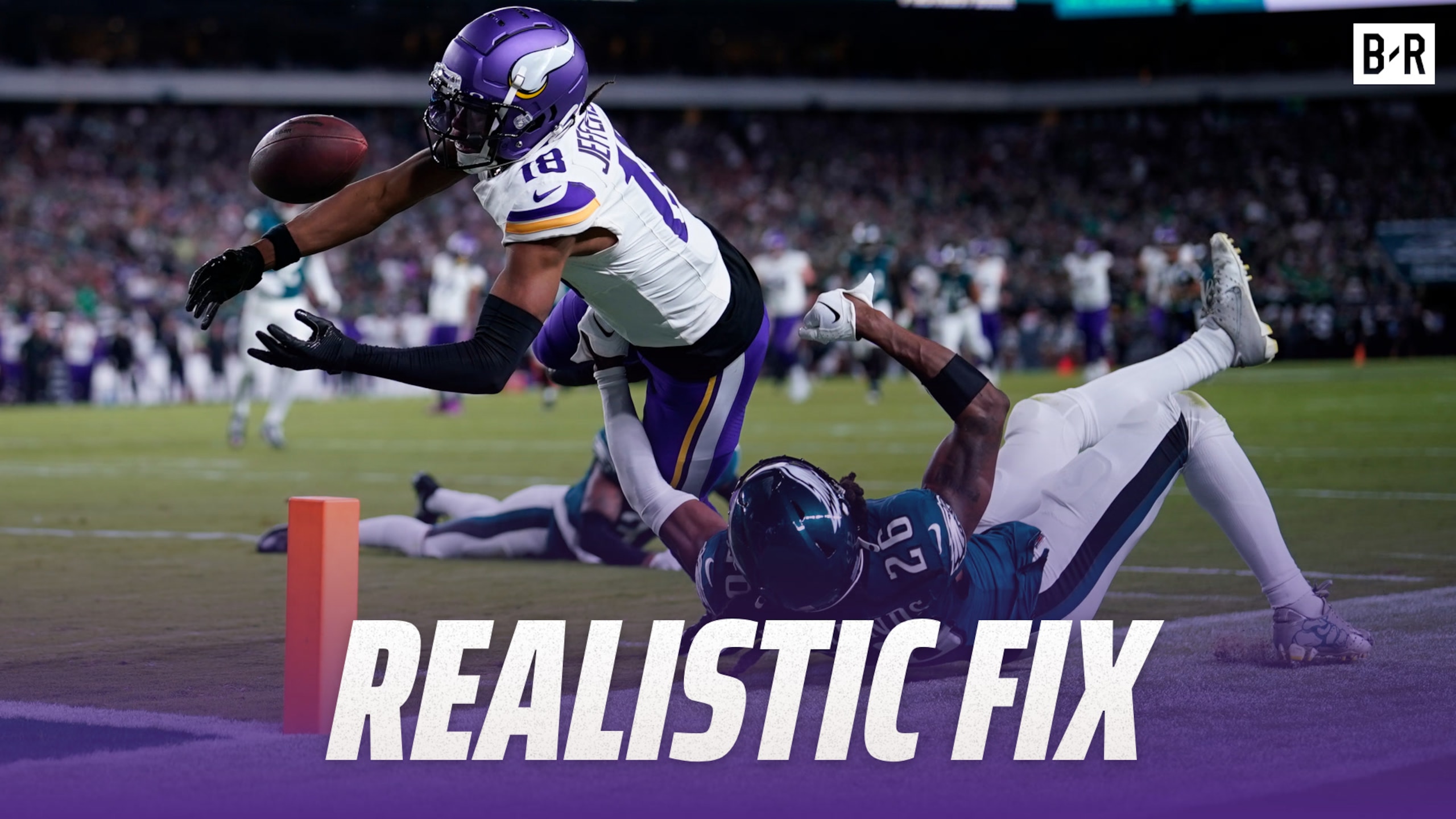
The Problem: If a team fumbles the ball at its opponent's 1-yard line and it goes out of bounds, it maintains possession at the spot of the fumble. If a team fumbles the ball at the goal line and it goes out of the end zone, its opponent takes possession at its own 20-yard line. Make it make sense.
The Realistic Fix: A team should not lose possession for fumbling through the back of the end zone. That's the bottom line. Let's start there before going into the nuance of this proposed fix.
With that said, there should be some sort of punishment for an offensive player fumbling out of the end zone. Otherwise, they'd have more incentive to reach the ball out once they get close to the goal line, which would put beleaguered defenses at even more of a disadvantage.
What if the NFL flipped the touchback rule on its head? Offenses could still maintain possession of the ball after a fumble out of the end zone, but they'd have to move back to their opponent's 20-yard line with a new set of downs. Worst-case scenario, they'd still be in field-goal range (barring a turnover), but they don't get to just Tush Push their way into a touchdown after fumbling at the goal line.
This rule has already come into play during the playoffs, and it's only a matter of time before it swings a critical game. In 2024, a league source told CBS Sports' Jonathan Jones that there had been no discussion of changing it among the competition committee, but the NFL could eventually grow to regret that.
—Bryan Toporek
NFL: Losing Team Picks the 4th-Quarter Wind
10 of 49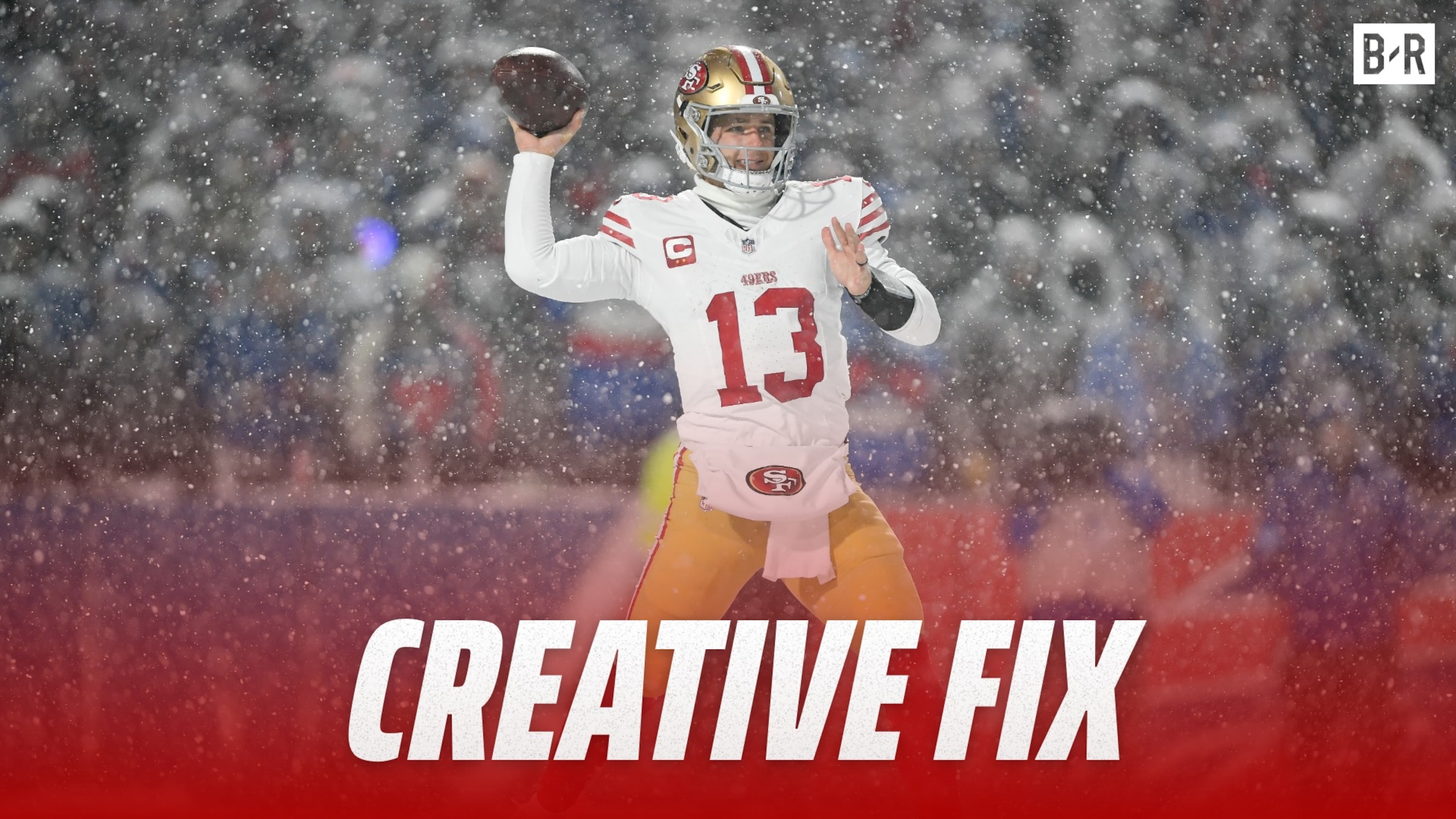
The Problem: Going into the fourth quarter, a team's direction is already settled. If the losing side is headed straight into the jaws of gale-force winds, it could end the chances of a rousing comeback before it gets started. And who doesn't want more late-game tension?
The Creative Fix: Allow the losing side to choose its direction at the end of the third quarter, making the weather a bigger part of the strategy and potentially increasing drama.
If there's a tie after the third, keep the normal field-direction rotation. Ditto for a dome. But things would get interesting as the winter months near in places like Chicago, Cleveland, New England and Buffalo, among others. The sun and glare are also factors, so even warm-weather games could be affected.
Does it punish the leading team for playing well? Slightly. But the opponent still has to earn the win, and it ups the chance for better theater.
—Jason Dunbar
NFL: Common-Sense Catch Rules
11 of 49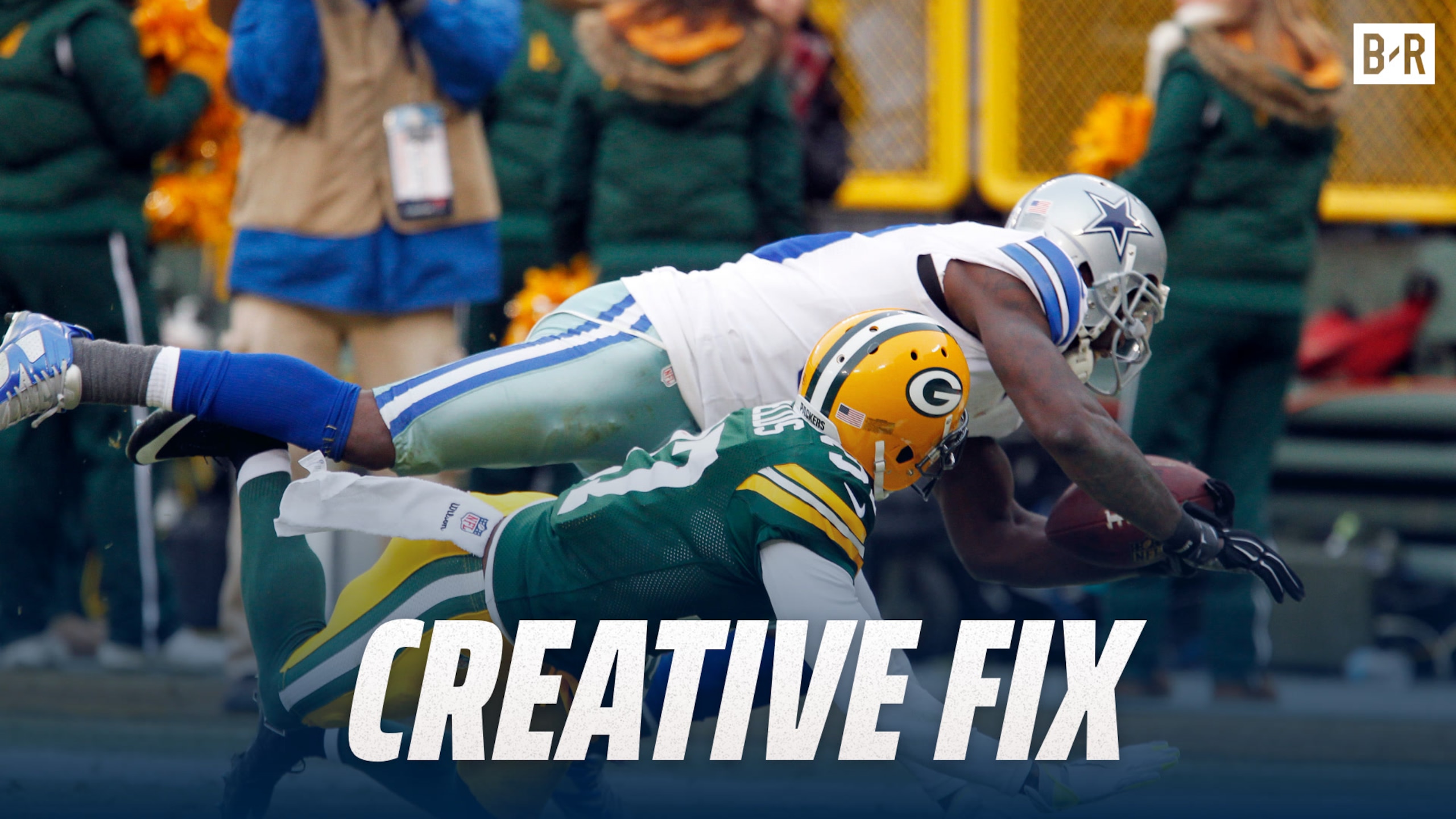
The Problem: Remember Cowboys star Dez Bryant's infamous overturned catch in the 2014 playoffs against the Packers? The NFL rewrote its catch rule in 2018 to prevent that sort of reversal from happening in the future.
Yet replay keeps flipping big catches. In the 2022 playoffs against the Bills, Bengals star Ja'Marr Chase lost a would-be leaping score at the back of the end zone to the video.
Just last season, the Vikings' T.J. Hockenson had a diving TD overturned by the tape after it was controversially ruled he didn't maintain ball control. Similarly, the Panthers' Tet McMillan lost a diving fourth-quarter catch in a tie game last December, and this time the league privately told the Panthers it got the call wrong.
Now, a multiple-choice question. All of those plays:
- a) were jaw-dropping displays of athleticism
- b) created the kind of euphoria fans crave
- c) certainly looked like catches to the naked eye
- d) were otherwise spectacular plays disallowed because of a technicality only slow-motion replay could reveal
- e) all of the above
If you guessed E, you see where we're going.
The Creative Fix: Of course, we understand the need for a clear definition of a "catch." We'd simply propose that the naked eye get a bigger say than replay.
If there's any question on a play originally ruled a catch, a replay can only overturn it if it's an obvious mistake viewed at full speed. The ball has to have clearly hit the ground, for example. No frame-by-frame dissections.
There's enough spirit-killing in football with the zillion penalties that can be called. Leave the brilliance alone.
—Chris Trenchard
NFL: Replace the Coin Toss with a QB Throw-Off
12 of 49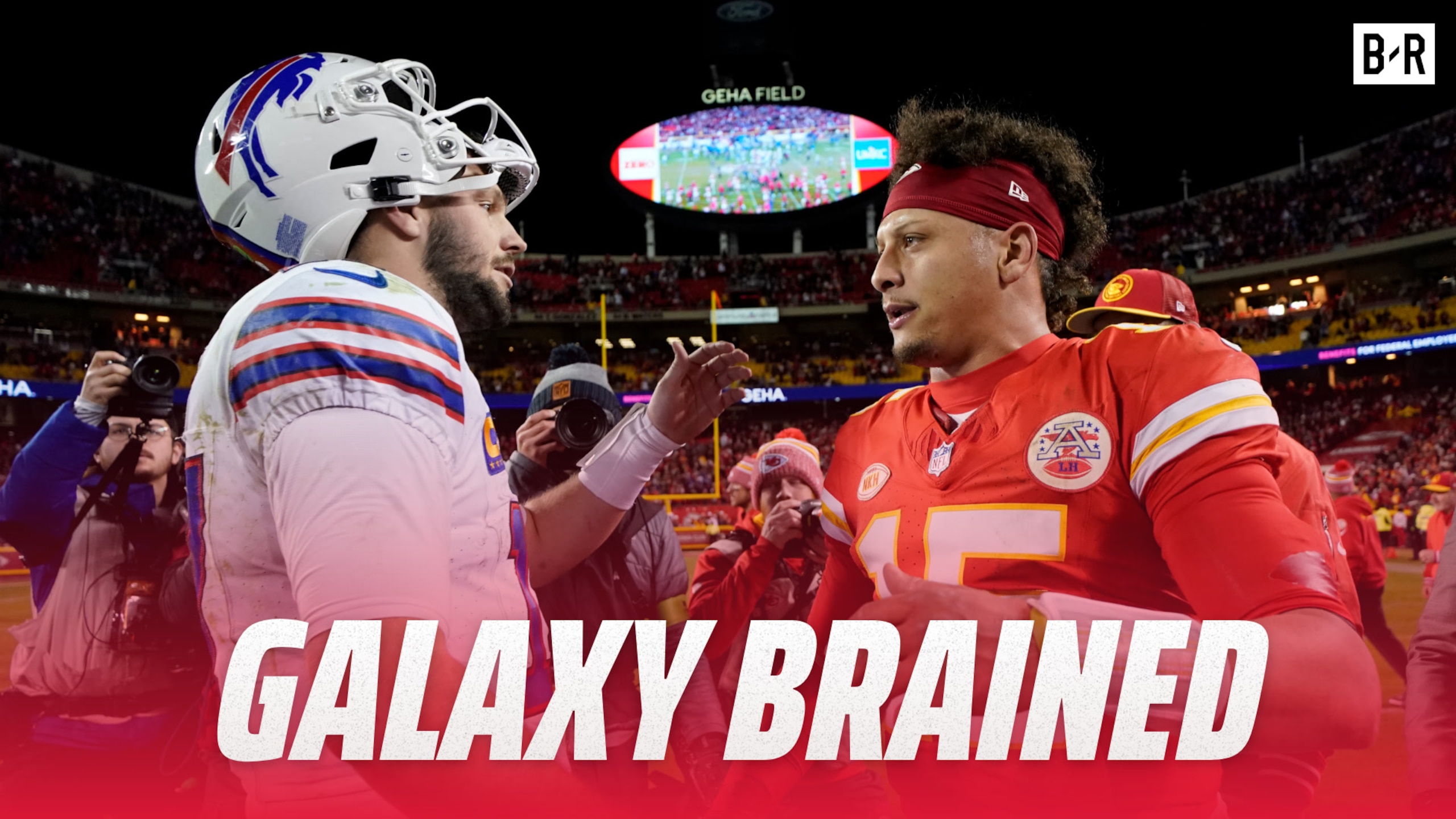
The Problem: Flipping a coin is your grandparents' way of settling possession and field direction. It's boring and leaves too much to chance. Why not get wild?
But the bigger issue is opposing NFL quarterbacks are never on the field at the same time. That feels like a gaping entertainment gap when it comes to the game's biggest stars.
The Galaxy-Brained Fix: Have each quarterback stand behind the same goal line and throw the ball as far as they can, one at a time. Whichever throw lands farther earns the same privileges as the current coin-toss winner would.
QBs would have just warmed up anyway, so the injury risk would be minimal. If that's too much of a concern, let teams designate any thrower they want from the 53-man roster. The amount of hidden arm talent could be dazzling. Or meme-worthy. It would be a must-watch pregame event in the ever-growing litany of NFL sideshows either way.
—Jason Dunbar
NFL: Anything Goes Before the Snap
13 of 49The Problem: Football has too many obscure rules, and none are more inane than procedural penalties like illegal shift and illegal formation. Few things in an NFL game are less fun than a great play getting wiped out by a penalty that even many hardcore fans couldn't really explain.
The Galaxy-Brained Fix: Be honest. Do you actually know what constitutes an illegal shift or illegal formation? In our experience, only two types of people answer yes to that question: liars and Hochulis.
Few fans care about or understand these particular rules, so it's hard to see how they add to the game. As long as a team on offense doesn't commit a false start, let them do whatever they want before the snap.
If they want to line up with just a center, a QB and nine wide receivers who run in circles 10 yards behind the line of scrimmage, let them! Common sense dictates they probably shouldn't do this, but there's no reason to make a rule preventing it.
Scrapping every pre-snap penalty except false start would allow creative coaches to come up with even more ways to evolve offenses and create cool gadget plays. It'll also allow bad coaches to find new ways to screw up spectacularly, which is still exciting for fans! And it gets the refs out of one more phase of the game, which can only be a good thing.
This change would be addition by subtraction at its finest.
—Ben Chodos
Fantasy Football: Kill the Kicker Slot
14 of 49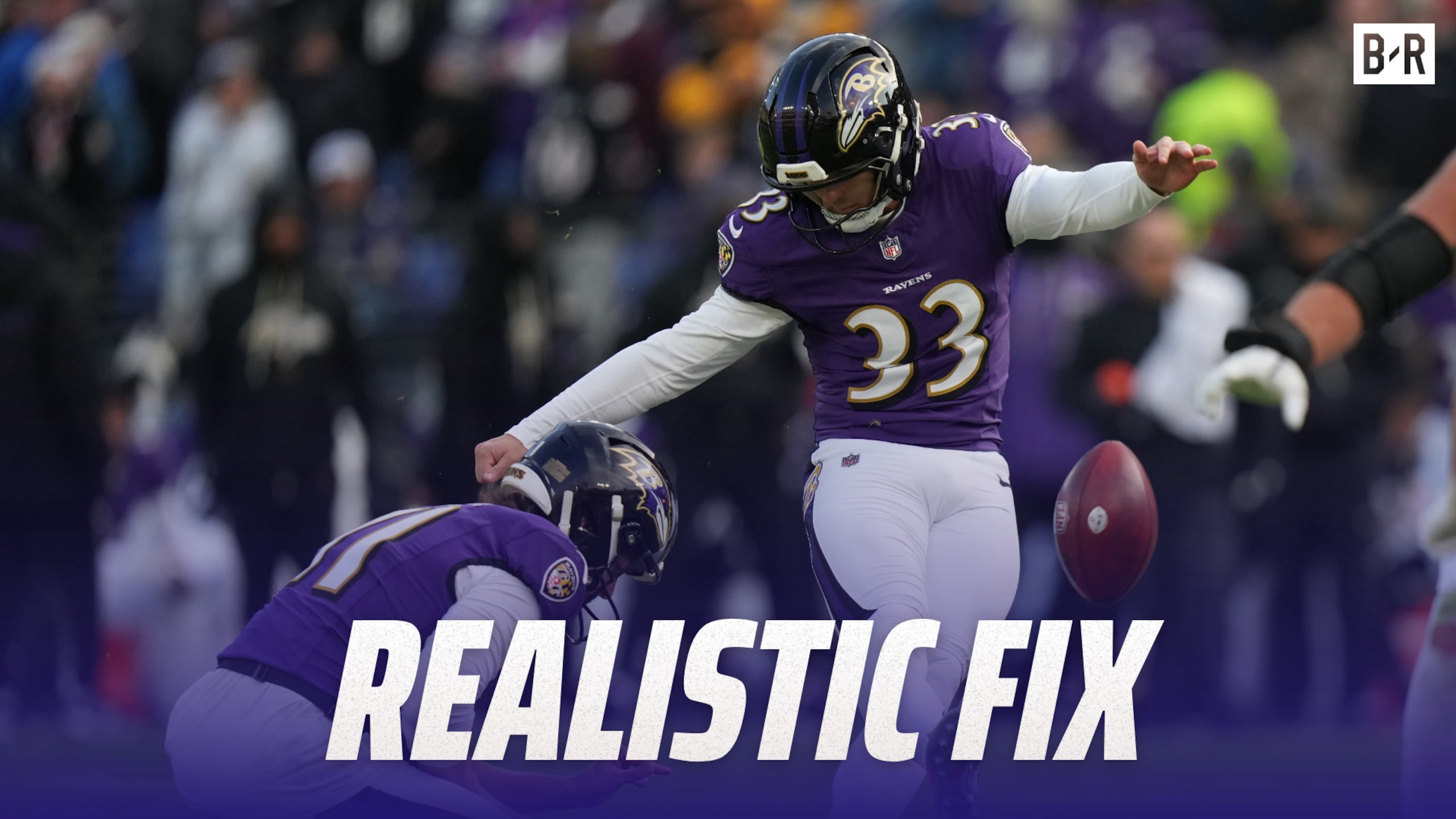
The Problem: Kickers add almost nothing but dumb luck to fantasy football. Fantasy champions can be decided on the foot of Tyler Loop. All a K slot does is add wasted time every week when you use them as waiver fodder and then have to remember to roster a kicker on Sunday.
The Realistic Fix: The tyranny of the K slot must be eliminated. Fix fantasy football by killing K as a default in private and public leagues.
Fantasy kickers are nothing but a nightmare when you lose because your opponent's kicker got busy. It's nothing to be proud of when your team gets that K edge. Kick out the K.
—Mark Smoyer
Fantasy Football: Score Defenses on Big Plays Only
15 of 49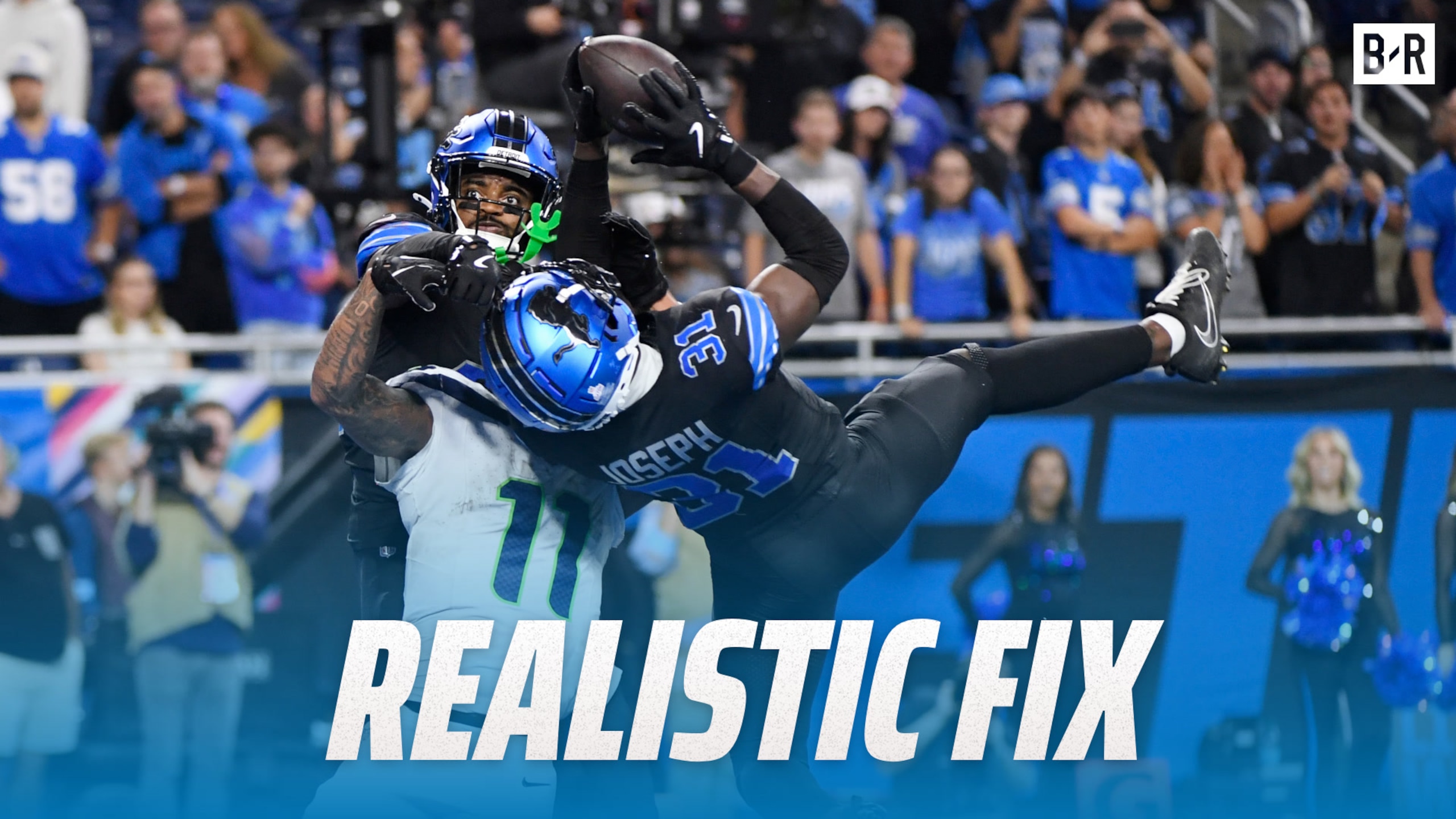
The Problem: Standard fantasy scoring penalizes defenses for yards and/or points allowed, which can cause a unit that racks up turnovers to still score close to nothing in a shootout.
Oftentimes, a defense's day is ruined by things it doesn't control thanks to the offense's turnovers or generally bad field positioning.
The Realistic Fix: Get rid of negative defensive plays in standard scoring and award points for big moments like interceptions, sacks, defensive TDs, etc. Nothing comes off the board.
Sure, any commissioner can set up a league how they want, but people often go with however the major fantasy outlets have things set up. Making this the standard setting does a better job of isolating a defense's day from how its offense performs.
—Jason Dunbar
Fantasy Football: Targeted WR Gets 3 Points on Pass Interference
16 of 49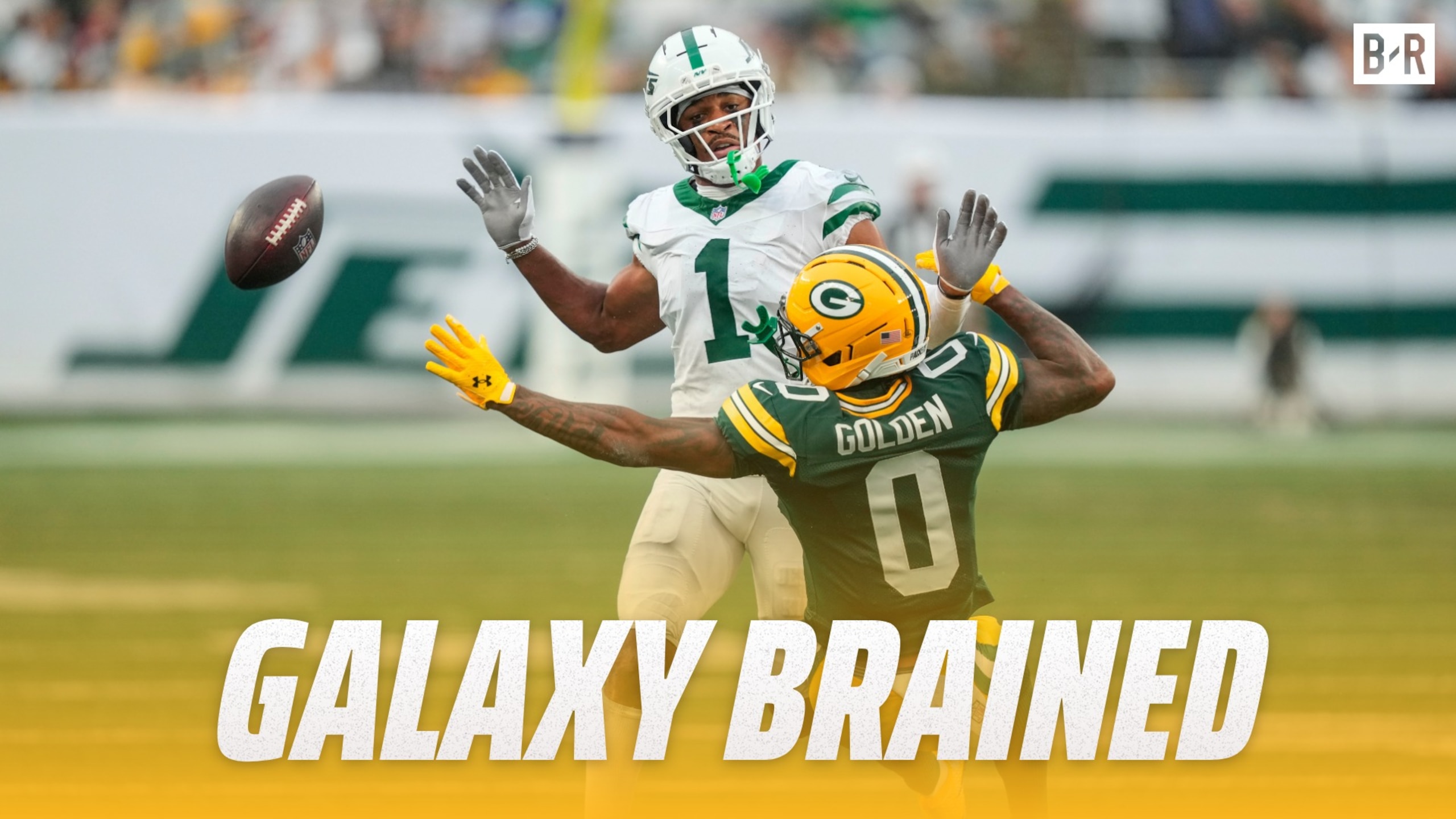
The Problem: When a running back catches a dump-off pass in PPR: One point, at least. When a wide receiver runs a perfect route 20 yards deep and gets knocked down just before he was going to catch the pass: Zero points.
It makes no sense. The real team advances the ball 20 yards on the pass-interference call, but your fantasy team gets nary a point.
The Galaxy-Brained Fix: Not anymore with this sensational solution. Now the fantasy victim of PI gets three points. One for the expected catch and two for a token yardage value without the fantasy game having to speculate on the actual yardage.
What about a PI that doesn't get called? Or a wide-open receiver whose QB can't throw right? Sorry. Can't help you there.
—Mark Smoyer
NBA: 2 Flops and You're Out
17 of 49The Problem: Flopping has gotten out of control in the NBA. The league tried to address it, making it punishable as a technical foul since 2023-24. But it's been a half-hearted measure, with the rule explicitly saying players can't be ejected for multiple flopping violations.
The Realistic Fix: The league is off to a good start by seemingly making an effort to enforce its existing rule this season. Now, it should make flopping the same as other technical fouls, meaning if you do it twice in the same game, you get the rest of the night off. It's the absolute least that could be done to convince fans there's a real effort to curb this behavior.
The risk-reward proposition as it currently stands still feels too much in favor of the flopper. The reward is a turnover and a personal foul against one of your opponents if you successfully dupe the ref, and the risk is just giving away one measly free throw, no matter how many times you try it. If you think shame is any sort of deterrent, you probably haven't watched the game in a while.
Something more needs to be done, and this would be an exceedingly moderate and reasonable step toward making flopping less a part of the game than it is now.
Our other ideas to punish this behavior included allowing floppers to be legally fouled for some period of time and forcing them to change into 1980s-style short shorts for the remainder of a game. So we can and will escalate if "two flops and you're tossed" doesn't get the job done.
—Ben Chodos
NBA: Add a 1-on-1 Tournament at All-Star Weekend
18 of 49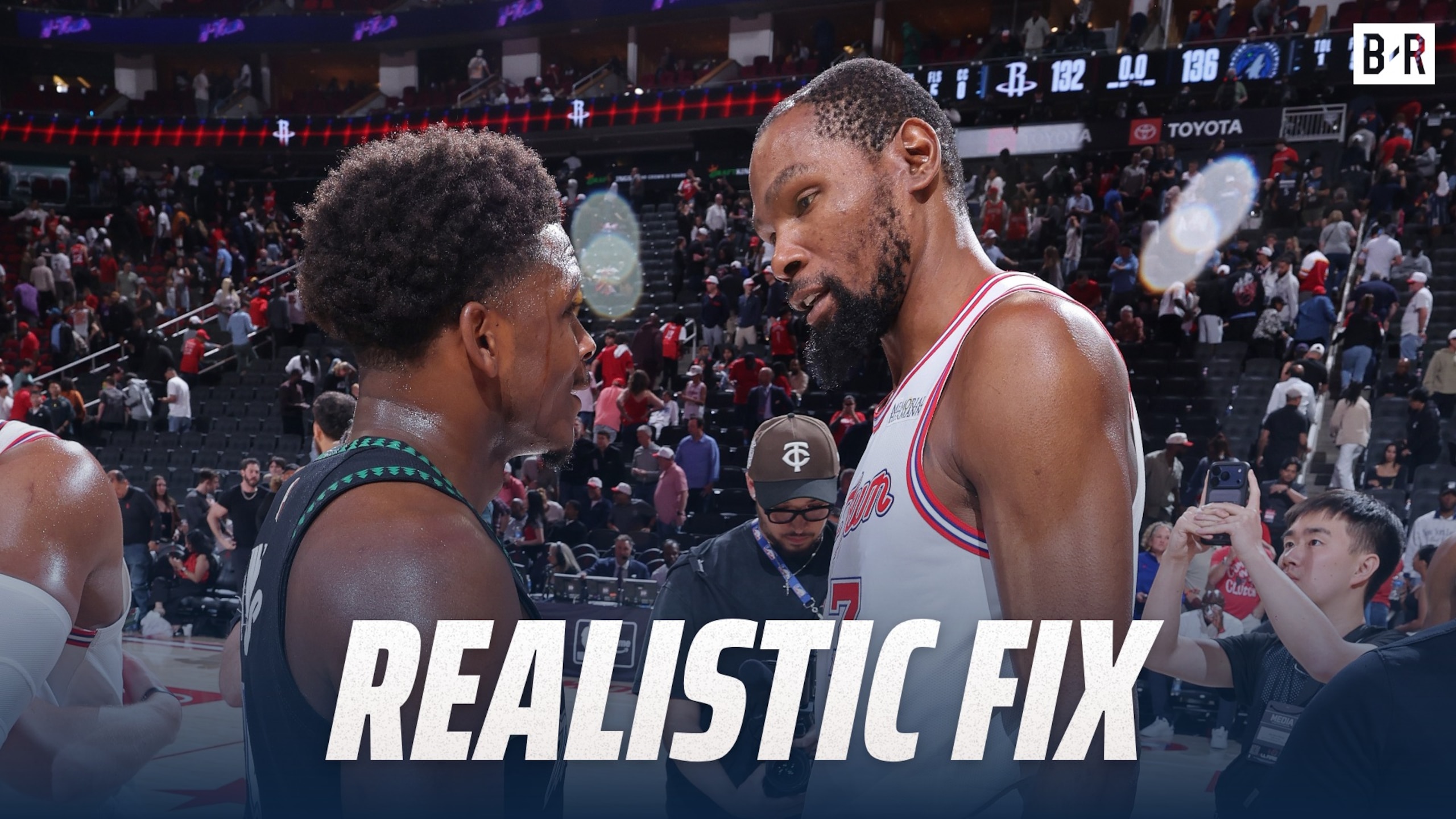
The Problem: The NBA's All-Star Weekend has lost most of its sizzle. The Three-Point Contest is fine, the Skills Challenge is whatever, and the Slam Dunk Contest is mostly populated by random young players or G Leaguers. The league needs something to revitalize All-Star Saturday.
The Realistic Fix: Look no further than Unrivaled, the three-on-three women's basketball league populated by WNBA stars. It introduced a three-day one-on-one tournament in 2025 and ran it back this past year because it was such a hit with fans. In fact, the semifinals and finals of its 2025 tournament drew more viewers (377,000) than Unrivaled had for its opening game (312,000), per Ryan Glasspiegel of Front Office Sports.
Given the amount of player movement throughout the NBA these days—along with the hurt feelings that often come with it—this is an absolute no-brainer for the NBA to replicate. Can you imagine Jaylen Brown and Jayson Tatum competing in a one-on-one contest? Kevin Durant vs. Anthony Edwards? Joel Embiid vs. Nikola Jokić? The possibilities are endless.
The NBA might not be able to convince every All-Star to compete in a one-on-one tournament, but offering a significant cash prize—or perhaps some free helicopter rides?—could incentivize participation. Whichever company ended up sponsoring it should offer to match each player's winnings with a donation to a charity of their choice, too.
If the NBA spread out the tournament over two days, it could hold the first two rounds either on Friday or Saturday and then do the semifinals and finals on the following day. Of course, that would cut into players' ability to attend "brand activations," which is what All-Star Weekend has effectively become, but this would be a way to turn attention away from the league's business partners and back to where it belongs: the fans.
—Bryan Toporek
NBA: Win the Cup, Make the Play-In
19 of 49
text
NBA: Bring Back Preps-to-Pros
20 of 49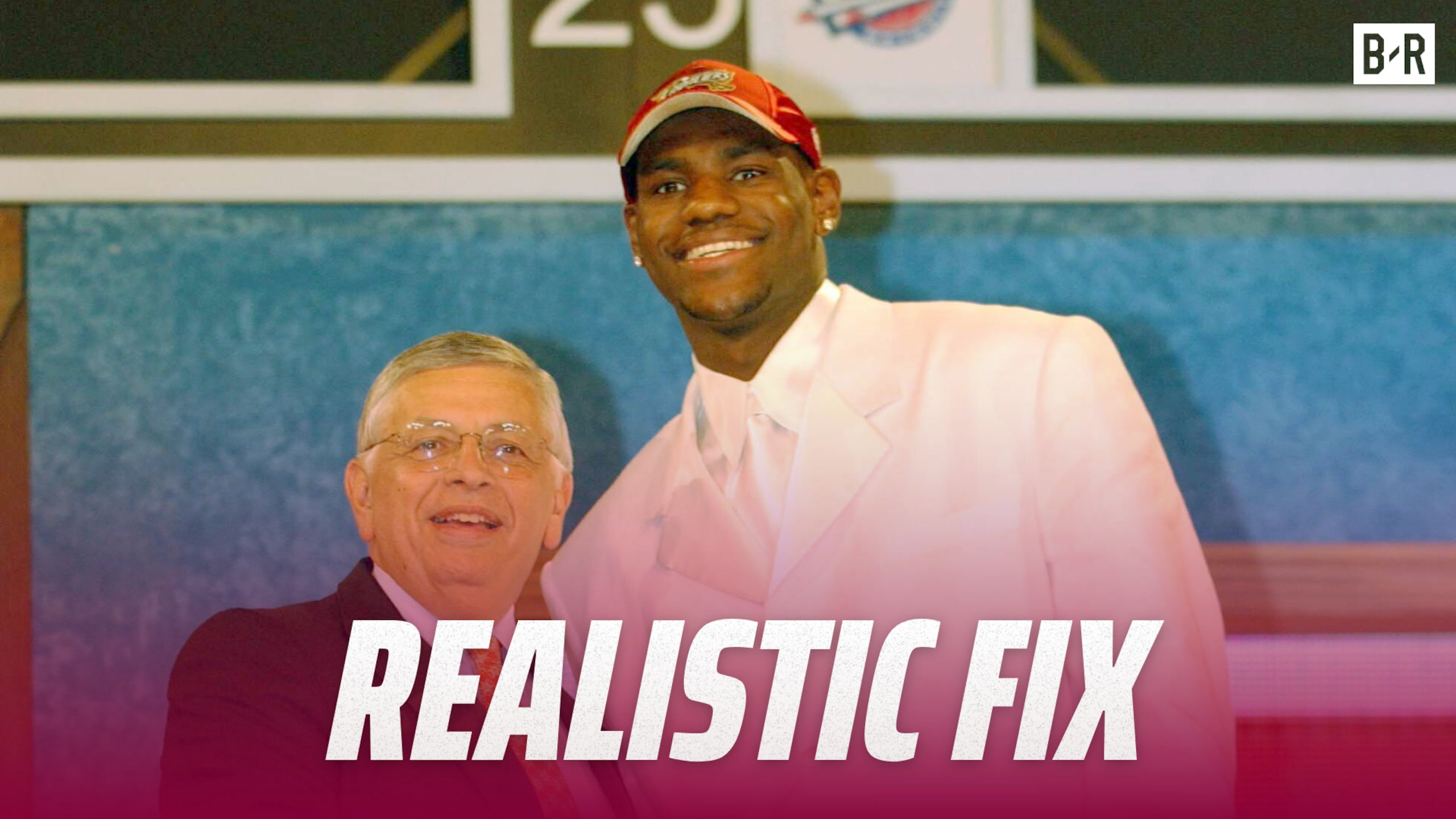
The Problem: Until 2006, high school players were allowed to directly declare for the NBA draft instead of going to college. But the NBA changed the rule in its 2005 collective bargaining agreement, forcing players to be at least 19 years old during the calendar year of the draft and one year removed from high school before they can declare.
The Realistic Fix: There have been discussions for years about scrapping the one-and-done rule. In 2022, The Athletic's Shams Charania reported the league and the National Basketball Players Association were "expected to agree on moving the age eligibility" from 19 to 18. However, ESPN's Adrian Wojnarowski reported in March 2023 that the two sides agreed to scrap those discussions, "clearing the way for the 'one-and-done' era to continue into the foreseeable future."
The advent of NIL rights in recent years has helped soften the blow of the one-and-done rule. The top collegiate prospects can now earn millions through sponsorship deals rather than under-the-table arrangements with boosters. As LaMelo Ball proved, top recruits can also go overseas for a year and still wind up being high lottery picks.
According to Wojnarowski, "NBA owners and executives were largely indifferent or fully against returning to high school gymnasiums to evaluate players, and even less enthusiastic about that idea without concessions from the NBPA on providing increased access to pre-draft player medical information and increased participation in several elements of the draft combine." The NBPA did ultimately make those concessions, but the one-and-done rule remained in place.
But if graduating high school seniors are ready for the NBA—as Dallas Mavericks forward Cooper Flagg proved at Team USA camp in 2024—why should they be forced to sacrifice their NBA earning potential for a year? That only pushes back when they'll be eligible for their next contracts.
Neither the NBA nor the NBPA may feel strongly about restoring the preps-to-pros pipeline, but top high school recruits likely feel differently about it.
—Bryan Toporek
NBA: Bring Back Best-of-5 First-Round Series
21 of 49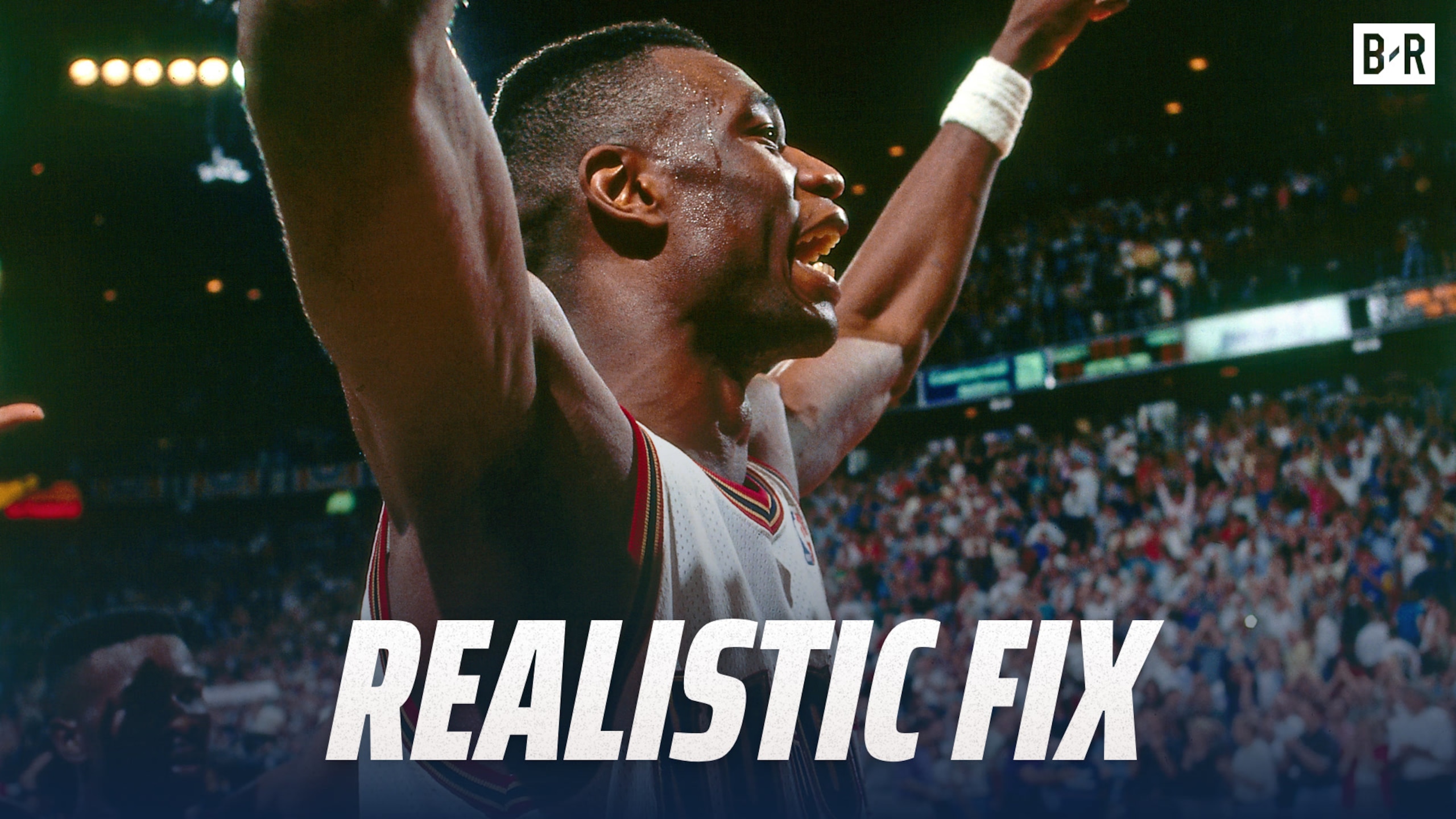
The Problem: The logic of the seven-game series has always been bizarre: If a series is longer, the odds of an upset will decrease! And that will be better!
Is it? Why do better NBA teams need protection?
The opposite logic is what makes the NCAA tournament feel like a dozen espresso shots to the heart: less certainty is actually quite awesome!
Postseason upsets live forever. Memories of Denver over Seattle, Allan Houston over Miami, the We Believe Warriors over Dirk's Mavs—excuse me, feeling emotional.
Meanwhile, you've already forgotten who OKC swept in the first round last year.
So why does the NBA insist on more games, really?
More games to broadcast, more tickets to sell, more highlights to market. That's sensible logic for an owner, and totally irrelevant to the rest of us.
The Realistic Fix: Pare things back to a best of five. If that's unbearable, there's also a perfectly fine compromise (h/t Bill Barnwell 12 years ago): a mercy rule if a team goes down 3-0.
Suddenly a 2-0 series is must-watch TV, and nobody has to suffer the inevitability of a 3-0 Game 4.
—Chris Trenchard
NBA: Play Games in MLB-Style Series
22 of 49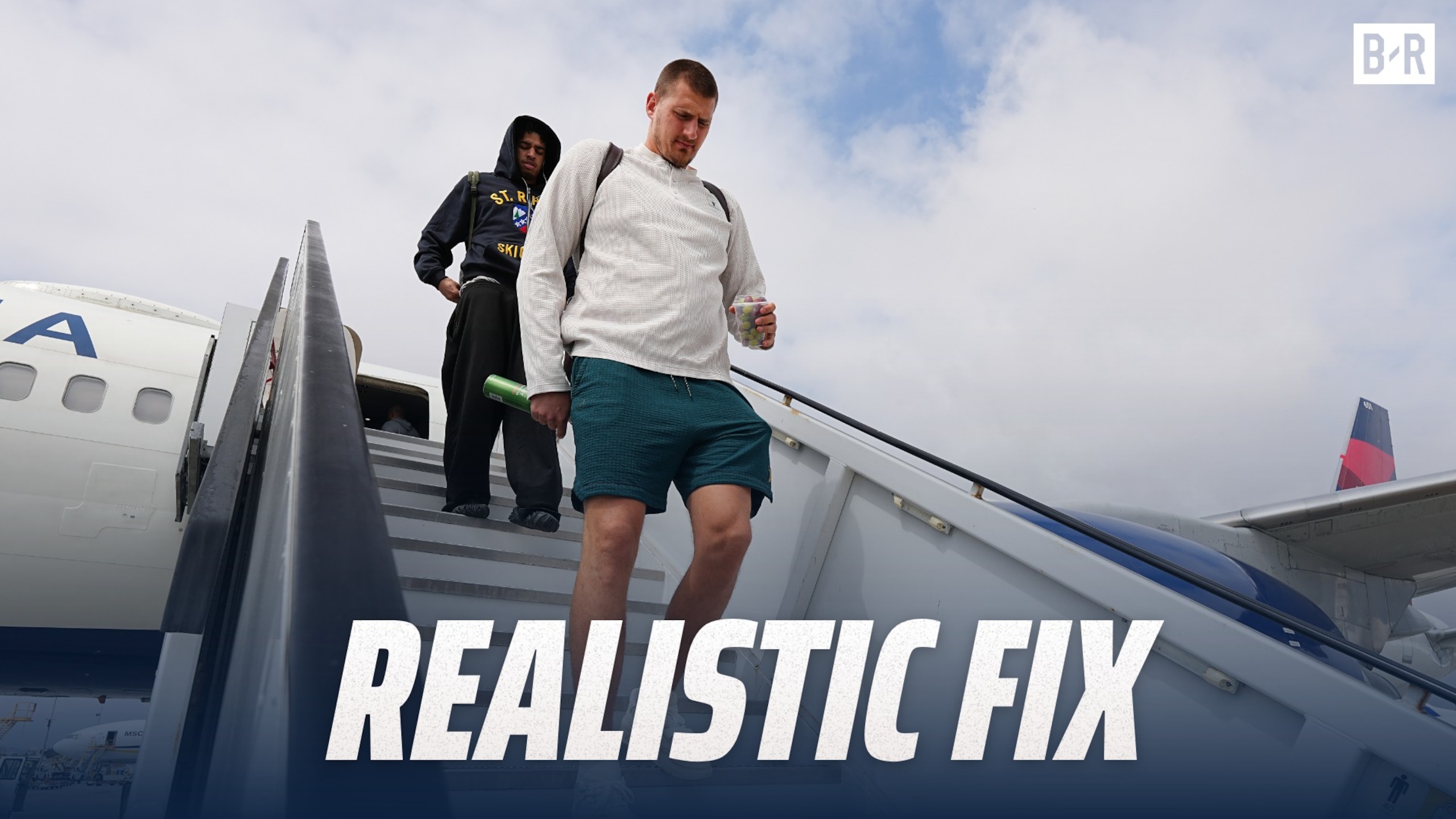
The Problem: We're tired of hearing NBA players and coaches complain about the league's extremely demanding travel obligations. And we get it: Going from city to city for seven months a year must be taxing on the mind and body.
What makes the complaint a headache: The NBA was trending toward a solution as recently as five years ago when it experimented with two-game, MLB-esque series to cut down on fraught flights. Single-game road trips were halved. It seemed like progress.
Fast-forward to 2025-26 and the league kinda…forgot about this concept?
The Realistic Fix: Any baseball fan will quickly tell you about all the benefits of a series: the evolving chess moves and games within the game, the simmering tension, the glory of a sweep. The sleepovers at their rivals' houses (we assume).
Here's how it would work in the NBA:
- Two games vs. each nonconference team become one two-game set (home one year, away the next). That's 15 sets and 30 games, with one trip per opponent instead of two.
- Then conference games follow suit. Division games and other four-game opponents become two-game home-and-home sets, while teams you see three times become one two-game set with a yearly rotating one-off.
Mini two-game sets would give fans another reason to care about that early-November back-to-back, and hopefully cut down on travel-related fatigue and injuries.
—Chris Trenchard
NBA: Make (Some) Dunks Worth 3 Points
23 of 49The Problem: Anthony Edwards has a lane to fly to the hoop for a tomahawk slam, but he stops 28 feet away and launches a three. Jaylen Brown is headed to the paint, in position to power over a 7-foot center, but he dishes out to Anfernee Simons for a corner trey.
Consider the following. In '96-97, Jerry Stackhouse had 115 dunks. In '99-00, Steve Francis had 96. But Edwards had just 48 dunks in '25-26 (4.5 percent of his shots). Brown had 32 (2.7 percent). That's a lot of spectacular that fans no longer are seeing.
Sure, off-the-dribble and logo threes can be spectacular, but way too many threes are stilted attempts on a well-spaced (read: boring) floor. Final-shot plays regularly are limited to moving screens around the arc followed by a heave. Three-and-D stiffs are prioritized over acrobats who didn't grow up with a live-in shooting coach.
The Galaxy-Brained Fix: Incentivize high-wire basketball by awarding high-wire acts with three points instead of two.
But, wait, are we saying that Mitchell Robinson gets three points for every putback dunk he makes? No, we are not.
Using the tracking wizardry that can plot the movement of players and basketballs, a formula is set for every player, taking into account their height and their distance from the basket when they take off. Wemby's dunk from the free-throw line? Three points. Fred VanVleet's dunk from outside that little semi-circle? Three points.
In honor of Dr. J and His Airness, let's take this one to the rack.
—Mark Smoyer
NBA: Give Us the 4-Point Line Already
24 of 49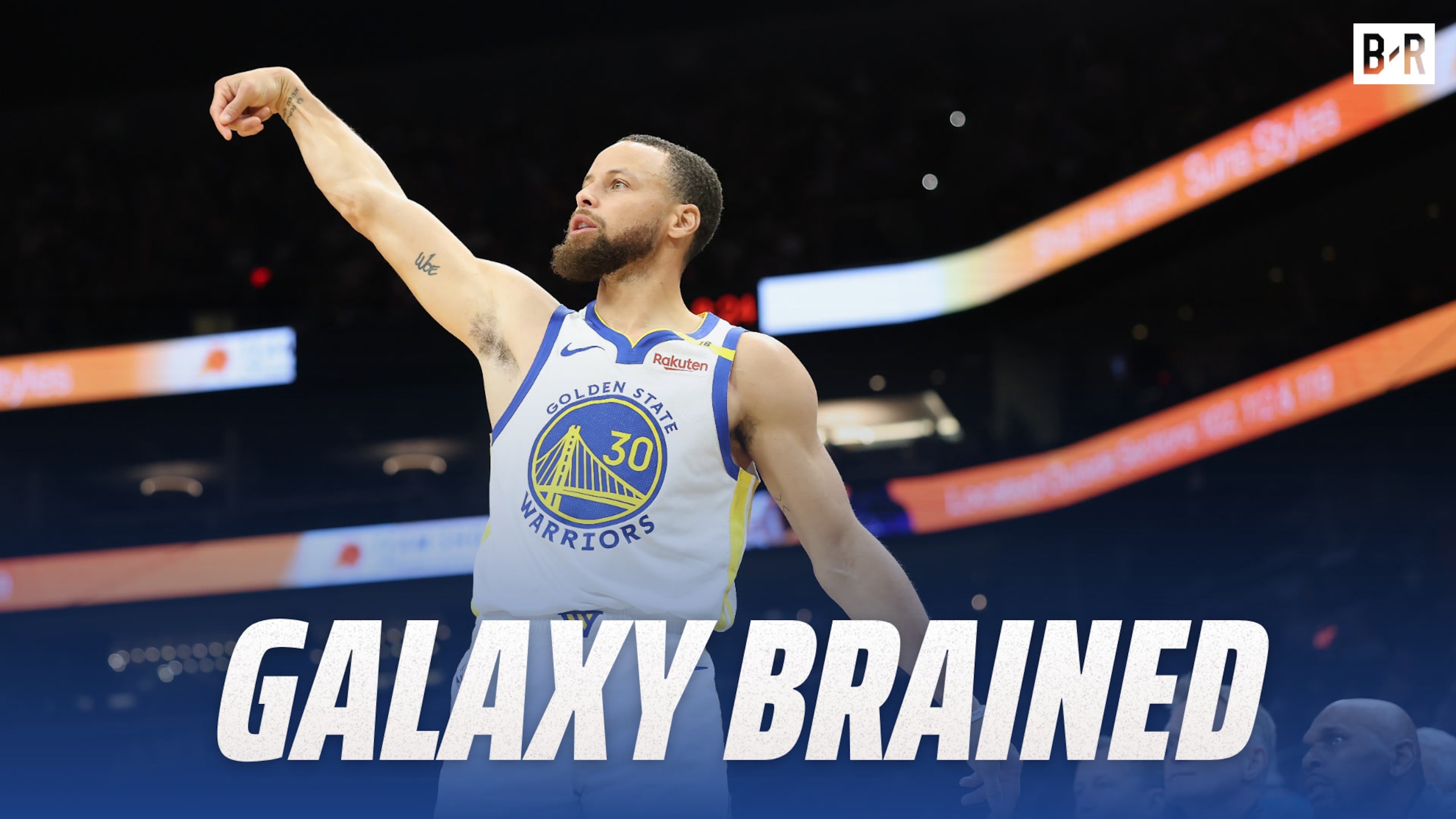
The Problem: Threes just don't slap like they used to.
Blame Steph. Blame the math. Blame the copycats.
Don't care. It's a problem.
Ten years ago, teams averaged 24 threes attempted per game. Last year, it was 37 threes per team, per game. Everyone's just jacking. Games feel like three-point fast-break drills and the novelty of a shot from distance is gone. Yawn.
The Galaxy-Brained Fix: But sources say there's a number bigger than three that could revolutionize the game, a number so bold it could make a three-pointer feel like the layup it's become: four.
Bring on the four-pointer, placed where the elite three-point specialists are already shooting from: 27 feet.
A four-point line would immediately open up the court, make end-of-game strategy fascinating and reestablish the value of the NBA's most skilled players.
All the dudes who worked on their corner three can keep chucking. But it's time to reward the heat-checkers and spice up game flow.
—Chris Trenchard
MLB: Use Robot Umps on Every Pitch
25 of 49The Problem: Following MLB's institution of the Automated Ball-Strike Challenge System (ABS) in 2026, teams won 53.9 percent of 10,557 challenges. That's great. But since every club gets two challenges per game and loses any that are unsuccessful, the system can only change calls while teams still have the ability. Even then, it can only do so when players call it out.
The Realistic Fix: Institute the ABS system full time. Any pitch that touches the established rectangular zone, which is 17 inches wide and stands from 53.5 percent of the batter's height at the top to 27 percent at the bottom, is a strike.
Why not do it? Well, umpires are people too, and over a century of tradition is hard to let go of. Players also prefer the challenge system to a full-on robotic takeover.
But the first time a team can't challenge an obvious blown call in a big postseason game, this issue will rear its head. There have already been instances of players failing to challenge calls that could've been overturned in key situations. MLB.com's Mike Petriello noted both Arizona's Ketel Marte and Milwaukee's Jackson Chourio left challenges on the shelf following questionable ninth-inning called third strikes.
We have the tech. Let's get this stuff right the first time.
—Jason Dunbar
MLB: Institute the Golden At-Bat
26 of 49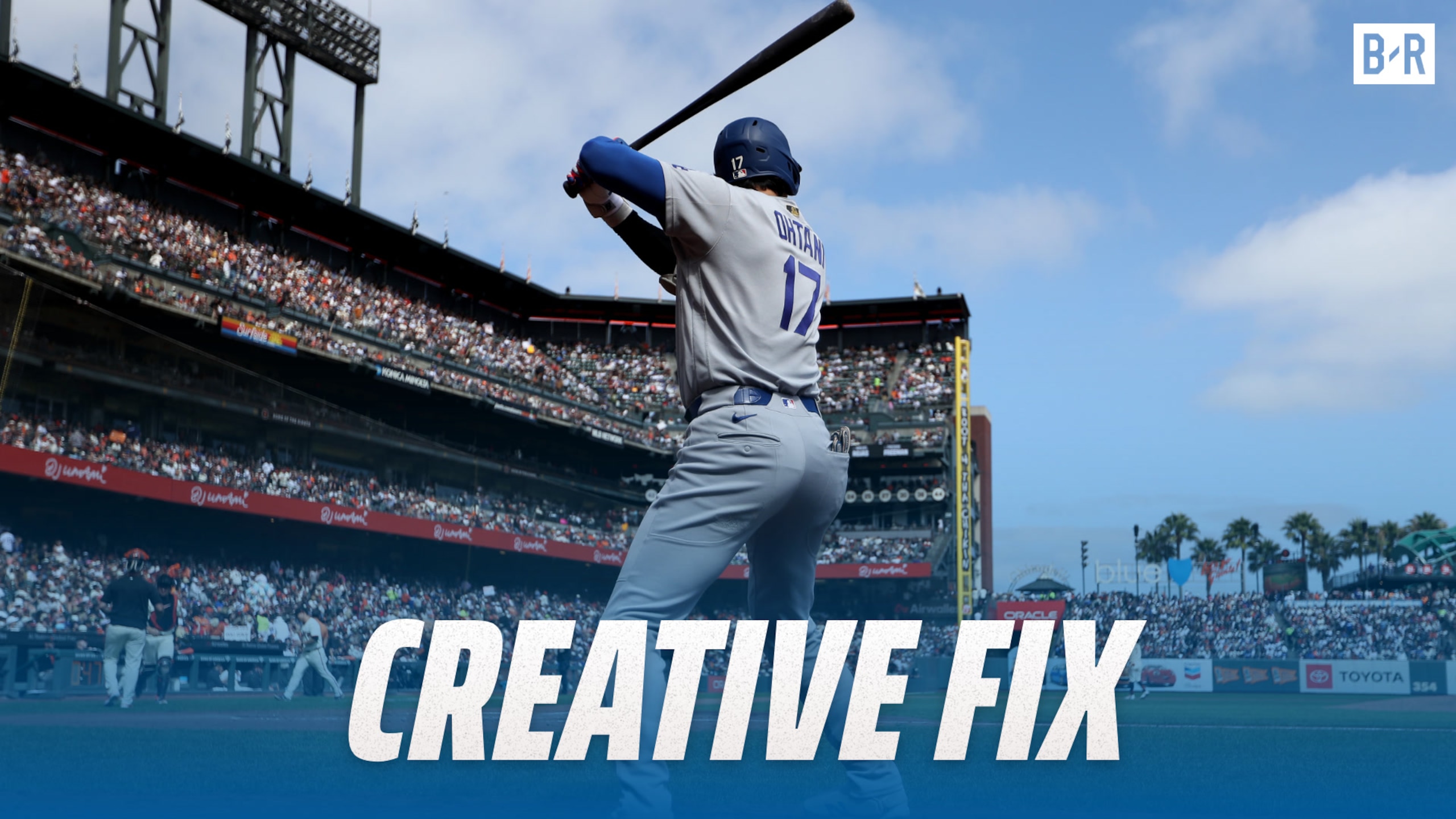
The Problem: MLB teams can't turn to their best hitters on demand in the biggest moments. In a world where baseball has lost its status as America's pastime, it should be able to lean on its star power in the same ways the NBA and NFL do.
The Creative Fix: Allow teams to give one at-bat per game in the seventh inning or later to a hitter already in the lineup, no matter if it's his turn. Baseball gets its equivalent of drawing up a late-game play for its best receiver or scorer.
The inning restriction would keep the focus on tense, high-leverage decisions rather than allowing teams to use it as an opener-like strategy. Theoretically, a star player could make consecutive plate appearances, but teams would have to consider the opportunity cost of replacing their No. 4 hitter with their No. 3, for instance.
The Athletic's Jayson Stark tackled the topic as well as anyone could after MLB commissioner Rob Manfred mentioned the idea in passing in October 2024. Owners had informally discussed the golden at-bat at a competition committee meeting that year, but Manfred later said he was not in favor of the rule change. There's been nothing but silence on it since.
For the naysayers, yes, the golden at-bat flies in the face of tradition, and baseball has done plenty of that in the last half decade or so with other rule changes such as the ghost runner. But think of the buzz in the air that rises when an ace starter comes on in relief in a short-rest playoff appearance. This would be the batter's version, and the moment would be electric.
—Jason Dunbar
MLB: Starting Pitchers Must Throw 60 Pitches, or Else
27 of 49
The Problem: The once-proud starting pitcher position is now filled by anyone who can face at least three batters, or maybe go three or four innings, and then be replaced by a parade of situational hurlers.
The bad results: There's no premium on pitchers' staying power. Fewer pitchers become the reliable foundation of a fan's experience. Pitchers are raised to throw nasty stuff 100 mph and then burn out, have surgeries and float in and out of the rotation. Brewers reliever Aaron Ashby wins 13 games and Yankees starter Max Fried wins 5.
The Creative Fix: If a team chooses to pull its starting pitcher before 60 pitches, the team must also choose to either:
1) gift the opposing team one run.
or
2) keep the SP in the game as a DH in a 10-batter lineup.
Even if you don't care about The Decline of The Starting Pitcher, you have to agree this is a great fix just for the strategic ramifications of deciding to pull a pitcher early.
—Mark Smoyer
CBB: Raise the Foul Limit!
28 of 49
The Problem: Our general POV here at Bleacher Report is simple: Superstars are fun to watch. Referees are not. Especially in college basketball.
We all watch college hoops for many reasons—the raucous student sections, the nostalgic house bands, the rivalries. But really: the stars.
Again, not the refs.
So why does the NCAA insist on the antiquated five-foul limit per player? The rule comes with dire consequences for fans, removing stars when everyone wants them on the court: crunch time.
Defenders of the rule say: "(robot voice) higher foul limits lead to more fouls, more free throws and slower games. And raising the limit rewards physical play."
The Realistic Fix: Exactly.
In other words: more hoops, higher scores and lottery picks taking the game-winning shot? That's an easy trade-off for us.
—Chris Trenchard
CBB: Protect Rivalries From Realignment
29 of 49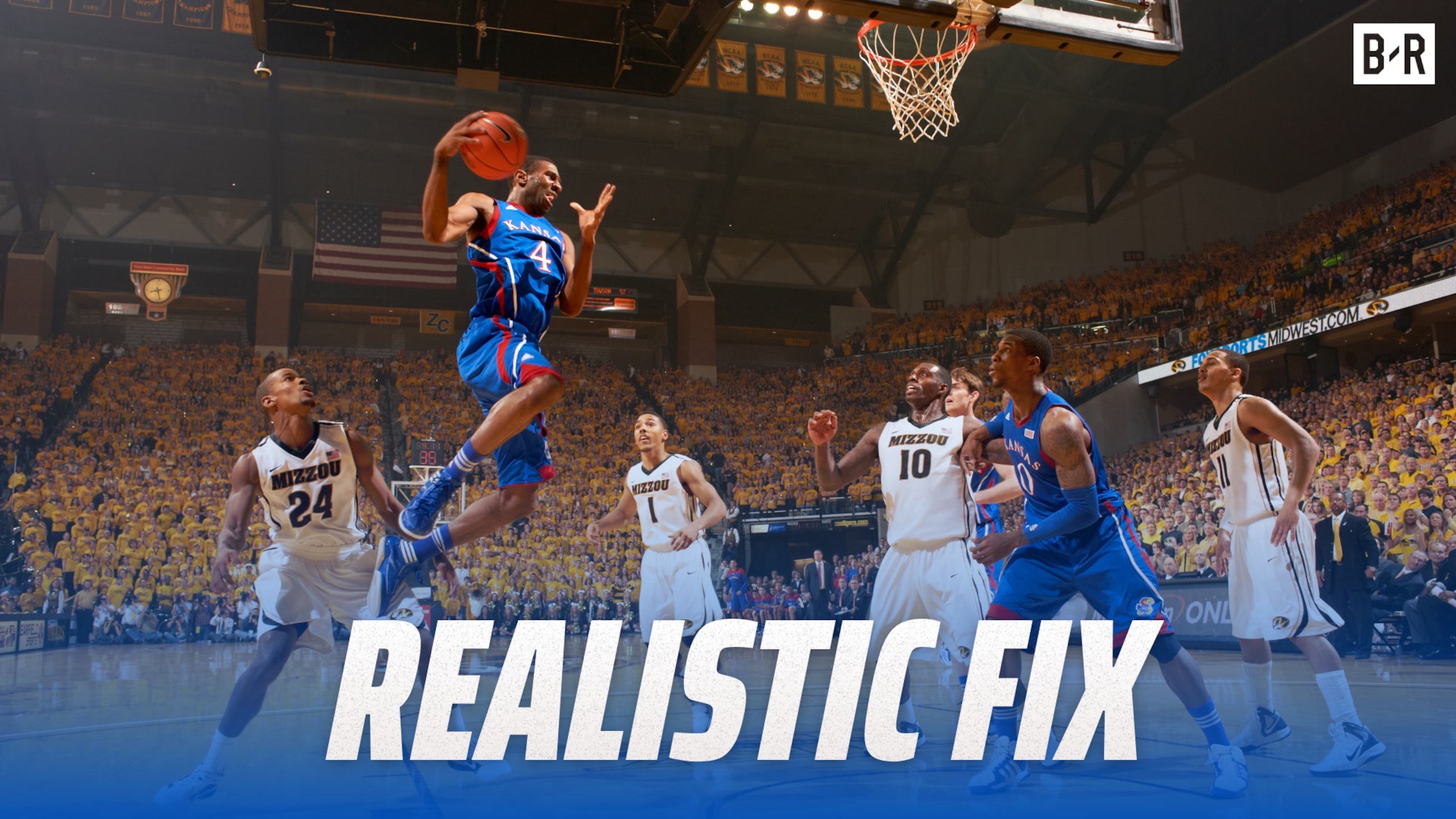
The Problem: Conference realignment has run amok in recent years, which has caused longstanding college basketball rivalries to become dormant. As teams change conferences, they're no longer guaranteed to face their rivals every year.
The Realistic Fix: Every men's and women's college basketball program should designate one permanent rivalry that conference realignment can't knock off the schedule, guaranteeing a home-and-home every season.
Take Kansas and Missouri, for instance. The two teams had been facing one another since 1907 (!), but when Missouri departed the Big 12 for the SEC in 2012, the rivalry went on hiatus for nearly a decade. Luckily, cooler heads prevailed and they eventually renewed it, but the agreement is only for six years and features one annual matchup, not two.
Georgetown and Syracuse are another example of a once-great rivalry that's now on pause. The Hoyas and Orange have clashed 98 times since 1930, but their last meeting came in December 2024. They didn't meet in the 2025-26 season, and they don't have a game scheduled against one another in 2026-27, either.
Conference realignment and transfer rules have made college sports feel more transient than ever before. Restoring historic rivalries—and guaranteeing a home-and-home each year instead of just one annual meeting—would go a long way toward bringing back what once made college basketball great.
—Bryan Toporek
CFB: Put the CFP Quarterfinals on Campus
30 of 49
The Problem: The first round of the College Football Playoff is held on campus, but the quarterfinals and beyond are held at neutral sites. That means the top four seeds never get a game on campus, while the No. 5 through No. 8 seeds do. On a completely unrelated note, three of the top four seeds lost in the quarterfinals in 2025.
The Realistic Fix: The CFP should put the quarterfinals on campus as well. That would result in a more drastic reimagining of bowl branding—for instance, the Rose Bowl would no longer be in Pasadena every year—but that's a worthy sacrifice to help ensure college football is crowning its best team as its champion every year.
If we're being honest, the days of college football fans caring about bowl branding are a thing of the past. While winning the Rose Bowl, Sugar Bowl and Orange Bowl might have been a point of pride in the past, the only thing that matters now is advancing in the CFP. Beyond that, novelty bowls such as the Pop-Tarts Bowl are the biggest attention-grabbers.
If the CFP eschewed the bowl system entirely—or the bowl sponsors were fine with hosting those bowls on campus instead of neutral locations—the top four seeds would get to reward their fans with a home game. That alone wouldn't necessarily guarantee a victory, but it would ensure that the lower seed didn't have a geographic advantage when it came to fans traveling for the game.
—Bryan Toporek
CFB: Require 1 Throwback Uniform for Every Team
31 of 49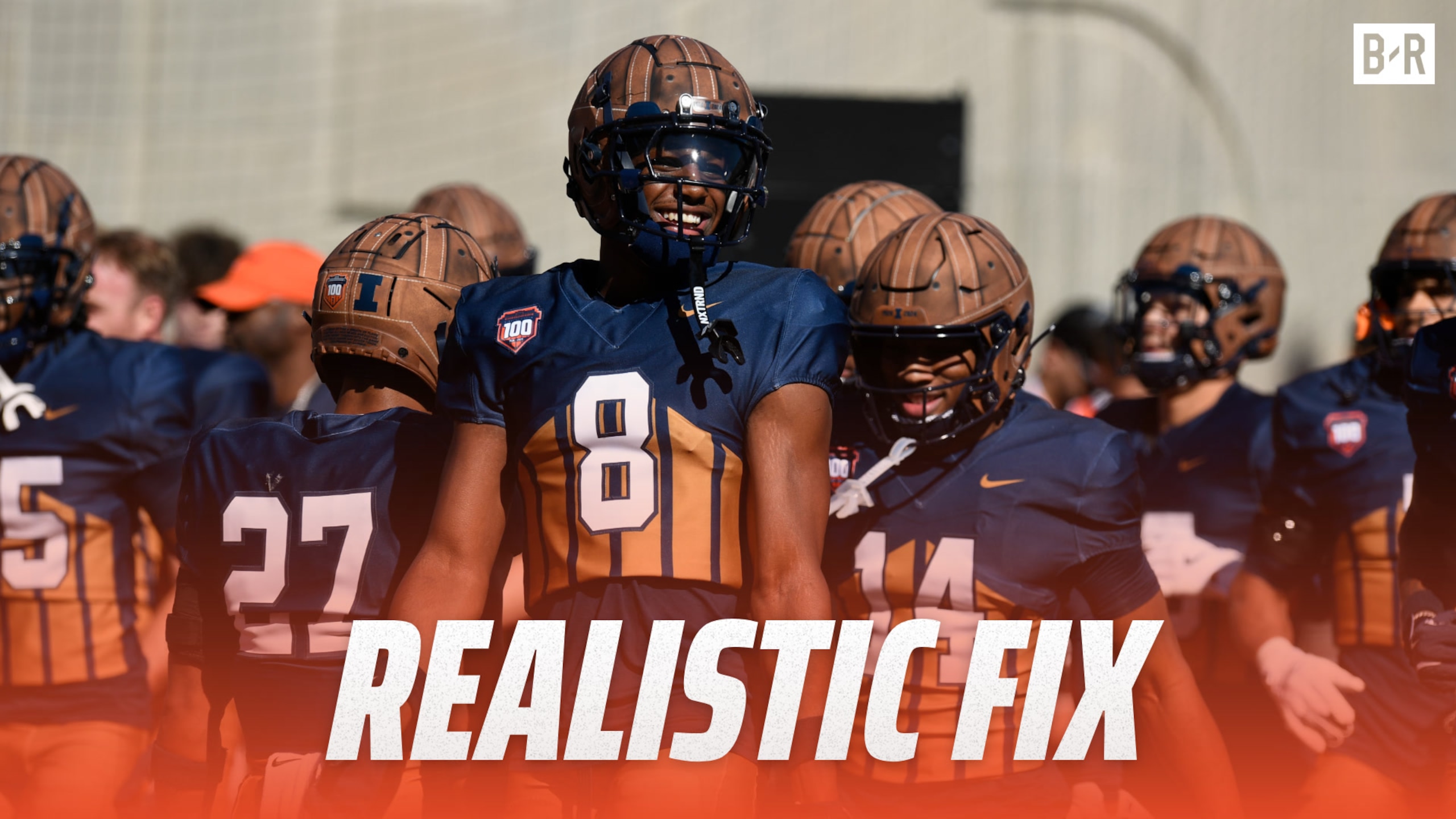
The Problem: In a sport that prides itself on tradition, the uniform arms race is too often about blackout themes and metallic looks. Examples abound of teams wearing futuristic fits that eschew the past.
The Realistic Fix: There's nothing wrong with pushing things forward, but throwbacks are fun, and CFB needs to get up to speed. Most pro leagues have their old-school vibes on lock, with the NFL, NHL, NBA and MLB regularly going retro.
Why not college football too? The NCAA should lean into the NIL era and require schools to go retro at least once a year. The unis would act as a nice attention-getter and help schools fund their now-costly player pipelines.
It's not just a money grab, though. It's a great way to keep the connection to the past that's so important to the sport. Illinois, for instance, paid homage to Red Grange's 1924 look (pictured above) in 2024, connecting current fans to a great of yore.
If we're talking about teams without much uniform history (or changes), do what other sports do: Conjure some fauxbacks. In other words, make retro-looking jerseys, even if they never existed.
Schools get to increase revenue while fans get more Saturday outfit options. Everyone wins.
—Jason Dunbar
CFB: Require a Marquee Opener for the Champs
32 of 49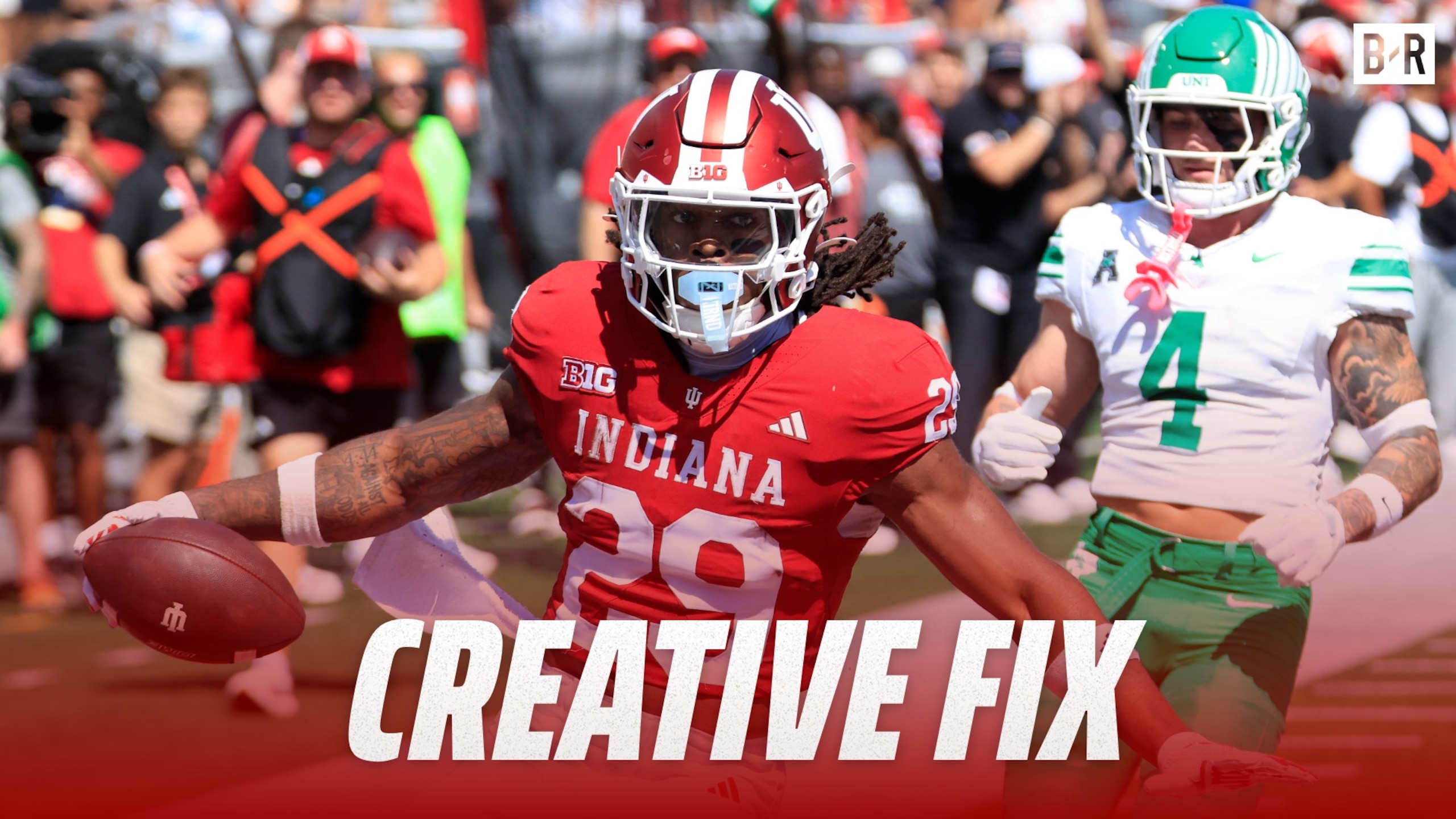
The Problem: While early marquee matchups have become frequent, cupcake openers still happen too often. Look no further than the defending national champ, Indiana, and its 3-0 North Texas-Howard-Western Kentucky stretch in which the Hoosiers dominated 145-16.
The Creative Fix: Mandate that the defending national champion face a strong Week 1 opponent.
The goal would be to make it feel less like a punishment and more like a prize for the challenger. A prove-your-mettle-type power move for those circling the next trophy.
Conference champs can opt in to be part of the pool from which the defending champs get to pick. Among them, the five highest-ranked teams from the previous season's final AP poll then make the shortlist of options that would host the game.
Dub the challenger "The Kingslayer," televise the selection and revel while fans and analysts spend the lead-up debating who should get the shot.
—Jason Dunbar
MLB: Make Gold Glove Winners Wear Gold Gloves
33 of 49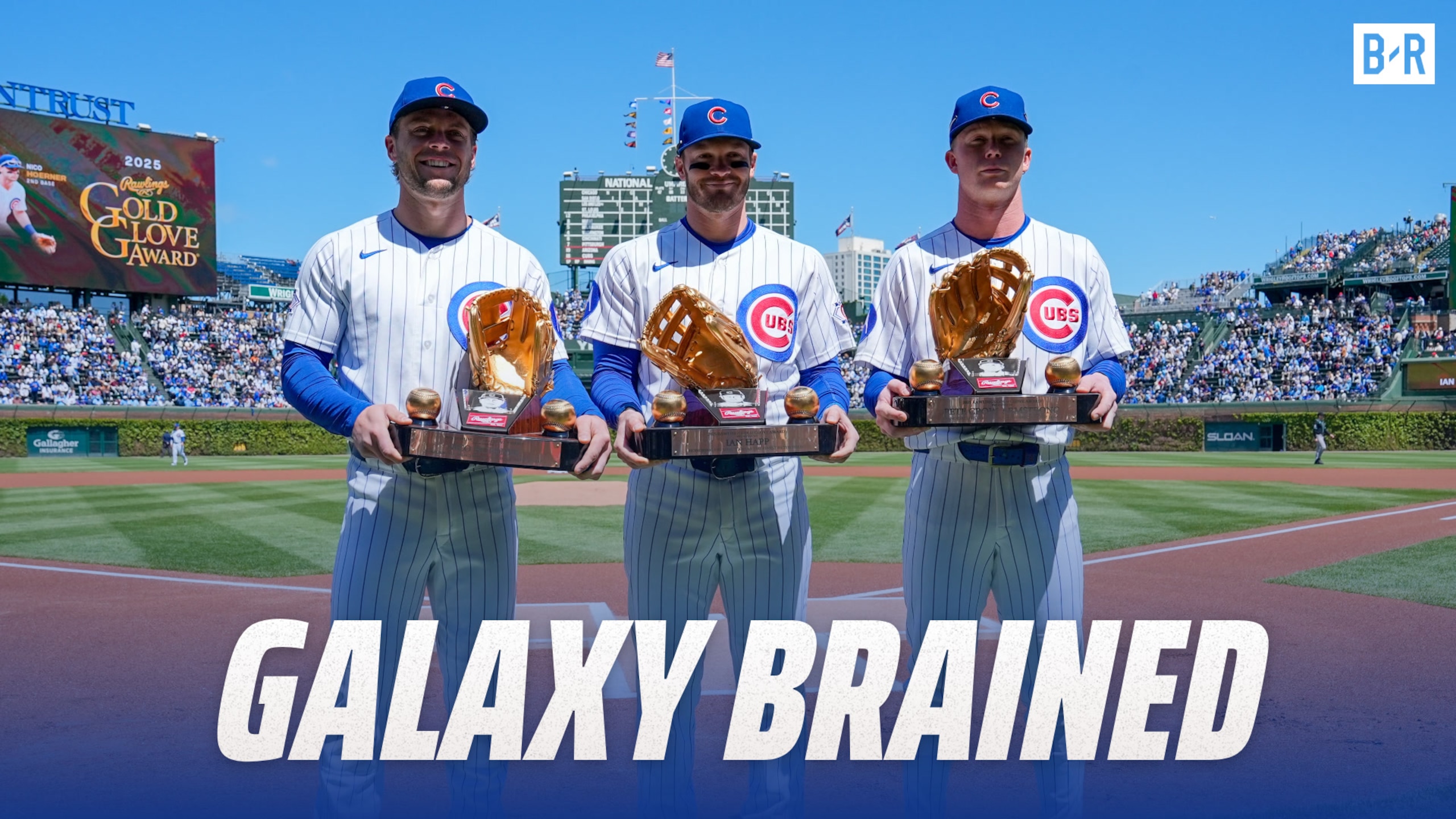
The Problem: Who even knows about the Gold Gloves anymore? Everyone knows Greg Maddux won like a hundred of them, and maybe you've heard tell of Brooks Robinson (16 in a row), but how many of the 2026 winners are in your prize collection of baseball NFTs? Ezequiel Durán? Dillon Dingler?
Listen, fielding is important. Just ask the Playoff Yankees of late. But the hallowed MLB award for good fielding is hollow.
The Galaxy-Brained Fix: No, we're not saying they have to field with a metal trophy glove, but we are saying that Gold Glove winners will play with golden gloves. Call it the Gilded Age, if that helps.
Now when you see an All-Star like Steven Kwan take center field for the Cleveland Guardians, wearing a very shiny mitt, you'll know he's considered the AL's best center fielder on top of his leadoff batting skills. And you'll know that his teammate Patrick Bailey might be No. 8 in the batting order, but as a catcher he's No. 1.
If you want to extend this to the T-ball league you manage, that's cool.
—Mark Smoyer
NHL: Kill the Loser Point
34 of 49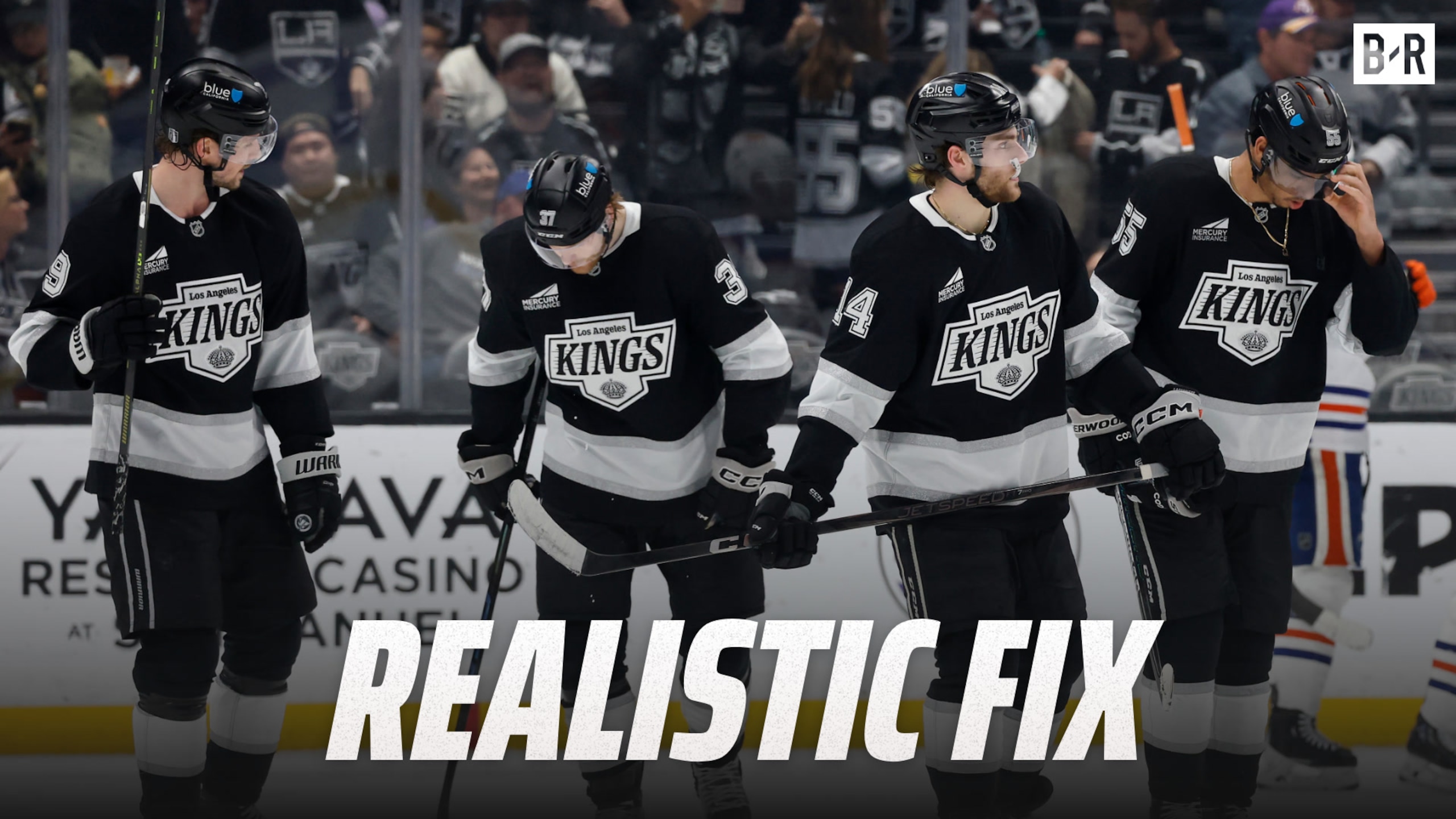
The Problem: It makes little sense that the NHL awards a standings point to teams that lose in overtime or a shootout. Teams shouldn't get credit for losing.
Beyond that, clubs went from playing for ties (and a point) in OT before the league instituted the practice in 1999-00...to doing the same thing late in third periods to guarantee at least a point.
Not only does the rule not solve what it set out to fix, but it also creates situations in which teams can finish ahead of those with higher win totals, which the Sharks, Capitals and Islanders fell victim to last season. It's convoluted.
The Realistic Fix: Go back to the pre-loser-point system, but with a caveat: Keep the shootout, which began in 2005-06, at the end of overtime. Teams get two points for a win, nothing for a loss and no ties.
Without the consolation point waiting, teams will have a lot less incentive to play it safe late in games. No more examples like last year's Kings, who made the playoffs with a record 20 OT or shootout losses. No more awarding losing.
—Jason Dunbar
MLB: Make Fan-Caught Foul Balls Count as Outs
35 of 49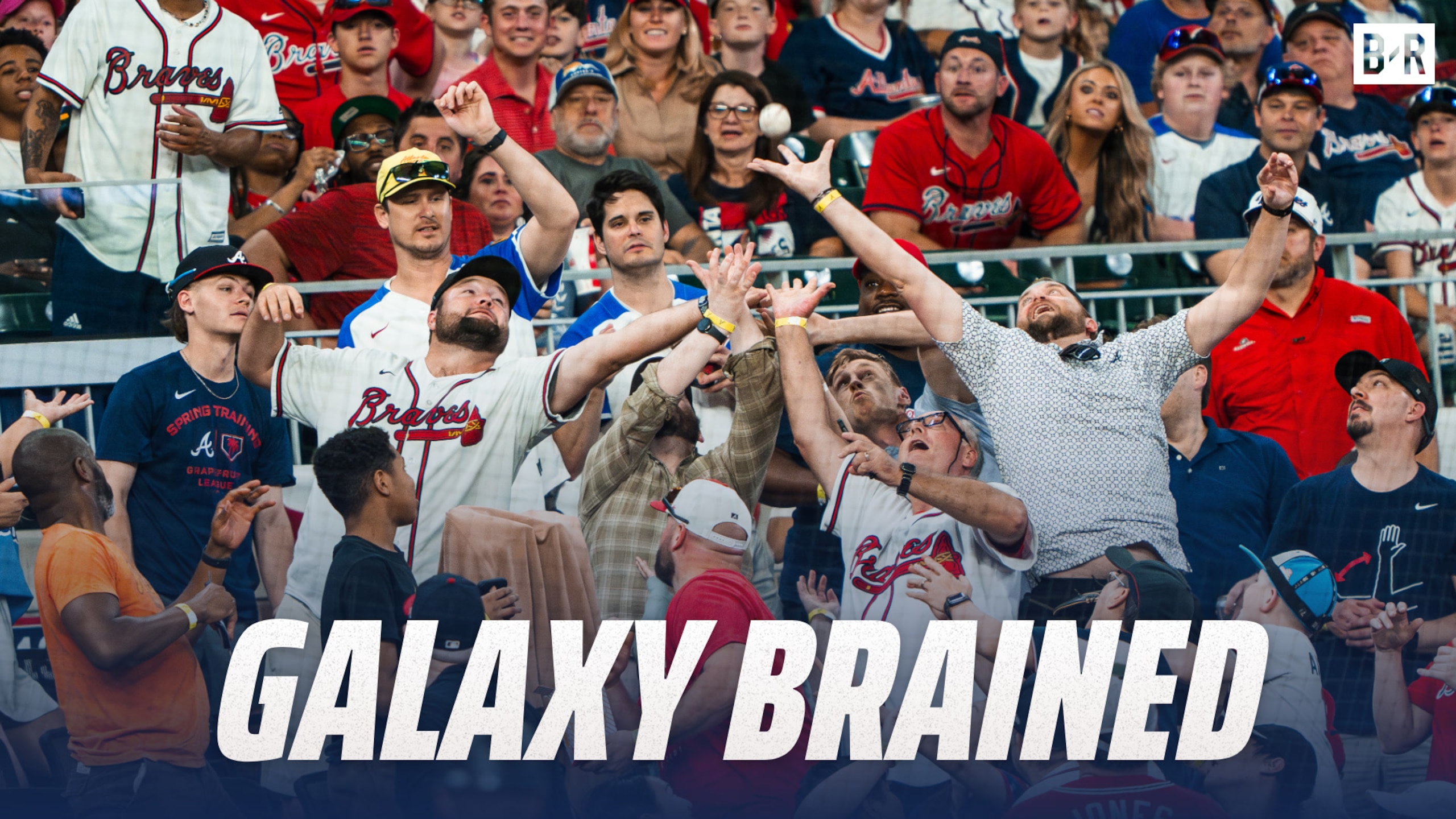
The Problem: Players aren't the only ones who make jaw-dropping catches. Ever seen a fan wearing a baby carrier and holding a drink manage to snag a screaming foul while the kid stays (relatively) unharmed and nary a drop of liquid hits the ground?
We need a way of crediting such athletic feats, other than with a broadcast booth chuckle and a highlight clip.
The Galaxy-Brained Fix: Award an out to the fielding team for a fan-caught foul ball on the fly. The Savannah Bananas already feature this rule, though we have an additional wrinkle: Fans have to be wearing the defensive team's gear to be eligible to record an out.
While the home team would have an advantage in most cases, visitors would still have a chance—and it would encourage road fans to travel well. The fan-interference rule would remain unchanged. Nobody wants the baby-strapped parent leaning into the field of play in the name of helping the team.
For everyone else? Bring your glove and get ready to live out your dreams.
—Jason Dunbar
MLB: No Walk-Up Song If You Suck
36 of 49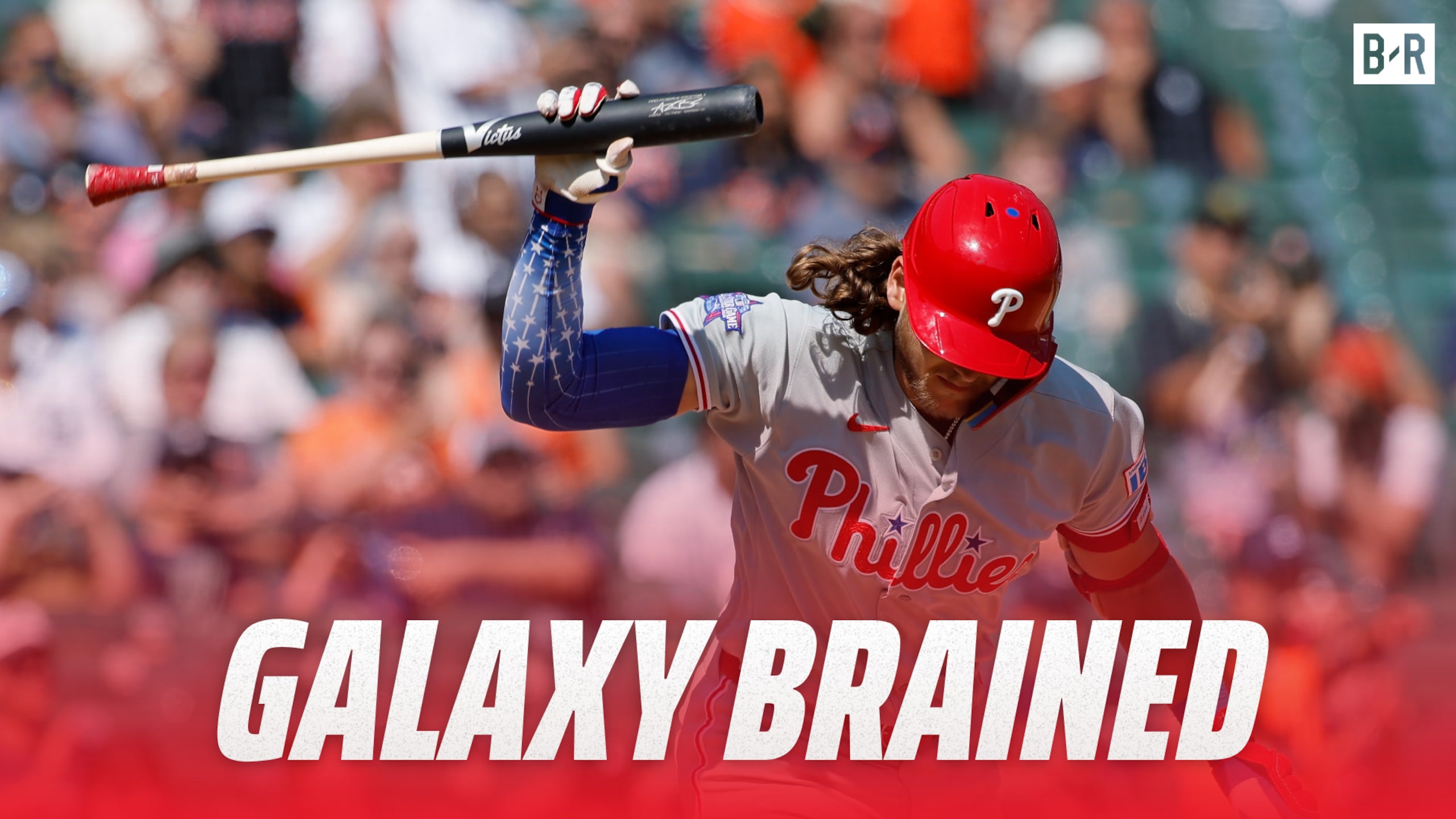
The Problem: A batter saunters up to the plate as "Back in Black" pounds out of the stadium speakers. He steps to the plate and flails a meek pop-up to second base. Any air pumped into the crowd by the heavy-metal riff immediately dissipates. The very sonic value of the music is undercut by the inept hitting display. It's like displaying Van Gogh's "The Starry Night" on the bathroom wall of a one-star motel room.
The Galaxy-Brained Fix: Your WAR is below 1.0, you don't get a walk-up song.
Trent Grisham made 484 regular-season plate appearances for the Yankees in 2026. His main walk-up song was Ella Langley's chart-topping "Choosin' Texas." He chose to slash .211/.308/.395 with a 0.6 WAR. No walk-up song.
One proposed alternative: Any player with a WAR below 1.0 walks up to the "Benny Hill" theme song.
One exception: Rookies get a walk-up song for their first 300 plate appearances regardless of their WAR. (But if they're not up to 1.0 WAR for PA No. 301, they trudge to the plate in silence.)
—Mark Smoyer
Boxing, MMA: No Draws in Title Fights
37 of 49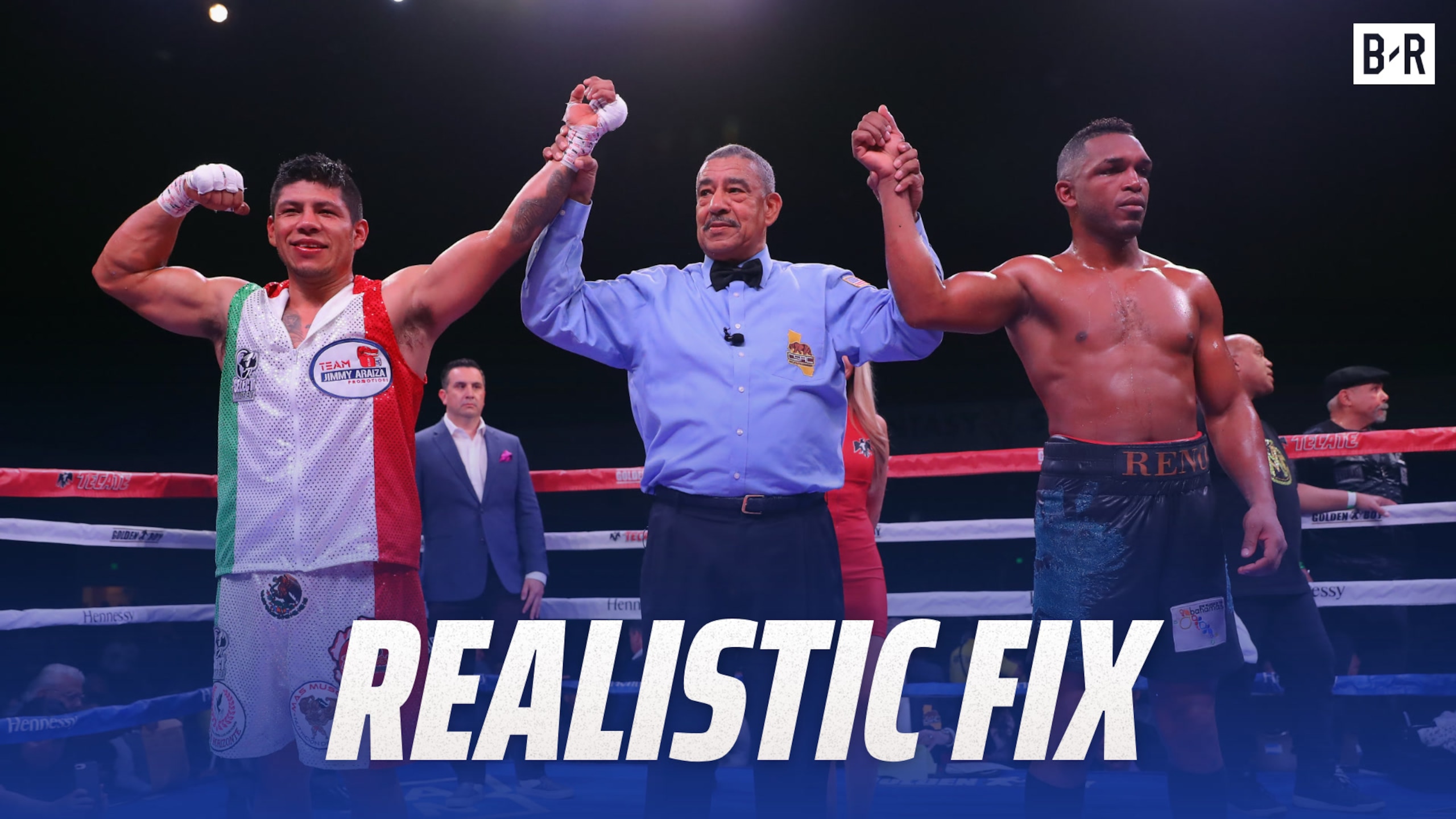
The Problem: Combat sports again choose to exist on their own among professional sports by allowing championships to end in a tie. This flies in the face of what a title is supposed to be. What other sport would allow its very best to square off, then let them play to a draw and tell fans that we may or may not do this all again in a few months?
The Realistic Fix: We don't need to think too hard to fix this issue, and we'll just do it the way every other sport does it: overtime.
Any title fight that ends in a draw simply gets another round added to it. All boxing and UFC title fights have three ringside judges, so it is overwhelmingly likely that two or more judges will favor one fighter or the other, requiring only a single extra round to decide the contest.
It's theoretically possible that a judge (or three) gives a 10-10 score on the round, failing to break the deadlock. This would be a very rare occurrence, and it also has a simple solution. Trot the fighters back out for yet another round until we have a decisive score from the judges.
Besides removing the possibility of such an unsatisfactory ending to a title fight, this change would also produce some incredible drama during these new overtime rounds.
—Ben Chodos
NBA: A Pro NIT for the No. 1 Pick
38 of 49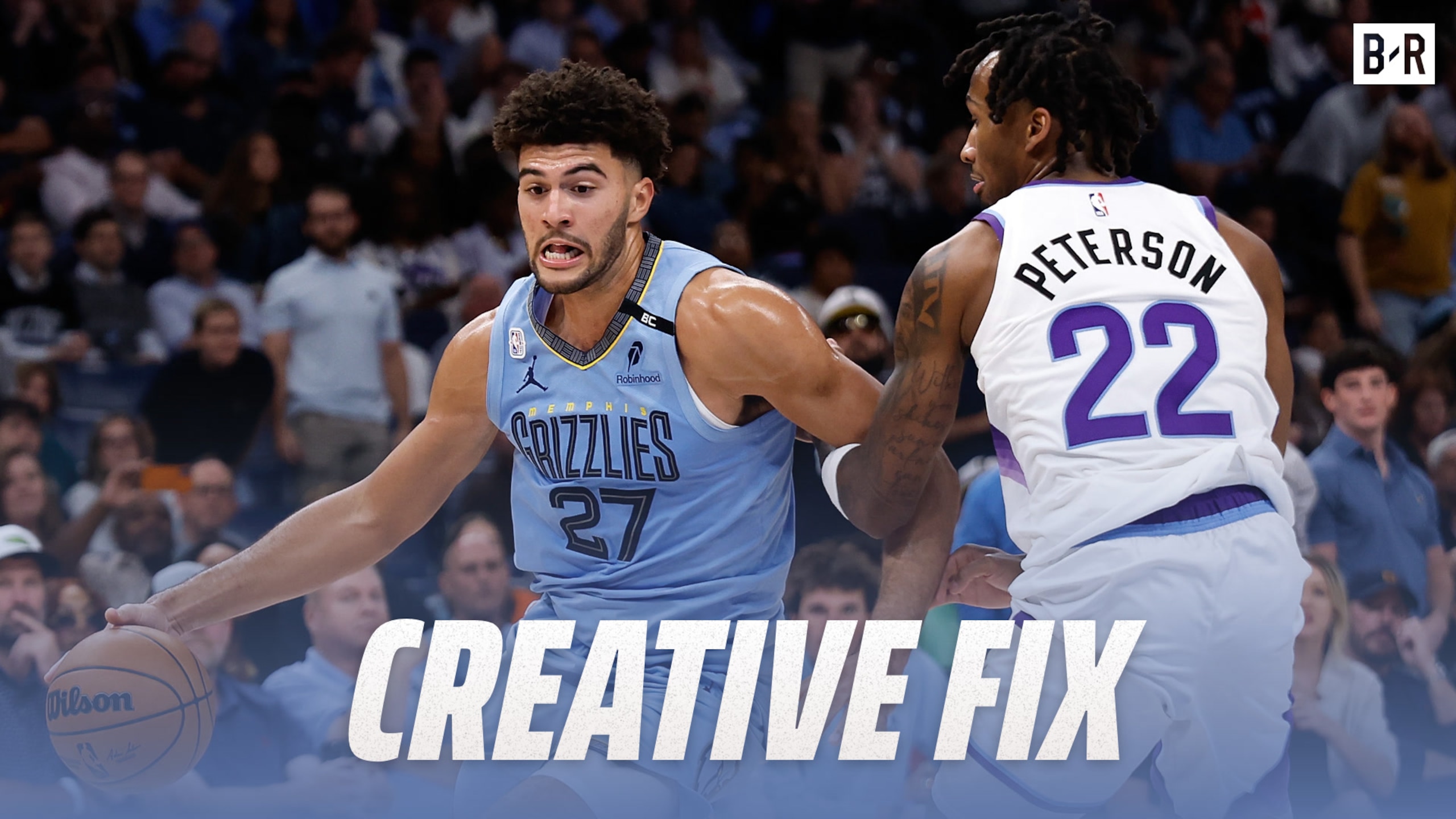
The Problem: The NBA has heard your complaints. The league is addressing the tanking crisis.
Of all the major American sports leagues, its 3-2-1 lottery fix is the most progressive system.
Starting this year, teams with the three worst records will have worse odds of winning the No. 1 pick than the fourth- through 10th-worst squads.
Yet…we can do better.
The Creative Fix: Consider a tanking solution with high-stakes, winner-take-all drama. The proposal:
- All non-playoff teams compete for lottery seeding in a postseason tournament, with the winner getting the No. 1 pick.
- Tournament setup: a bracket with 14 teams, single elimination.
- Seeds 1-2 get byes.
- Play-in losers go in as seeds 11-14 no matter how they rank. (They play an extra round to disincentivize teams from tanking the play-in.)
- Single games would be played mid-day, abroad, before the first round of the playoffs. Upset potential + a fast schedule + NBA games in Europe that matter.
The winner gets the No. 1 pick. Runner-up gets No. 2. Semifinal losers play for No. 3.
Quarterfinal losers enter a lottery with equal odds. First-round losers enter the same lottery with equal, worse odds.
Players are incentivized with rewards on par with the NBA Cup:
- Champion: $1M
- Runner-up: $400K
- Semi loser: $200K
- Quarter loser: $100K
Who's not watching that?
—Chris Trenchard
NHL: Give the Awards Names Anyone Can Understand
39 of 49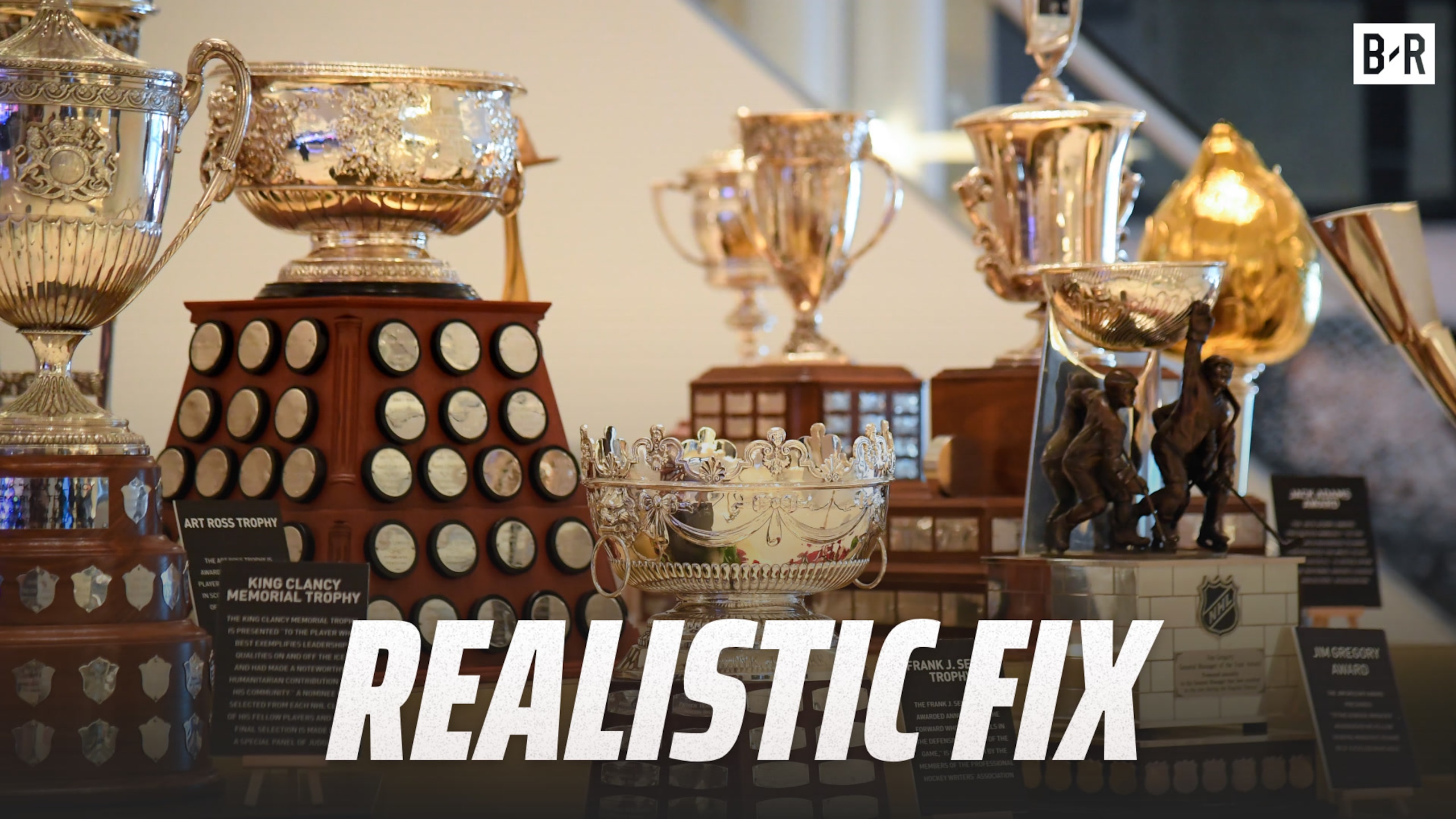
The Problem: Art Ross, Frank J. Selke, Georges Vezina, William M. Jennings, Conn Smythe, Ted Lindsay, Frank Calder, David Hart, James E. Norris, Bill Masterton, Jack Adams, King Clancy, Maurice Richard, Roger Crozier, Mark Messier, Lady Byng of Vimy.
As everyone's favorite Canadian, Alex Trebek, might've said: Who are the NHL's awards named after?
And as every sports fan who can't skate backwards would say: What are these awards for?
We get it: Hockey kinda likes being in its own world. But it's high time for NHL Award Glasnost. Us casuals who want to embrace hockey are never going to remember the difference between Art Ross and David Hart.
The Realistic Fix: Hart MVP, Ross Top Points Scorer, Vezina Best Goalie, Norris Defenseman of the Year, Calder Rookie of the Year, Adams Coach of the Year.
The Lady Byng we keep. It just sounds like Best Sportsmanship.
We'd like to add The Hanson Brothers Trophy, for Best Fighter.
And the rest, you can keep as is. "Forward Who's Best at Defense" isn't much better than "the Selke Trophy."
—Mark Smoyer
NHL: Pull Your Goalie, You Can't Put Him Back
40 of 49The Problem: Few coaching moves in any sport fire up the watchability of a game more than when a hockey coach pulls the goalie so the team can go six-on-five, trying to come back in the final minutes of a game.
It's a fun regular-season scenario and a peak postseason one: The team's down a goal with 1:30 left, but it's not hopeless. Go empty net and put another scorer on the ice! The tension rises tenfold for fans of both sides.
But then, it happens: The trailing team scores right away. The game is tied. The goalie goes back in. No more empty net. Sixty seconds of conservative play and we go to OT.
The Creative Fix: If you pull your goalie, you can't put a goalie back in the net. Go empty net with 1:30 left, your net stays empty. Score to tie the game 10 seconds later, you've still got that six-on-five advantage but you're defending an empty net for 80 seconds.
Besides doing away with the anticlimactic back-to-even-strength regulation finishes, this simple but brilliant fix adds opportunity for more final-moment goals after a tying goal.
—Mark Smoyer
Soccer: Let Subs Come Back In
41 of 49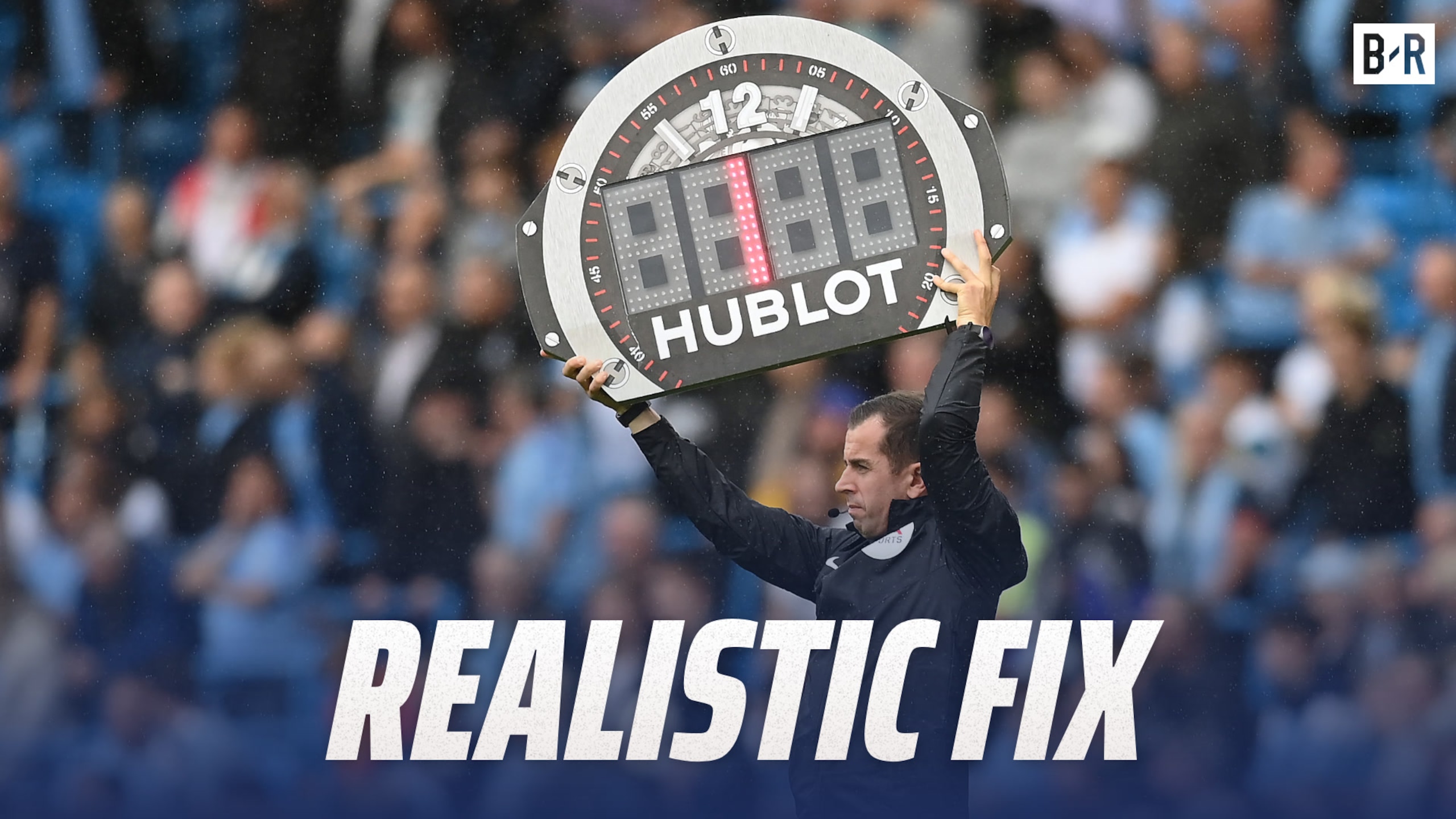
The Problem: To put it in terms most Americans would understand, a professional soccer pitch is somewhere between a football field and the state of Kansas in square footage. Even the most well-conditioned athletes will get exhausted having to run constantly on such a large space for 90-plus minutes, and this often results in some of the game's most exciting players not being part of the action in the most critical moments.
The Realistic Fix: Just let subs come back in. This is how it works in most other major team sports.
To be clear, we are not arguing for unlimited substitutions, as that would clearly have a negative effect on the game by creating too many stoppages. There are already limits to the number of substitution windows, and those should remain in place.
Apart from keeping the game moving, the only real objection to returning substitutes is that it makes stamina less a part of the game. This concern seems overblown, as needing to constantly sprint absurdly long distances still requires obscene levels of fitness, and that won't change if a few key players per game are allowed to take a bit of a breather.
Giving managers the option to strategically rest players will ensure they are fresh and ready to make an impact in the most exciting moments. It will also open up entirely new options for galaxy-brained tactics that wouldn't be tenable for whole games or halves, but would be thrilling to see in a brief experiment for a few minutes.
Soccer players can and should take pride in the level of conditioning required to have made the current substitution rules viable. But let's consider their point thoroughly proven and move on to a more exciting way of managing subs.
—Ben Chodos
Soccer: Sin Bins for Yellow Cards
42 of 49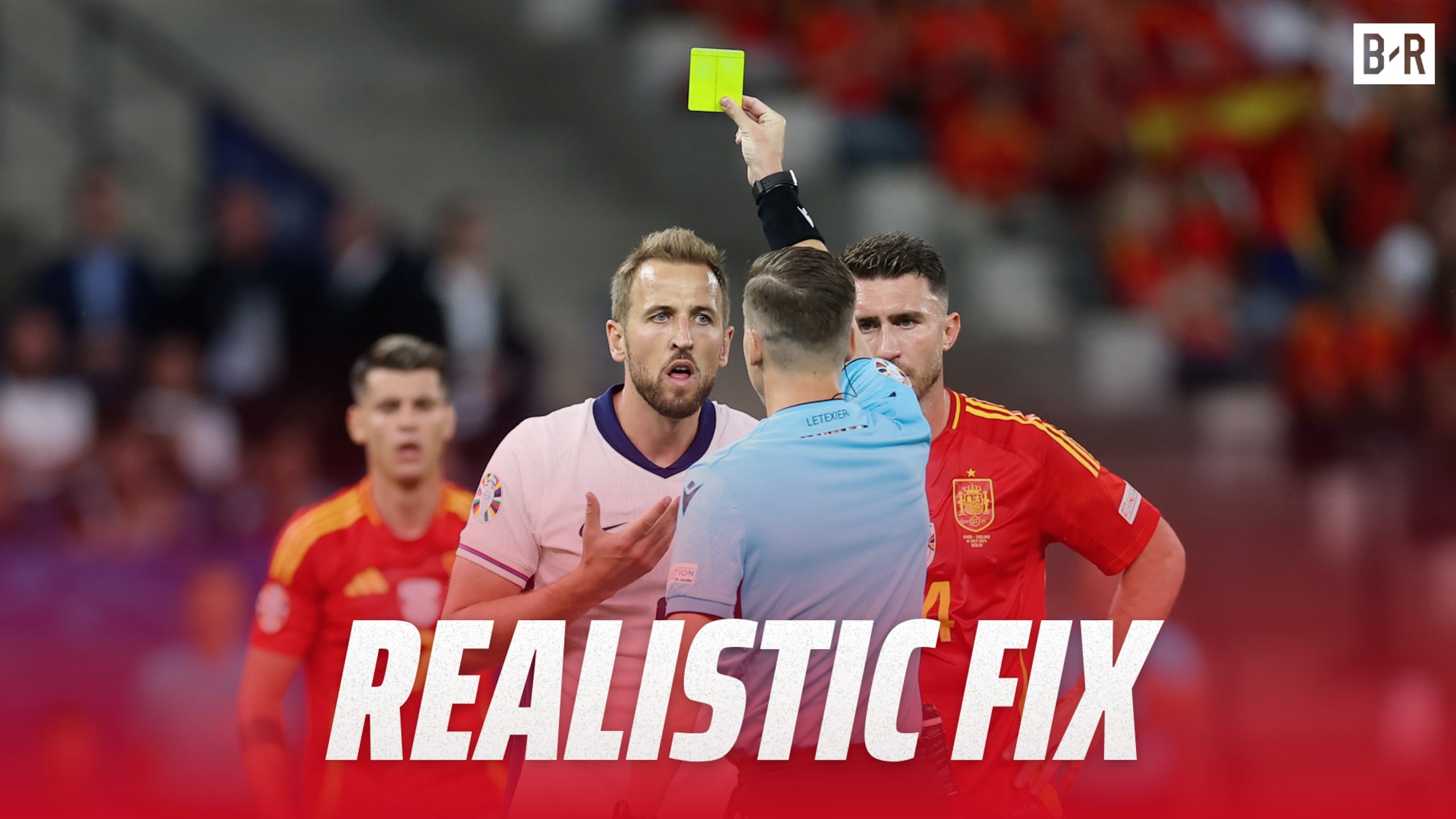
The Problem: The range of offenses for a yellow card is so broad that it often doesn't feel like an appropriate punishment. A first yellow can sometimes feel meaningless, while a second yellow can be excessively harsh. The system needs some tinkering at the very least.
The Realistic Fix: A first yellow results in a player having to sit out for five minutes while their team plays a person down. A second yellow forces a player off for 10 minutes. A third yellow and they're off for good.
A five-minute sin bin trip solves our first problem of initial yellows often being an unsatisfactory response. This is particularly evident when a player commits a "professional foul" during a transition moment. Putting an immediate end to a dangerous counterattack robs fans of excitement, and a simple yellow is clearly not much of a deterrent considering how often this happens. Knowing that this behavior will result in an additional disadvantage will make more players think twice before that intentional shirt tug.
Then, a 10-minute penalty solves the second problem of a silly lack of judgment totally altering a game. Yes, blame for most second yellows can rightly be put on the offending player (although referees have been known to show the occasional perplexing card), even when one or both of the offenses are fairly innocuous. But sending off a player permanently tends to make matches less interesting, and it hardly seems to violate the sanctity of the game if a player gets to continue after sitting out a significant amount of time in the wake of two less-than-egregious offenses.
This new protocol would make for fewer cynical fouls and also more matches where the competition itself rather than an error in judgment—whether it be from a player or a ref—is the main talking point.
—Ben Chodos
Soccer: No Offside in the Box
43 of 49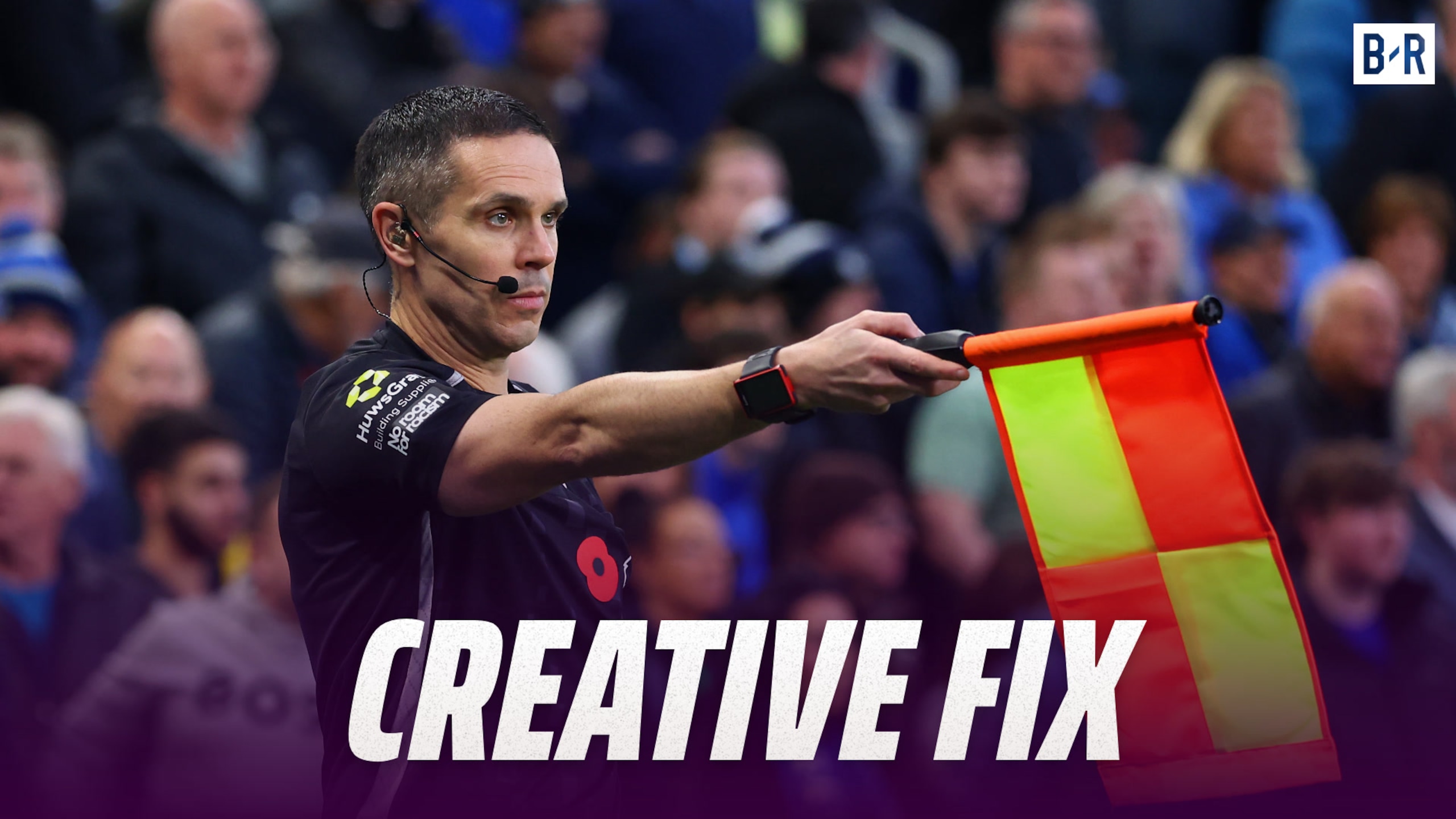
The Problem: Goals are fun. Stopping a game for several minutes while VAR officials show us that graphic design is their passion by drawing lines all over still frames to determine that a player's shoelace was in an offside position is not. We need fewer goals disallowed for margins that are a fraction of an inch.
The Creative Fix: The point of offside is pretty simple: prevent cherry-picking. It has to exist in some form so that players can't just spend the whole game camped out by their opponent's goal.
Getting rid of it entirely would distort the geometry of the game in absurd ways. It would cause the entire field to be playable for the team in possession at all times, which is just not feasible given how insanely large a professional soccer pitch is. Condensing the field showcases skill on offense and tenacity on defense, and makes the game more exciting.
But once a team has possession near the goal it's attacking, that rationale disappears, and so should offside. The field is already condensed. Skill and tenacity are already being displayed. Offside can only do more harm than good at this point.
To get technical—because there is no way to discuss offside in any shape or form without doing so—what we're really proposing is offside goes away as long as the players delivering and receiving a pass are both beyond the 18-yard line. They do not actually have to be in the box.
To put it more simply: players already in advanced attacking positions can't be offside. This would keep the game largely the same as it is now, just with fewer annoying VAR reviews and more exciting, well-deserved goals.
—Ben Chodos
Soccer: Breakaways, Not Penalty Shootouts
44 of 49The Problem: A penalty shootout hardly seems like a fair way to settle a match after 120 minutes of the ultimate test of endurance, skill and fortitude. It also allows a team that decided to park the bus and play for a 0-0 tie to be rewarded with a chance to advance via a contest that is largely a guessing game with a 50-50 chance of winning.
The Creative Fix: Penalties do have one undeniable thing going for them: drama. Few things in sports deliver the sort of tension fans and athletes feel in the moments between the ref's whistle blowing and a player taking a spot kick. The solution to this problem has to preserve that.
While the NHL gives us a good current example of how a different format of penalties can require more skill from both the shooter and the goalie without taking the lid off the pressure cooker, we don't need to look to another sport for a better alternative. We simply need to turn the clock back to the 1990s during the formative years of Major League Soccer.
Basking in the glow of hosting the 1994 World Cup, the United States, in typical fashion, decided it was not only going to become a real soccer nation, it was going to make soccer better than it's ever been. It launched its latest and greatest domestic professional league and instead of playing the game the way it's played everywhere else, efforts were made to Americanize the rules with time counting down instead of up, the clock stopping every time the ball goes out of play, and a radical new version of the penalty shootout.
Instead of traditional spot kicks, these shootouts featured a player dribbling toward goal in a simulated breakaway, needing to find a way to score while the goalie charges at them.
Thankfully, MLS has progressively moved its game more in accordance with how everyone else does it, but there is a baby in all that bathwater that was thrown out over the years. Those old-school MLS shootouts were awesome, and adopting them across the board is the lone instance where the rest of the world could take a page out of the United States' soccer notebook.
—Ben Chodos
Boxing, MMA: Show the Scorecards After Every Round
45 of 49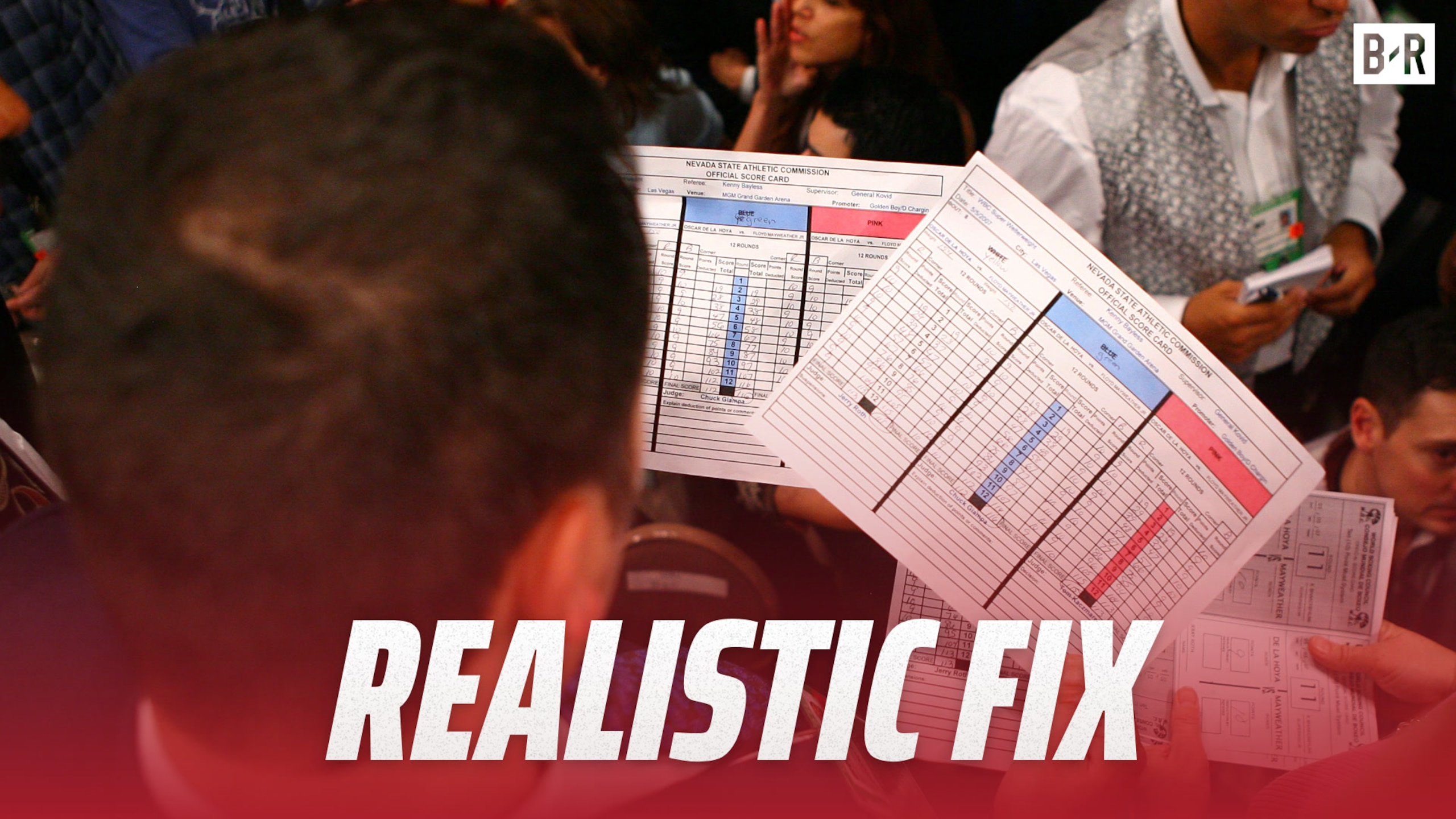
The Problem: Combat sports stand alone in not allowing fans to know the score while the contest is happening. Even beyond your typical stick-and-ball sports, other contests involving rounds and judges like gymnastics or various extreme sports still show official judges' marks along the way, while boxing and MMA fans are left relying on a commentator's guess at what the score is at any given time.
The Realistic Fix: It couldn't be simpler. Judges are already writing down and submitting their scores after every round. Show those on the broadcast, and let the fighters know what they are.
The common argument against doing this is it will incentivize a fighter who knows they're in the lead to take a defensive posture and produce less exciting fights. This logic cuts both ways, though. A fighter who knows they're down is going to sell out on trying to land big blows.
Our take is any strategic changes that result from fighters knowing the score during fights would at worst balance out between incentivizing more offensive or defensive tactics. And in all likelihood, it'll produce more exciting moments, as we'll more often get to see the combat equivalent of a Hail Mary when fighters know for sure they're down rather than having to guess that's the case.
This change—which has already been experimented with over recent years—will bring more entertainment to the fans, more transparency and accountability from the judges, and make everyone more informed about what's going on along the way. Unlike the actual fights, everyone wins here.
—Ben Chodos
MMA: Shrink the Cage for Heavyweights
46 of 49The Problem: Any major combat sports event is going to promise plenty of action, but inevitably some will fail to deliver. Hardcore MMA fans will admirably wax poetic on the nuances of technique and strategy, but the mainstream lifeblood of the sport is big blows landing to produce thrilling highlights. Why not tilt the playing field to make more of these moments?
The Creative Fix: Move the walls in a few feet, similar in size to the UFC's Apex cage, giving less space for the biggest, baddest, strongest fighters to escape each other. With the action forced right into the middle of the Octagon, fans will know that a heavyweight fight is going to deliver.
Limiting this to just the giants is a nice compromise between the hardcore and casual fans. The former still gets to see most of the fights on any given card carry on in the traditional way. The latter gets more action and knockouts for one or two select bouts.
Changing the physical infrastructure of the Octagon mid-card may seem impractical, but the folks at modern-day sports venues have proven themselves to be miracle workers. Arenas commonly switch from a hockey rink to a basketball court on the same day. We just saw crews figure out how to install natural grass in domed stadiums for the World Cup. And WWE shows deliver all sorts of stunts involving cages appearing in the middle of a show.
It may not be easy, but there's little doubt it's entirely possible. And not only would it produce more exciting fights, but the process would be dramatic in its own right. Seeing the walls literally close in would build incredible tension ahead of a heavyweight showdown.
—Ben Chodos
Tennis: Get Rid of Service Lets
47 of 49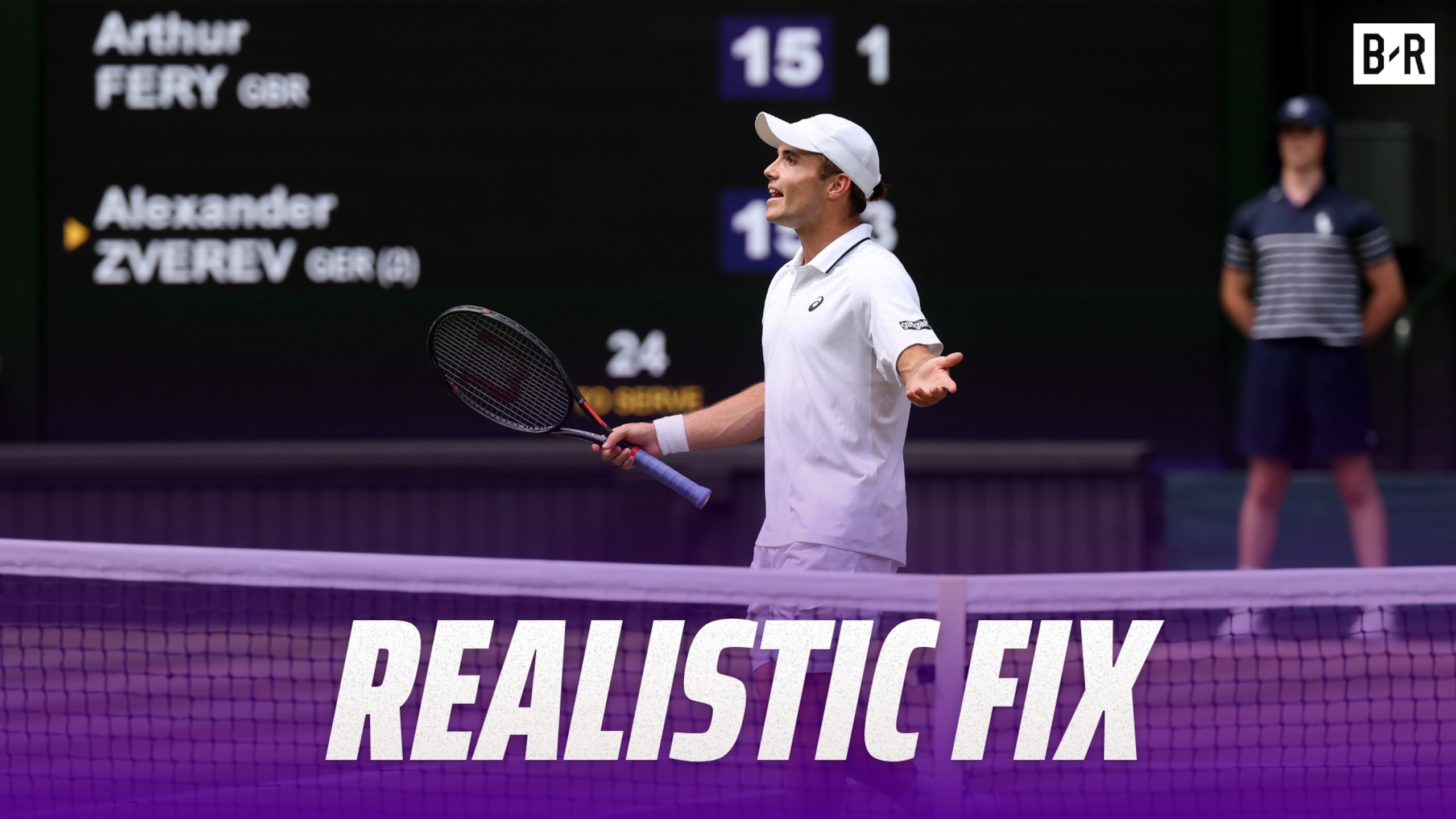
The Problem: When a serve ticks the net and lands in, it's a "let." Try again. The problems here are myriad.
First, it's hardly fair that if a serve ticks the net cord and lands out, it's out, but if it lands in, it's a do-over.
Second, the action is delayed.
Third, there can be dispute over whether or not it was a let, seeing as the chair umpire has to detect it and call it.
Fourth, two great servers can make for a pretty boring match, so it'd be good to get some luck involved.
Fifth, it's always been super-confusing that when the ball ticks the "net," it's a "let."
The Realistic Fix: No service lets. If the ball hits the net cord and lands in, it's in. Play on!
(This is actually the rule in NCAA tennis, by the way, so we're not being crazy.)
With this easy fix we fix all five problems.
And now we're going to get points where the serve pops up and the returner crushes it. Or the ball just gets over and the returner dashes for it. Maybe some players perfect serving off the net cord!
And no more of this "net," "let" business.
—Mark Smoyer
Tennis: Make All Matches Best-of-3 (Except Men's and Women's Finals)
48 of 49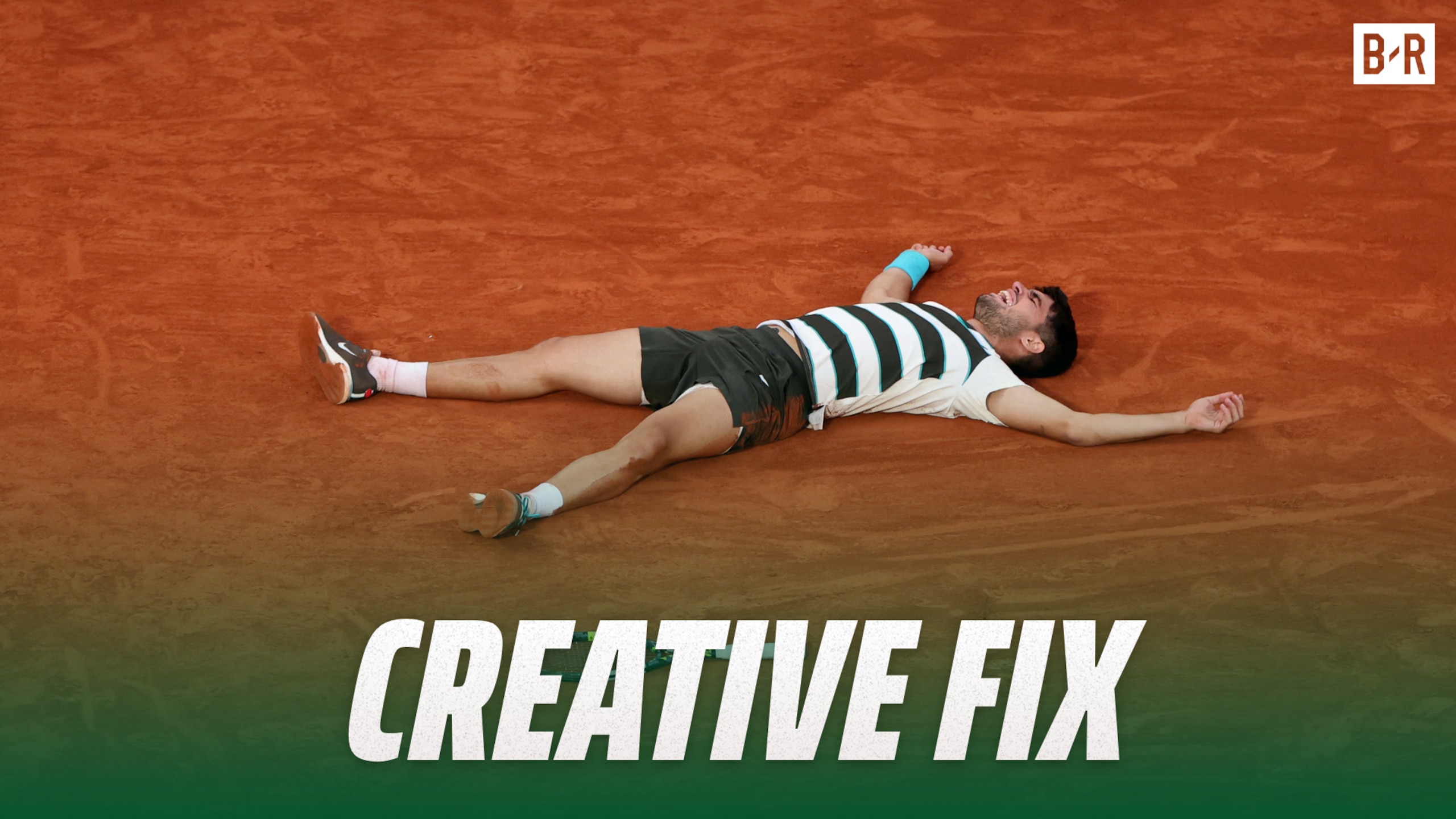
The Problem: Best-of-five singles matches frequently are too long.
Too long for TV viewers. Too long for spectators. Too long for maintaining a reasonable match schedule at majors for the players and tournament staff. Made longer by cramping timeouts and multiple shirt changes. Too long.
Just the specter of how long they could be mars the fan experience.
One related problem: In best-of-five, a player down two service breaks in an early set often mails in the rest of the set, so he can save energy for the next set. Watching a guy go through the motions from 0-3 to 1-6 is not what we need.
The Creative Fix: Make all matches best-of-three no matter the magnitude of the tournament, except for the major finals—men's and women's—which will be best-of-five.
Now, when you settle in to watch a match, you won't have to worry that the first hour or two will be ultimately meaningless. Now, if someone wins the opening set with authority, it will really mean something toward the ultimate result.
A side benefit of this fix is that it will prevent another "fix" some people suggest: Making all women's matches best-of-five at the majors. Not that many, many fans wouldn't rather watch five-set women's matches than five-set men's matches, but we really should avoid an evolution to both sexes playing best-of-five, because then the U.S. Open would be a full month of 2 a.m. finishes.
—Mark Smoyer
Golf: Institute a Shot Clock
49 of 49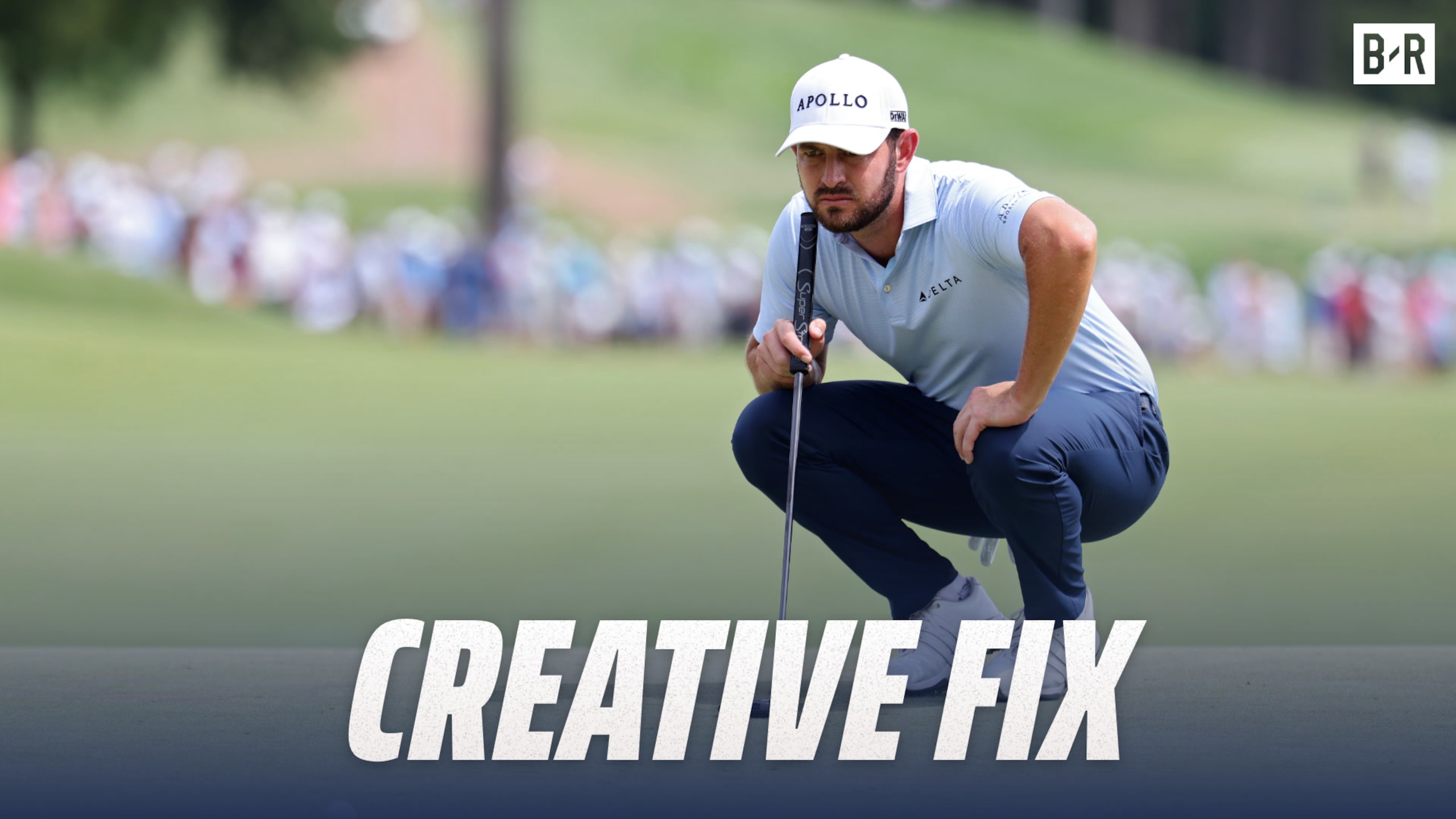
The Problem: Despite the PGA Tour's nominal pace-of-play rules, it can sometimes take the worst offenders more than a minute to assess an approach and go through their pre-shot routine. It turns the broadcast into a snoozefest, and audiences hate it.
The Creative Fix: Add a 40-second shot clock, and enforce it. Hand out a warning for the first violation and then a one-stroke penalty for each subsequent infraction. The game's top players will fall in line fairly quickly.
No more interminable waggles. No more minute-plus waits only for the golfer to slice it into the drink. Bring golf into the 2020s and speed it up.
—Jason Dunbar