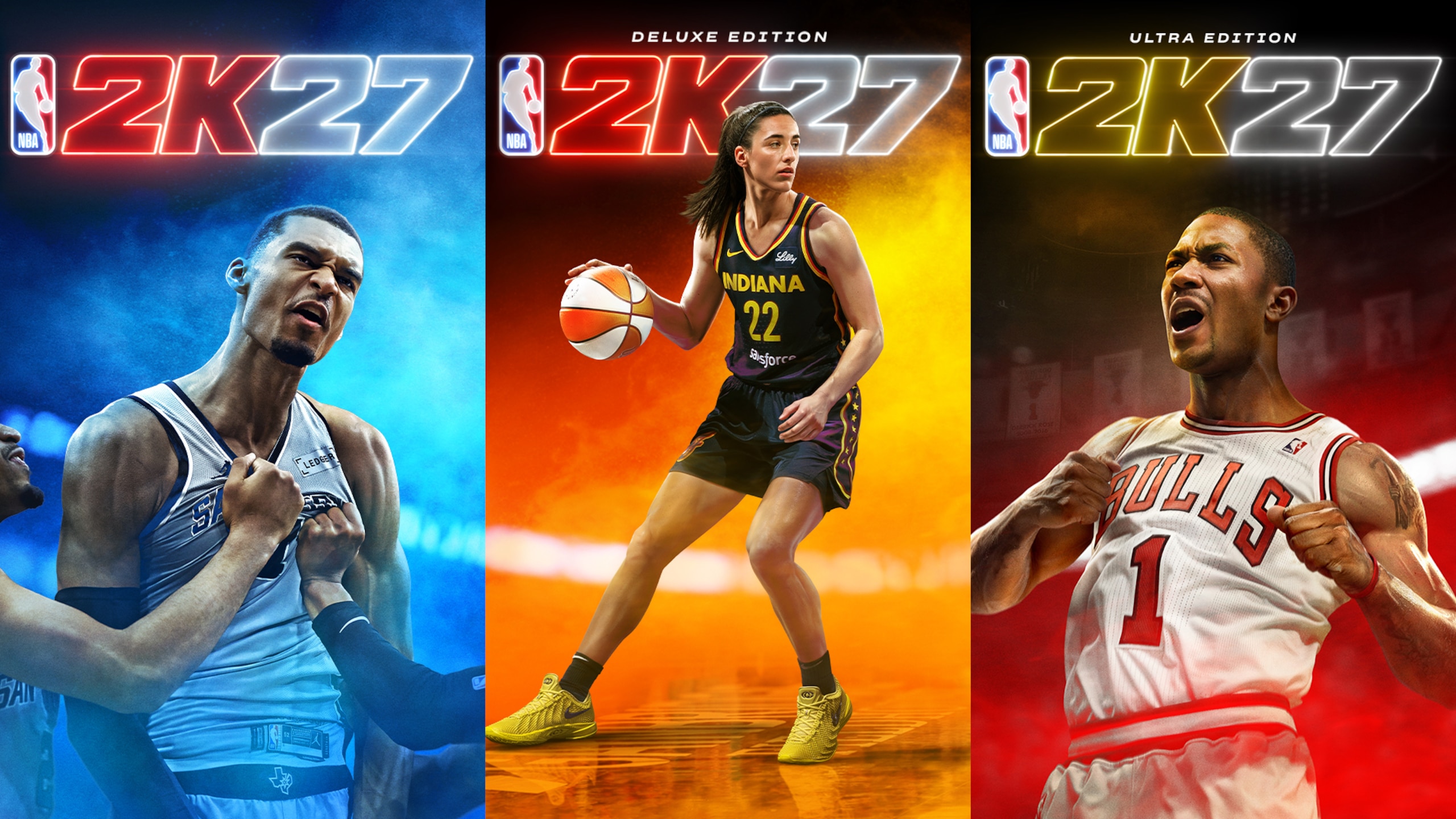

NBA 2K27 Review, Gameplay Impressions, Videos and Top Features
NBA 2K27 from developer Visual Concepts is another effort in the series aimed at walking the tightrope between modern upgrades and catering to player feedback.
It's a tough balance to seek, no doubt. Last year's game kept pushing things in realistic directions on and off the court, while also listening to player feedback when it comes to shot meters and specific systems.
This year? More of the same, in a good way, with a push to get more realistic-feeling things on the court and finer control over the many systems off it.
.jpg?w=2560 "Packers 49ers Football")
.jpg?w=2560 "Lions Cardinals Football")
.jpg?w=2560 "Steelers Browns Football")
The best entry yet thing is starting to become a cliché, sure, but NBA 2K27 has a shot at it once more thanks to measured upgrades atop a strong foundation.
Gameplay
One glance says the gameplay in NBA 2K27 is a leap. There's obvious new cutoff angles and droves of more dynamic animations, at the hoop amid contact or otherwise.
The strive for freshness and realism this year takes a Shai Gilgeous-Alexander slant with the long-awaited inclusion of the step-through up-and-under, which adds a more dynamic option to the gameplay, for the ball-handler and defender alike.
Expanded dribbling customization was a must and makes the cut. Each of the nearly 30 movements can now be attached and arranged as players see fit. It's a deeper level of control than ever on this front, and a welcome one.
Something as seemingly small as layup tunings turns up big on the court, too. Auto adjustments to fit the situation seem more dynamic than ever and it's pretty clear that dunking logic, based on those involved and the physics of it all, got an upgrade.
Shooters get some love too. The strong rhythm shooting mechanic is back and tweaked for the better, with successful rhythm shots now strictly requiring greening the timing.
Defense gets some love too, not to worry.
There's a revamped shot contest system that gives players finer control over just how aggressive they try to attack each shot. The result helpfully shows up on a colored meter, revealing the quality of the contest.
New defensive cutoffs help those on the backpedal, too. They feel good and enable players to keep pace with the dizzying number of new possible dribbling combos coming at them on cuts to the hoop.
Both ends of the court benefit from the tweaked takeover system, which now zooms in on five areas: Shooting, Finishing, Playmaking, Defense, and Rebounding. These are now able to be activated individually. Tracking these via each meter and being able to trigger them when needed, if possible, is a nice bit of strategic depth and a skill gap.
Overall, there's a new weight to the on-court physics, too, when it comes to collisions. It's an exclamation on the whole thing. There's going to be an adjustment period for players, but the smooth pick-up-and-play base with big skill depth is a fun time.
Graphics and Presentation
Beyond simple star-likeness upgrades and the usual graphical horsepower stuff, where does a series like NBA 2K continue to evolve?
Updates in realism and variety, of course. Jersey updates, player updates and special attention to arenas and crowds shine in what remains one of the most immersive sports games out there.
The game deserves its flowers for freshening up The City, too, with REC games now featuring new environments. These new areas won't shock from a basketball game standpoint, but it's still cool to play some hoops on top of a roof with a nice view, right?
Really, there's lots of little presentation love thrown into each mode, when needed. The new MyCareer eras, for example, features true-to-era broadcasting and environments.
These are little things, but they add up to quite a lot. Improved player physics, dynamic crowds and the little details really create an authentic-looking project that takes smart creative liberties in the arcade-like streetball realm when it can, too.
MyPlayer, Features and More
Like those before it, NBA 2K27 keeps making solid pushes across a variety of game modes. MyPlayer, of course, remains king.
Many of the big changes in MyPlayer arrive in the initial builder itself. There's reworked badge progression that gives players finer control over the created character. Wiggle room for a balanced build is there, but players can also hyper-focus on one trait.
Also new within the builder is a synergy system that lets players tweak things to the point of surpassing badge max potential. A nice touch, as are badge loadouts, making it easier to swap entire badge configurations at will.
Over in MyCareer, what the game promises as double the length of last year's story now includes co-op. It also includes eras, complete with historically locked rosters.
The eras:
- Magic vs. Bird Era(1984)
- Jordan Era (1991)
- Kobe Era (2003)
- LeBron Era (2010)
- Steph Era (2016)
A notable problem here, though, is there's no era-hopping. If players want to experiment, it seemingly requires starting a new character over with low stats. That would certainly seem to nudge players toward microtransactions to speed things up.
As for co-op in the mode, a player joins a friend via a fictional character introduced in the G League. Said teammate is customizable to an extent, and AI will control him if there's no co-op enabled. A nice touch for those who want it, if nothing else.
MyNBA feels like it has more depth than ever before, too, thanks to some modern-feeling tweaks. Players can move more assets than ever in up to four-team trades. They need to worry about contract buyouts, international prospects and a morale system that keeps tabs on things like friendships within the locker room.
City is now co-ed, which includes the usual bells and whistles of the mode like Park, Proving Grounds, The Theater and more.
A nice exclamation point on the whole package is the Crew HQ, which is exactly what it sounds like. Players now have a home hub for their crew, which nicely includes small things like half courts all the way on up to 5v5 courts.
Last year's highlight, Street Kings, returns in a big way. Up to three players still get to take on bosses across multiple courts, with the weekly tournament boasting a tense championship game by the end of the run.
MyWNBA and The W get some single-player love in the form of updated progression and attribute systems, including moving those around at will. There's something to be said for MyWNBA getting the full control of its own franchise mode, just like the MyNBA counterpart.
MyTeam returns many of the same trappings, but tacks on rotating multiplayer modes and a unified auction house. Doesn't sound like much, but tack on new card rarities and the onslaught of collecting, exchanging and upgrades amid a live-service list of game modes and, frankly, MyTeam could be its own separate release.
There's a lot to love here. Immersive ways to insert oneself into the NBA or WNBA are a blast, as are the in-depth franchise options or even card-collecting activities. Wrapping all of these up in different, hoops-based gameplay in smart ways is where 2K really excels.
This year's release runs well and has that eye-boggling number of options, sliders and assists to poke through. But it's the same story for the long list of microtransactions too, for better or worse.
Conclusion
This feels like one of the more meaningful upgrade passes the 2K series has seen in a long time.
Usually, it's easy to point at one game mode that didn't get a lot of love. But there's no maybe next year sport adage this time: Franchise and card modes are deeper than ever, the arcade and customizable stuff is a blast and really, any of the modes are now deep enough to be their own separate releases.
Kudos to NBA 2K27, really. There's only so many ways a sports game can fundamentally grow on a per-year basis. But this one is a good example of how to do it across an all-audiences experience.
If there were a year to not skip an annual sports release, NBA 2K27 is the new shining example.
.jpg?w=2560 "Seahawks Cardinals Football")
.jpg?w=2560 "Cam Ward Says He's Not A Loser")

.jpg?w=2560 "Chargers Fall to 0-5 🤢")
