.jpg?w=2560 "MLB Draft")

MLB Draft 2026 Live Grades, Scouting Reports and Reaction For Every Round 1 Pick

Welcome to your hub for all things 2026 MLB draft, as we break down every first-round selection with scouting reports, live grades and reaction to picks 1-40.
The Chicago White Sox hold the No. 1 pick after winning the annual draft lottery in December. The last time they picked first overall was in 1977, when they selected Harold Baines, who went on to have a Hall of Fame career.
UCLA shortstop Roch Cholowsky, Georgia Tech catcher Vahn Lackey and Texas high school shortstop Grady Emerson stand out as the consensus top three talents in this year's class.
Keep it locked right here as Saturday's first-round action unfolds for full scouting reports, grades and analysis on each of the first 40 selections in the 2026 MLB draft.
Note: My final Mock Draft, which published Friday morning, can be found here.
1. Chicago White Sox: SS Roch Cholowsky, UCLA
1 of 40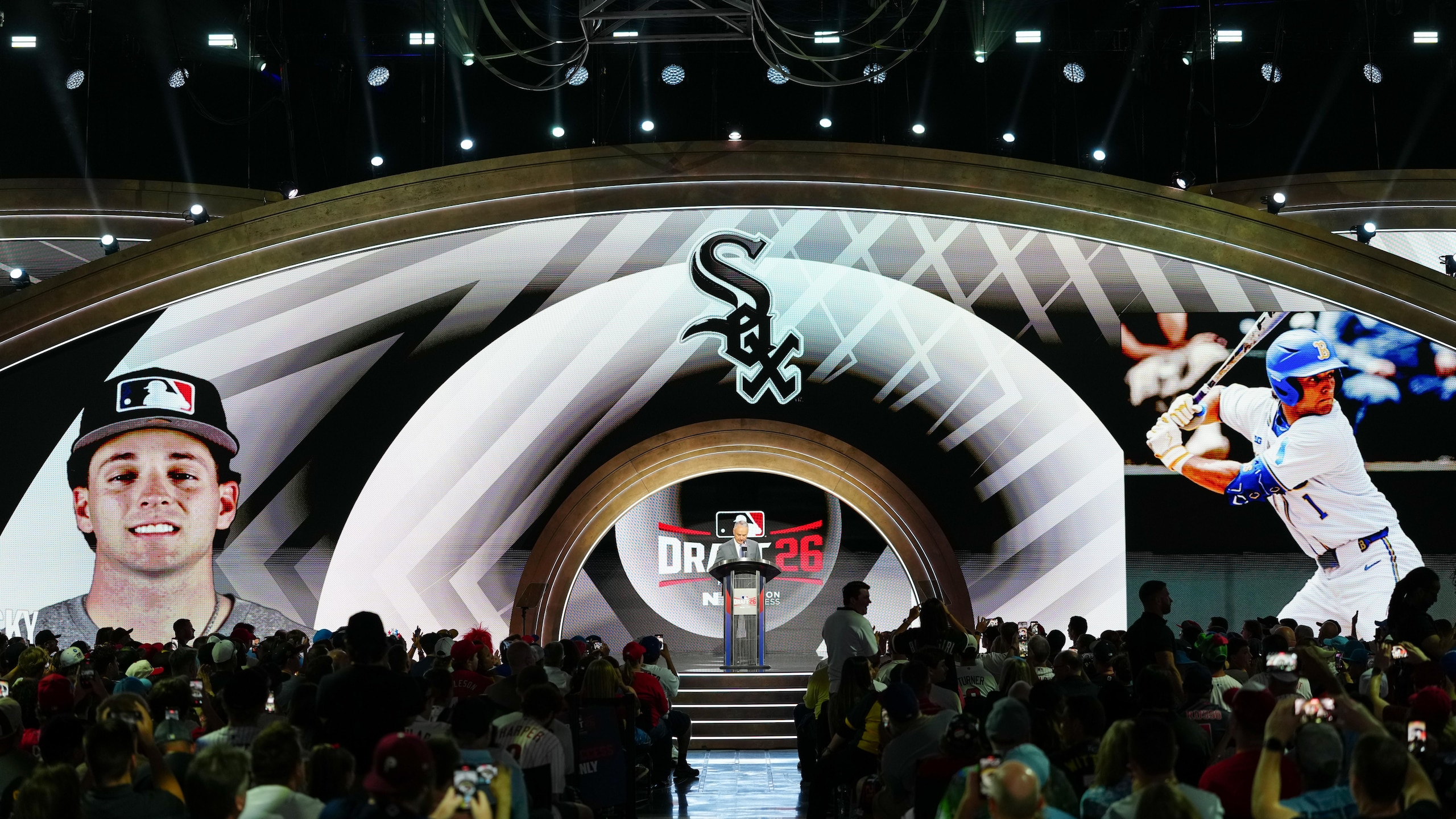
Height: 6'2" | Weight: 200 | Bats/Throws: R/R
Pro Comp: Troy Tulowitzki
Roch Cholowsky entered the spring as the favorite to go No. 1 overall in the 2026 draft following a sophomore season where he hit .353/.480/.710 with 23 home runs and more walks (45) than strikeouts (30) while displaying Gold Glove-caliber defensive tools at shortstop.
He mostly lived up to the lofty expectations, hitting .320/.452/.636 with 21 long balls during his junior year while continuing to look like one of the best all-around shortstops to come out of the college ranks since Troy Tulowitzki starred at Long Beach State back in 2005.
His good-not-great .308 average and 10 extra-base hits in 30 games during conference play narrowed the gap between him and the rest of the draft class, but he remains the safest bet on the board to develop into a franchise player and a perennial All-Star. It's not unreasonable to think he could be on an Opening Day roster in 2028.
Grade: A
There was no wrong answer in the Roch Cholowsky vs. Grady Emerson debate at the top of this draft, but given the step forward the White Sox have taken this year after three consecutive 100-loss seasons, opting for the more polished "sure-thing" over a potentially higher ceiling was the right move. Cholowsky is a good enough defender to push Colson Montgomery to third base, and they could be sharing the left side of the White Sox infield by 2028.
2. Tampa Bay Rays: SS Grady Emerson, Fort Worth Christian School (TX)
2 of 40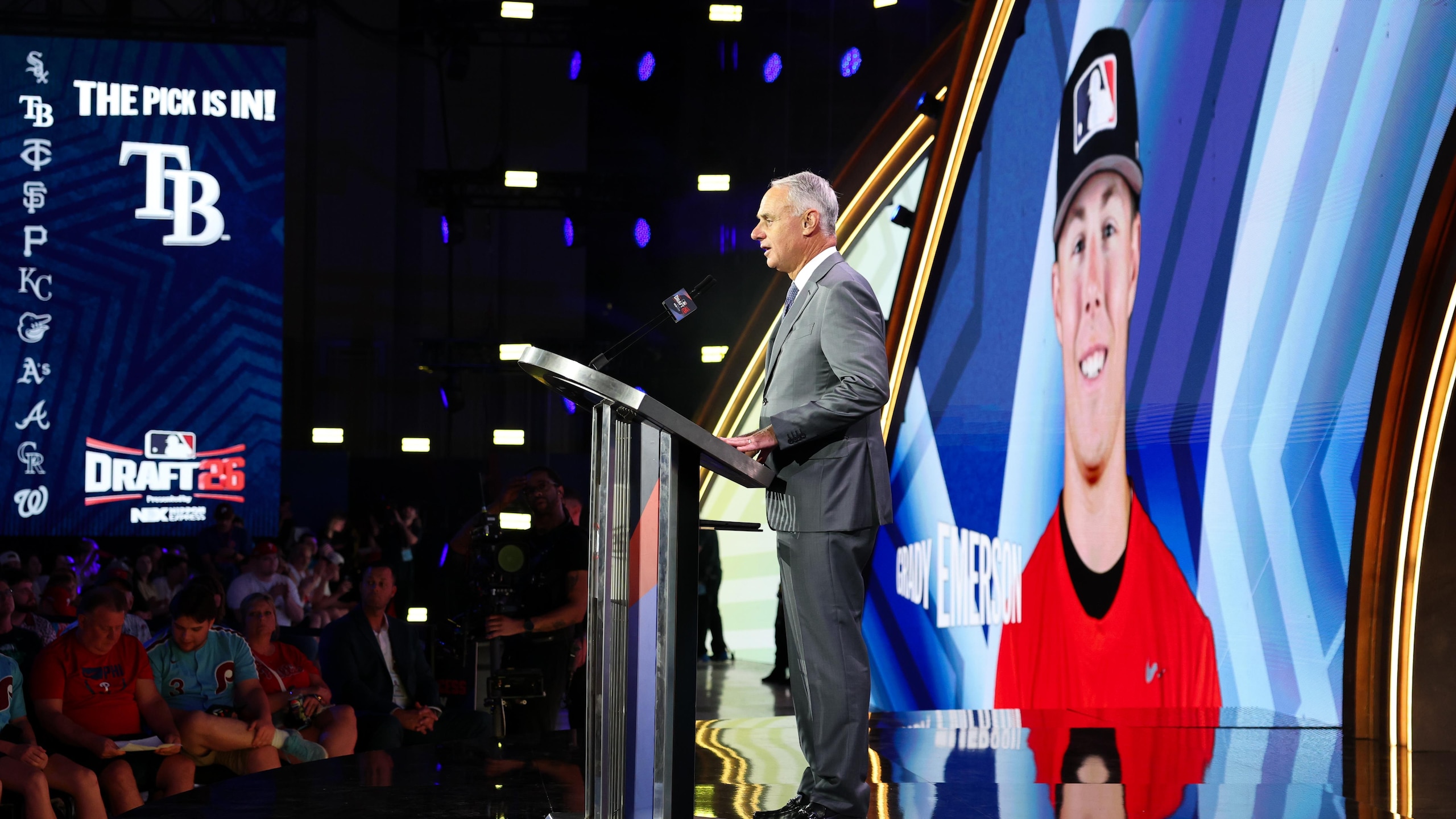
Height: 6'2" | Weight: 180 | Bats/Throws: L/R
Pro Comp: Corey Seager
The Gatorade National Player of the Year and just the second high schooler ever to be a Golden Spikes semifinalist, Grady Emerson hit .508 with a 1.549 OPS while tallying eight home runs, 56 RBI and 61 runs scored this spring.
He is the complete package, from an elite hit tool to budding power to a standout defensive profile at shortstop even with his larger frame. His overall feel for hitting is what drives his offensive game, and he has a great idea of the strike zone, advanced pitch recognition skills and consistently finds the barrel with his smooth left-handed swing without selling out for power.
It's not often a teenager possesses his blend of tools and overall polish, and there is a strong case to be made that he is the best high school shortstop prospect since Bobby Witt Jr. was selected with the No. 2 overall pick in the 2019 draft.
Grade: A
There was a compelling case for the Rays to take Vahn Lackey given their long-standing search for a true franchise catcher, but it's hard to pass on the highest ceiling in the entire draft. Given the stalled development of Carson Williams, they are also lacking a clear long-term answer at shortstop. Emerson will take a few years to get there, but he has all the tools to be that guy.
3. Minnesota Twins: C Vahn Lackey, Georgia Tech
3 of 40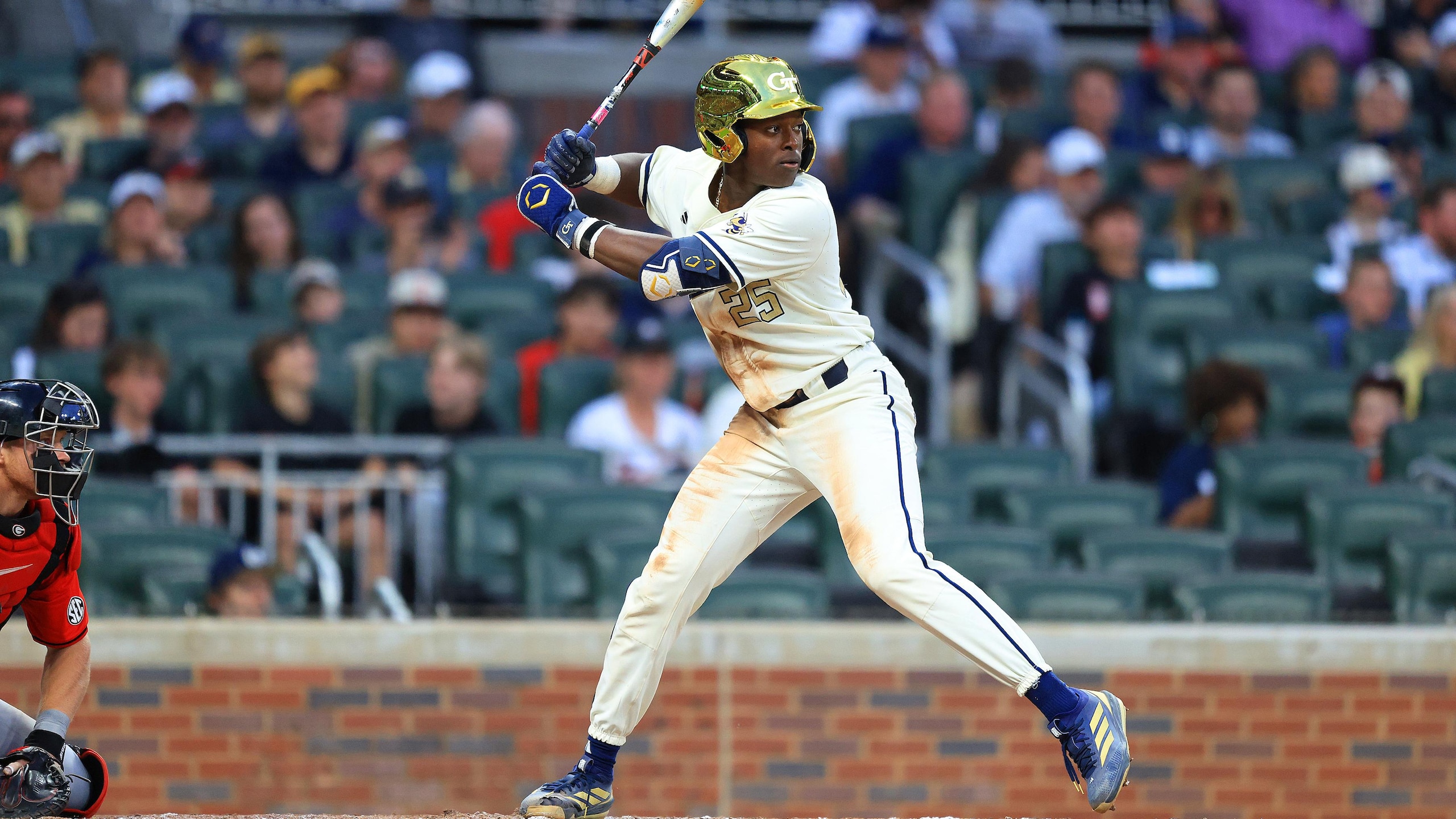
Height: 6'2" | Weight: 215 | Bats/Throws: R/R
Pro Comp: J.T. Realmuto
Vahn Lackey was already the top catching prospect in the 2026 class following a sophomore season where he batted .347/.421/.500 with 21 extra-base hits before suiting up for the Collegiate National Team in the summer, but he took his game to another level entirely as a junior.
The first team All-American hit .397/.519/.772 with more walks (50) than strikeouts (38) while slugging 20 home runs and swiping 15 bases in 16 tries. He has 30-homer upside, though it comes more from raw strength than bat speed, and his pure hitting ability stands out more than his power.
His plus athleticism really shines behind the plate, with a strong arm, quick release and fluid receiving skills giving him legitimate Gold Glove potential. He will need some developmental time like any catcher, but he looks the part of a true franchise backstop.
Grade: A
The last time the Twins drafted a catcher in the first round was Joe Mauer at No. 1 overall in 2001, and that worked out pretty well. In a draft with a consensus top three at the top, they just needed to sit back and take whichever one fell into their laps without overthinking things, and they did just that.

.jpg?w=2560)
4. San Francisco Giants: RHP Jackson Flora, UC Santa Barbara
4 of 40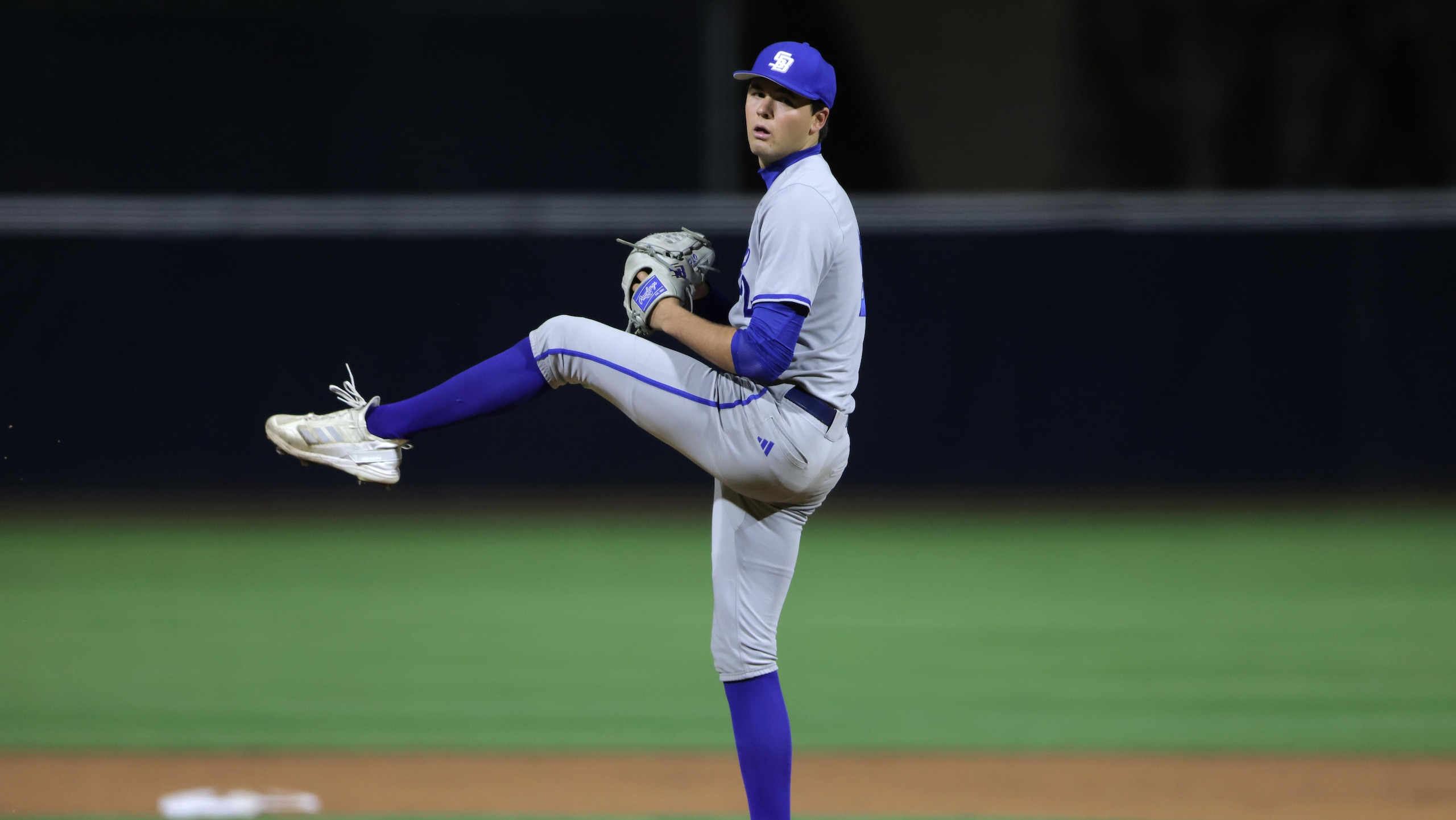
Height: 6'5" | Weight: 205 | Bats/Throws: R/R
Pro Comp: Logan Gilbert
Slotted behind last year's No. 2 overall pick Tyler Bremner in the UC Santa Barbara rotation as a sophomore, Jackson Flora stepped into the staff ace role this spring and put together the most dominant pitching season in the nation.
He finished 12-0 with a 1.06 ERA, 0.85 WHIP and 133 strikeouts in 102 innings, tossing a pair of complete game shutouts along the way. After pitching almost exclusively off his fastball-slider combination as a sophomore, he showed a terrific changeup this spring that became his go-to offspeed option against left-handed hitters.
He still has room to refine his command and continue polishing his secondary stuff, but his elite fastball velocity, good strike-throwing and durable frame point to a future at the top of a big league rotation if he continues on his current developmental trajectory.
Grade: B+
The uber-athletic Eric Booth Jr. with his top-of-the-scale speed and 30/30 upside would have looked awfully good roaming center field in spacious Oracle Park, especially given the team's lack of young impact position-player talent. That said, they do a solid job developing pitching, and Flora should move quickly through the minors with a chance to anchor the rotation.
5. Pittsburgh Pirates: OF Derek Curiel, LSU
5 of 40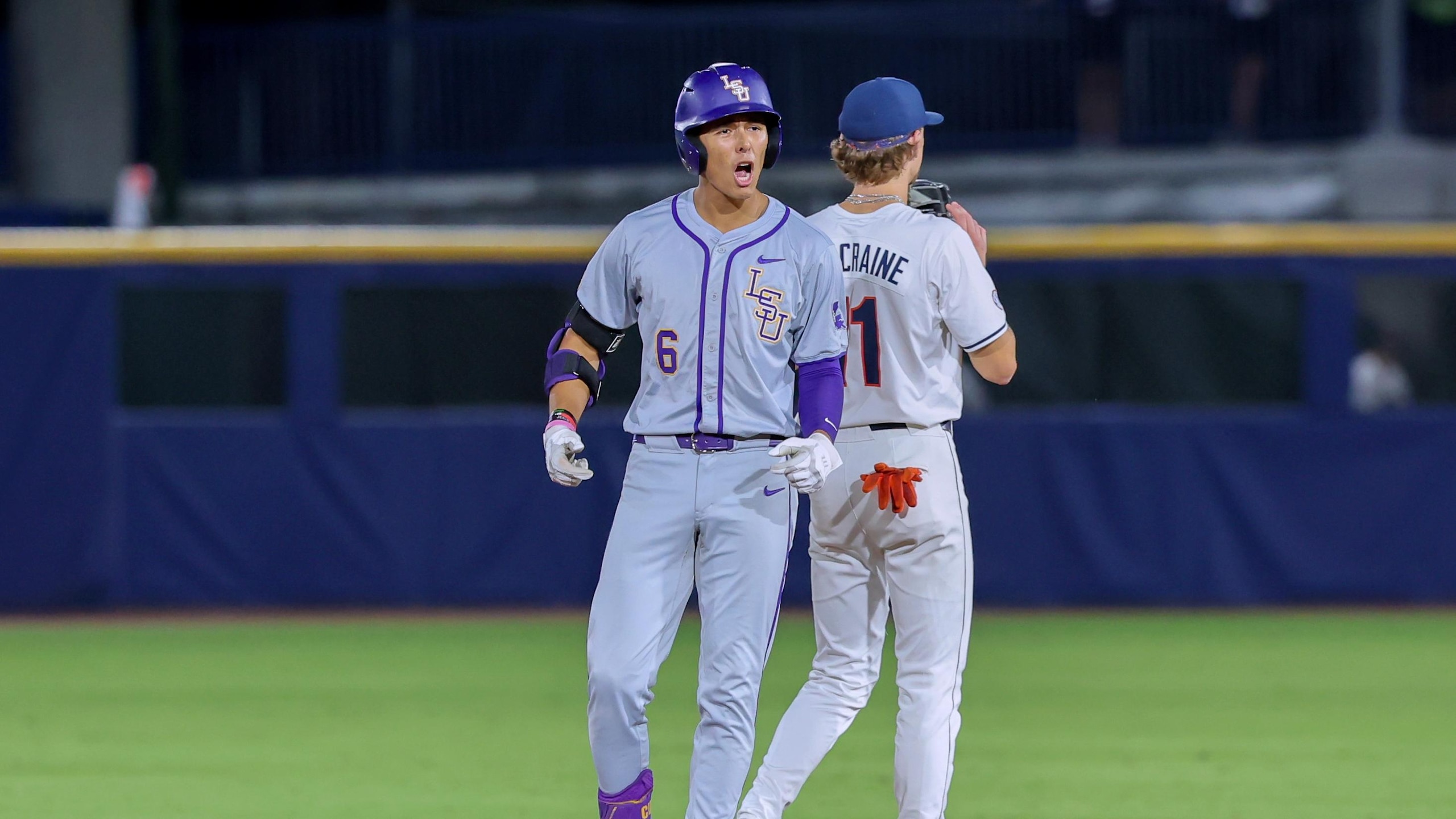
Height: 6'2" | Weight: 190 | Bats/Throws: L/L
Pro Comp: Brett Gardner
Derek Curiel played left field and batted leadoff as a true freshman for the LSU team that won the 2025 College World Series, hitting .345/.470/.519 with 29 extra-base hits and 67 runs scored in 68 games.
He was essentially the same player this spring offensively, again showing an advanced hit tool with strong bat-to-ball skills and the speed to be a table-setter at the top. The difference was he did it while playing a standout defensive center field, taking home Rawlings Gold Glove honors as one of the nation's standout defenders.
His flat swing is built for contact and there are questions of how much impact he will ultimately make offensively, but his contact skills, speed and terrific defense still give him an extremely high floor and make him a safe bet to be a big league center fielder.
Grade: B-
With one of the highest floors in the class and a premium defensive profile, Curiel is a safe selection and one that addresses a need for the Pirates, who have had a revolving door of sorts in the outfield for several years. I question whether there's enough impact potential for him to go this high, but if the power comes, he could easily justify this slot.
6. Kansas City Royals: OF Zion Rose, Louisville
6 of 40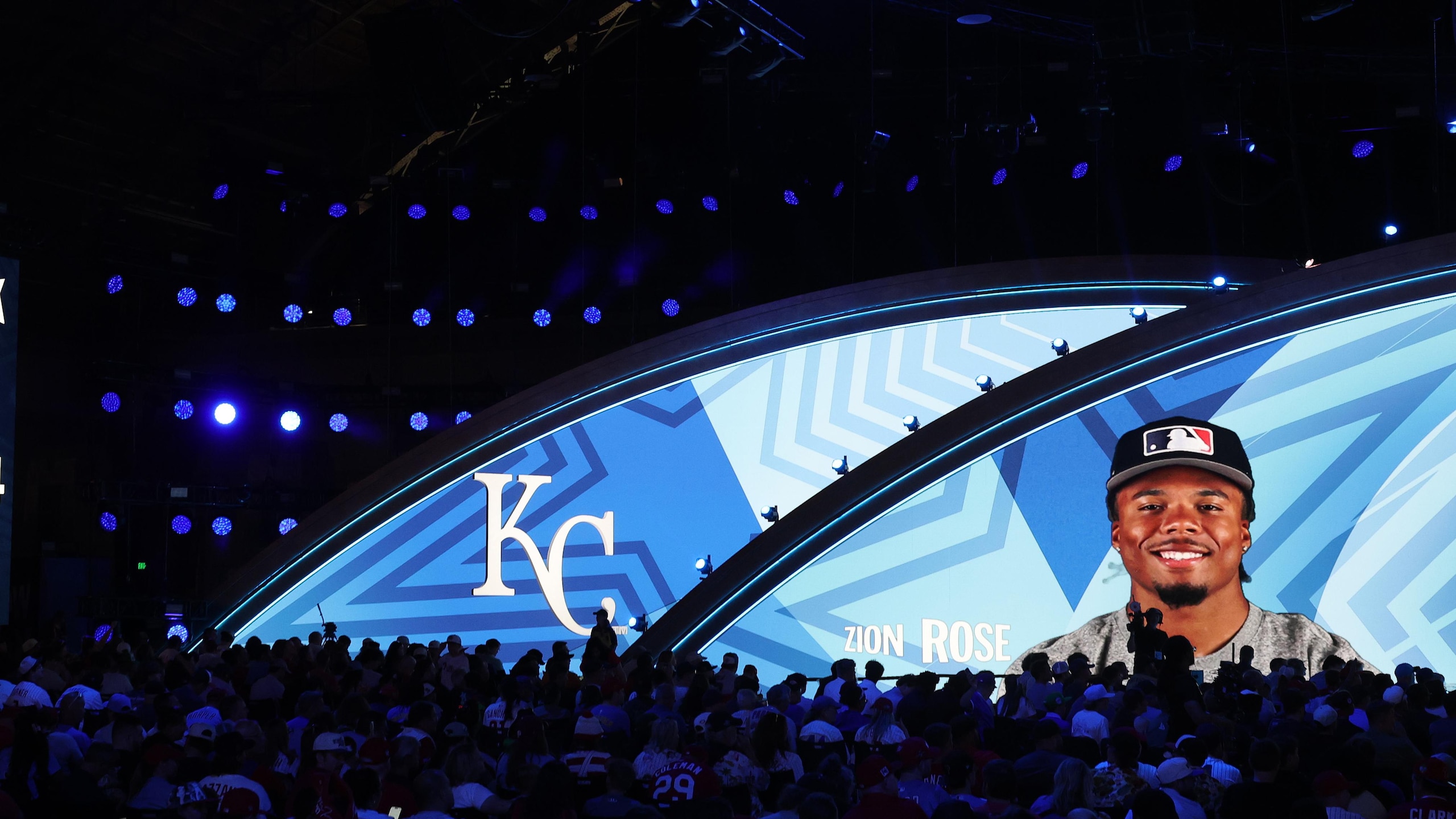
Height: 6'1" | Weight: 200 | Bats/Throws: R/R
Pro Comp: Lourdes Gurriel Jr.
An ankle injury cost Zion Rose time early in the 2026 season, but he made the most of the 36 games he did play once he returned, hitting .417/.491/.646 with 20 extra-base hits and 24 steals in 173 plate appearances.
He has strength and quick-twitch athleticism in his solid frame, though his current swing path is not built for power, instead focusing on spraying line drives from gap to gap. He still managed to hit 24 home runs in 146 games during his three seasons at Louisville, and there is raw power for him to tap into if he can elevate the ball more consistently.
A catcher in high school when he attended IMG Academy, his athleticism and speed are his best assets in the outfield where he is still raw. The tools are there for him to handle center field, but Lucas Moore pushed him to left field at Louisville and he was an average-at-best defender there.
Grade: C
The Royals love getting creative with their bonus pool, and they were frequently identified as a team that might look to cut a below-slot deal here to land one of the top high school arms with their next pick at No. 30 overall. Outfield is a glaring need, and Rose has some untapped upside, but Drew Burress was a polished option with five-tool upside and a far higher likelihood of impact production.
7. Baltimore Orioles: OF Eric Booth Jr., Oak Grove HS (MS)
7 of 40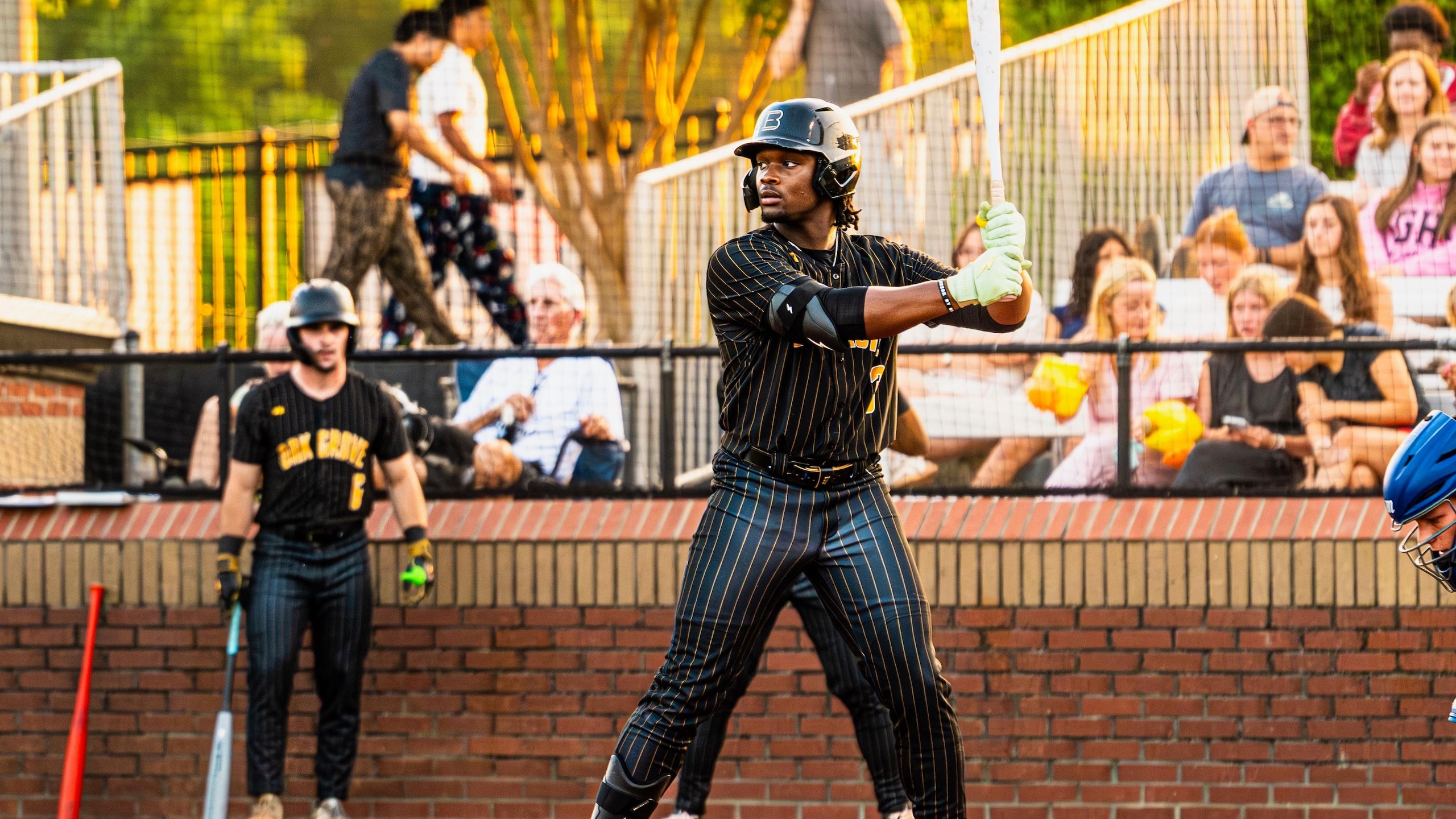
Height: 6'0" | Weight: 205 | Bats/Throws: L/L
Pro Comp: Carl Crawford
Every draft class has an uber-athletic outfielder with top-of-the-scale speed and athleticism, but they rarely come with the offensive polish and power potential that Eric Booth Jr. possesses in support of his unquestionably elite wheels.
There is some choppiness to his swing that will need to be smoothed out in pro ball, but he already has a really good feel for the strike zone. He makes consistent hard contact and has enough present power that he won the home run derby at the Perfect Game All-American Classic last summer.
The end product here could be a perennial 20-homer, 40-steal center fielder who puts up gaudy counting numbers while also providing secondary value in a variety of ways. He has already shown the ability to make mechanical adjustments to his swing, so pro ball could unlock another level in his game.
Grade: A
The last time the Orioles took a high school player with their first pick it was Jackson Holliday at No. 1 overall in 2022, and they have a long history of targeting college outfielders, with Drew Burress a name they were frequently tied to during the draft cycle. I love them swinging for the fences on upside here and not being so beholden to their entrenched philosophy. There's a non-zero chance Booth ends up being the best player in this draft.
8. Athletics: OF Drew Burress, Georgia Tech
8 of 40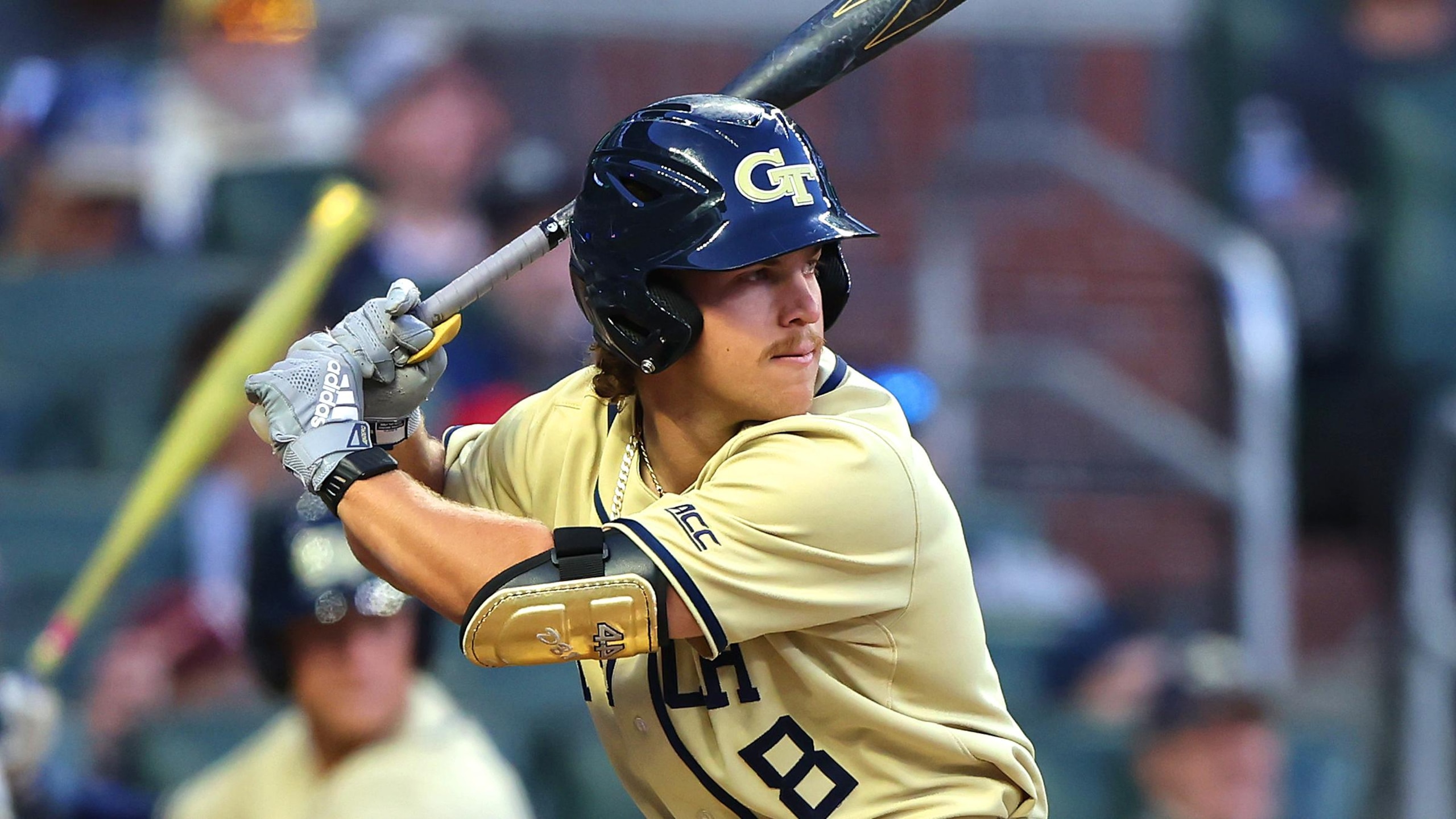
Height: 5'9" | Weight: 175 | Bats/Throws: R/R
Pro Comp: Jackson Chourio
Despite his undersized frame, Drew Burress was one of the best power hitters in college baseball throughout his three seasons at Georgia Tech, hitting .357/.484/.720 with 60 doubles, 60 home runs and 189 RBI in 179 games.
Those 60 long balls set a new school record, surpassing the 57 hit by former Red Sox catcher Jason Varitek during his time with the Yellow Jackets, and his strength and bat speed should allow that power to continue playing at the next level.
He is more or less maxed out physically, but the finished product looks like a run-producing outfielder with the athleticism to roam center field and the arm strength to handle right field if he ends up moving to a corner. A lack of holes in his game helped separate him from the rest of a deep college outfield crop as the spring unfolded.
Grade: A
There's a good chance the Athletics didn't expect Burress to be available, as he was frequently mentioned in the No. 4-7 range, so props to them for being adaptable and not digging in on Tyler Bell or Ryder Helfrick who they were most often linked to predraft. There is no question they need pitching, but with Jackson Flora off the board, anyone else would have been a reach in this spot.
9. Atlanta Braves: OF AJ Gracia, Virginia
9 of 40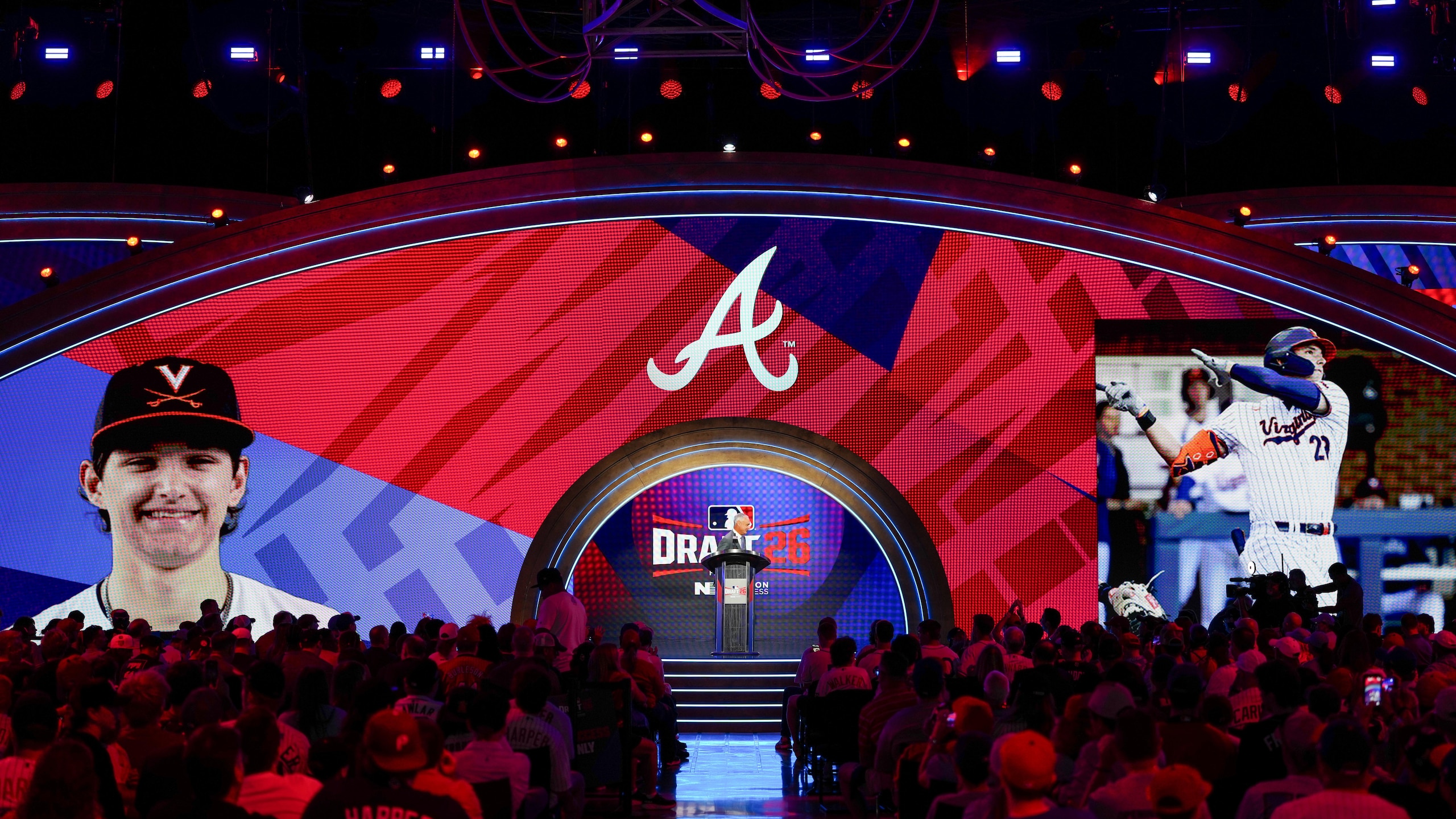
Height: 6'3" | Weight: 195 | Bats/Throws: L/L
Pro Comp: Michael Conforto
After two productive seasons at Duke, AJ Gracia was one of the top players in the transfer portal last offseason, and he put together the best campaign of his collegiate career after landing at Virginia.
He hit .354/.489/.632 with more walks (47) than strikeouts (38), and while his 14 home runs don't jump off the page like some of the other top college performers in this draft class, his strength, barrel skills and advanced approach could mean more in-game power shows up in pro ball.
While he played center field the last two seasons, his lack of quickness and average arm might make left field his landing spot at the next level, which would in turn put more pressure on his bat. That said, don't be surprised if he's one of the first players from the class to reach the majors.
Grade: B+
I would not have loved this pick for several teams in this range, but the Braves already have their long-term center fielder in place with Michael Harris II signed through 2032, so they can afford to place less emphasis on the defensive side of this profile in favor of a highly advanced bat that should move quickly. Expect him to be put on the fast track.
10. Colorado Rockies: SS Tyler Bell, Kentucky
10 of 40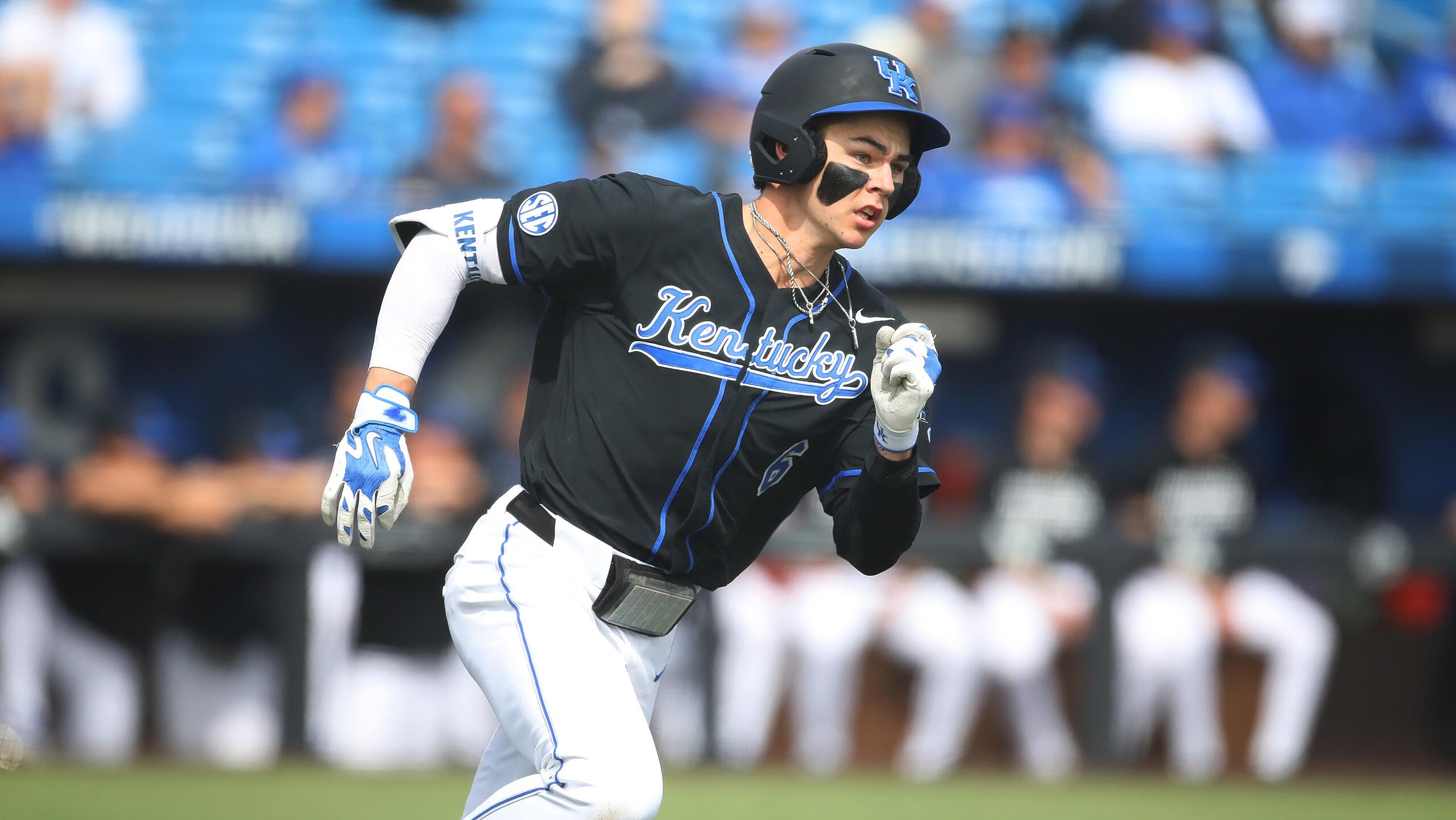
Height: 6'1" | Weight: 190 | Bats/Throws: S/R
Pro Comp: Zach Neto
Tyler Bell was the highest unsigned pick in the 2024 draft when he went No. 66 overall to the Tampa Bay Rays but honored his commitment to Kentucky, and after two standout seasons for the Wildcats he is now the consensus No. 2 college shortstop behind Roch Cholowsky.
He stands out more for his well-rounded skills and overall polish than any one standout tool, and while he does not possess the same superstar upside as UCLA star Roch Cholowsky, it's not out of the question that he might end up beating him to the majors.
He suffered a shoulder injury on Opening Day this spring and missed a month, but he hit .343/.510/.608 with 19 extra-base hits in 41 games after returning. His stock steadily climbed down the stretch as his exit velocity started ticking back up and he was elevating the ball more, and he stands out as one of the safest bets in the class to be an everyday big leaguer.
Grade: A-
Arkansas catcher Ryder Helfrick and his standout defensive tools would have been a creative way for the Rockies to address their ever-present issues with the pitching staff. For a team that has no shortage of roster holes, the goal when picking in the top 10 should be to strike a good balance between certainty and upside, and Bell fits that mold nicely.
11. Washington Nationals: 2B Chris Hacopian, Texas A&M
11 of 40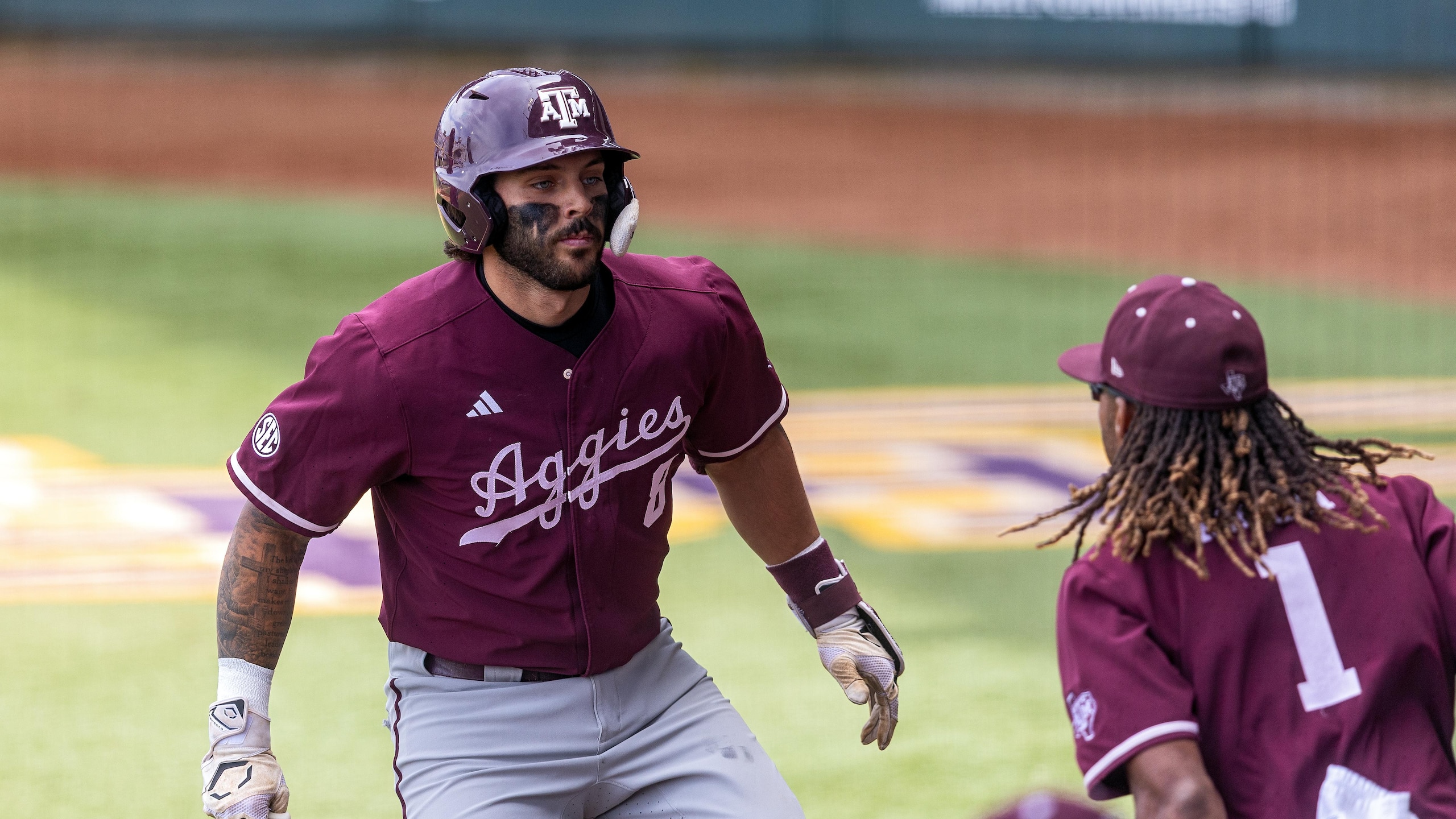
Height: 6'1" | Weight: 200 | Bats/Throws: R/R
Pro Comp: Jeff McNeil
After hitting .347 with 29 home runs over two seasons at Maryland, Chris Hacopian transferred to Texas A&M where he continued to showcase one of the best hit tools in the 2026 draft class while also flashing plus raw power.
He hit .319/.405/.578 with 10 doubles, 11 home runs and 41 RBI in 42 games this spring, and wrapped up his collegiate career with 66 strikeouts in 711 plate appearances, good for a 9.3 percent strikeout rate that speaks to his elite bat-to-ball skills.
He played shortstop at Maryland before shifting to second base this season, and has the requisite skills to shift back to the more demanding position in pro ball. Despite a lack of gaudy counting stats, he has one of the most complete offensive packages in the class and could be a 20-25 home run threat at the next level to go along with his standout hit tool.
Grade: A
The Nationals have some upward momentum as a franchise for the first time in years, and Hacopian strikes a nice balance between an extremely high floor with his elite hit tool and untapped upside with the potential for more power to come. For an organization still collecting building blocks, there's a high probability he ends up being one.
12. Los Angeles Angels: OF Jared Grindlinger, Huntington Beach HS (CA)
12 of 40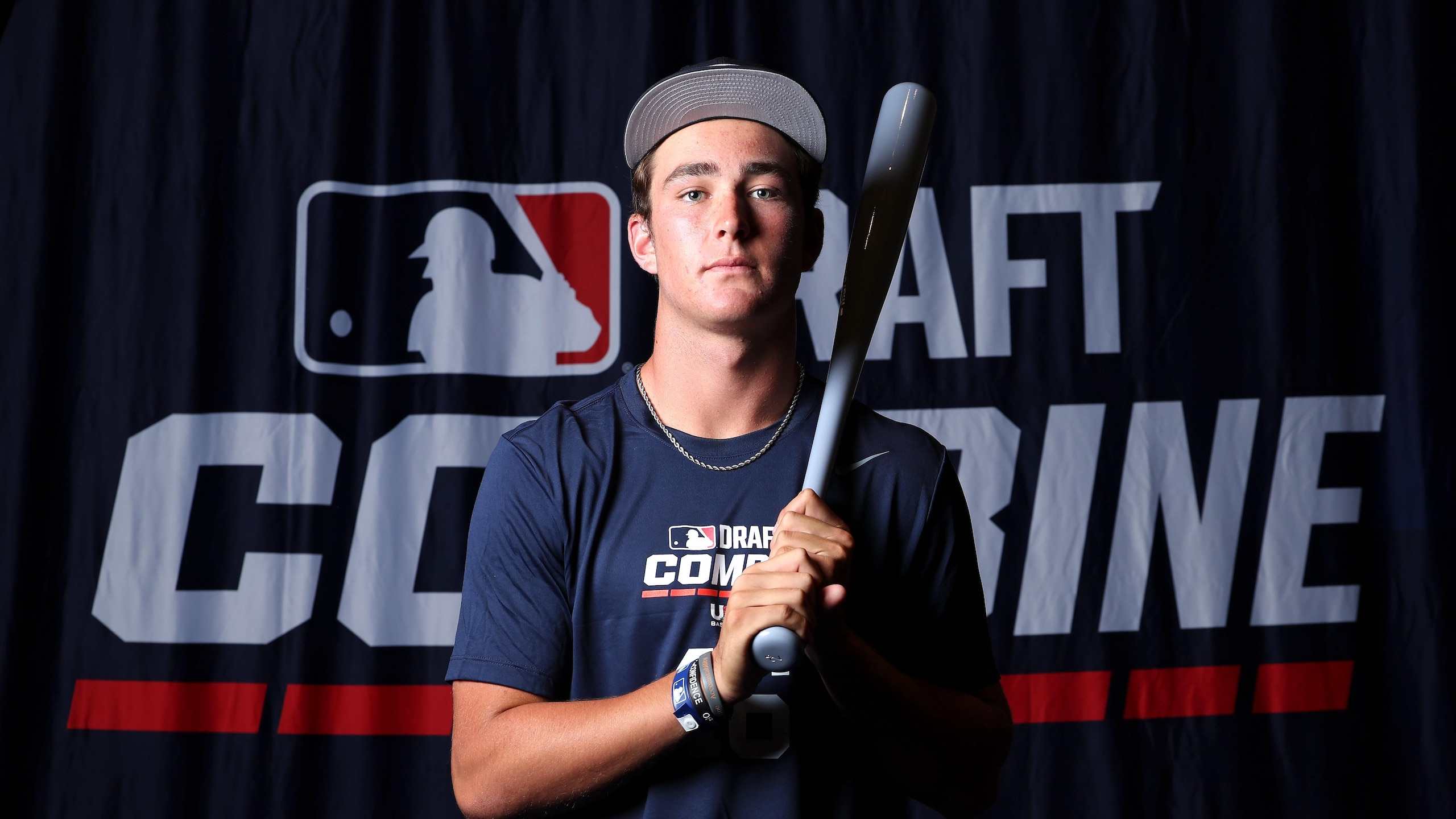
Height: 6'3" | Weight: 185 | Bats/Throws: L/L
Pro Comp: Lars Nootbaar/Andrew Heaney
One of the youngest players in the 2026 draft after reclassifying in February, Jared Grindlinger might also be the most compelling. He is a true two-way prospect who doesn't turn 18 years old until next April, with a ton of projection on the mound and some of the best contact skills in the class at the plate.
While he has touched 96 mph with his fastball and shows a good feel for his secondary stuff, his profile on the mound is based largely on projection. With smooth mechanics and three polished pitches, it's easy to envision a velocity uptick and a frontline profile with further development.
At the plate, he makes a ton of contact, though it's not always quality contact. Similar to his projectability as a pitcher, it's also reasonable to expect his exit velocity and power output to climb as he continues to grow into his frame.
He is a lottery ticket with a long developmental path ahead, but his all-around talent gives him multiple paths to reaching the big leagues.
Grade: B
With interim general manager John Mozeliak calling the shots, the Angels drifted away from their recent preference for polished talent that can reach the majors quickly in a big, big way. It's interesting that he was announced as an outfielder rather than a two-way player, but it's definitely easier to start him as a position player and transition him to the mound later if needed than the other way around.
13. St. Louis Cardinals: OF Trevor Condon, Etowah HS (GA)
13 of 40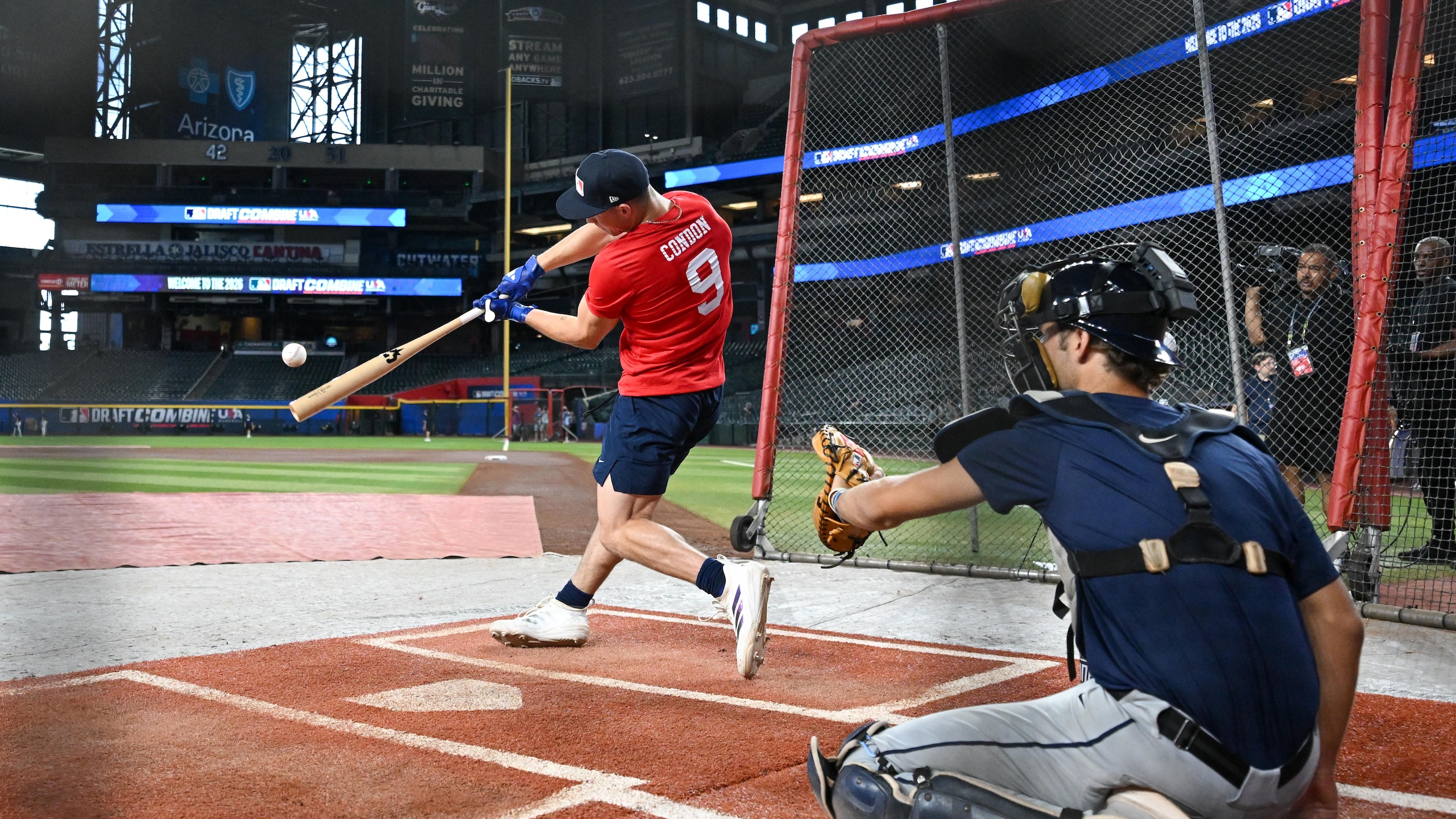
Height: 5'11" | Weight: 175 | Bats/Throws: L/R
Pro Comp: Jarren Duran
Corbin Carroll walked so guys like Trevor Condon could run, proving that the undersized prep outfielder with the advanced hit tool can develop into a star, even with a less-than-imposing physical footprint and limited remaining projection.
He has drawn some comparisons to Pete Crow-Armstrong at the same point in his development, with similar game-changing speed and feel for hitting from a surefire center field profile. He will likely never develop into a major power threat, but he has enough strength and bat speed to maximize his extra-base production.
A Gold Glove-caliber defensive center fielder with 30 doubles, 15 home runs and 30 steals has plenty of value, even in today's power-centric game, and that's the type of ceiling Condon brings to the table with a higher floor than most high school hitters.
Grade: A
It feels like a win for the entire league that the Cardinals didn't let this guy fall to the Diamondbacks at No. 15 overall given their ability to develop players with this exact profile. Thought this might be where we see the Jacob Lombard slide end, but Condon is a safer pick with significant upside in his own right, and he immediately becomes one of the top position players in a St. Louis system loaded with arms.
14. Miami Marlins: SS Jacob Lombard, Gulliver Prep (FL)
14 of 40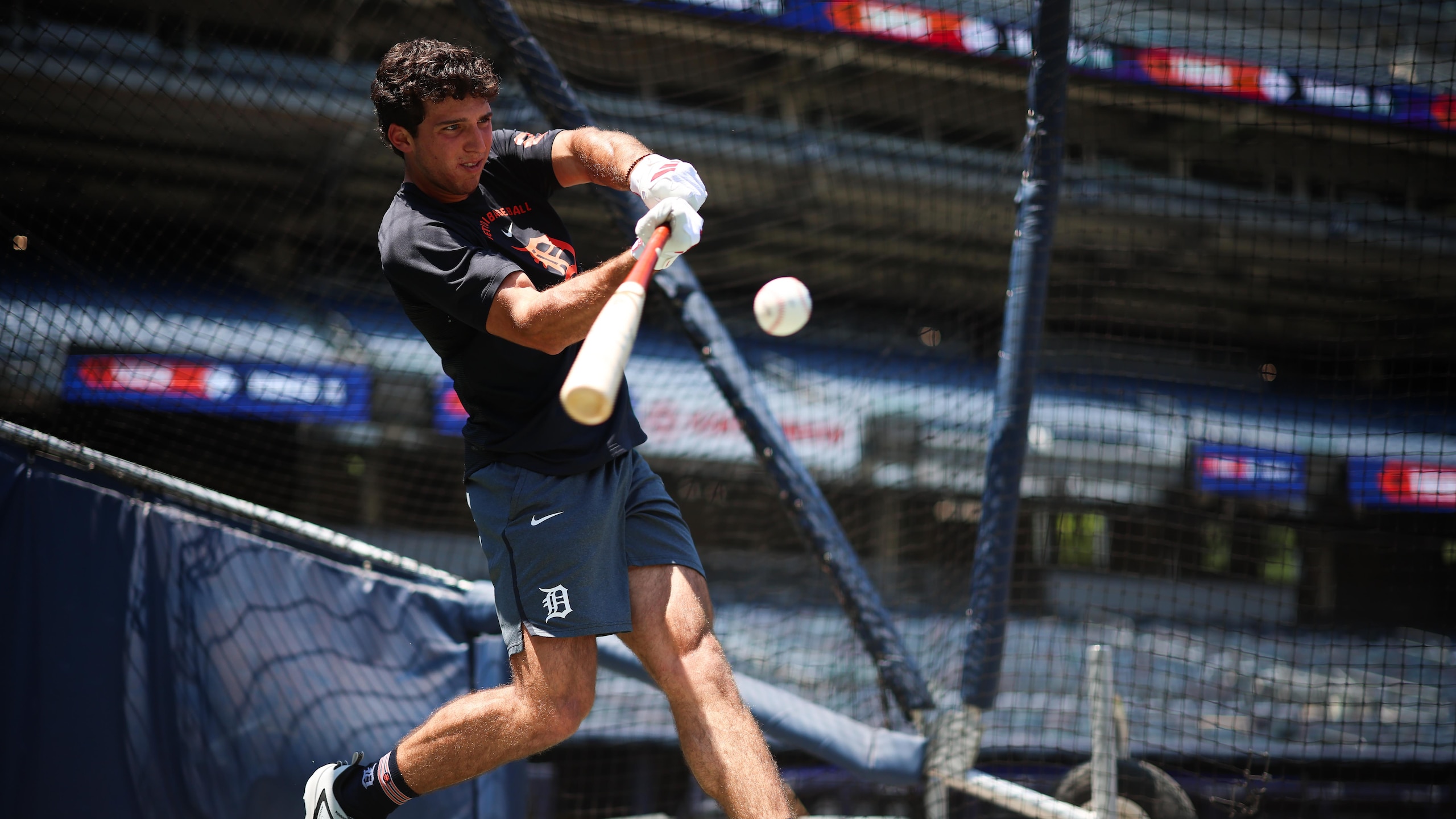
Height: 6'3" | Weight: 185 | Bats/Throws: R/R
Pro Comp: Colson Montgomery
Jacob Lombard has the power, speed and explosiveness to be a superstar if his hit tool continues to develop, but after showing considerable swing-and-miss throughout his prep career and specifically on the showcase circuit last summer, that is the question hanging over his long-term outlook.
From a tools standpoint, he stacks up to any player in the draft. He has significant present power and more to come with a highly projectable frame, and he complements it with elite speed that flashes top-of-the-scale and all the defensive tools to be a standout shortstop.
His strong baseball bloodlines—he is the son of Tigers bench coach George Lombard and brother of Yankees top prospect George Lombard Jr.—and overall athleticism should serve him well as he tries to make the necessary adjustments in pro ball. Even with some swing-and-miss, he could still be an everyday shortstop with 30-homer pop and plus defensive value.
Grade: A
The swing-and-miss concerns are legitimate, but so is the huge power upside. The Marlins were often pointed to as a potential landing spot for Alabama shortstop Justin Lebron, who has far more significant contact questions, so they still ended up with a huge offensive ceiling and might have dialed back some of the risk in the process.
15. Arizona Diamondbacks: C Ryder Helfrick, Arkansas
15 of 40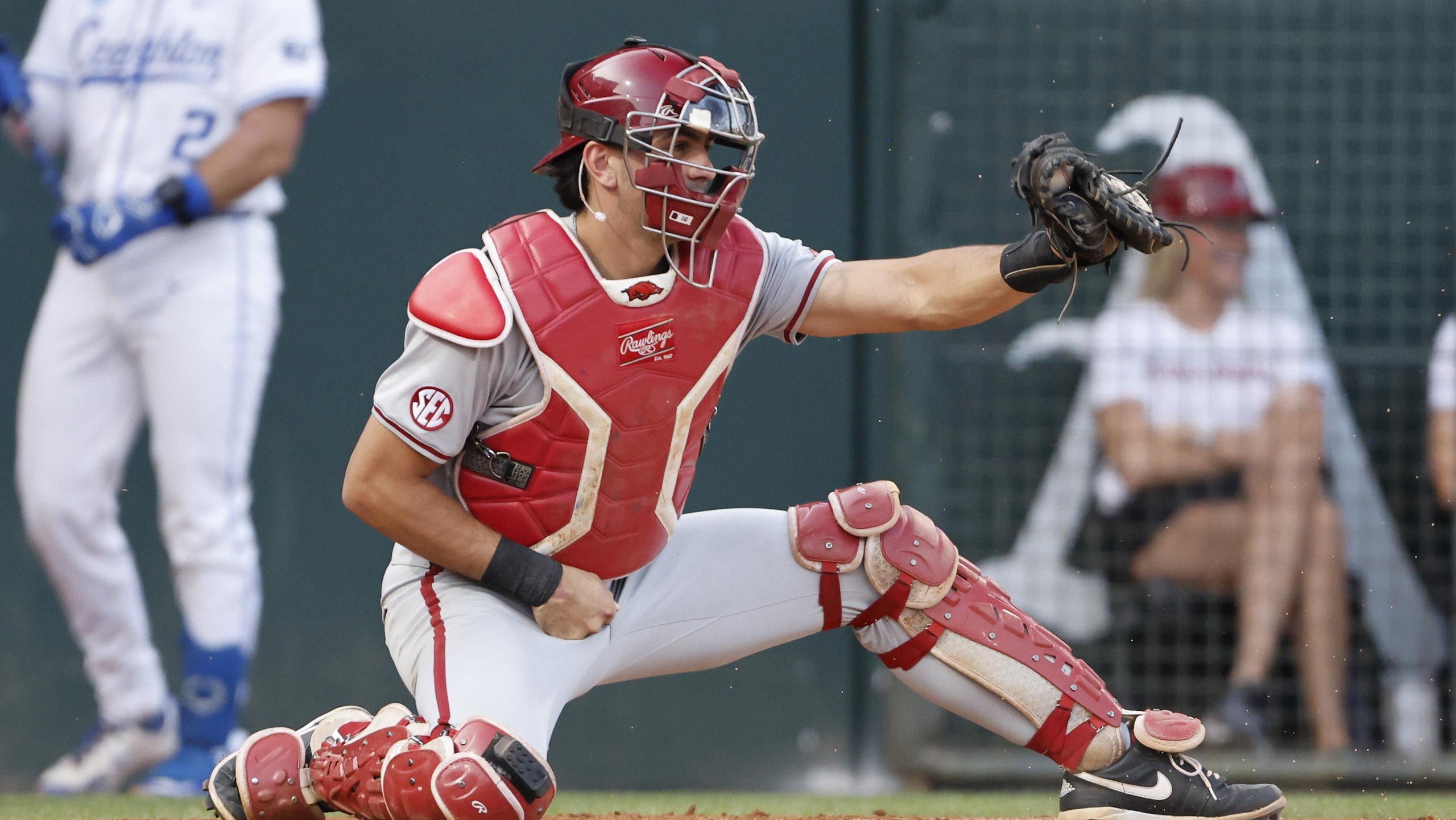
Height: 6'1" | Weight: 215 | Bats/Throws: R/R
Pro Comp: Shea Langeliers
Ryder Helfrick is the most advanced defensive catcher in the 2026 draft class, and along with a strong throwing arm and polished receiving skills, he was also one of the few pitchers in the country comfortable enough handling a staff to call his own pitches.
Offensively, he has a power-over-contact approach, and it yielded 33 home runs in 123 games over the past two seasons. He also showed a willingness to work the count, logging a 19.1 percent walk rate and .417 on-base percentage this spring, which should help offset some of his swing-and-miss.
Add in an .837 OPS and 11 home runs swinging wood bats in the 2025 Cape Cod League, and there is every reason to believe he should move as quickly through the minors on his way to becoming an everyday backstop.
Grade: A
Teams don't draft for MLB needs, but they do sometimes draft based on where they are thin in the farm system, and the D-backs don't have a catching prospect among their top 15 prospects. There is no chance they expected Helfrick to still be on the board here, and he immediately becomes the catcher of the future for an organization that clearly values defense at the position with Gabriel Moreno in the starting role.
16. Texas Rangers: LHP Gio Rojas, Stoneman Douglas HS (FL)
16 of 40Height: 6'4" | Weight: 190 | Bats/Throws: R/L
Pro Comp: Carlos Rodón
With a dynamic fastball-slider pairing, plus command and clean, repeatable mechanics, Gio Rojas offers more polish and present pitchability than most high school pitchers with the upside one would expect from the top teenage arm on the board.
It's easy to envision a future frontline starter thanks to his remaining physical projection and overall athleticism on the mound, and while he is more or less a two-pitch guy at this point, his feel for a changeup should help him develop it into a reliable third offering to round out his arsenal.
He is a low-risk prospect from a high-risk demographic, and the type of pitcher who could fly up Top 100 prospect lists by putting up gaudy numbers while dominating hitters in the lower levels of the minors.
Grade: A-
The long run on position players ends with the best prep pitcher in this draft class, and the Rangers have made some strides with their pitching development after years of struggling to get impact arms through the minors. The floor here is as appealing as the ceiling, and he could have gone off the board 10 picks earlier without anyone blinking an eye.
17. Houston Astros: OF Logan Hughes, Texas Tech
17 of 40Height: 5'11" | Weight: 210 | Bats/Throws: R/R
Pro Comp: Jesse Winker
Each year a few college bats enjoy some late helium once teams start digging into analytics, and Logan Hughes is one of those guys this season thanks to top-tier exit velocity numbers coupled with his elite on-base production.
He hit .375/.510/.735 with 50 walks against just 33 strikeouts this spring, tallying 16 doubles, 18 home runs and 70 RBI while showing good pitch recognition skills and production against elite velocity and quality breaking stuff.
The knock is that his profile is essentially bat-only, as he is a below-average athlete who will be limited to left field where he is a passable defender at best. That puts all the pressure on his offensive game, but there's a lot to like about the bat.
Grade: C
Hughes hit his way into the first round, but his value is largely one-dimensional. That makes taking him over stat-stuffer Sawyer Strosnider or rising power threat Aiden Robbins, who both have a chance to provide secondary value in center field, a bit difficult to understand. The bat will need to be significantly better than theirs for this to not look like a reach.
18. Cincinnati Reds: SS Justin Lebron, Alabama
18 of 40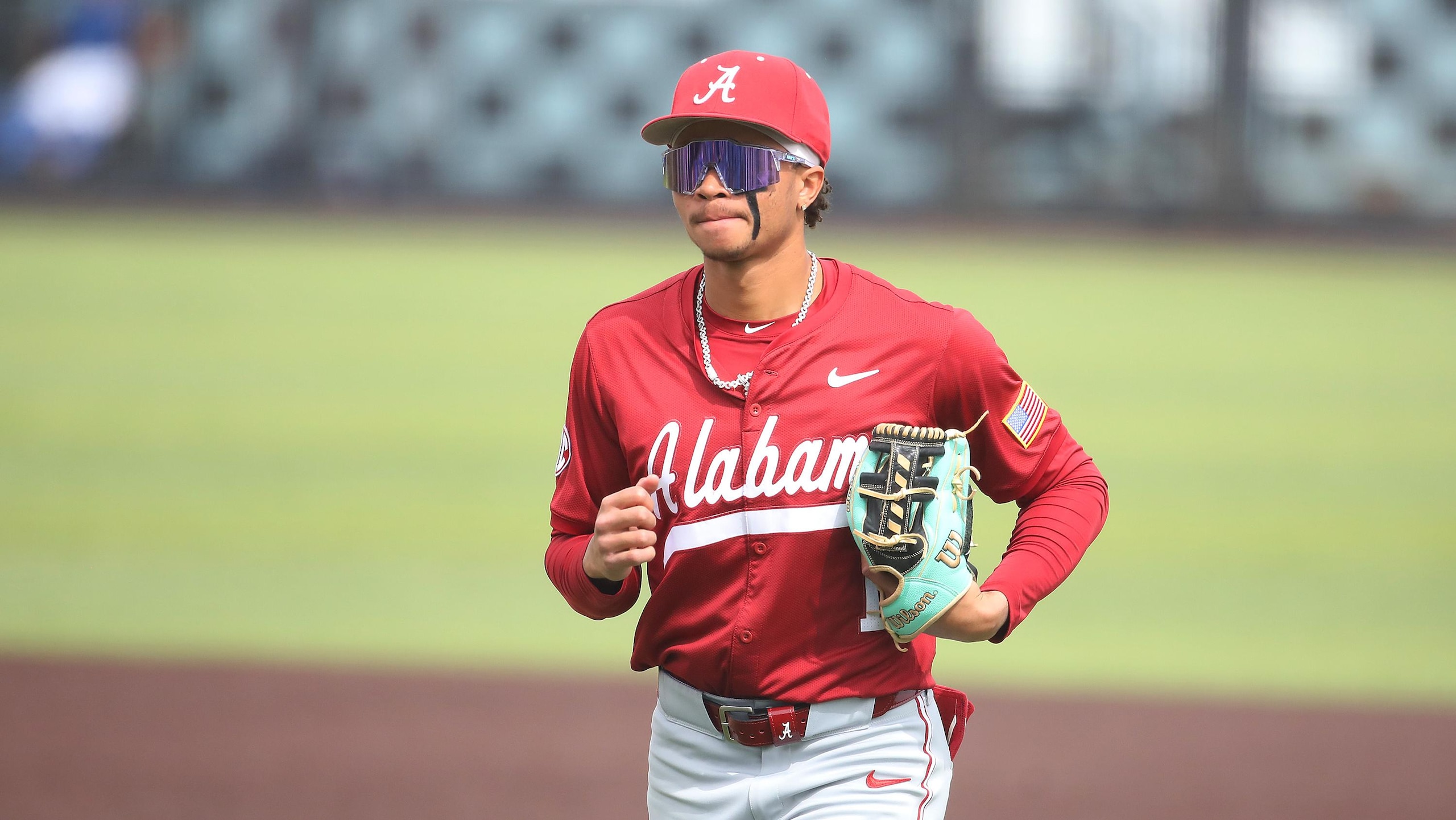
Height: 6'2" | Weight: 165 | Bats/Throws: R/R
Pro Comp: peak Trevor Story
A rare plus-power, plus-speed shortstop with the quick-twitch athleticism to be a standout defender, Justin Lebron was listed right alongside Roch Cholowsky as the leading candidates to go No. 1 overall in the 2026 draft when the spring began.
He hit .316/.421/.636 as a sophomore with 18 home runs and 17 steals, but failed to take the step forward many were expecting this spring. After a modest start to the year, his stock really took a hit during SEC play when he batted just .229/.328/.413 with 27 strikeouts in 28 games.
He still finished with 16 home runs and 42 steals in 43 attempts while posting a .920 OPS, but serious questions about his hit tool and some inconsistency in the field have made him one of the most polarizing prospects in the class. He is a true boom-or-bust roll of the dice, but the upside is an All-Star shortstop.
Grade: B+
The struggles this spring were significant, but so is the ceiling on a player who might have gone inside the top five picks a year ago if he were a draft-eligible sophomore. There's not a bigger risk/reward play in this draft, and for a Reds team that needs impact bats, it was a risk worth taking.
19. Cleveland Guardians: RHP Liam Peterson, Florida
19 of 40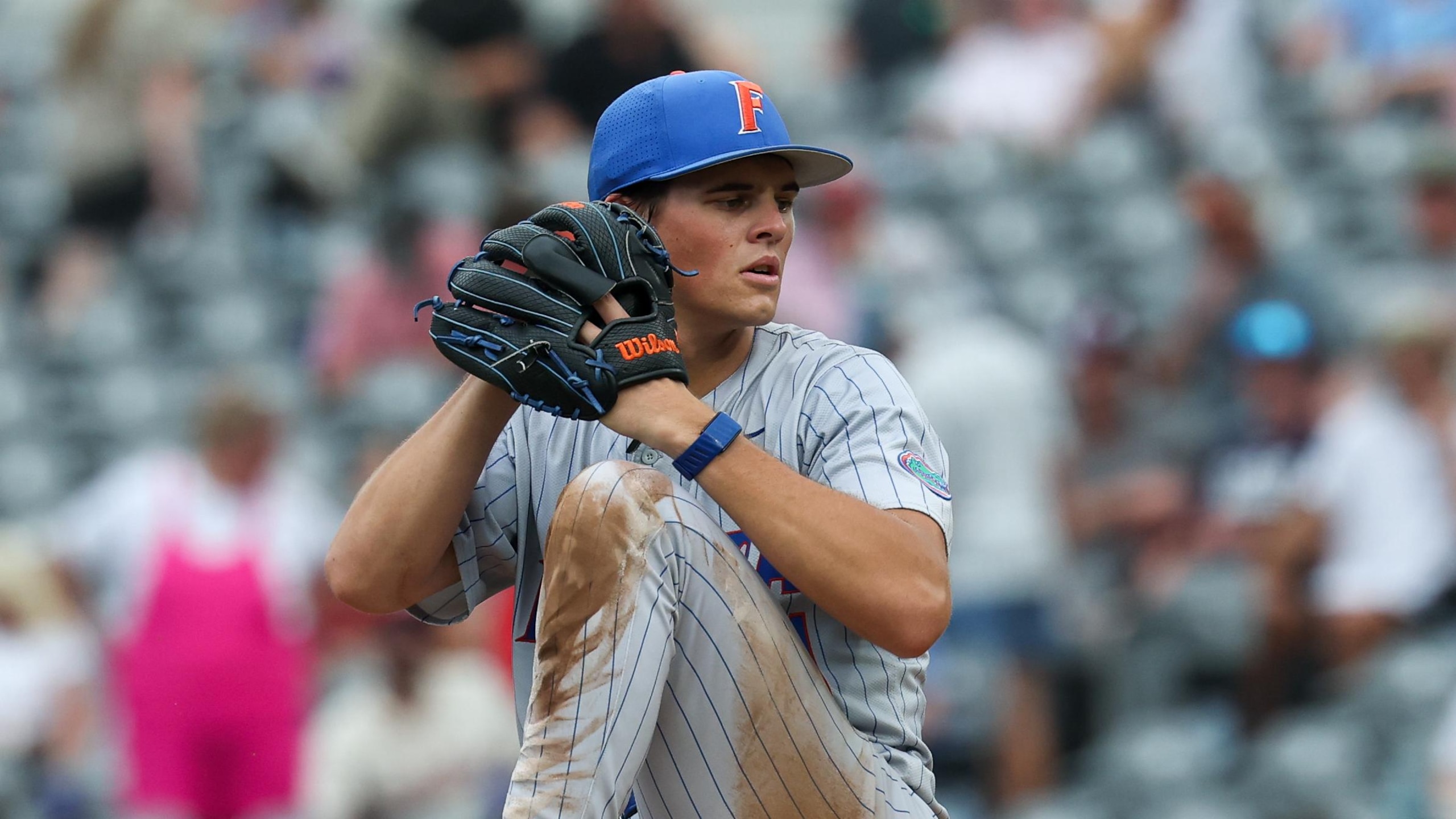
Height: 6'5" | Weight: 225 | Bats/Throws: R/R
Pro Comp: Hurston Waldrep
Liam Peterson stepped right into the Florida rotation as a true freshman, flashing swing-and-miss stuff with 77 strikeouts in 63 innings, but also battling inconsistent command en route to a 6.43 ERA and 14.6 percent walk rate.
Now with three seasons under his belt, he is essentially a more advanced version of that same pitcher. He has excellent pure stuff, but falls into the "effectively wild" category. He logged a 4.59 ERA with 111 strikeouts in 84.1 innings this spring, but it was accompanied by a 9.8 percent walk rate and a level of inconsistency that kept him from being a true top-tier arm in this class.
He is a wild card, but one with frontline upside if he can find a consistent arm slot that works for him and improve his overall command, and the pure stuff is enough to bet on upside.
Grade: A
There might be no better place for a college pitcher with considerable arm talent who needs some further refinement to land than Cleveland. It's interesting that they liked him more than Coastal Carolina ace Cameron Flukey, but they have more than earned the benefit of the doubt when it comes to identifying pitching talent.
20. Boston Red Sox: SS Jake Schaffner, North Carolina
20 of 40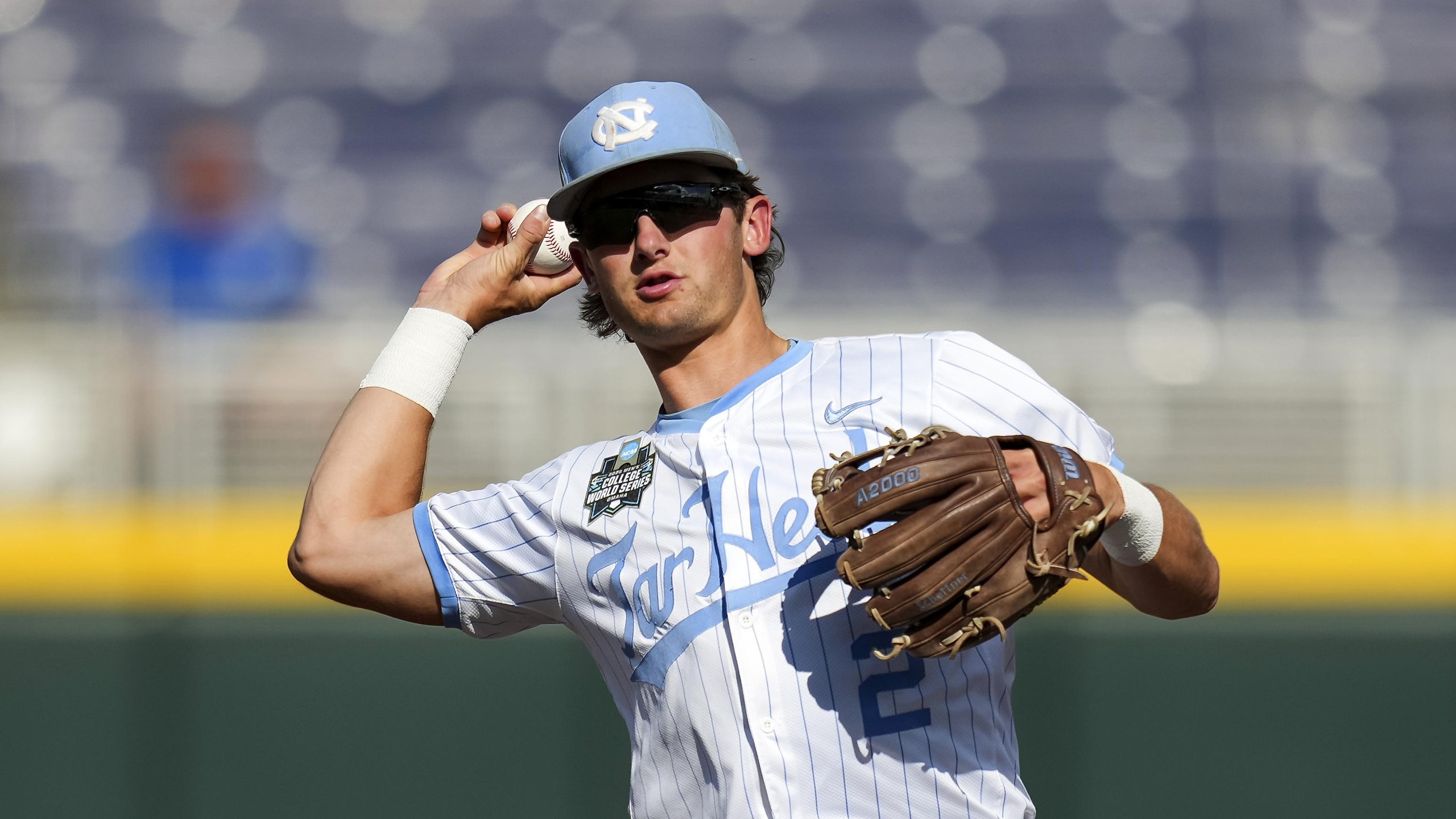
Height: 6'2" | Weight: 175 | Bats/Throws: L/R
Pro Comp: Cavan Biggio
After transferring from North Dakota State to North Carolina for his junior season, Jake Schaffner took the major step up in competition in stride. He hit .356/.467/.552 with 33 extra-base hits and 26 steals while helping lead the Tar Heels to the College World Series finals.
His power plays more gap-to-gap than over-the-fence, but he has an advanced approach at the plate, good bat-to-ball skills and plus speed to make the most of the offensive tools he does possess.
He might not have the arm to stick at shortstop, though he is a reliable defender who should begin his pro career there, with second base the most likely destination if he moves down the defensive ladder.
Grade: D
With limited power upside and defensive tools that are not a lock to stick at shortstop, it's hard to understand what the Red Sox saw here that seemingly no one else did. He was generally viewed as a late-second or early-third round candidate, so he will need to exceed expectations.
21. San Diego Padres: RHP Coleman Borthwick
21 of 40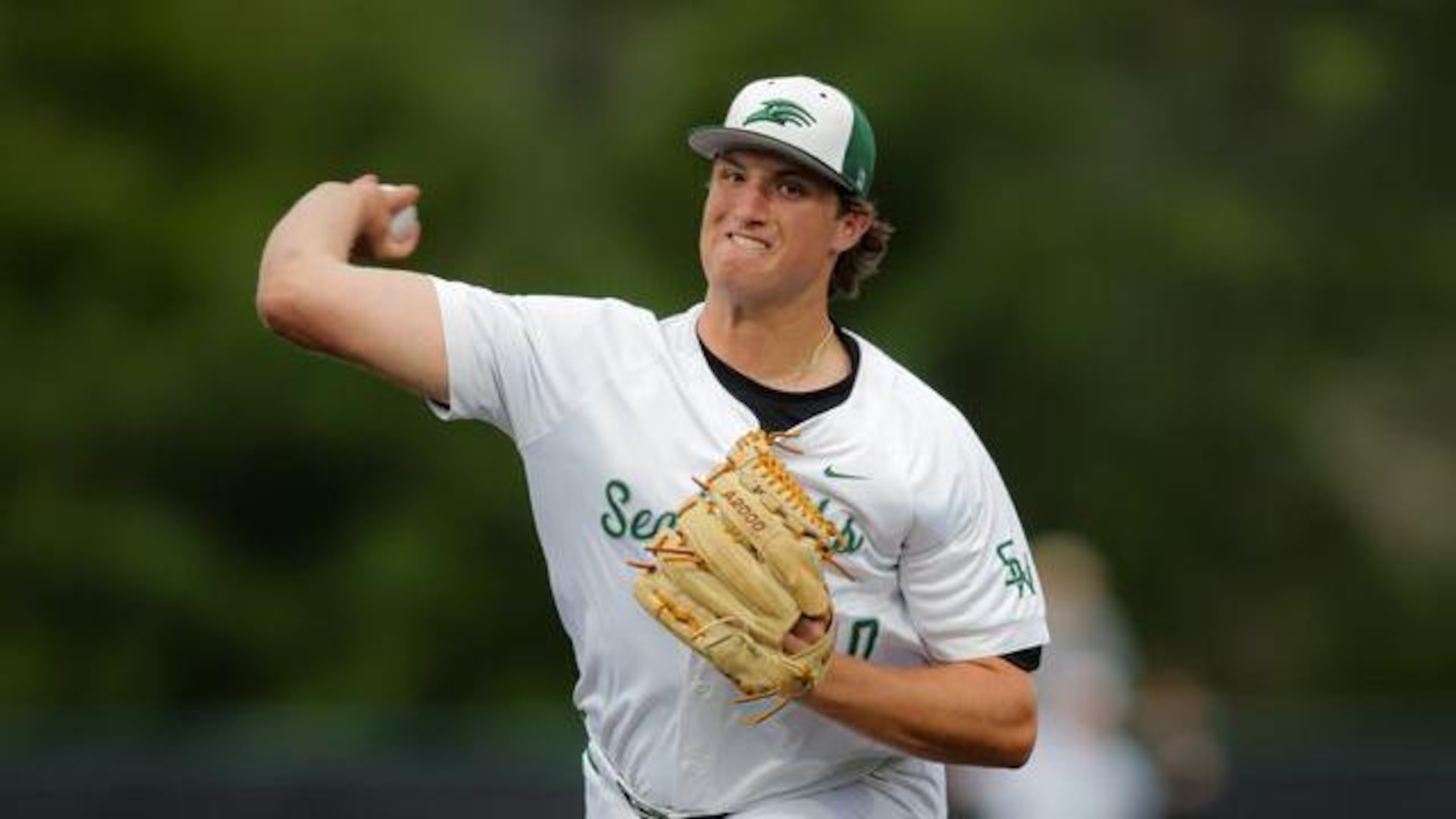
Height: 6'6" | Weight: 260 | Bats/Throws: R/R
Pro Comp: Tanner Houck
Coleman Borthwick already looks the part of a big league workhorse with a massive 6'6" frame, premium fastball velocity and good command, and he is a much better athlete than his size might suggest, playing both ways for the U-18 National Team last summer and hitting .300.
His fastball already touches 100 mph and plays up thanks to a low arm slot, and he gets a good bite on a slider that can be a swing-and-miss pitch when it's on. His changeup lags behind those two pitches, but he has some feel for it and it should develop into at least an average third pitch to round out his repertoire.
Unlike most high school pitchers where projection is a central part of the conversation, he is a finished product physically. With his advanced pitchability, he is a safe bet to one day slot into a big league rotation, and there is a frontline ceiling if everything clicks.
Grade: B+
With Gio Rojas off the board, I wonder how seriously the Padres considered prep slugger Bo Lowrance here, as he would have given them the high-ceiling bat the system is sorely lacking right now. That said, high school pitching is their lane and Borthwick as the No. 2 prep arm is completely defensible.
22. Detroit Tigers: RHP Cameron Flukey, Coastal Carolina
22 of 40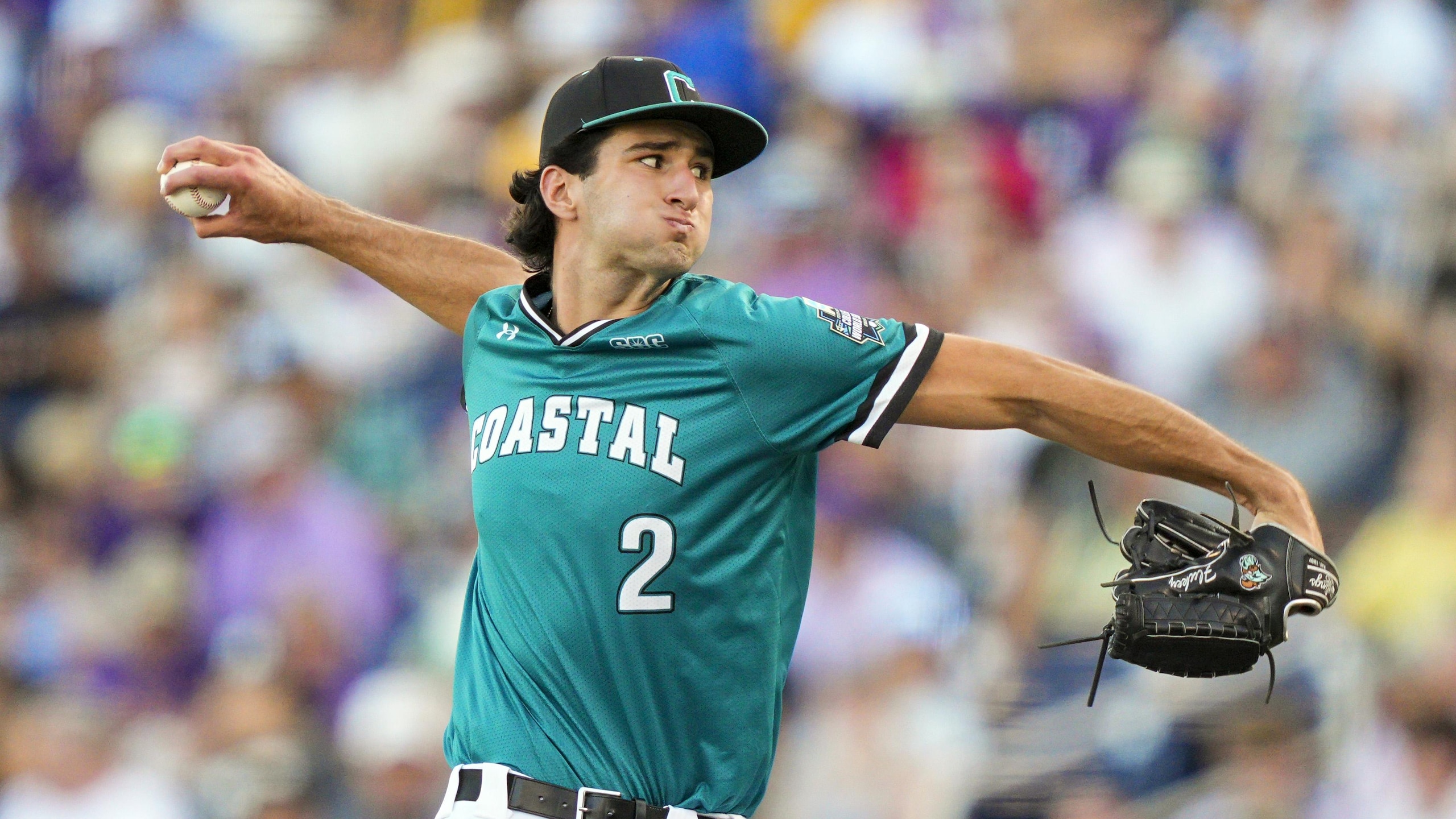
Height: 6'6" | Weight: 210 | Bats/Throws: R/R
Pro Comp: Tyler Glasnow
Cameron Flukey went 8-2 with a 3.19 ERA and 118 strikeouts in 101.2 innings as a sophomore to help pitch Coastal Carolina to a College World Series runner-up finish, and he threw six innings of four-hit, one-run ball going head-to-head with Kade Anderson in Game 1 of the finals.
With that foundation, he entered the spring squarely in the conversation to be the top pitcher in the 2026 draft class, but a stress fracture in his rib cage ended up sidelining him for most of the season. He returned in late April and made six appearances post-injury, but he didn't pitch beyond the fourth inning in any of them and finished his junior campaign with a 4.13 ERA in 24 innings.
He still has elite arm talent, with a fastball that regularly bumps triple-digits and a good feel for spinning two distinct breaking pitches. There is also projection remaining in his lanky frame, giving him potentially untapped upside.
Grade: A
The Tigers might have walked away with the best pitcher in this draft class if the injury that plagued Flukey this spring proves to be a blip on the radar and he returns to the ace-caliber form he showed in the past. There are questions, but this could be steal-of-the-draft value for a team that has a strong developmental pipeline in place.
23. Chicago Cubs: RHP Cade Townsend, Ole Miss
23 of 40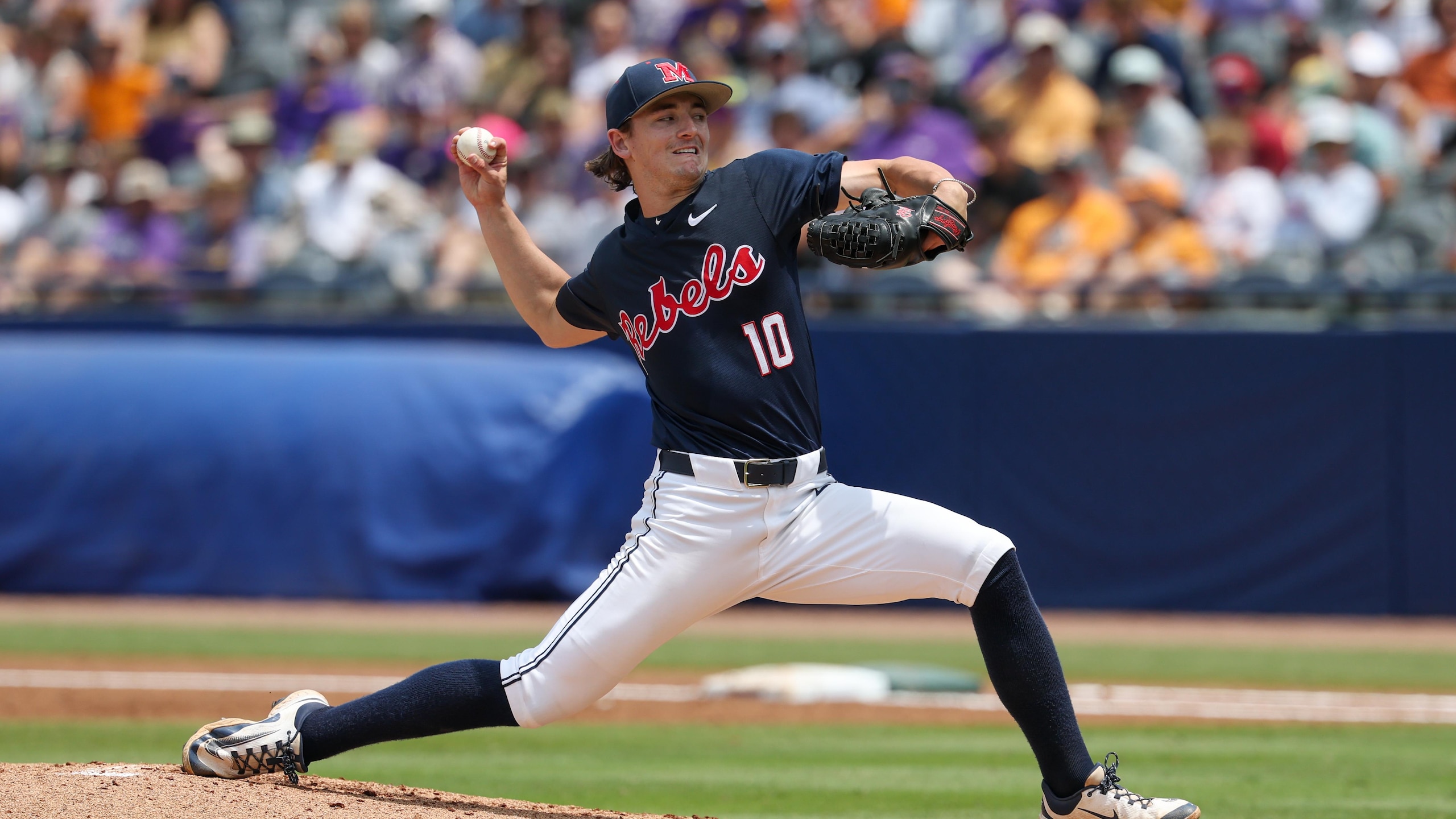
Height: 6'1" | Weight: 185 | Bats/Throws: R/R
Pro Comp: Clarke Schmidt
An eye-popping appearance against LSU in the 2025 SEC tournament where he touched 98 mph with his fastball and showcased a wipeout slider helped elevate expectations for Cade Townsend heading into his sophomore season, despite finishing his college debut with a 6.35 ERA in 34 innings.
He indeed took a significant step forward as a draft-eligible sophomore, logging a 3.94 ERA with 88 strikeouts in 64 innings, and lowering his walk rate from an untenable 13.1 percent clip as a freshman to a more manageable 8.0 percent rate.
While he has plus stuff and a legitimate five-pitch repertoire, he is undersized with some effort in his delivery, so there is some reliever risk. He is athletic enough to potentially mitigate that risk, and the stuff is good enough across the board to be worth taking a chance on.
Grade: B-
Townsend fit right into this range of the draft, so this is not a reach, but he comes with more significant question marks than Tegan Kuhns, Taylor Rabe and Logan Reddemann if his medicals were clean. The arm talent is undeniable, but the Cubs glaring need for pitching up and down the system made a higher floor more appealing here.
24. Seattle Mariners: 3B Ace Reese, Mississippi State
24 of 40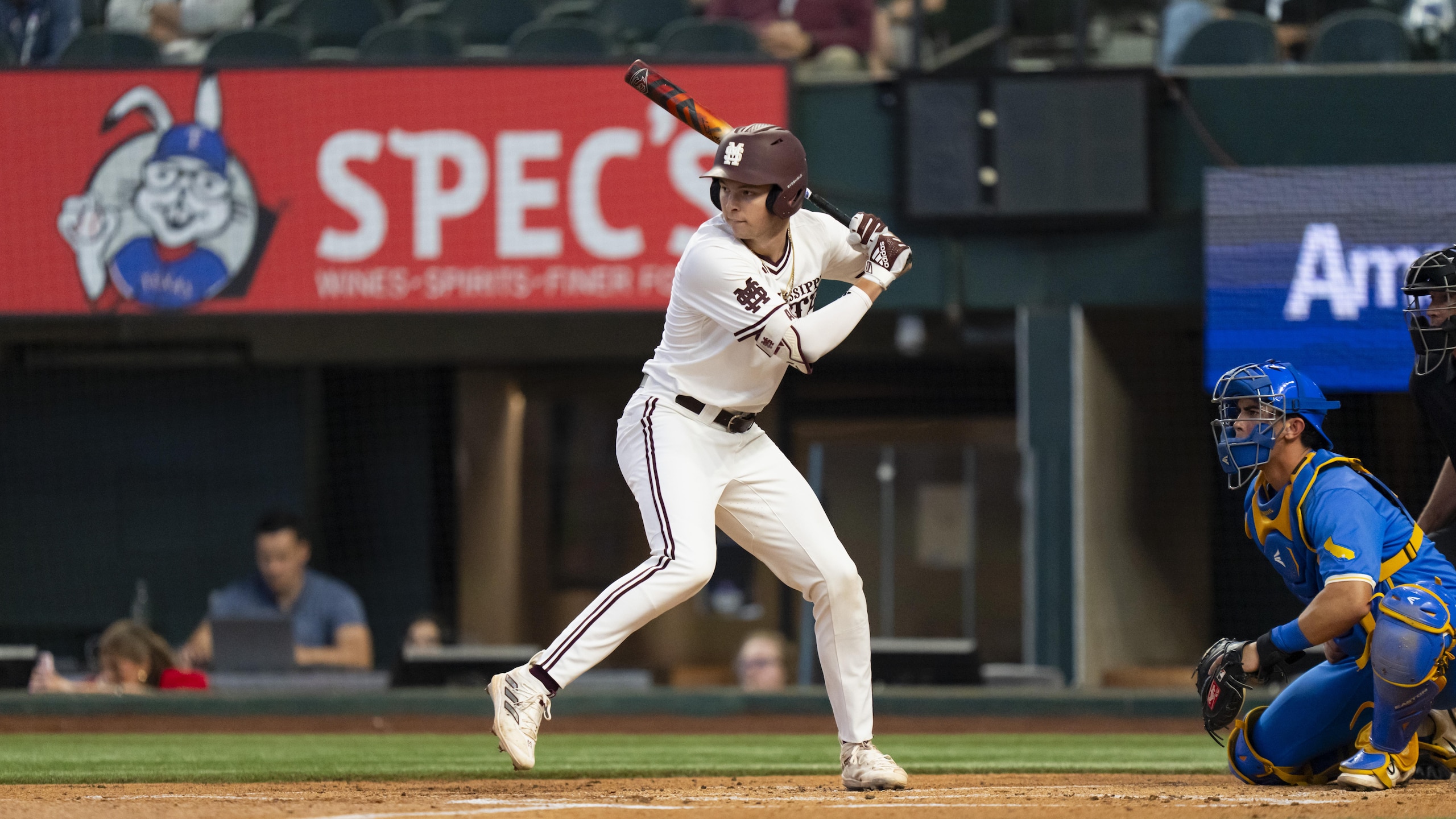
Height: 6'4" | Weight: 220 | Bats/Throws: L/R
Pro Comp: Max Muncy
Ace Reese firmly established himself as one of the best power hitters in the country over the last two seasons with 45 home runs in 119 games, and his .993 OPS and 12 long balls in 30 games during SEC play this spring were the cherry on top.
He does have some swing-and-miss to his game, but he took a positive step toward offsetting it this spring by raising his walk rate from 9.9 to 14.0 percent, and there is still room for him to develop an average or better hit tool to go along with his impact over-the-fence production.
A lack of quickness and range at the hot corner could ultimately mean a move across the diamond to first base or to left field, but his hands and arm are good enough to at least give him a look at third base to begin his pro career.
Grade: A
The Mariners have not taken a college hitter with their first pick since Evan White in 2017, and they chose the right guy to buck that trend. Reese could have gone at the back of the top 10, especially for a team chasing his offensive upside and not hoping for a clean fit at third base. This was a best-available pick and a good one for an organization with one of the deepest systems in baseball.
25. Milwaukee Brewers: SS Trey Ebel, Corona HS (CA)
25 of 40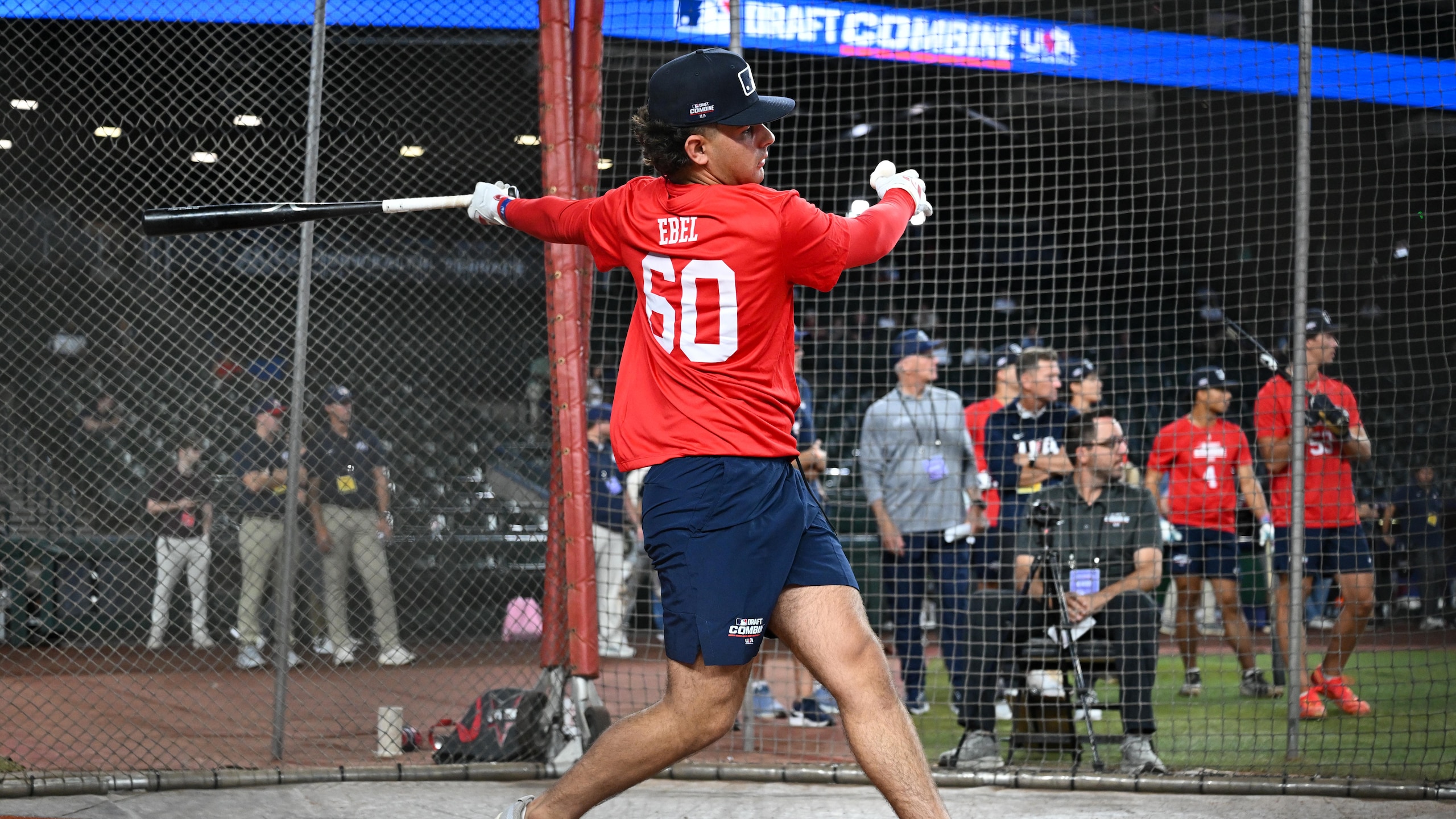
Height: 6'0" | Weight: 180 | Bats/Throws: R/R
Pro Comp: Santiago Espinal
Not unlike his brother Brady, who was taken No. 32 overall in the 2025 draft, Trey Ebel has the sort of polished all-around game and high baseball IQ one might expect from someone who grew up around the game, since his father is Dodgers third base coach Dino Ebel.
An above-average hit tool and solid defensive skills drive his present value, and he has a good understanding of the strike zone with a line-drive approach and gap power.
He might not have the quick-twitch athleticism to stick at shortstop, with second base his likely alternative, and the profile overall is more floor than ceiling for a high school player, though one that could outplay his raw tools.
Grade: D
With a wealth of prep shortstop talent still on the board, some with higher offensive ceilings, some with more promising defensive profiles and some with a better all-around collection of tools, this is a head-scratcher. The Ebel brothers get to play together now, and that's fun.
26. Atlanta Braves: OF Carter Beck, Indiana State
26 of 40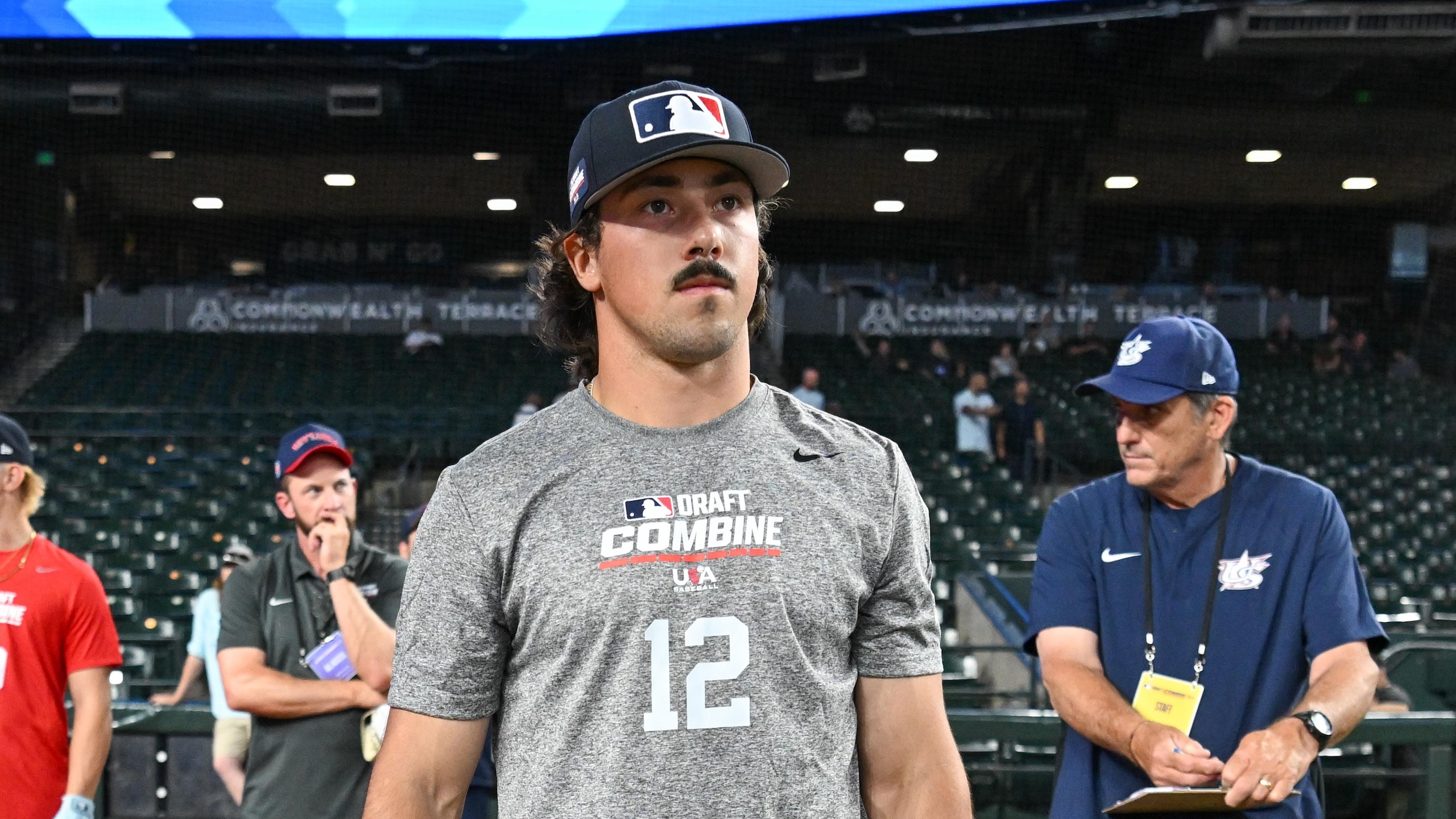
Height: 5'11" | Weight: 205 | Bats/Throws: L/R
Pro Comp: Nathan Church
The Canadian-born Carter Beck started his collegiate career at the University of Mary in North Dakota before turning in two highly productive seasons at Indiana State, including a junior campaign where he batted .346/.446/.637 with 17 doubles, 16 home runs and more walks (35) than strikeouts (33).
His strong frame and top-tier batted-ball metrics make him one of the analytical favorites of this draft class, and aside from a middling arm, he doesn't have a below-average tool with a good feel for hitting, playable power and good wheels.
He also performed extremely well during two summers swinging wood bats in the Western Canadian Baseball League. If he can stick in center field, he could end up being one of the under-the-radar standouts of this draft class.
Grade: B
It was an off-the-board pick relative to pre-draft rankings, and Sawyer Strosnider was still sitting there if they were set on the college bat demographic, but this could be a sneaky good selection. The Braves have uncovered some hidden gems taking the analytics route in recent years, and this could be another one.
27. New York Mets: RHP Carson Wiggins, Arkansas
27 of 40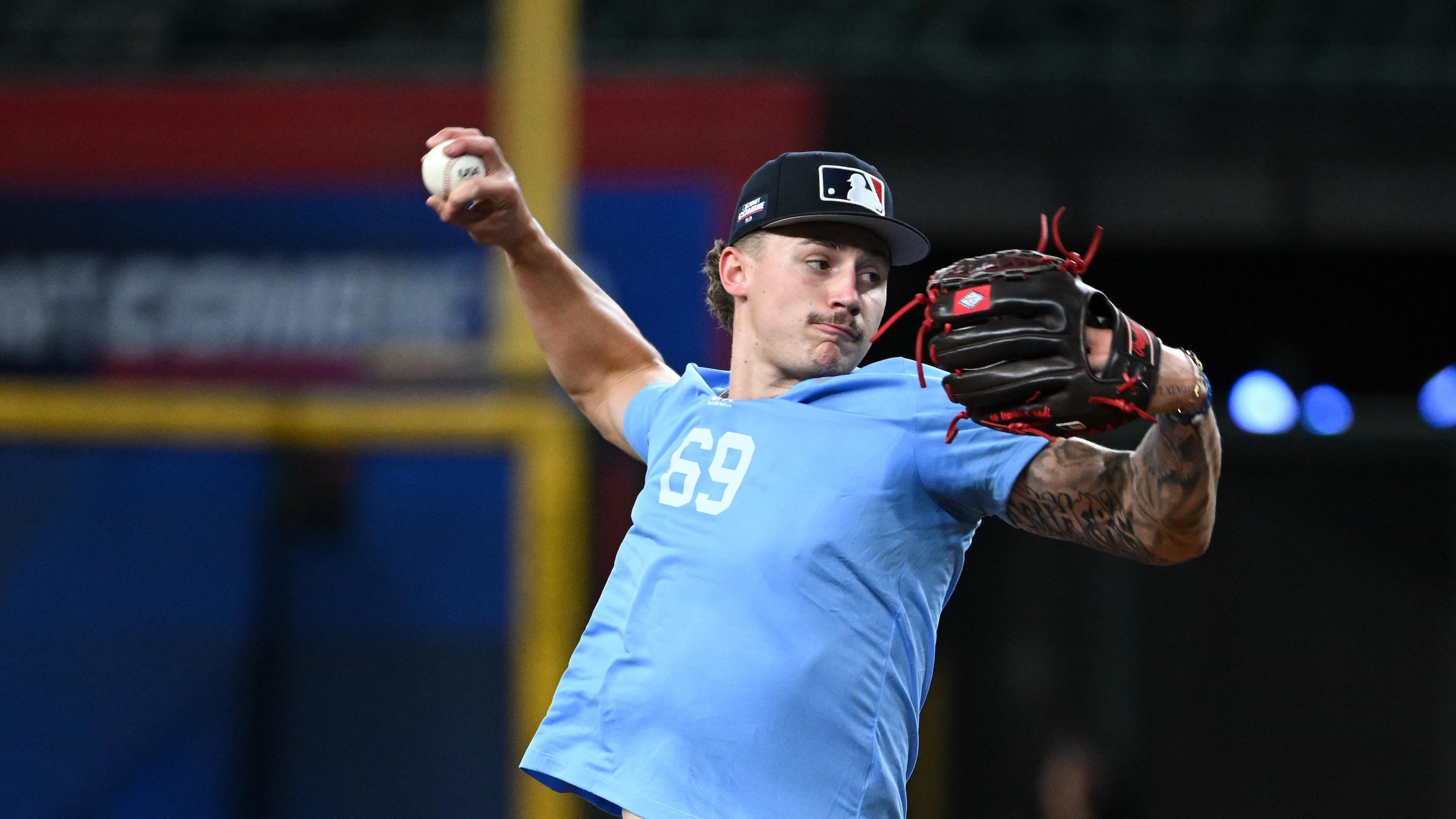
Height: 6'5" | Weight: 215 | Bats/Throws: S/R
Pro Comp: Mason Miller lite
There might not be a bigger wild card in the entire 2026 draft class than Carson Wiggins, who was a consensus top 100 draft prospect out of high school, but not viewed as signable, so he made his way to Arkansas where his older brother and current Cubs prospect Jaxon Wiggins also played.
His college track record is made up of 14 innings of relief work out of the bullpen as a freshman before he suffered an elbow injury and underwent an internal brace procedure that sidelined him for the remainder of that season and all of his sophomore campaign.
Before the injury, he logged a 3.21 ERA with 20 strikeouts and three saves in 14 appearances while bumping 102 mph with his fastball and backing it with a wipeout slider. That's tantalizing enough to make him a high-level draft prospect, even if the track record is almost entirely lacking.
Grade: B+
This would have been a questionable reach for almost any other team, but the Mets don't pick again until No. 92 overall, so rolling the dice on that huge ceiling here made a ton of sense. There is still a chance he develops as a starter, but the fastball-slider pairing could be electric out of the bullpen.
28. Houston Astros: RHP Jack Radel, Notre Dame
28 of 40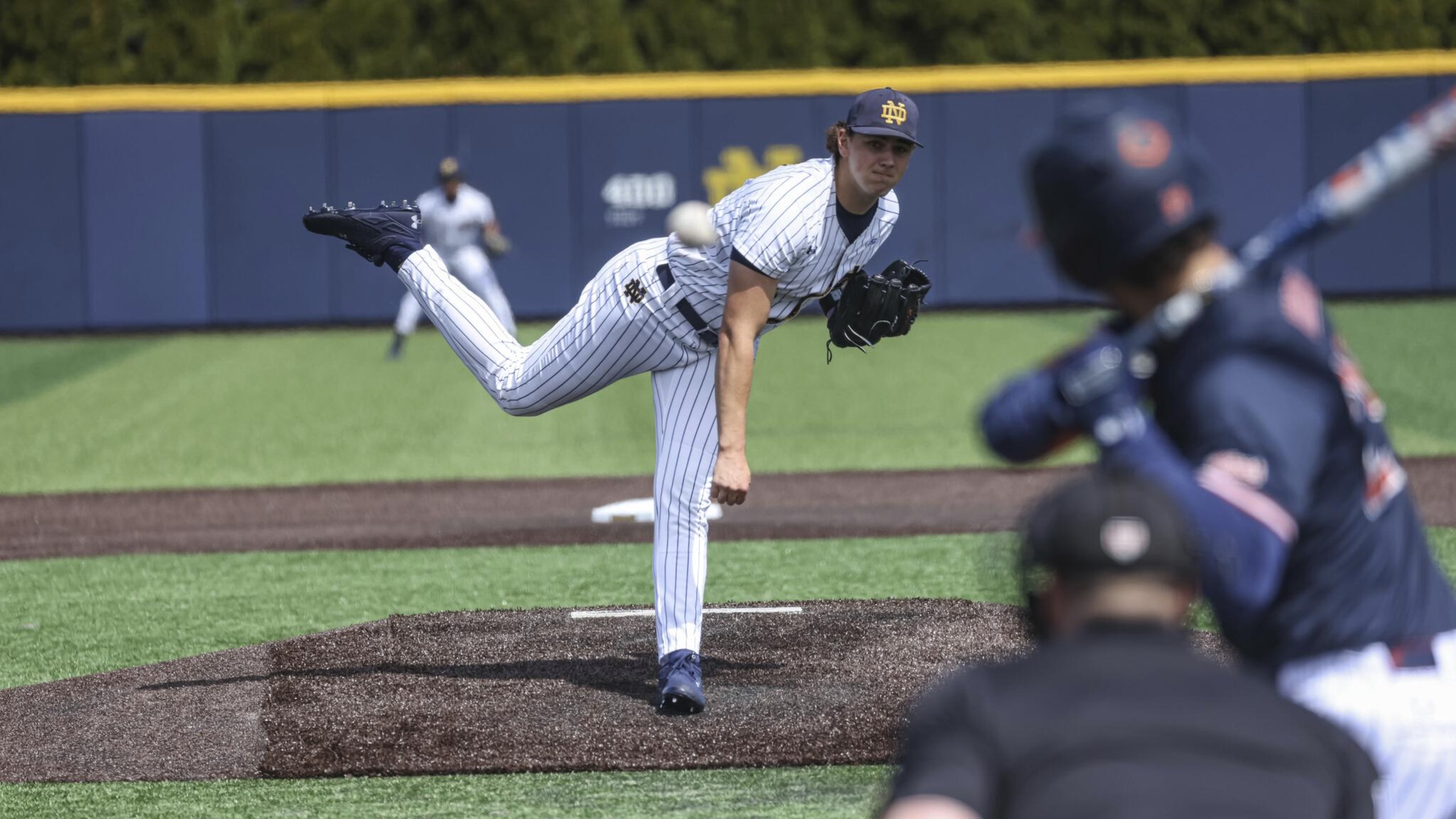
Height: 6'5" | Weight: 250 | Bats/Throws: R/R
Pro Comp: Kyle Gibson
After three seasons as a weekend starter at Notre Dame, Jack Radel offers one of the highest floors from this year's college pitching crop. With his fastball velocity now sitting in the mid-90s and improved command of his secondary stuff, he has raised his profile considerably since rating as the top high school prospect in South Dakota in 2023.
He struck out 99 batters in 123.1 innings during his first two collegiate seasons, but started missing more bats this spring with a 116-to-22 strikeout-to-walk ratio over 87.2 innings and logged a career-best 3.29 ERA and 1.03 WHIP as a reliable workhorse.
He doesn't have a true plus pitch, but with good command of his entire five-pitch repertoire and a strong, durable frame, he is a near lock to remain a starter in pro ball and move quickly toward a potential middle-of-the-rotation ceiling.
Grade: B
Going floor over ceiling here after reaching a bit for Logan Hughes at No. 17 puts the Astros in an interesting position where they have potentially pushed some money down the board for an above-slot deal in the third or fourth round. Nothing wrong with a relatively safe bet to plug in as a No. 4 starter down the road.
29. San Francisco Giants: LHP Carson Bolemon, Southside Christian School (SC)
29 of 40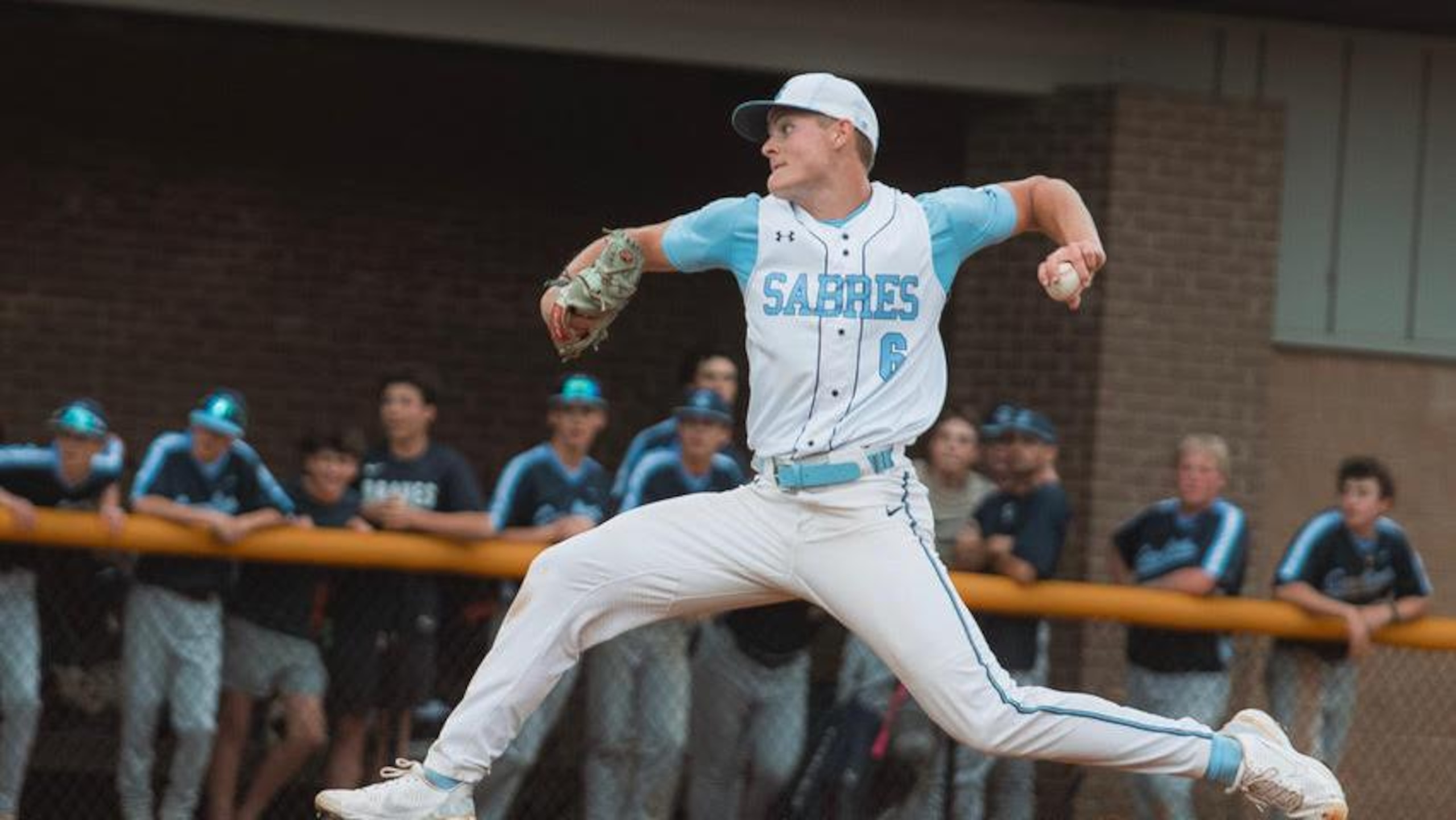
Height: 6'4" | Weight: 210 | Bats/Throws: R/L
Pro Comp: Ryan Weathers
After striking out 101 batters in 42.2 innings without allowing an earned run as a junior, followed by a terrific run with the U-18 National Team last summer, Carson Bolemon was the top prep arm in the country heading into his senior season.
His top-end velocity didn't come as easy this spring and he was hit harder than expected, but he still managed to repeat as South Carolina's Gatorade Player of the Year.
With a polished four-pitch mix and the best overall command from this year's high school pitching crop, he remains an intriguing overall prospect package, even if there were some bumps in the road during his senior season. It's worth noting that he had an internal brace procedure in eighth grade, though there have been no secondary issues to date.
Grade: A
Slam dunk for the Giants pairing Jackson Flora at No. 4 overall with a pitcher who has the ceiling to be the best prep arm in this class. The junior-year version of him might have been the first pitcher taken in this class, college or high school, making this a "buying low" opportunity that could pay huge dividends.
30. Kansas City Royals: RHP Taylor Rabe, Ole Miss
30 of 40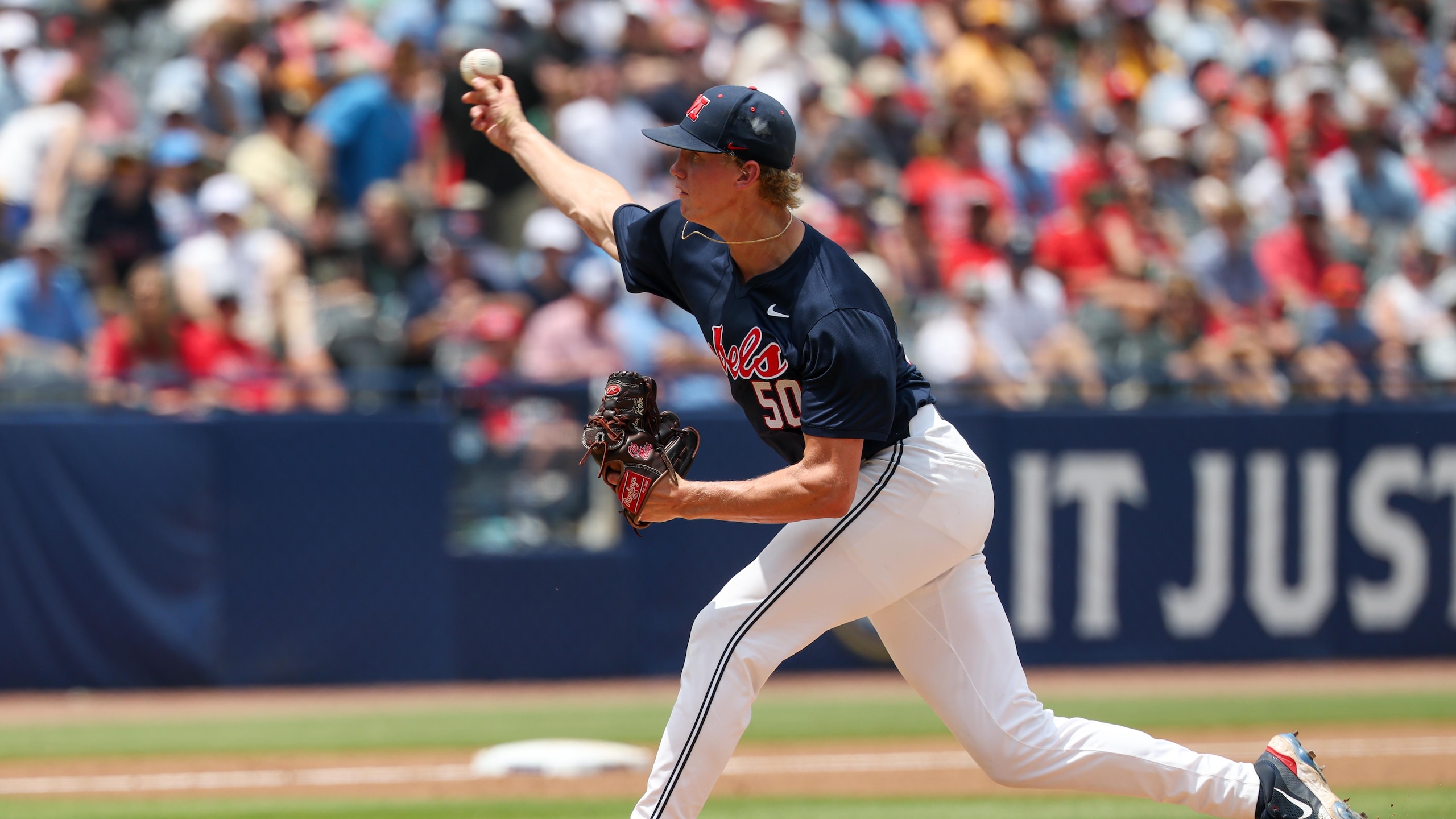
Height: 6'5" | Weight: 200 | Bats/Throws: R/R
Pro Comp: George Kirby
Taylor Rabe began the 2026 season as a multi-inning reliever and spot starter and ended it arguably overtaking Cade Townsend as the pitcher on the staff for an Ole Miss team that made the College World Series.
Over his final four starts, he had a 1.46 ERA and allowed just 13 hits while racking up 37 strikeouts in 24.2 innings. That included an absolute gem against Alabama during the final series of the regular season when he allowed just one hit and one walk with 13 strikeouts over six shutout innings.
His fastball is one of the best in the class, sitting in the upper 90s and touching triple-digits with good life, and his slider and cutter can both be swing-and-miss offerings. With a 105-to-15 strikeout-to-walk ratio over 76 innings, command is also a plus, with the biggest question mark simply being his lack of track record in a starting role.
Grade: A
After the way he dominated hitters late in the season, facing some elite competition, Rabe had a solid case as the second-best college pitcher in this draft after Jackson Flora. This is more or less where he was slotted in most mock drafts, so the major above-slot move that is likely to come from the early reach for Zion Rose is still coming, but this is a great add to a thin Kansas City system.
31. Arizona Diamondbacks: RHP Blake Bryant, Citizens Christian Academy (GA)
31 of 40Height: 6'5" | Weight: 180 | Bats/Throws: R/R
Pro Comp: A.J. Burnett
With a projectable, athletic frame, a plus fastball that already tops out at 97 mph with good life and two distinct breaking pitches, Blake Bryant offers one of the more complete packages from this year's crop of high school right-handers.
His feel for spin helps separate him from other pitchers in his demographic, and his fastball, curveball and slider are all present plus pitches, while he also has some good fade on a changeup that looks like a potential fourth solid offering.
Physical development should help him find more consistency in his premium stuff, and his well-rounded arsenal of pitches gives him a middle-of-the-rotation outlook with potential for more depending on how he matures.
Grade: B+
A high-ceiling prep pitcher to pair with high-floor college catcher Ryder Helfrick is a textbook start to the draft for the D-backs, though there was a wealth of college arm talent still on the board and the Arizona system is somewhat lacking in pitching talent that is close to the big leagues. Still, a great early haul for Arizona.
32. St. Louis Cardinals: RHP Tegan Kuhns, Tennessee
32 of 40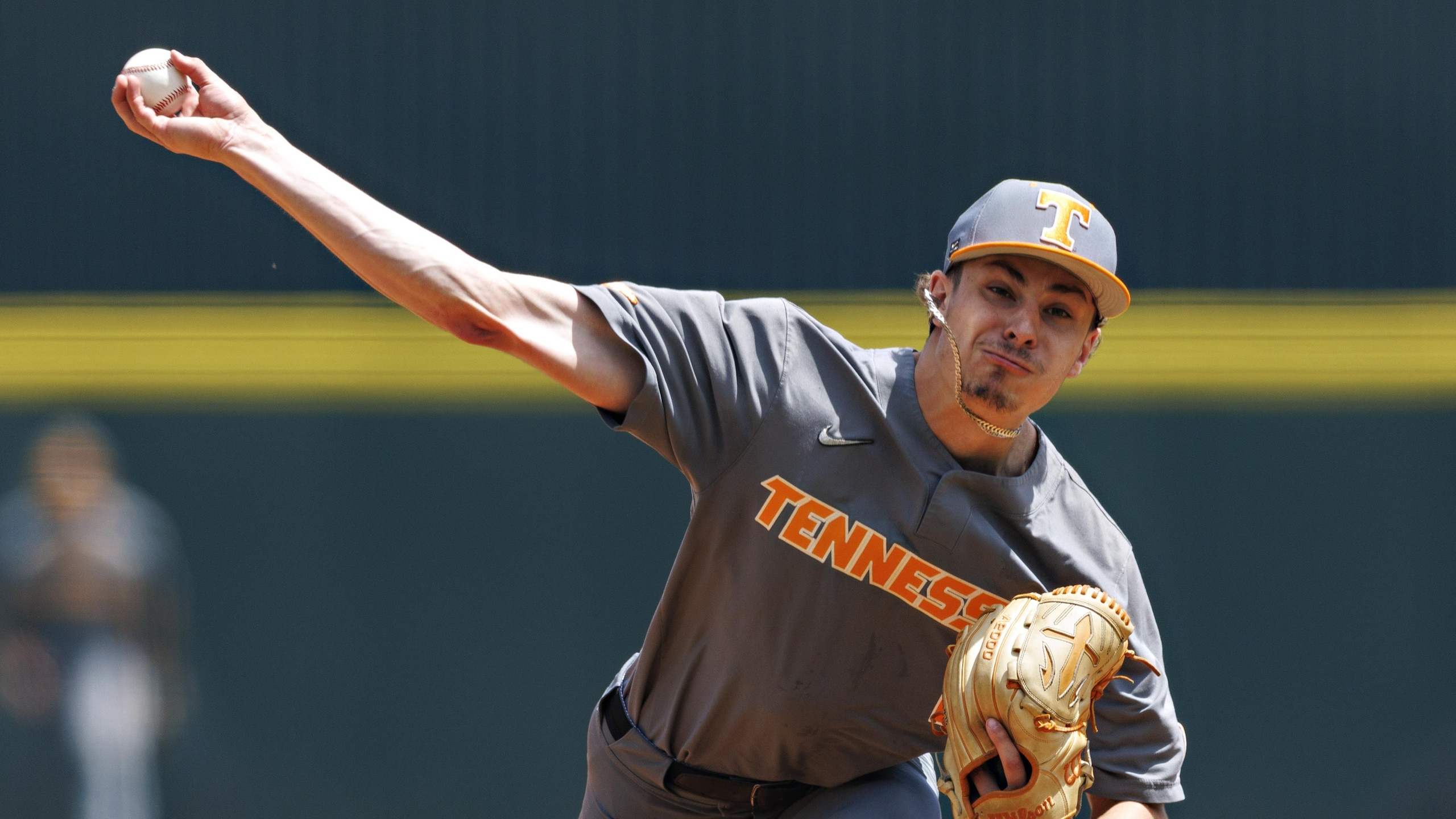
Height: 6'3" | Weight: 195 | Bats/Throws: R/R
Pro Comp: Bryan Woo
Slotted at No. 54 on Baseball America's Top 500 draft rankings in 2024, Tegan Kuhns was one of the top high school arms from his class to make it to campus. He ended up in the weekend rotation as a freshman, then logged a 1.35 ERA and 20-to-1 strikeout-to-walk ratio over 13.1 innings in the Cape Cod League.
He leaned heavily on his upper 90s fastball and hammer curveball, and will need to develop his slider and changeup into more consistent options at the next level. The two-pitch approach worked for him this spring, though, as he finished with a 3.56 ERA and 106 strikeouts in 81 innings while showing well in SEC play.
There is more physical projection in his profile than most college pitchers, and his upside hinges on the development of a quality third pitch and the continued refinement of his command, but the pieces are there for him to wind up as an impact starter.
Grade: A
Honestly, it would not have been that big of a reach if the Cardinals had taken Kuhns with their first pick at No. 13 overall, and his fastball-slider pairing was as overpowering as any arsenal in college baseball this spring when it was at its best. The Cardinals often lean toward high-floor, pitchability college arms, so it's interesting to see them take a chance on upside and projection here.
33. Tampa Bay Rays: SS Taj Marchand, James Island HS (SC)
33 of 40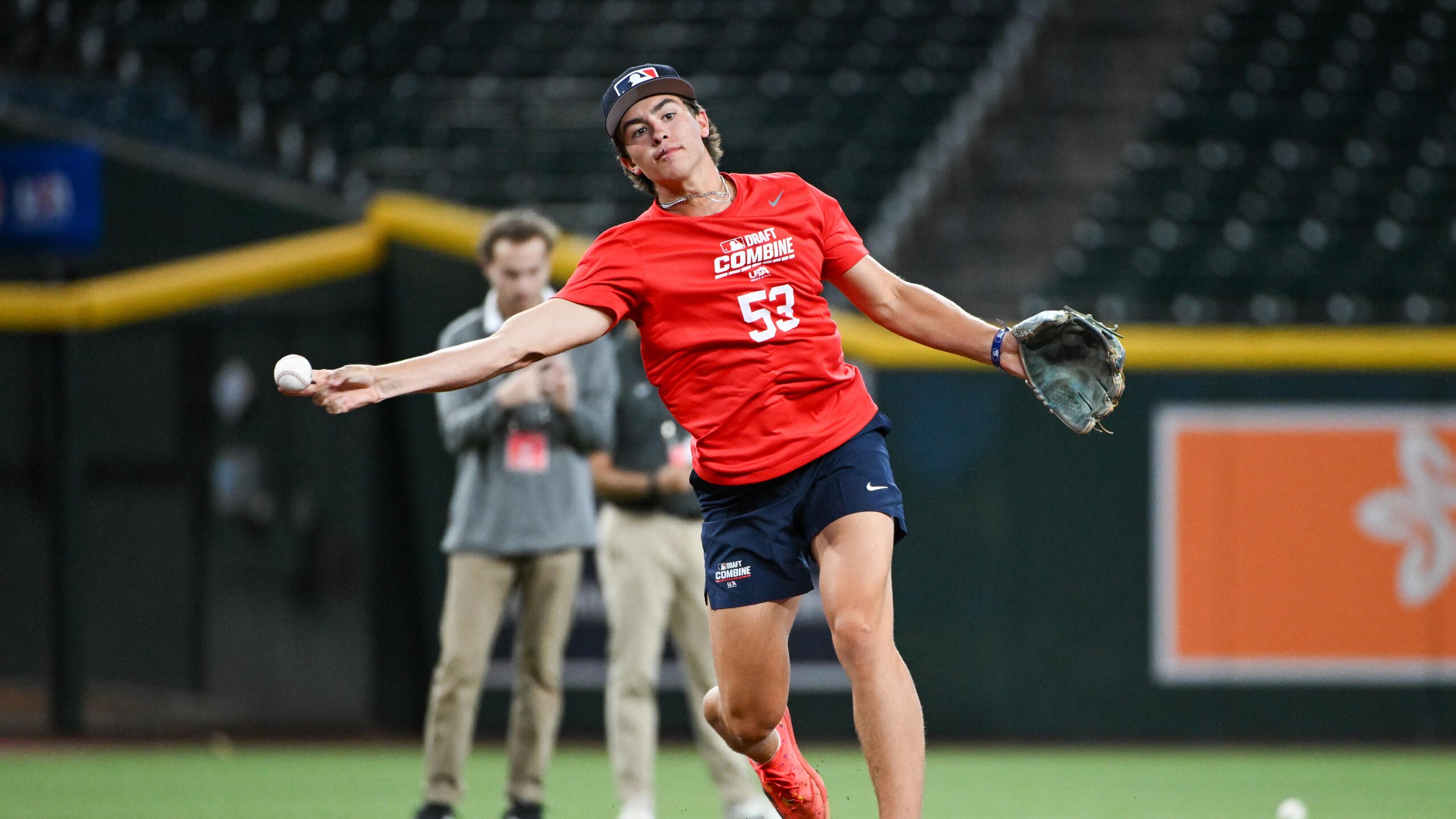
Height: 6'2" | Weight: 190 | Bats/Throws: R/R
Pro Comp: young Marcus Semien
An unorthodox swing has made Taj Marchand one of the more polarizing prospects among this year's top-tier talent, as he has a lot of moving parts in his pre-swing mechanics and ends up frequently hitting off his front foot.
His good hand control and bat speed still allow him to barrel up the ball frequently, and he has a strong record of production on the showcase circuit, but the mechanical disconnect is something that could be exploited at the next level. He also has an aggressive approach and can expand the zone, so his overall approach will need to improve.
Despite those concerns, his strong batted-ball data and proven track record give him intriguing offensive upside if the swing can be smoothed out, and he is a solid defender with instincts that help his average athleticism play up at shortstop and enough arm to handle a move to third base.
Grade: B-
The Rays love a toolsy prep shortstop with untapped upside, but they already got the premium version of that in this draft class with Grady Emerson at No. 2 overall. My guess is Marchand was much higher on their board than this draft slot and they couldn't say no, but there were a lot of quality arms still available for a team that develops pitching talent as well as anyone.
34. Chicago White Sox: SS Landon Thome, Nazareth Academy (IL)
34 of 40Height: 6'0" | Weight: 185 | Bats/Throws: L/R
Pro Comp: Michael Busch
Landon Thome does not have the same imposing physical stature as his Hall of Fame father Jim Thome, but he is one of the best all-around hitters in the 2026 prep class thanks to his quick hands, strong pitch recognition skills and natural loft in his swing.
He stands out more for his pure hitting ability than his raw power right now, but both tools project to be above-average, giving him one of the more complete offensive profiles among the high school infielders and a chance to be a true impact bat.
Despite good footwork and reliable hands, he lacks the quickness to stick at shortstop, though he should have no problem settling in as a solid defender at second base or third base. He is also a better runner than his raw athleticism suggests, and he swiped 54 bases in 56 attempts this spring.
Grade: A
The White Sox love plucking prospects from their own backyard, and Nazareth Academy is less than 20 miles from Rate Field, so this was a match made in heaven. There was a lot of Thome buzz after the South Siders secured more bonus pool money in a trade with the Pirates, so this was a pick many were predicting.
35. New York Yankees: LHP Hunter Dietz, Arkansas
35 of 40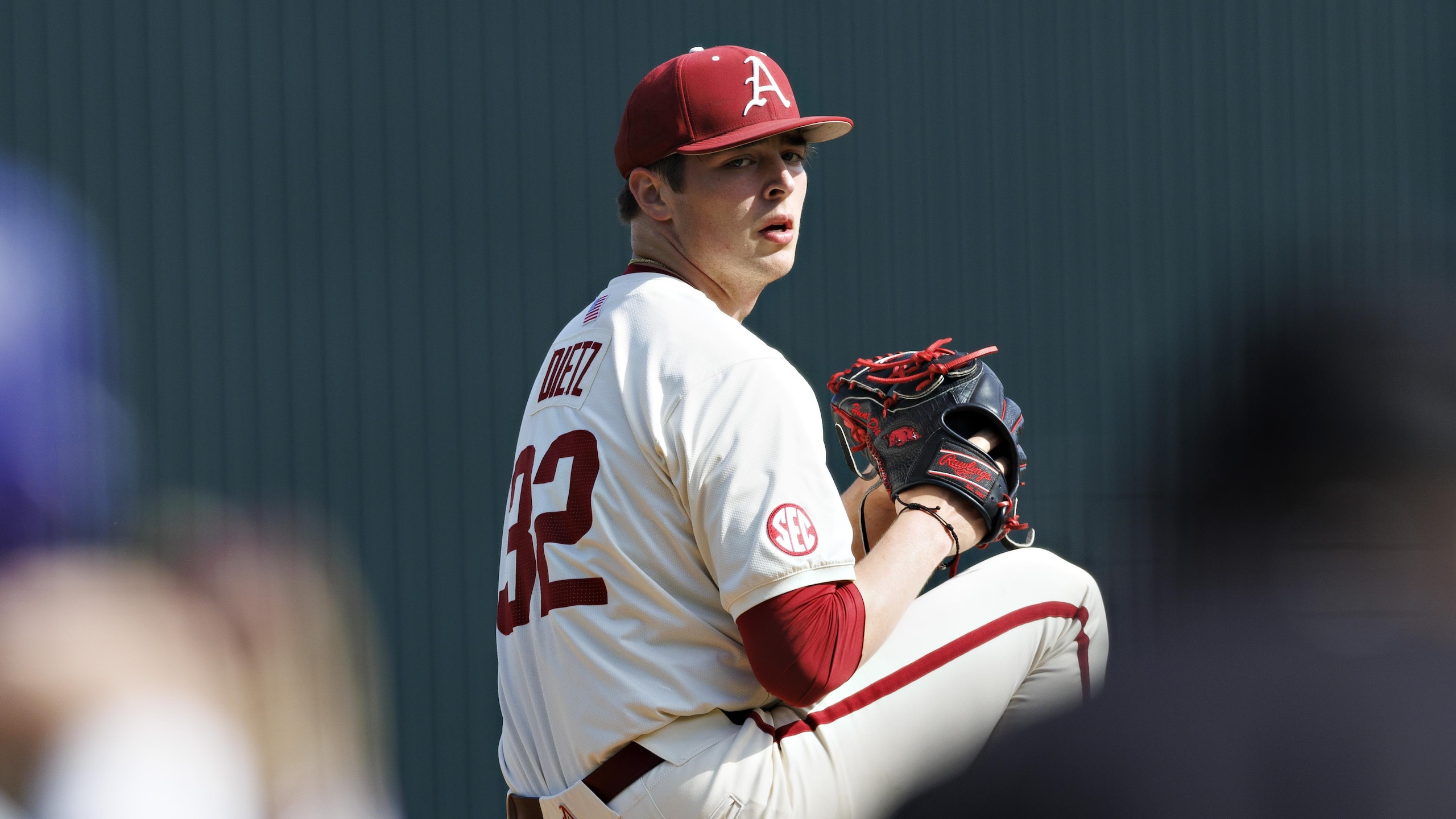
Height: 6'6" | Weight: 235 | Bats/Throws: R/L
Pro Comp: Nick Lodolo
Hunter Dietz was one of the better pitchers from the 2023 high school class to make it to campus, but his first two years at Arkansas were essentially a wash after a stress fracture in his throwing elbow required surgery and limited him to 1.2 innings total.
Back healthy this season, the big southpaw logged a 3.57 ERA with 131 strikeouts in 85.2 innings. That included 83 punchouts in 59.2 innings during conference play in the loaded SEC, and his combination of size and stuff gives him the highest ceiling of this year's college lefties.
The question, of course, is his lack of a track record beyond this season, and the severity of the injury that sidelined him for most of his freshman and sophomore campaigns.
Grade: A
Despite having their first pick moved back 10 spots, the Yankees still walked away with a pitcher many considered to be the top college lefty in this draft class. They have a great track record of developing oversized pitchers, and clearly didn't see anything glaring in his medicals, so this looks like a home run.
36. Philadelphia Phillies: SS Tyler Spangler, De La Salle HS (CA)
36 of 40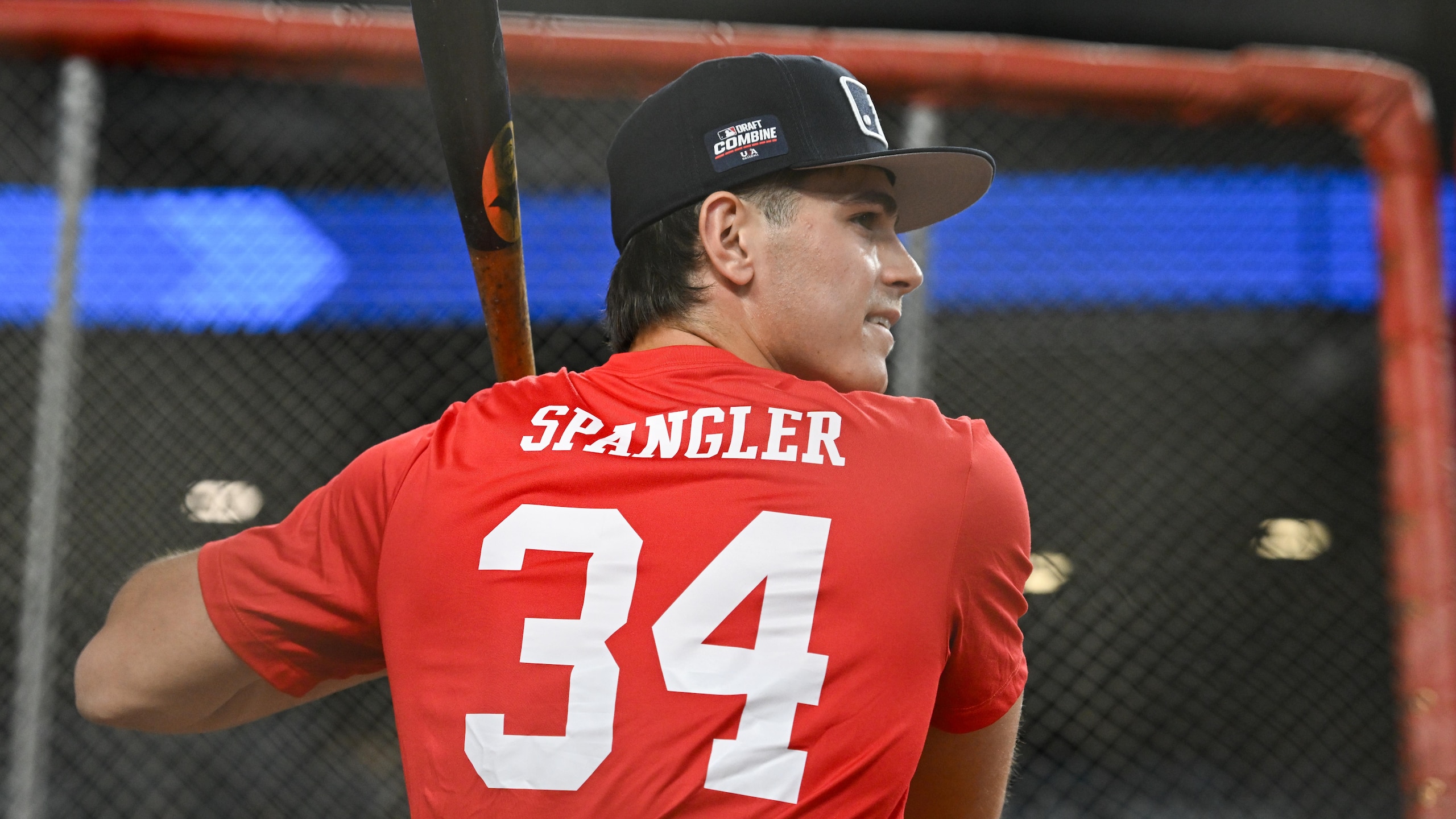
Height: 6'3" | Weight: 195 | Bats/Throws: L/R
Pro Comp: Didi Gregorius
One of the top performers on the showcase circuit last summer, Tyler Spangler spent most of his senior season sidelined with a back injury, though he did participate in the Draft Combine to give scouts a long-awaited look at his present skills.
He has a smooth, simple left-handed swing with significant physical projection remaining, giving him a potential plus-hit, plus-power offensive game when coupled with his polished approach and ability to make consistent hard contact.
He checks all the boxes to stick at shortstop now, with the caveat that he is projectable enough that he could outgrow the position, in which case his offensive profile and arm strength should be a clean fit at third base. Assuming the injury issues are in the rearview, he has one of the higher floors in the high school class.
Grade: A
Another team that made the most of its first pick, despite it being pushed back 10 slots, Spangler might have been a top-15 selection with a healthy senior season. He shares some similarities with Aidan Miller, albeit with less present power, and the upside here is well worth the health risk.
37. Colorado Rockies: C Daniel Jackson, Georgia
37 of 40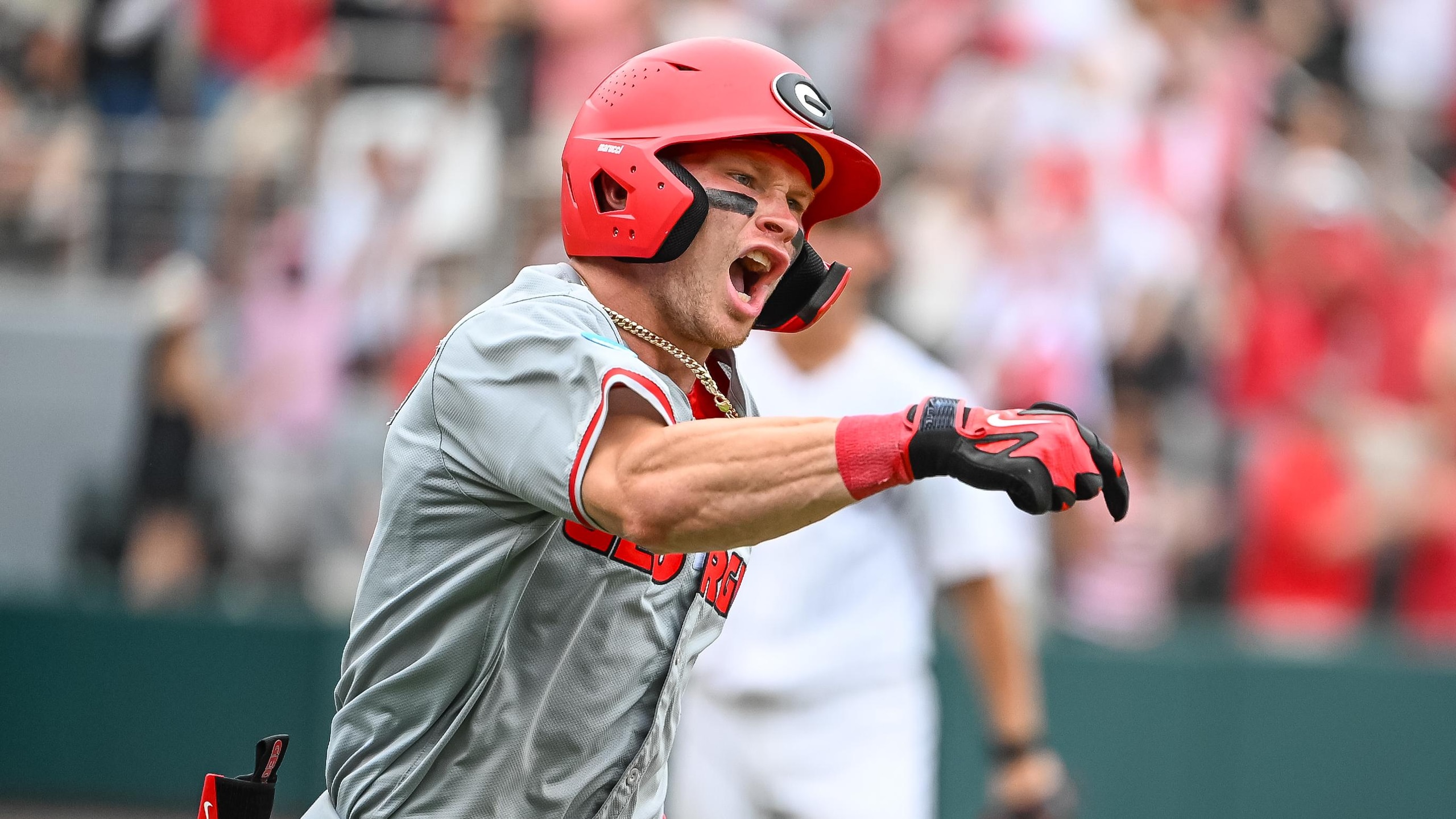
Height: 6'2" | Weight: 200 | Bats/Throws: R/R
Pro Comp: a more athletic Mike Napoli
After spending time at catcher, first base and both corner outfield spots while slugging 14 home runs as a sophomore, Daniel Jackson took over as Georgia's primary backstop and walked away with 2026 Golden Spikes honors.
With a .379/.473/.803 line that included 32 home runs and 87 RBI, he was one of the nation's most prolific power threats. He also added 26 steals in 28 attempts, showcasing the athleticism that made him a Swiss Army knife a year ago.
His 73 percent contact rate this spring likely speaks to an average-at-best hit tool at the next level, but his power is for real and plays to all fields. His defensive tools are good enough to get a chance to catch at the next level, but his bat will drive his value, and an early move to a corner outfield spot is not out of the question.
Grade: C
Love the player, hate the fit. If ever there was a team that should be prioritizing defense at the catcher position, it's the Rockies and their perennially inept pitching staff. Maybe they buy the defensive development, but this reads more like a grab the best bat on the board move.
38. Colorado Rockies: RHP Logan Reddemann, UCLA
38 of 40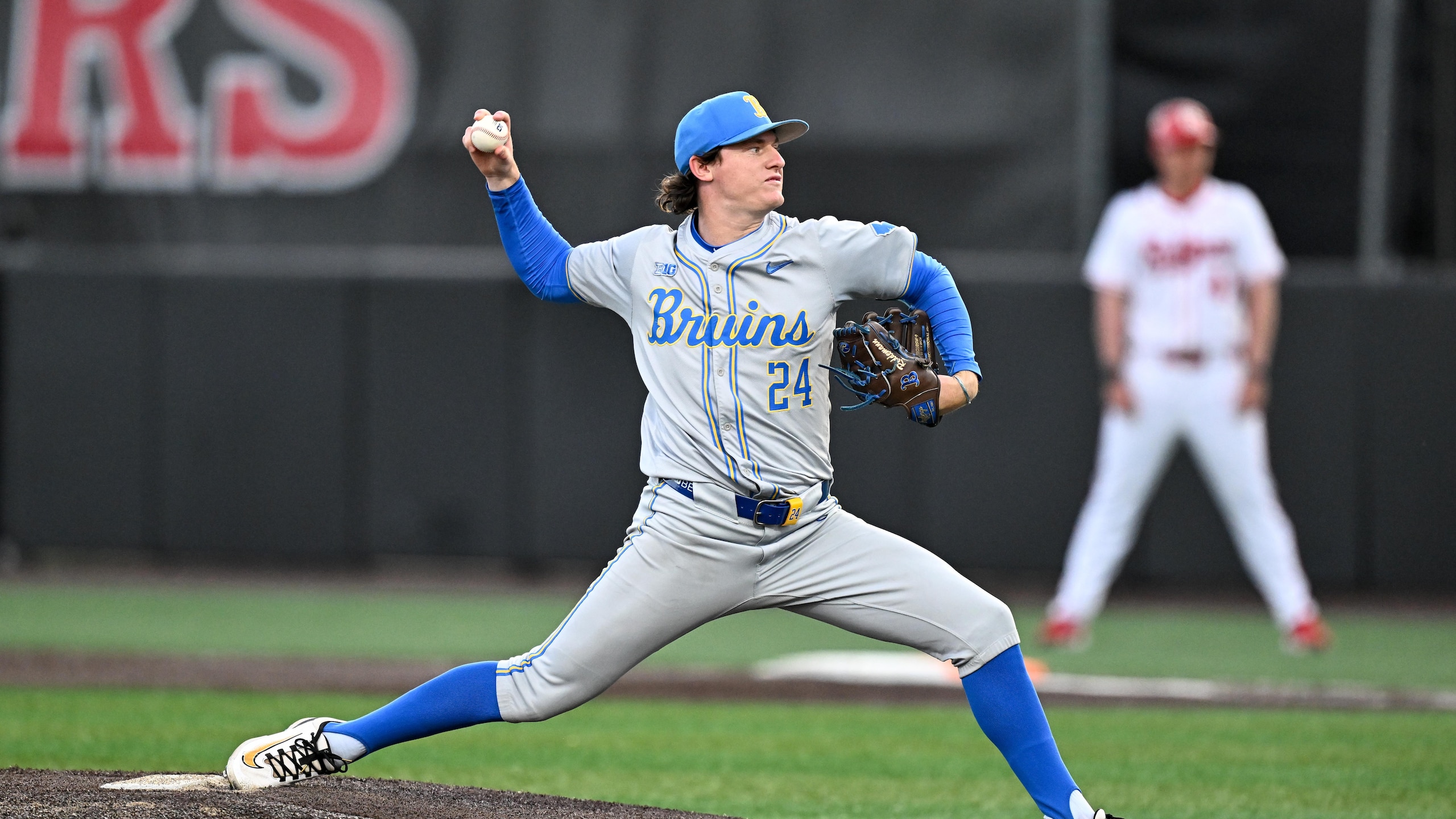
Height: 6'2" | Weight: 200 | Bats/Throws: S/R
Pro Comp: Mitch Keller
A control artist who averaged less than a strikeout an inning over two seasons at the University of San Diego, Logan Reddemann transferred to UCLA and was flying up draft boards this spring with improved velocity before he was shut down on April 17 with arm fatigue and did not pitch again.
He threw in front of scouts at the Draft Combine, so his health is not a complete unknown, and there was a lot to like about his early results. He went 8-0 with a 2.87 ERA and an 84-to-11 strikeout-to-walk ratio in 59.2 innings over 10 starts, touching 99 mph with his fastball with an array of quality secondary offerings.
If not for the arm issues, he might have been the consensus No. 2 pitcher in this draft class, and if a team trusts the medical he could end up being one of the steals of the class.
Grade: A
This might be my favorite pick of the entire first round, as the Rockies came away with a potential steal on the mound if Reddemann's arm fatigue issues were a one-off problem. They always, always need arms, and he offers a healthy mix of floor and ceiling.
39. Toronto Blue Jays: Cole Carlon, Arizona State
39 of 40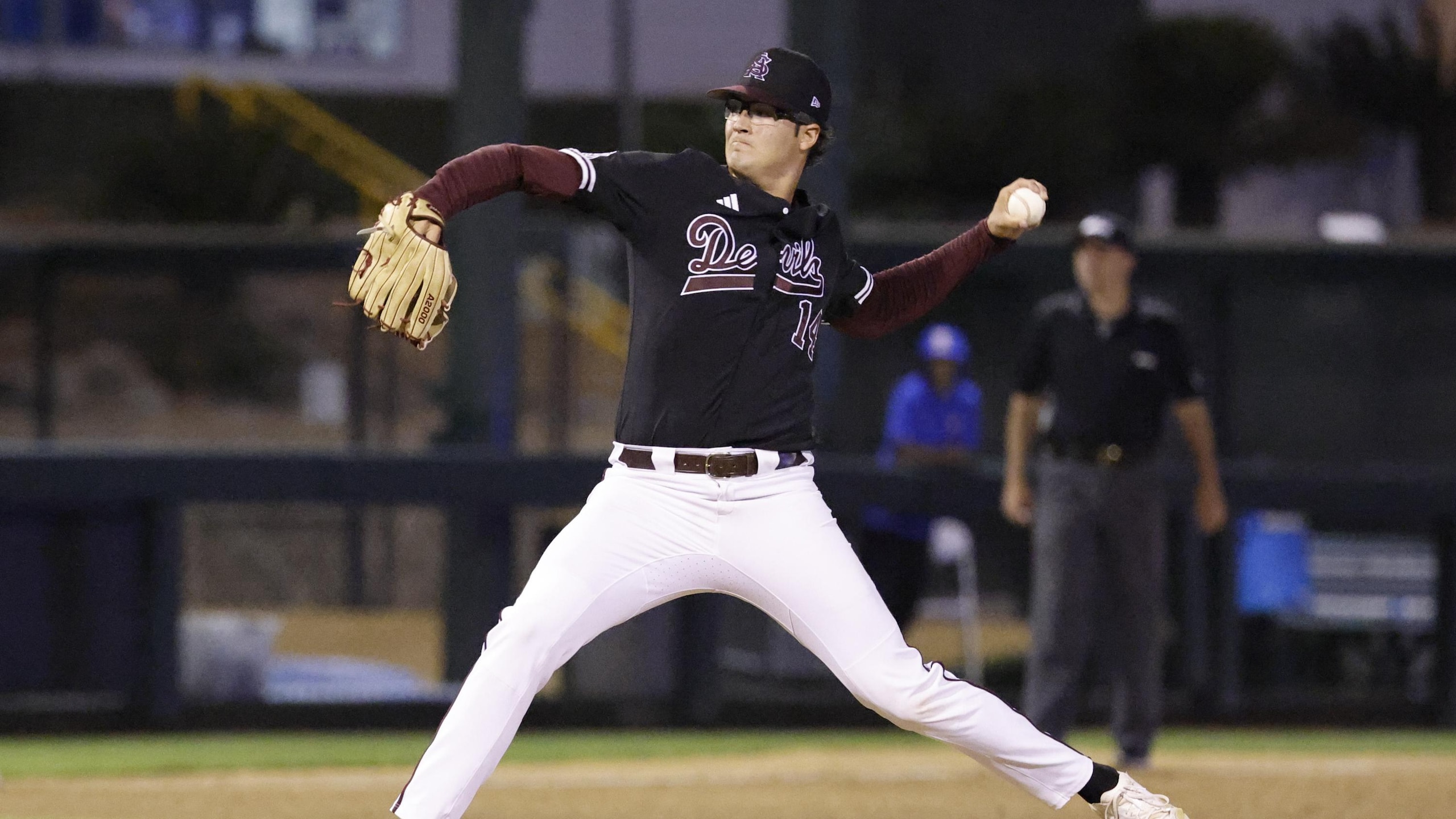
Height: 6'5" | Weight: 230 | Bats/Throws: L/L
Pro Comp: C.J. Wilson
Cole Carlon pitched almost exclusively out of the Arizona State bullpen as a freshman and sophomore, and he was one of the best relievers in the country in 2025, making 29 appearances and tallying four saves with 86 strikeouts in 54 innings.
His size, strength and four-pitch repertoire all pointed to a pitcher with starter potential, and he made a smooth transition to the rotation as a junior. He finished with a 3.87 ERA and 133 strikeouts in 83.2 innings, maintaining his elite strikeout numbers while also slashing his walk rate from 11.3 to 8.9 percent.
His other secondary stuff lags behind his fastball and slider right now, and his command can be inconsistent, so there is still some reliever risk. Still, the results this spring were encouraging, and he offers untapped upside with a high floor as a fast-moving, late-inning arm.
Grade: B
The Blue Jays have leaned more toward prep infielders in recent years, and there were some good ones on the board if that's where they are focusing their developmental efforts. That said, Carlon is a good value here after frequently appearing 10-15 picks higher throughout the mock draft cycle.
40. Los Angeles Dodgers: 3B Bo Lowrance, Christ Church Episcopal HS (SC)
40 of 40Height: 6'5" | Weight: 200 | Bats/Throws: L/R
Pro Comp: Vinnie Pasquantino
High school hitters with tantalizing raw power often have accompanying concerns about their hit tool, especially ones with large frames. That can be a recipe for a long swing with holes that can be exploited in pro ball.
Bo Lowrance has the plus power, the big frame and the long levers, but he also has a smooth left-handed swing and the bat-to-ball skills to make consistent contact. There is some natural loft to his swing, and he has a good approach at the plate, though he will need to drive the ball in the air more consistently.
He has the footwork and arm to stick at third base to begin pro ball, though his long-term defensive home will be determined by how much he slows down once his frame fills out. Corner outfield or first base are the alternatives given his below-average speed.
Grade: A
Classic Dodgers. I had Lowrance at No. 20 to the Red Sox in several of my mock drafts, ultimately slotting him at No. 22 to the Tigers in my final version. Here the defending champs are, scooping him up 20 picks later and adding him to the pile of high-ceiling talent in their stacked system.