
8 Under-the-Radar 2026 NFL Draft Prospects Who Will Go Higher Than Expected
Talent evaluation is subjective, hence why the NFL draft can vary so greatly, with numerous names becoming surprises when they're chosen much sooner than the general consensus expects.
The difference between overall draft coverage and individual team boards is vast. The former doesn't have the luxury of excluding prospects that don't fit specific systems, fall short of specific physical requirements, may not be locker room fits or have medical red flags. Thus, team boards tend to be much, much smaller in scope.
As a result, certain draft picks always occur that seem like massive reaches in real time. However, reason can be found behind these particular selections, even if they're not viewed as the best value.
Now under a month remaining before the 2026 draft begins in Pittsburgh, certain names should be expected to go much higher than they have been generally ranked throughout this process, even above the Bleacher Report Scouting Department's current rankings.
Multiple factors come into play, but the biggest ones tend to be top-notch athletes from non-pipeline schools and/or getting overlooked to a degree even though their skill set projects well to the next level. Outsiders might not be quite as high on these specific individuals, but each has an excellent chance of hearing their names called much sooner than expected.
QB Cole Payton, North Dakota State
1 of 8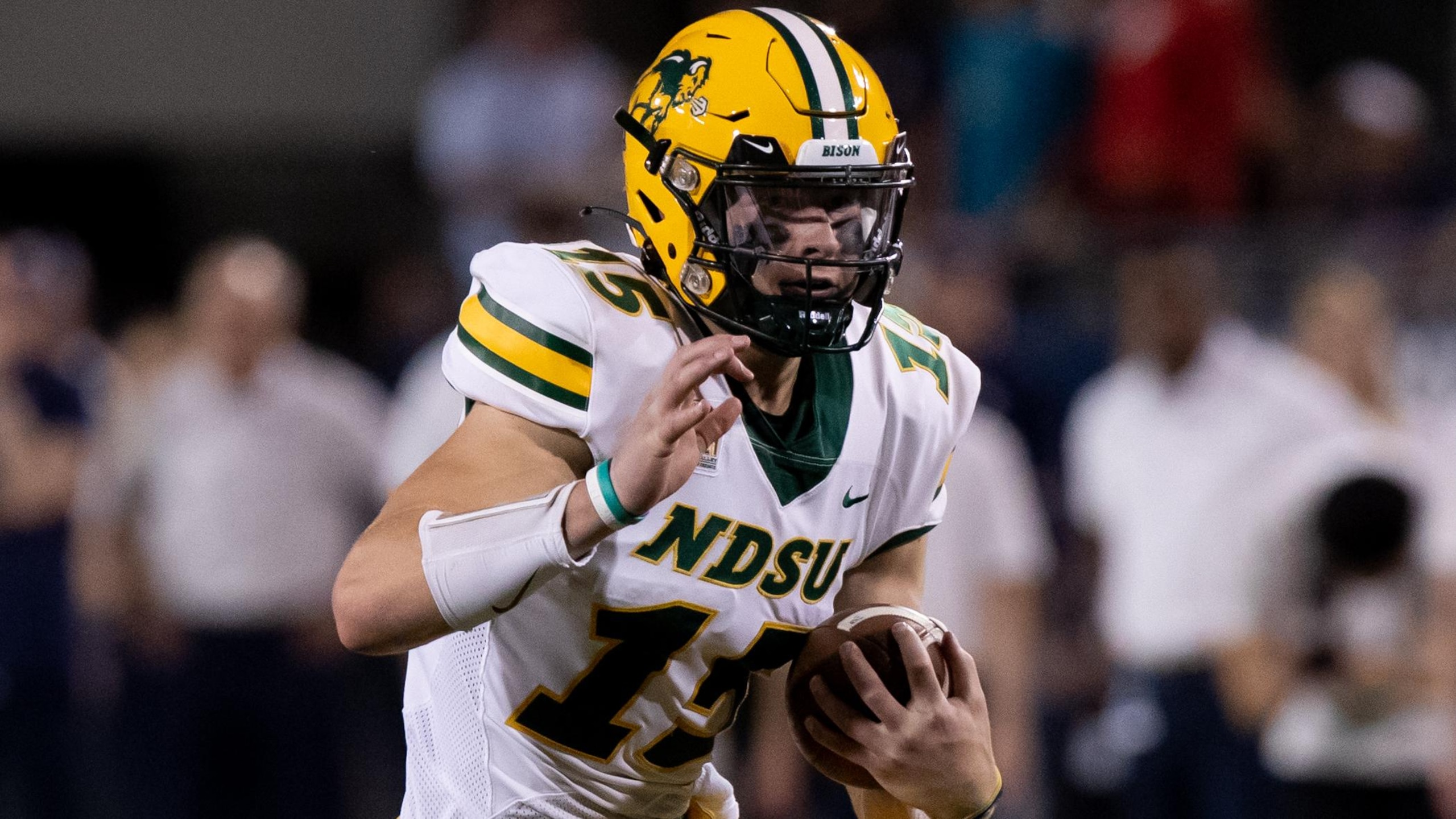
Two factors automatically play in Cole Payton's favor.
First, the 23-year-old prospect has an NFL frame and he's an exceptional athlete. He measured 6'3" and weighed 232 pounds at the combine. He posted a near-perfect 9.97 relative athletic score while in Indianapolis, according to Kent Lee Platte.
Payton is a burly, physical and explosive player with the ball in his hands, which creates a floor for his potential as a professional quarterback.
Second, North Dakota State may not be an FBS-level program, but it's well-regarded among scouting circles for its pro-style system. Payton has plenty of experience playing under center and understanding different drops, though he was only the Bison's full-time starter for one season.
His lack of experience can hurt him, because he has a tendency not to play with quick eyes and his mechanics can be erratic. However, the left-hander does display an NFL-caliber arm and accuracy to all three levels when he's comfortable.
Considering the state of the incoming quarterback class, with Indiana's Fernando Mendoza being the only surefire first-round draft pick, Payton is exactly the type of developmental option a team should be willing to choose on Day 2 thanks to his immense upside.
WR Ted Hurst, Georgia State
2 of 8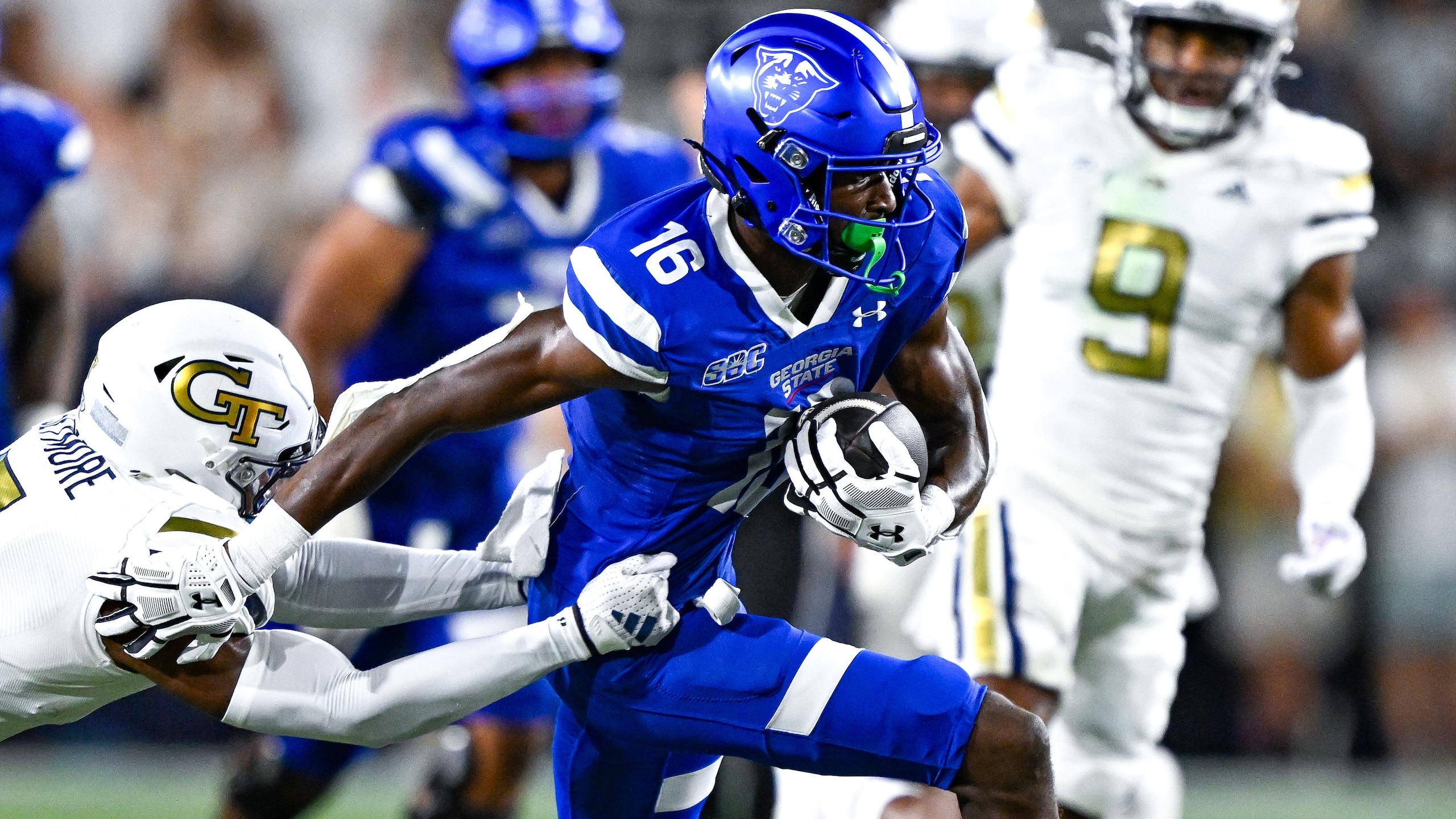
A group of high-end athletes can be found among the wide receivers who may not be as well-known or highly regarded yet have the foundation to be legitimate targets at the professional level.
Case in point, Georgia State's Ted Hurst spent the last two seasons at Georgia State as one of the best non-Power Four wide receivers. Originally, he began his collegiate career at Valdosta State after being a 0-star recruit in the 2022 class. In two seasons with the Blazers, he didn't put up big numbers, with a total of 1,027 yards and 10 touchdowns. Yet he made a splash with the Panthers as their leading receiver in 2024 and registered his first 1,000-yard campaign last year, which earned him first-team All-Sun Belt recognition.
At 6'4" and 4.42-second 40-yard-dash speed, Hurst is a big-bodied vertical threat, with the growth potential to become an NFL offense's No. 1 target.
"Hurst is a pure X-receiver, who can dominate the catch-point and convert contested catches at a high rate," B/R scout Dame Parson wrote.
Now, add in the fact that Hurst scored a 9.90 relative athletic score, per Kent Lee Platte.
Usually, those types of talents/athletes don't last long, even if it took the 21-year-old some time before he blossomed at the collegiate level.
TE Justin Joly, North Carolina State
3 of 8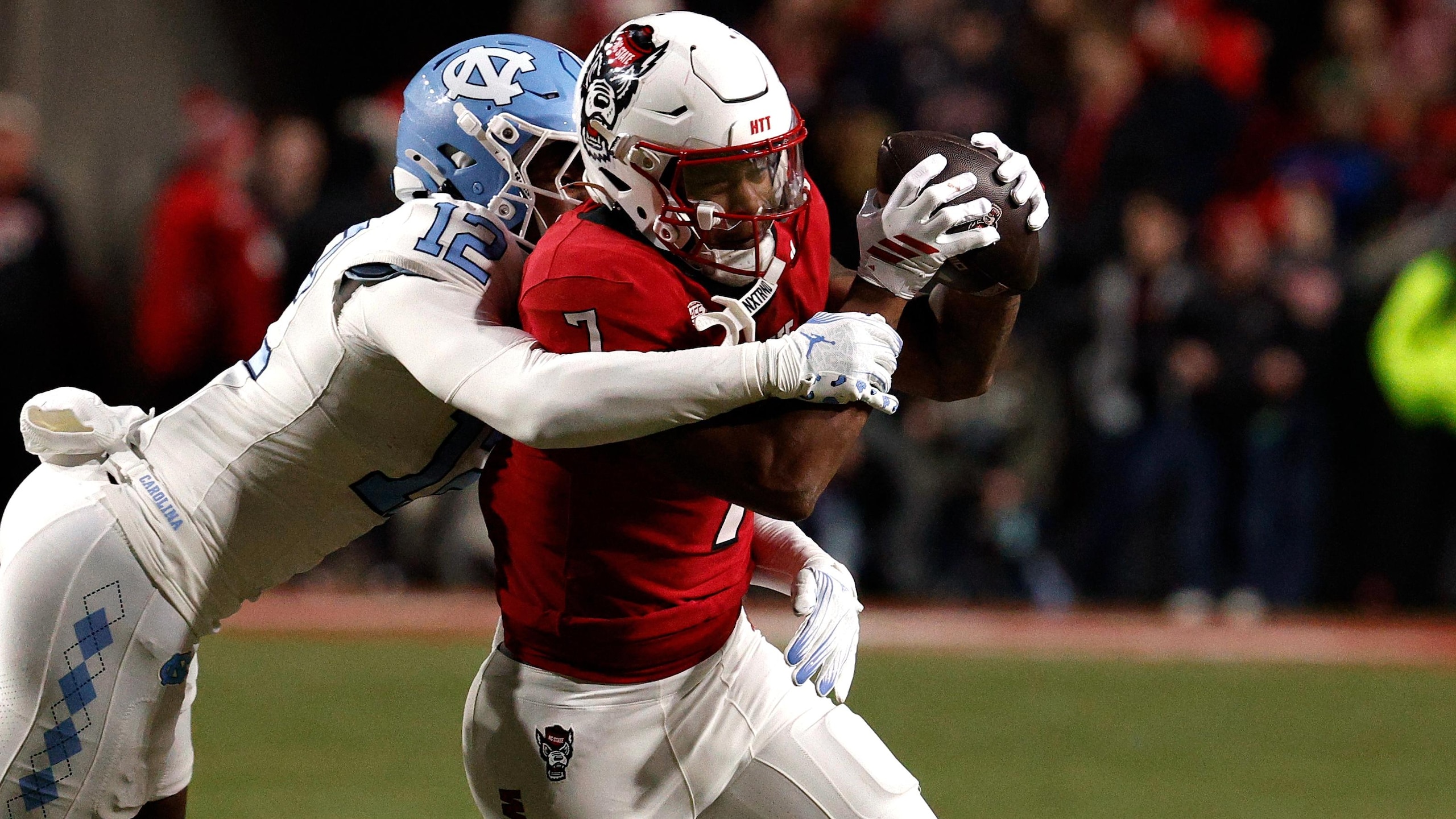
North Carolina State's Justin Joly is the most productive receiver among the upper-tier tight end prospects in the incoming class.
His 1,978 career receiving yards more than double this year's TE1, Oregon's Kenyon Sadiq. Joly's natural feel in the passing game and creativity after the catch can immediately help an NFL offense. Furthermore, his skill set allows him to be an every-down tight end in a class where many of the prospects are specialized in what they can contribute.
"Joly has incredibly strong hands with an impressive catch radius to be a weapon at tight end," B/R scout Daniel Harms wrote. "He's a tactician running routes and brings a workman's mentality after the catch. A smooth-moving chess piece, Joly lines up all over a formation, adds as a move-blocker in the run game and is a surprising pass protector."
This incoming crop of tight end talent is fascinating, because it's packed with potential, particularly looking at an impressive list of athletic profiles. However, multiple options never fully blossomed or were properly utilized at the collegiate level.
Joly isn't as big (under 6'4" and 241 pounds) or explosive as other potential options, but he has a refined skill set, which should intrigue NFL coaches.
.jpg?w=2560 "Packers 49ers Football")
.jpg?w=2560 "Lions Cardinals Football")
OT Diego Pounds, Ole Miss
4 of 8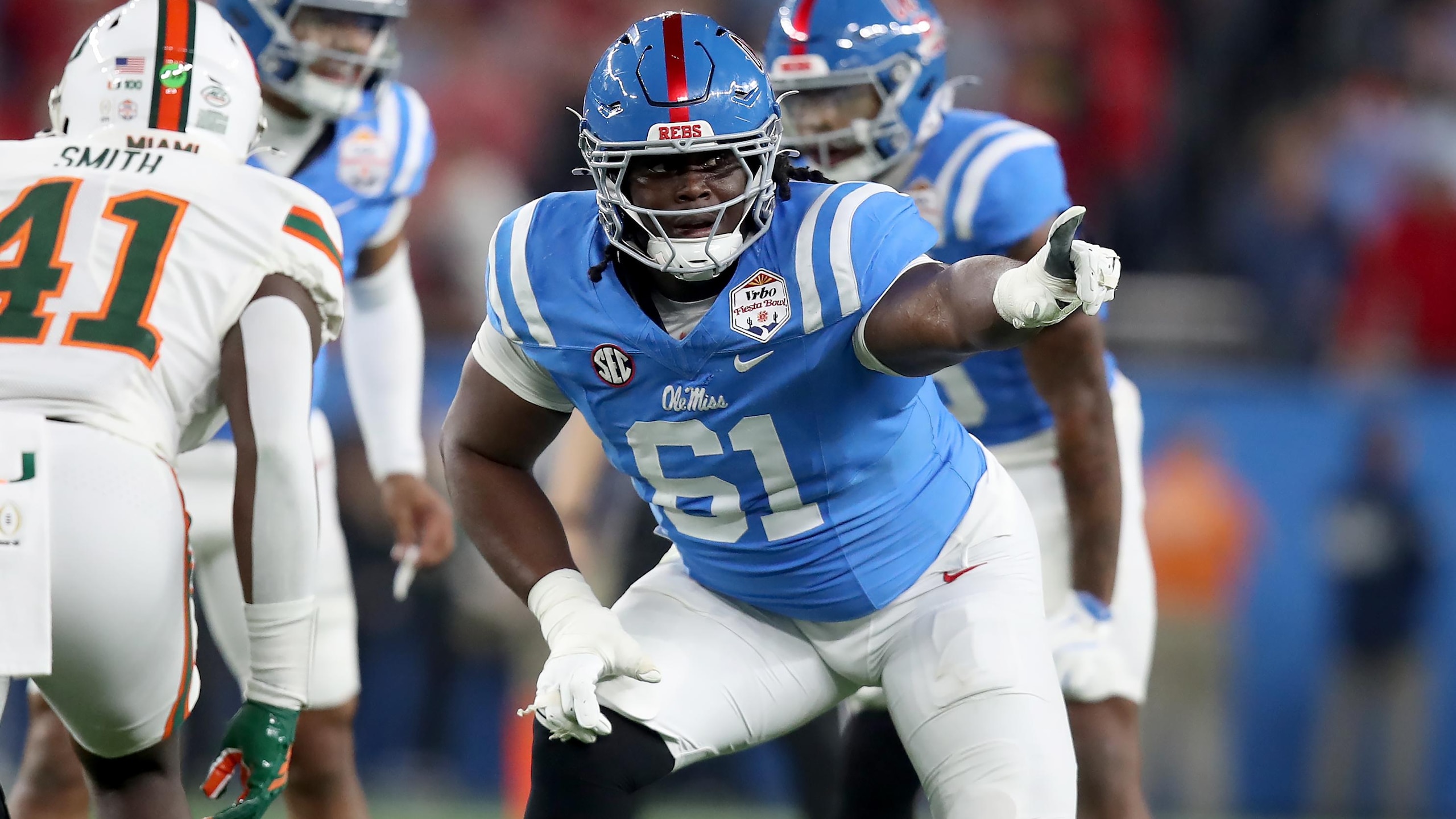
The incoming offensive tackle class is hit or miss, particularly if an NFL team is looking for a blindside protector.
Utah's Spencer Fano is OT1 on the B/R Scouting Department's board, but he's a natural right tackle. Miami's Francis Mauigoa is another right tackle, who may be better suited at guard. Alabama's Kadyn Proctor could realistically find himself playing along the interior as well. Arizona State's Max Iheanachor and Clemson's Blake Miller are long-time starters at right tackle.
Some of those mentioned may move to or stick at left tackle depending on the situation in which they enter. But the current setup shows it's not particularly deep at that singular position.
Ole Miss' Diego Pounds has the physical profile and experience in a major conference to be drafted relatively early and be given ample opportunity to stay on the blind side. Pounds is a 6'6", 325-pound prospect with nearly 34-inch arms. Over the last two seasons, he started 24 games as part of an SEC program. He shows excellent play-strength and adequate movement skills.
The allure of finding a left tackle outside of the first round definitely draws attention for NFL teams in need. Pounds may be built differently and offers an alternative play-style compared to smoother and more traditional left tackle options, but he remains in the mix all the same.
Edge Malachi Lawrence, UCF
5 of 8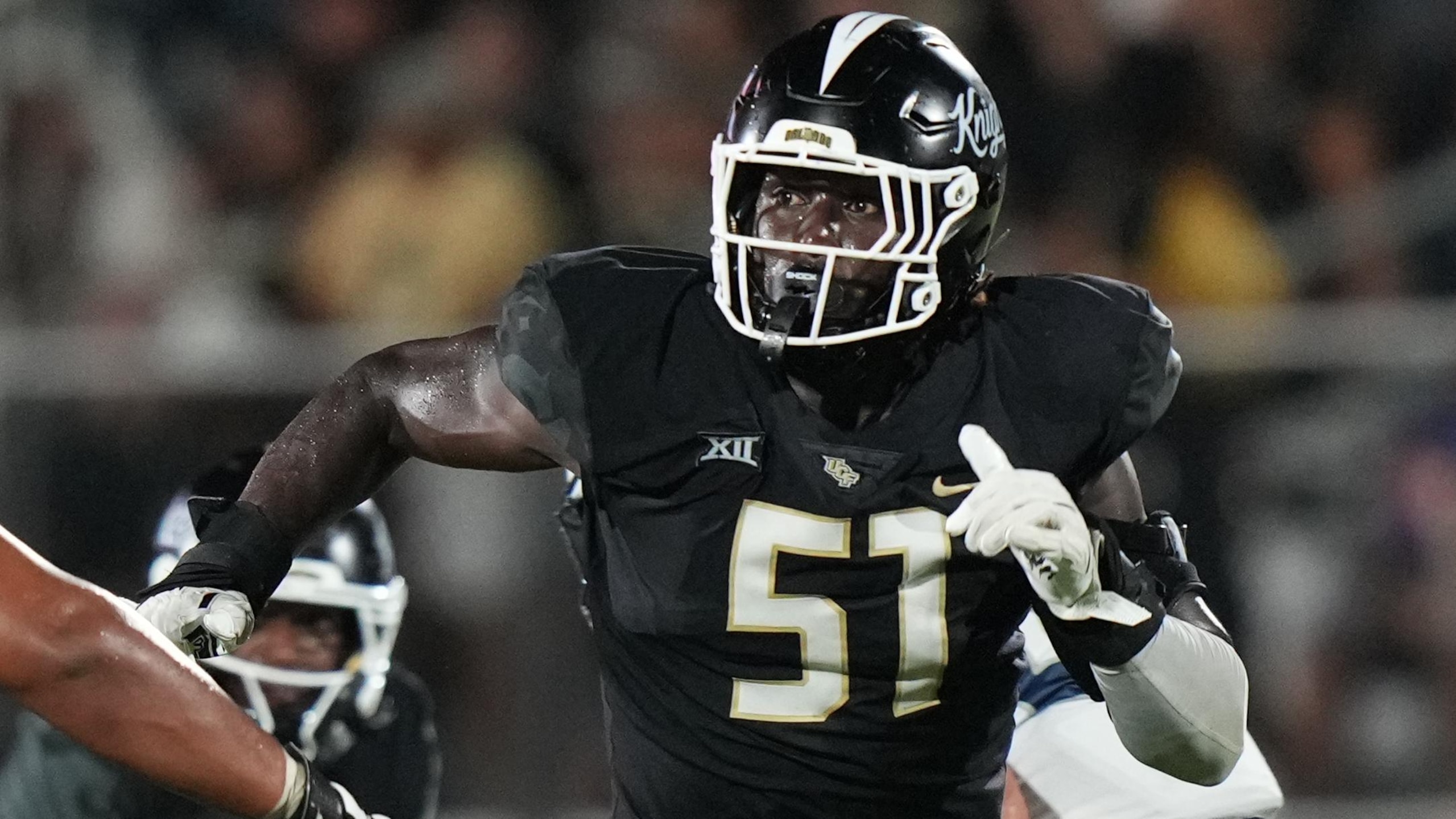
Pass-rushers built like UCF's Malachi Lawrence, with the matching athletic profile he also brings, simply don't last long once the NFL draft begins. In fact, the B/R Scouting Department projected him as a first-round pick in the site's latest mock draft even though he's not currently graded as a top-75 prospect.
The dichotomy between those two points might come across as oxymoronic. His tape says he still needs work, particularly as a run defender, thus questions arise whether he can enter an NFL lineup and contribute as an every-down option. However, pass-rushers are considered a premium position based on how they can affect opposing quarterbacks. All all-around evaluation isn't the same as an organization banking on a prospect's upside, particularly if it projects as a long-term 10-sack contributor.
The first-team All-Big 12 performer is 6'4" and 253 pounds, with near 34-inch arms, 4.5-second 40-yard-dash speed and the flexibility to bend the edge. He was more productive in college than Danielle Hunter and Odafe Oweh, while presenting very similar physical attributes. When those two names are mentioned, it's easy to understand why the expectation is now there for Lawrence to come off the board quite early despite valid reasons why he isn't graded as Day 1 or early Day 2 option.
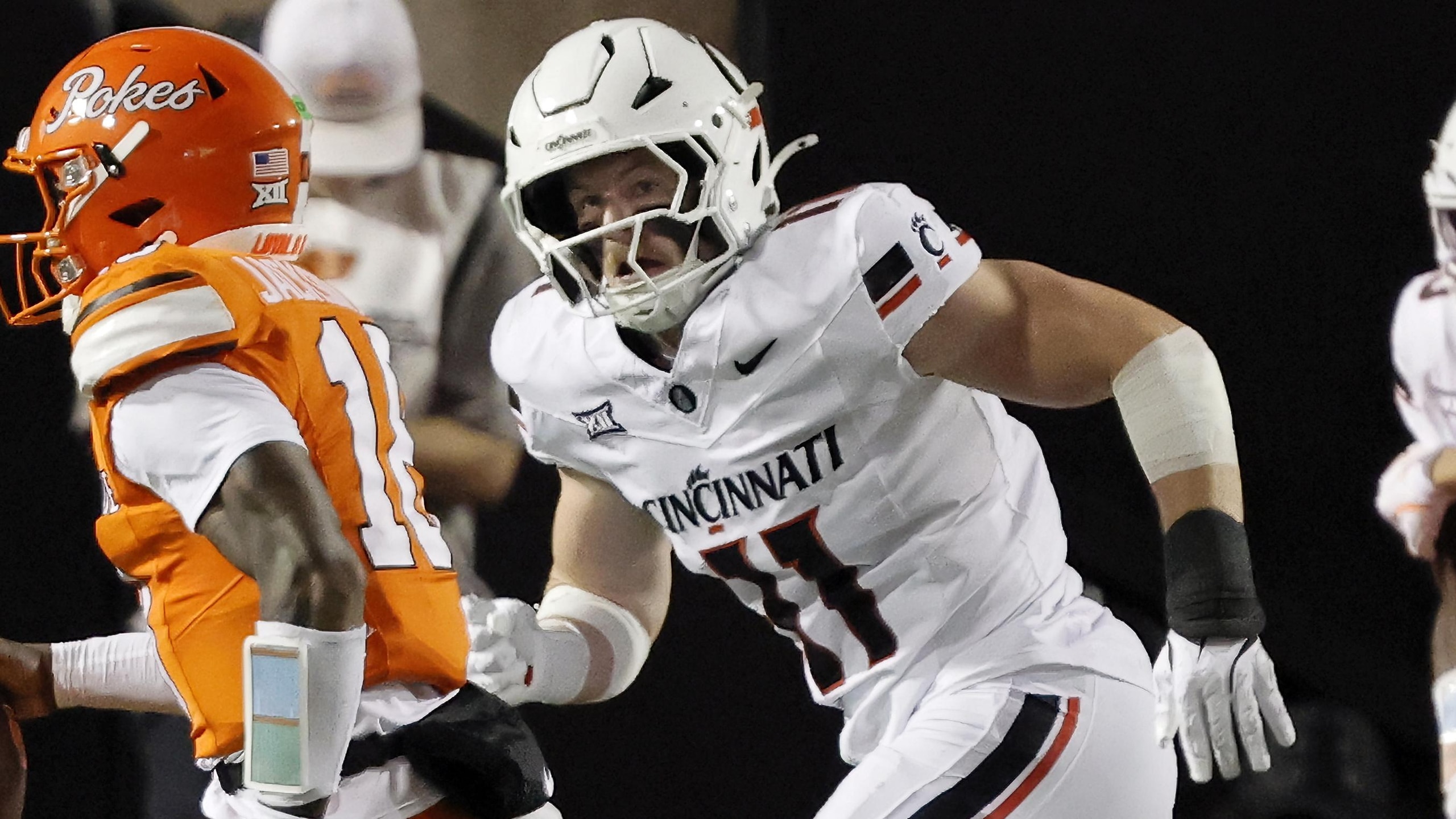
LB Jake Golday, Cincinnati
6 of 8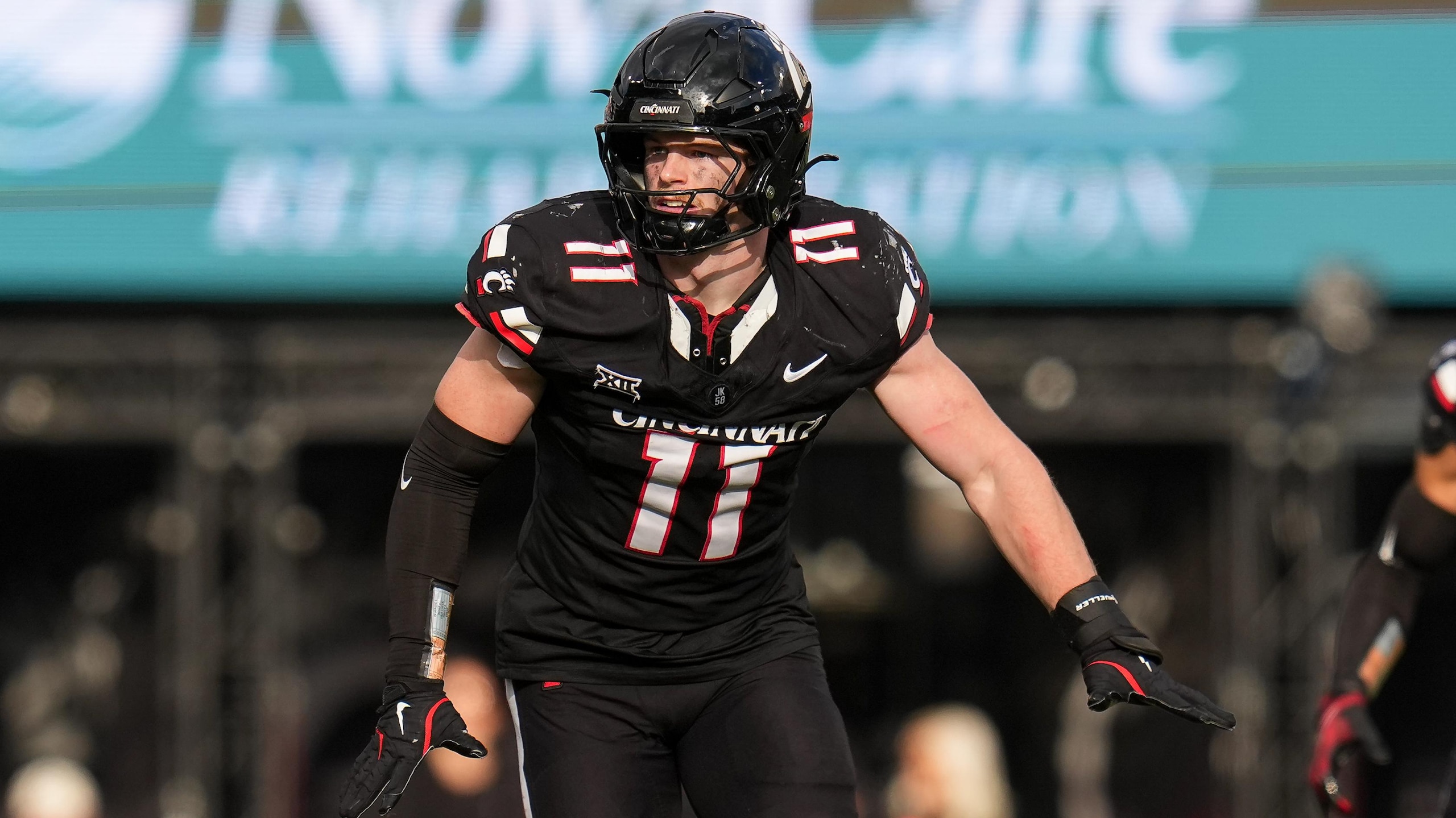
Would you like to play a game? One of the following is Brian Urlacher before becoming at top-10 pick in the 2000 NFL draft. Cincinnati's Jake Golday is the other.
Player A: 6'4", 239 pounds, 32-inch arms, 4.62-second 40-yard dash, 1.60-second 10-yard split, 39-inch vertical, 10'5" broad jump, 7.02-second 3-cone, 4.34-second short shuttle
Player B: 6'4", 258 pounds, pounds, 33-inch arms, 4.57-second 40-yard dash, 1.62-second 10-yard split, 34-inch vertical, 10'2" broad jump, 6.94-second 3-cone, 4.18-second short shuttle
Golday is the first linebacker, and Urlacher is the second.
The comparison isn't made to presume the incoming prospect will be a Hall of Fame defender or that his skill set is exactly the same as a former high first-round selection. It simply shows the physical profile Golday brings to the table and why NFL evaluators may be more interested in him than the general perception.
Golday is a fine prospect in his own right. He registered 105 total tackles and became a first-team All-Big 12 honoree during his final season on campus. He has the athleticism to play sideline to sideline, while even bumping out over the slot.
All of these things are reasons why Golday may not make it to the draft's second day despite being graded as such, even though he's still getting comfortable at linebacker after starting his collegiate career as a defensive end.
CB Chris Johnson, San Diego State
7 of 8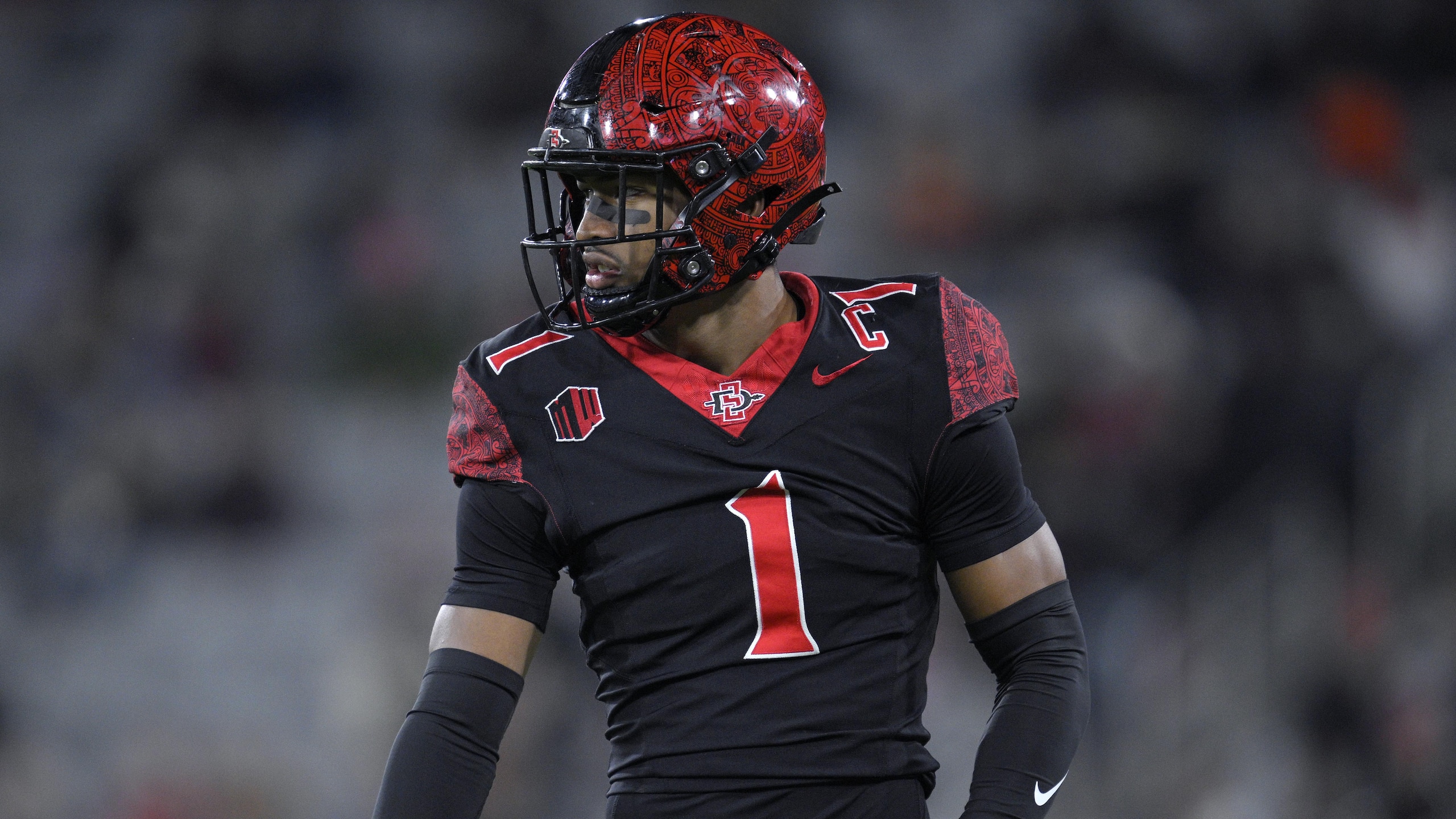
Cornerback is always deep, with at least 47 total defensive backs drafted each year since 2009. The prevalence of spread offenses and heavy reliance on seven-on-seven tournaments throughout the developmental process continue to produce plenty of quality receivers and those who defend them.
San Diego State's Chris Johnson is arguably the incoming class' best cover corner despite not being in the conversation among top-tier prospects. Maybe he should be. According to Pro Football Focus, the reigning Mountain West Defensive Player of the Year allowed a 16.1 passer rating when targeted last season.
"A precise technician on the outside, Johnson displays the scheme versatility to excel with his eyes in off, zone, and in a man coverage phone booth," Harms wrote. "He trusts in his athleticism to flip his hips and run while being patient and reading manipulation tactics."
Speaking of Johnson's athleticism, the 6'0", 193-pound cornerback did post an impressive 9.63 relative athletic score, per Kent Lee Platte.
The 21-year-old prospect does lack length and didn't play against the best level of competition. Even so, any NFL team that misses out on the defensive backs expected to go in the top of Round 1 should strongly consider Johnson.
S AJ Haulcy, LSU
8 of 8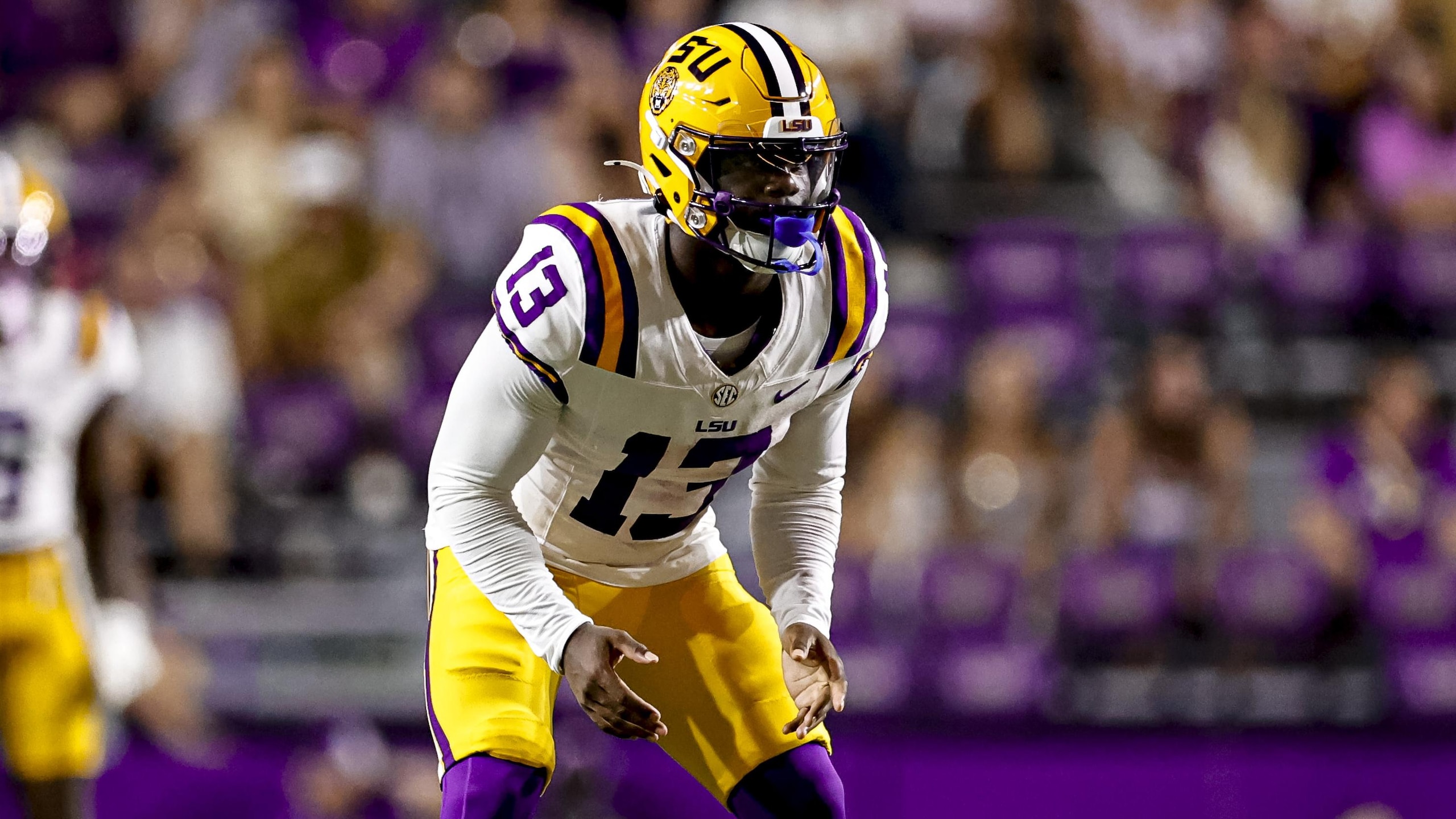
Safeties tend not to be built like LSU's AJ Haulcy anymore. As the game evolved, more physical tone-setters haven't been nearly as prevalent. Whereas, Haulcy is a rocked-up 215-pound defensive back, who will clobber receivers in his territory.
"Haulcy looks like a linebacker playing safety," Harms wrote, "but his zone instincts and impressive downhill click-and-close speed give him a unique skillset at the top of defenses. Best as a split-field safety or robber, he operates quickly and efficiently, moving toward the line of scrimmage with great instincts and play development eyes."
Some coaches may still pine for old-school enforcers at the safety position, but today's game is predicated on creating mismatches. If a defensive back can't hang in coverage, he'll be exploited. In Haulcy's case, Harms' secondary points are important, because the first-team All-American isn't just out there trying to lay the lumber. He's a capable zone defender.
Considering how much of today's defensive approach is based on dropping as many as possible into zone coverage and confusing quarterbacks, Haulcy has a real chance to not only contribute but thrive in the right defensive scheme.
.jpg?w=2560 "Steelers Browns Football")
.jpg?w=2560 "Texans Titans Football")
.jpg?w=2560 "Buzz: MHJ Hired Agents for Trade")
.jpg?w=2560 "Chargers Fall to 0-5 🤢")
