

The 2025 NHL draft draws ever nearer. On Monday night, we learn the winner of the draft lottery, and with it much of the selection order. Then, we can start to analyze which players might go where.
Something to know about this year is that there are really two main segments in the first round. You have the top four players: James Hagens, Porter Martone, Michael Misa, and Matthew Schaefer (that's alphabetical order).
And then you have...everyone else. It's much more wide open than other recent seasons that had more of a defined hierarchy.
The contents of the top 10 haven't changed since the last go-round, but the order has shifted slightly as we've refined our thoughts with more viewings and more research.
You won't see as much movement from this board to the one we'll release prior to the Stanley Cup Final, so you can start to get a sense of how we feel the first round might shake out as we settle into our final list order.
As we've noted before, this year's draft is decentralized for the first time. With only the 50 prospects being invited, there is a non-zero chance someone chosen in the first round isn't actually there. We'll see.
For now, here's our post-draft lottery board.
1. Michael Misa, LW, Saginaw Spirit (OHL)
1 of 32
Strengths: Vision, playmaking, skating (because I can't say 'everything')
Weaknesses: Nothing glaring. Will need time and experience to move to the pros, but that's hardly a weakness, just a given at this age.
What can be said about Michael Misa that hasn't already been said?
He's the best pure skill guy in this year's class. I have zero issue seeing him translate his playmaking ability and offensive production to the next level, and that lies heavily with how high-end his skating and his hockey IQ are.
It's his attention to detail and his process that underpin the rest of his skill set and allow him to be so successful.
Even when he's having an off night, Misa is a force every time he steps on the ice. His skating supports his ability to use his high-end skill at the game's top speeds—speeds that opponents often can't reach, much less process the game at—and he's able to dodge defenders and protect the puck while doing so.
He's heavily engaged in the play, whether he has the puck or not, coming in on the forecheck to take it from opponents often before the threat clicks for them, and he knows precisely where he needs to be to set up his teammates. His motor and work ethic are relentless.
There are no glaring weaknesses in his game, only opportunities for him to become an even better player who will get filled out as he adjusts to the pro game. Even the most jaded among us prospect heads have to admit that watching Misa play is a blast; fans are going to love him too (if they don't already).
2. Matthew Schaefer, D, Erie Otters (OHL)
2 of 32
Strengths: Game-breaking skill, decision-making, skating
Weaknesses: Search me. I want to see him in a consistent stretch at the pro level but that's hardly a weakness.
When it comes to choosing between Michael Misa and Matthew Schaefer, it's like choosing between two delicious flavors of ice cream.
There's no wrong choice; it comes down to what you prefer, so it's really a 1A and 1B situation rather than a 1 and 2 situation. Schaefer could easily go first overall and it would be the right decision.
I put Misa over the top because I don't understand passing up a player like that; other people have that same mindset about Schaefer. What it comes down to is what your franchise needs.
Through no fault of his own, Schaefer only played 17 OHL games this season. Unlike what often happens with other injured players, that shortened viewing experience does not seem to have knocked him down any draft rankings—and that's the right call, because even in those short 17 games (and his time at World Juniors) it's exceedingly clear the kind of player Schaefer is.
He's an incredible skater, able to hit great straight-line speeds and with a quick first step, and he's able to use that skating to carry puck possession end to end without losing a step. He's got the kind of agility you want from the offensive defenseman style player, as well.
A standout quality that Schaefer has that separates him from others in his age group, though, is his ability to take over a game and do so while maintaining his composure and defensive awareness.
His hockey IQ is elite—a necessary factor when you play the kind of game he does, as that ability to read and process all your options at top speeds is priceless. Forecheck, neutral zone play, gapping up on opponents: You name it and he does it well.
3. Porter Martone, RW, Brampton Steelheads (OHL)
3 of 32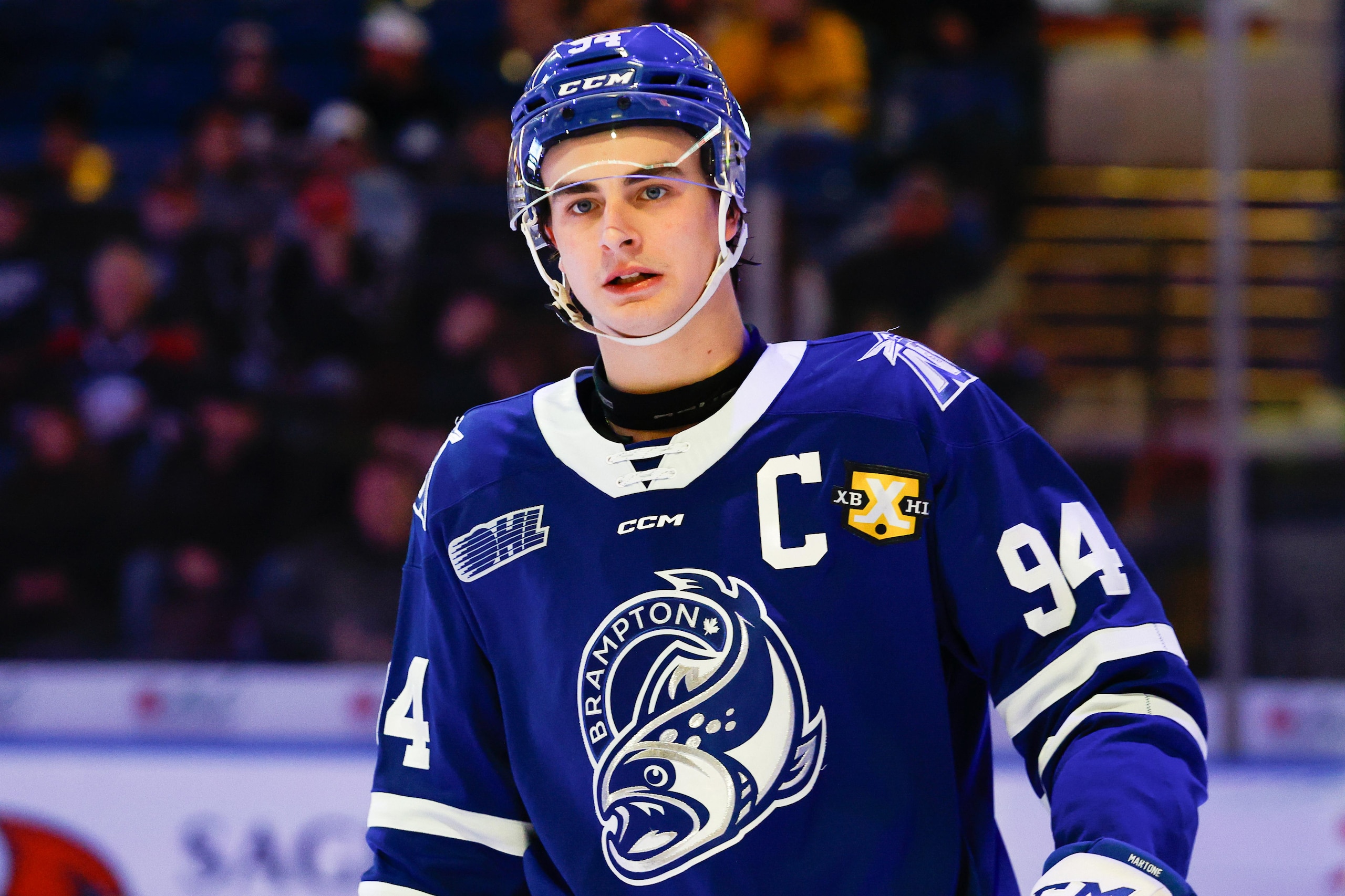
Strengths: Offensive instincts, stickhandling, reading the play
Weaknesses: Stays to the perimeter. Doesn't throw productive hits, but rather throws hits to start something. Needs to sharpen his focus on using his skill set consistently because it is extensive.
Porter Martone's offensive skill set is through the roof. He's got so much potential.
We've been endlessly frustrated across the season when he does not use that potential to its fullest, but he's young and even without maxing out his ability, he's still one of the best players in this draft class.
His hockey sense is high-end—he's able to project how plays might unfold before they begin, and he knows precisely how to best set his teammates up for success.
Add to that his ability to deceive opponents and to utilize his frame and reach when setting up those plays, and you can understand why he's stayed at the top of everyone's boards all year. He projects as potentially an incredible power forward.
He'll be even better if he stops floating around the perimeter as he can be prone to doing, and instead getting involved in the meat of the play.
Martone was invited to Canada's pre-World Championships camp, and it will be interesting to see what sort of game time he gets. Much like with Misa and Schaefer, he and James Hagens are their own tier—you could take either and get a player you're going to be happy with. But Martone just has a higher ceiling than Hagens.
Am I sold yet that he'll reach that ceiling? No. I need to see real growth from him over the next year or two for that. But he's worth taking the swing on, especially in this year's draft class.
.jpg?w=2560 "NHL Trade Grades Connor Hellebuyck")
4. James Hagens, C, Boston College (NCAA)
4 of 32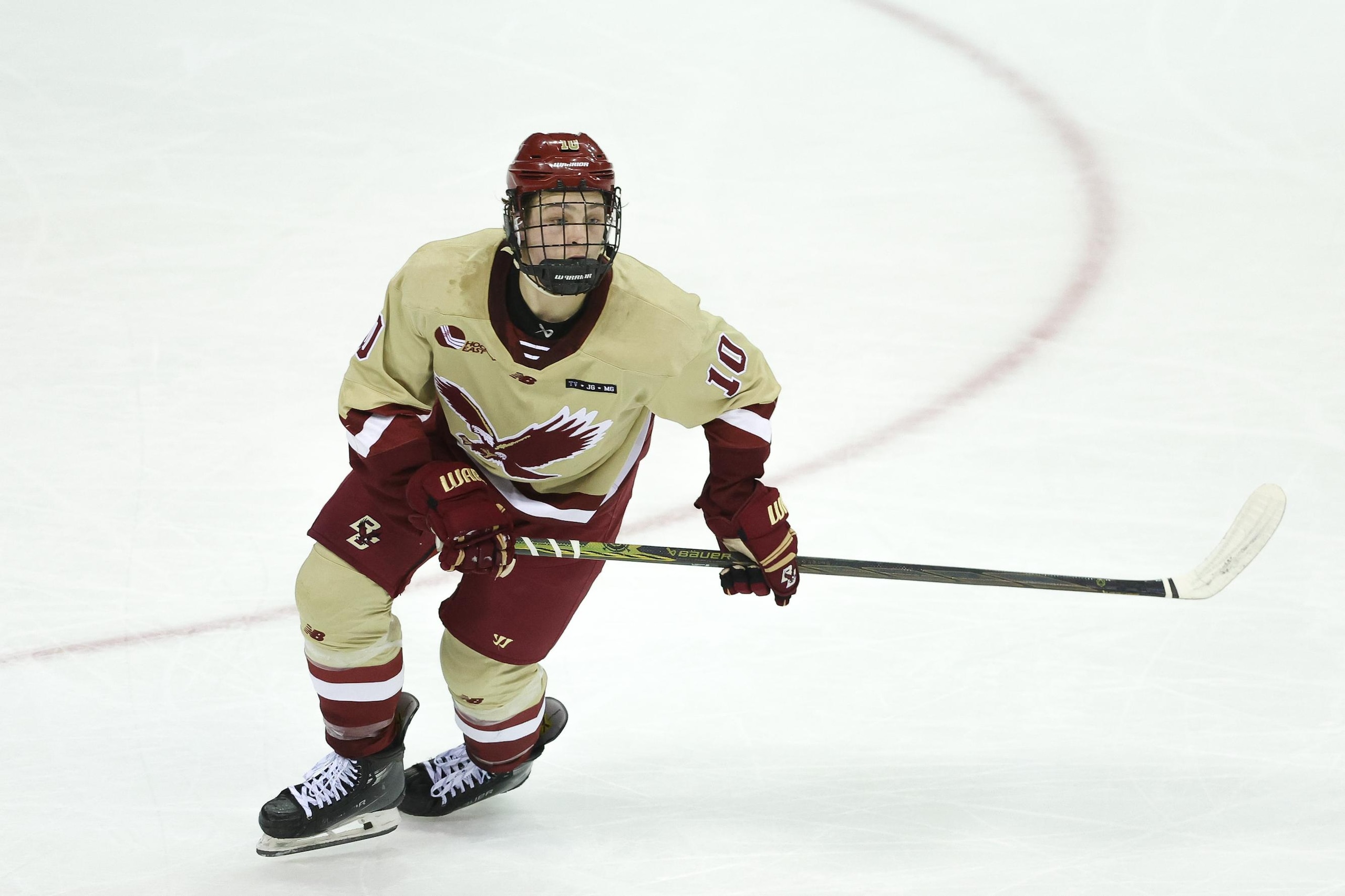
Strengths: Skating, hockey IQ, vision both on and off of the puck
Weaknesses: Decision-making can be questionable at times—he defers too often—and he has a higher gear than he showed this season
As with Martone, James Hagens is on the tier directly below Misa and Schaefer; you could pick either him or Martone and find a player your franchise will love and who will see success.
Hagens falling to fourth when people were yelling last summer about how he would potentially be first overall doesn't mean he's fallen off completely or isn't a phenomenal player.
He just hasn't shown the kind of "putting it together" the guys ahead of him have shown—even Martone, with his issues that we have extensively documented, blew apart the OHL. We wanted to see more from Hagens in college hockey this season than we did.
That said, he brings quite a lot to the table.
Being a point-per-game player in your first NCAA season is nothing to sneeze at, and Hagens achieved it by utilizing his fantastic skating, high-end motor and elite playmaking skills to set up teammates.
We didn't see his shooting skills as much as I would've liked, but one does have to take into account that he most often played with Ryan Leonard, who tends to feast at the net (30 goals this season to Hagens' 11).
That being said, we were treated to an excellent viewing of his passing ability, and while there were moments that seemed questionable, by and large it was obvious that this is a facet of his game that will translate quite well to the NHL.
Hagens knows how to set up a play so his teammate will find success, thanks to his vision. He's also able to use that vision off the puck as well, knowing where he needs to be to receive passes.
I want to see him defer less in the future, and I want to see him use his vision to become a more deceptive player. The potential is there.
5. Roger McQueen, C, Brandon Wheat Kings (WHL)
5 of 32
Strengths: Hockey IQ, puckhandling
Weaknesses: Skating mechanics
This is one of those "I can't quit you" situations, because I genuinely believe in what McQueen brings to the table. He ended up with 17 total WHL games this season, with 20 points in those games—nine of those points came in the nine games after he returned from injury, so I'm not super-concerned about his offensive abilities.
McQueen will certainly be back in the WHL next season, and this would've been true even prior to injury; most of this year's draft class isn't going to be NHL-ready right off the bat.
But the potential he has is very real. His hockey IQ and puck skills are terrific. His point-per-game pace after returning from injury showcased that nicely.
The only real drawback to his game right now is his skating, particularly his somewhat clunky mechanics. He's consistently involved at both ends of the ice, though I would like to see his detail game improve in his own end, and he's not afraid to throw the body around.
The way he understands the game allows him to identify the best playmaking opportunities and create advantages, and there have been flashes that make me believe he could add deception to that toolbox. We'll see if that plays out.
Someone is going to take a swing on this guy and get a player with incredible upside.
6. Victor Eklund, LW, Djurgårdens IF (HockeyAllsvenskan)
6 of 32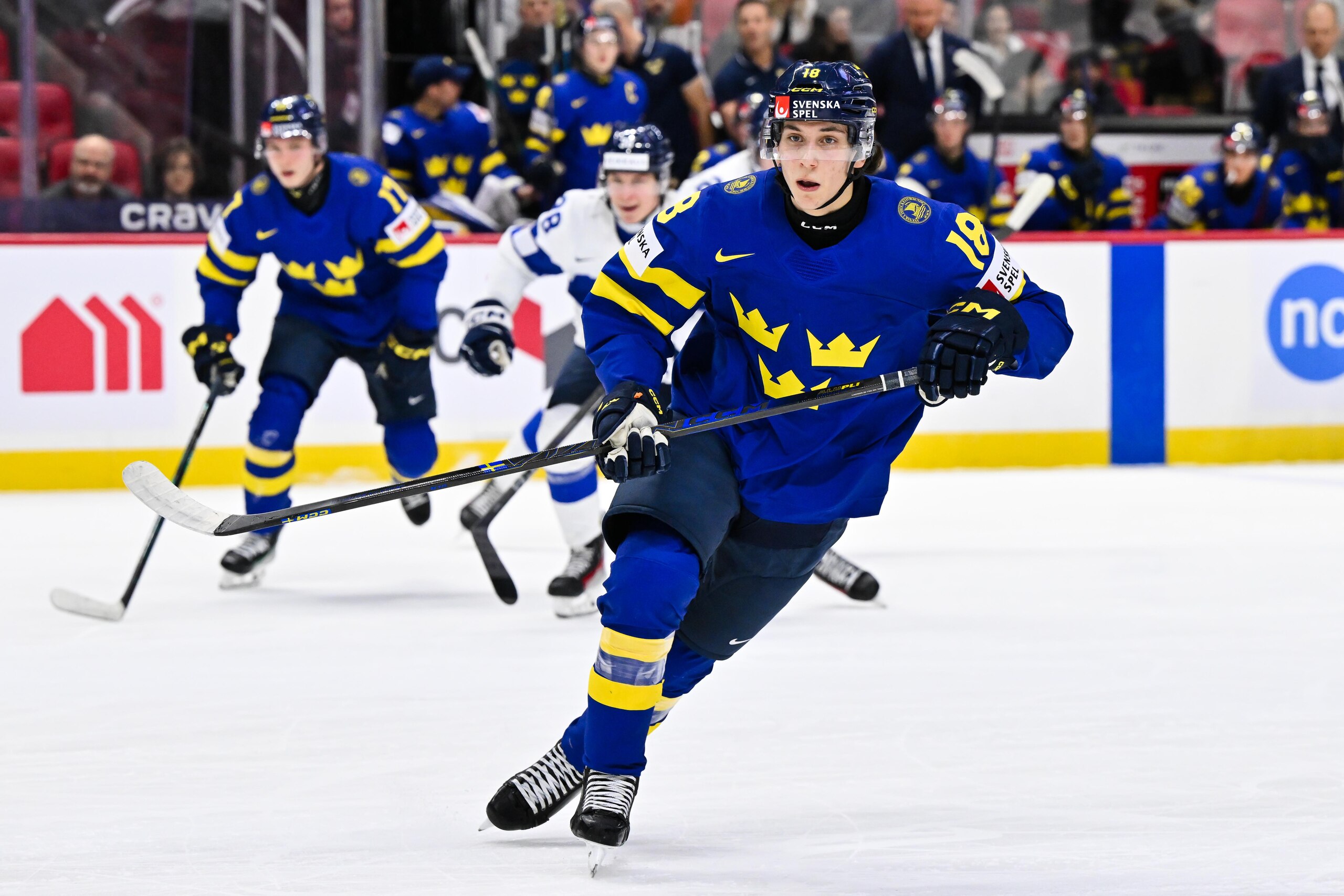
Strengths: Attention to detail, work ethic, playmaking
Weaknesses: A lot happening in his head, which can occasionally affect his execution
This next tier of Victor Eklund, Jackson Smith, Carter Bear, and Jake O'Brien are roughly on par. I've ranked them based on my own preference due to my viewings, but for teams selecting from those four guys, there's no wrong choice.
Eklund could easily go inside the top five. He's an incredibly intelligent player, and he can typically process and execute plays quickly and effectively, though sometimes he has too much running through his mind and this can occasionally affect his ability to execute. That doesn't happen too often, though.
He plays with purpose and intention, and he's willing to go to the dirty areas on top of that. His motor never quits, and his playmaking abilities have developed beautifully across the season. He's so dependable and is strong on the puck.
7. Jackson Smith, D, Tri-City Americans (WHL)
7 of 32Strengths: Skating, puck-moving skills
Weaknesses: Would like to see him continue to improve his decision-making
Smith is such a smooth skater and his offensive ability has really started to open up across this season. He finished the WHL regular season with 54 points in 68 games, adding six points in his final three games to put a stamp on that aspect of his play.
He's an excellent skater, and his puck-moving skills are terrific—both of these pieces of his game translate well to the next level. With that further proof we've seen this year, I think his offensive abilities will too.
One of the best things about Smith's game, though, is that he has that unique combination of pure skill and the ability to be a pain to go up against on the ice. Godspeed if you're facing him one-on-one.
It's always a delight when a player is able to utilize that "pest" aspect of his game without sacrificing his skill. I'd love to see Smith's decision-making continue to improve, because we saw growth in that area and in minimizing the risks he takes this year.
We've seen flashes of creativity that I would love to see him tap into more next season as well.
8. Carter Bear, LW, Everett Silvertips (WHL)
8 of 32
Strengths: Never-quit motor, awareness, playmaking
Weaknesses: His mechanics are average, but he's doing OK despite that
Every year I have a guy I'm drawn to outside of rankings, who I could just sit and watch for hours on end, and Carter Bear is that guy this year.
There's something magnetic about his approach to the game. These are not overall player comps, but his relentless motor reminds me a lot of Seth Jarvis and Logan Stankoven. He's going to go inside the top 10 and whatever team selects him is going to have a blast with him.
In no particular order, standout elements of his game include: playmaking abilities, awareness and relentless tenacity. He is involved in the play each time he steps onto the ice, which is important because if he continues to improve his playmaking and the way that he uses his offensive instincts, that level of engagement is just going to boost his offensive touch even further.
He's not making the same play over and over, either; he's constantly making different types of plays. Not relying on the same tricks further speaks to his ability to translate his skills to the next level.
9 Jake O'Brien, C, Brantford Bulldogs (OHL)
9 of 32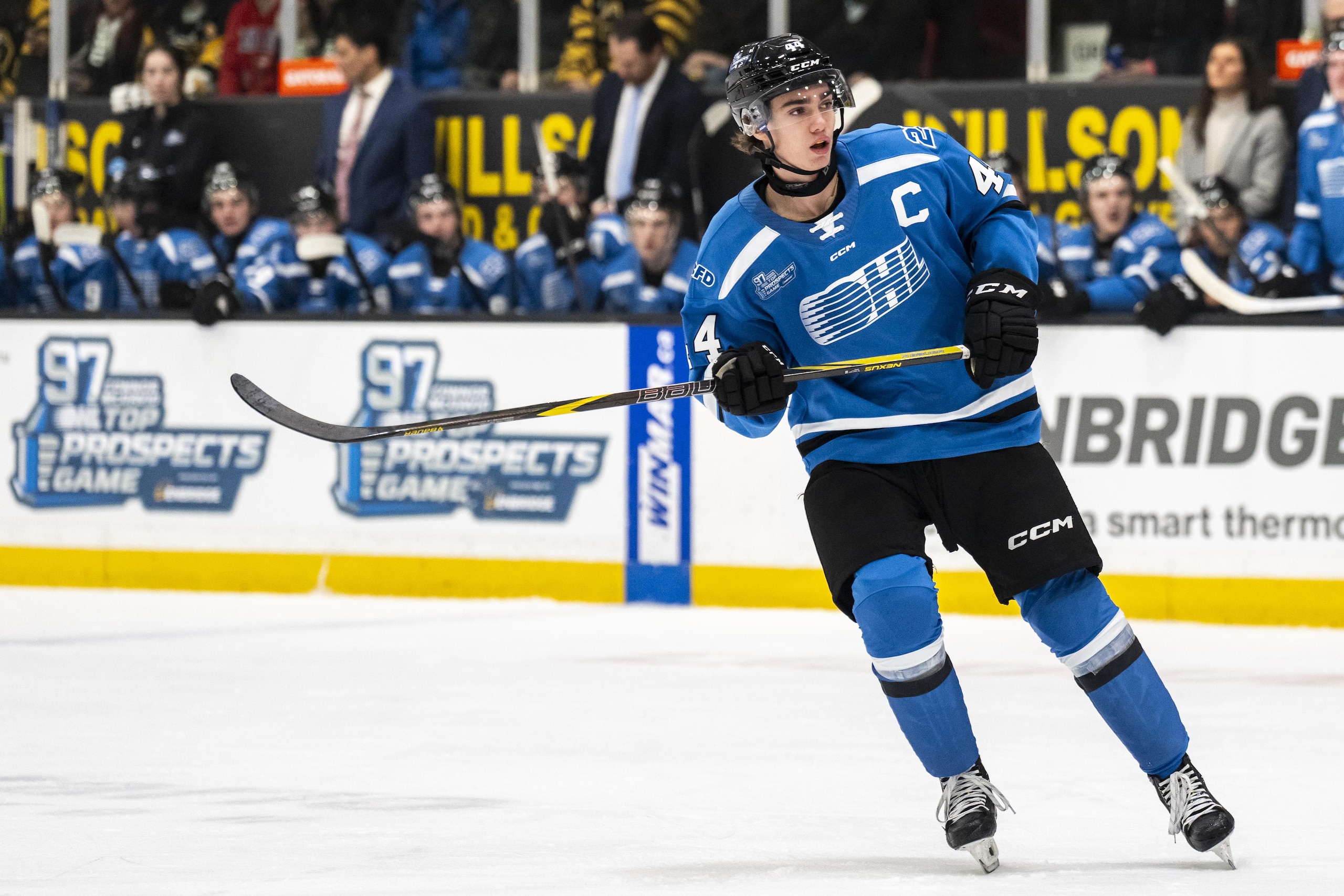
Strengths: Playmaking, passing
Weaknesses: Skating mechanics
Jake O'Brien slipped back down our board, but him, Eklund, Bear and Smith as a sort of tier of their own—pick a guy from that group and you won't regret it.
Let's be real: 98 points in 66 regular-season games, including 32 goals, is terrific, and in any season without Michael Misa and Porter Martone we'd be screaming a lot louder about O'Brien and a handful of other guys.
(O'Brien also had 11 points in 11 playoff games. I digress.)
One of my favorite things about O'Brien is the creativity he brings to his high-end playmaking. His vision and passing skill allows him to manipulate opponents and create opportunities out of nowhere.
He's really hard to contain when he gets going. His hands are more agile than his feet; if he can work on his skating mechanics to the point where his feet can match and add some strength, he is going to look unreal in the future.
10. Caleb Desnoyers, C, Moncton Wildcats (QMJHL)
10 of 32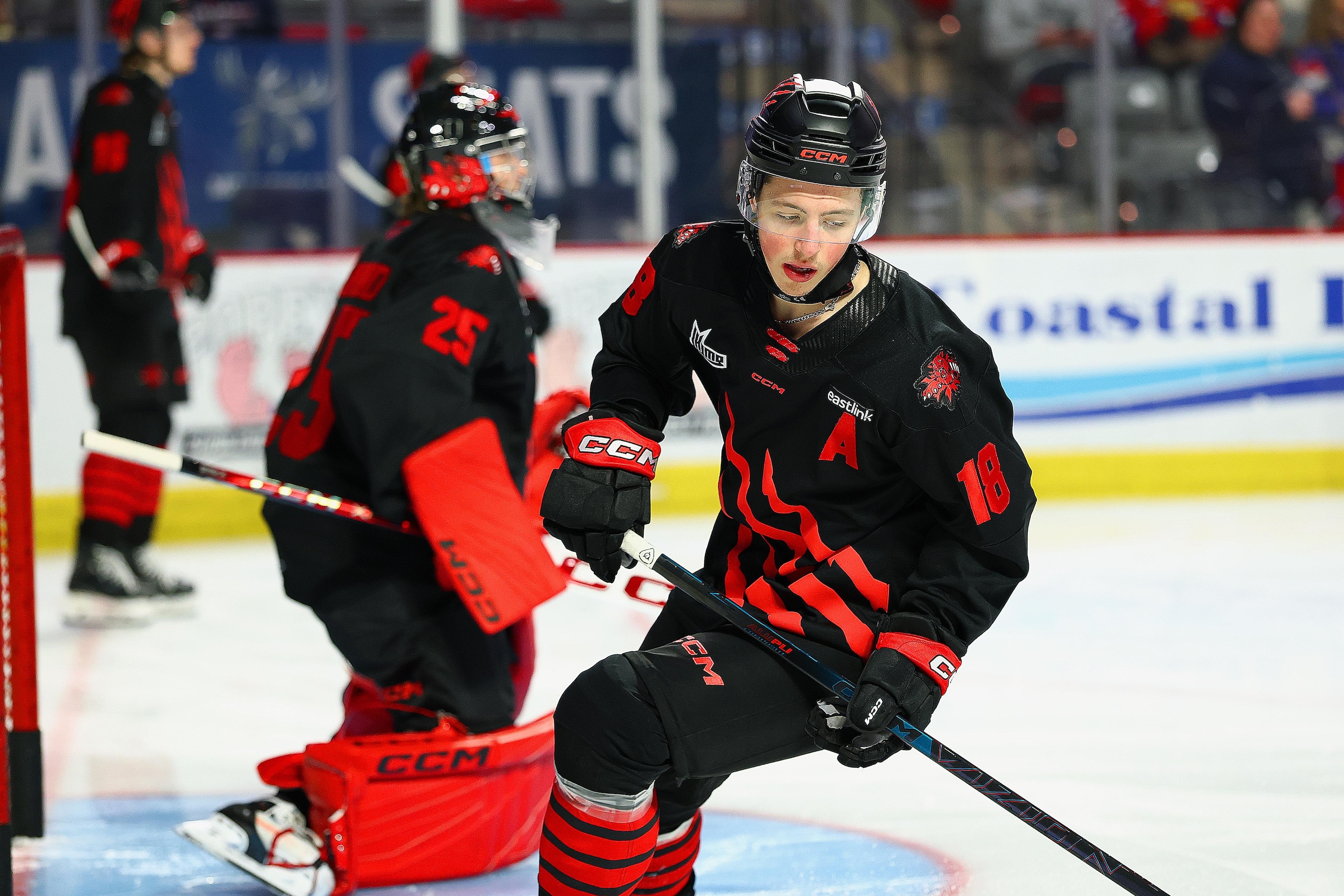
Strengths: Hockey IQ, skating skills
Weaknesses: Could afford to boost his motor/pace of play
Caleb Desnoyers finished out the QMJHL regular season with 84 points in 56 games, and he did it without feasting on blatant mistakes—his hockey IQ and his ability to read the ice are what drive his offense, along with his skating and his puck skills.
He's a strong skater with high-end intelligence, which shows in his ability to read his passing options and identify the best one before making it happen. He can also really bring the physicality when the situation calls for it.
I would like to see him play with more pace, but I'm really looking for things that I want to see mature in his game at this point. His attention to detail with his stick, his consistent engagement both mental and physical—there are so many things to like about his game.
11. Lynden Lakovic, LW, Moose Jaw Warriors (WHL)
11 of 32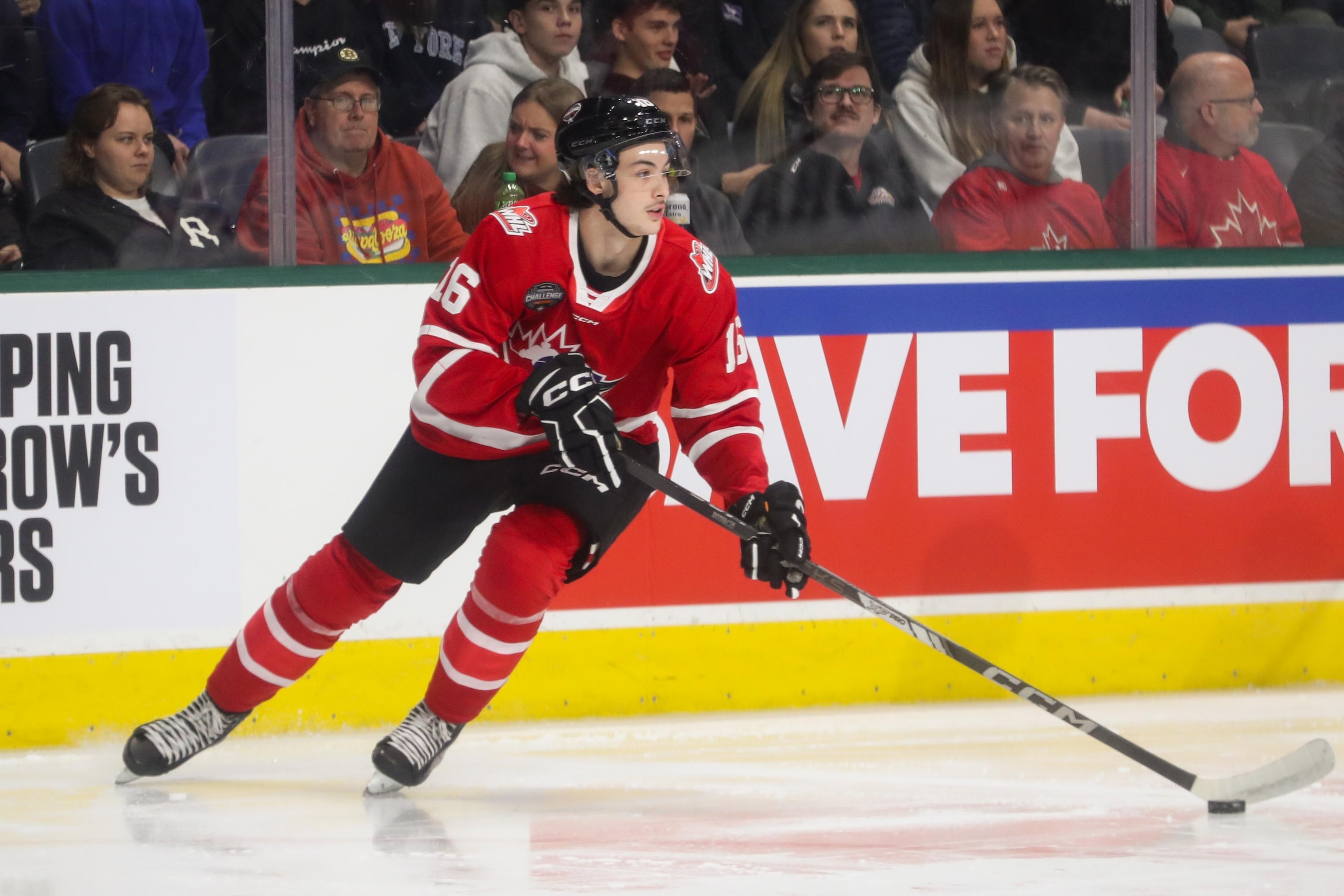
Strengths: Excellent shot, speed
Weaknesses: Could engage more physically
In our first Big Board, I said: "We don't anticipate keeping Lakovic this low all season." He's ended up at the No. 11 spot, and this is where he'll likely stay.
There's so much potential in his game, and the progress we saw across the season (when he wasn't injured) was promising. His skill is still somewhat raw, but he was never going directly to the NHL, so I look forward to seeing how he further refines it with Moose Jaw next season.
Lakovic has a high floor because he has a great set of tools. He needs to be more aggressive and more consistent with how he utilizes those tools. He has an excellent shot, and he's great at using his stick to both protect the puck and get in the way of plays his opponents are trying to cook up.
He's an above-average skater with good speed and has great puck-handling skills. He ended the regular season with 58 points in 47 games. He has another gear that he could kick into next season when he's healthy, both offensively and in terms of engaging physically. The right development environment will help encourage that, depending on which team drafts him.
12. Justin Carbonneau, RW, Blainville-Boisbriand Armada (QMJHL)
12 of 32
Strengths: Playmaking, vision, precise shot
Weaknesses: Does too much sometimes
Justin Carbonneau is such a dynamic, creative playmaker. He's a threat every time he steps onto the ice, whether he has the puck or not.
If he has it, he's going to use his top-notch vision and playmaking, or perhaps his quick release shot, to burn you; if he doesn't, he's going to use his speed to chase you down and take it back. All these things combined confirm that his skill set is quite projectable to the NHL.
An issue with Carbonneau is that sometimes he can try to do it all himself. And inevitably, when you try to run the show yourself, things are going to slip through the cracks and mistakes are going to happen.
With Carbonneau, if we can see his decision-making in these sorts of situations improve, which will go a long way toward assuring that he has a promising future rather than burning out.
13. Anton Frondell, C, Djurgardens IF (Hockeyallsvenskan)
13 of 32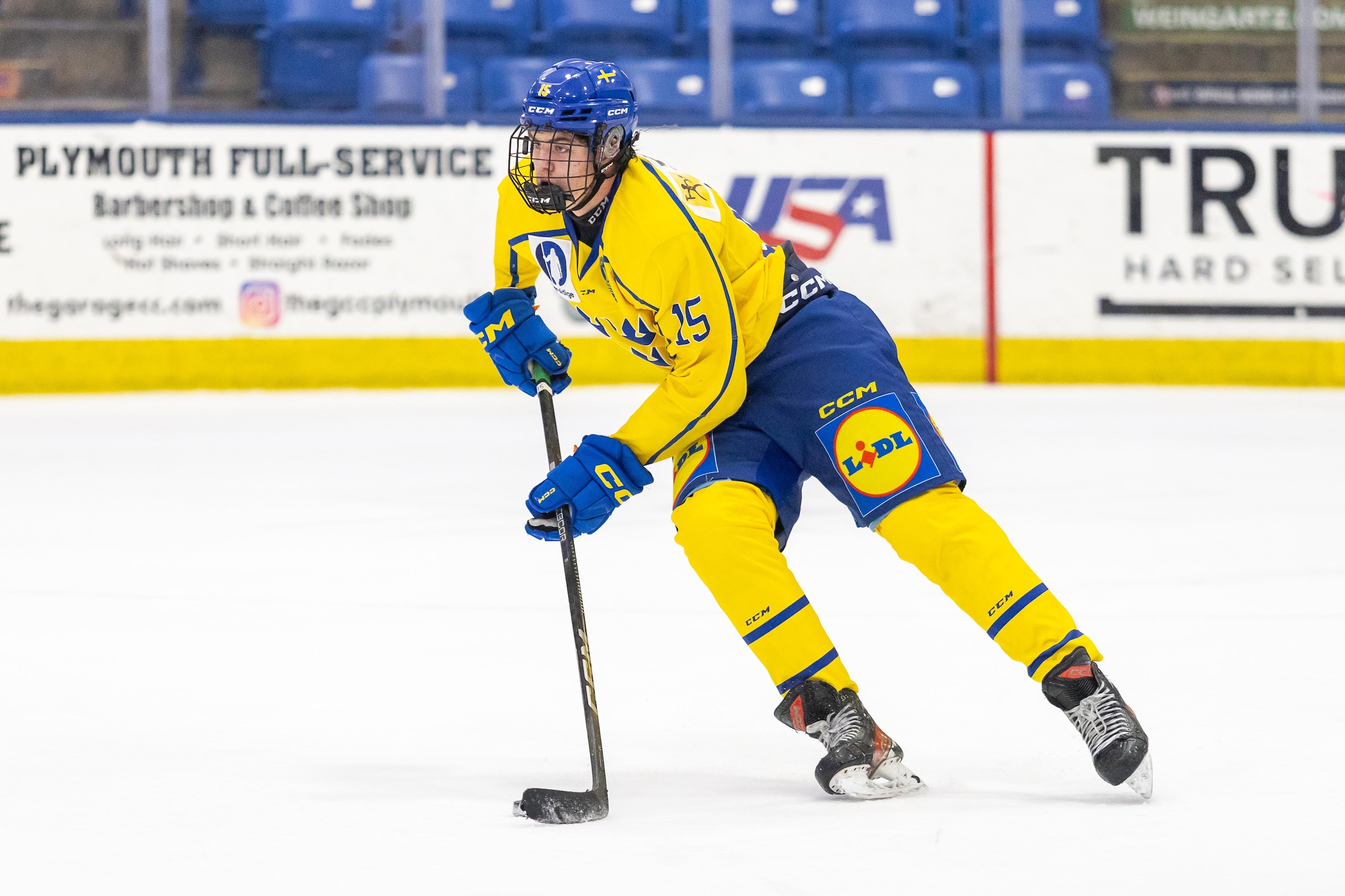
Strengths: Puck skills, physicality
Weaknesses: Consistency, deceptive abilities
Anton Frondell has dynamic puck skills, particularly in small areas, and he's been improving the physicality of his game across the season, using it to win pucks back.
He's strong, smart and we've seen several flashes of puck protection skills—it's an area of his game I would really like to see more consistency in, because there are moments where I've really liked what I saw.
I don't love that we haven't really seen the playmaking skills Frondell displayed at lower levels this season. I'm not sure whether that's a coaching thing or if he's just focusing on other aspects of his game, but there are many times when he chooses to dump the puck in transition rather than try to make a play, and it can get frustrating.
He's a really intelligent player, and I'd like to see more playmaking from a guy who is playing center. We've seen flashes—they haven't disappeared entirely, so we know he's still capable. His ability to win puck battles and get the puck back from his opponents is still great.
14. Radim Mrtka, D, Seattle Thunderbirds (WHL)
14 of 32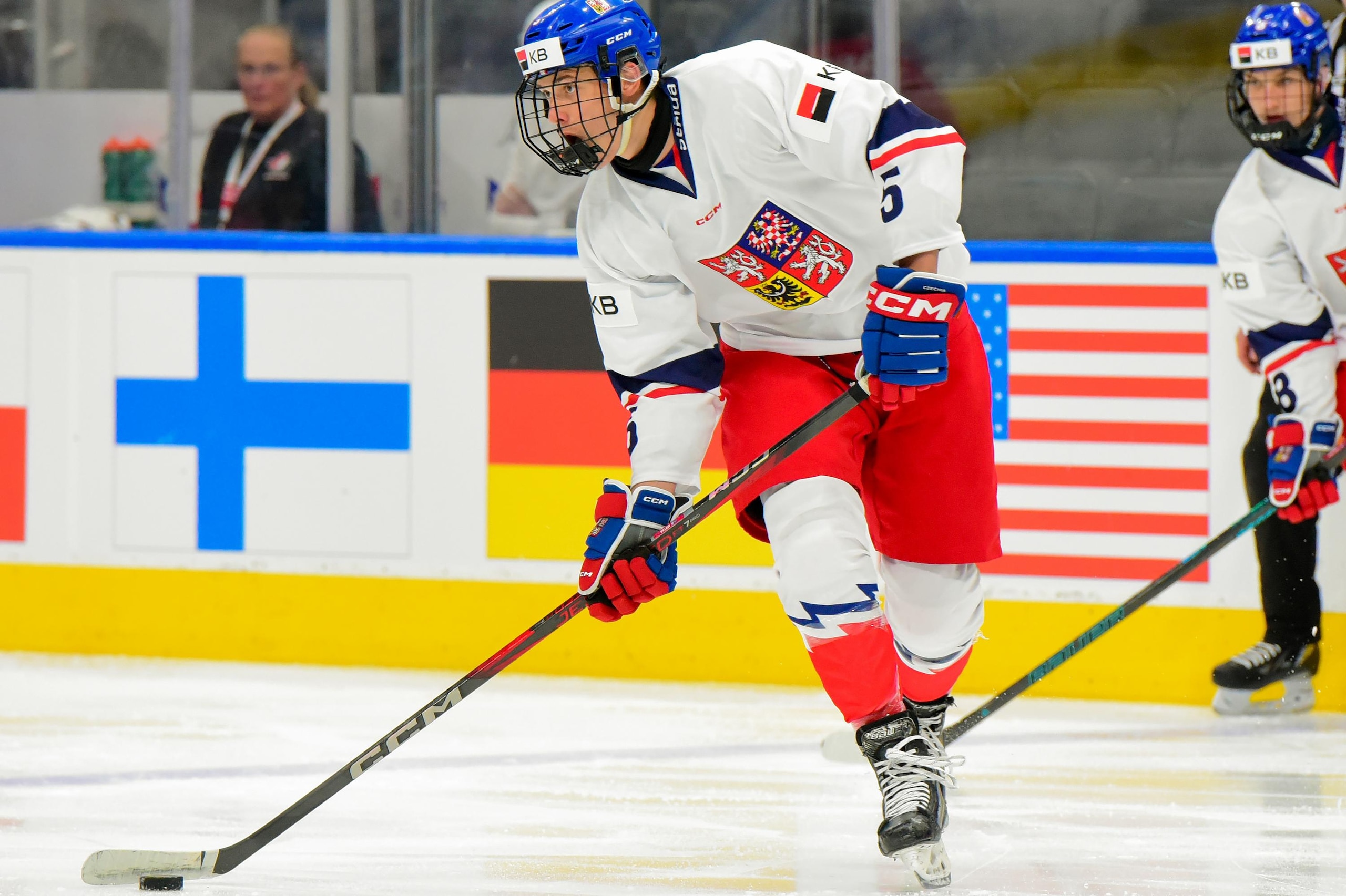
Strengths: Awareness, stick skills
Weaknesses: Mobility could improve
Radim Mrtka grew on me over the course of the season, which is great—it really feels like you're watching a story unfold in real time.
On our last full board, I said he was "someone we're going to be watching closely the rest of the way," and boy did I, as is evidenced by how he rose up the rankings several spots.
Though he projects as more of a shutdown type, we do see occasional flashes of his offensive ability—he finished his time in the WHL this season with 35 points in 43 games.
Only three of those points were goals; most often Mrtka is using his awareness to facilitate and create for his teammates. He's got excellent awareness of the ice and how plays are unfolding, and this serves him well both with and without the puck.
He shines more when he's eating up big minutes and focusing on shutting down opportunities for his opponents, though—the offensive side of things is not where his future lies, though it could be useful at times.
15. Cameron Schmidt, RW, Vancouver Giants (WHL)
15 of 32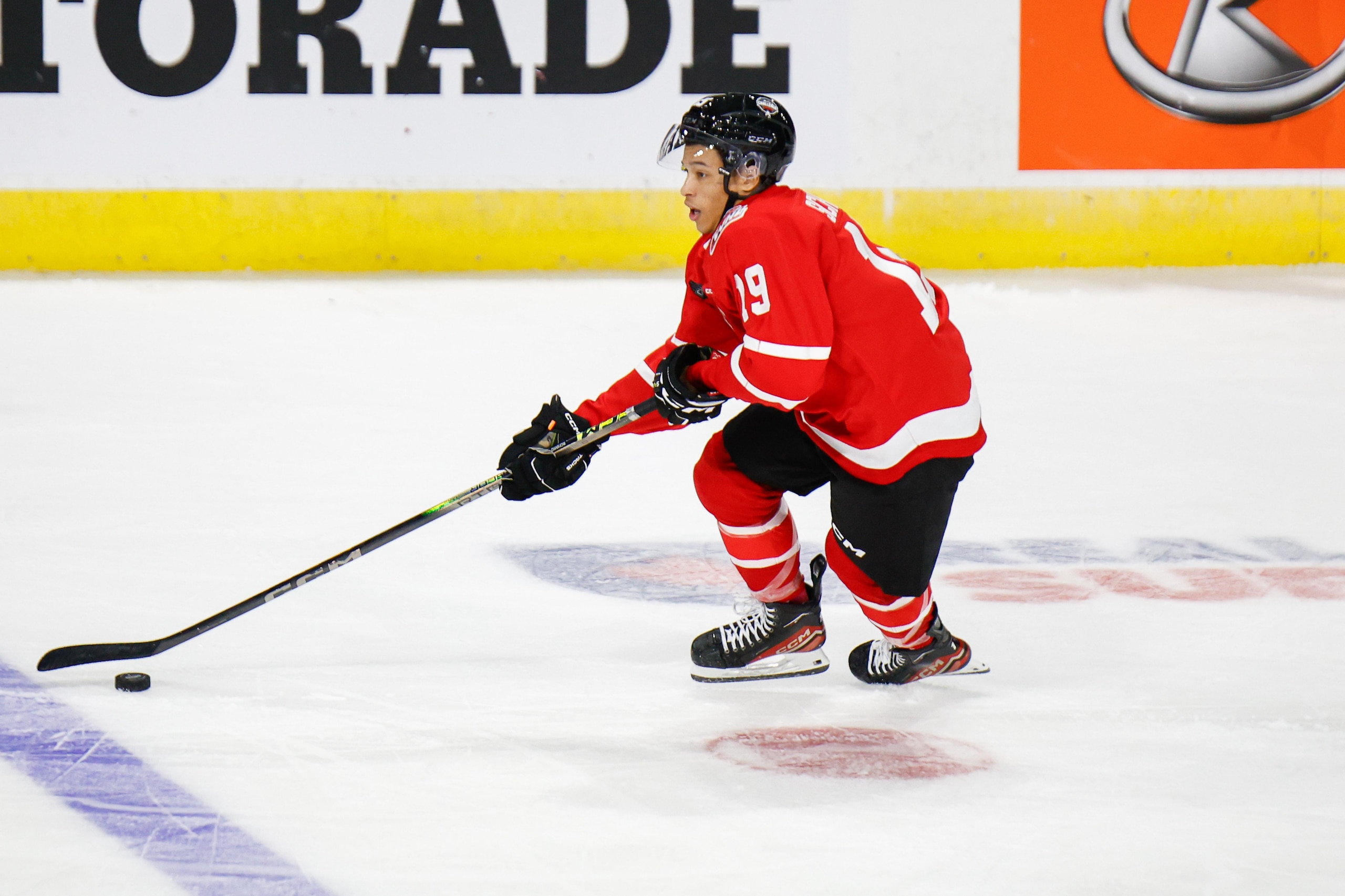
Strengths: Goal-scoring, speed
Weaknesses: Consistency, play without the puck
Cameron Schmidt reads the ice at such a high level, and he's able to exploit that to nab lots of points. He finished the WHL regular season with 78 points in 61 games, added nine more points in five playoff games, and then a four further points in seven games with Canada at the U18s.
That vision allows him to take advantage of mistakes by his opponents and allows him to be in the right position himself—although we aren't necessarily seeing this with the consistency I want to see it, particularly in terms of his timing off-puck.
Schmidt has an excellent shot and scores some impressive goals, using his speed nicely. He's shown moments of impressive playmaking ability. But there's not enough consistency, particularly in how he selects his plays—if there was, his point totals would be much higher.
He isn't afraid to engage physically or be a bit of a pest, but those aren't where his biggest strengths lie.
16. Brady Martin, C, Soo Greyhounds (OHL)
16 of 32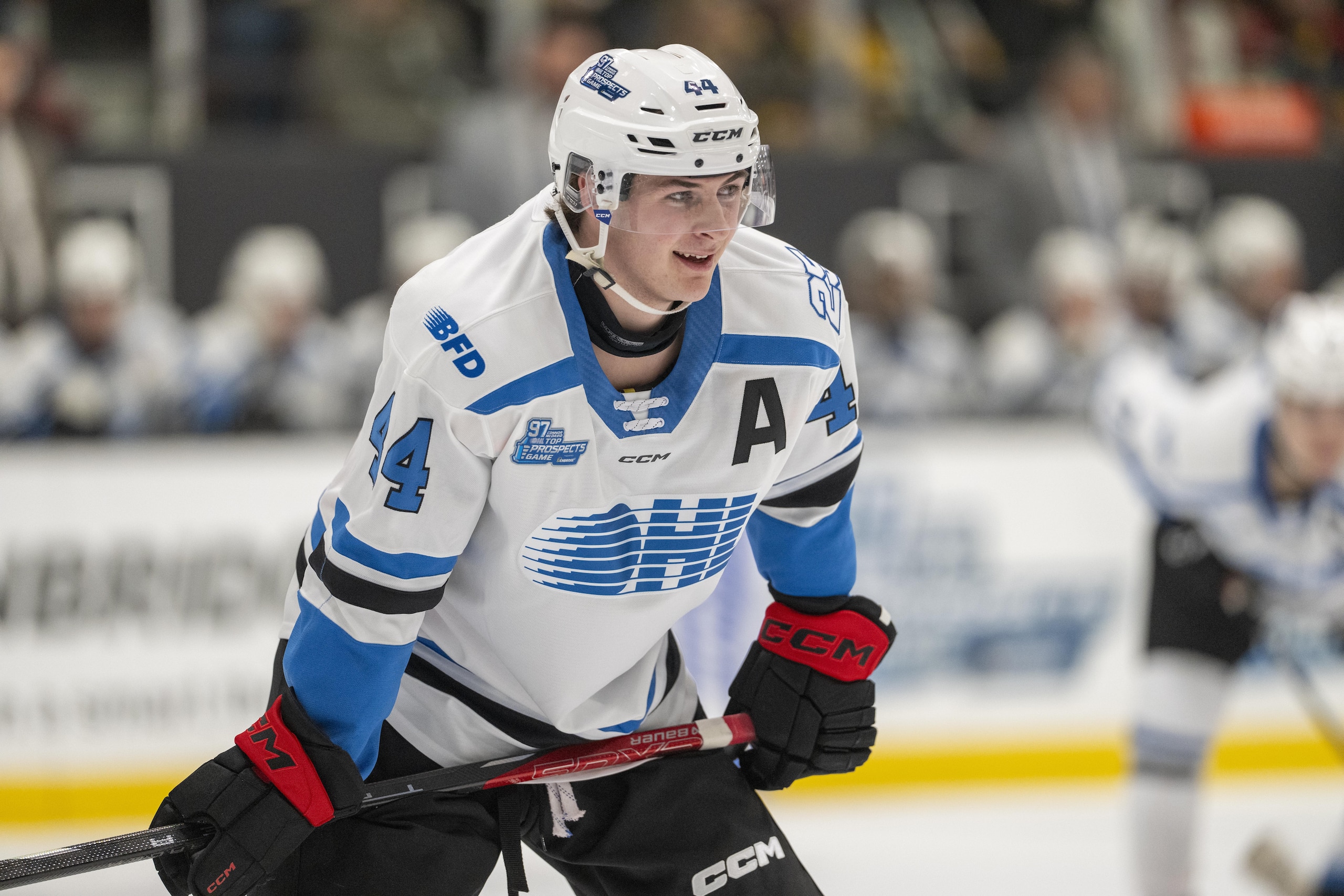
Strengths: Intelligence, tenacity
Weaknesses: Skating (especially posture)
Brady Martin is going to both bless and stress whatever NHL team drafts him.
You cannot deny his work ethic, his tenacity or his hockey IQ. He's such a smart player, and there aren't many players in this year's draft who can match the tenacity he puts into the game.
He's constantly getting involved in every area of the ice, and his physicality allows him to dominate opponents. He doesn't know what the word "quit" means. As I've said before, sometimes he can end up trying to do too much, but I'd rather have a player who tries to do too much and have to scale him back than have to motivate a player who hangs around the edge of the play to get involved.
Martin finished the regular season with 72 points in 57 games, including 33 goals, and those points come from his fascinating approach to the offensive side of his game. His offensive instincts and intelligence have him trying some stuff with the puck that his opponents won't even consider. He's so clever; he just pairs it with chaos.
And it's the chaos—as well as his not-great skating posture—that makes us wonder whether the full package is translatable to the NHL level.
17. Logan Hensler, D, University of Wisconsin (NCAA)
17 of 32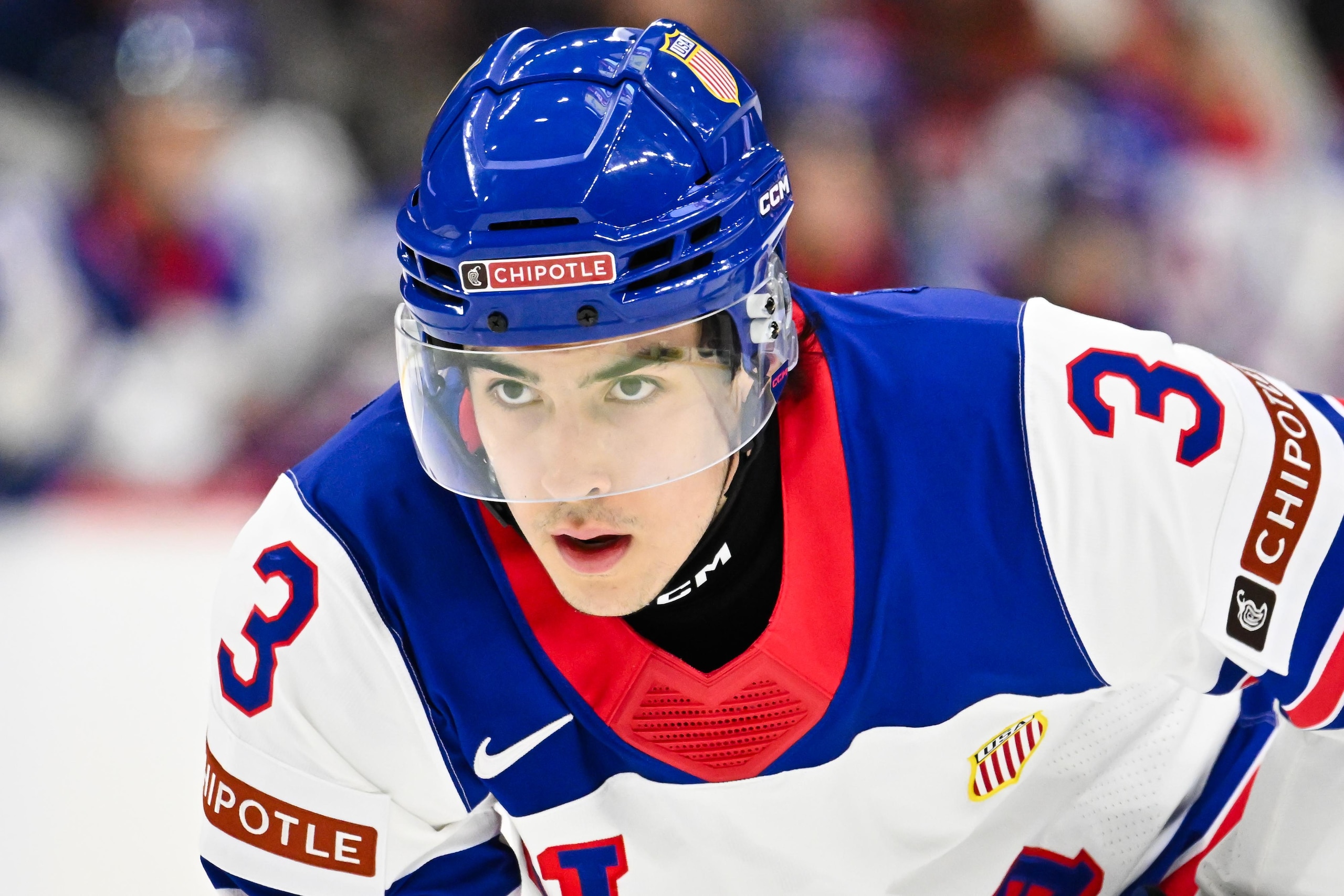
Strengths: Mobility, stick work
Weaknesses: Decision-making under pressure
Logan Hensler is the rare player who has fallen for me across the course of his draft season rather than growing on me. He's no longer in the top half of our first round, but I don't want to suggest that he is not a good prospect, or that he shouldn't be selected in the first round. Other players have bypassed Hensler for me, but he still projects to be an NHL defender; he's just a longer-term project than we may have initially thought.
One aspect of his game that I saw become an issue at times this season, and that I would love to see Hensler work on, is his awareness and decision-making under pressure. It's funny, because prior to his move to college hockey those are two things I would've called strengths of his game—and obviously that isn't going to completely disappear overnight! But he was in a brand-new environment with more difficult opponents, and being in the NCAA in your draft year is always going to be a challenge. He activates well and he's been showing signs of incorporating offensive opportunities into his game; I hope he keeps exploring that and adding it to what he already brings to the table. Regardless, I think he still projects as a top-four NHL defenseman. It's just going to take slightly longer to get there than we thought.
18. Braeden Cootes, C, Seattle Thunderbirds (WHL)
18 of 32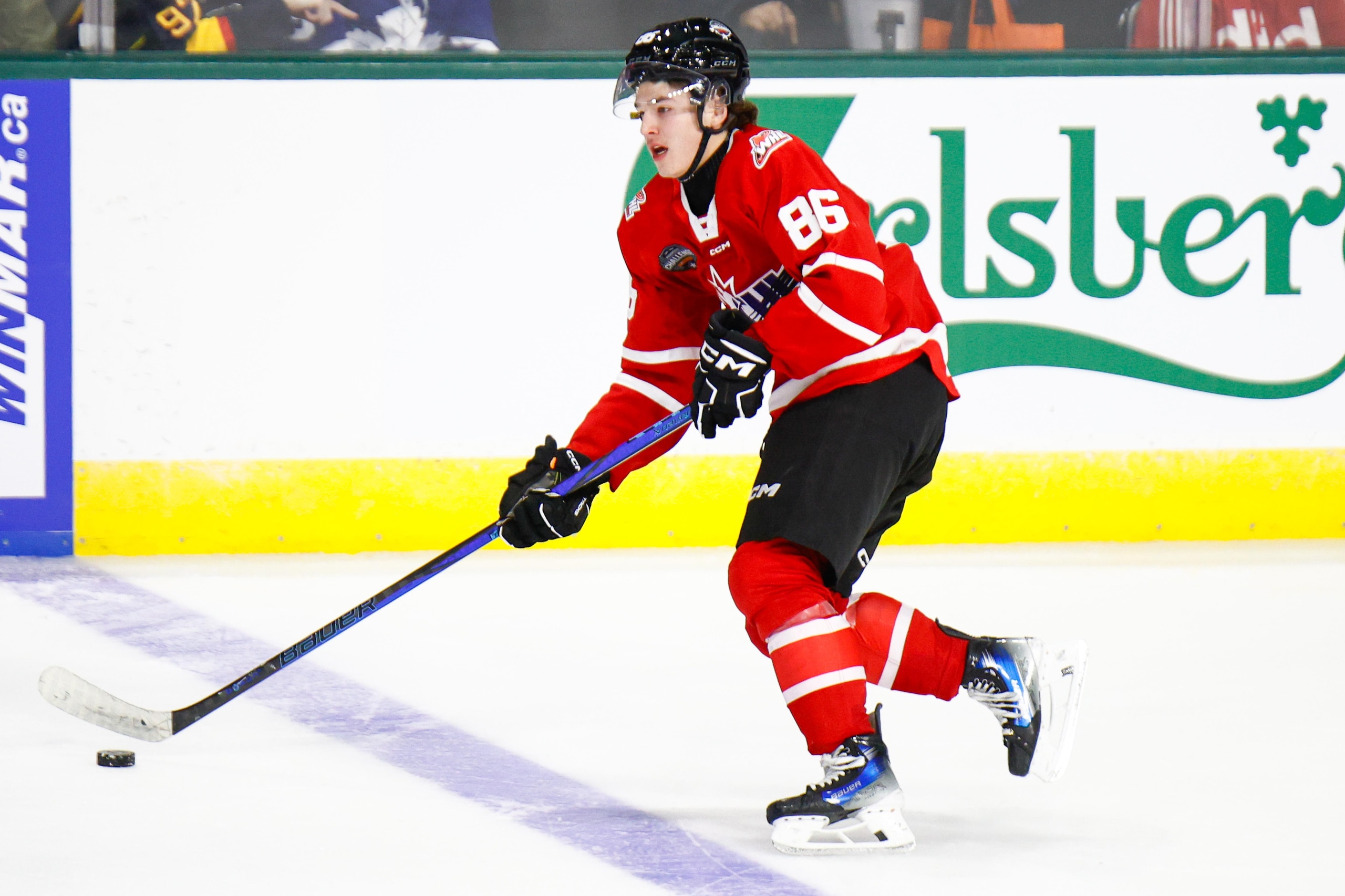
Strengths: Constantly engaged, excellent off-puck, speed
Weaknesses: Size is a concern, as well as the question of whether his skill is enough for the next level
You may have heard Braeden Cootes' name recently, because he's been shining at the U18 World Championships for Canada. The Seattle Thunderbirds center, who finished the WHL regular season with 63 points in 60 games, decided to show off the facets of his game we like most and prove that he is in fact that player that scouts say he is.
He's terrific off the puck, and we've seen him add a playmaking layer to his game across the regular season this year. I'll be watching closely next season to see whether he elevates that even further, because it feels like the potential is there; we'll see whether he puts the tools all together. Cootes has excellent speed, and he's a very agile guy. He's fearless and he's relentless, and that can be a very valuable combination when channeled correctly. He's able to evade defenders, and he's good at applying pressure on the forecheck. The only big question about his game is whether his skill set—which is certainly above average—is enough to make the jump to the professional level. As we saw a lot of growth this season, I feel like that's a question we will see answered next season.
19. Kashawn Aitcheson, D, Barrie Colts (OHL)
19 of 32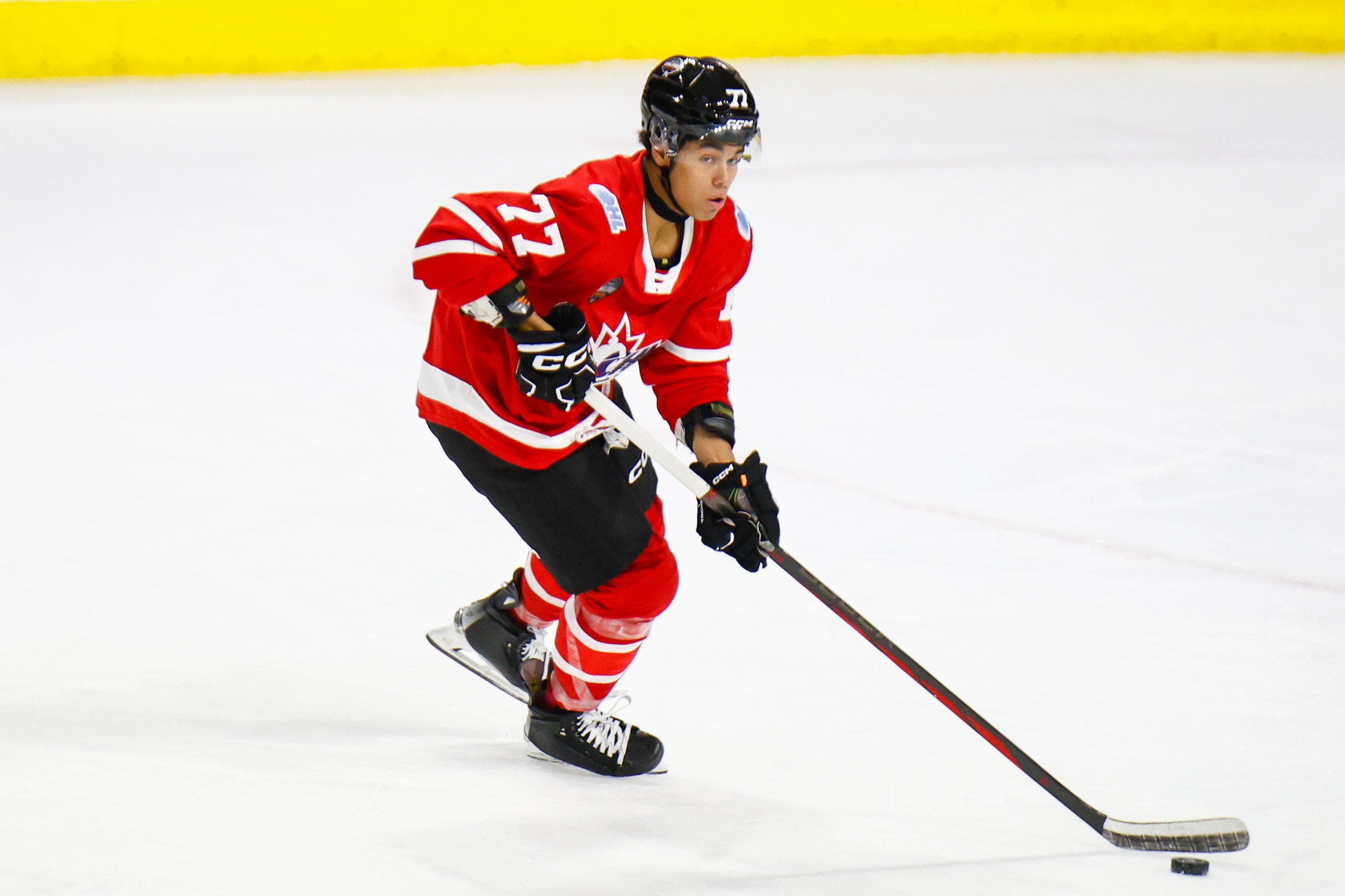
Strengths: Physicality, puck moving
Weaknesses: Isn't the most creative or dynamic
Watch Kashawn Aitcheson once and you can almost immediately picture what he would look like in the NHL. He's stayed in (roughly) the same area on our draft boards throughout the year, and it's because he's very clear about the kind of player he is. The Barrie Colts defenseman is a physical force each time he steps onto the ice, and he pairs that with excellent puck-moving abilities. The way he attacks the game is very "what you see is what you get" — in a good way.
Aitcheson is never going to be a flashy dynamic defenseman, or the most creative player on the ice, and that's okay; he doesn't need to be. He's quite effective without those facets. He's able to read lanes, we've seen his decision-making improve across the course of the regular season, and he's great at shutting down opponents and taking away their breathing room, all while breathing down their necks. It's a lot of fun, honestly. He's constantly engaged in play, and constantly scanning the ice. He's a very real two-way guy in the best possible sense, and he's going to be relied upon to chew up important minutes when he makes it to the professional level.
20. Cameron Reid, D, Kitchener Rangers (OHL)
20 of 32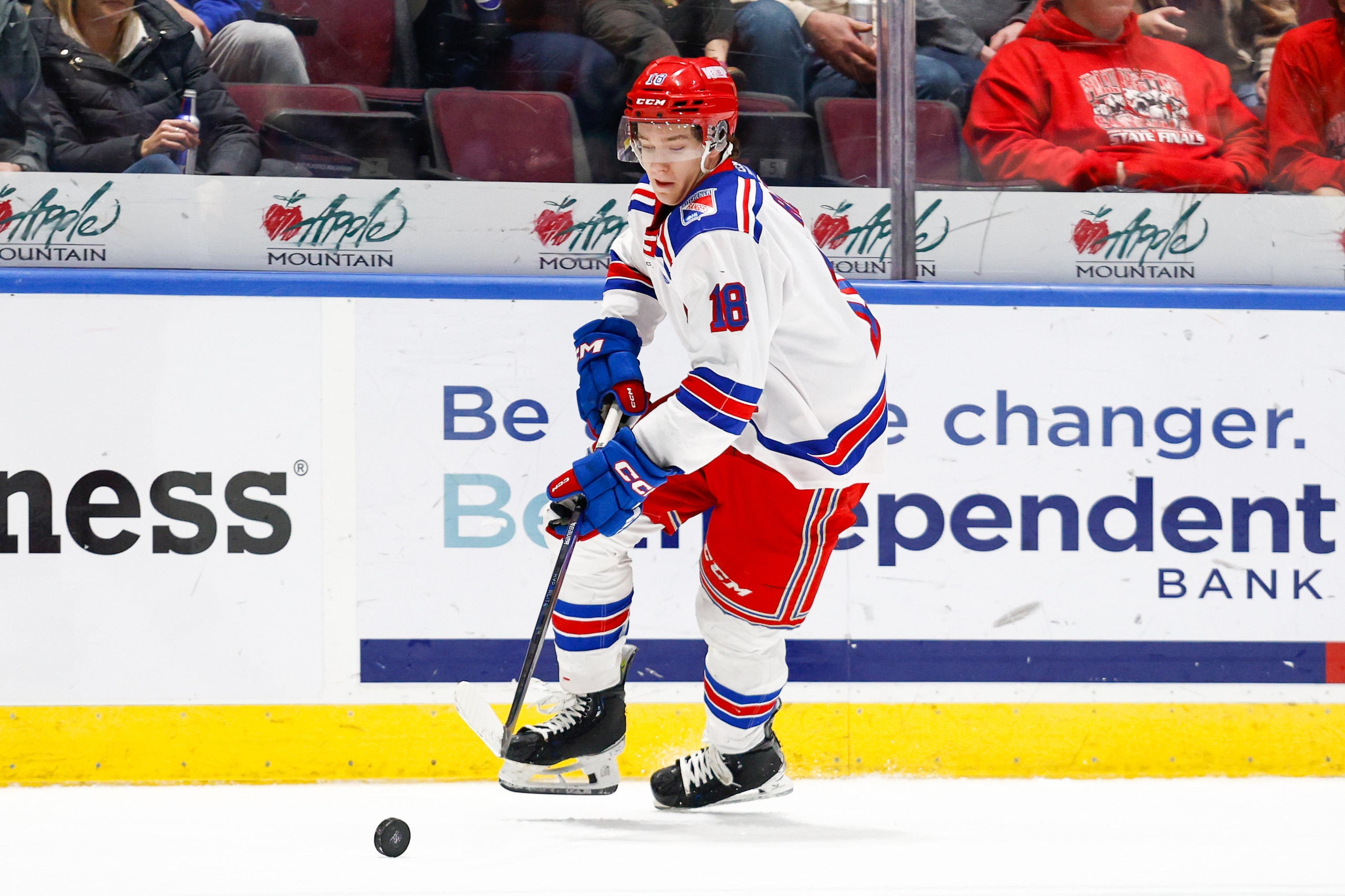
Strengths: Skating, stick work
Weaknesses: Size, inconsistency in several areas
If I had to sum up Cameron Reid in one short sentence it would be this: the potential is high but the runway is long. There's a lot to like about Reid's game; his stick work is excellent, he's a great skater, and he's always activating. His rush defense is an area consistently called out as solid. But he's limited by his size (and for me of all people to call that out, you know it has to be true), and moreover he is limited by a lack of consistency in areas of his game that should be his strengths. His offensive reads, his physicality without the puck, and his playmaking all need to become more consistent facets of his game. If that happens, he should have a good, solid NHL career ahead of him. But at present the key word is "if".
21. Benjamin Kindel, RW, Calgary Hitmen (WHL)
21 of 32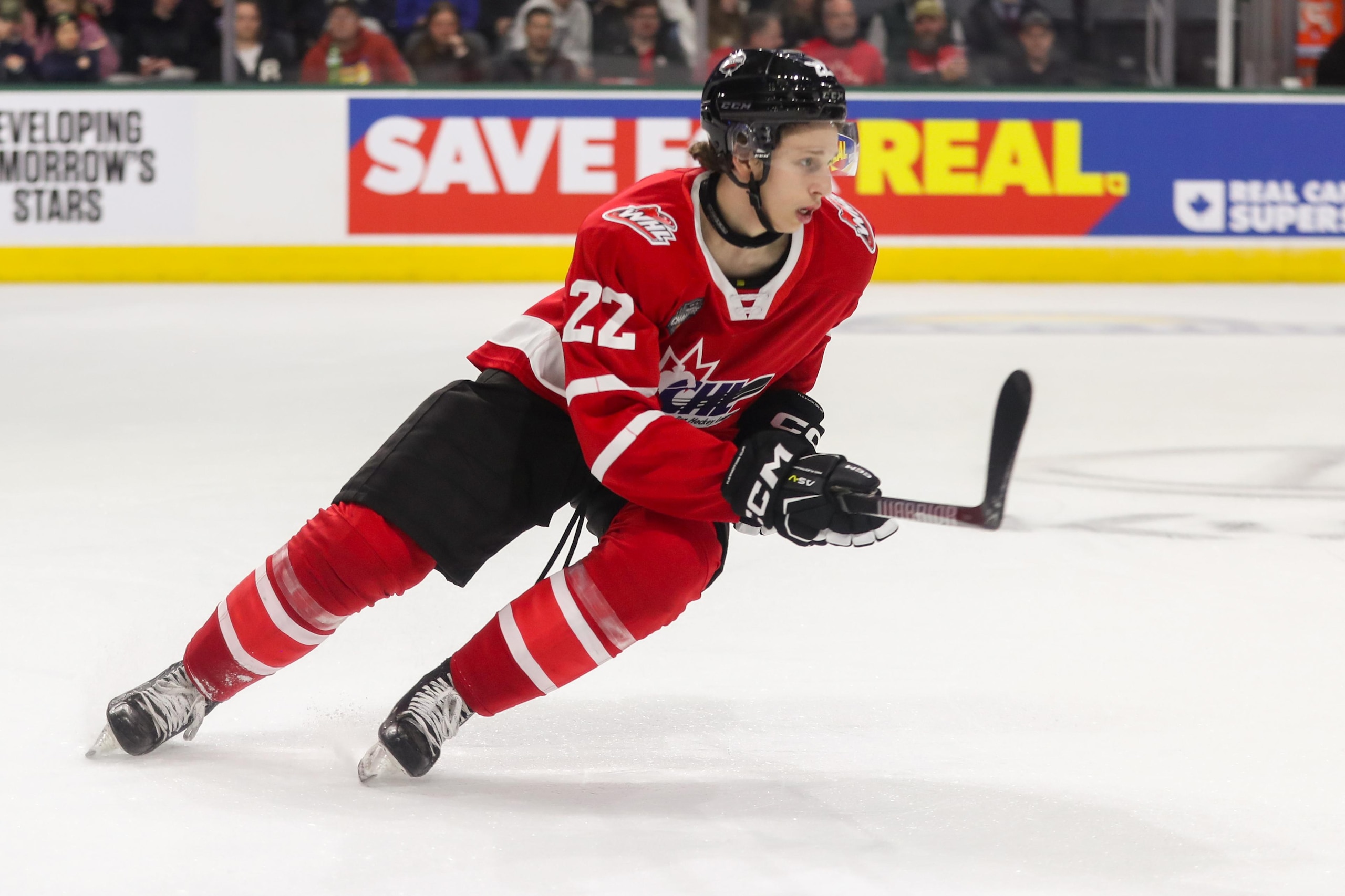
With 99 points in 65 regular season games, it's hard not to take a closer look at Calgary Hitmen forward Benjamin Kindel. In terms of pure tools, he has skill out his ears. The big question with Kindel is whether he is going to be able to put those tools together at a professional level. He's got fantastic hockey sense, and we've seen his offensive output improve across the course of the season. He's a terrific creator, but he also engages physically and backchecks, working hard in puck battles. He needs to improve his shot if he's going to be a goal scorer at the next level, particularly adding deception to his arsenal, and he needs to add strength. I'd also like to see him take the offensive creativity and hockey sense at his disposal and learn how to utilize that more effectively at the game's top speeds—his decision-making can sometimes leave you wanting.
22. Blake Fiddler, D, Edmonton Oil Kings (WHL)
22 of 32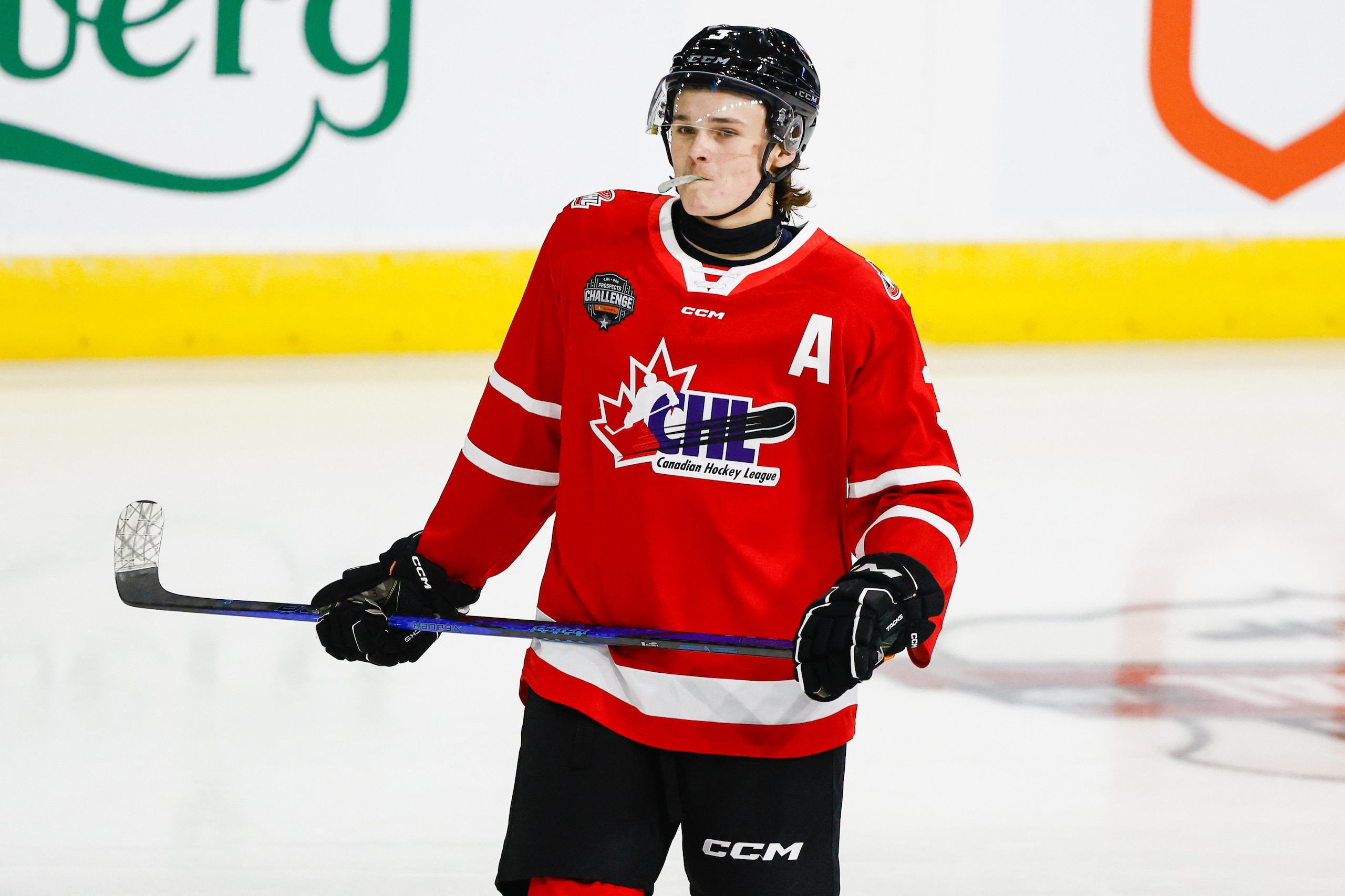
Strengths: Always involved and activating, good offensive instincts
Weaknesses: Has issues with misreads and timing
While Blake Fiddler slid down our board a couple of spots, that's no slight on Blake Fiddler, and with the way this year's first round is shaping up I still think there's a chance he goes inside the top 20. There's something so appealing about the Oil Kings' defenseman's game; he's so strong defensively, able to suffocate opponents' chances, and he's a mobile skater. One of Fiddler's prime issues is that he can misread plays, or misread his timing, and he needs more of a runway to build good habits in those areas. While his offensive instincts are good, and should be utilized, I do think his future projects as more of a shutdown-style defenseman—and that's no slight, because with some focus he could be a fantastic one.
23. Malcolm Spence, LW, Erie Otters (OHL)
23 of 32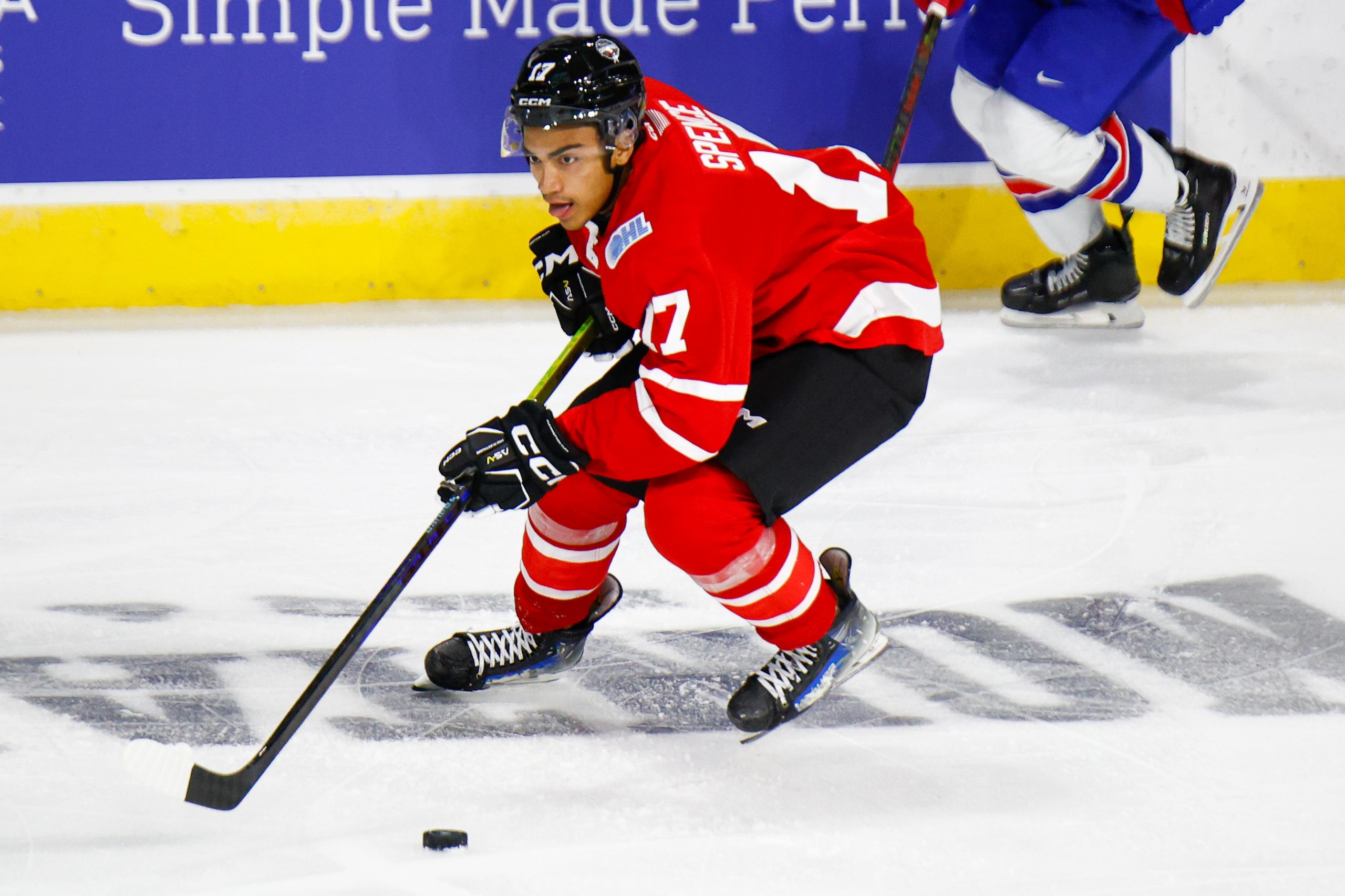
Strengths: Tenacity, physicality, instincts
Weaknesses: Lack of agility and dynamism
Finishing out the regular season for the Erie Otters with 73 points in 65 games, Malcolm Spence netted an additional 9 points in 9 playoff games. Right off the jump that speaks to one of the key facets of Spence's game—his tenacity. He combines a relentless work ethic with physicality, and will do so in the same breath that he finishes off a pass from a teammate. It's a very appealing combination. He doesn't have those flashy playmaking abilities others in his class have, but it doesn't really matter; he's quite effective without it. One thing that I would like to see him improve is his skating, particularly his agility—imagine his ability to annoy the stew out of an opponent combining with the ability to turn on a dime and be elsewhere on the ice. Still, there's extensive potential even without that aspect of the game being part of his skill set; his floor is very high.
24. Shane Vansaghi, RW, Michigan State University (NCAA)
24 of 32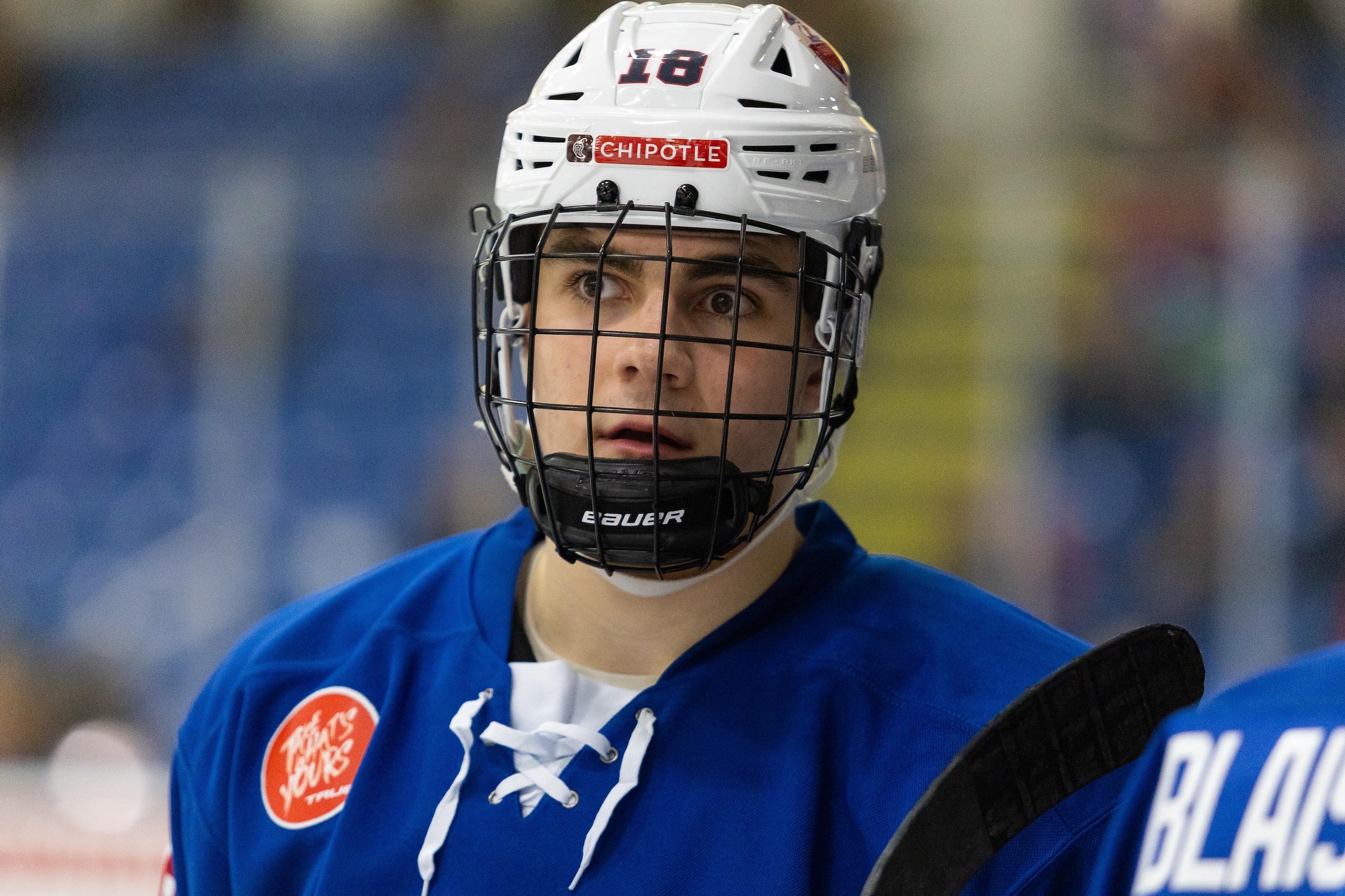
Strengths: Puck skills, physicality, relentless work ethic
Weaknesses: Skating, offensive consistency
Shane Vansaghi is one of a handful of draft-eligibles jumping into the NCAA in their draft year, one of the younger players in the NCAA overall. You wouldn't know it to look at him; Vansaghi already has that NHL size, at 6'2" and 216 pounds. He finished his first season at Michigan State with 16 points in 37 regular season games, and there's quite a bit of potential lurking beneath the surface. He's got excellent puck skills, and he pairs them with incredible physical play and battling. He's got great pace without the puck as well, and his hockey sense is definitely above average. Something we would like to see improve next season is turning that vision and those crafty puck skills into numbers on the score sheet. His skating can be a bit clunky at times as well, and some work in that area would go a long way toward supporting his offensive skills.
25. Joshua Ravensbergen, G, Prince George Cougars (WHL)
25 of 32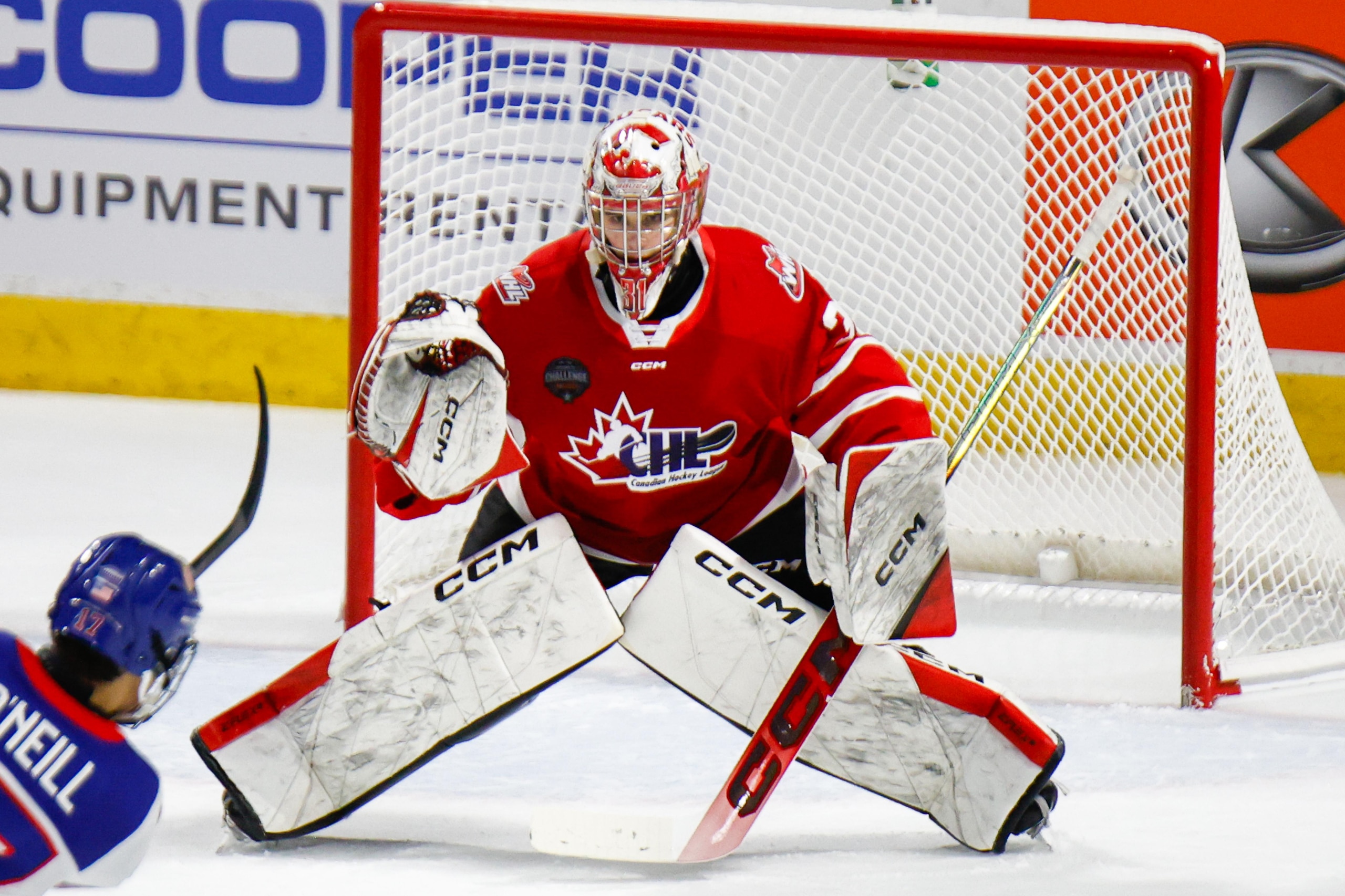
Strengths: Size, puck-tracking
Weaknesses: Struggles with layered screens (who doesn't?)
As far as goaltenders go, if you're going to take one in the first round this year it should be Joshua Ravensbergen (though we will entertain arguments for Steelheads goaltender Jack Ivankovic). The Cougars goaltender could potentially go as high as inside the top 20, with as wide-open as this year's field is. One of Ravensbergen's best traits is the composure and sense of calm he brings to the net. Another is his size—he's 6'5". But the standout element of his game is his puck-tracking ability. It allows him to stay one step ahead of his opponent's skaters, reading the play unfolding in front of him so that he can use his athleticism to be in precisely the right place. We would like to see him improve his ability to absorb rebounds, but what goalie doesn't want to improve that aspect of their game?
26. Benjamin Kevan, F, Des Moines Buccaneers (USHL)
26 of 32Strengths: Defensive play, pace
Weaknesses: Consistency
Forward Benjamin Kevan finished the USHL regular season with 43 points in 51 games, and while we anticipate that he will need a longer development runway than some before he's ready for professional hockey, the elements of a great pro player are there. He's strong defensively, great on the forecheck with impressive skating, and the high pace with which he plays is frequently a standout part of his game. His puckhandling is also top-notch. The seeds of great playmaking abilities are there, particularly with his intelligence, but we need to see him learn to utilize the tools in his skillset more consistently. He's a dynamic player with a lot of potential, and, at present at least, the gut feeling is that with enough time he's going to live up to it.
27. Vaclav Nestrasil RW, Muskegon Lumberjacks (USHL)
27 of 32Strengths: Physicality, offensive impact
Weaknesses: Consistency, certain aspects of his skating (i.e. quickness and agility)
In terms of raw potential, Vaclav Nestrasil is an ignore-at-your-own-risk power forward type. Whether he puts it all together at the professional level remains to be seen, but there's a lot here worth taking a chance on. He brings great defensive awareness and offensive impact to the game, particularly in terms of making quick, creative plays. His physicality is also excellent, and could be described by some as bringing a level of violence to the game—but from Nestrasil it appears that he knows how to use that productively. All of the above are things we don't see consistently yet, but are extremely appealing if he manages to apply them on a regular basis. He's a smooth skater, as well, but needs to improve his quickness and agility.
28. Jack Murtagh, C/LW, USNTDP
28 of 32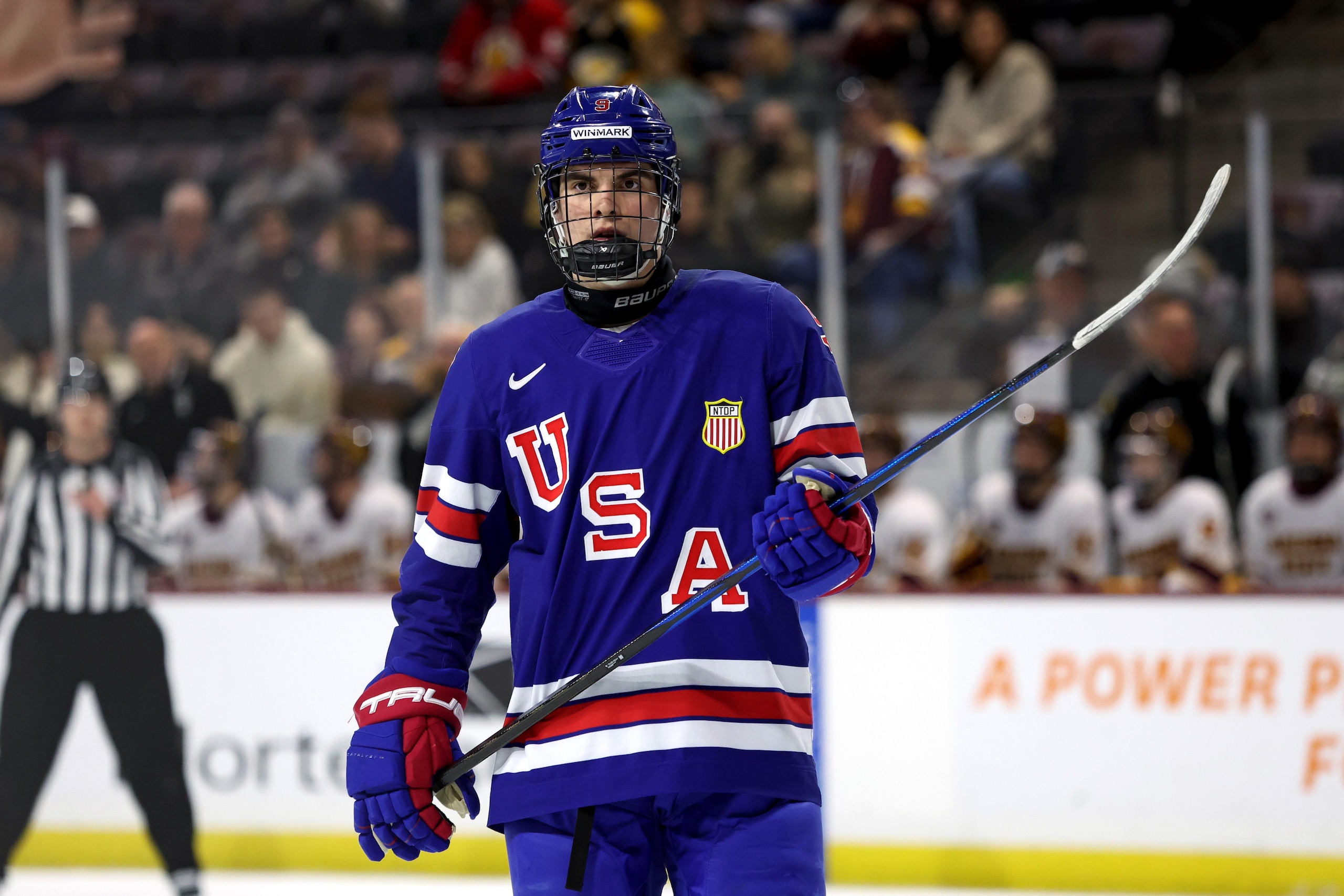
Strengths: Work ethic, motor, playmaking
Weaknesses: Could be more creative, and could showcase manipulation abilities more consistently
We love an NTDP draft-eligible guy around these parts, if I'm being frank, Jack Murtagh is one of the only two of this year's crop that I consider first round material, the other potentially being his teammate William Moore, who just barely fell off our list and could go in the first round. Murtagh's growth this season has been fantastic to witness—perhaps the best part was when he began incorporating manipulation into his playmaking, and that's something we would like to see him do more consistently. His relentless motor really pulls all his skills together, allowing him to push back defenders and open up space for Murtagh to create for his linemates. We think there could be another layer to his playmaking game that we haven't seen consistently yet. He's headed to Boston University next season, and a couple of years in college hockey will be a great environment for him.
29. Bill Zonnon, LW, Rouyn-Noranda Huskies (QMJHL)
29 of 32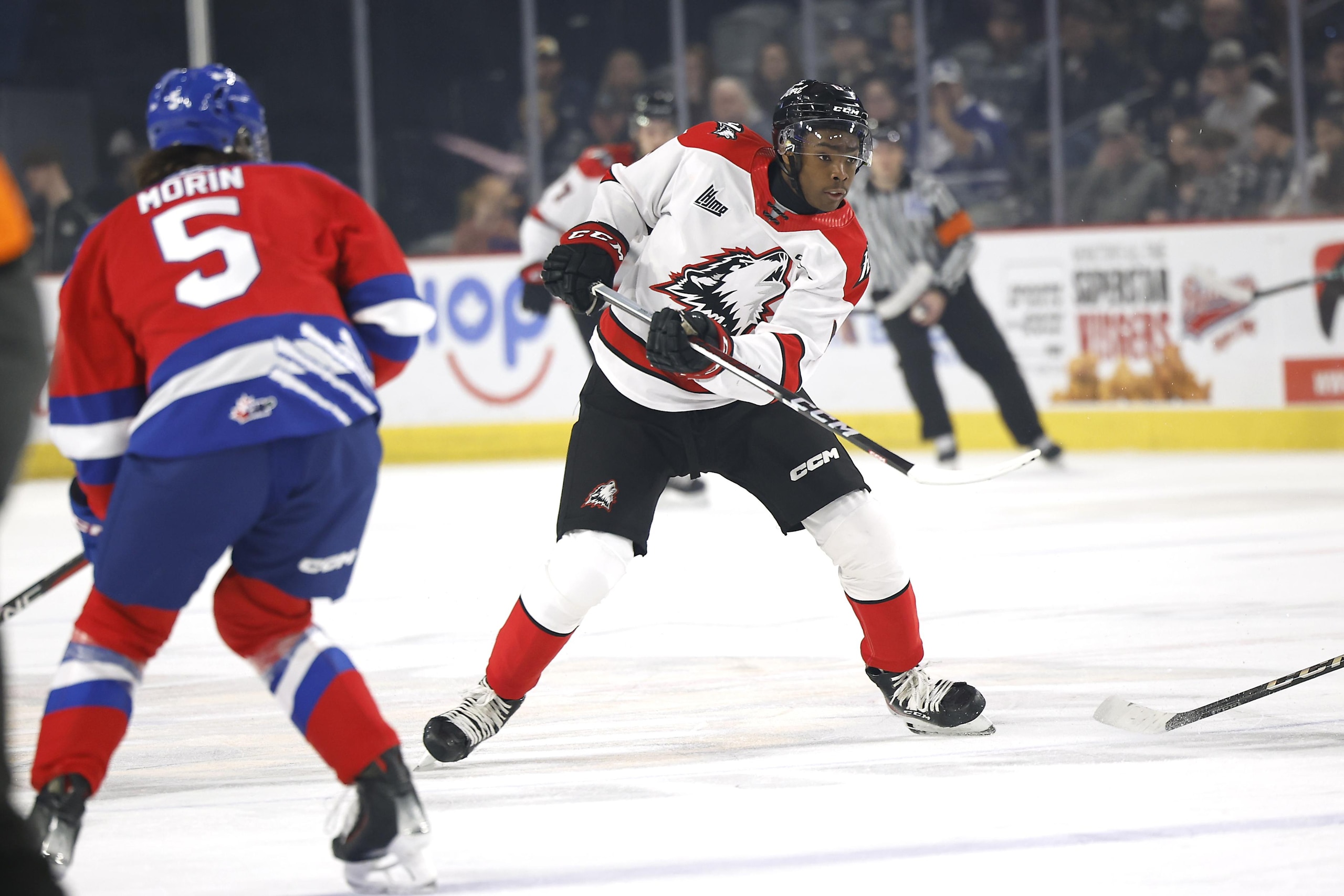
Strengths: Work ethic, motor, playmaking
Weaknesses: Skating, though it is improving
Some playoff team is going to draft Bill Zonnon late in the first and be absolutely delighted with the player they get out of it.
Watch it be Carolina; it's notorious for sniffing out raw potential, and Zonnon has it in spades. He's got a high floor and a fantastic work ethic, and that's just his starting point; his awareness and engagement level when he's on the ice paired with his ability to net primary points suggests there is much more to be mined when it comes to his offensive abilities, particularly his playmaking and hockey sense.
Add that to the growth we've seen in his defensive game across the season and the fact that he's clearly worked on improving his skating and you have a prospect who is more than worth taking a flyer on.
30. Cullen Potter, LW, Arizona State (NCAA)
30 of 32
Strengths: Speed, mobility, tenacity
Weaknesses: Play under pressure, especially reading the ice
It's difficult playing in the NCAA in your draft year, particularly when you don't even turn 18 until halfway through.
Cullen Potter's growth as a player this year has been impressive. Don't let the fact that he only scored 22 points in 35 NCAA games this season sour your opinion of him offensively; pair that with the knowledge that he's netted eight points in seven games at the U18 World Championships, including four goals.
Potter has looked better among his own age group at the tournament, which supports our theory that this NCAA year has been a season of growth and transition; it seems like that's going to be a good thing for him and his future career.
His electric speed and skating ability, especially his mobility in transition, and his tenacity are undeniable, and his playmaking ability has grown quite a bit across the season. So has his defensive play.
Don't frame it as struggling to transition to college; frame it as Potter taking advantage of growth opportunities, because we'll continue to see him improve.
31. Nathan Behm, LW/RW, Kamloops Blazers (WHL)
31 of 32While forward Nathan Behm didn't replicate his scoring pace of 29 points in his first 18 games this year, he finished the WHL regular season with 66 points in 59 games and broke the 30-goal mark. It's a pretty solid draft season.
The key thing to know about his early production is that it wasn't a fluke overall—the elements that made it possible were clear each time he stepped onto the ice for the Blazers this season.
His shot is NHL-ready, he always has the dynamic playmaking elements going—deceptive passing, creativity and puck-handling—and he's able to identify and take advantage of opponents' mistakes.
I'd like to see the physical side of his game improve and see consistency on the forecheck, before I decide whether he can consistently translate his game to higher levels, but there's real potential here.
32. Cole Reschny, F, Victoria Royals (WHL)
32 of 32
Strengths: Reading the play and exploiting opponents' mistakes
Weaknesses: Offensive play isn't as dynamic or high-end as others (but is effective)
With eight points in five games at the recent U18 World Championships, as well as 92 points in 62 regular-season WHL games and a further 25 points in 11 playoff games, Cole Reschny's offensive abilities are undeniable.
He's not a dynamic playmaker who will create deceptive or crafty plays that require high-end vision; he's more of an opportunist who feasts on the mistakes of his opponents or creates intelligent plays on a dime. He doesn't solely rely on those opportunistic moments like many with that skill can, though.
He's engaged in the game on all levels, with a high-end motor and the ability to get involved physically and take hits when necessary for the sake of a play, despite being a smaller guy.
He's going to be a useful middle-six type for some NHL team for a long time because he knows how to lurk in wait for the right moment to strike.



.jpg?w=2560 "NFL House in Paris Closes for Protests")
.jpg?w=2560 "Trevon Diggs Cut by Seahawks")



.jpg?w=2560 "Jonathan Taylor Landing Spots")
