
3 Reasons Why Mega MLB Contracts Are Trending After Vlad Guerrero Jr.'s $500m Deal
Welcome to Major League Baseball's new Extension Season, which is apparently never-ending and is absolutely, positively lucrative.
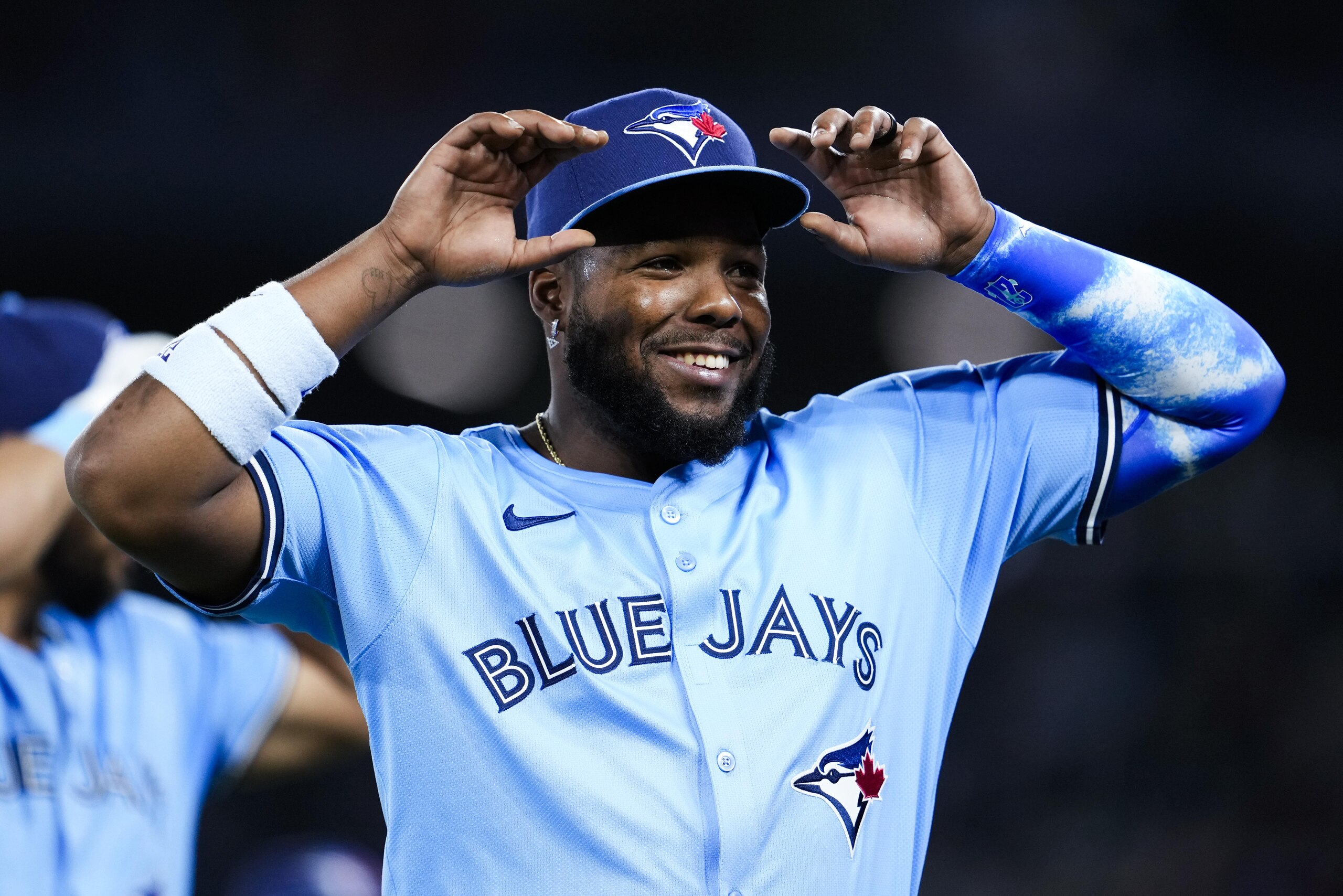
Four-time All-Star Vladimir Guerrero Jr. is the latest player to get in on the fun, agreeing to a 14-year, $500 million contract with the Toronto Blue Jays on Sunday. With Shi Davidi of Sportsnet reporting that the deal has no referrals, it is now the second-biggest contract in MLB history.
It's behind the 15-year, $765 million free-agent pact Juan Soto signed with the New York Mets, which obliterated the roughly $460 million present-day value of Shohei Ohtani's 10-year, $700 million contract with the Los Angeles Dodgers.
TOP NEWS
Skubal Reacts to Improbable HR 🤝

Ranking Top 25 Trade Chips For Offseason 🔢

MLB Playoffs Winners and Losers ⚾
Within the last month, Lawrence Butler, Cal Raleigh, Garrett Crochet, Kristian Campbell and Jackson Merrill all signed extensions of six or more years. Their total haul comes to 36 years and $535.5 million. Brandon Pfaadt and Alejandro Kirk just missed with five-year pacts.
Clearly, MLB mega-contracts are in right now. Let's look at three reasons why.
This Is the Market Now
While the early 2000s—think Alex Rodriguez, Manny Ramirez, Derek Jeter and the like—may have been MLB's prototype for a golden era of big contracts, the edition seems to be happening right now.
Assuming Spotrac isn't missing any, there have been 155 contracts of at least six years since 2012, compared to 59 between 2000 and 2011.
More recently, contracts of at least nine years have especially proliferated. Between 2000 and 2020, there were 17 such contracts. Since 2021, there have been 19.
This trend can be easily traced back to gung-ho owners who laid the foundation that Mets owner Steve Cohen and others have since built upon. Most notably, John Middleton of the Philadelphia Phillies and the late Peter Seidler of the San Diego Padres.
They basically collaborated in raising the bar for star player earnings via their deals with Bryce Harper and Manny Machado in 2019, which totaled 23 years and $630 million. That cleared the way for subsequent mega-deals for Mike Trout, Mookie Betts and Fernando Tatis Jr. The rest, as they say, is history.
There's also an accounting trick at play with these long deals, specifically where luxury-tax payrolls and the associated penalties are concerned. These are calculated based on the average annual value of a contract, and teams can dilute that figure by making the contract longer, and preferably with as much deferred money as possible.
We can also be real that another big reason these huge deals exist is that the money for them exists.
This has always been the case to some degree, but it was apparent in the 2010s that not enough money was being reinvested into teams' payrolls. Revenue has only gone up since then, with Maury Brown of Forbes reporting MLB pulled in a record $12.1 billion last year.
This rising tide isn't lifting all boats, but the Soto deal is instructive of how much of the pie superstars are taking. His average salary of $51 million beats even A-Rod's earth-shattering $25.2 million AAV from 2001, which is worth about $44.8 million in 2024 dollars.
This Is How Teams Value Players Now
All of the players mentioned above have at least one thing in common: They're in their 20s. Now more than ever, teams must get in while the getting's good.
It has long been understood that players peak around the age of 26, but what really matters is the ever-growing production gap between players in their 20s and players in their 30s, and particularly among hitters.
In the late 1990s, the 30-something hitters were more productive, yet now it's the other way around and then some. In 2024, hitters in their 20s outperformed hitters in their 30s by roughly 150 wins above replacement.
Signing players while they're still in their 20s is the only sound way for teams to get a good return on investment, though the Guerrero contract is a fascinating case study for how this isn't quite a foolproof notion.
When Dan Szymborski of FanGraphs ballparked an extension for Guerrero in February, he found that the slugger would be worth $500 million only if he built upon a terrific 2024 season in which he hit 30 home runs with a .940 OPS. The power is surely doable, but his career OPS heading out of last year was just .863.
At the same time, to think players only live up to their contracts between the lines is to ignore all the business that happens beyond them.
We mean this in a literal sense, of course. When a team signs a star to a mega-contract, they really are doing a deal with a "star" more than they are a "player." Stars do things that other players can't, such as sell tickets and move merch.
Take Soto, for example. After he signed with the Mets, sales of season and single-game tickets exploded, and he's already climbed to third place in MLB's list of popular jerseys.
This is what the Blue Jays are really after with Guerrero, though there's also something to be said about the credibility these contracts can buy.
They have ensured their fans will see a familiar face every day for the foreseeable future. This is never a bad idea for any ballclub, and this one has a whole country standing by to be grateful for it.
This Is How Uncertain Things Are Now
Have you ever heard the expression "make hay while the sun shines?" MLB's recent extenders have.
Financial uncertainty is on the horizon within Major League Baseball. The league is only three years removed from going into a lockout amid contentious collective bargaining negotiations, and things are probably going to get nastier when the current CBA expires on December 1, 2026.
"Unless I am mistaken, the league has come out and said there's going to be a work stoppage," Tony Clark, the MLBPA's executive director, told Barry M. Bloom of Sportico in March. "So, I don't think I'm speaking out of school in that regard."
The threat of a salary cap has long been a real one for the union, and Ken Rosenthal of The Athletic reported the league's owners are "agitating" to make it happen.
Even firming up the soft cap the league has now (i.e., the luxury tax) would threaten high earners first and foremost. That means guys like Soto and Guerrero, whose salaries are doing much to sustain a leaguewide average of $5.2 million. Even that figure is misleading, as the median salary is down.
It also simply cannot be ignored that there's a huge deal of financial uncertainty outside of MLB right now. The chances of the U.S. economy entering a recession before the end of this year go as high as 45 percent (Goldman Sachs) and even 60 percent (JPMorgan).
The question, then, is if there will be more big-money extensions as the 2025 season winds along.
The most obvious candidate is Chicago Cubs right fielder Kyle Tucker, who stands to reach free agency after this season. Tim Britton of The Athletic estimated his value at 11 years, $366 million. But following the 26-year-old Guerrero's deal, the 28-year-old Tucker could probably get more than $400 million.
Other pending free agents who could look to get paid include Dylan Cease, Zac Gallen and Framber Valdez. Those who are further from free agency who would need to listen if approached with offers include Adley Rutschman, Gunnar Henderson, Elly De La Cruz and Tarik Skubal.
Truthfully, these are just partial lists. What's going on in MLB right now is...well, not quite a perfect storm. It's more like the calm before a nasty storm, with a general agreement between teams, players and agents that the thing to do is make it count.
Stats courtesy of Baseball Reference, FanGraphs and Baseball Savant.

.jpg?w=2560 "Buzz: MHJ Hired Agents for Trade")
.jpg?w=2560 "AD Trolls Bears WR on IG 😂")
.jpg?w=2560 "Report: Steelers WR to Miss 'Weeks'")
.jpg?w=2560 "49ers LB Suspended for Headbutt")
.jpg?w=2560 "Viral Dan Campbell Presser 💙")