

AL or NL: Which All-Star Roster Has the Premier Batch of Baseball Superstars?
When it comes to the subjective, mathematical formulas and logic be damned.
Major League Baseball's way of determining home-field advantage in the World Series through the All-Star Game leans heavily on regional popularity contests. Given the way starting lineups are determined (fan voting), how pitchers and reserves are selected (player and manager votes, humans all of them) and how the final roster spot is filled (yet another fan vote), it sometimes seems lucky if a player is chosen based on merit—you know, the numbers.
Relying on such an inefficient selection model also risks the game's star power being dimmed. That is something we saw this year with the exclusions of Los Angeles Dodgers ace Clayton Kershaw and New York Yankees lightning rod Alex Rodriguez from the current rosters.
TOP NEWS
Alex Bregman Hospitalized

Playoff Predictions Entering Last Week 🔮
.png?w=2560 "MLB Power Rankings")
New Rankings with 1 Week Left 📊
Like it or not, the rosters are the rosters. They are set in stone except for injuries that might come up, pitchers ineligible to pitch in the All-Star Game because they pitch for their teams Sunday and the outcome of the Final Vote.
Now comes the question: Which league got it more right, or less wrong? This not only includes the numbers, but also talent and star power. Where does the premier batch of players reside?
Looking at the starting lineups, the star power is about equal.
In Albert Pujols, Mike Trout and, to an extent, Josh Donaldson, the American League has three of the game's legitimate star players. And they perfectly fit the career arc, with Pujols being the elder statesman, Donaldson being the player in his late 20s and prime and Trout being the youngster and one of the game's faces.
Buster Posey, Andrew McCutchen and Bryce Harper provide the shine in the National League. They skew younger than the AL stars, and it can be argued that they all have plenty of production remaining in their careers just based on age.
It should be noted that each league had a megastar eliminated from the starting lineup because of injuries. The AL lost Miguel Cabrera at first base, and the NL lost Giancarlo Stanton in the outfield. Both of those players would have given their respective leagues a massive star boost.
It also can't be ignored that both leagues dropped a bowling ball through the floor by not ensuring Kershaw and Rodriguez are on their respective teams. It can be argued, quite well, that neither league has a bigger star or a more recognizable name than those two. Not only that, but both players deserve to be All-Stars this season.
In this area, neither league has a distinct advantage, which is how it should be in a perfect world with perfect rosters. These rosters are far from that, but we still found a way to have equal star power, even if we got there through the back door.
Scanning the overall talent up and down the rosters, it is nearly impossible to look at the stars and completely deserving names and lean to one league or the other with any kind of real conviction. That means we have to examine the second-tier All-Stars on each roster, and in some cases, even lower than that.
The AL went heavy on relievers, plucking seven. While those guys are capable of delivering a shutdown inning, it is hard to say they are more talented than starting pitchers. The NL went with five relievers. Just based on that, we can figure the NL has more overall talent among pitching staffs, but both leagues have questionable relievers on the rosters—Tampa Bay's Brad Boxberger and Pittsburgh's Mark Melancon are examples.
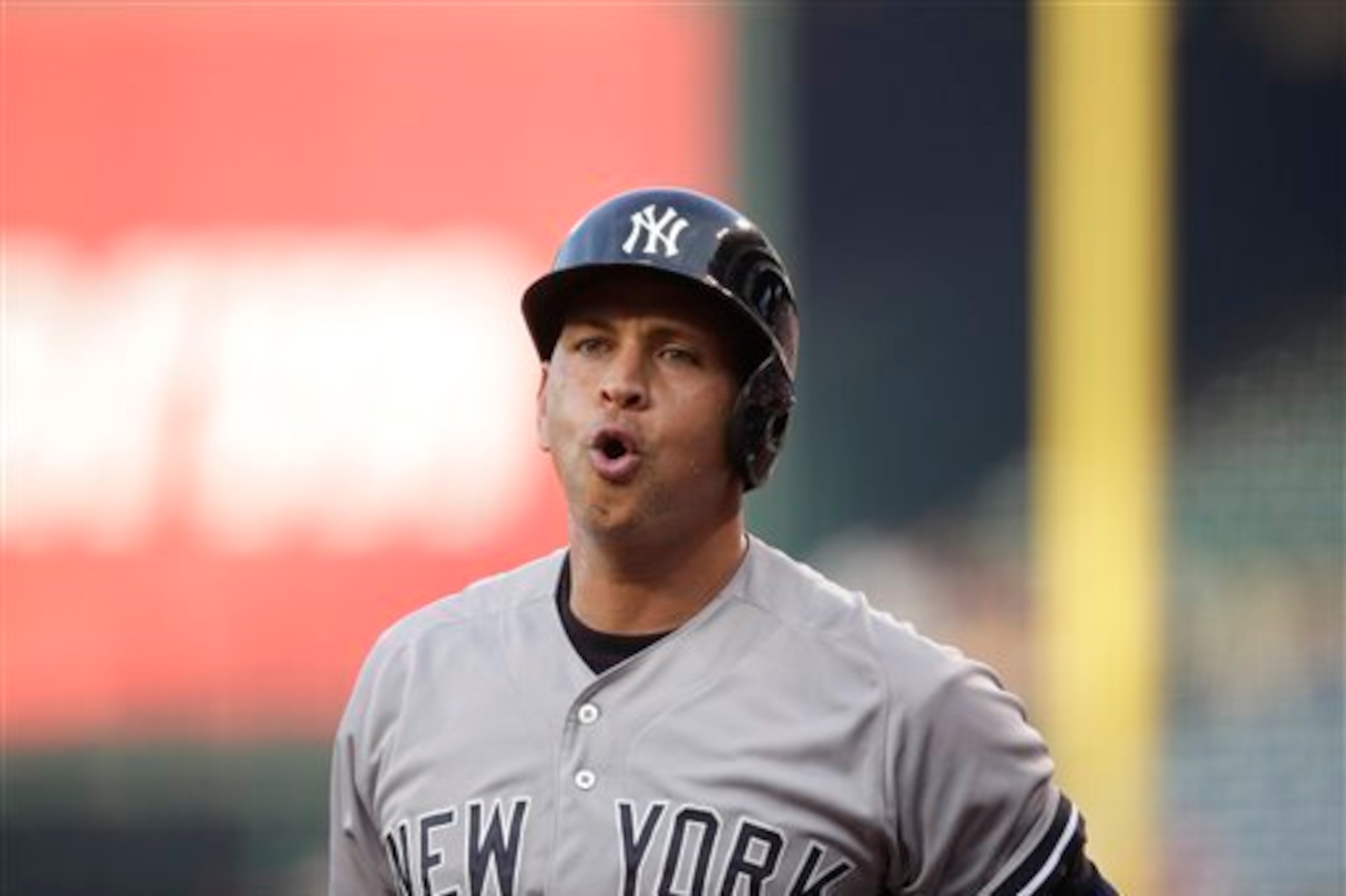
The AL also had a curious choice in Boston Red Sox utility man Brock Holt. He has zero star power, but he went into Tuesday's game with a 124 OPS-plus. However, he technically doesn't have enough plate appearances to qualify for batting leaderboards, so if the AL was going in that direction, it should have chosen someone like Houston Astros shortstop Carlos Correa, who already has star power and who already is the best in the league at his position.
Or, again, A-Rod. Just saying.
Other questionable choices on the AL roster include Kansas City Royals teammates Salvador Perez (starter) and Alcides Escobar (starter). Perez rates fourth among qualified AL catchers in FanGraphs WAR (there are only four candidates), and all of Escobar's value comes on the defensive side.
For the NL, St. Louis Cardinals catcher Yadier Molina was strictly a reputation pick by the league's players and manager, Bruce Bochy. Of course, there is no denying his defensive talent, but Molina has been quite pedestrian with the bat this season.
Moving down the roster, Colorado Rockies second baseman DJ LeMahieu is a very questionable pick. Six other NL players at his position with at least 279 plate appearances entering Tuesday had better FanGraphs WAR numbers, and he is also the third NL second baseman on the roster.
If the NL really needed another infielder, Los Angeles Dodgers third baseman/utility man Justin Turner would have been a better choice.
One of those other second basemen is San Francisco's Joe Panik. While Panik is a secondary All-Star just based on star power, he is at least deserving, maybe even of the starting spot. So the NL's second-level All-Stars can be questioned, but not as much as the other league's.
The advantage here goes to the NL.
Now let's get to the meat of the argument—the numbers.
A simple way to do this is by adding up the collective WARs of every player in the game. Simple enough, even if WAR has its flaws.
The final tally based on FanGraphs' WAR formula as of the start of play Tuesday:
American League, 81.5.
National League, 84.9 without accounting for a DH spot on the roster, which in a sense is one fewer player.
Again, WAR is not the end of every story, but it is a catch-all number that gives a pretty decent idea of where a player—and in this case, the rosters—stands.
More relevant numbers: A ridiculous 35 players in this year's game are 27 years old or younger. The NL boasts 21 of those with a couple of others who are 28. This does not count Kershaw, who is 27, if he happens to win the Final Vote.
Those numbers tell us the future is already beaming for the NL, which also has two 23-year-old All-Stars who were part of Baseball America's top 100 prospects entering the season—Chicago Cubs third baseman Kris Bryant and Dodgers center fielder Joc Pederson.
"Rookies Kris Bryant, Joc Pederson make #ASG, but A-Rod snubbed NL & AL Rosters: http://t.co/H92mxnxH5i pic.twitter.com/dpGnJRxhBk
— FOX Sports: MLB (@MLBONFOX) July 7, 2015"
Again, all of this is highly subjective, but if one had to choose between these two rosters when deciding on factors like star power, talent, production and age, the nod goes to the National League.
Of course, that is in no way a prediction of who will win the 86th All-Star Game, but as always, it should be fun finding out.
All quotes, unless otherwise specified, have been acquired firsthand by Anthony Witrado. Follow Anthony on Twitter @awitrado and talk baseball here.
.jpg?w=2560 "Jaxson Dart Ruled Out of MNF")

.jpg?w=2560 "Ertz Returning to Eagles")
.jpg?w=2560 "WWE Raw Live Grades 🔠")
.jpg?w=2560 "Dak Addresses 'Dumb' Old Romo Tweet 🤣")

.jpg?w=2560 "Follow Raw As It Happens 👊")