Jon Cooper Showing Remarkable Learning Curve with Lightning on Cusp of Cup Final
Three of the four surviving teams in the 2015 NHL playoffs have veteran coaches. The Tampa Bay Lightning have Jon Cooper, who is handling his team beautifully in his second full season as an NHL coach.
It’s particularly remarkable given the experience gap between the sophomore coach and his distinguished rivals.

TOP NEWS
Mark Scheifele Landing Spots 📍
3-Way Trade Ideas for Connor Hellebuyck and Alexander Nikishin Amid NHL Rumors

Every Team's Odds to Win the Cup 🏆
When Cooper got into coaching for the first time, doing part-time work running a team for a Catholic high school in 1998-99, his current rivals were already well-established:
- New York’s Alain Vigneault had spent a decade as an NHL assistant and QMJHL head coach and was in his second year with the Montreal Canadiens.
- Joel Quenneville was a year away from winning the Jack Adams Award with St. Louis.
- Even Bruce Boudreau had spent nearly a decade behind the bench. He’d win an ECHL championship (Kelly Cup) the same year that Cooper was getting his feet wet.
Cooper told NHL.com’s Dan Rosen in April that he didn’t get into coaching with NHL ambitions. He did it because he loved doing it. That’s not at all surprising given where he started out. It’s hard to believe that, even in his wildest dreams, he could have sketched out the ridiculous career path he was about to embark upon.
Rosen’s piece, along with Cooper’s staff page at Elite Prospects, shows a track record of incredible advancement. In his first five years coaching, Cooper won three significant titles with three different teams, climbing the coaching ladder all the while.
By 2003, he was ready to give up practicing law and coach hockey full-time, though Cooper made it clear in an interview with USA Hockey Magazine's Ryan Satkowiak that one of the secrets to his success in hockey stemmed from his time as a lawyer:
"I found there is a definite common area [between] hockey [and law]. I got comfortable speaking to groups. You’re sitting there talking to 20 players in the locker room and you’re trying to convince them how to play, what you want done. It’s no different than convincing a jury.
"
Cooper’s first full-time coaching job was in the North American Hockey League, a second-tier U.S. junior league. He was both the first general manager and coach of the expansion Texarkana Bandits and would spend five years with the team, relocating with it to St. Louis along the way.
Cooper was named the NAHL’s Coach of the Year twice during this run and guided the team to back-to-back championships in his final two years at the helm.
Finally, in 2008, Cooper reached the pinnacle of U.S. junior hockey, being hired as the GM/head coach of the United States Hockey League’s Green Bay Gamblers.
He was spectacularly successful. In two seasons with the team, he was the league’s GM of the Year twice, the Coach of the Year once and, in his second campaign, he guided the team to the Clark Cup.
Losing, as he jokingly put it, was for the other guys:
Still, he’d never even coached a professional game. Tampa Bay brought him in to run its AHL affiliate in Norfolk in 2010, taking a chance on a first-timer with such an impressive history.
He quickly duplicated his success in the minors, winning the AHL’s Coach of the Year award and guiding his team to the Calder Cup in just his second year on the job. Partway through his third season, he was elevated to the NHL, as the Lightning gambled on him once again.
By all rights, the higher Cooper climbed, the more difficult it should have been for him to excel.
Winning a championship in one's second year with Honeybaked of the Midwest Elite Hockey League is a different matter than doing it in the USHL, which in turn is a far cry from the incredibly tough AHL.
The NHL is a different animal entirely, particularly since Cooper himself freely admits that he had a lot to learn when he first broke in. Here's what he told Sportsnet.ca in late March:
"My first year was learning the league, on and off the ice. Learning the refs. Learning the players, the coaches. Everything you have to do to help yourself have success in the league, I had to learn last year. This year has been much easier in that regard. We have this good young core, and then our free agent signings were outstanding—great teammates, guys that have played in the playoffs. That made the transition seamless, and that’s helped me out.
"
And yet, here he is, once again guiding a strong team to an exceptional performance and only a single win away from competing in the Stanley Cup Final.
There's no one reason that any coach wins; all coaches have to find the balance between a grasp of tactics and motivating their players. But it's telling how many players have stuck with Cooper.
Matt Taormina, once a Texarkana Bandit, followed his old coach to Syracuse and the Lightning organization. A half-dozen farmhands found their games during Cooper's short time in the AHL, many of whom are now in key roles with the Lightning. The man seems to inspire loyalty.
And it's not just his longtime disciples who admire him. Ryan Callahan told Rosen that when he was traded to the Lightning, it was Cooper waiting to pick him up at the airport.
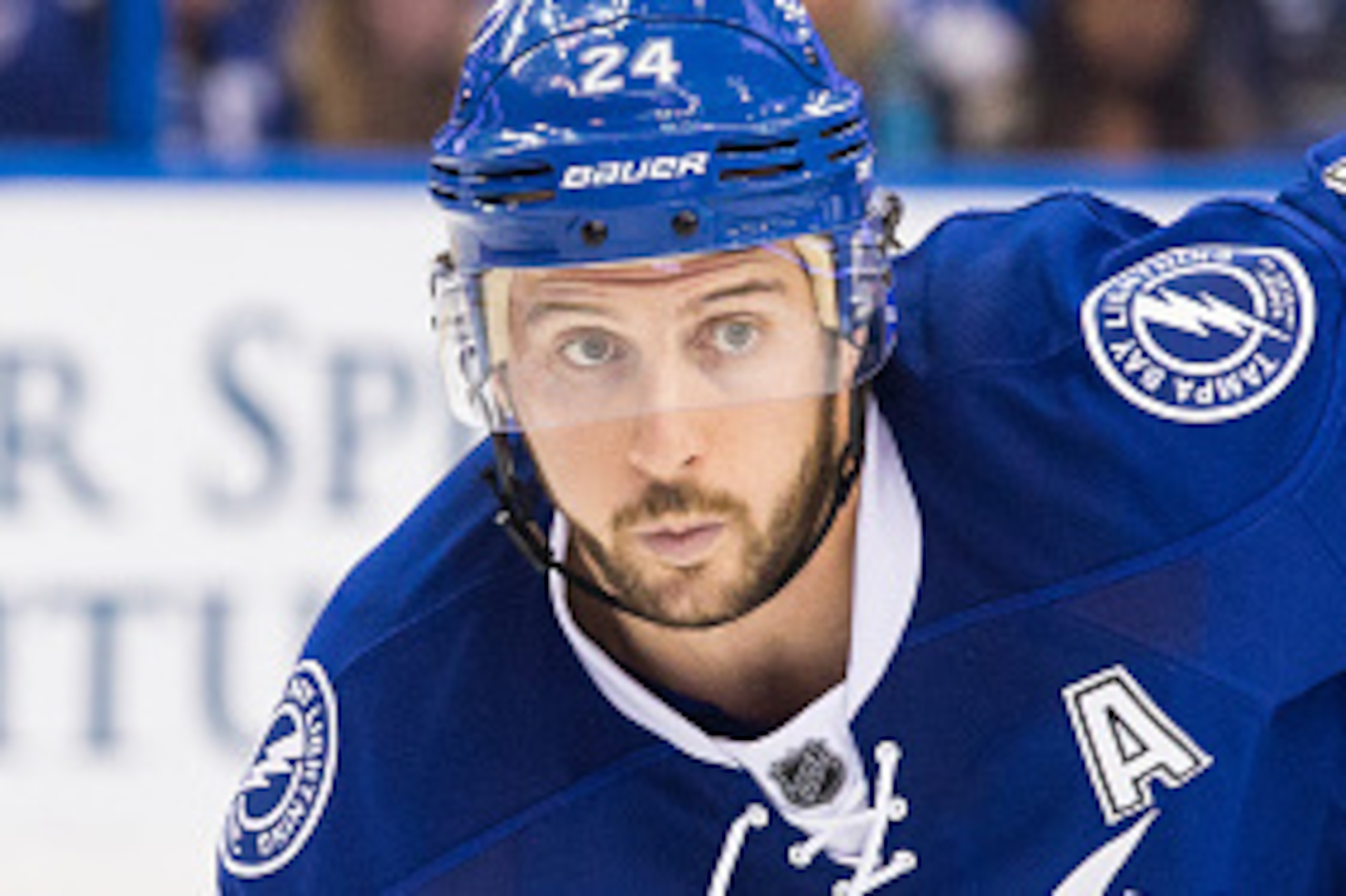
"I don't think every NHL coach would do that," Callahan said. "Obviously there was a lot going through my mind, my nerves, and to have him sitting there waiting for me at the airport showed me right away how much he cares about the team and how much he cares about his players. It definitely made an impression on me."
Those immediate connections with people predate Cooper's time as a hockey coach.
"His personality is immediately attractive. You can’t help but be drawn to the guy," was the way Thomas Brennan Jr., a judge who helped Cooper get his Catholic school coaching job all those years ago, explained it to Satkowiak, before relating that even opposing lawyers liked him.
"He could negotiate with the prosecutors; they would give away the store to him. He’d have been terrific had he stayed in law."
Cooper has shown again and again that he's a quick study, able to learn and adapt to difficult circumstances with comparative ease. Even more impressive, he has consistently shown an ability to connect with people, be they rivals or colleagues or players.
It's a big part of the reason why, in just two years as an NHL coach, he's a game away from coaching in yet another final series.
Statistics courtesy of NHL.com and Elite Prospects.
Jonathan Willis covers the NHL for Bleacher Report. Follow him on Twitter for more of his work.


.jpg?w=2560 "NFL investigating 2 referees for separate viral exchanges")

.jpg?w=2560 "Report: Chiefs Contact Hill's Agent")
.jpg?w=2560 "OBJ Calls Out Giants 😳")
.jpg?w=2560 "Tyreek makes another cryptic post amid Chiefs rumors")