

Breaking Down How the 2015 Stanley Cup Will Be Won
Some people were put on this Earth to broker peace between warring nations. Others are here to create cures for diseases. Many are walking this planet looking for ways to improve the existence for human beings everywhere and are willing to work their entire lives to meet that goal.
Others, however, make predictions about who will win hockey games and write extensive, detailed descriptions of the teams and players involved in those games.
My round-by-round predictions are available here. Hopefully they will be flawless, unlike last year, when the first 13 completed series were predicted correctly before...something, something, who can say...I don’t remember anything other than rage and sadness. But I wanted to go a little deeper and offer a broader look into those predictions instead of the narrower ones in that slideshow and include some fun and informational tidbits along the way.
TOP NEWS
Best NHL Heritage Classic Jerseys 📋
Teams That Need Goalie Trade💡
Hellebuyck Trade Takeaways 📊
The best predictions are all about using all available information to make the best possible guess. There are statistics of an overlying and underlying nature that are helpful, but there also historical markers which we can learn from and use as a guide on the path toward (please, please, please) 15-0.
So here are the sometimes linear, sometimes scattered thoughts that led to a final prediction about the 2015 Stanley Cup Playoffs.
Bring us your tired, huddle masses (of goaltenders)
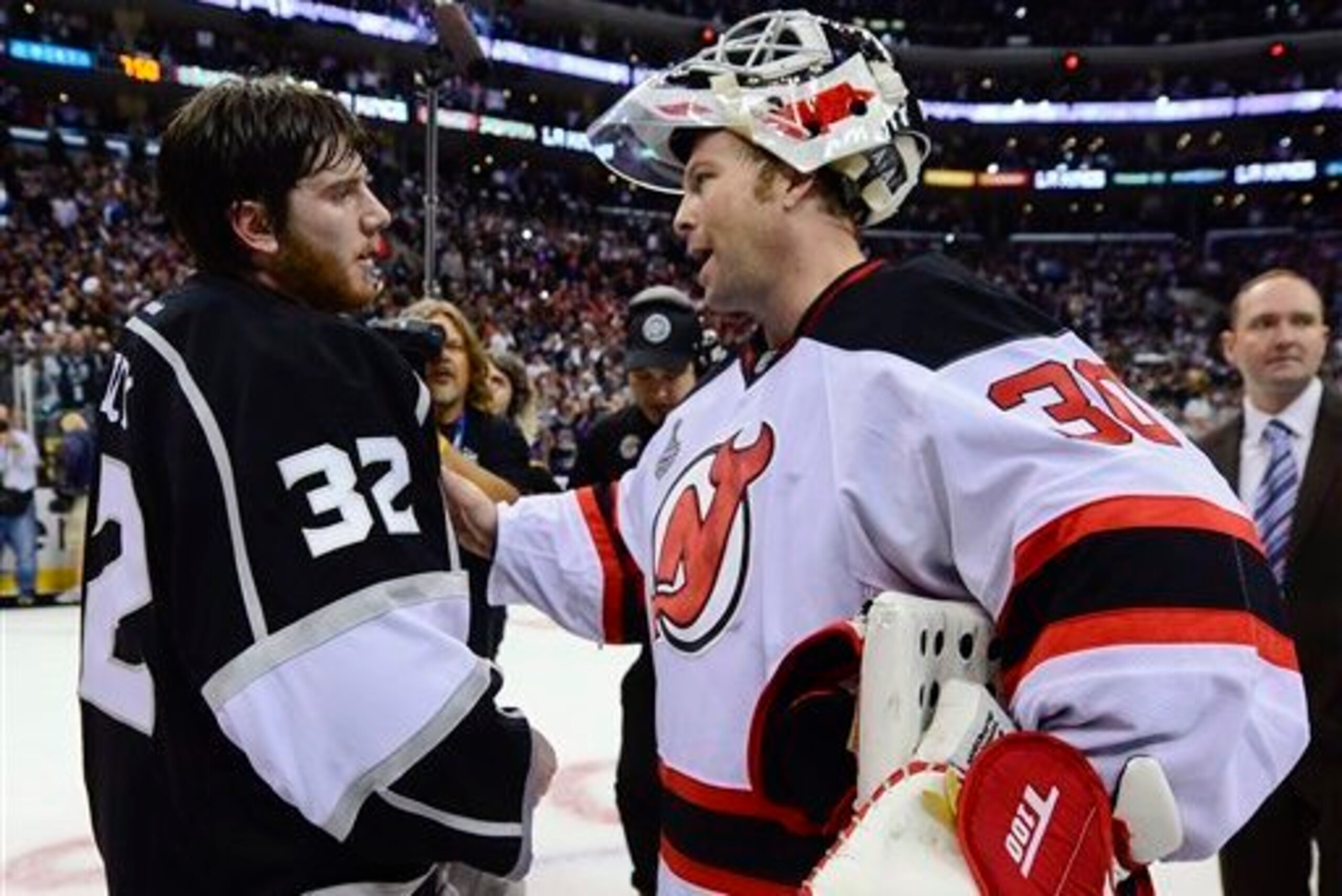
A tired goalie is usually not effective for two months of playoff hockey. The last goalie to play at least 70 games and win a Stanley Cup was Martin Brodeur of the New Jersey Devils in 2003. Jonathan Quick made 69 starts when the Kings won the Cup in 2012, so the line is a thin one.
Another workload tidbit: Only four goalies aged 30 or older have won a Cup since 2000 while playing more than 60 games: Brodeur, Dominik Hasek, Patrick Roy and Tim Thomas.
So, the three best goaltenders in NHL history and a fourth with very little NHL mileage.
Who does all this information rule out?
The Washington Capitals and Nashville Predators.
Braden Holtby (73 games) and Pekka Rinne (64 games, age 32) will be too worn down to win 16 games between April and June, according to the historical data. The 30-year-old Marc-Andre Fleury played in 64 games but was 29 years old for the first two months of the season, so he and the Penguins escape the guillotine here.
When Roberto Luongo took the Vancouver Canucks to the Final in his age 31 season in 2011, he played 60 games in the regular season. In his final 11 postseason starts that year, he had a .908 save percentage, which includes an .891 in seven Stanley Cup Final games against the Bruins. Luongo faded as the postseason moved forward and could be representative of what happens with Rinne this year.
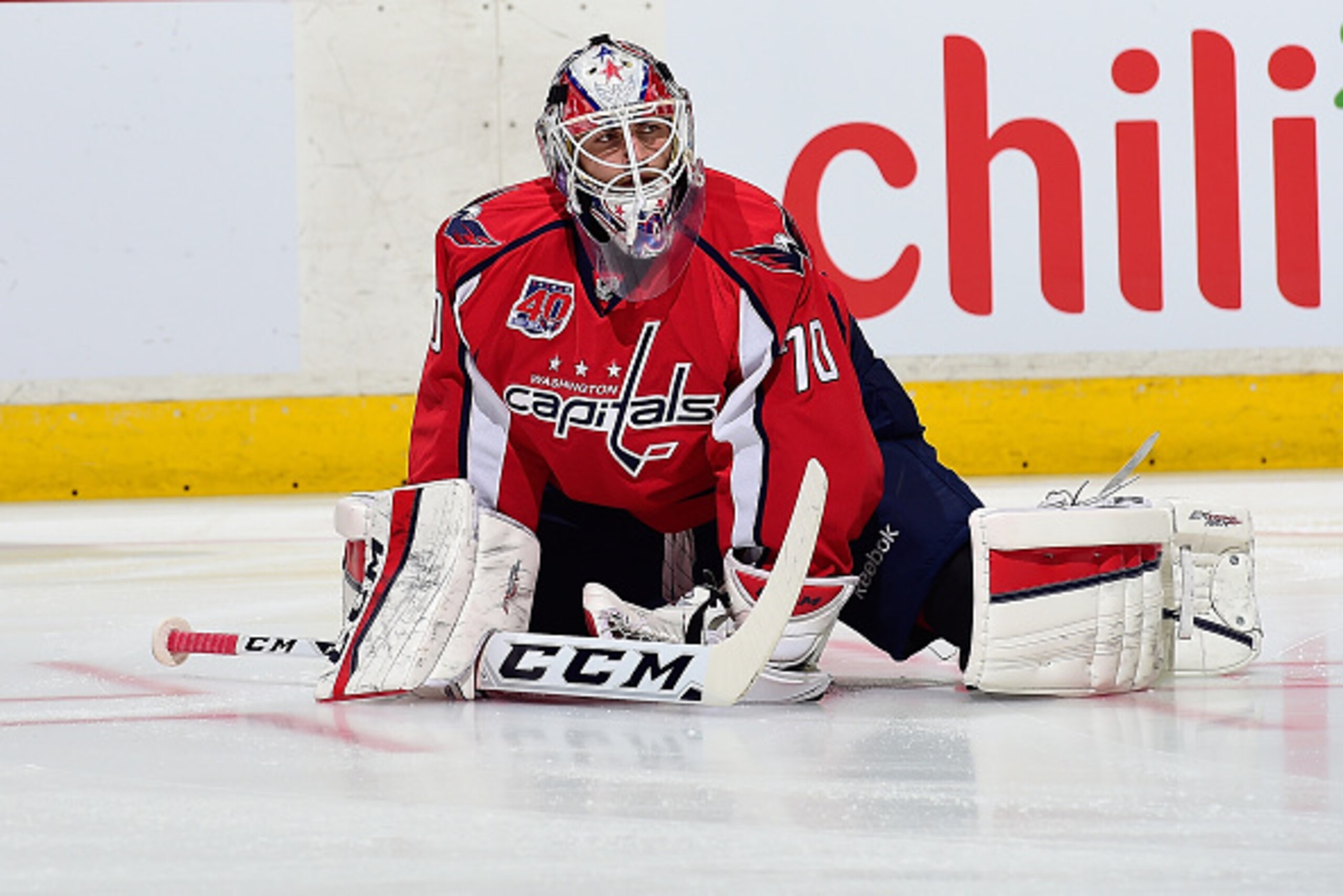
Holtby is the only playoff goaltender to start 70 games this season, although at 25 years of age, he’s hardly in danger of losing his legs should he encroach on the 90-game plateau.
Again, there’s that history stuff going against him winning a Cup.
Since 2005-06, there have been 28 instances of goaltenders making 70 starts in the regular season. In 11 of those 70-start seasons, the goaltender’s team failed to reach the postseason; in the other 17 instances that resulted in a playoff berth, the results are discouraging.
Only one goaltender—Evgeni Nabokov, 71 starts, 2010—got beyond the second round, and Nabokov’s Sharks were swept in the conference finals by Antti Niemi (35 starts) and the Chicago Blackhawks.
Here’s the round-by-round group save percentages of those 17 goaltending performances:
| First round | .919 |
| Second round | .909 |
| Third round | .905 |
If you’re thinking the quality of the goaltender matters more than the number of games he plays in the regular season, that list includes: Carey Price, Pekka Rinne, Henrik Lundqvist, Jonathan Quick, Miikka Kiprusoff, Nabokov, Luongo and Brodeur.
What Holtby is being asked to do isn’t impossible—no one is asking him to sit through an Olivia Wilde movie and enjoy it—but recent history gives a pretty good idea of how hard it will be for the Capitals to win the Cup.
And just like that, we are down to 14 teams.
Is your head coach a rookie?
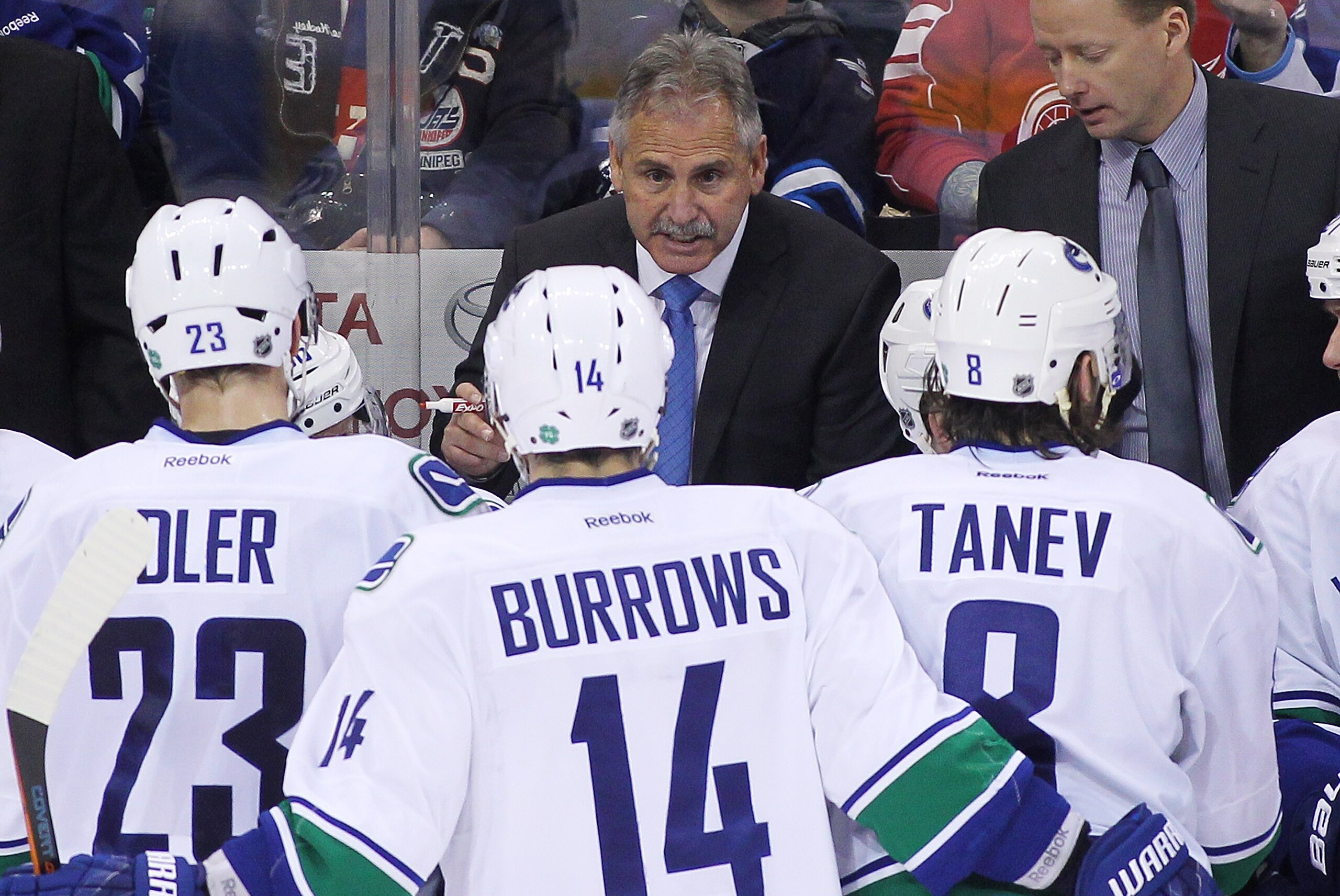
The last rookie head coach to win a Stanley Cup was Dan Bylsma with the Pittsburgh Pegnuins in 2009. That doesn’t apply to this section because we are looking at teams to win Stanley Cups with rookie coaches who started the season in that position, and Bylsma took over for Michel Therrien midseason.
(Good news for you, Ottawa and Dave Cameron.)
Remove Bylsma, and just three rookie coaches have won the Stanley Cup in the past 50 years. The last three times it happened it was the Montreal Canadiens, in 1986 (Jean Perron), with Al MacNeil (1971) and Claude Ruel (1969). There were 12 teams in the league in 1969 and 14 in 1971. In 1986, the NHL had 21 teams, and the Habs had this rookie named Patrick Roy who had a somewhat decent postseason.
It’s not impossible for a rookie head coach to get it done in his first postseason, but take away Bylsma grabbing the helm midseason, and it hasn’t happened in nearly 30 years.
That wipes out rookie coaches Willie Desjardins of the Vancouver Canucks and Bylsma’s replacement in Pittsburgh, Mike Johnston.
And just like that, we’re down to 12 teams.
How experienced is your goaltender?
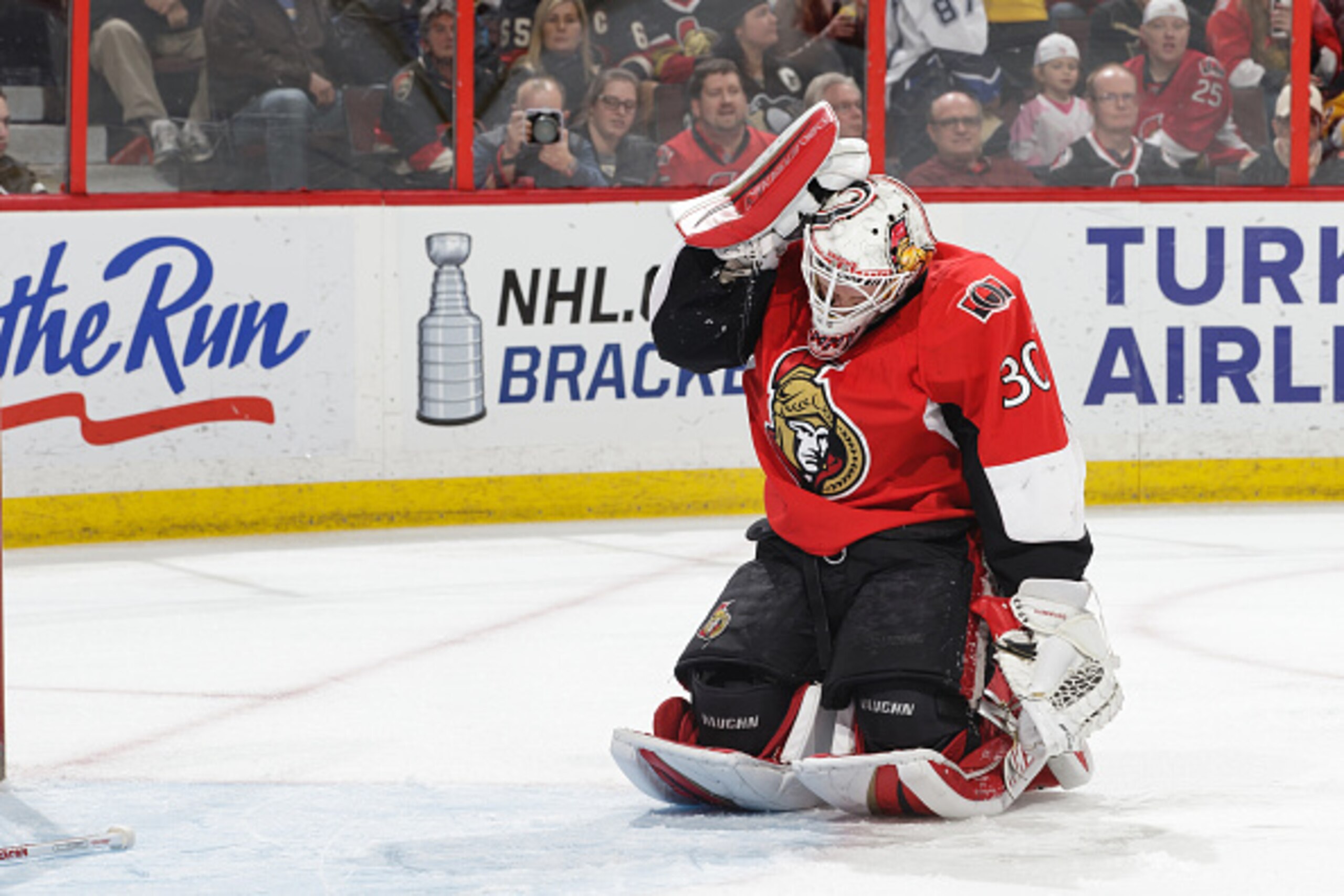
Forget workload—has your goaltender been here before?
This rule of thumb isn’t as grounded in evidence as the previous two items; it’s more an idea of thumb or guiding principle of thumb. The only rookie goaltenders to win Cups the past 30 years are Roy, Cam Ward of the Carolina Hurricanes in 2006 and Antti Niemi of the Chicago Blackhawks in 2010.
Roy is Roy while Ward and Niemi were thrust into the job either in the playoffs or late in the season.
It’s a rare thing for a rookie goaltender to win a Cup, be it a rookie in name or rookie in playoff experience.
With that in mind, it’s time to dismiss Ben Bishop of the Tampa Bay Lightning, Devan Dubnyk of the Minnesota Wild, Ondrej Pavelec of the Winnipeg Jets and Andrew Hammond of the Ottawa Senators. Jonas Hiller looks like he'll be the guy for Calgary, as the inexperienced Karri Ramo takes a backseat due to injury.
Hammond is a rookie who made his NHL debut in February while Pavelec, Bishop and Dubnyk have never played a second of postseason hockey. Only Dubnyk has a backup (Darcy Kuemper) with postseason experience, so there isn’t even a veteran sitting behind Bishop and Hutchinson who could offer guidance in this area.
And just like that, we are down to eight teams.
How deep have you gone in recent years?
Here are the past seven Stanley Cup winners along with how far they went in the playoffs in their previous two seasons:
| 2008 | Red Wings | first-round loss (2006), third-round loss (2007) |
| 2009 | Penguins | first-round loss (2007), Cup Final loss (2008) |
| 2010 | Blackhawks | missed playoffs (2008), third-round loss (2009) |
| 2011 | Bruins | second-round loss (2009), second-round loss (2010) |
| 2012 | Kings | first-round loss (2010), first-round loss (2011) |
| 2013 | Blackhawks | first-round loss (2011), first-round loss (2012) |
| 2014 | Kings | won Stanley Cup (2012), third-round loss (2013) |
The only team to miss the playoffs in one of two years before winning the Cup was Chicago in 2010, although the Blackhawks pushed their way to the conference finals in 2009. The only outlier since the 2004-05 lockout is the Los Angeles Kings, who suffered a pair of first-round exits before their rise to the league’s best team.
Championships are almost always forged through near-misses the previous years. It’s practically a prerequisite more than a pattern.
With that in mind, we say fare thee well to the New York Islanders and Calgary Flames.
This one was the hardest, because I think very highly of the Islanders. And while Nick Leddy and Johnny Boychuk have Cup experience with the Blackhawks and Bruins, respectively, the only trip the Islanders made to the playoffs since 2007 was two years ago when they lost in six games to the Penguins.
The Islanders’ time could be coming, but it isn’t now. This feels like the start of the process of learning to win that involves crushing defeat. Sports can be awful sometimes.
The Flames, meanwhile, are back in the playoffs for the first time since 2010. They are a young team. Their time is not now, but with Sean Monahan, Johnny Gaudreau and Sam Bennett, that time is on the horizon.
And just like that, we are down to six teams.
That leaves us with Montreal, Detroit and the New York Rangers in the East and Chicago, St. Louis and Anaheim in the West.
What other arbitrary anecdotal reasons and statistical arguments exist to trim the field further? Glad you asked.
What’s your team’s goal differential?

The average goal differential of the past nine Stanley Cup champions is plus-44; the worst goal-differential for any Cup champion since 2006 is when the Kings won the Cup in 2012 with a plus-18. (You know, if the Kings didn’t get to the conference finals the following year and another Cup in 2014, you’d probably think 2012 was the flukiest fluke in fluke title history.)
This fact means we can bid adieu to the Red Wings and Ducks.
The Red Wings are plus-14 (plus-20 if shootouts results are discounted), and the Ducks are plus-10 (plus-seven without shootouts), making them the shakiest bets of the remaining clubs. At five-on-five, the Red Wings outscored opponents 138-132 while Anaheim held a 158-152 advantage, which is to say they weren't much better than average at even strength.
That will be the downfall of each of those teams at some point in the postseason.
And just like that, we are down to four teams.
How fancy are your fancy stats?
Here are the Fenwick percentages and league rankings for every Stanley Cup champion since 2008:
| 2008 | Red Wings | 59.0, 1st |
| 2009 | Penguins | 49.0, 19th |
| 2010 | Blackhawks | 57.8, 1st |
| 2011 | Bruins | 50.1, 16th |
| 2012 | Kings | 53.6, 4th |
| 2013 | Blackhawks | 54.9, 3rd |
| 2014 | Kings | 56.1, 1st |
Five of the past seven winners were at least top four in Fenwick, and three were champions of the Fenwick Hockey League, if you will. The 2011 Bruins were backstopped by Tim Thomas, who had a .940 save percentage in the postseason, yet his team still needed seven games to win three series. The 2009 Penguins received a combined 29 goals and 67 points in 24 games from Sidney Crosby and Evgeni Malkin.
Boston and Pittsburgh aside, the idea is pretty clear: The dominant possession teams are the ones you don’t want to mess with in the postseason.
Who are those teams this year? Here’s the Fenwick of the four teams remaining on this countdown.
| St. Louis | 53.1, 4th |
| Chicago | 52.7, 4th |
| N.Y. Rangers | 49.4, 18th |
| Montreal | 48.9, 21st |
Our two low-hanging, sub-average possession teams are the Canadiens and Rangers, although both teams are at least close to or better than that 2009 Penguins team? So can we lop off their heads? Do they have a chance to do what those past champions did?
Does either team have the two best players in the world at center? No. No, they do not. Moving on to the other parameter…
Does either team have a goaltender capable of delivering a .940? With Carey Price and Henrik Lundqvist, you bet. Price is in the midst of the best goaltending season in more than a decade, and Lundqvist has posted .931, .934 and .927 save percentages in three, two and four rounds of postseason action the past three years.
But I’m ruling out Lundqvist, and in turn, the Rangers, because in his past two postseasons, he played behind the seventh-best Fenwick team in 2013-14 and sixth-best Fenwick team in 2013. There are five playoff teams in the East this season with better Fenwicks than the Rangers, and that will make life too tough for Lundqvist.
As for Price, my feeling is this: Even if he is the .940 goaltender Thomas was in 2011, that's probably not going to be good enough. Price has the ability to offset any five-on-five imbalances in the East, but asking him to do that for two weeks against the West will be too much, even if the Habs get that far.
For those reasons, the Rangers and Canadiens are ejected from the cockpit.
And just like that, we are down to two teams.
Chicago vs. St. Louis for the Cup?
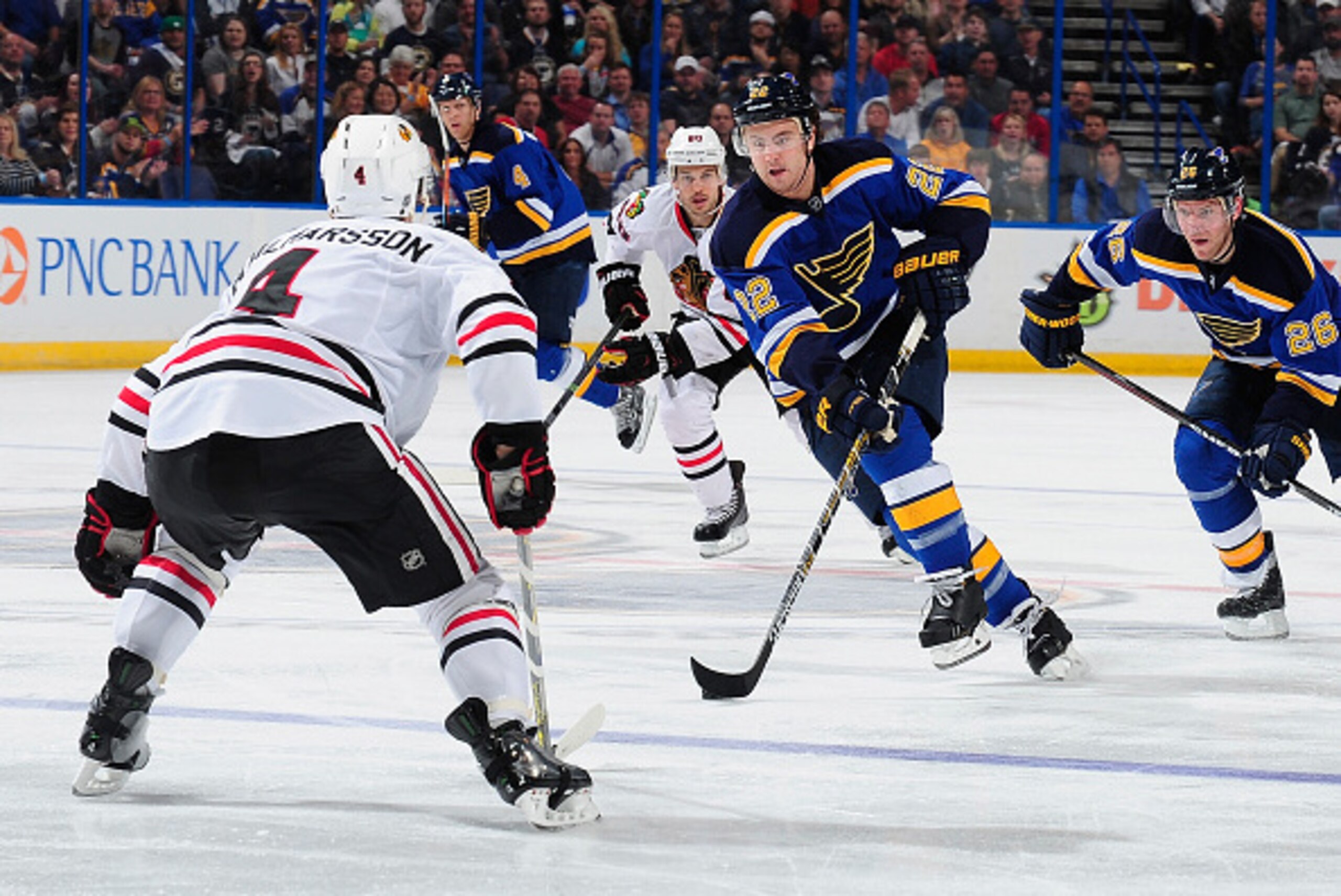
That's what we are down to, two teams that have been perennial Cup contenders for years that have just as good of a chance at winning it all as they do of losing in the first round. The West, and the NHL overall, has so much parity among its playoff teams that Minnesota and Nashville, the first-round opponents of St. Louis and Nashville, are good enough to go all the way too.
But we've come this far, and we are left with the Blues and Blackhawks, and there's no way I'm writing this all over again from scratch.
Which team has the stronger case for the winning the 2015 Cup?
Travis Yost of TSN (and in this link, formerly of Sporting News) wrote about how score-adjusted Fenwick over the final 20 games of the regular season can be a really good indicator of future postseason success. It's not a perfect way (nothing is) of determining a champion, but if you're sitting at or above 55 percent over the final quarter of the season, you've got a great chance at a Cup.
Who are those teams this season? Well, that's a bit of an issue.
Puck on Net tracks score-adjusted Fenwick, and three of the top-four teams over the final 20 games (Los Angeles, Dallas, San Jose) aren't in the playoffs. The other teams above St. Louis have already been ruled out for various reasons, leaving us with the Blues as the top remaining team.

The Blackhawks rank 17th in scoring, second in goals allowed, 20th on the power play, 10th on the penalty kill and 22nd in shots allowed per game.
The Blues are the only playoff team that is top-five in scoring, defense, shots allowed and power-play efficiency, and they rank eighth in penalty-killing. They are arguably the most complete team in the league.
The only question is goaltending—Brian Elliott's career postseason save percentage is .898, and Jake Allen has 67 seconds of postseason experience. My prediction: Both Elliott and Allen see time during the postseason, and those two goaltenders, working together at full capacity, can do the job of one normal goaltender.
This is one of the most competitive postseason fields in NHL history, with about a dozen teams having a realistic shot at winning it all. There are reasons to like them all, but the Blues present the most compelling case.
All statistics via NHL.com. Advanced stats via Stats.HockeyAnalysis.com and Puck On Net.
Dave Lozo covers the NHL for Bleacher Report. You can follow him on Twitter: @DaveLozo.
.jpg?w=2560 "NHL Trade Grades Connor Hellebuyck")




.jpg?w=2560 "Mahomes Asked OT to Leave Meeting")
.jpg?w=2560 "Jonathan Taylor Landing Spots 📍")

.jpg?w=2560 "Five Teams Eyeing Taylor")

