The Most Underrated Player on Every NHL Team in the 2014-15 Season
There's a massive difference between the perception that a player is underrated and that player actually being underrated.
A good example of what I mean is the difference between Loui Eriksson and Patrik Elias.
Eriksson, particularly during his time with Dallas, has been consistently cited as one of the most underrated players in the NHL. The problem is that when a guy consistently gets mentioned as underrated, it generally means that he's doing more than just scoring. It also means that people recognize him as a player who does more than score. That's one of the reasons that "most underrated lists" tend to be populated by defensive specialists.
Elias actually was underrated. In one of the lowest scoring eras in NHL history, he managed to carve out a career that will top 1,200 games and 1,000 points by the time it's over. He did it while playing superb two-way hockey on a primarily defence-oriented team.
He was a leading light on a consistently excellent franchise that won two Stanley Cups and made two other appearances in the Finals in his time with the club. And he's done it all while going almost entirely without being recognized as one of the best players of his generation.
This list tries to identify people like Elias—players who make significant contributions but are often overlooked or even criticized. Those players run the gamut from being primary contributors to being role players, but the key correlation between them is that they're either unknown or known and undervalued.
Read on to see which player fits that description on every NHL team.
Anaheim Ducks: Andrew Cogliano
1 of 30
At first glance, Cogliano doesn't fit the profile of an underrated player.
A first-round draft pick of the Edmonton Oilers back in 2005, Cogliano entered the league with significant hype after winning two gold medals with Canada's junior team. He beat Dominik Hasek for his first NHL goal and scored an NHL-record three consecutive overtime winners in a 45-point rookie campaign.
But what has happened since then puts him on this list. Cogliano has accepted a role with a significant defensive component, as well as a shift to left wing after balking at both of those assignments in Edmonton.
Scoring has dipped, but he's become a plus possession player and key penalty killer with a very good Anaheim team. In 2013-14 he scored 42 points while playing less than 20 minutes on the power play and almost entirely without playing with Ryan Getzlaf or Corey Perry; his 37 points at even strength put him ahead of such notables as Nicklas Backstrom and Henrik Sedin.
He's a two-way threat and an extremely important player on an excellent team but is almost entirely overlooked these days.
Arizona Coyotes: Rob Klinkhammer
2 of 30
It took Klinkhammer a long time to find his way to the NHL.
The 28-year-old was a late bloomer in junior, going undrafted as a result, but he established himself as a solid AHL forward immediately. It took him four seasons of solid minor league play to get into his first NHL game and seven seasons and three organizations before he finally landed a one-way contract and a full-time major league job.
He's been a nice fit in Arizona as a big (6'3", 214 pounds) forward who plays the game with a physical edge while scoring a bit and delivering solid possession numbers. There isn't a team in the league that doesn't want to find a player like that for a near minimum contract.
Boston Bruins: Dougie Hamilton
3 of 30
The Bruins are one of the NHL's marquee clubs, and as a result most of their players end up with the credit they deserve.
An arguable exception is Hamilton, the ninth overall pick in the 2011 draft, A 6'5", 212-pound workhorse with a range of skills, he has been pushed into the No. 1 role in Boston for much of 2014-15 thanks to injuries that have decimated the blue line. He's thrived.
That not only sends a message to observers across the NHL that Hamilton is in fact ready to take on a larger role, but it also reinforces the point to head coach Claude Julien, who made Hamilton a healthy scratch as recently as March.
Buffalo Sabres: Matt Moulson
4 of 30
With the Bruins, it's difficult to pick an underrated player because their excellent players tend to get the credit they deserve. In Buffalo, it's hard to make a choice because for the most part the players simply aren't very good.
An exception is Matt Moulson, a late-bloomer who found his NHL goal-scoring touch in the same season that the New York Islanders found John Tavares. Many wondered how Moulson would adapt after being separated from Tavares, but the results suggest he's still a capable offensive producer in his own right.
Despite a (potentially relevant) drop-off in shooting percentage, he's still managed 20 goals and 51 points in what has virtually been a season's worth of games separated from the Islanders superstar.
Calgary Flames: Mark Giordano
5 of 30
It might seem odd to peg a defenceman who is justly getting attention for his exceptional scoring performance as underrated, but Giordano has long been grossly underappreciated around the NHL.
All kinds of numbers could be referenced here—items such as quality of competition and Giordano's exceptional on-ice possession numbers. But there's an even simpler metric worth looking at: how well the Calgary Flames have performed at even strength with or without Giordano since he returned to the club in 2008-09:
- With Giordano on the ice: 284 goals for, 251 against (plus-34)
- With Giordano off the ice: 567 goals for, 661 against (minus-94)
Every metric available points to Giordano as an elite, Norris-level defenceman. He's never been given that kind of credit, but he deserves it.
Carolina Hurricanes: Brett Bellemore
6 of 30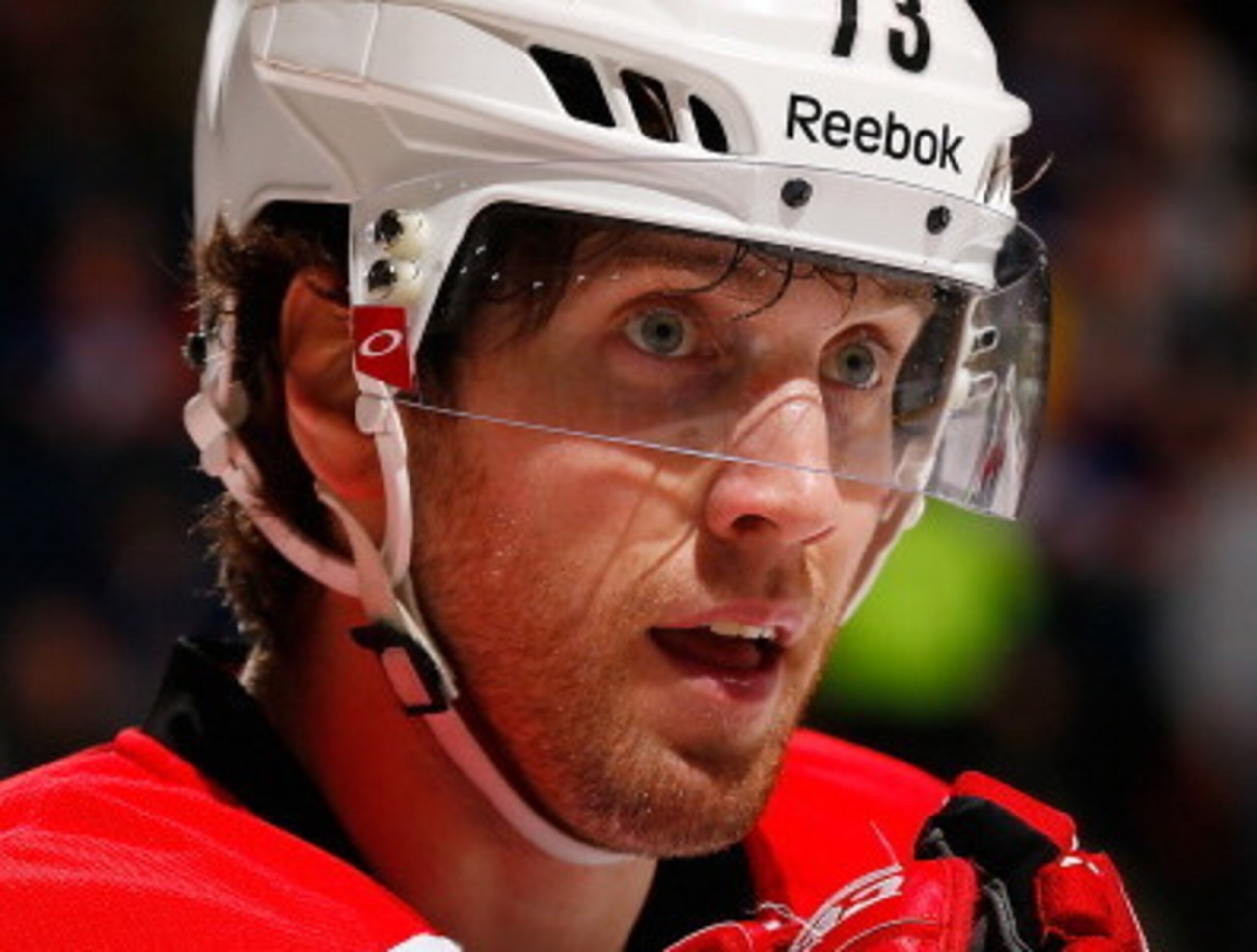
It's not so much that Bellemore is an exceptional player, but he is a serviceable NHL defenceman of a type that NHL general managers went nuts for over the summer and he was barely able to hang onto a major league job.
Bellemore, a physical 6'4", 225-pound defenceman who can handle third-pairing work without trouble and spent a surprisingly effective 2013-14 campaign on Carolina's shutdown pairing, must have watched with wonder over the summer as teams signed remarkably similar players like Deryk Engelland and Clayton Stoner to long contracts with massive cap hits. But instead of getting one himself, Bellemore just barely stayed in the league, eventually settling for a two-way deal near the NHL minimum from Carolina after testing free agency.
Chicago Blackhawks: Johnny Oduya
7 of 30
The Chicago Blackhawks boast an exceptionally talented group of top-four defenceman.
There is Duncan Keith, offensive wizard and Norris Trophy winner. There is his regular partner, Brent Seabrook, the 2010 Olympic gold medalist. Niklas Hjalmarsson, the shutdown specialist who takes on the toughest opposition most nights, can't be forgotten either.
And then there's Johnny Oduya.
By any standard, Oduya is a very strong defenceman. He's played 20-plus minutes per game for one of the game's elite teams since his arrival in 2011-12. He takes on the same tough opponents Hjalmarsson does, using excellent mobility and intelligence to form half of one of the game's best shutdown pairings.
Not to make him out to be anything he isn't, but Oduya has done excellent work in a tough role for years, and all too often he's seen as a spare part rather than as the key contributor that he has become.
Colorado Avalanche: John Mitchell
8 of 30
Often overlooked on a team loaded with high-end forwards, Mitchell nevertheless finds ways to contribute.
The Toronto Maple Leafs draft pick took his time getting to the majors, bouncing from the AHL to the NHL and from Toronto to New York over four seasons in the Eastern Conference. Since arriving in Colorado, however, he has solidified his status as a third-line centre, contributing reliably at both ends of the rink.
Though largely unknown, he's yet another pick from the insanely deep 2003 draft to establish himself as a useful full-time NHL'er.
Columbus Blue Jackets: Fedor Tyutin
9 of 30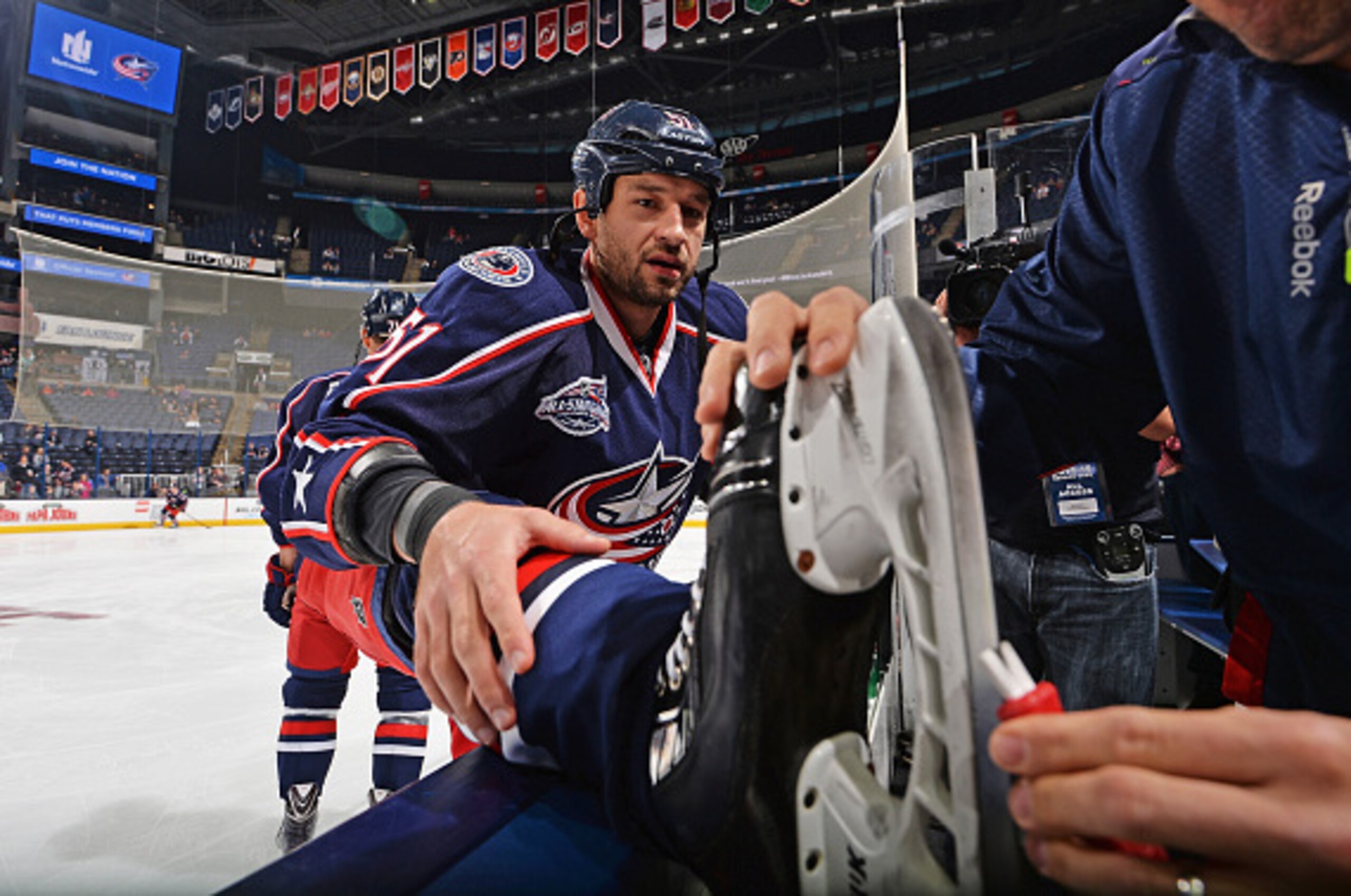
Few solid NHL defenders get less recognition than Tyutin.
Tyutin broke into the league in 2003-04 as a 20-year-old and immediately started logging better than 20 minutes per night on the New York Rangers' blue line. Now 31, he's still playing north of 20 minutes per game, having peaked at just over 24 minutes per night in his late 20s. He's not brilliant at any one thing, but he's big and smart and skilled—the kind of defenceman who can be given any role and play against virtually any opposition.
He's the kind of solid citizen every team in the league wants on its blue line.
Dallas Stars: Antoine Roussel
10 of 30
Roussel is best known as a giant pain in the backside, but he's also much more than an on-ice irritant.
The undrafted, late-blooming Frenchman worked his way up to the majors the hard way. Roussel had a stint in the ECHL and had minor league stints with the farm teams of both the Bruins and the Canucks before finally landing a (dirt cheap) two-way NHL contract with Dallas.
What he's shown since is that beyond the agitating, he's also capable of being a pretty good little player. Roussel took on some brutal zone starts last season at evens and posted positive possession numbers; he also scored 14 goals in the process. He's good enough defensively to be a regular on the penalty kill under head coach Lindy Ruff.
In short, Roussel isn't just an agitator; he's a two-way threat who can be trusted in tough defensive assignments.
Detroit Red Wings: Pavel Datsyuk
11 of 30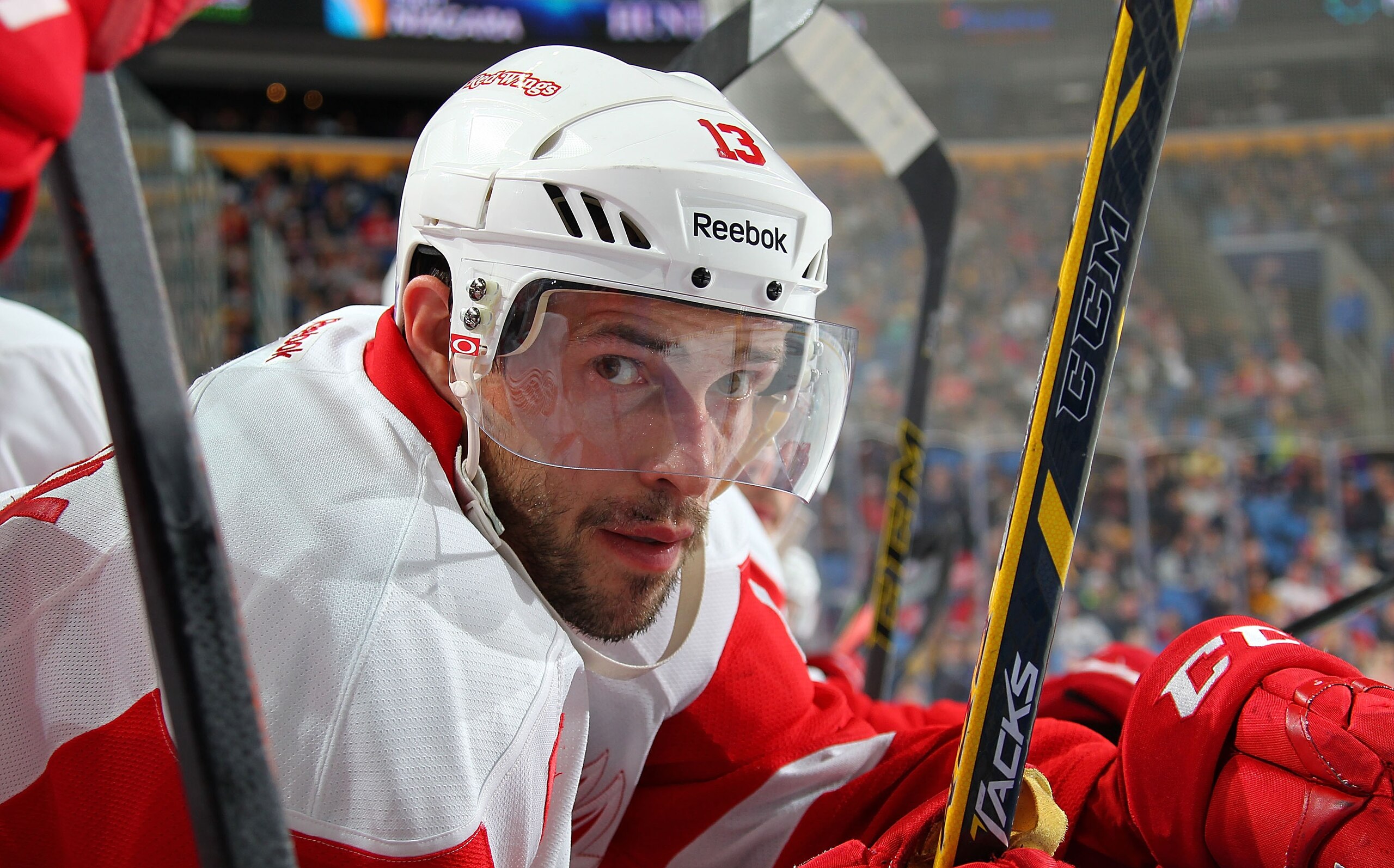
Datsyuk is a favoured candidate in many polls looking at underrated players, and for that reason I was tempted to scroll past him and look at someone like Johan Franzen. But there's a reason Datsyuk keeps showing up on these lists.
The period from 2003 to 2013 was the prime of Datsyuk's career, when he was one of the most potent two-way threats in the game and probably the fourth-best player in the NHL, behind only the trio of Sidney Crosby, Evgeni Malkin and Alex Ovechkin.
Despite this, Datsyuk was named to just one NHL All-Star team, getting a second-team nod in 2007-08. This happened despite hi being awarded the Selke Trophy (or, as it's known when Patrice Bergeron isn't winning it, the Western Conference's Hart Trophy) three times and collecting four Lady Byngs, all of which were essentially the PHWA's way of saying "have an award because you're really good, but we're giving the Hart to a guy with lots of points."
Still a sublime two-way player, Datsyuk was a franchise talent who was often overlooked because he had the misfortune to play in the low-scoring West for most of his career.
Edmonton Oilers: Jeff Petry
12 of 30
There's a funny thing that happens in Edmonton to good puck-moving defencemen with a range of abilities who don't (a) score a ton of points or (b) regularly destroy opponents with open-ice hits: They get run out of town. Petry appears to be next on the list.
The best way of measuring Petry's influence in Edmonton is to look at his partners:
- Ladislav Smid briefly looked like a bona fide shutdown defenceman who could be thrown into the deep end against top opposition during his time on Petry's pairing; now he's barely treading water in a third-pairing role in Calgary for $3.5 million per season.
- Raw rookie Martin Marincin stepped into the lineup in 2013-14 and did the exact same thing, brilliantly performing in a tough assignment. Since being separated from Petry, he's bounced between the Oilers, the press box and the minors.
- Andrew Ference, after looking lost for most of 2013-14, is having a remarkable turnaround this year; he's been the Oilers' best left-shooting defenceman.
The common element in the successes of that trio was playing with Petry; the common element in their failures was playing away from him. And yet the Oilers, one of the worst defensive teams in the NHL, are on the brink of losing Petry to unrestricted free agency after signing him to just a one-year deal.
It's almost like there's a reason they are a consistently ineffective team.
Florida Panthers: Brian Campbell
13 of 30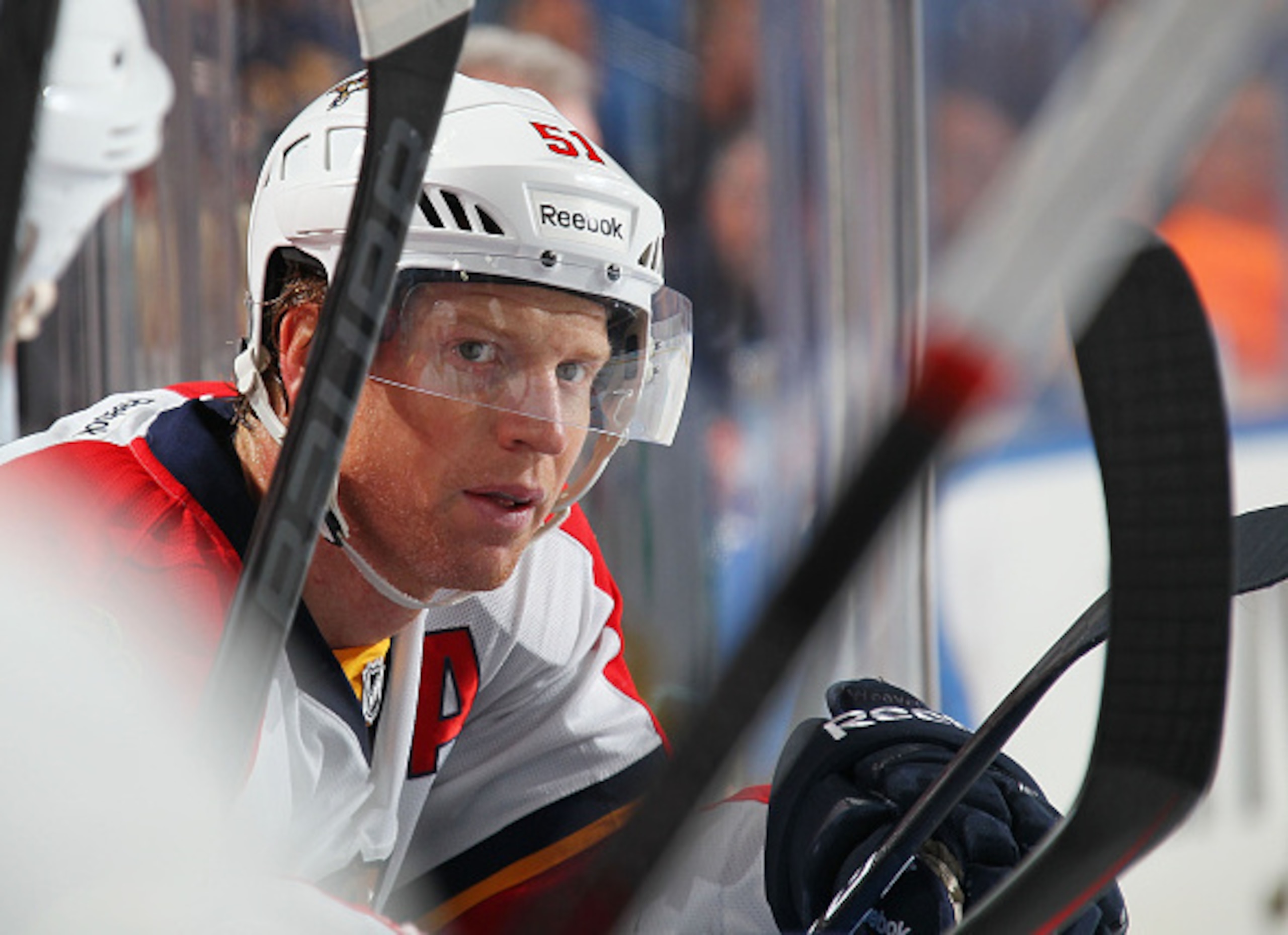
Like Petry, Campbell's impact is best measured by looking at his partners in Florida. The difference is that whereas Petry is a rare good defenceman on a bad team, Campbell is an even rarer great defenceman on a bad team.
His work this year with Aaron Ekblad is perhaps the best possible case in point. With all due respect to Ekblad, an exceptional young defenceman, the number of 18-year-olds who can be genuine difference-makers in the NHL is really close to zero, and he isn't an exception to the rule. When Ekblad plays without Campbell, the opposition has taken two shots at the Florida net for every one the Panthers manage. When Ekblad plays with Campbell, the Panthers take the majority of the shots.
Campbell has been doing this ever since he arrived in Florida, logging ridiculous minutes and helping defenders ranging from the inept to the good but not great to look like legitimate top-pairing options. He's an incredible talent who doesn't get the credit he deserves for his excellent work.
Los Angeles Kings: Jake Muzzin
14 of 30
Jake Muzzin plays regularly with Drew Doughty, one of the very best defencemen in the game of hockey, and as a result there are people who act like he's a nobody who only looks like a real NHL player because he's playing with one of the best in the game.
As Toronto Sun columnist Steve Simmons put it to The Hockey News in August, “There are teams he probably couldn’t play for.”
What the presence of Doughty is blinding Simmons and others to is that Muzzin is an exceptional defenceman—a very good player who makes a great one like Doughty even better. As we explained when the Kings signed Muzzin to a long-term contract extension, not only does he thrive when separated from Doughty but he performs better with the Kings' No. 1 defender than any of LA's other options.
There isn't a team in the NHL that Muzzin couldn't play for. And on most of them he'd be playing on the top pairing.
Minnesota Wild: Jared Spurgeon
15 of 30
If there is a player type that doesn't ever get the benefit of the doubt, it is the small defenceman. So when a 5'9", 185-pound defender can play 20-plus minutes per game for four consecutive seasons—especially on a Western Conference team—it should be obvious he's pretty special.
Spurgeon isn't just a special player; he's been ridiculously cost-effective for the Wild. For two seasons he averaged better than 21 minutes per night for a paltry $526,667 cap hit; over the last two years the ice time has gone up, but he's still been earning well south of $3 million per year.
Minnesota's No. 2 defenceman by ice time this year plays in all situations, relying on mobility, intelligence and a competitive streak a mile wide to overcome his size deficiency. He's done well, too, outperforming his team's Corsi number in each of his five NHL seasons. For those who prefer something a little more tangible, like goals, these numbers over his five-season career are interesting:
- With Spurgeon on the ice: 139 goals for, 112 against (plus-27)
- With Spurgeon off the ice: 345 goals for, 425 against (minus-80)
Spurgeon is a legitimately excellent NHL defenceman, but he's all too often ignored.
Montreal Canadiens: Tomas Plekanec
16 of 30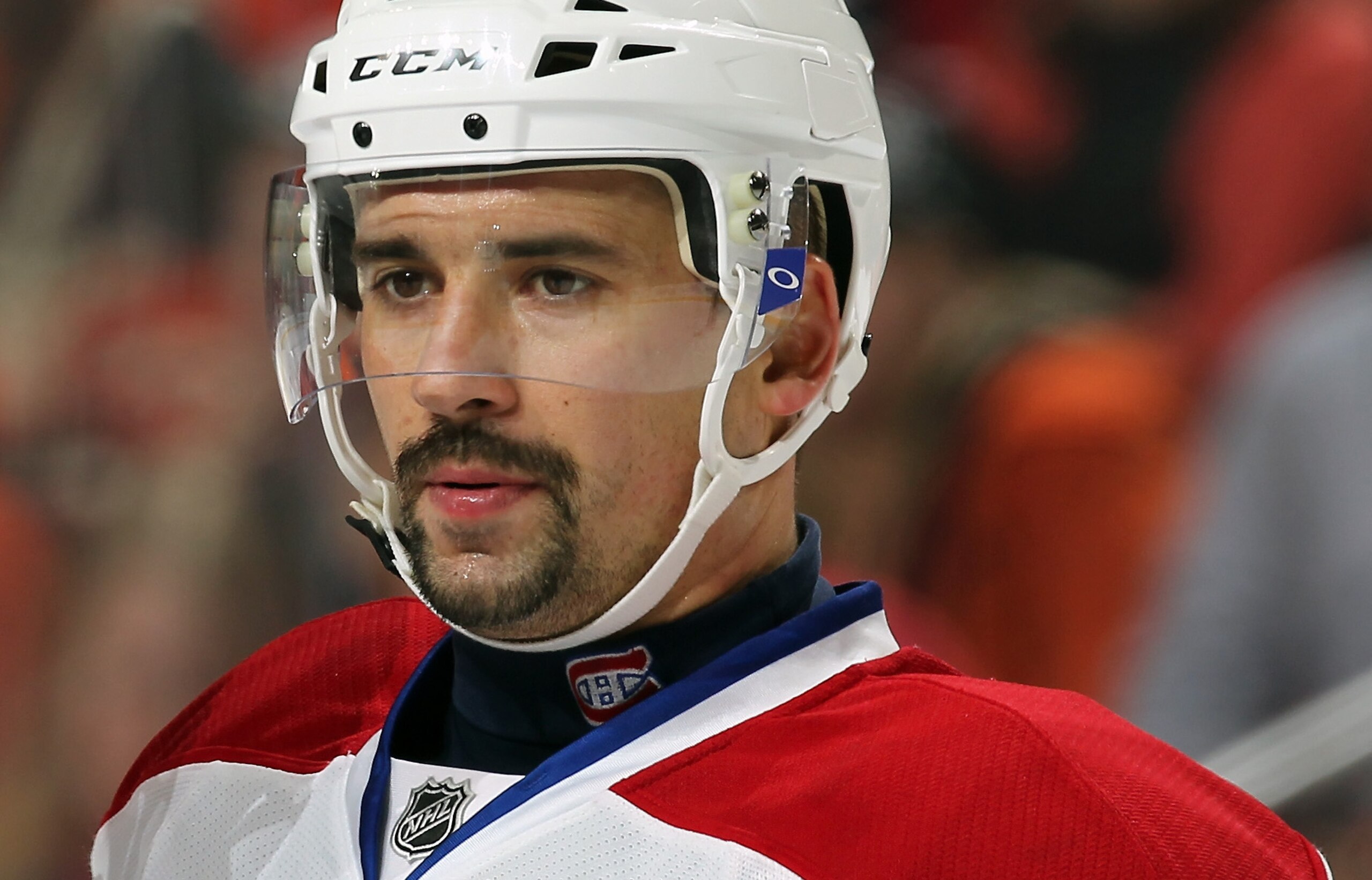
Plekanec, like more than a few others on this list, is here because although he's an excellent NHL player in virtually every way his point totals tend to undersell him.
The 2013-14 season is a great example. Plekanec led all Canadiens forwards in ice time, playing more than 1,600 minutes over 81 games (a team-high 19:46 per night) as Montreal cruised to a 100-point campaign. His ice time increased in the playoffs, and the Habs advanced to the Eastern Conference Final. And yet, he scored only 43 points, leading to characterizations of him as a second- or even third-line pivot.
Plekanec takes on brutal assignments every night. He's been a defensive-zone workhorse for every season in which we have data; he's played the toughest available competition and has been durable and consistently reliable throughout. He's a fantastic player.
Nashville Predators: Mike Ribeiro
17 of 30
A lot of the players on this list are here because their offensive totals don't accurately reflect how much they contribute to their team winning. Mike Ribeiro is the rare player whose impact is probably overstated by his point totals but who still can't get much respect.
Virtually all that Ribeiro does is put up offence; he scores his team's problems away. Since his breakout season in 2003-04, he's been a remarkably reliable offensive producer, scoring in the mid-600-point range alongside players like Jason Spezza, Daniel Alfredsson and Patrick Marleau. He's still scoring now, providing the Nashville Predators with a much-needed injection of offensive creativity.
Despite this, he's on his fourth team in four years after suffering a compliance buyout over the summer; Nashville got him for the NHL equivalent of a song (a one-year, $1.05 million contract) late in free agency.
New Jersey Devils: Travis Zajac
18 of 30
Patrik Elias may have been underrated over his long career, but with that career winding down, the torch in New Jersey has passed to Travis Zajac, who has more than a little in common with Montreal's Tomas Plekanec.
Like Plekanec, Zajac plays massive minutes (more than 20 minutes per game in 2014-15) and in all situations for the Devils. Like Plekanec, he topped out near 70 points but has seen his offensive totals drop off in favour of an expanded defensive role. And like Plekanec, he is tasked with the challenge of taking on the toughest available opposition and generally does well in the role.
New York Islanders: Jaroslav Halak
19 of 30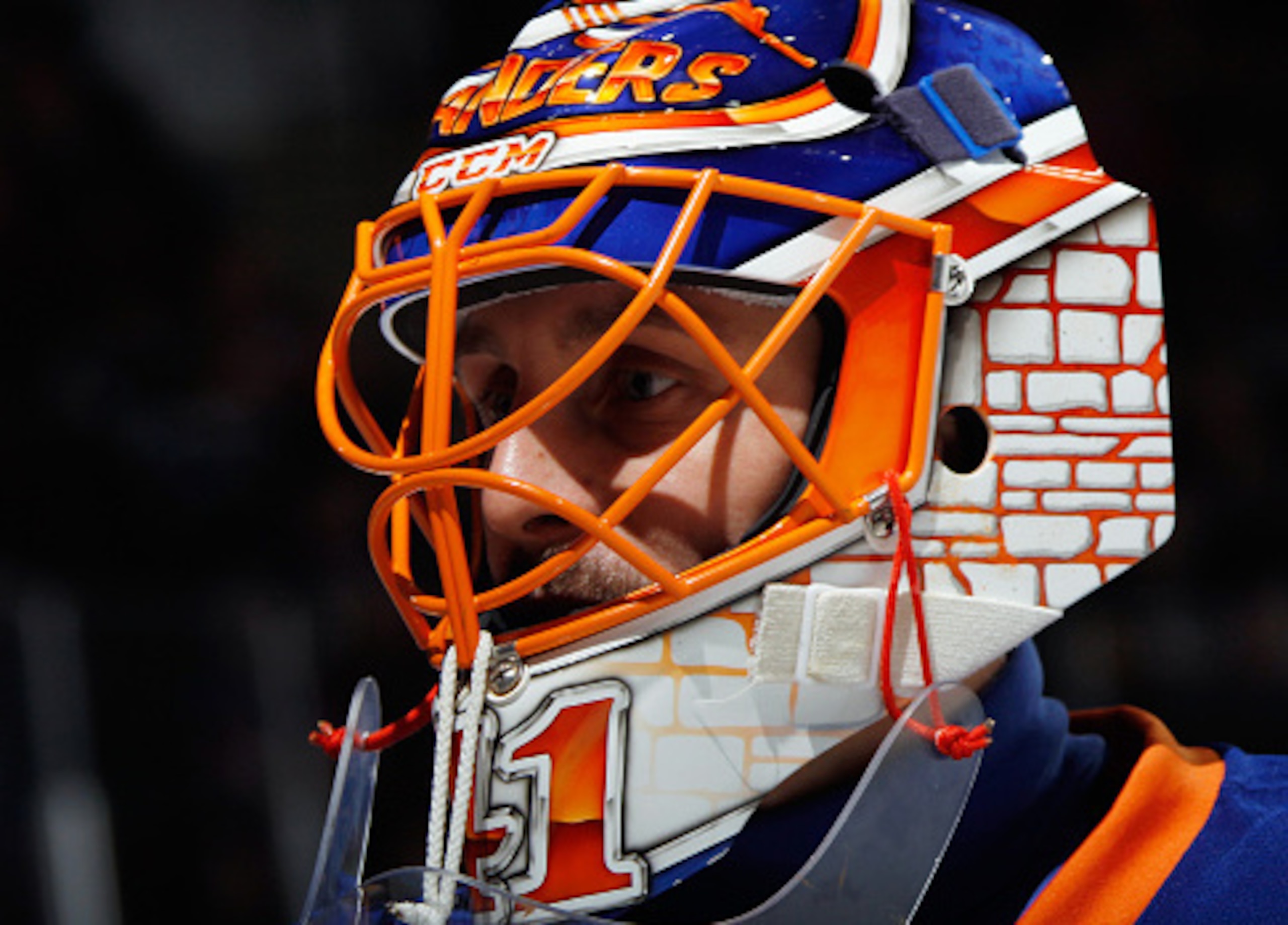
It's incredible that there are still people who doubt Halak's ability to start at the NHL level.
He broke into the league full-time in 2008-09, meaning he's now played seven full NHL seasons. Over that span, he's been a 0.918 save-percentage goalie for four different franchises. Excluding the lockout-shortened 2012-13 campaign, he's never posted a full-season save percentage below 0.910 and only once has he fallen below 0.915. He's been a solid playoff goalie over his career too, posting a 0.923 save percentage over 23 career games.
Now he's bringing that pattern of consistent excellence to the Islanders' rebuild, where he has a 0.922 save percentage through 14 games. He's a legitimate starting goalie, probably even an above-average starter, and the Isles have him locked up for the next four seasons at a very reasonable $4.5 million cap hit.
New York Rangers: Matt Hunwick
20 of 30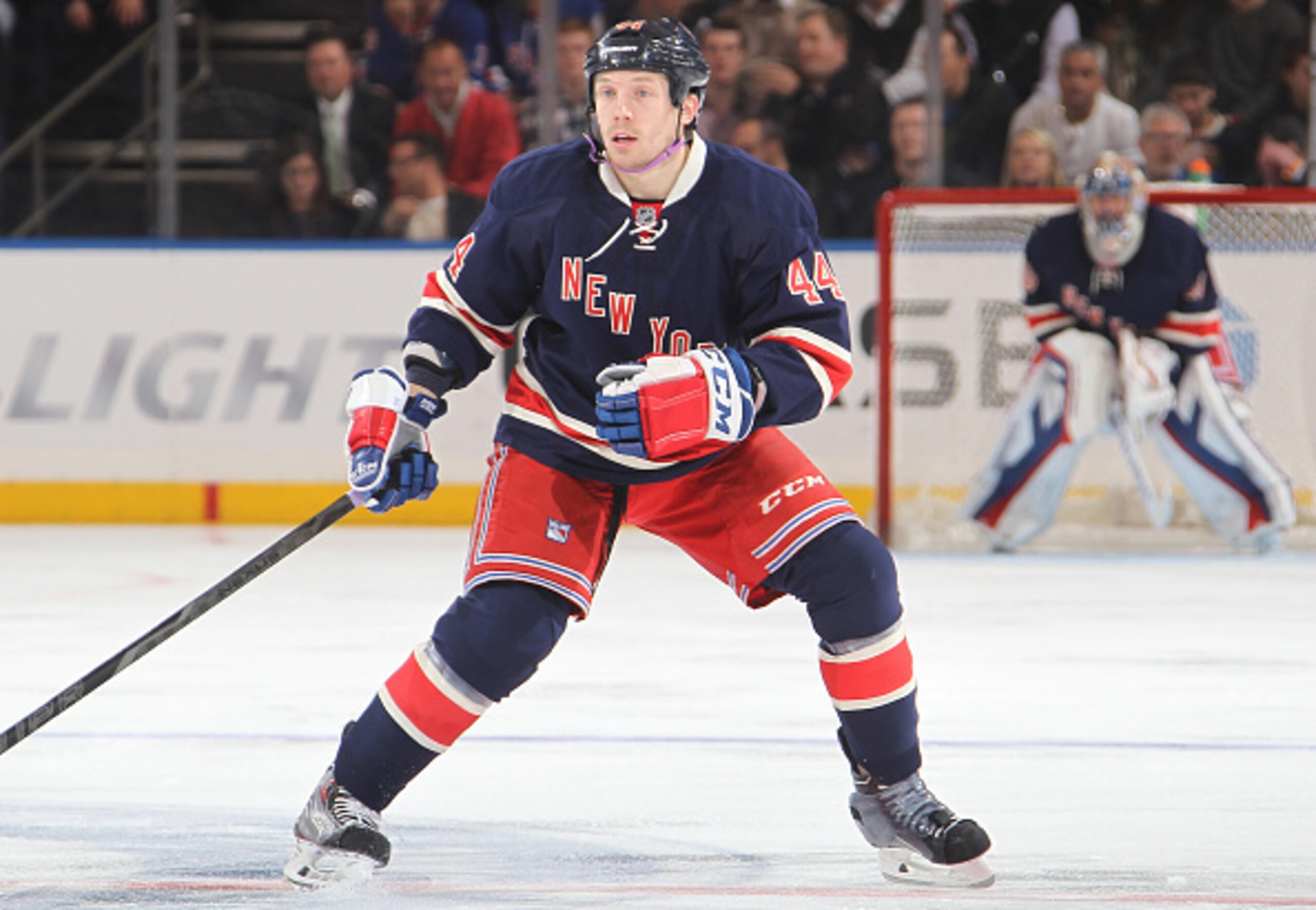
It's hard to find an underrated player in a market as exposed as New York, but Matt Hunwick has a pretty decent case.
The veteran defenceman has been a lifesaver for the Rangers as they have battled through injuries on the blue line, stepping into surprisingly heavy minutes and providing an effective presence. It shouldn't be a total surprise; over a nearly-300 game career, Hunwick showed he was capable of playing in the majors.
In a surprise move he was waived and then buried in the minors by the Colorado Avalanche last season, and while he did his best to show what he was capable of at that level (posting 31 points in 52 games) he's had to rebuild his NHL reputation. He's off to a good start on Broadway.
Ottawa Senators: Zack Smith
21 of 30
It's tough to find an underrated player on the Senators because the team for the most part is so very young. One reasonable candidate is Smith, a heart-and-soul centre who does yeoman's work handling defensive zone faceoffs and penalty-killing duties and has for several years now.
Smith has fallen into a fourth-line role in Ottawa this season, ceding time to David Legwand (and occasionally playing on the same line) as he's struggled to produce much offensively. That may not entirely be his fault; when he's on the ice his linemates are struggling along with a 3.3 shooting percentage, and he has history of doing more.
Just 26 years old, Smith still has the chance to carve out a role as a third-line shutdown pivot.
Philadelphia Flyers: Matt Read
22 of 30
There is a surprisingly long list of candidates for this slot in Philadelphia, but it's hard not to go with Read because the undrafted forward basically stepped into the NHL as a complete two-way player who brought both a firm attention to detail at his own end of the rink and the ability to make an opponent pay with his scoring touch.
Read, who finished one back of the NHL lead for short-handed goals last season, has massive defensive responsibilities on the penalty kill. He's also called upon at even strength, where he and regular collaborator Sean Couturier take on tough zone starts and tough opponents and generally find a way to work that matchup to Philadelphia's advantage.
Pittsburgh Penguins: Blake Comeau
23 of 30
One of general manager Jim Rutherford's mandates in Pittsburgh was to improve the team's bottom-six forward group, and adding Comeau was one of the quiet but positive steps that he made in that regard.
It's easy to just lump checking-line forwards together—to assume that one middling scorer with a range of skill is basically the same as another. But that's not true. Comeau is effective in the role because he has a long record of taking on reasonably tough minutes (lots of defensive zone starts) and still managing to end up on the right end of the territorial battle. He's also a player with the ability to score in bursts, as he's done early in his Pittsburgh career; he did after all once score 24 goals for the New York Islanders.
He's still a role player, but he's a good one.
San Jose Sharks: Antti Niemi
24 of 30
Antti Niemi is a good goaltender. He isn't bad and isn't great, but he's a legitimate NHL starter and good enough to win a Stanley Cup, as the Chicago Blackhawks proved in 2010. Despite this, the San Jose Sharks seem to have lost faith in his ability to take their team to where it needs to go.
Niemi has long been underrated, with the Blackhawks electing to let him walk for nothing following their 2010 Cup win and the Sharks seemingly approaching a similar decision with the pending unrestricted free agent whose name has cropped up in recent trade rumours, according to Jim Matheson of the Edmonton Journal.
The important thing is that over nearly 300 NHL games he is a 0.916 save percentage goalie and that since breaking into the league in 2009-10 he has never posted a single-season save percentage south of 0.912.
St. Louis Blues: Vladimir Sobotka
25 of 30
It might seem a little odd to go with a player who is not presently on the roster, but there certainly isn't any more obvious candidate in the organization than the guy the Blues played salary hardball with and ultimately allowed to leave for Russia rather than accommodate.
St. Louis may feel the salary-cap integrity hill is worth dying on, but no matter how good the team is at the moment (plenty, by the way), it would be better still with the energetic Czech centre.
Sobotka is among the very best faceoff men in the NHL, winning more than 60 percent of his draws in 2013-14. He's an all-situations workhorse who can be used in any offensive or defensive assignment, on special teams or at even strength and at centre or on the wing. He's a physically aggressive player, a capable scorer and conscientious in his own end of the rink.
Now he's using those skills to benefit a Siberian team, while the Blues just have to be happy that they have upheld the "fabric of the CBA."
Tampa Bay Lightning: Tyler Johnson
26 of 30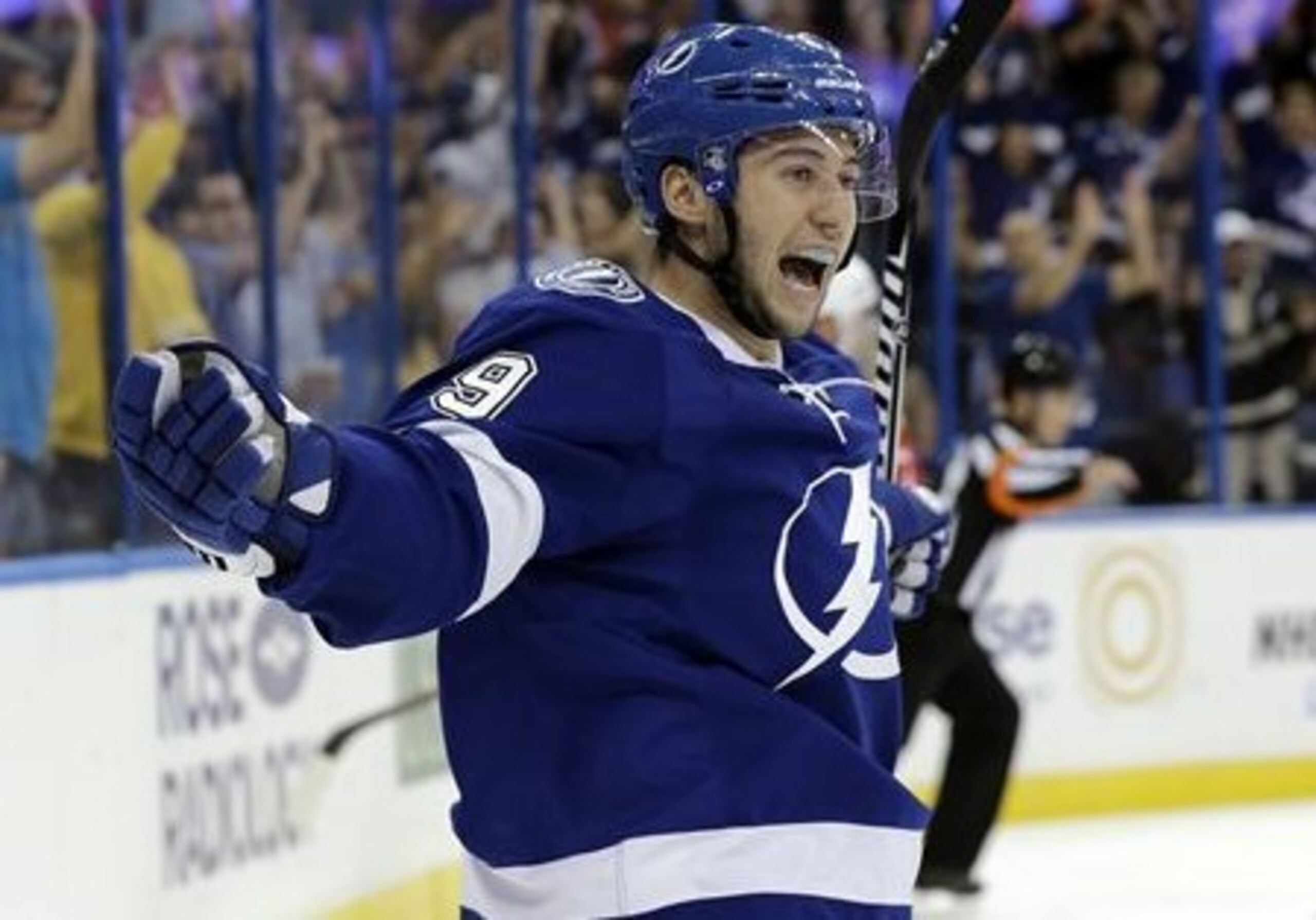
It's a little odd to highlight Johnson given the season he's having (21 points in 22 games), but there's a reason he slots in here. The undrafted forward is pretty well-known as a pint-sized (5'9", 182 pounds) offensive dynamo, but what's less well-known is how effective he is defensively.
Despite his size and history, Johnson is an integral part of the Lightning's penalty kill, playing better than two minutes per night while his team is short-handed. He's also surprisingly effective in the faceoff circle for a second-year player, winning more than half his draws and coming out at well over 50 percent at even strength.
In other words, Johnson is a shockingly polished two-way player, especially for an undrafted 24-year-old who just crossed the 100-game threshold earlier this season. He's a lot more than the sum of his scoring totals.
Toronto Maple Leafs: James Reimer
27 of 30
Reimer isn't a popular guy in Toronto these days after getting shelled in consecutive starts, but as always with goalies, it's best to focus on the long term rather than the vagaries of a short-term sample.
And Reimer's long-term results have been very impressive. Over the four seasons of his career preceding this one, he ranks 22nd among NHL goaltenders (minimum 2,500 minutes played) with a 0.926 even-strength save percentage. By those numbers, he's a starter-calibre goalie trapped in a backup job.
That's what it comes down to. Reimer has had his ups and downs, but on balance over his NHL career he's looked like a guy who should be battling for a starting job.
Vancouver Canucks: Chris Tanev
28 of 30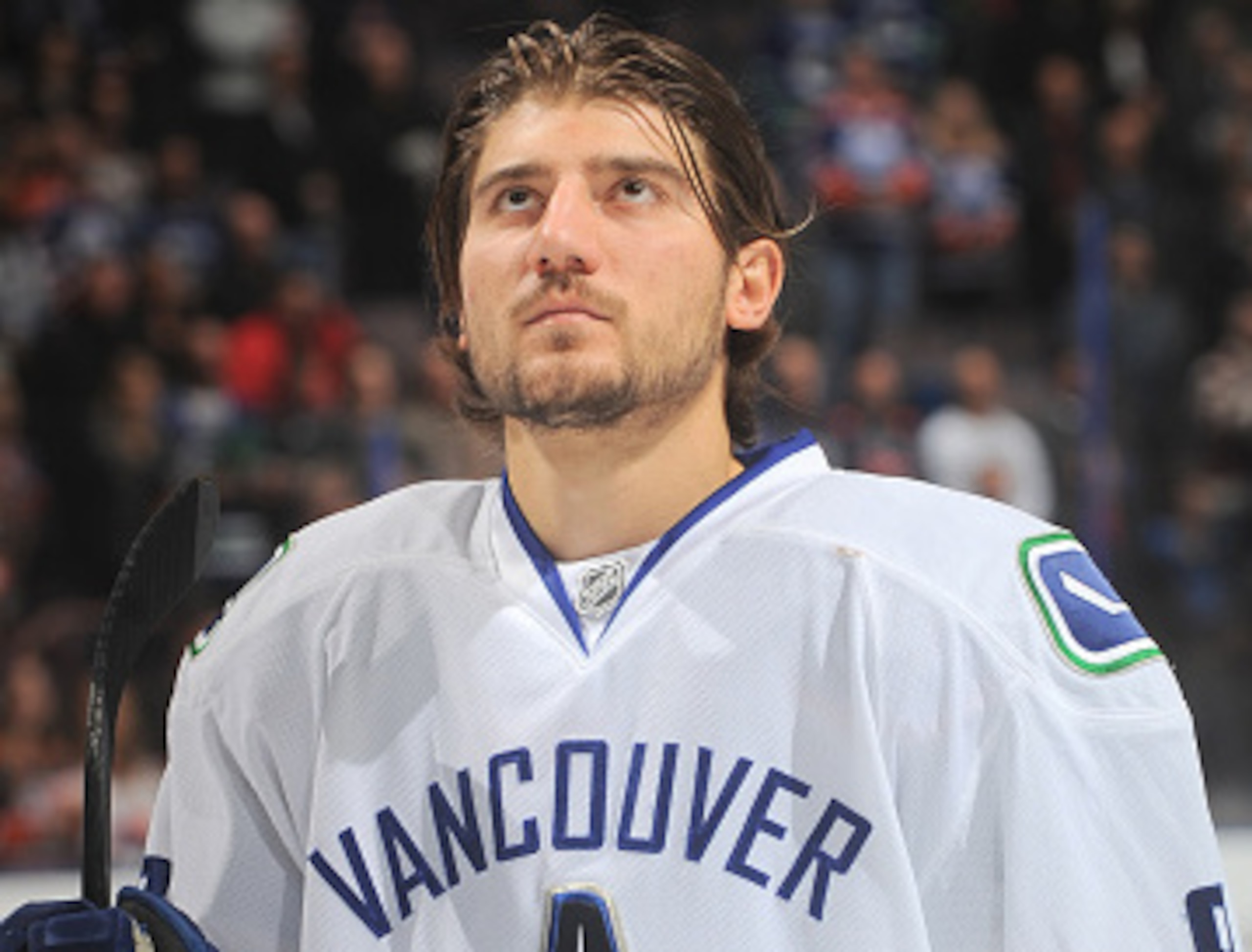
Tanev slides into a category that has been fairly well-represented on this list: the puck-moving defenceman who doesn't put up a lot of points.
There's a reason these kinds of players tend to be underrated. Fans normally look for one of two things in a defenceman—either a punishing, physical defensive game or a lot of points. What that point of view misses is that it's possible to effectively defend without playing a crushing style of hockey and that it's possible to support the attack without getting a lot of points.
That's where Tanev comes in. He moves the puck effectively, which means that he helps the team get out of its own end and get on the attack in a hurry. He's also smart and mobile, making him an effective positional defender when the puck comes back the other way.
As for his point totals, in 2013-14 he put up six points at even strength, the same total as Kevin Bieksa and more than either Jason Garrison or Alex Edler. He finished behind all three of those players because they got power-play time, and power-play effectiveness is a primary driver of defencemen point totals.
Washington Capitals: Nicklas Backstrom
29 of 30
Alexander Ovechkin's assist machine is a legitimately excellent player in his own right, and while it's clear that Washington's captain would be a great goal scorer regardless of his linemate, there is good evidence to suggest that Backstrom brings out the best in him.
Backstrom is a cerebral player at both ends of the rink, capable of contributing both offensively and defensively. Previous coaches in Washington have used him extensively on the penalty kill (though Barry Trotz only gave him spot duty), and he serves as the defensive conscience of the Capitals' top line.
Winnipeg Jets: Dustin Byfuglien
30 of 30
The much-maligned Byfuglien is criticized in the media for his weight, his attention to defensive detail and his attitude. He's been bounced from defence to forward, and multiple columnists in Winnipeg have suggested that the Jets would be better off the instant that they shipped Byfuglien out of town.
It's pretty incredible.
Byfuglien has his warts, but there are benefits. Like the fact that he's a physical 6'5", 265-pound skater, or that he has a complete offensive toolkit including the right-handed point shot that every power play in the game is looking for.
Maybe he'll be appreciated more after he's been shuffled off to his next NHL destination.
Statistics via BehindTheNet.ca, War-on-Ice.com, Hockey-Reference.com, Stats.HockeyAnalysis.com and NHL.com. Salary information via CapGeek.com.


.jpg?w=2560 "Every Trade's Best Trade Asset 🔁")
.jpg?w=2560 "Insiders: Cowboys Overpaid for Porter")
.jpg?w=2560 "MHJ's Potential Trade Value 📉")