
The Biggest NFL Injury Concerns Emerging This Offseason, Part 1
Every year, some injuries end NFL seasons before they begin. Others can put a player's ability to start Week 1 in serious doubt.
2014 is, unfortunately, following suit.
So far this offseason, a number of significant health concerns have popped up on the newswire. Regrettably, they will probably continue to do so.
Whether an injury ends a player's season outright, threatens his availability for training camp or lies somewhere in between, offseason injuries—as well as late-season injuries from the preceding year—continue to affect NFL teams across the league.
Let's take a look at a few, broken down and ranked—very roughly—into green-, yellow- and red-flag medical issues.
Please note this list is not comprehensive. More injuries will be covered throughout the offseason.
DeSean Jackson, WR, Washington (Hamstring): Green
1 of 10
According to The Washington Post's Mike Jones, Washington wide receiver DeSean Jackson returned to action last week after missing the prior week's activities due to a hamstring strain.
Compared to major injuries such as ACL tears or serious head injuries, pulled hamstrings occasionally fly under the radar—and sometimes deservedly so. After all, NFL players nursing sore hamstrings more often than not will sit out a week or two before returning to action and face minimal to no long-term consequences.
Nevertheless, hamstring strains tend to occur during an all-out sprint due to the rapidly cycling sequence of muscle extension and contraction—Jackson's forte.
Furthermore, hamstring strains often beget hamstring strains. In fact, a prior strain is one of the largest risk factors for a future injury. Cleveland Browns wide receiver Miles Austin comes to mind as an example of a player who continues to deal with the health and financial effects of multiple hamstring injuries.
For now, there is no reason to expect anything but a full recovery for Jackson. However, KFFL.com notes 2012 hamstring troubles for the former Philadelphia Eagle, preventing the complete dismissal of a strain or pull in 2014—at least until he demonstrates an injury-free return to full speed.
Eli Manning, QB, New York Giants (Ankle): Green
2 of 10
Last week, New York Daily News' Gary Myers noted that New York Giants quarterback Eli Manning says "he's good to go" following arthroscopic ankle surgery in April.
Manning underwent the procedure to address lingering symptoms from a late-season ankle sprain. Surgeons frequently use arthroscopic surgery to clean out excess scar tissue or loose bodies in the ankle that may be leading to tightness or swelling and inflammation, respectively.
At this point, it seems the Giants signal-caller's recovery went as smoothly as possible. Barring a repeat sprain, he will likely experience minimal lingering effects in the short- or medium-term.
Aaron Dobson, WR, New England Patriots (Foot): Yellow
3 of 10
A broken foot probably prevented New England Patriots wide receiver Aaron Dobson from reaching his full potential in 2013.
Dobson underwent surgery to address the issue in March, but on Monday, MassLive's Nick Underhill reported that, despite the projection of a two- to three-month recovery, the wideout "is said to be doubtful for this week's mandatory minicamp"—over three months removed from surgery.
From the outside looking in, it's impossible to truly know the significance of his seemingly prolonged recovery. However, delayed healing in an area of bone with poor blood flow—in certain regions within the fifth metatarsal, for example—could be to blame.
Then again, it's possible the Patriots are merely exercising extreme caution with their potential budding star. For now, it's too early to know.

.jpg?w=2560 "Cowboys Texans Football")
Jadeveon Clowney, LB, Houston Texans (Sports Hernia): Yellow
4 of 10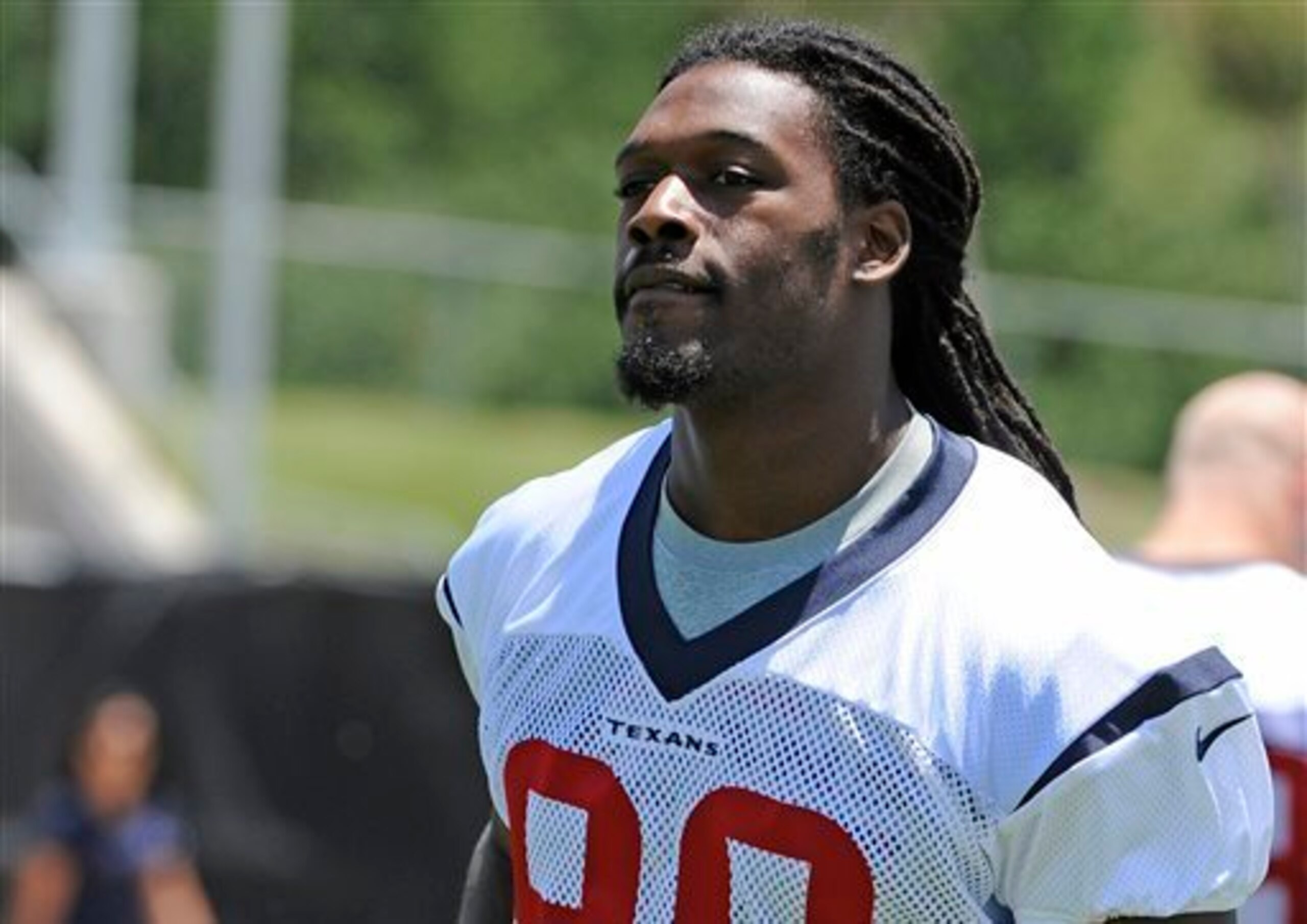
Houston Texans linebacker Jadeveon Clowney somewhat suddenly underwent sports hernia surgery last week, according to the Houston Chronicle's Brian T. Smith. Smith adds the Texans expect their former No. 1 overall pick to be ready for training camp.
A somewhat unique injury, the term "sports hernia" does not represent a true hernia—or a bulge of tissue through the abdominal wall—as its name suggests. Rather, it is a catch-all term for nagging groin pain that flares up with sudden sprints, bursts or twists at the waist.
Anatomically, the pain of a sports hernia—sometimes known as "athletic pubalgia" or, more recently, "inguinal disruption"—might stem from any of a number of different processes, such as a muscle imbalance between the groin and core. That said, each athlete's case is unique, and theories behind the pathological mechanisms underlying sports hernias are still evolving.
Surgery aims to, for example, address the muscle imbalance by repairing a muscle defect or releasing tension within a tendon. Following the procedure, many athletes experience excellent pain relief, but some may not and will eventually require further intervention.
Texans fans should pay close attention to Clowney's sudden starts, cuts and twists once he returns to the field. A decreased quick-burst ability could signify an ongoing issue.
Jon Beason, LB, New York Giants (Foot): Yellow
5 of 10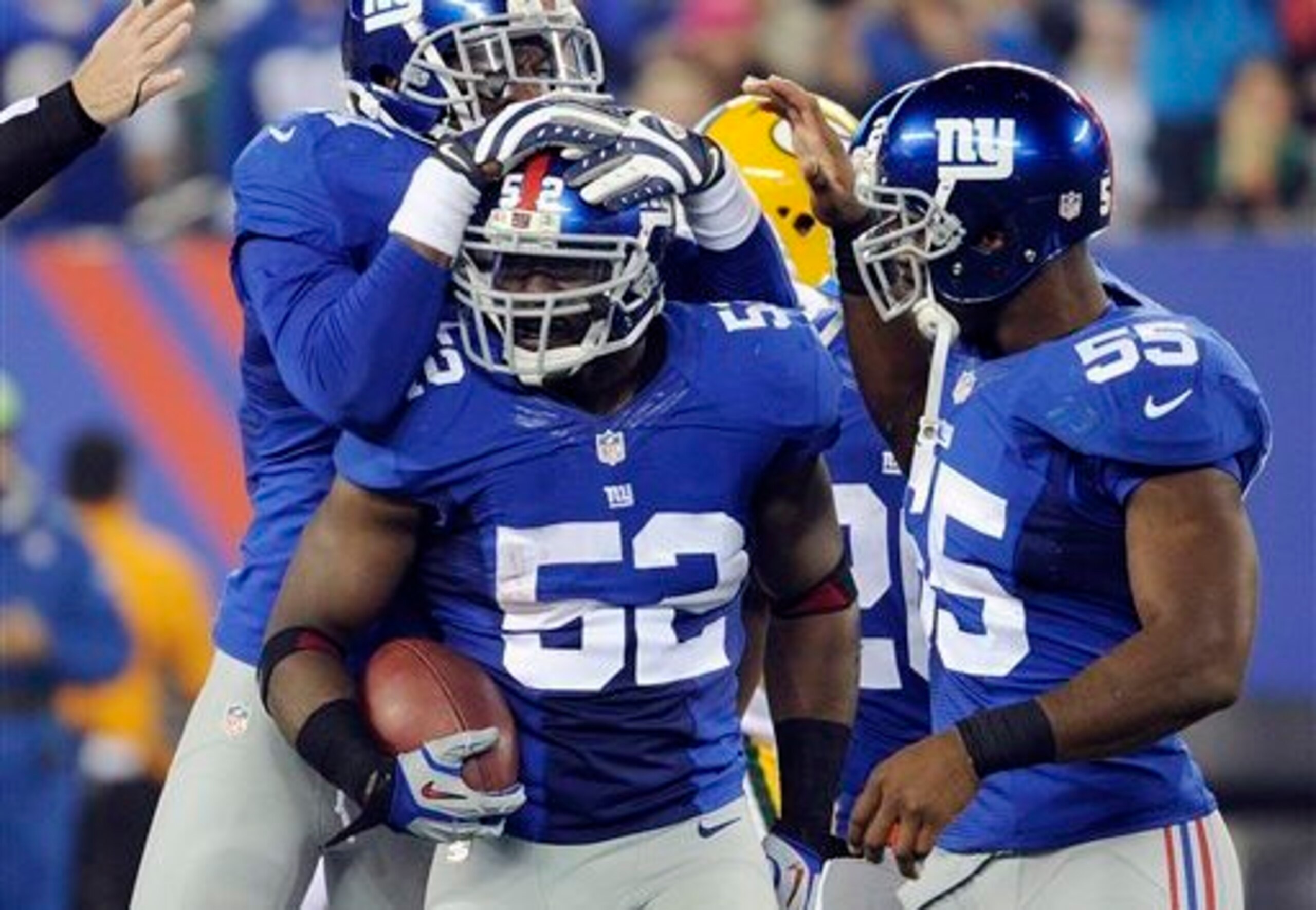
According to New York Daily News' Ralph Vacchiano, New York Giants linebacker Jon Beason suffered a fractured sesamoid bone in his right foot last week. Vacchiano also reports that, according to a team source, the team "expects he'll need surgery and at least three months to recover."
Two small sesamoid bones sit underneath the base of each big toe. They serve protective and biomechanical roles within the big toe and forefoot, but they can break if an athlete overdorsiflexes the big toe—or sharply bends it too far upward.
Sesamoids carry a relatively poor blood supply, and as such, a sesamoid fracture may not heal well on its own.
Sesamoid fracture surgery in elite athletes might involve stimulating healing with a bone graft. A surgeon can attempt to do so by exposing the fracture and inserting small pieces of bone taken from elsewhere into the area.
Whether or not Beason will undergo a procedure on his foot is not clear, but either way, it seems the Giants are already projecting a long recovery—even one that might, under the best of circumstances, extend into the regular season.
Sean Lee, LB, Dallas Cowboys (ACL): Red
6 of 10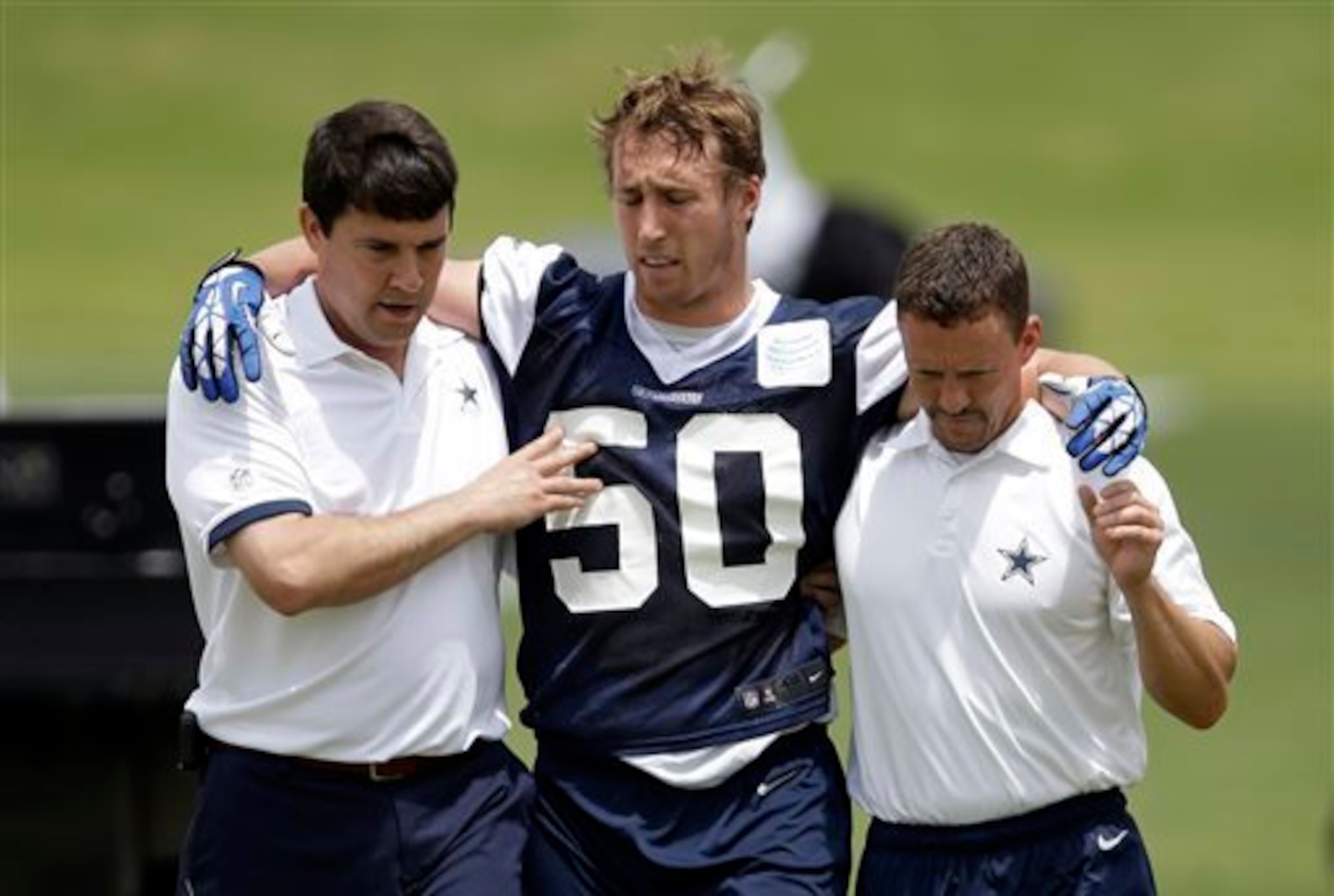
In late May, one of the most serious and unfortunate offseason injuries thus far fell on Dallas Cowboys linebacker Sean Lee.
According to NFL Network's Ian Rapoport, Lee went down with a torn ACL on this play during Cowboys OTAs.
ESPN Dallas' Todd Archer reported the linebacker underwent knee surgery last week.
ACL reconstruction surgery usually carries—at minimum—a recovery time of at least six to seven months. Most of the time, it extends to seven, eight or nine months, and sometimes, it can even approach a year or more.
With that in mind, a 2014 return for Lee following an offseason ACL tear is not impossible nor unprecedented—Melvin Ingram did so last year—but it's extremely unlikely.
Sean Weatherspoon, LB, Atlanta Falcons (Achilles): Red
7 of 10
Last week, oft-injured Atlanta Falcons linebacker Sean Weatherspoon ruptured his Achilles tendon—a devastating injury at any point in the year. The official Falcons Twitter account immediately announced the linebacker will miss the entire 2014 season.
Indeed, USA Today's Tom Pelissero noted on Monday that the league's transaction wire included Weatherspoon moving to injured reserve.
As the strongest tendon in the body, the Achilles tendon carries a large burden. It connects the calf muscles to the heel, allowing for pointing of the toes—as well as pushing forward with the toes or off the ground and up into the air.
In that vein, rehab following Achilles-repair surgery must proceed slowly in order for the healing tendon to meet the progressively increasing demands of physical therapy. Therefore, it comes as no surprise that Weatherspoon will not set foot on an NFL field until at least 2015.
That said, if he can avoid complications or setbacks after surgery—reruptures occur in a handful of cases per 100 injuries—his prognosis should remain relatively good.
Carl Nicks, G, Tampa Bay Buccaneers (MRSA): Red
8 of 10
In April, CBS Sports' Josh Katzowitz profiled Tampa Bay Buccaneers guard Carl Nicks' struggles with methicillin-resistant Staphylococcus aureus (MRSA).
Staphylococcus aureus—the "SA" in MRSA—is a bacteria that lives on human skin. MRSA is a particularly nasty strain of staph that harbors resistance to several commonly used antibiotics.
The skin normally provides an excellent barrier between the inside of the body and staph, but cuts in the skin can provide an entrance point for bacterial invasion. Infections that set in can range from folliculitis (pimples) to serious, life-threatening blood stream infections.
MRSA can be particularly difficult to treat medically due to its antibiotic resistance spectrum. As such, serious infections may require surgical intervention to drain or, quite literally, wash out the infected area. The infection—or the surgery to treat it—can damage the surrounding tissue.
It seems Nicks might be dealing with such a complication.
Katzowitz mentioned that Nicks is rehabbing nerve damage stemming from a MRSA infection last year. At this point, whether or not he can recover sufficiently enough to play in the NFL is unclear at best.
Jermichael Finley, TE, Free Agent (Spine): Red
9 of 10
Last year, free-agent tight end Jermichael Finley suffered a spinal cord contusion after one of the most frightening NFL scenes in recent memory. The injury left Finley briefly paralyzed on the field and led to spinal fusion surgery shortly thereafter.
Several months later—despite occasional rumors of interest throughout the league—Finley remains without a home in the NFL.
Fortunately, the former Green Bay Packer reportedly received medical clearance from his physician—renowned spinal specialist Dr. Joseph Maroon—in late May. However, an NFL medical staff must also deem him safe for play, and that team also needs to be willing to take on the injury risk.
So far, it seems neither has happened.
Without access to Finley's medical information, the precise reasons behind why the tight end remains a free agent are next to impossible to discern. Regardless, the entire NFL community certainly hopes for nothing but the best for the young star's future...whatever it may be.
Danario Alexander, WR, Free Agent (ACL, Infection): Red
10 of 10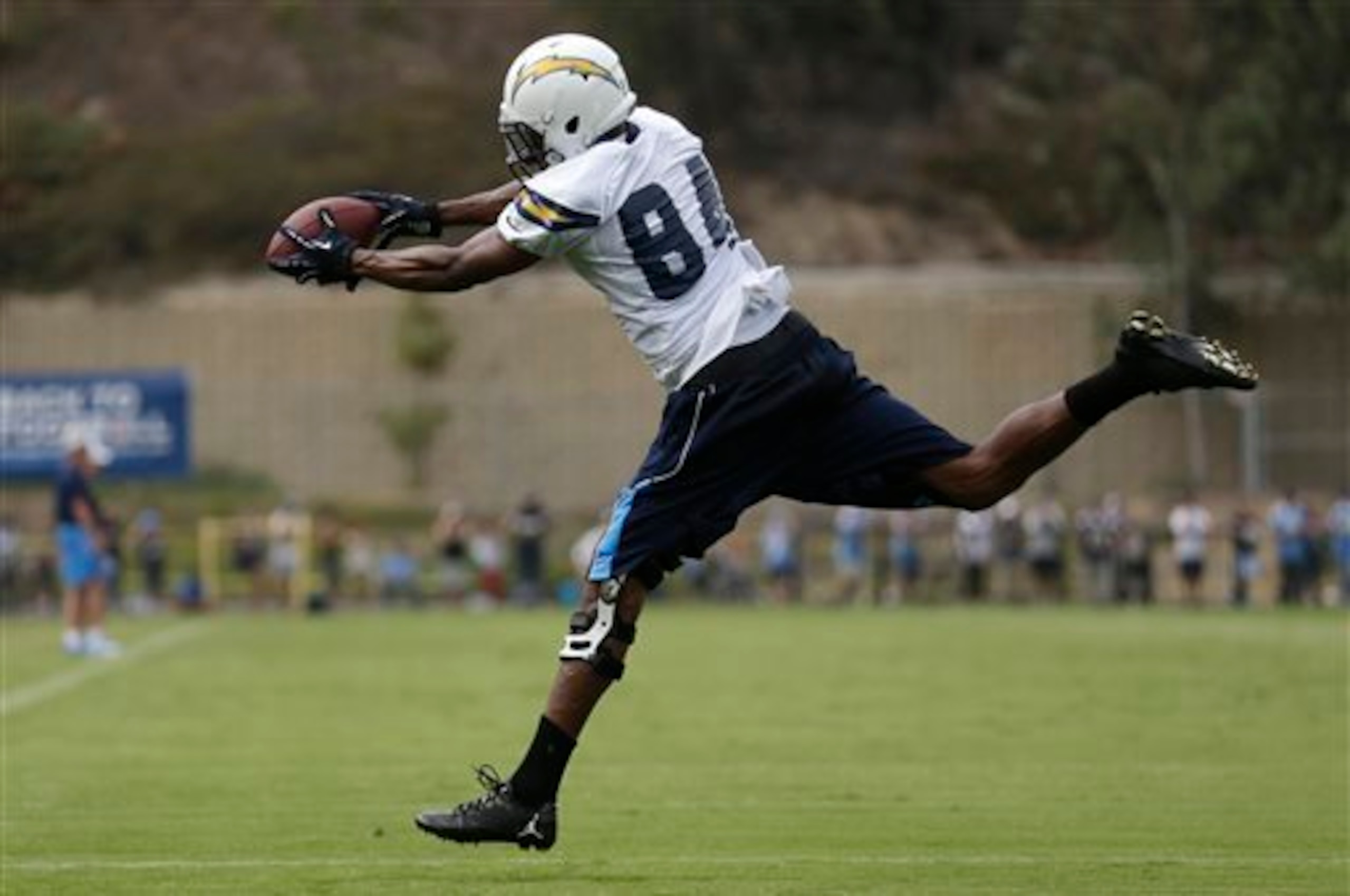
Little did free-agent wide receiver Danario Alexander know that his 2013 ACL tear would mark only the beginning of a complicated injury saga.
In February, Fox Sports' Alex Marvez reported Alexander needed not only ACL revision surgery in January—essentially a redo of his August 2013 reconstruction—but also multiple procedures due to an infection that set in after the fact.
The story marks the next chapter in a long history of knee injuries. Marvez notes at least five previous surgeries on his Alexander's knee, bringing the wideout's total operation count to a number approaching or at double digits.
At 25 years old, Alexander is not supposed to be thinking about threats to his long-term career prospects, but a bout of extremely bad luck might force him to do otherwise.
Dr. Dave Siebert is a resident physician at the University of Washington who plans to pursue fellowship training in Primary Care (non-operative) Sports Medicine. Medical information within this slideshow is for informational purposes only.
Questions about players on this list? Not on this list? Send 'em to Dave on Twitter: Follow @DaveMSiebert
.jpg?w=2560 "Browns Jaguars Football")