Mike Rice Speaks Out 7 Months After Rutgers Firing for Abusing Players
Former Rutgers head basketball coach Mike Rice was the talk of college basketball for all the wrong reasons seven months ago when he was fired after a video showed him physically and mentally abusing his players during practice. Rice has kept a low profile since then, but he has finally come forward with his side of the story.
Jonathan Mahler of The New York Times shadowed Rice for several months in an effort to figure out why the disgraced coach acted out in such an extreme manner. While Rice expressed a great deal of remorse and took responsibility for his actions, he also stopped short of calling his actions abusive.
TOP NEWS

New NFL Power Rankings 📊
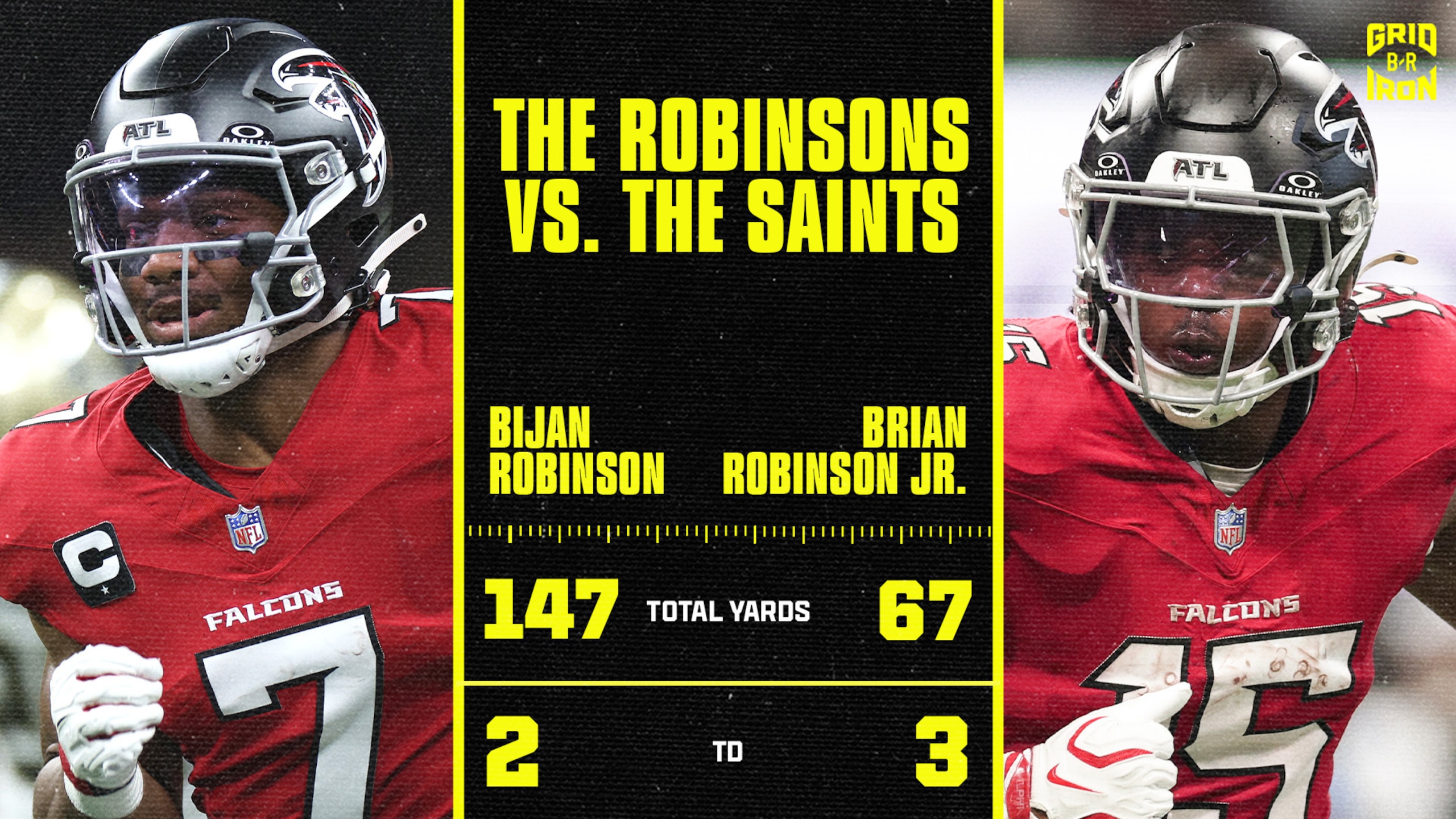
The Robinsons POUND the Rock 🪨

Takeaways from Falcons' dominant MNF win
“Everything I’ve ever done is fight, scratch and claw,” Rice said, “and now I have to sit back and take it, listen to people say I was abusing my players? I was an idiot, but I never abused anybody.”
Rice certainly isn't trying to run away from the fact that he acted inappropriately, but he suggested that the things that happened in that infamous video occurred quite infrequently.
“When you look at those moments, they’re ugly moments, there’s no way of describing them any way else,” he said, adding, “Once every 20 practices doesn’t make it that way every day.”
The 44-year-old Rice is working hard to rehabilitate his image, and while he still appears to have a long road ahead of him terms of getting another collegiate coaching job, he has kept busy by running after-school basketball clinics and coaching his son's high school team, according to Mahler.
Following the release of the highly publicized video, all Rice could do was apologize as seen in this tweet and video courtesy of SportsCenter.
Some questioned the sincerity of Rice's apology, but based on the many conversations he has had with Mahler, it's clear that Rice is trying to better himself as a person.
Rice even admitted that he knew deep down inside that his rage was a problem prior to his stint at Rutgers. Rice was known as a fiery presence on the sidelines while coaching at Robert Morris University, but he crossed the line at times.
“The 1,500 people who came to the games at Robert Morris, I’d put on a good show for them,” Rice said. “If the game was boring, they could just watch me. I would watch myself and think, Jeez, I’ve got to calm down.”
That issue only intensified at Rutgers as the games got bigger and more meaningful, and the pressure mounted.
"“You’re successful and now you keep building and it gets a little more out of control until it becomes a problem,” he says. “And my problem became a huge problem, and I never took time out to analyze how I was going about things. Even though people would say things, I’m not hearing it. Because the intensity is what I was, the intensity is what I knew.”
"
Rice has certainly become more philosophical since the fallout, and he now fully realizes the fact that he went about motivating his team in the worst way possible.
"“A good coach leads his team to water,” Rice said, borrowing a metaphor he picked up in anger-management counseling. “A great coach leads them to water and makes them thirsty. I led them to water, put their heads in until I was satisfied with how much they drank.”
"
Rice told Mahler that he now understands that his motivational tactics were counterproductive, however, there is still a hint of defiance and rationalization in his explanation as he mentioned that none of his players ever stood up to him or put a stop to the behavior.
"“There’s not a lot of thought that went into why you would throw a ball at somebody’s feet as hard as you could. Is that going to make him rebound better? Probably not. I don’t know what will, but that won’t.” Even as Rice acknowledges that he was wrong, he says his players understood he was just trying to motivate them. “Did any of them blink?” he asked me once. “If they were mad at me, they would have knocked the hell out of me. They’re 6-9, 270 pounds.”
"
Ultimately Rice came to the conclusion that his competitiveness caused him to overstep boundaries that he never should have crossed. While everything Rice did was done with an eye toward getting his team to perform at the highest possible level, Rice submitted that he shouldn't have abandoned values in order to make that happen.
"“I wish I would have been more thoughtful in how I went about making them forged as a team, making them tougher as a unit,” Rice said. “Or maybe just accepting that sometimes you have to accept that you are who you are. Look, we’re not very good, but we’re going to try every day, and we’re going to do the right things.”
"
Throughout Mahler's profile, Rice came across as a humbled man who is trying to make up for the wrongs he committed at Rutgers. There is no doubt that Rice wants to coach again, and if he continues on his current path, it's certainly possible that someone will be willing to give a rehabilitated Rice a chance.
Follow @MikeChiari on Twitter

.jpg?w=2560)

.jpg?w=2560 "Viral Rams Coach Vid 🖕")