The Best and Worst Free-Agent Signings from the Salary Cap Era
Up until 2005, NHL teams could sign players to whatever financial terms they desired. Teams such as the New York Rangers and Detroit Red Wings were allowed to throw money at the best players, trading away draft picks and prospects for names like Brett Hull and Dominik Hasek.
The salary cap changed all of that.
Now all the teams have a limit to how much they can spend, thus making each and every deal made an impactful one. Overpay a handful of players by a half-million, and suddenly, you're stuck scrounging for a second-line center.
There has been no shortage of both good and bad deals since the cap was implemented in '05. Here are the best and worst contracts from each free-agency period since then.
2005's Best Contract: Tim Thomas
1 of 16Contract: One Year, $450,000
Team: Boston Bruins
Highlights During the Deal: Calling this deal the best from 2005 is cheating a bit since Tim Thomas didn't rise to prominence during the term. Yet it's tough to look beyond the fact that there was a point when Thomas couldn't get a deal (or a job) in the NHL.
In 2005, the Bruins were one of the weaker teams in the league, but Thomas was one of the first pieces they acquired that would eventually lead to their Stanley Cup victory (much) further down the road.
During the one-year deal, he went 12-13 while posting a rock-solid .917 save percentage to go along with a weak 2.77 GAA. The Bruins would steadily improve over the next few seasons, and Thomas would be a huge part of that moving forward.
2005's Worst Contract: Alexander Mogilny
2 of 16Contract: Two years, $7 million
Team: New Jersey Devils
Lowlights During the Deal: There was a time when Alexander Mogilny was one of the most dangerous snipers in the NHL. But once 2005 rolled around, the original "Alex the Great" was simply out of gas.
The New Jersey Devils brought him to town to milk the last bit of hockey he had in him, and that's exactly what they did.
He played in 34 games with the Devils, scoring 25 points before getting buried in the AHL with the Albany River Rats—a sad way for the career of a great like Mogilny to end.
2006's Best Contract: Zdeno Chara
3 of 16Contract: Five years, $37.5 million
Team: Boston Bruins
Highlights During the Deal: 2006 was really the first free-agency period that featured jaw-droppingly long contracts, and Zdeno Chara was the first star to ink one of these mega-deals. The Bruins were continuing to dig deep for their rebuild, and they wanted Chara to be their centerpiece.
During the term of the contract, Boston rose from lottery team to Stanley Cup champion, and Chara won the Norris Trophy as the NHL's best defenseman in 2008-09. He was named team captain during the first year of the deal and has worn the "C" ever since.
He was an All-Star in four out of the five years of his contract and achieved the hardest shot ever recorded.


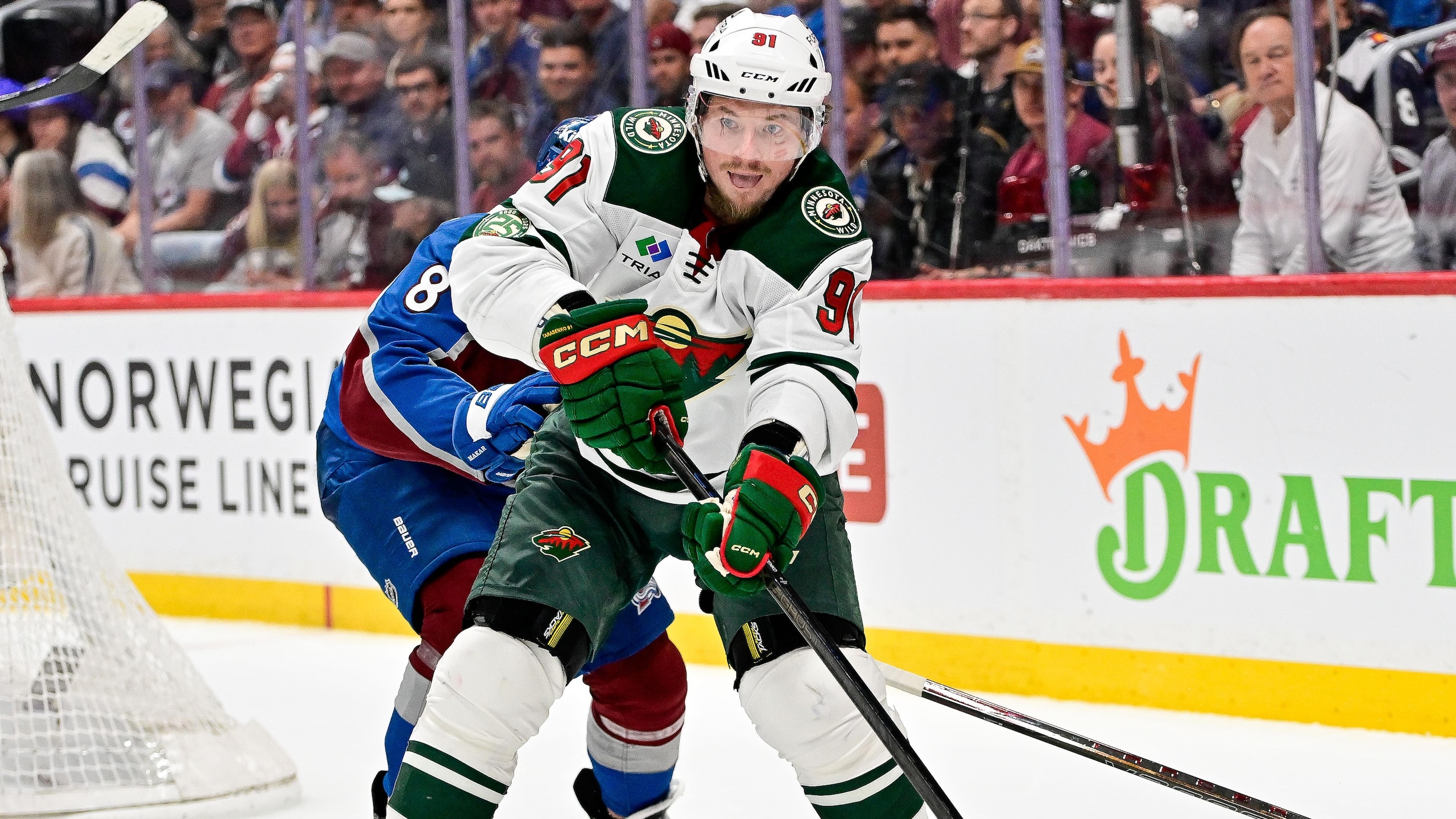
2006's Worst Contract: Rob Blake
4 of 16Contract: Two years, $12 million
Team: Los Angeles Kings
Lowlights During the Deal: Rob Blake and Los Angeles Kings were synonymous through the 90s. He played 11 seasons with the team that drafted him until he requested to sign an extension worth $9.6 million.
L.A. balked, trading him to the Colorado Avalanche in the 2000-01 season. Blake would stay there until 2006, when he re-signed with the Kings as a free agent in one of the feel-good moves of the summer. While he was still dangerous in the offensive zone, posting 65 points through the two years of the deal, Blake was awful in his own zone.
He posted a minus-26 in 2007 and a minus-19 in 2008. The Kings decided to allow Blake to leave via free agency, and he bolted for state rival San Jose Sharks.
2007's Best Contract: Brian Rafalski
5 of 16Contract: Five years, $30 million
Team: Detroit Red Wings
Highlights During the Deal: In one of the best deals since the NHL implemented the salary cap, Brian Rafalski took a serious hometown discount in order to join the Detroit Red Wings. He was the top free-agent defenseman available in 2006 and could have received much more money than $6 million per year.
The Wings made it to the Stanley Cup Final twice during Rafalski's four-year stay. Across those four regular seasons, he accumulated a total of 204 points and was an incredible plus-78.
The highlight for Rafalski and Detroit would come in 2008, when the team won the Stanley Cup. It was his third cup, and he was instrumental in bringing the championship trophy back to Hockeytown.
He unexpectedly retired with one year left on his contract, and Detroit's blue line hasn't been the same since.
2007's Worst Contract: Scott Gomez
6 of 16Contract: Seven years, $51 million
Team: New York Rangers:
Lowlights During the Deal: There's nothing left of this dead horse.
Yes, the New York Rangers vastly overpaid Scott Gomez, and yes, it was arguably the worst contract that was dealt out during the initial salary cap feeling-out process. His cap hit would be an albatross for two years before Glen Sather hypnotized the Montreal Canadiens into taking him on while giving up something of value in return.
Nothing else to see here. Moving on.
2008's Best Contract: Marian Hossa
7 of 16Contract: 12 years, $63.3 million
Team: Chicago Blackhawks
Highlights During the Deal: Say what you want about the term and cap hit, but Marian Hossa is a guy who knows how to play in big games. He's been in four out of the last six Stanley Cup Finals and has won two Stanley Cups with the Chicago Blackhawks since joining the team for the 2009-10 campaign.
Hossa has been a constant injury risk for the 'Hawks since coming aboard, but when he's on the ice, you'll have to look pretty hard for a more complete player. He's one of the most underrated two-way forwards in the game, and he's a Stanley Cup Final magnet.
Hossa has scored more than 200 points since joining Chicago and will be a good player for them for at least another few seasons.
2008's Worst Contract: Wade Redden
8 of 16Contract: Six years, $39 million
Team: New York Rangers
Lowlights During the Deal: When Wade Redden signed his lucrative deal with the New York Rangers in 2009, he figured to become one of the team's most important players on the blue line. Instead, he would play an increasingly diminished role for New York through two seasons.
Then he'd find himself buried in the minors for two years, buying dinners for bygones and rookies. He was still receiving his $8 million per, just while riding buses in the AHL.
He was a trooper about it and found his way back to the NHL in 2012 with the St. Louis Blues and Boston.
2009's Best Contract: Matt Moulson
9 of 16Contract: One year, $575,000
Team: New York Islanders
Highlights During the Deal: "No one is going to come along and just hand us a top-six winger, so it's imperative that we draft well." You'll hear general managers repeat this mantra over and over again during the NHL draft.
When they are speaking, they clearly must be blocking Matt Moulson from their minds since that's exactly what happened.
A 263rd overall selection in 2003, Moulson bounced from the Pittsburgh Penguins and Los Angeles Kings before signing this one-year deal with the New York Islanders. He led the team in scoring during the 2009 preseason and made his way out of camp despite having a two-way deal.
He stuck on a line with John Tavares, and that's where he's been ever since. Albeit making just a tad more money.
2009's Worst Contract: Mike Komisarek
10 of 16Contract: Five years, $22.5 million
Team: Toronto Maple Leafs
Lowlights During the Deal: Brian Burke was obsessed with getting the Maple Leafs to play a tough brand of hockey he'd had a lot of success with while building the Anaheim Ducks up to the status of Stanley Cup champion.
In an attempt to make Toronto a tougher opponent, he overpaid Mike Komisarek by an outlandish margin.
He didn't add much more than an anchor of a contract to the ledger, which has since been bought out by Toronto's new management. Komisarek finished his career with the Leafs playing in the minors, and odds are, fans won't miss...whatever it is that he supposedly brought to the table.
2010's Best Contract: Paul Martin
11 of 16Contract: Five years, $25 million
Team: Pittsburgh Penguins
Highlights of the Deal: In what was perhaps the most starless free-agency period since 2005, 2010 didn't feature many big names. The Pittsburgh Penguins were looking to defended their Stanley Cup title, and minutes after free agency opened, they learned that they'd lost their assistant captain, Sergei Gonchar, to the Ottawa Senators.
It didn't take the Pens long to reload, and it was announced later that day that Paul Martin had been signed away from the New Jersey Devils.
The team hasn't been back to the Stanley Cup Final yet, but Martin has been a steady performer since joining the club three years ago.
2010's Worst Contract: Ilya Kovalchuk
12 of 16Contract: 15 years, $100 million
Team: New Jersey Devils
Lowlights During the Deal: First, to address the question that's running through your head: "What's the difference between the Marian Hossa deal and Ilya Kovalchuk's pact?"
Answer: About $37 million and two cup rings. And yes, that's all it takes to make a contract good or bad. If the team succeeds with the deal by winning the Cup, then the cap hit is irrelevant.
The New Jersey Devils just have not been a better hockey team since inking Kovalchuk to the first $100 million deal in the history of the NHL. Sure, Zach Parise bolted, but a large reason for that was that New Jersey had tied up so much money in "Kovie."
Tack on the fact that the team was forced to give up a third-round pick in 2010 and (now) a first-round pick in 2014, plus $3 million in fines for cap circumvention, and this deal hasn't been a good one for the Devils.
2011's Best Contract: Mike Smith
13 of 16Contract: Two years, $4 million
Team: Phoenix Coyotes
Highlights During the Deal: In 2010, the Phoenix Coyotes were allegedly carried by goaltender Ilya Bryzgalov. When he refused to sign an extension, he was traded out of town, leaving a gaping hole in net for the Desert Dogs.
They took a chance on ex-Tampa Bay Lightning blue-chipper Mike Smith and were rewarded with a starting goaltender just entering his prime.
The success of Smith in Phoenix was only made sweeter by the struggles of Bryzgalov with the Philadelphia Flyers.
2011's Worst Contract: Ilya Bryzgalov
14 of 16Contract: Nine years, $51 million
Team: Philadelphia Flyers
Lowlights During the Deal: Writers and pundits alike will be highlighting this deal as one of the worst ever until 2026-27. This is when the Flyers will no longer be on the hook for just over $1.5 million per season after buying out Bryzgalov.
General manager Paul Holmgren traded away the core of his team (Mike Richards and Jeff Carter) to make room for Bryz, who was supposed to finally solve Philly's seemingly constant net issues.
He put up numbers comparable to those that he had in Phoenix, but that wasn't good enough for Holmgren and the Flyers. They decided to use one of their compliance buyouts on the netminder after only giving him one full season to settle in.
Not only is this one of the worst contracts of all time, it is one of the most poorly executed team-building plans ever.
2012's Best Contract: Brad Boyes
15 of 16Contract: One year, $1 million
Team: New York Islanders
Highlights During the Deal: The Isles secured another successful reclamation project in Brad Boyes prior to the 2012 season. He lined up in New York's top-six, and his speedy style fit right in on Long Island.
He put up 35 points in 48 games and appears to have put his injury-riddled days behind him. Of course, playing on a line with John Tavares didn't hurt matters, but we've seen stranger things than talented players not learning to streak to the net with their sticks down when playing with elite centers.
While no deal is imminent with New York as of right now, both player and team received what they bargained for with this contract.
2012's Worst Contract: Ville Leino
16 of 16Contract: Six years, $27 million
Team: Buffalo Sabres
Lowlights During the Deal: It's tough to decide which season was worse for Ville Leino and the Buffalo Sabres: 2011-12 when he only scored 25 points in 71 games or 2012-13 when he missed 40 games due to injury.
Regardless of which way you go, Leino has yet to earn much (if any) of the $4.5 million he makes on a yearly basis.
Spending to the cap ceiling is one thing. Doing so while paying the right players is another thing altogether—a fact that won't be lost on the Sabres after this terrible deal.
Stats and contract information are courtesy of hockeydb.com and capgeek.com unless noted otherwise.
.jpg?w=2560 "Grading WWE Raw 🔠")
.png?w=2560 "Allen's BRUTAL 1H Stats 🫤")