Biggest Winners and Losers of the 1st Half of The 2023 MLB Season
The first half of the 2023 Major League Baseball season was some kind of roller coaster ride, jam-packed with surprising performances—some good, some not so much.
And before we dive headlong into trade deadline madness and the subsequent postseason push, let's crown the biggest winners and losers of the season to date.
For the individual players deemed winners and losers, we've approached it from a "future money gained/lost" perspective, as opposed to an MVP/LVP/Cy Young/Cy Yuk viewpoint. All four of those players will (or might) be free agents this offseason, and their projected contracts have changed drastically over the past three-plus months.
For the teams, it's a more conventional "biggest over/under-achiever" situation. And while both Kansas City and Oakland have been flirting with historic levels of terribleness, neither one takes the biggest loser crown.
We'll wrap things up by looking at two leaguewide trends, one of which isn't going anywhere near as well as we once thought.
Biggest Winner Among Hitters: Cody Bellinger, OF, Chicago Cubs
1 of 8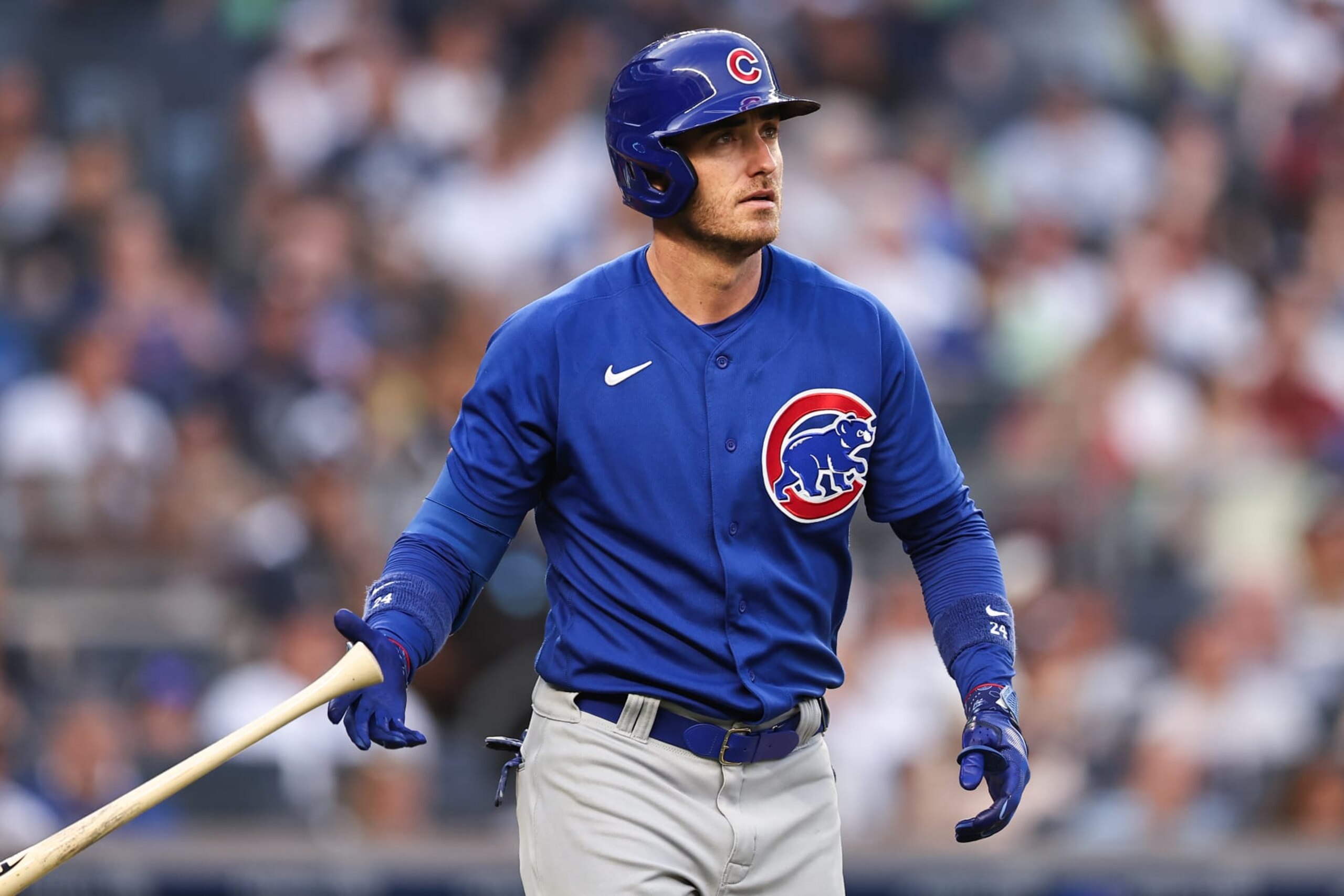
2023 Stats: .298/.355/.491, 9 HR, 29 RBI, 44 R, 11 SB
The best hitter thus far this season has been Shohei Ohtani. Barring injury, it's a foregone conclusion that he will be named AL MVP for the second time in his career, and there's a chance he's going to join Miguel Cabrera as the only player to win a batting triple crown in the past half-century.
Yet, in spite of Ohtani's two-way heroics, the Angels are a sub-.500 team, and he was going to become a very, very rich man this offseason regardless of how this season played out. Perhaps in light of his dominant campaign, he'll now get a 10-year, $550 million contract instead of a 10-year, $500 million contract.
It's also a near-foregone conclusion that Ronald Acuña Jr. will be named the NL MVP, on pace for roughly 40 home runs and 75 stolen bases. At least he is leading the best team in baseball, but he's already under contract through 2028. (Unless Atlanta declines its club options for 2027 and/or 2028, which ain't happening.)
But the biggest winner among hitters has to be Cody Bellinger.
The soon-to-be 28-year-old centerfielder isn't homering at anywhere near the same rate he did while winning NL MVP in 2019, but he has an .846 OPS that is 235 points higher than his .611 mark between 2021 and 2022.
The impending free agent—there's a $12 million mutual option for next season that he'll be declining in a heartbeat—isn't all the way back to what he was in his early 20's, but he's batting nearly .300 and has surely increased the total value of his upcoming contract by more than 300 percent.
We'll see how the second half of the season pans out, but aside from Ohtani and Matt Chapman, Bellinger may well now sign for more than any other hitter in the upcoming free agency cycle.
Also, there's a clause in Bellinger's contract that states he gets an extra $1 million if named the NL Comeback Player of the Year, which he's in good shape to get. It probably should go to Fernando Tatis Jr., who is having an incredible year after missing all of 2022. However, the voters will be reluctant to applaud a guy coming back from a PEDs suspension. (See: Tatis not even named to the All-Star Game.)
Biggest Loser Among Hitters: Tim Anderson, SS, Chicago White Sox
2 of 8
2023 Stats: .223/.259/.263, 0 HR, 13 RBI, 29 R, 9 SB
What in the world has happened to Tim Anderson?
In 2019, Anderson led the majors with a .335 batting average, hitting 18 home runs in just 123 games played. The following year, he hit .322 and earned a Silver Slugger Award. He was subsequently named an All-Star in each of 2021 and 2022.
Yes, he was frequently injured. But his .318 batting average during those four seasons was the best among all qualified hitters. He also homered at a 162-game pace of 22 from 2019-22.
But now?
Anderson is dead last among qualified hitters in FanGraphs' Offense Rating. And not only does he have zero home runs, but according to Baseball Savant, he has just two batted balls in this entire season that would have been a home run in any of the 30 MLB stadiums.
He started the year hot, batting 14-for-40 (.350) with five doubles and five stolen bases in his first nine games. But since coming back from a knee injury suffered on April 10, he has been a shell of his former self, going 47-for-227 (.207) with five extra-base hits and four stolen bases in 56 games played.
Coming into the season, Anderson's $14 million club option for 2024 was as good as exercised. It was really just a question of whether it would be one more year with the White Sox or if he would get traded at the deadline and play for that $14 million somewhere else next year.
The White Sox most likely will still pick up that option, but if he doesn't at least show signs of turning things around after the All-Star Break, it will be a tougher decision.
And if Anderson does hit free agency, the shortstop who turned 30 last month might not even be the hottest commodity at his position, as Amed Rosario (who turns 28 in November) has been way less injury prone throughout his career and is more likely to provide good ROI on a long-term deal.
Biggest Winner Among Pitchers: Marcus Stroman, RHP, Chicago Cubs
3 of 8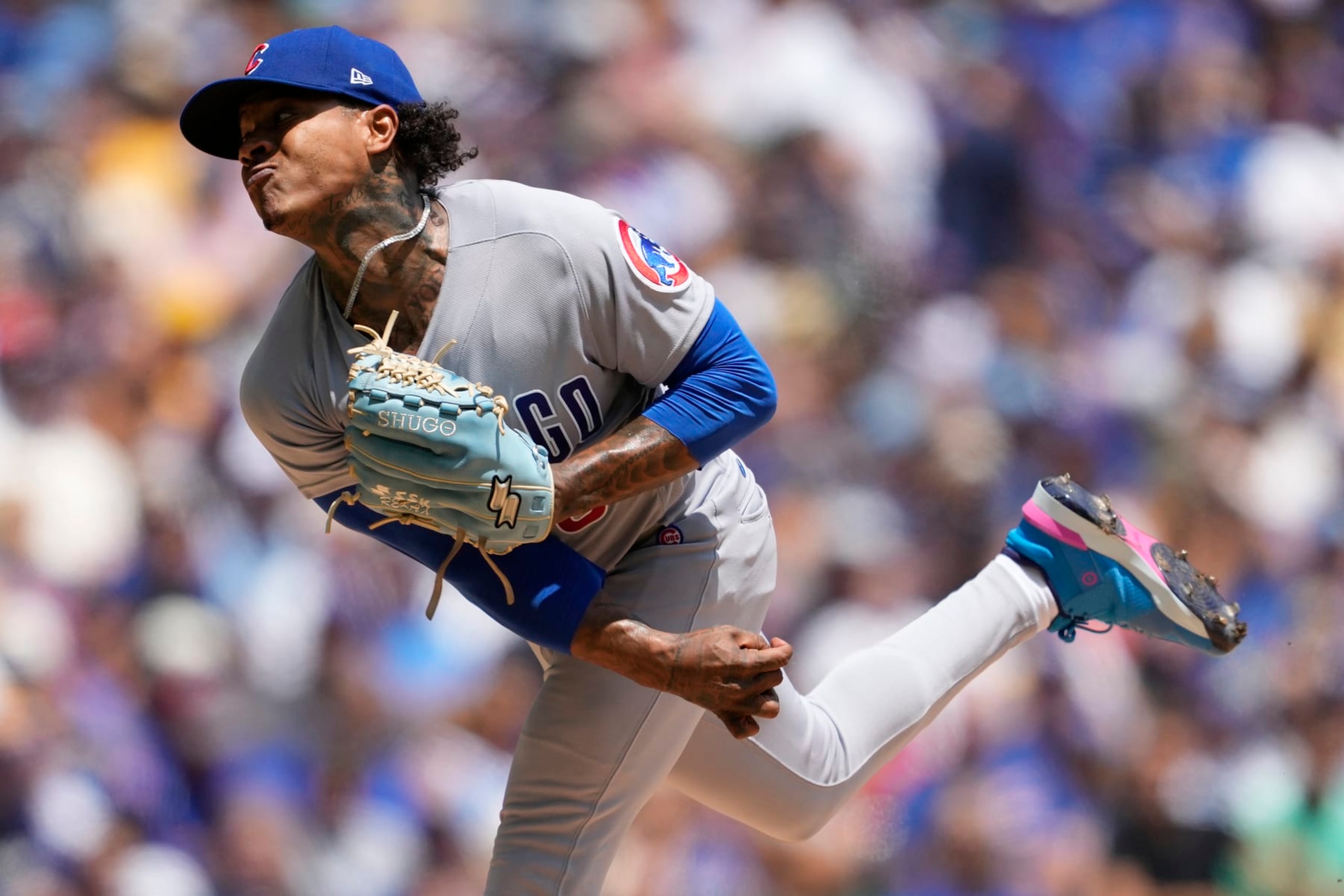
2023 Stats: 9-6, 112.2 IP, 2.96 ERA, 1.11 WHIP, 7.8 K/9, 3.3 BB/9
I promise we will eventually highlight some guys who don't play in Chicago, but it's back to the Windy City yet again for the pitcher who has made the most of the first half of 2023.
Marcus Stroman did sputter to the midseason finish line, though, giving up 12 earned runs in just 14 innings of work over his last three starts. But in his 10th-16th starts of the season, he racked up seven consecutive quality starts (and seven consecutive wins) while lowering his ERA to 2.28.
At that point, he was a top candidate to start the All-Star Game, as well as the clear No. 1 player in any ranking of trade deadline targets. (Now that the Angels have lost 13 out of 17, though, Shohei Ohtani is very comfortably back at No. 1 in that ranking.)
For a while there, Stroman was leading all pitchers in bWAR. (He's still tied for fourth.) And it didn't exactly come out of nowhere. He opted out of playing in 2020, but had an ERA of 3.50 or better in four of his last five seasons.
And even without pitching at all in 2020, Stroman is one of just 14 pitchers who has logged at least 1,000 innings dating back to the start of 2016, ranking among the most durable and reliable arms in the business.
Like Cody Bellinger, Stroman has an option in his contract to remain a Cub in 2024. But he, too, has performed well enough that it is laughable to think he would play one more season for $23 million when he could instead hit the open market and get a five-year deal worth more than $23 million per season—even as a pitcher who will turn 33 next May.

.jpg?w=2560)

Biggest Loser Among Pitchers: Martín Pérez, LHP, Texas Rangers
4 of 8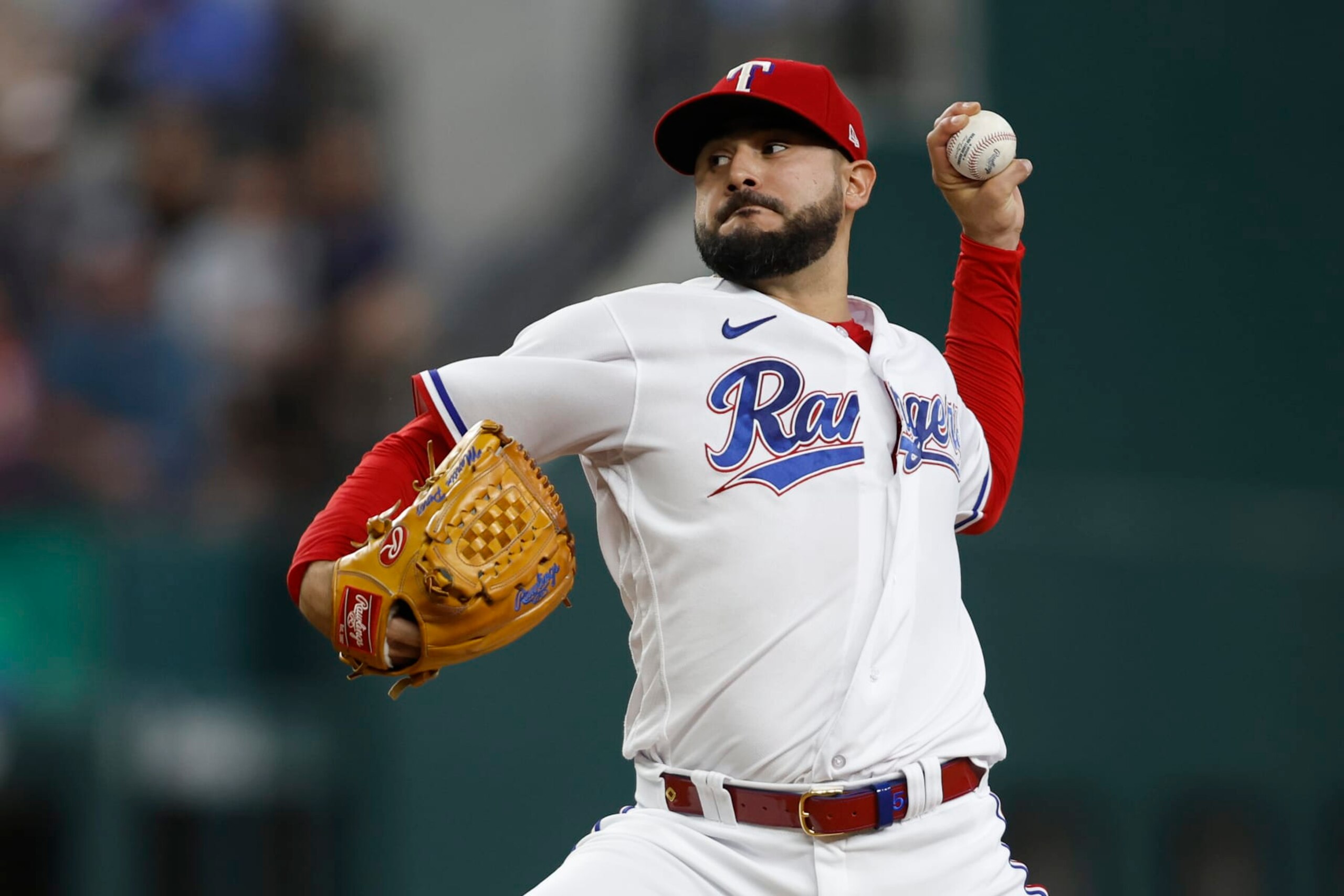
2023 Stats: 7-3, 91.2 IP, 4.81 ERA, 1.48 WHIP, 5.9 K/9, 3.1 BB/9
It's hard to fault Martín Pérez for accepting Texas' one-year, $19.65 million qualifying offer rather than electing for free agency this past offseason. It was more than triple the previous largest salary of his career ($6 million), and it was about to be his fifth consecutive year hitting free agency, as a result of having club options declined after each of 2018 (Texas), 2019 (Minnesota), 2020 (Boston) and 2021 (Boston).
Must have been nice actually being wanted back for a change.
But it was a calculated risk to accept the offer.
After posting a 2.89 ERA and a 5.0 bWAR in 2022, Pérez probably could have gotten a two-year, $30 million deal—maybe even a three-year, $45 million contract—if he had turned down the QO and embraced another November as a free agent.
However, if Pérez had anything close to a repeat of last year's career-best-by-far campaign, not only would he have the nearly $20 million from this season, but he might've gotten a contract this coming offseason on par with the four-year, $72 million that Taijuan Walker got, or the four-year, $68 million that Jameson Taillon got.
The other distinct possibility was accepting the offer and then reverting to his "marginally better than replacement level" form from 2014-21, which is unfortunately how things have gone thus far for Pérez.
His FIP (5.33) is more than two runs higher than last year (3.26) and is presently the second-worst of his career (5.71 in 2018). And that's after a strong start to the year, finishing April with a 2.41 ERA. Since then, Pérez has allowed multiple earned runs in 10 of 11 starts, four times allowing at least six earned runs.
At this point, the only way he'll be getting a four-year deal is if it's full of all sorts of options with a minimal guarantee, like the one Michael Wacha signed with San Diego in February.
Biggest Winner Among Teams: Baltimore Orioles
5 of 8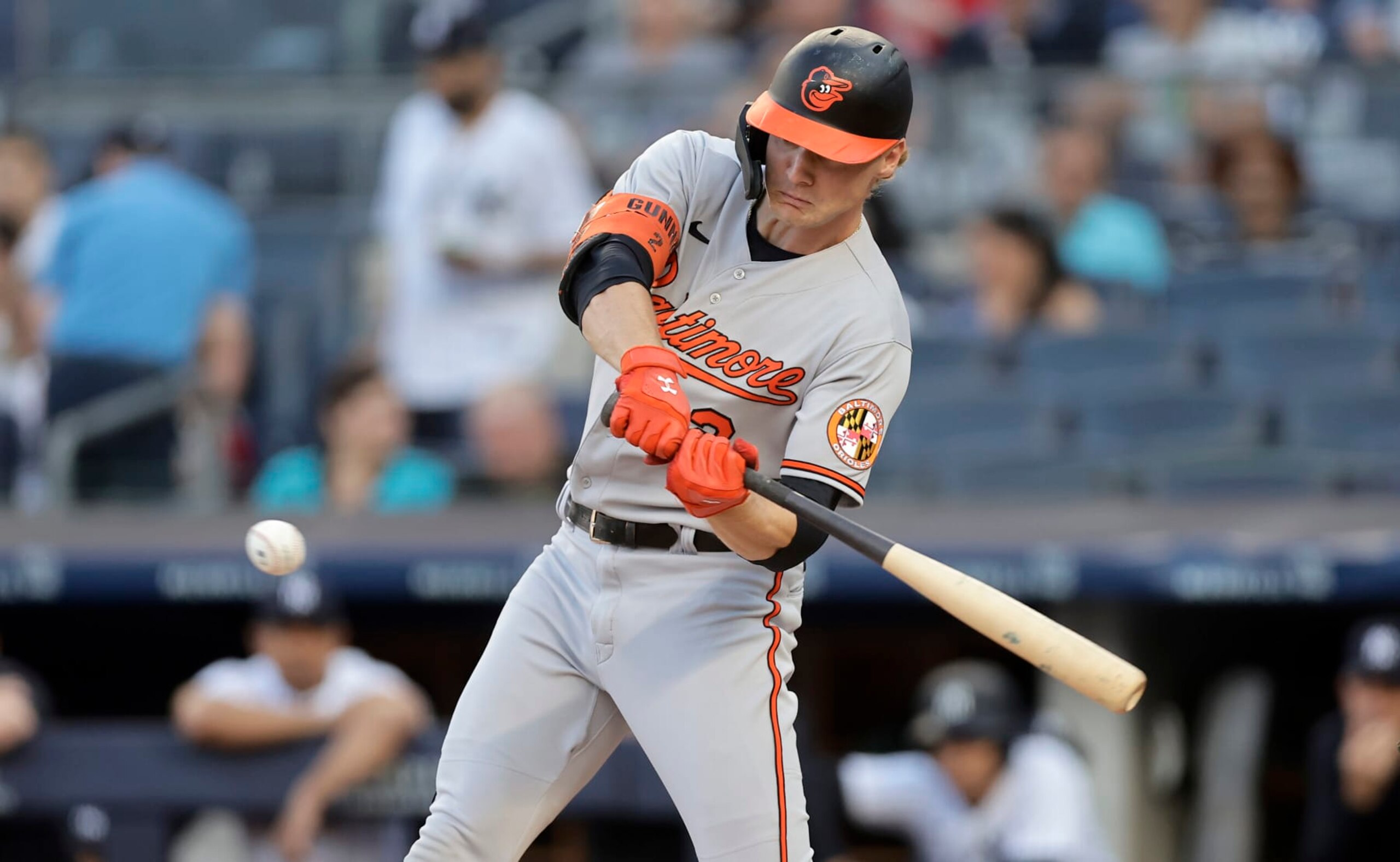
Plenty of teams are drastically exceeding expectation this season.
Both Tampa Bay and Texas limped into the All-Star Break, but remain well ahead of schedule with two of the best run differentials and records in the majors. Atlanta going 27-5 over the final 32 games of the first half was ludicrous. Arizona has been a pleasant surprise atop the NL West. Miami refuses to drop out of the postseason conversation and actually has the second-best record in the National League right now. And Cincinnati is on pace to eclipse its preseason win total (65.5) by August 11.
But, come on, who had "Baltimore tied for fewest losses in the American League at the All-Star Break" among their preseason prognostications?
After going 178-368 (.326 winning percentage) from 2018-21, the Orioles had a breakthrough year in 2022, going 83-79 and missing the postseason by just three games.
The hope around the Inner Harbor was that the O's would build on that success and become an annual contender, as just about every single returning player from the 2022 roster entered this season having not yet celebrated his 30th birthday.
However, the expectation was that Baltimore would return to its normal role as the AL East basement dweller. Granted, not as a 110-game loser anymore, but they were supposed to finish slightly behind Boston, and nowhere close to New York, Toronto or Tampa Bay.
Instead, the Orioles are on pace to win 98 games, and have the second-best record in baseball (behind only Atlanta) dating back to April 13—AKA the final game of Tampa Bay's season-opening 13-game winning streak.
Rookie Gunnar Henderson started slow, but he has blossomed into a legitimate star over the past two months. Fellow rookie Jordan Westburg has been quite impressive in the two weeks since he was called up. And the Yennier Cano/Félix Bautista tandem at the back of the bullpen has been sensational.
Baltimore's schedule for the first five weeks after the All-Star Break is brutal, but this team has staying power and might actually win the AL East for what would be just the second time in the past quarter century.
Biggest Loser Among Teams: New York Mets
6 of 8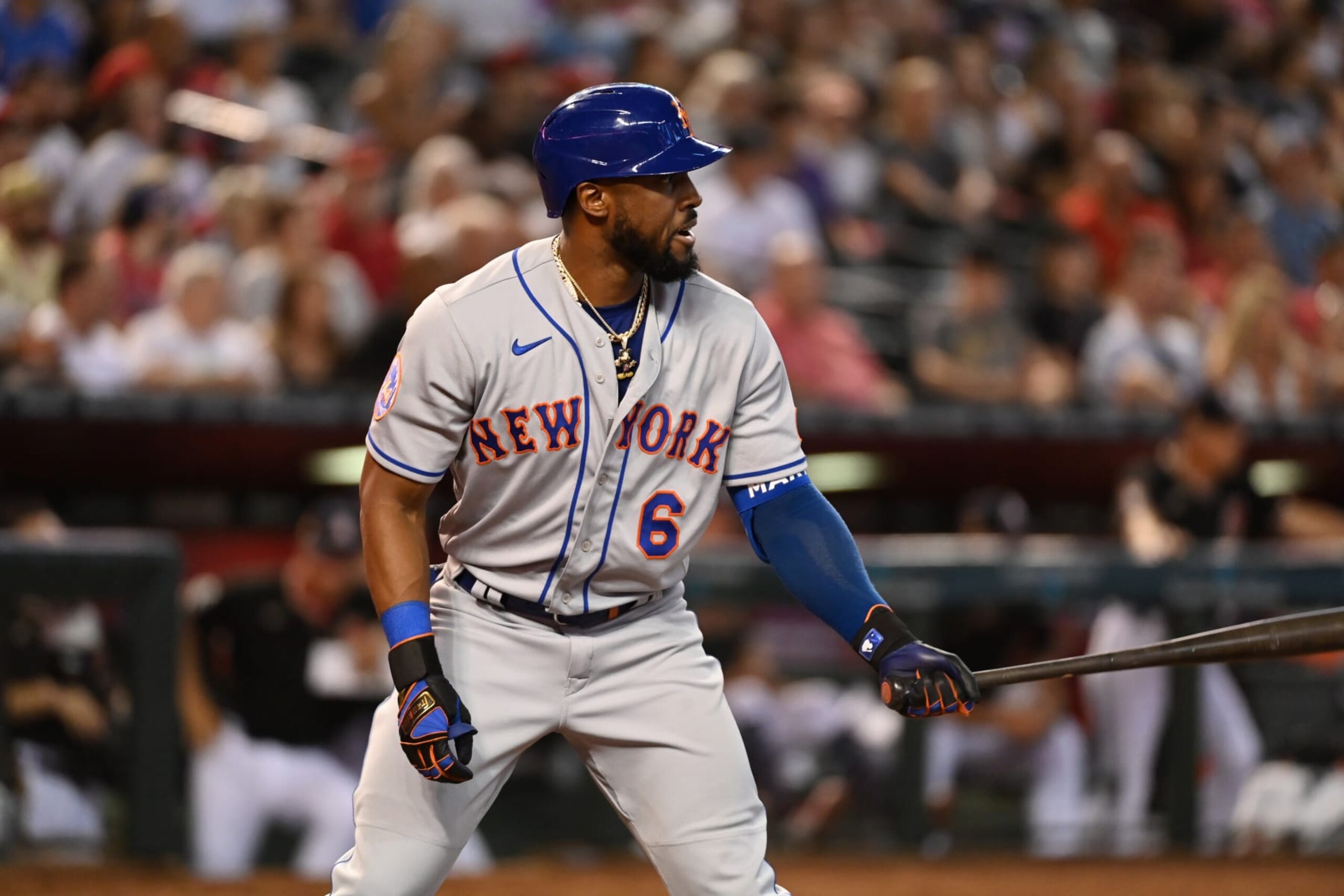
In the preseason, there were seven teams projected to win at least 90 games: Atlanta, Houston, San Diego, Toronto, both New York squads and the Los Angeles Dodgers. Five of those seven enter the All-Star Break at least seven games over .500, while the Mets and Padres finished the first half with a head-to-head series to settle the tie for biggest disappointment.
New York took game one, but lost the latter two to end up at an embarrassing 42-48.
We can't stick a fork in the Mets just yet. Seven games back for the final wild card spot isn't promising, but it isn't insurmountable, either. And they did have a six-game winning streak prior to mustering just eight hits between those last two games in San Diego.
But if you factor in the more than $100 million in luxury tax they're set to pay, the Mets have a winning percentage (.467) lower than the percentage of $1 billion being spent on this team (.488).
That would certainly be a first in MLB history, seeing as how this is by no small margin the largest payroll ever assembled.
And what's most maddening about the Mets is that while there have been some injuries that they can try to blame for their shortcomings, it has really just been mediocrity across the board, save for Francisco Lindor and Kodai Senga.
Max Scherzer and Justin Verlander simply aren't coming anywhere close to being worth their $43.3 million salaries. Starling Marte is still stealing bags, but his power has completely vanished. Pete Alonso has power, but provides little else of value.
It's like some Frankenstein's monster of overpaid assets that has horrified its architect.
Biggest Winner Among League Trends: Pace of Play
7 of 8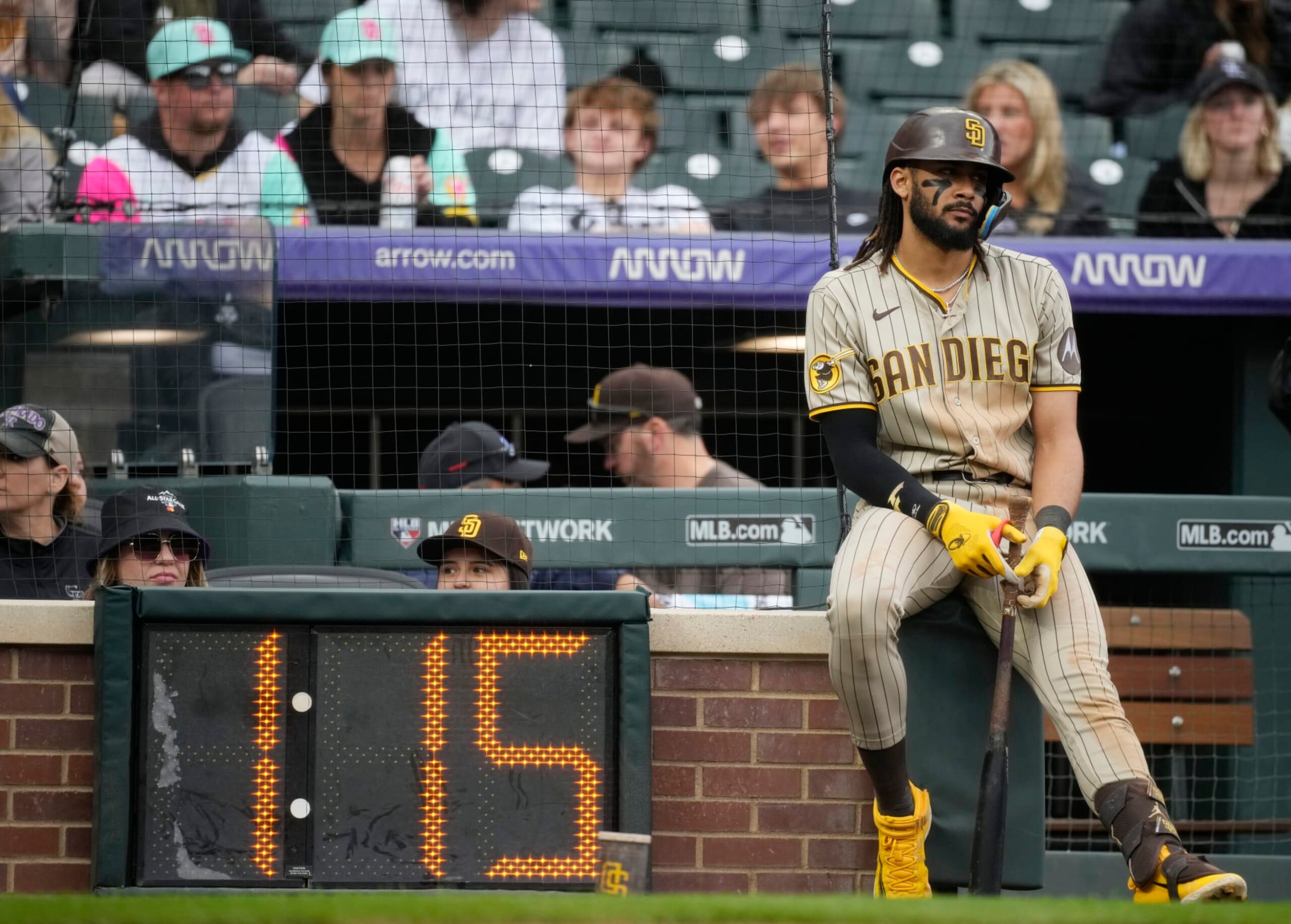
Throughout April, we were somewhat beaten over the head with "pace of play" data, as the baseball community adjusted to the brand new pitch clock world.
But you barely even hear about it anymore, right?
Well, in case you were wondering, MLB's pace of play is still quite crisp.
So buy me some peanuts and Cracker Jack...but maybe mobile order them so you don't miss an entire half inning of action.
There were 14 games played Sunday. Two of them went to extra innings. One of the others featured 17 total runs and a ton of pitching changes. There was also a key showdown between Tampa Bay and Atlanta with a combined 14 runs scored.
However, not a single Sunday game lasted more than three hours and six minutes, there were a pair of 1-0 shutouts that ended in a combined four hours flat and the overall average for the day was two hours and 34 minutes.
That's only one day, but it's pretty much par for the course, and it's half an hour quicker than last year's average game length of three hours and four minutes.
Simply put: The pitch clock is doing its job.
And for all the people who worried that the pitch clock would result in a ton of arm injuries for pitchers, FanGraphs' Dan Szymborski did a pretty extensive dive into the matter a month ago and came to a conclusion of: "When it comes to the pitch clock as the potential cause of injuries or underperformance, the early data suggests a rather muted effect."
Biggest Loser Among League Trends: Batting Average
8 of 8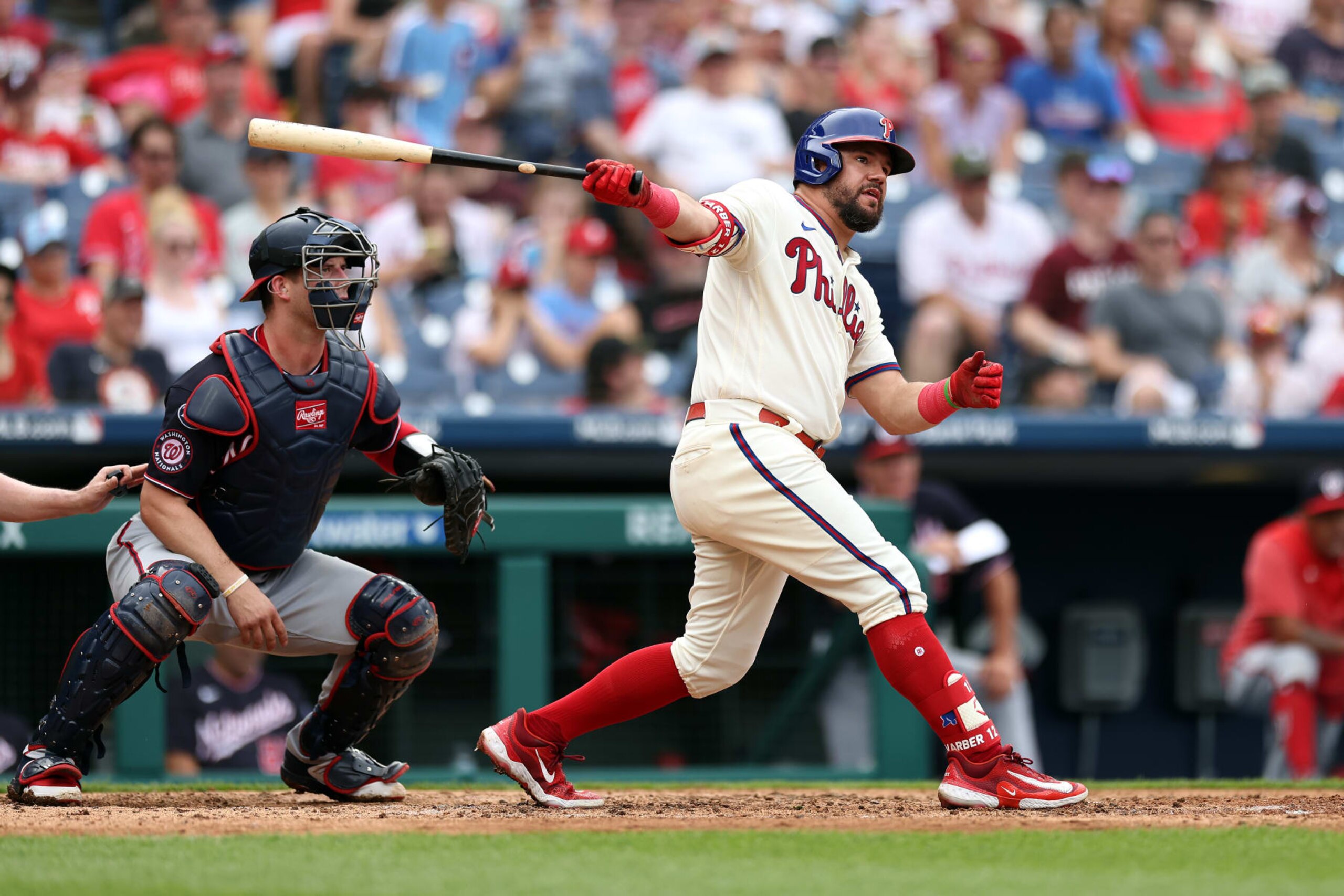
Early in the season, it looked like the combination of the pitch clock, the larger bases and the limitation on infield shifts was going to have the desired effect of improving a leaguewide batting average that had somewhat steadily declined from .270 in 2000 to .243 last season—even with last year's implementation of the universal DH.
In March/April of this season, MLB hitters batted .247, which was a substantial improvement compared to .231 in April 2022.
But have things actually changed, or was that simply a product of comparing the beginning of a season that began abruptly after a lengthy lockout to the beginning of a season in which a lot of hitters were already in midseason form because of the World Baseball Classic?
In May, that 16-point gap closed to just a 3.5-point difference (.2456 in 2022; .2490 in 2023).
In June, it was merely a 1.5-point divide, with players hitting .2480 in 2023 compared to .2465 in 2022.
Technically, that is still improvement from yesteryear.
However, we may have seriously jumped the gun with all of those "Banning the shift has significantly improved batting average" conclusions from a few weeks into the season.
Getting rid of the shift has surely helped some players, but leaguewide BABIP has been in the .290 to .303 range in every single season dating back to 1993. Not sure why we ever thought that would spike by enforcing a "conventional" defensive alignment.
Notably, though, scoring is up from 8.57 runs per game to 9.15, as home runs are up slightly and the rate of stolen bases has risen by roughly 40 percent, creating more RISP situations.
But even with all the changes—and Luis Arráez trying to hit .400—leaguewide batting average is barely any better than last year's historically futile mark.

.jpg?w=2560 "Cam Ward Says He's Not A Loser")
.jpg?w=2560 "🚨 Texans Trade for MHJ")
.jpg?w=2560 "Grading MHJ Trade 📝")
.jpg?w=2560 "Chargers Fall to 0-5 🤢")

.jpg?w=2560 "MHJ Bought Own Jugs Machine")