
The Stanley Cup: 16 Feel-Good Stories of the NHL's Ultimate Prize
NHL players put a lot of blood, sweat and tears into winning the Stanley Cup.
They play through series that can be as long as seven games. They'll get shots and cover themselves in ice packs to keep playing through injuries. They won't stop hitting or shooting the puck until the final buzzer sounds in the last game of the series.
When the Stanley Cup is won, it is the most amazing feeling for players and fans alike. Once the hard work is over, the celebrations and parades begin, and nothing but pure joy comes out of those parties.
Here are 16 of the Stanley Cup stories that gave us a lot of warm fuzzies.
Side Note: In addition to my Internet research, I also utilized material from the book "Then Wayne Said to Mario: The Best Stanley Cup Stories Ever Told." I think it's a five-star read for any hockey fan, especially those who have an interest in NHL history.
All quotes in this slideshow come from the above-mentioned book.
Alison Myers is a Pittsburgh Penguins and NHL Featured Columnist on Bleacher Report. E-mail her at Alison.Myers@mail.com with questions, comments or other writing opportunities.
16. Jean-Sebastien Giguere Wins the Conn Smythe: 2003
1 of 16
The only story from a losing Finals team to make it on this list, Jean-Sebastien Giguere helped the then-Anaheim Mighty Ducks have an incredible run to the 2003 Stanley Cup Finals.
In the Western Conference Quarterfinals, the Ducks swept the Detroit Red Wings, the 2002 Stanley Cup champions. Giguere made 63 saves in a triple-overtime performance in Game 1 of that round.
He stepped up in Game 1 of the semifinals against the Dallas Stars. This time, the game went to five overtimes, but Giguere still made 60 saves. His ability to step up in extra periods helped him be undefeated in seven overtime games that playoff year.
Although the Ducks' Cinderella story came to an end in the Finals, Giguere still had a lot to be proud of. He finished the playoffs with a record of 15-6 to go with a 1.62 GAA and a .945 save percentage.
When he was announced the winner of the Conn Smythe Trophy, many Devils fans booed, but New Jersey captain Scott Stevens led his team in a round of applause.
Giguere became the fifth player in NHL playoff history to win the Conn Smythe as a member of the losing team.
15. 1995 New Jersey Devils: Devils Win in Lockout-Shortened Season
2 of 16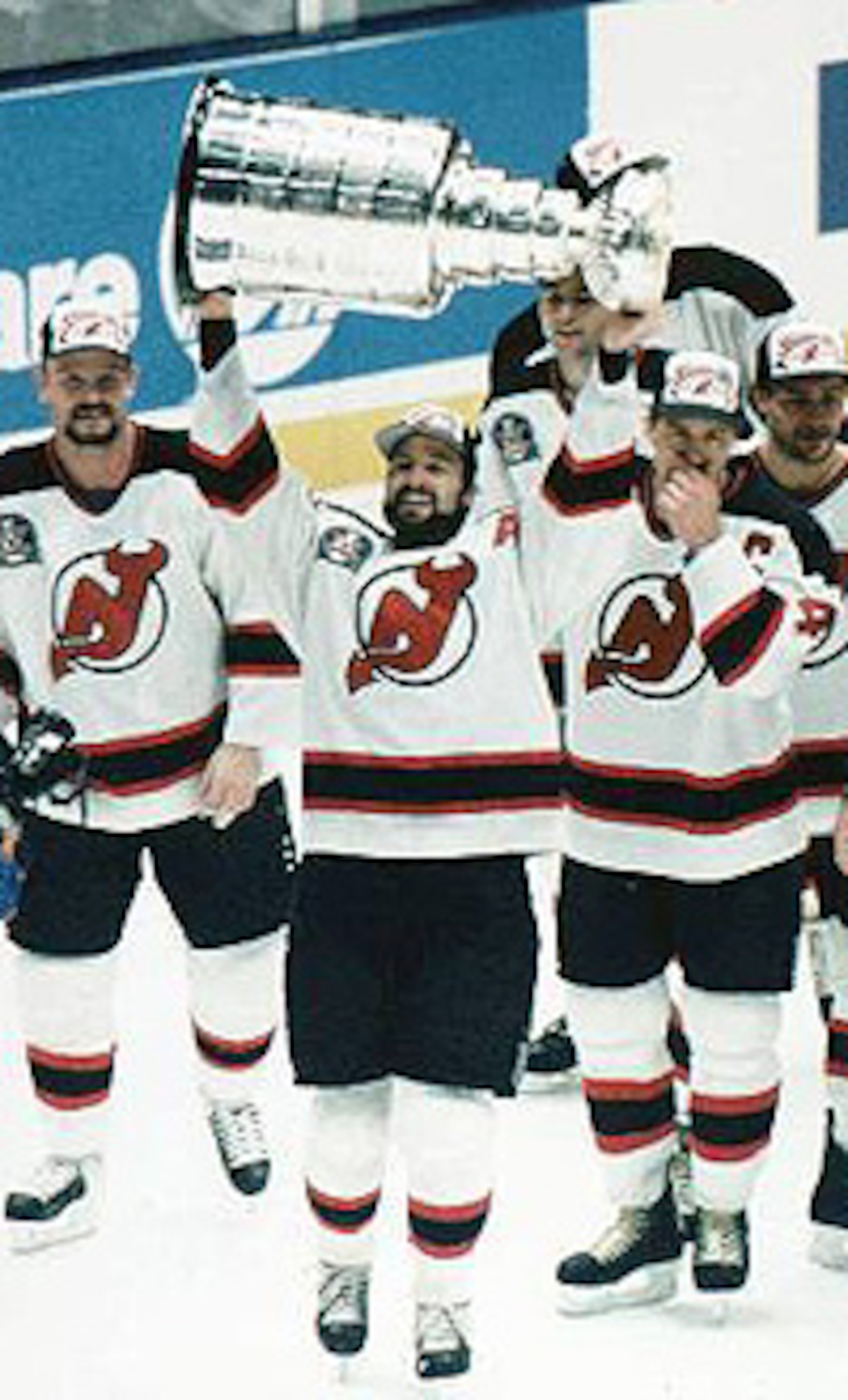
The 1994-95 season was limited to 48 games due to a lockout, and many experts felt the Stanley Cup Playoffs should not be played.
However, the NHL wasn't going to mess with tradition and went ahead with the postseason.
The Devils were in the Finals for the first time in franchise history and became the lowest-seeded team to win a Cup by sweeping the Red Wings. New Jersey entered the playoffs as the team with the lowest regular season winning percentage among postseason participants.
Claude Lemieux won the Conn Smythe after leading the playoffs with 13 goals, finishing with 16 points in 20 games. It was the second team Lemieux won the Cup with, and he would go on to win with the 1996 Colorado Avalanche, becoming one of 10 players who won the Cup with three different teams.
New Jersey was also the first team to win a Cup after two franchise relocations. The team had previously been the Kansas City Scouts and the Colorado Rockies.
14. 1988 Edmonton Oilers: Wayne Gretzky's Final Stanley Cup
3 of 16
The Oilers swept the Boston Bruins in five games in the 1988 Finals, even after a power failure delayed the completion of Game 4.
In that game, Glenn Anderson set a record for the fastest goal in a Finals game, scoring just 10 seconds into the contest. When the game was completed two days later, the Oilers topped the Bruins 6-3 for their fourth Stanley Cup.
Wayne Gretzky won his second Conn Smythe after setting a playoff record for 31 assists in 18 games, finishing the playoffs with 43 points in 19 games.
After the Cup had been awarded, Gretzky wanted the entire Oilers team, even non-playing members such as coaches and management, to get on the ice for a team picture.
It started a tradition that every Cup winning team carries out to this day. The team photo is also done after medals are awarded in various hockey tournaments.
This would be the last time Gretzky won the Stanley Cup. He would play in the Finals with the Los Angeles Kings in 1993, but the Kings lost to the Montreal Canadiens.
13. 2006 Carolina Hurricanes: First Stanley Cup in Hurricanes History
4 of 16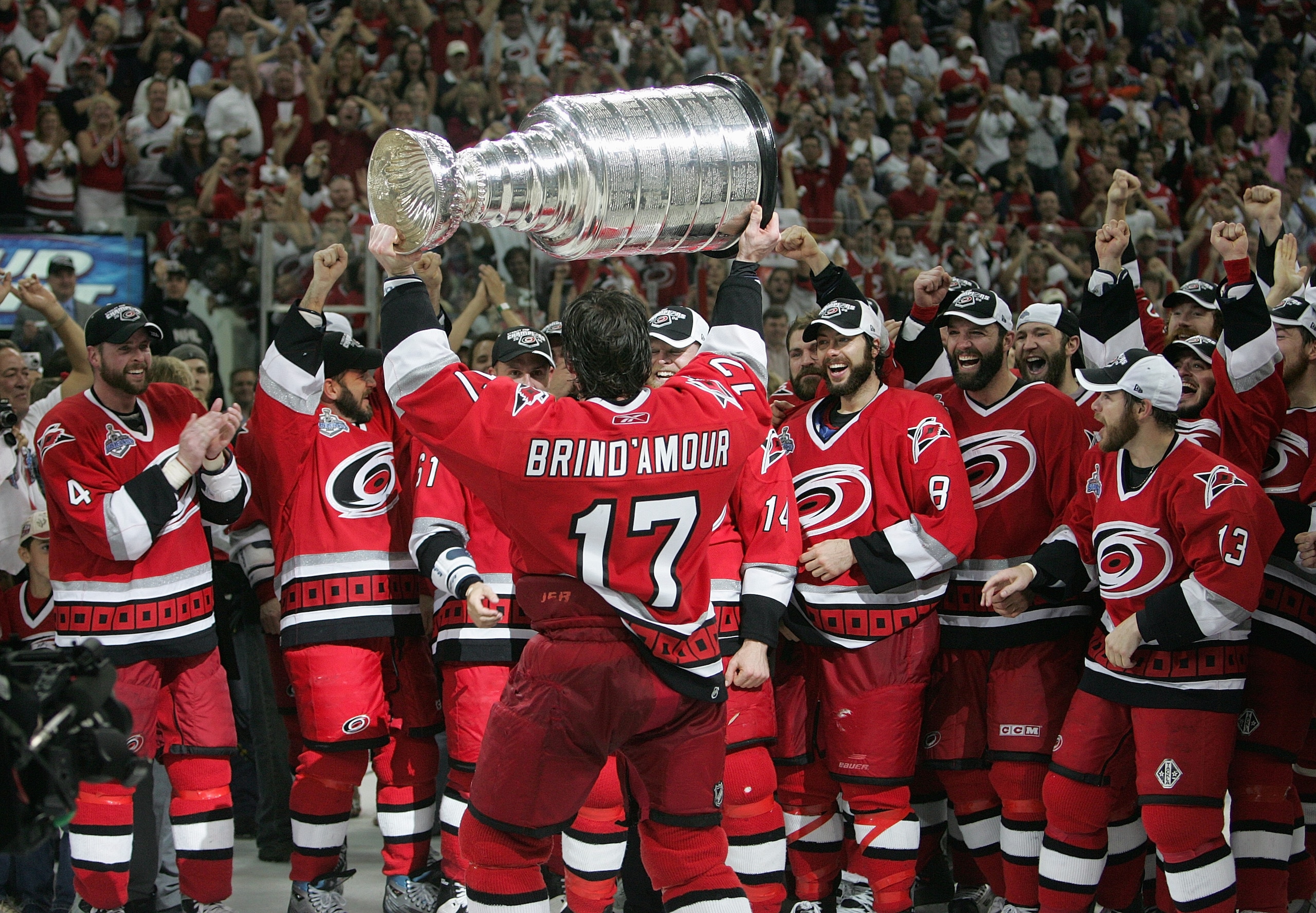
The Hurricanes were in the Finals for the second time in five years. They competed in 2002 but fell to the Red Wings.
They were facing the Cinderella story Oilers, who were the first eighth seed to play for the Cup since the current conference playoff format started in 1994.
The Canes had nine players left from their 2002 run and also boasted three veterans who had yet to win their first Cup: Rod Brind'Amour, Glen Wesley and Doug Weight.
One of the Canes' wins had another interesting storyline. In Game 1, Oilers goaltender Ty Conklin misplayed the puck behind his own goal, and the puck bounced off teammate Jason Smith's stick.
The puck went in to the empty net, and Brind'Amour was credited with the goal, which turned out to be the game winner.
Cam Ward, who was in his first NHL postseason appearance, won the Conn Smythe. He went 15-8 in 23 playoff games while posting two shutouts and had a .920 save percentage and 2.14 GAA.
While reflecting on the Cup run a year later, Hurricanes general manager Jim Rutherford told then-Ducks GM Brian Burke what to expect in 2007-08 after Anaheim claimed their first Cup in team history.
"Your players just climbed Mount Everest." Rutherford said.
"Don't expect them to do it again anytime soon."
12. 2007 Anaheim Ducks: Niedermayer Brothers Share the Cup
5 of 16
Anaheim returned to the Stanley Cup Finals in 2007.
Rob and Scott Niedermayer found themselves on the same team. In the 2003 Finals, Scott was playing for New Jersey, while Rob was on Anaheim.
Just four players from Anaheim's 2003 Cinderella run remained, and Scott was serving as team captain. They were facing the Ottawa Senators, who were in their first Stanley Cup Finals since returning to the NHL in 1992.
In Game 5, Anaheim won 6-2 with both teams combining for just 31 shots on goal. Scott won the Conn Smythe after finishing the playoffs with 11 points in 21 games.
The Niedermayers were the 15th set of brothers to win the Cup in NHL history, but the first to accomplish the feat since 1983, when Duane and Brent Sutter won with the New York Islanders.
The 2007 championship also marked the first Cup for Teemu Selanne, who won after 16 years of waiting.
Everyone on that roster, except Scott Niedermayer, took home their first NHL championship.
11. 1961 Chicago Blackhawks: Chicago Dethrones the Habs Dynasty
6 of 16
The Blackhawks were taking on their biggest rivals in the Red Wings in the 1961 Stanley Cup Finals. It was their first trip to the Finals since 1944 and the first Finals for Blackhawks stars Bobby Hull and Stan Mikita.
The championship journey was great because Chicago had defeated the 1960 Stanley Cup champion Canadiens to make the Finals. Prior to 1961, the Habs had won five consecutive Cups.
Mikita scored the game-winning goal in Game 6 as the Hawks beat the Wings by a 5-1 score.
Years later, Mikita reflected on his win by thinking about how players often stayed on one team for long periods and weren't as likely to be traded or become journeymen.
"Maybe winning the Cup meant even more back then because there wasn't as much moving players around back then. There was more loyalty from the players to management and management to players back then."
10. 2000 New Jersey Devils: Devils Ruin Stars' Chances of a Repeat
7 of 16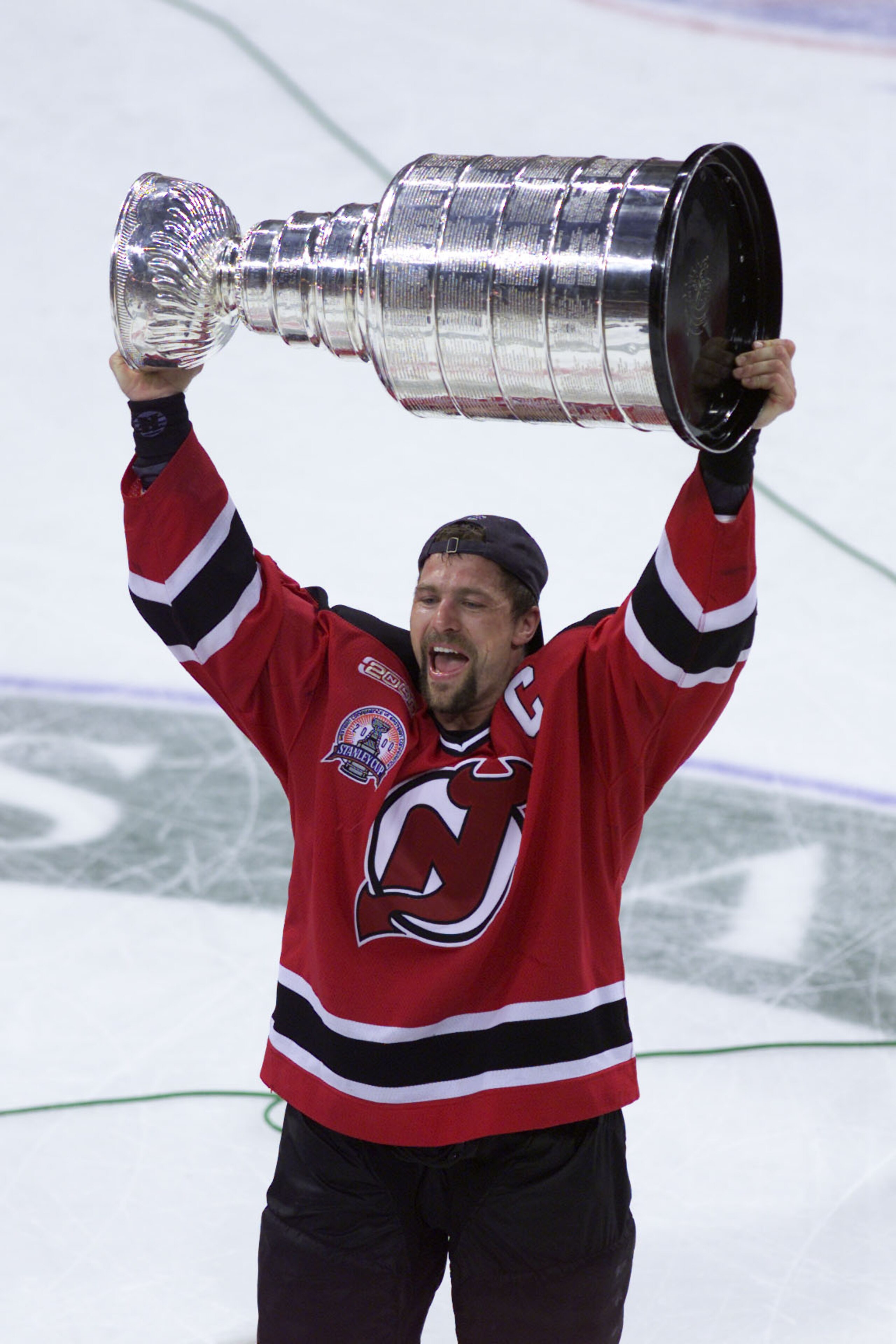
The 2000 New Jersey Devils almost did not make it to the Stanley Cup Finals.
In fact, they fell behind three games to one in their Eastern Conference Finals series with the Philadelphia Flyers.
During that series, head coach Larry Robinson gave his players a harsh talking to that has become known as "The Speech." Although Robinson said he was just doing his job, the Devils responded and eliminated the Flyers in seven games.
Robinson had come in with eight games left in the regular season to replace Robbie Ftorek, who was fired because the team was not responding to his ideas.
Although Robinson did not change the playing style, the team believed in what he wanted to do.
After the Devils defeated the Dallas Stars to prevent them from winning a second straight Cup, Robinson came out for the presentation in the jersey of Devils forward Petr Sykora.
Sykora had gone to the hospital earlier in the game after a heavy hit from Stars agitator Derian Hatcher.
Scott Stevens won the Conn Smythe for his strong leadership abilities as well as his 11 points and plus-nine rating.
In addition, Robinson became the 14th man to win a Stanley Cup as a player and a head coach. The Devils were also the first team to win a Cup after such a late coaching change.
9. 1970 Boston Bruins: Bobby Orr Takes Flight
8 of 16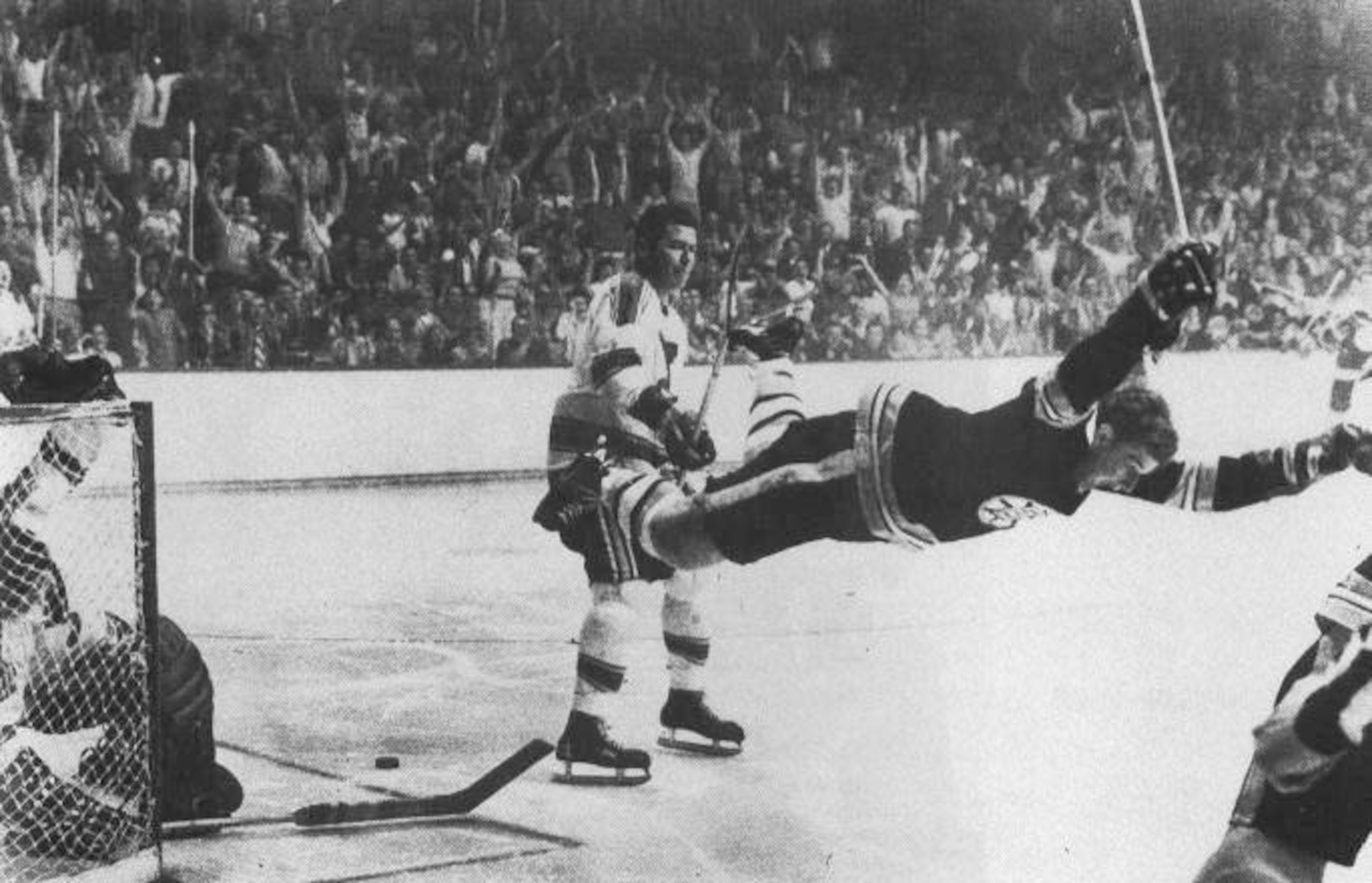
In the 1970 Stanley Cup Finals, the Bruins were facing off against the St. Louis Blues.
This series became famous for Bobby Orr's game-winning moment. After scoring the goal to clinch the Cup, Orr was tripped by Blues defenseman Noel Picard.
He went through the air with his arms raised in celebration, and the picture has become arguably the most famous image in NHL history.
Orr won the Conn Smythe as well after putting up 20 points in 14 playoff games.
Bruins teammate Derek Sanderson credited Orr with the championship that year.
"It was Bobby who led us to the championship. It was fitting that he scored that goal."
"No one ever resented Orr's success. I've seen superstars on other teams come and go, and I've seen people talk about them. Often teammates try to get in a little snip or a little rip. But Bobby was a leader, and we never questioned it."
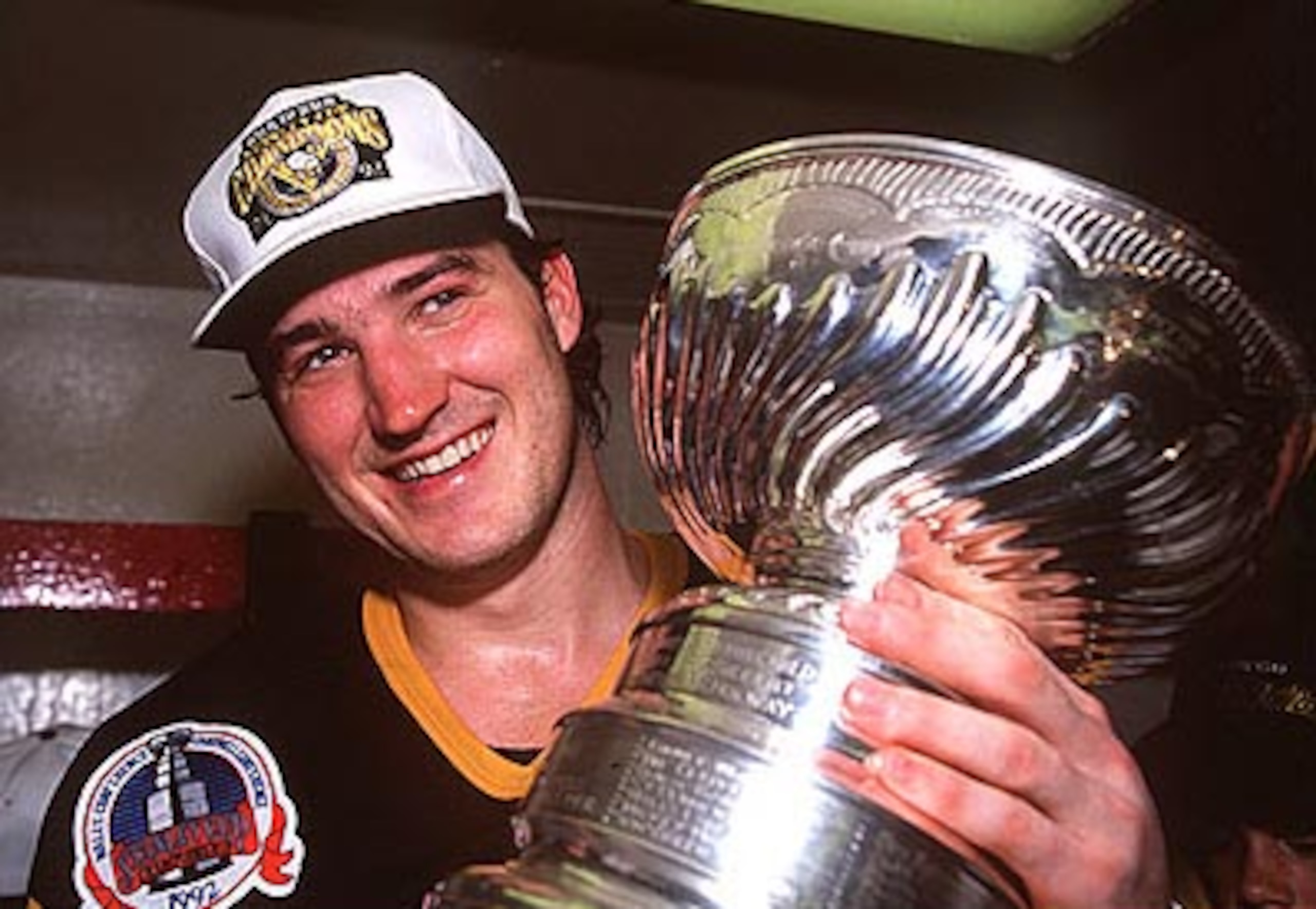
8. 1992 Pittsburgh Penguins: Penguins Honor Fallen Coach; Repeat as Champions
9 of 16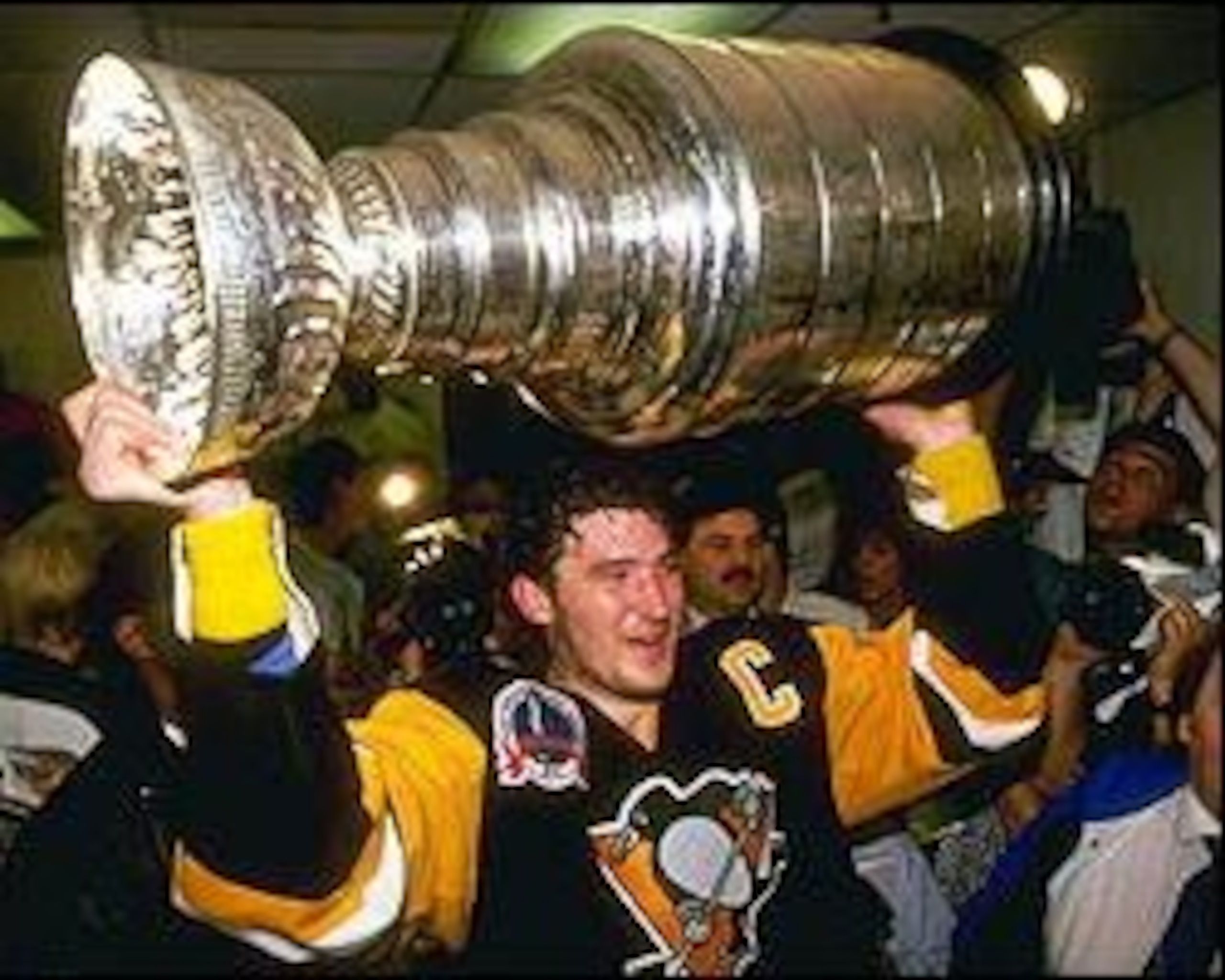
Pittsburgh won their first Cup in team history in 1991 under the guidance of beloved head coach "Badger" Bob Johnson.
Sadly, Johnson was diagnosed with brain cancer that summer and passed away in November 1991.
Scotty Bowman was in charge of the team for the 1991-92 season, and players often had a hard time understanding him. Bowman was more straightforward and not afraid to speak his mind, while Johnson had been more encouraging and optimistic.
Despite the differences, the Penguins went on to defeat the Blackhawks in four games in the 1992 Finals and repeat as champions. It was the first time the Finals had been played into June.
Mario Lemieux won his second Conn Smythe trophy with 34 points in just 15 playoff games. Meanwhile, Bowman captured the sixth Cup of his coaching career.
In a party after the win, Penguins forward Phil Bourque made a bold move when he threw the Cup to the bottom of Lemieux's pool.
"It hit me that this Cup needs to go in the water," Bourque said. "I hiked up there and grabbed the Cup."
Bourque was referring to a waterfall in Lemieux's backyard, which he was triumphantly at the top of. He threw the Cup into the pool, and it sank to the bottom, ultimately becoming filled with water.
Bourque and others at the party weren't trying to disrespect the Cup. They were just having a good time.
7. 2009 Pittsburgh Penguins: Penguins Changes Push for Cup Title
10 of 16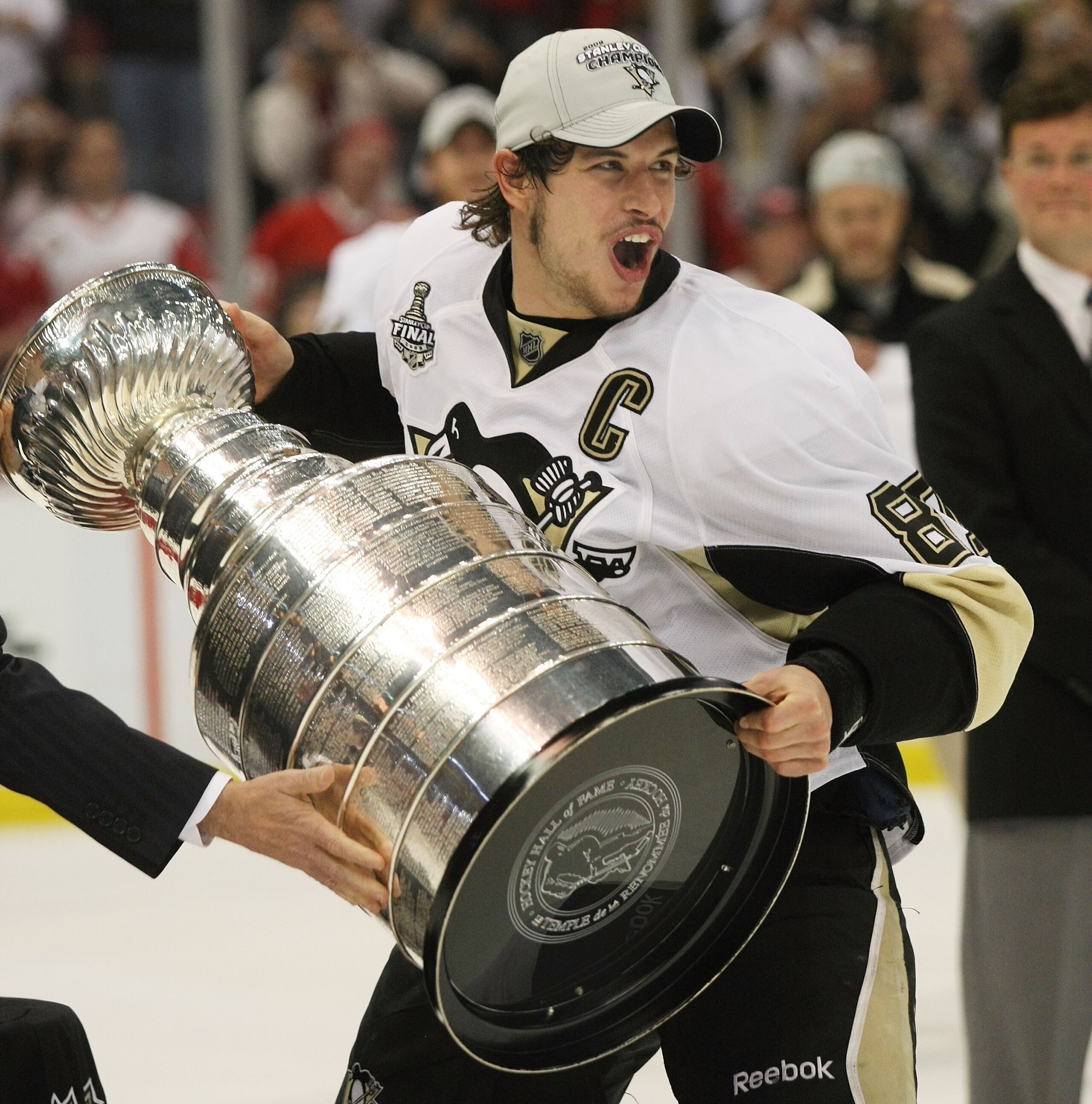
The Penguins were almost not going to make the playoffs. In fact, they were in 10th place in February, and the final nail in the coffin appeared to be a 6-2 loss to the Toronto Maple Leafs.
However, thanks to a coaching change and some big acquisitions from trades, the Penguins ended up on their way back to the postseason.
Pittsburgh finished the regular season 18-3-4 to claim fourth place in the Eastern Conference. They took out the Flyers in six games and the Washington Capitals in seven games before sweeping the Hurricanes in the Eastern Conference Finals.
A rematch was set with the Detroit Red Wings. At first, Detroit jumped out to a 2-0 series lead, and many felt that 2009 would end the same way as 2008 did, with the Wings lifting the Cup on Pittsburgh's ice.
But thanks to great plays from Rob Scuderi, who acted as a second goaltender of sorts and earned the nickname "The Piece", the Wings would not have an easy road to the Cup.
In Game 7 of the Finals, Max Talbot scored two goals to give the Pens a 2-1 victory and their third Cup in team history.
It sure was a long way from the Penguins who were not supposed to make the playoffs.
The Cup did end up in Mario's pool again, but at least it didn't have to be pulled out from the bottom this time.
6. 1971 Montreal Canadiens: Jean Beliveau Starts the Parade
11 of 16
The 1971 Finals featured Chicago going to their first championship since 1965 and set up an Original Six matchup. Montreal was coming in two years after capturing another Cup.
The series went to seven games, where the Canadiens won by a score of 3-2. Rocket Richard scored the series winning goal, but goaltender Ken Dyrden, making his playoff debut, came away with the Conn Smythe.
Dryden went 12-8 in 20 postseason games and posted a GAA of 3.00.
After Beliveau was presented the Cup, he started a tradition that would become a part of each team's victory from that point forward. He took the trophy and began a lap round the ice. His teammates followed behind him.
Beliveau said that he wanted to bring the Cup closer to the fans, even though they were Blackhawks fans watching the Cup be paraded around Chicago Stadium. Although some thought he did it to commemorate his retirement, he didn't see it that way.
"Maybe there was some connection to my pending retirement when I did what I did. But really, I think it was just a spur of the moment thing. It was just a natural reaction, and I wanted everyone to enjoy the Cup."
Beliveau retired after that year with 10 Stanley Cups to his name, all of them coming with Montreal.
5. 2010 Chicago Blackhawks: 49 Years of Waiting Comes to an End
12 of 16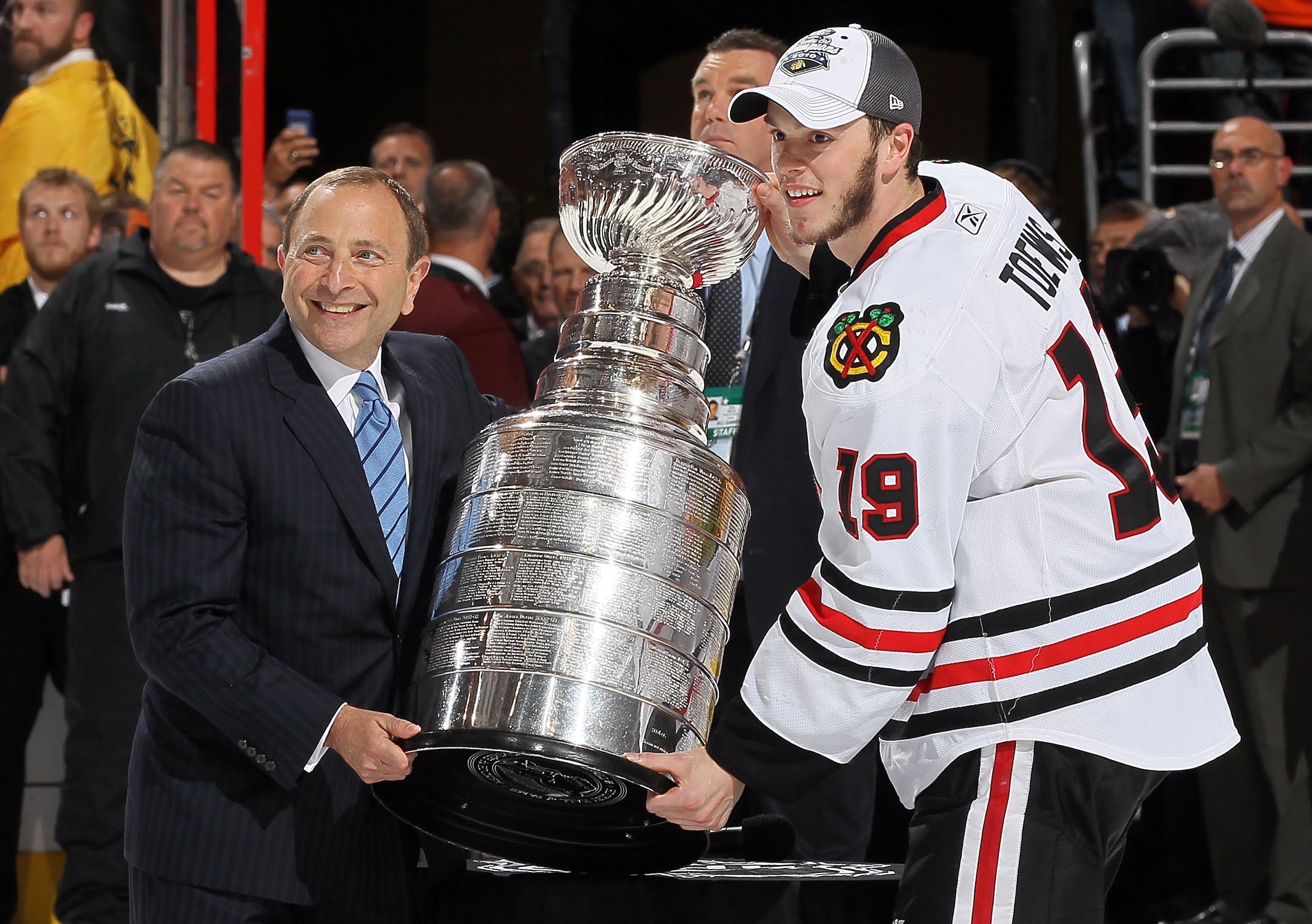
Chicago had finished just three games short of the 2009 Stanley Cup Finals, but they found a path there in 2010. It was their first Finals since 1992, and they were looking to win their first title since 1961.
The teams had six games which featured a high level of offensive talent, and the home team was winning every game in the series.
In Game 6, Chicago looked like they were about to buck the trend when Scott Hartnell scored at 16:01 of the third to tie the score 3-3. Hartnell's goal forced overtime.
At 4:06 of overtime, Patrick Kane took a shot from the left faceoff circle that went behind Michael Leighton, but the puck hit the padding underneath the net.
Television announcers such as Doc Emrick had called the goal, but also seemed unsure as to where it was. Kane knew the puck had went in and raced down the ice to Antti Niemi to kick off the celebration, but the referees were conducting a video review.
The goal was ruled a good goal, and Chicago broke their 49-year Stanley Cup drought.
Team captain Jonathan Toews won the Conn Smythe with 29 points in 22 playoff games.
4. 1994 New York Rangers: Rangers Break League's Longest Cup Drought
13 of 16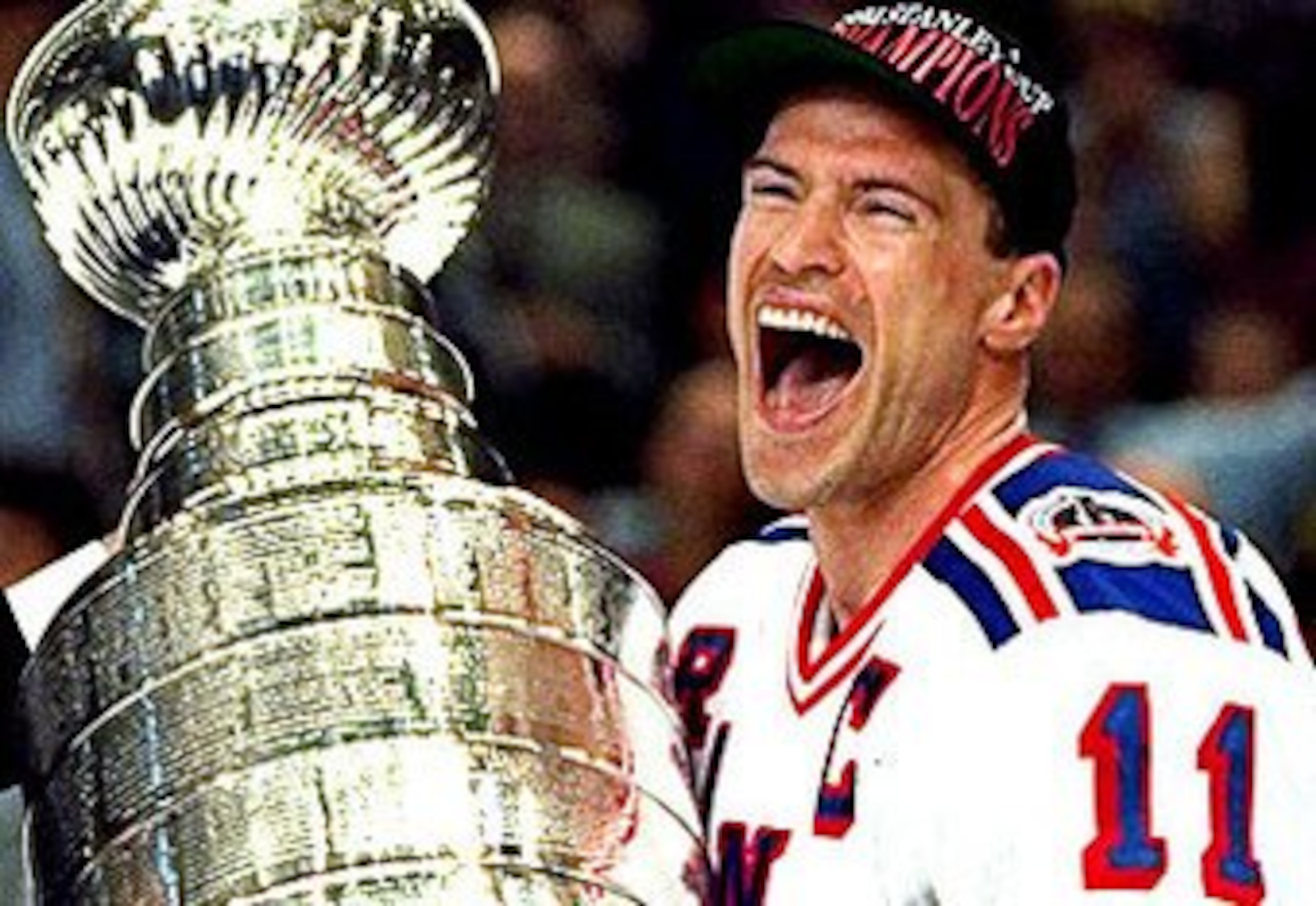
Coming into the 1994 Finals, New York had the NHL's longest Stanley Cup drought, having not won a title since 1940. They were in the championship for the first time since 1979.
They were facing off against the Vancouver Canucks, who were in the Finals for the first time since 1982.
However, the Rangers had seven players on their team who were part of the 1990 Oilers Cup winning team. Among them were Mark Messier (team captain), Glenn Anderson, Adam Graves, Kevin Lowe and Craig MacTavish.
Game 7 was held at Madison Square Garden, and the Rangers fans were crazy as they anticipated a possible title.
The Rangers took control first with a 2-0 lead, but Trevor Linden scored two goals to tie the game. Ultimately, Messier scored the goal that put the Rangers up 3-2 and won them the Stanley Cup.
Messier was the first, and is still the only, player to captain two different teams to a Cup run.
Brian Leetch became the first U.S. born player to win the Conn Smythe after posting 34 points in 23 playoff games. He remains the only U.S. player to win the trophy.
Rangers teammate Eddie Olczyk spoke highly of Messier's leadership abilities during that Cup year.
"Mess treated everyone the same, from himself to the 28th guy. He kept everyone in line and he made everyone feel important. He knew the foot soldiers were important."
3. 1989 Calgary Flames: Lanny McDonald Retires on Top
14 of 16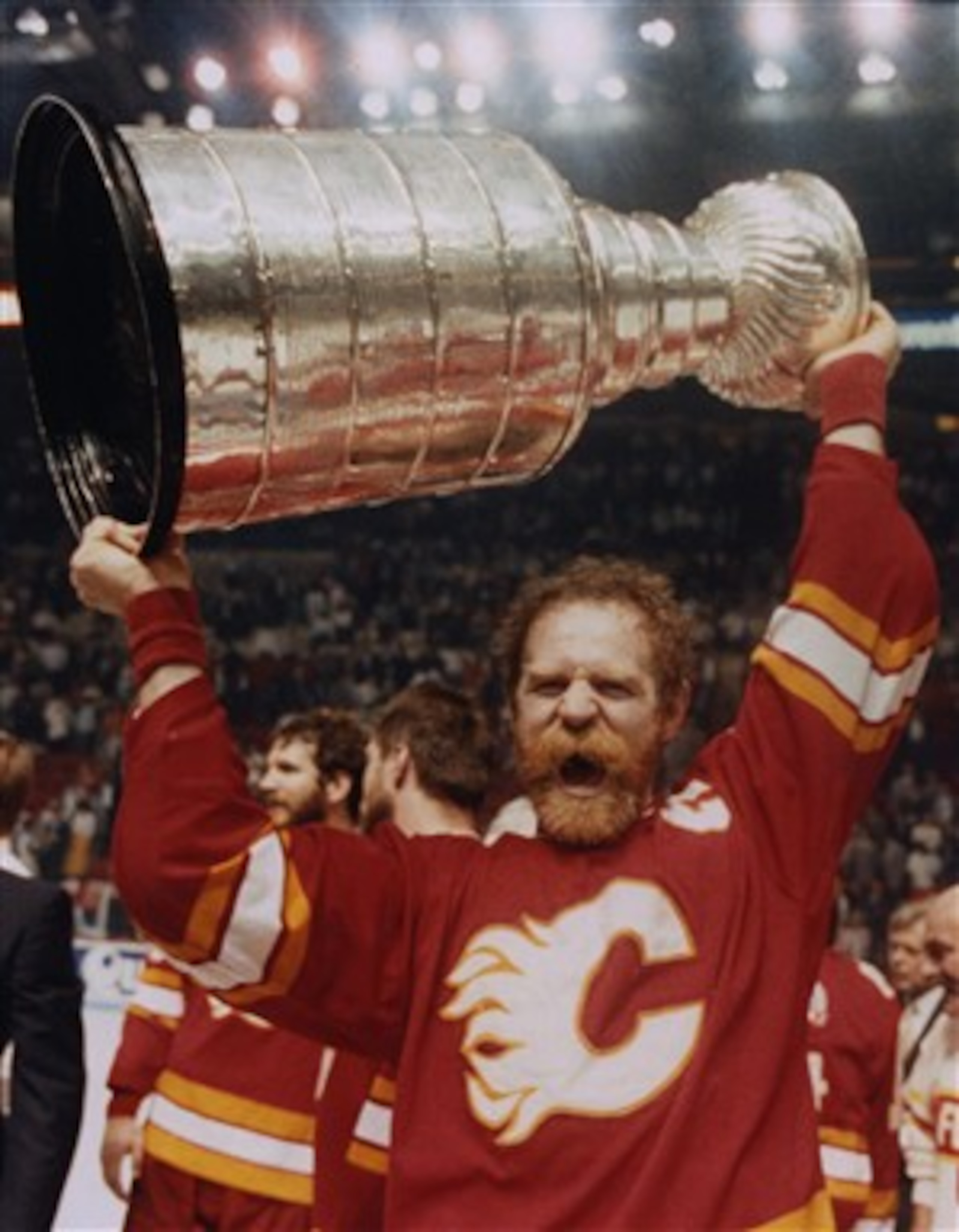
As the Flames prepared to face the Canadiens in 1989, it would mark the most recent time that the two top seeds played for the Stanley Cup.
Flames veteran forward Lanny McDonald still had not won his first Stanley Cup. He had scored his 500th goal towards the end of the regular season, but he had been benched for three out of the first five games of the Finals.
McDonald began to feel he was running out of time to win the prize, but before Game 6, his fears were put to rest. The coaching staff, headed by Terry Crisp, was going to give him a chance that night.
In the second period, he tallied a goal to put the Flames up 2-1. They went on to win the game 4-2 to win the first Cup in team history and become the first relocated team (Calgary was originally the Atlanta Flames) to win the trophy.
McDonald finished the playoffs with four points in 14 games and retired after the Flames' victory.
Al MacInnis was named MVP after putting up 31 points and becoming the first defenseman to lead the playoffs in scoring.
2. 1998 Detroit Red Wings: Vladimir Konstantinov Gets His Moment with the Cup
15 of 16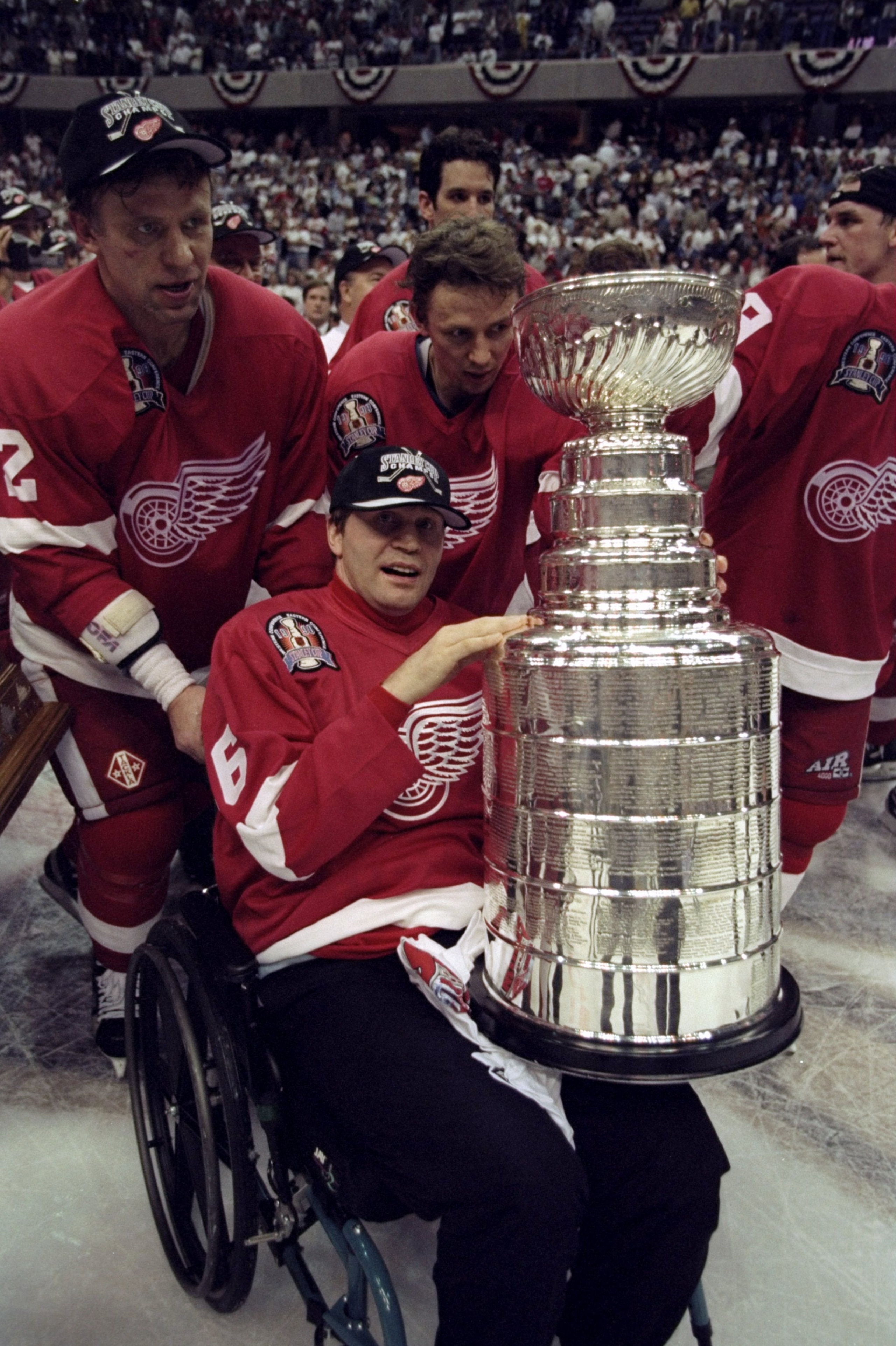
Vladimir Konstantinov was a member of Detroit's 1997 Stanley Cup team, tallying four points in 20 playoff games as the Wings defeated the Flyers. His performance in that regular season also earned him a nod for the Norris Trophy, although he did not end up winning.
Six days after the 1997 victory, his life changed forever.
Konstantinov and team massage therapist Sergei Mnatsakanov were involved in a limousine accident. Konstantinov ended up in a coma, and although he woke up, he was never able to play hockey again.
The following season, the Wings wore a patch bearing the initials of Konstantinov and Mnatsakanov with the word "Believe". They even left Konstantinov's locker set up for him.
In 1998, the Wings defeated the Capitals in four games to repeat as champions. Captain Steve Yzerman was presented with the Cup, but instead of taking it on the traditional lap around the ice, he rested it in Konstantinov's lap.
The Wings then surrounded Konstantinov as he was pushed around the ice carrying the Cup.
It was one of those moments that was just simply touching and showed the spirit of the Wings coming together around Konstantinov like he had never stopped playing.
Today, Konstantinov still needs the aid of a walker and has short term memory loss. However, his impact on the Wings organization, as no player has worn his No. 16 jersey since he was injured.
1. 2001 Colorado Avalanche: Ray Bourque Finally Gets His Stanley Cup
16 of 16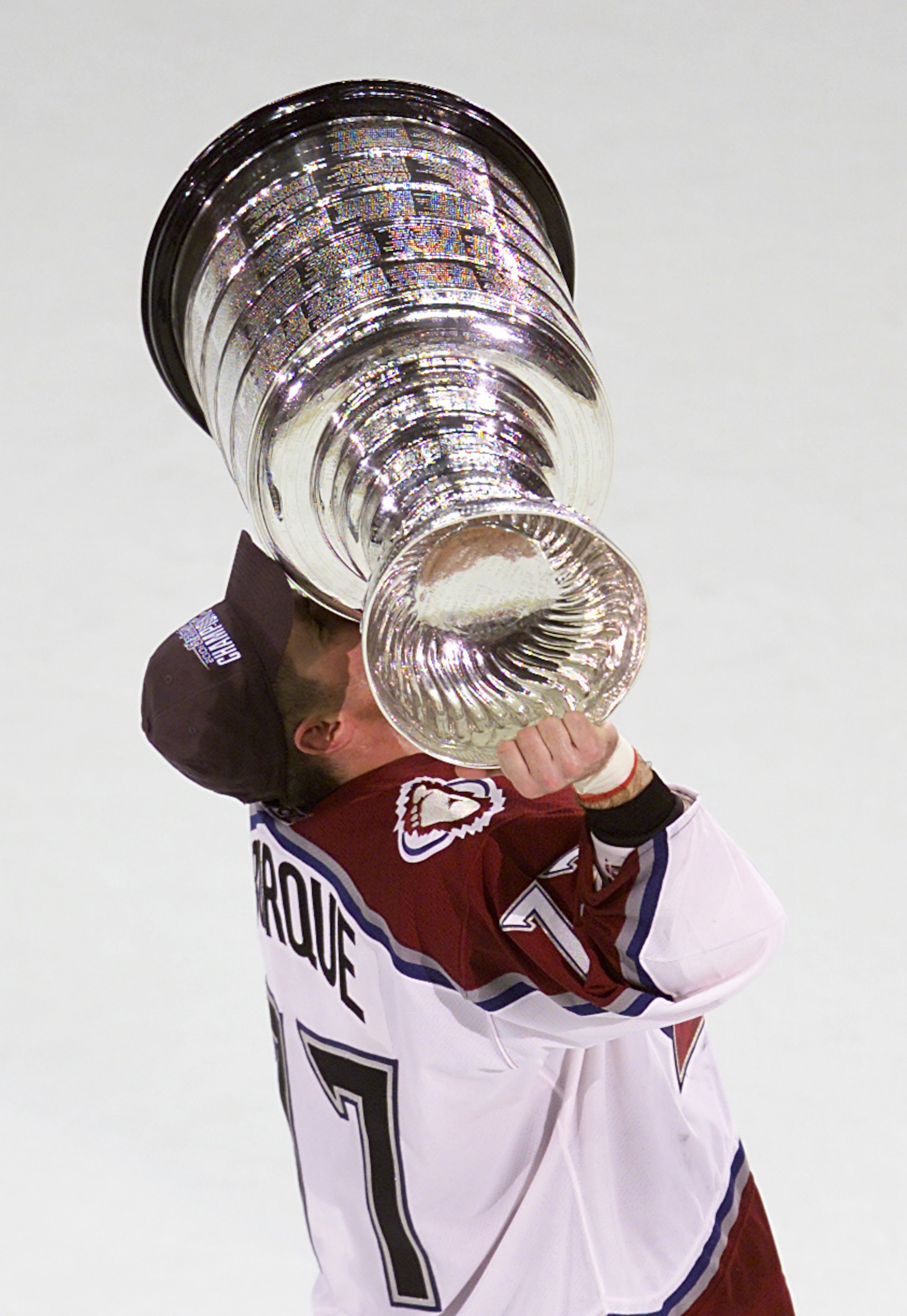
Ray Bourque was one of those players that you just couldn't dislike. He was genuine and very down to earth while fiercely loyal to his teams.
He had spent 20 years with the Bruins but had yet to taste Stanley Cup glory.
In 2000, he was traded to the Colorado Avalanche by the Bruins, and although he only played less than half of a season in Denver, he was named an alternate captain for the 2000-01 season.
The Avalanche found themselves in the 2001 Finals, their second appearance in six seasons. There was an unspoken sentiment that they were going to win the Cup for Bourque.
Each member of the Avs wore baseball caps that said "Mission 16W", but Bourque wore it more than any of his teammates.
Bourque scored the game winning goal in Game 3 of the Finals, which the Avs won by a score of 3-1. He became the first 40-year-old to score in the Finals.
In Game 7, his teammates made sure he was on the ice for the final seconds of the win. Bourque scrambled on to the ice despite being exhausted, and Colrado defeated the Devils, the 2000 champions, by a score of 3-1.
Joe Sakic was presented with the Cup, but instead of taking the first lap himself, he happily passed the Cup to Bourque, who skated around the ice with tears of happiness in his eyes.
He retired from hockey after that season, and his No. 77 became the first number to be retired by the Colorado franchise.
Patrick Roy, the Conn Smythe winner that year, shrugged off his own accomplishment to display his happiness for his teammate, who had toiled since 1979 to be on top of the hockey world.
"Individual awards are great, but there was nothing better than seeing Ray with that Cup."
It's hard for anyone to disagree with that.
.jpg?w=2560 "NHL Trade Grades Connor Hellebuyck")



.png?w=2560 "Week 8 Winners & Losers 📊")

.jpg?w=2560 "Malik Beasley Negotiating Plea Deal (AP)")
.jpg?w=2560 "Jonathan Taylor Landing Spots")