The 2010 Philadelphia Phillies Regular Season Report Card
A rollercoaster ride of a season saw the Phillies at 48-46 in the middle of July, seven games behind the Atlanta Braves and fading quickly. Fast-forward two and a half months, and the Phillies have been crowned National League East Champions for the fourth consecutive season, thanks to an incredible 49-18 surge at the end of the season.
The 2010 Philadelphia Phillies are without a doubt the strongest Phillies team I’ve ever seen in my life. I’m 20. I don’t remember the 1993 Phillies, and even if I did, I would pick our current team as better. This might be the strongest Phillies team in the history of the franchise. True, the 1976 and 1977 Phillies won 101 games, but the pitching staff on this year’s team, particularly the Big Three, ranks with Maddux, Glavine and Smoltz as among the best in the history of baseball.
Twenty-eight players made enough of a contribution, or received enough playing time, to warrant a grade for their performance. From worst to best, I rank the players on the 2010 Philadelphia Phillies.
28. Greg Dobbs
1 of 28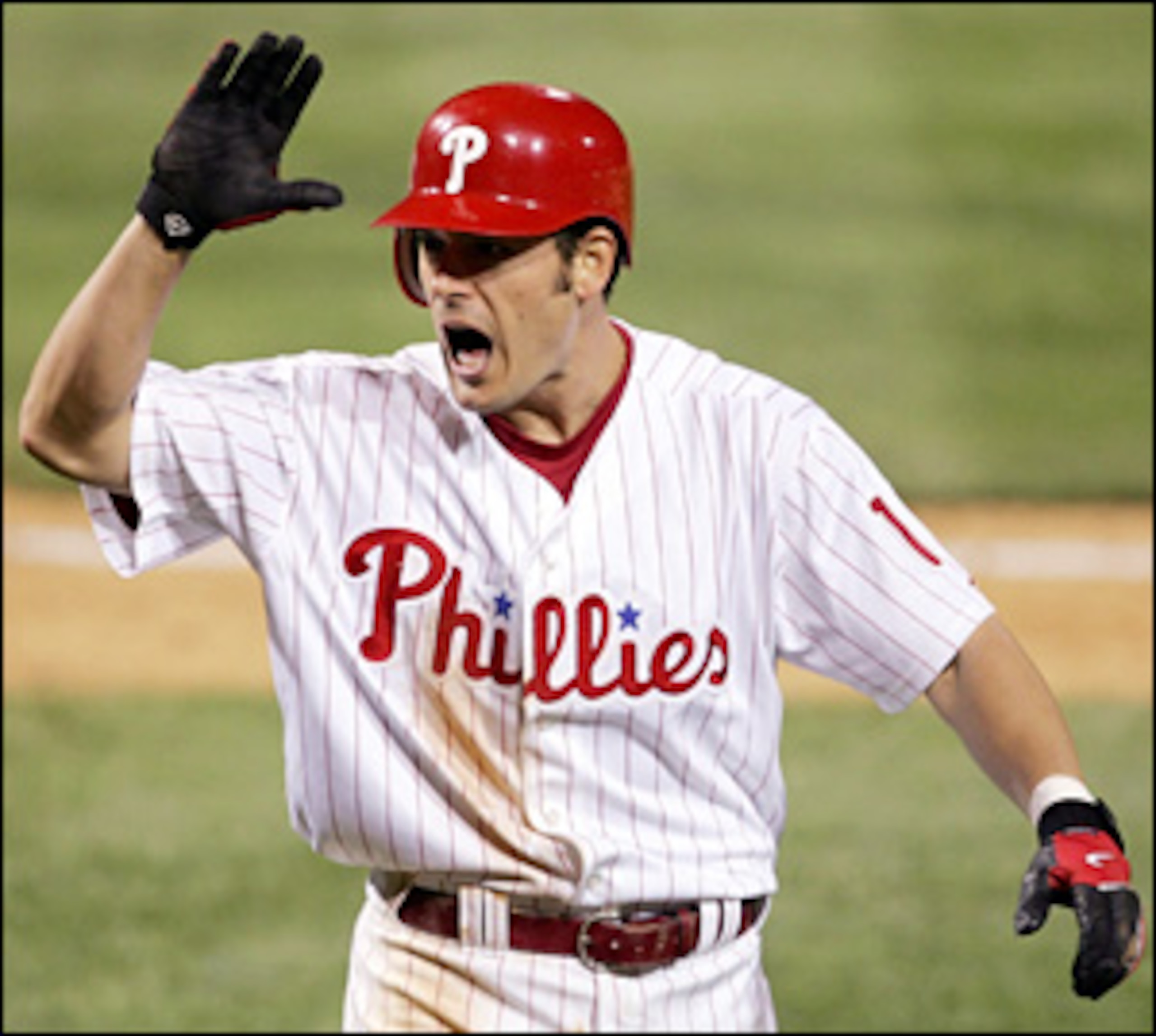
This season, Dobbs set personal worsts in batting average (.196), on-base percentage (.251), and slugging (.331), while striking out 39 times in just 163 at-bats. He was embarrassing in close and late situations, collecting a single hit in 28 at-bats.
The days of Greg Dobbs as the best pinch-hitter in baseball are long gone. Dobbs was designated for assignment twice during the regular season, and I'm shocked that he earned a spot on the postseason roster.
Grade: D-
27. Domonic Brown
2 of 28
Named the top prospect in all of baseball in 2010 by Baseball America, Brown debuted with the Phillies on July 28th. He doubled in a run in his first at-bat, and finished with two hits and a sacrifice fly.
Used sparingly for the rest of the season, Brown hit a disappointing .210 with 24 strikeouts in 62 at-bats. He did lead the team by driving in a run every 4.77 at bats, making him one of 25 players in baseball history to record at least 13 RBIs in 62 or fewer at-bats.
Grade: D
26. Mike Sweeney
3 of 28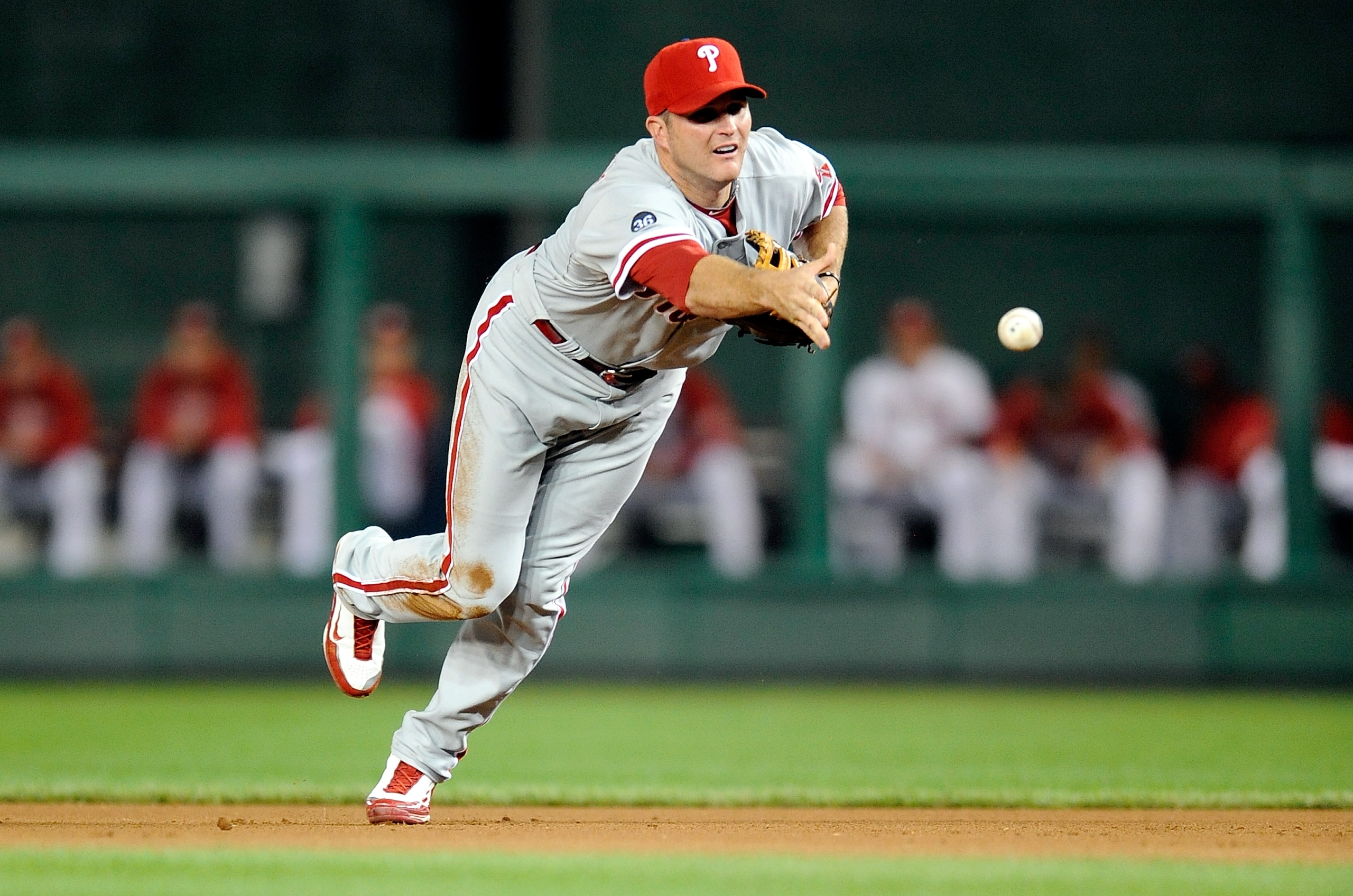
Sweeney brought 16 years of experience and five All-Star selections to the Phillies. Acquired via trade in early August, Sweeney has played in more games than any active Major League player without reaching the postseason.
Sweeney struggled with the Phillies, hitting just .231 with two home runs. The 37-year-old first baseman managed to grab a spot on the postseason roster anyway.
Grade: D

25. Danys Baez
4 of 28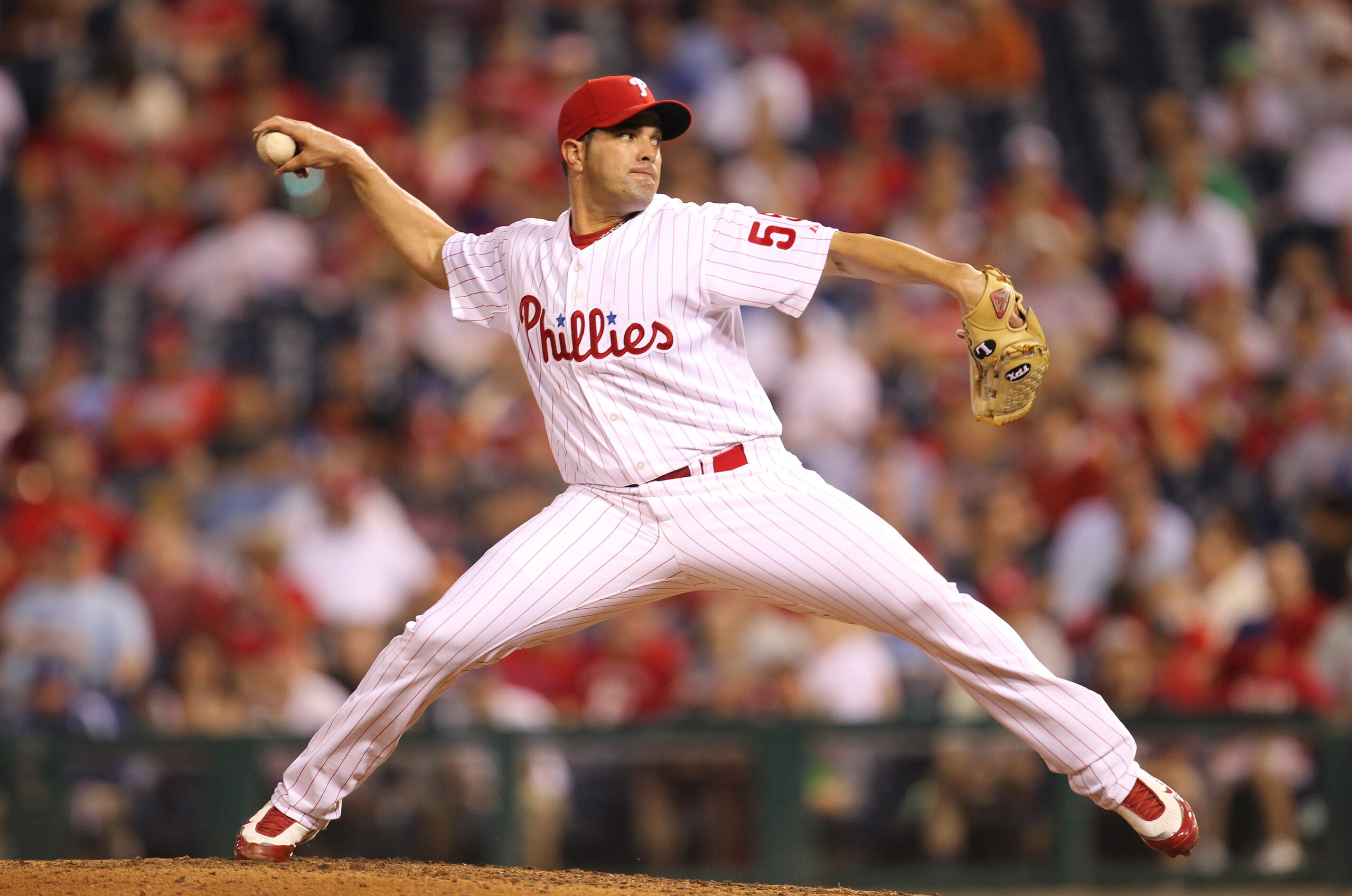
A career journeyman reliever, Baez signed with the Phillies, his sixth team, before the 2010 season.
Baez pitched in 51 games, finishing 17 of them. His 5.48 ERA was the worst mark of his career. His 1.636 WHIP was pathetic, as was his 1.22 strikeout-to-walk ratio. And his WAR (wins above replacement) was the worst for any pitcher on the team.
Not surprisingly, Baez was not named to the postseason roster.
Grade: D
24. Brian Schneider
5 of 28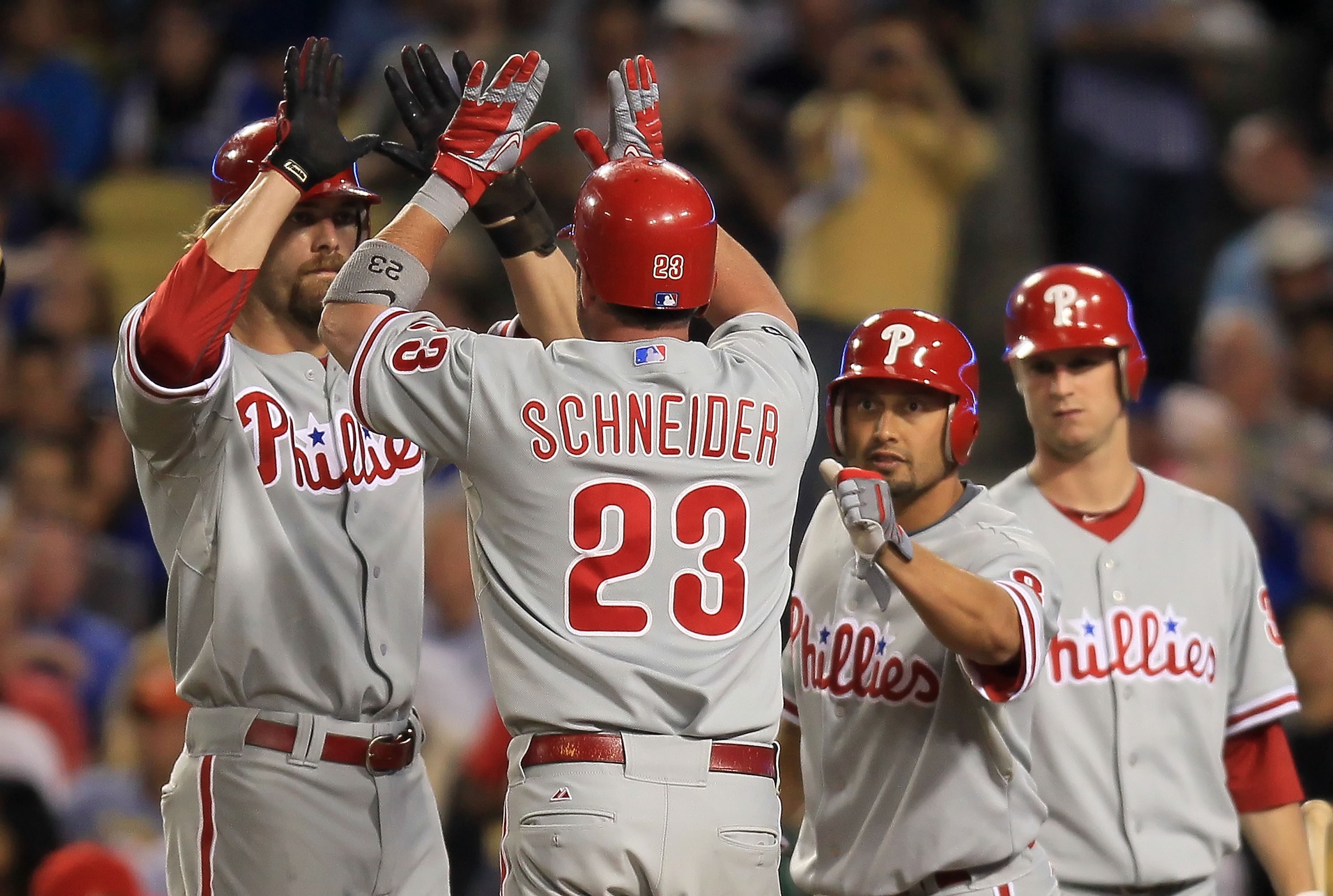
Schneider turned in his typical season, catching about one quarter of the games and hitting .240 with four home runs. He draws a decent number of walks and finished with his best OPS+ since 2005. He also hit a walkoff home run against the Reds in the 12th inning of a game in July.
After eight seasons with the Expos/Nationals and two with the Mets, Schneider is in the postseason for the first time in his career.
Grade: C-
23. Kyle Kendrick
6 of 28
Kendrick isn't quite as bad as you may think. He's clearly inferior to the Big Three, but he's about average for a fifth starter.
Kendrick posted an 11-10 record with a 4.73 ERA in 31 starts. He hurled the first complete game of his career, but pitched at least six innings in just 17 of his 31 starts.
For the third straight season, Kendrick was left off the postseason roster.
Grade: C-
22. Jamie Moyer
7 of 28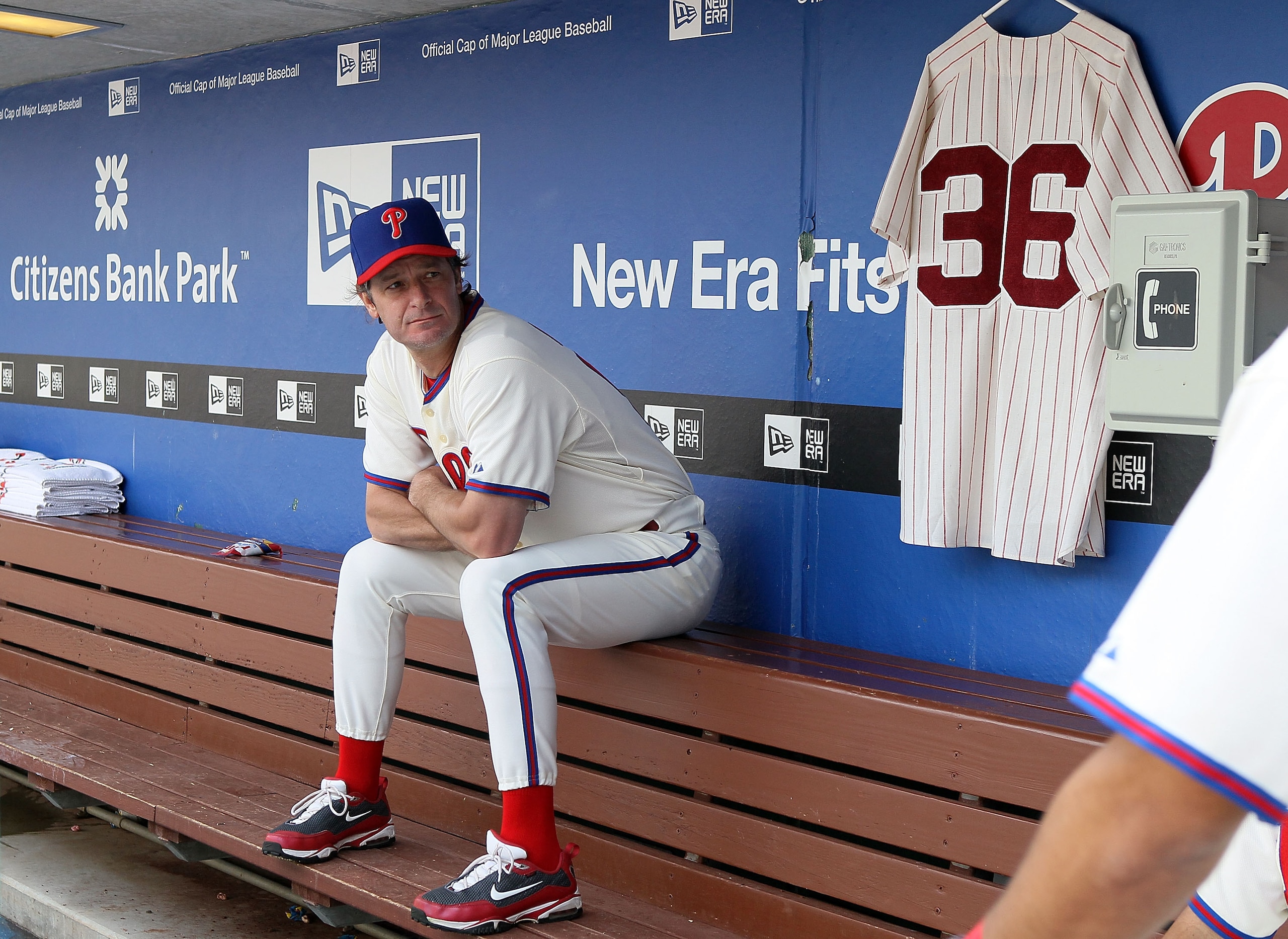
The 47-year-old Moyer definitely showed his age in 2010, winning nine of his 18 decisions with a 4.84 ERA. He did throw a two-hit shutout against the Atlanta Braves, making him the oldest pitcher in baseball history to throw a shutout.
He injured his left elbow in July and will miss the remainder of the season. Most likely, Moyer will never pitch again.
Grade: C-
21. Jimmy Rollins
8 of 28
I hate to call Jimmy Rollins overrated, but that's exactly what he is. For the third straight season, his numbers declined, and to top it off, he should now be considered injury-prone, as he missed over 70 games in 2010.
Rollins batted just .243 with career lows in virtually every statistical category. He also committed just as many errors (6) as last season despite playing in half as many innings.
A solid October could erase the memories of a disappointing season, as his walkoff double in Game 4 of last year's NLCS helped to do.
Grade: C-
20. Wilson Valdez
9 of 28
Valdez received the most playing time of his career, filling in over 100 games, mostly for injured shortstop Jimmy Rollins and second baseman Chase Utley. He hit .258, and showed good speed with seven stolen bases.
His defensive WAR was 1.3, the best on the team, and his versatility has made him a surprisingly valuable backup infielder.
However, he grounded into 20 double plays in 333 at-bats, making him one of five players in the history of baseball to ground into at least 20 double plays in fewer than 350 at-bats.
Grade: C
19. David Herndon
10 of 28
Rookie David Herndon pitched in 47 games, finishing 14 of them. He posted a mediocre 4.30 ERA, but allowed 67 hits in just 52.1 innings for an opponents' batting average of .321.
Herndon didn't make the postseason roster but will have his opportunity to prove himself again next season.
Grade: C
18. Joe Blanton
11 of 28
Blanton turned in a disappointing season, posting a 4.82 ERA. He won nine of his 15 decisions, but ended the season winning his last six decisions. In the process, he lowered his ERA from 6.03 to 4.82.
Blanton will make up to two starts in the postseason, and I expect the 30-year-old right-hander to pitch well. He has a 2-0 career postseason record, including a Game 4 World Series win in 2008.
Grade: C
17. JC Romero
12 of 28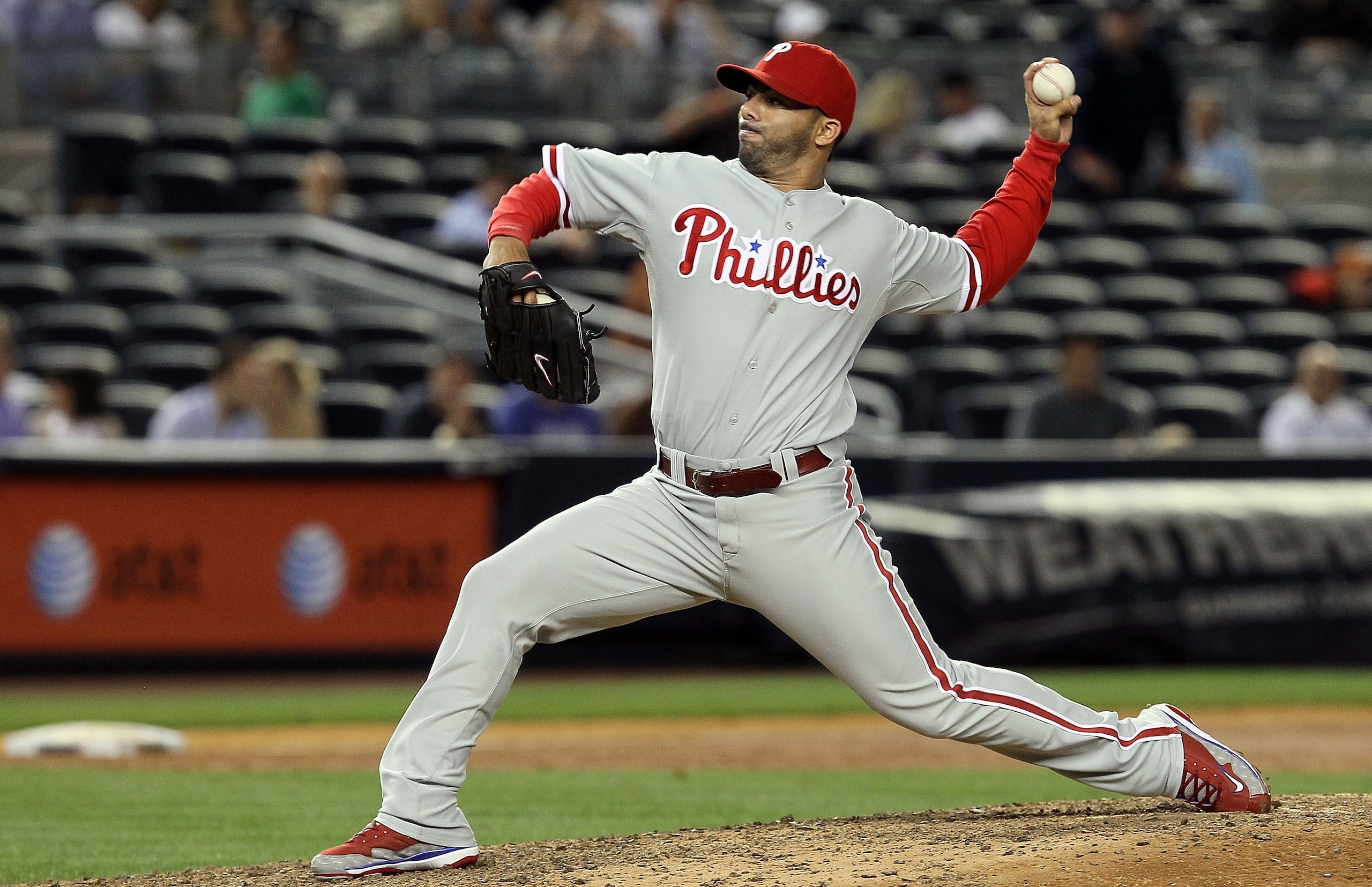
The team's primary lefty specialist, Romero pitched in 60 games, recording a 3.68 ERA. He totaled 36.2 innings and allowed just 30 hits, but also walked 29, including seven intentionally. His strikeout-to-walk ratio was under 1.00, which is completely unacceptable.
Romero brings a good track record to the postseason (3.32 ERA in 23 games).
Grade: C+
16. Ben Francisco
13 of 28
Francisco had a solid season in fairly limited action, batting .268 with six home runs and 28 runs batted in. He stole all eight bases he attempted.
Francisco easily earned a spot on the postseason roster. However, it would be nice if he actually did something this October. Last year, he was 0-for-11 in the playoffs, including seven at-bats in the World Series.
Grade: C+
15. Raul Ibanez
14 of 28
The demise of Raul Ibanez has been greatly exaggerated. Ibanez's power numbers dropped from 34 home runs in 2009 to 16 in 2010. He batted .275, but hit .309 in the second half of the season, and still drove in 83 runs.
Ibanez has become a liability in left field, however, and produced a -1.0 WAR this season, easily the worst total on the team.
Grade: C+
14. Shane Victorino
15 of 28
An All-Star in 2009, Victorino's numbers dropped in 2010 as he batted just .259 with an OPS+ of 102. He slugged a career-high 18 home runs, but scored only 84 runs in 647 plate appearances, the lowest rate of his career.
Victorino produced 1.2 WAR defensively and, through five full seasons, stands as the third-best defensive center fielder in baseball history in terms of fielding percentage.
Grade: C+
13. Chad Durbin
16 of 28
Durbin has been a consistent member of the Phillies bullpen since 2008. He pitched 64 games this year, posting a 3.80 ERA. He walked just 3.5 batters per nine innings, a significant improvement from 2009 (6.1).
Durbin is 2-0 in 13 postseason games, but only has a 5.19 ERA.
Grade: B-
12. Ross Gload
17 of 28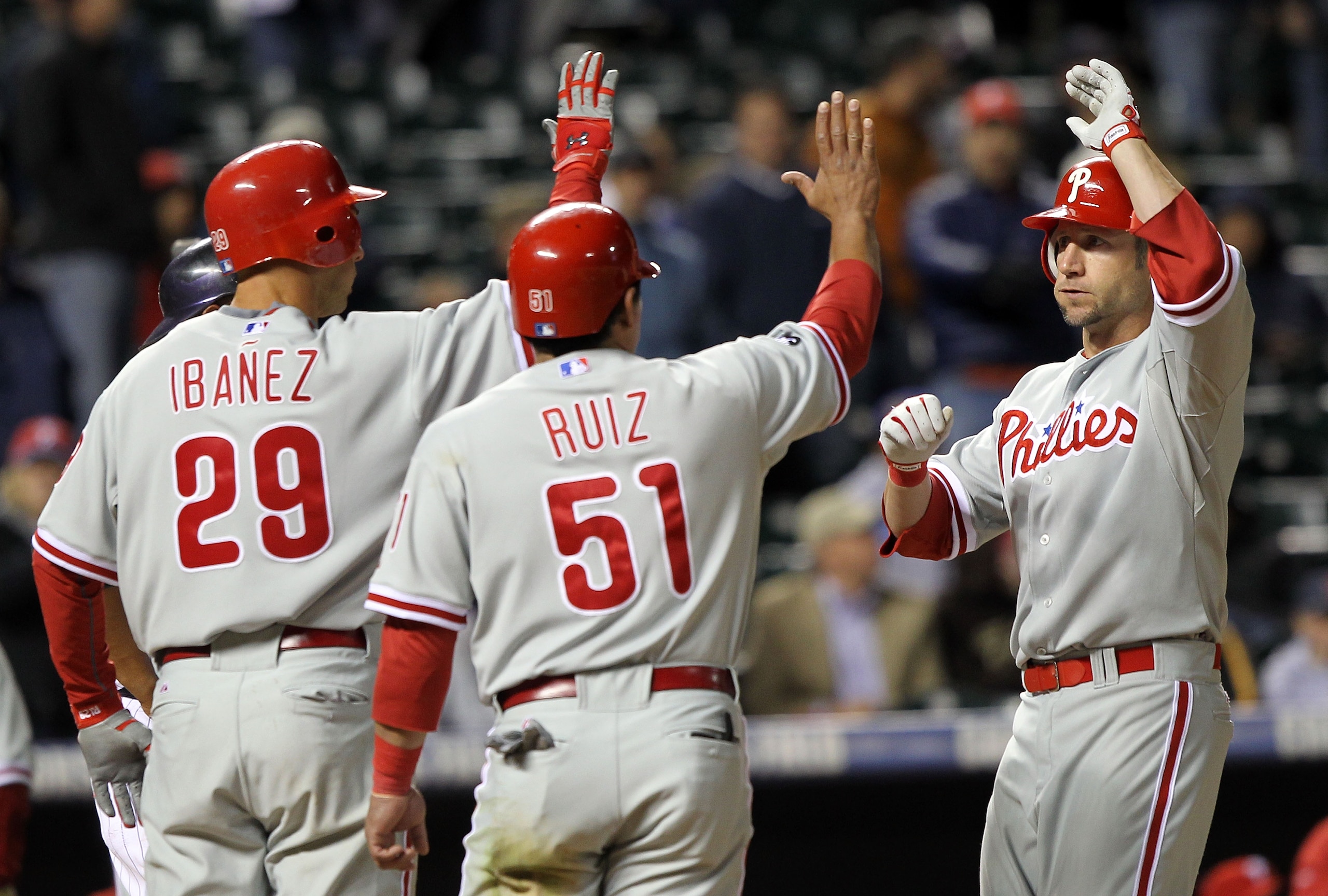
Gload came to the Phillies from the Florida Marlins and established himself as the team's best pinch-hitter. He batted .281 with six home runs (.484 slugging percentage). He batted .311 with men on base, and hit .333 in high-leverage situations.
Gload hasn't played in the postseason before, and will probably be the Phillies' DH for a game or two if the team reaches the World Series.
Grade: B
11. Jose Contreras
18 of 28
Contreras was the Phillies' third-best reliever in 2010, pitching in 67 games and posting a 3.34 ERA. Contreras fanned 57 batters in 56.2 innings.
Contreras is the only player on the Phillies to win a World Series with another team (2005 White Sox), and he could appear in his third World Series with his third different team (2003 Yankees).
Grade: B
10. Brad Lidge
19 of 28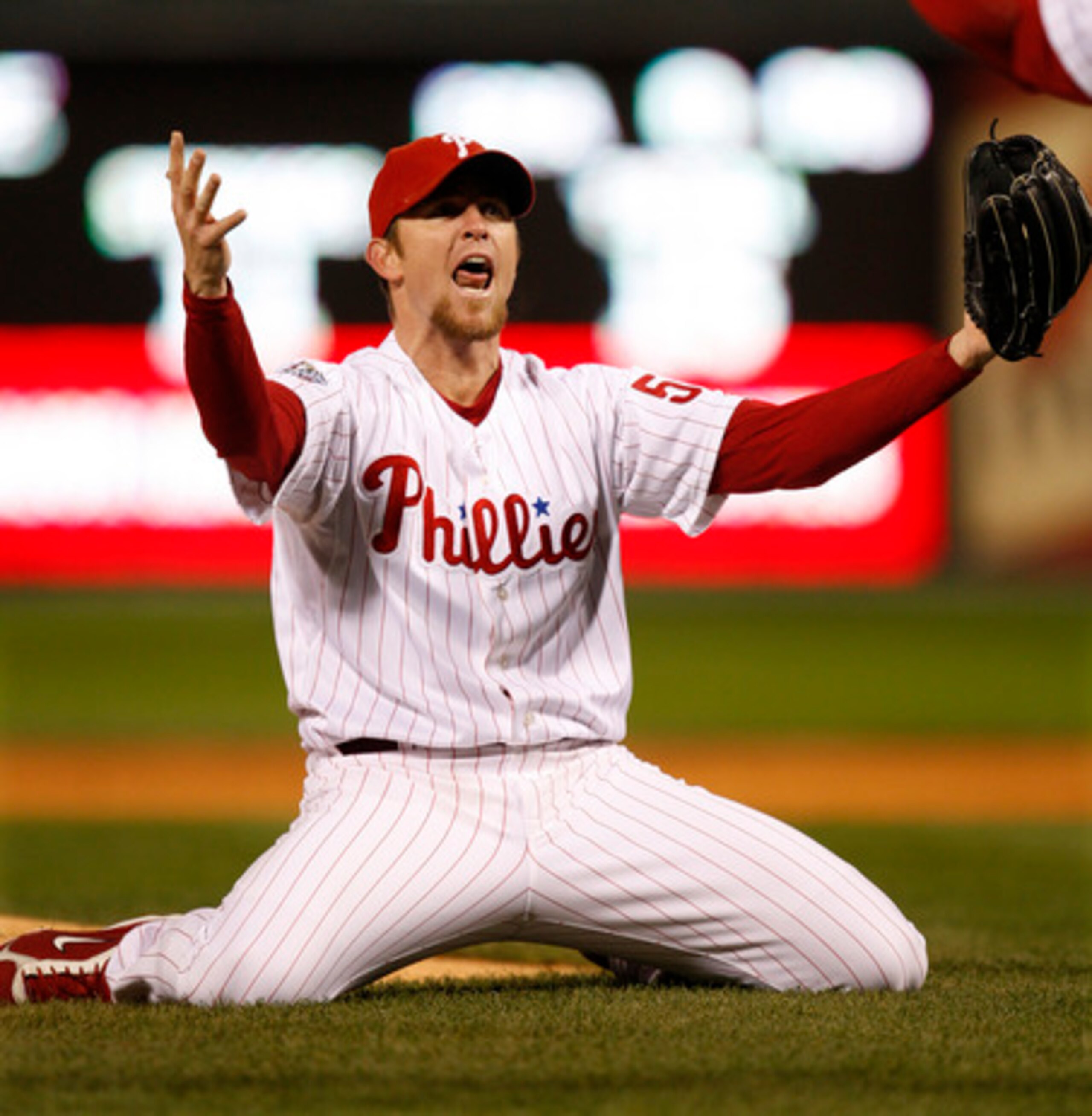
Lidge rebounded well from the worst season by a closer in baseball history. He posted a 2.96 ERA, 37 percent better than the league average, and saved 27 of 32 games.
He allowed 6.3 hits per nine innings, even better than his 2008 season, while upping his strikeouts per nine innings from 9.4 in 2009 to 10.2 in 2010.
In both August and September, Lidge allowed just one earned run in 12.1 innings for an 0.73 ERA. He converted 17 of his last 18 saves, and has not blown a save since August 27th.
The old Brad Lidge (2004, 2008) may never return, but hopefully neither will the 2009 Brad Lidge. For now, I'm perfectly fine with the 2010 Brad Lidge.
Grade: B
9. Placido Polanco
20 of 28
Polanco hit .298 in 2010, but he actually produced -4 batting runs throughout the season, meaning he was less productive than the average hitter.
He played third base for the first time in eight seasons and led the National League with a .986 fielding percentage.
He also provided one of the season's best defensive plays, diving into the stands against the New York Yankees to grab a foul ball.
Grade: B
8. Chase Utley
21 of 28
Utley turned in a disappointing season, missing almost 50 games due to injuries and batting .275. He cut down on his strikeouts, and for the first time in his career, he walked as many times as he struck out.
He earned his fifth consecutive All-Star selection but set career lows in virtually every statistical category.
Grade: B
7. Ryan Madson
22 of 28
Every great team needs a solid setup man, and for the last four seasons, Ryan Madson has been exactly that pitcher.
"The Bridge to Lidge" won six of his eight decisions in 2010, setting career highs in ERA (2.55), ERA+ (159), fewest hits per nine innings (7.1), walks per nine innings (2.2), strikeouts per nine innings (10.9) and WHIP (1.038). He capped off his productive season with an 0.98 ERA in August and a 1.17 ERA in October.
He even made (most) Phillies fans forget about the infamous chair-kicking incident in late April, when he broke his right big toe and missed two months of the season.
Grade: B+
6. Jayson Werth
23 of 28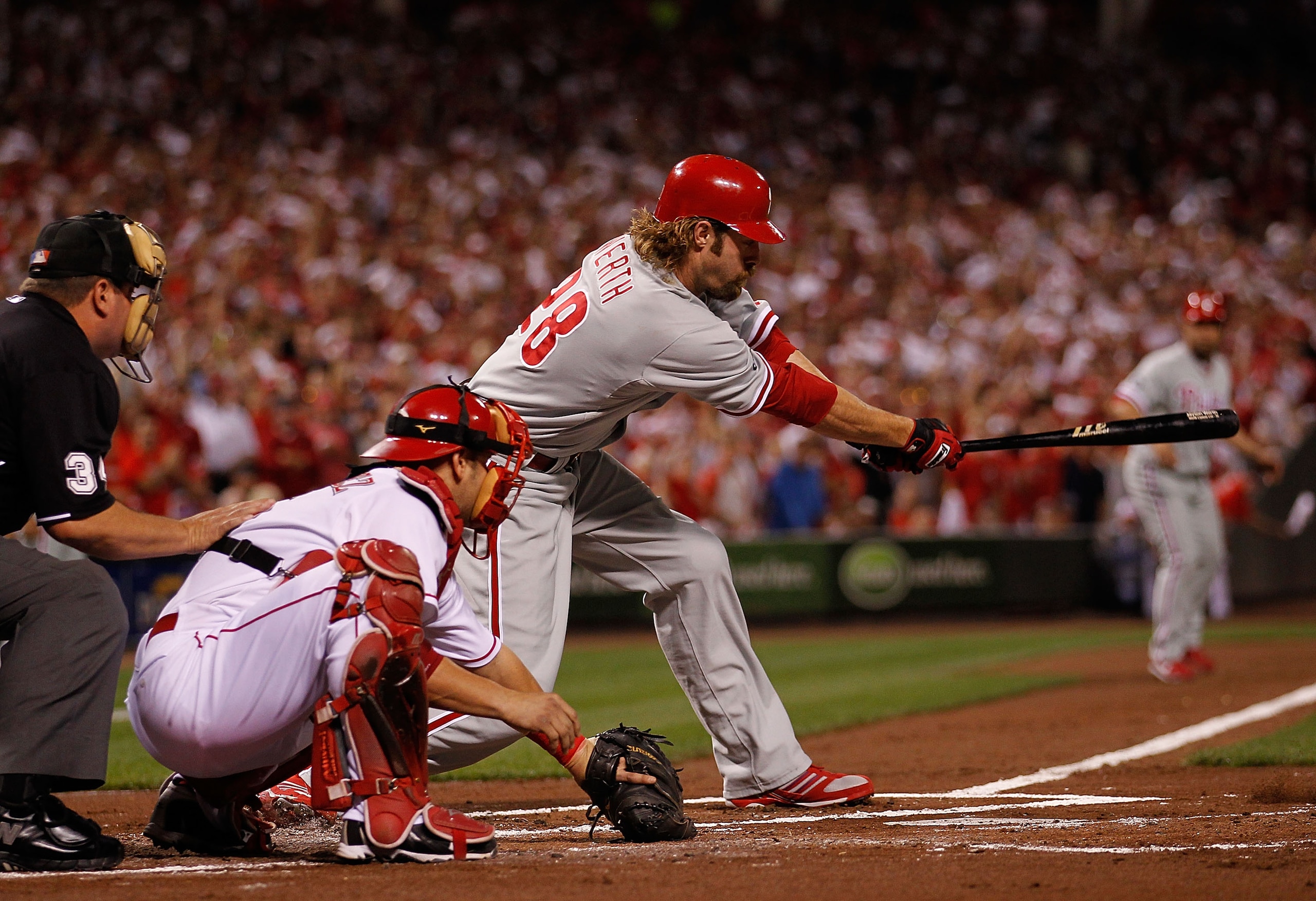
Werth turned in the best season of his short career, batting .296 with a league-leading 46 doubles and a 146 OPS+. He slugged 27 home runs, drove in 85 and led the team with 106 runs scored.
He ranked fourth among National League players in offensive win percentage and fifth in offensive WAR. He ranked in the top 10 among NL players in 16 different categories.
However, Werth hit just .186 with runners in scoring position, a full 110 points lower than his season batting average. With RISP and two outs, Werth batted .139. He also batted just .205 in close and late situations.
Grade: B+
5. Ryan Howard
24 of 28
The big man turned in easily the worst season of his career. He still hit 31 home runs, drove in 108 and batted .276, earning his third All-Star selection. He also drew just 59 walks, easily his fewest since his rookie season. His biggest cause for concern is his home run to fly ball ratio. In 2006, he belted 58 home runs, and 25.6 percent of his fly balls left the playing field. In 2010, the percentage reached an all-time low at 13.9 percent.
His defense was also a cause for concern. After producing a +1.0 defensive WAR in 2009, easily the top mark of his career, he slumped to -0.7 in 2010.
For the season, Howard produced 2.1 WAR in 143 games, as compared to 2.4 in 88 games in his Rookie of the Year season in 2005.
Grade: B+
4. Cole Hamels
25 of 28
It's safe to say that Colbert Richard Hamels regained the form that made him the most dominant pitcher in the 2008 postseason. Hamels started 33 games and posted a solid 3.06 ERA, the best mark of his career. He also topped 200 strikeouts (211) for the first time in his career.
Hamels was absolutely dominant in the last two months of the season. At one point, he hurled 25 consecutive scoreless innings. He allowed one earned run or fewer in 10 of 14 starts. He also won five straight starts from late August to late September to secure a winning record for the season (12-11).
The run support that Hamels received was just terrible. Ten times he allowed two runs or fewer and didn't collect a run. If fifth starter Kyle Kendrick can go 11-10 with a 4.73 ERA, Hamels should have been 17-6, not 12-11.
Grade: B+
3. Roy Oswalt
26 of 28
Oswalt won just six of 18 decisions with the Astros before a midseason trade sent the three-time All-Star to the Phillies. He struggled in his first start in a Phillies uniform, but won his last seven decisions.
He posted a 1.74 ERA with the Phillies, with a phenomenal 232 ERA+. He also allowed just 5.8 hits per nine innings, and allowed one run or fewer in seven of his last eight starts.
His combined Houston and Philadelphia totals rank him first in the National League in WHIP, fifth in ERA, sixth in strikeout-to-walk ratio and sixth in WAR for pitchers.
Grade (for the whole season): A-
2. Carlos Ruiz
27 of 28
Nobody expected Ruiz to turn in the season he did. The 31-year-old catcher batted a team .302 with a sensational .400 on-base percentage. He batted .330 on the road, .324 with men on base, .350 in high-leverage situations and .359 in the ninth inning or later.
He ripped 28 doubles in just 433 plate appearances, and fanned just 54 times. He also tied his career low by grounding into just eight double plays, and ranked fourth in the National League with 13 intentional walks.
His handling of the Phillies' pitching staff was fantastic, and he helped Roy Halladay become the 20th pitcher in baseball history to throw a perfect game on May 29th.
Grade: A-
1. Roy Halladay
28 of 28
Halladay was everything Phillies fans hoped for, and more. He turned in arguably the best season by a Phillies pitcher since Steve Carlton in 1972.
He won 21 games, lost 10, and posted a 2.44 ERA. He topped the National League in wins (21), complete games (9), shutouts (4), innings pitched (250.2), batters faced (993), fewest walks per nine innings (1.1) and strikeout-to-walk ratio (7.30). He finished second in WAR, winning percentage, WHIP, strikeouts and adjusted ERA.
He also received relatively poor run support for the majority of the season. It's not unlikely to think he could have won 25 games had the Phillies produced for him as they did for Joe Blanton and Kyle Kendrick.
And for one night, on May 29th against the Florida Marlins, he was absolutely perfect.
Grade: A+



.jpg?w=2560 "Jonathan Taylor Landing Spots")

.jpg?w=2560 "Malik Beasley Negotiating Plea Deal (AP)")
.jpg?w=2560 "NFL House in Paris Closes for Protests (AP)")