
Comparing the 2005 and 2009 Washington Nationals: Who Was Really Better?
As the Nationals prepare to begin their sixth season in Washington, management and ownership is doing all they can to get better. This team, after all, has been the worst in all of baseball over the last two seasons, losing 205 games and looking very bad while doing it.
It’s not as though they don’t try to get better. Clearly, the team continues to turn over their roster in an attempt to find 25 players capable of playing sound, fundamental baseball.
When they arrived in 2005, the Nationals surprised the baseball world by winning 81 games and were in first place in the National League East as late as July 24, and didn’t fall out of second place until the middle of August.
TOP NEWS
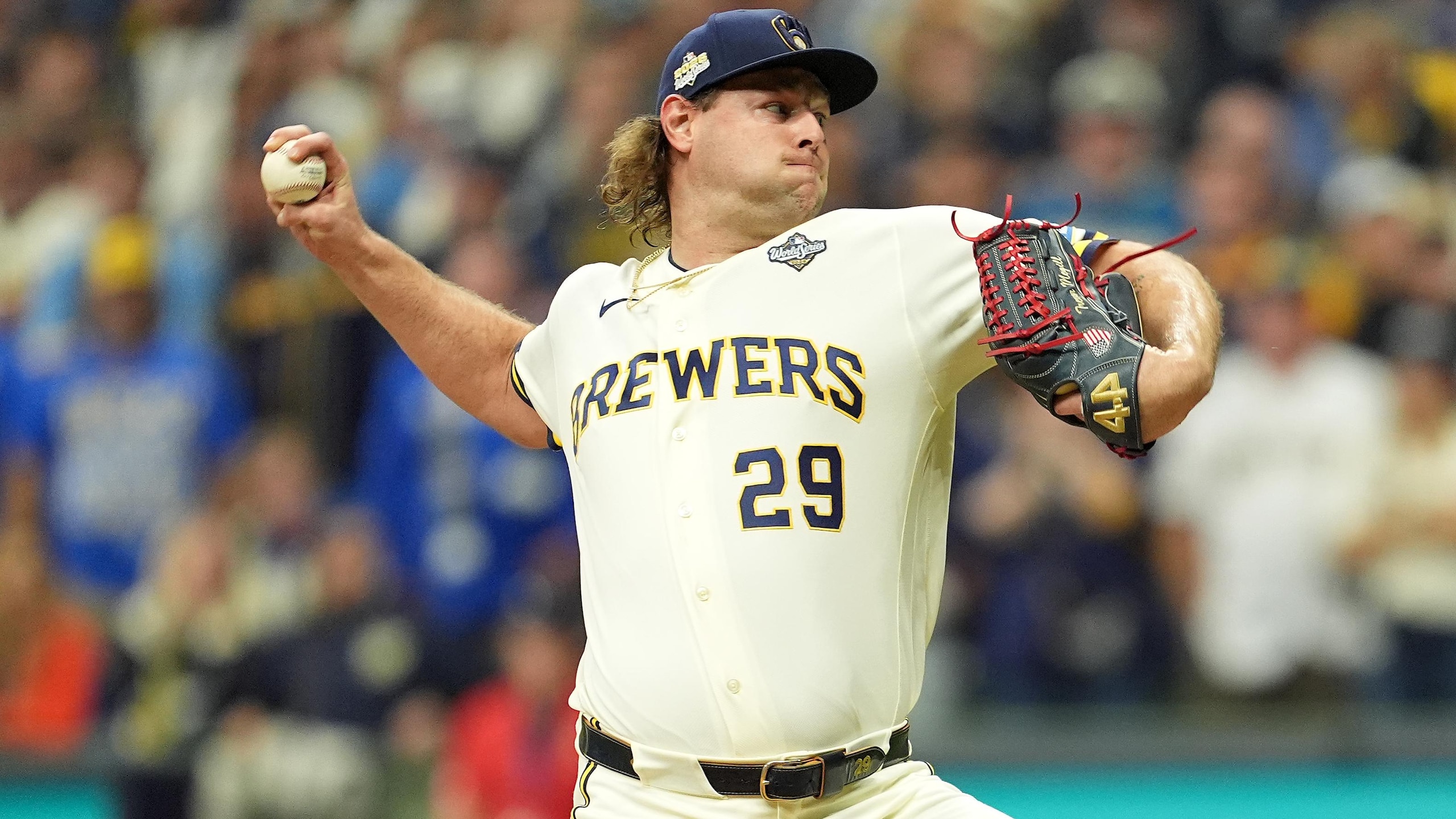
Brewers Closer Blasts Tropicana Field Roof

Latest MLB Trade Rumors 👂

Next MLB Players to Sign $200M Contracts 💰
Since then, the team has been torn apart, ripped up and blown to pieces. The result? One of the worst two-year periods in the history of baseball.
Let’s go back and take a look at that 81-81 2005 team and see how they compare—position by position—to 2009’s version:
First Base:
2005: Nick Johnson .289-15-74
2009: Adam Dunn .268-38-105
Clearly, Adam Dunn is the far superior offensive player while Johnson was one of the best defensive first baseman in the league.
However, with all due respect to Johnson’s glove, National League teams don’t win championships with defensive-minded first baseman. The last Senior-Circuit team to win the World Series with a non-slugging first baseman was the 2001 Arizona Diamondbacks with Mark Grace (.298-15-78).
No question, the Nationals were much better at first in 2009
Second Base:
2005: Jose Vidro .275-7-32
2009: Alberto Gonzalez .265-1-33
Vidro’s multiple knee surgeries, and subsequent loss of range, coupled with questionable defense, makes this comparison much closer than you would think. Vidro had a .985 fielding percent compared to Gonazalez’ .995, and his range factor was 4.4, far worse than Gonzalez’ 5.13.
I just don’t think those 10 extra points on his batting average and six more homers makes up for his slow-motion defense.
I see this one as a draw
Shortstop
2005: Cristian Guzman .219-4-31
2009: Cristian Guzman .284-6-52
In 2005, Guzman suffered through one of the worst hitting slumps I have ever seen. His batting average didn’t stay above .200 for good until September 8, and he had to hit .338 for the remainder of the season to get the average “up” to .219. The 2010 Guzman didn’t see his average go below .300 until September 1.
Guzman’s fielding percent dropped a bit in 2009, but all other factors remained constant.
The 2009 Guzman wins by a wide margin.
Third Base
2005: Vinny Castilla .253-12-66
2009: Ryan Zimmerman .292-33-106
Castilla hit just enough and fielded well enough to keep his job until Ryan Zimmerman began to play every day towards the end of September. The Vinny Castilla of old was now old, and it showed late in the season. Zimmerman, on the other hand, won both the Silver slugger and the Gold Glove in 2009.
Zimmerman over Castilla, and it’s not even close to being close.
Left Field
2005: Ryan Church .287-9-42
Preston Wilson .261-10-43
2009: Josh Willingham .260-24-61
Church played regularly until he cracked his back and neck on the PNC Park fence in a dramatic win against the Pirates. Wilson, acquired in a mid-season trade with the Rockies, did was he was expected to do.
Church was capable but not great, and Wilson was terrible in the outfield, thanks in part to a very bad set of wheels. Josh Willingham’s numbers are skewed because he didn’t play every day until late May.
Willingham doesn’t play outstanding defense but he’s certainly good enough. Willingham wins.
Center Field
2005: Brad Wilkerson .248-11-57
2009: Nyjer Morgan .351-1-12, 24 steals
Wilkerson was presumed to be the team’s slugger after hitting 32 homers the year before. But he struck out too much, didn’t hit nearly enough homers and played good defense. Morgan was the team’s catalyst, playing superb defense and raced around the bases, begging the opposition to stop him. They never did.
No contest: It’s Morgan
Right Field
2005: Jose Guillen .283-24-76
2009: Elijah Dukes .250-8-58
Clearly, Guillen had the better year. Both players were outstanding defenders, and though Dukes is the more talented player, Guillen flat outplayed him.
Funny how both of them were clubhouse problems.
Guillen wins this one.
Catcher:
2005: Brian Schneider .268-10-44
2009: Jesus Flores .301-4-15
Granted, Flores didn’t play the entire season, but we’ve seen enough of him to make a fair comparison with Schneider. Flores has now played 198 games and has a career batting record of .260-16-99. Though he’s not quite as good a defender as Schneider was then, he will in the end be far better.
Flores wins.
Starting Pitchers
2005: Livan Hernandez 15-10, 3,98
2009: John Lannan 9-13, 3.88
I’m taking Lannan in this comparison, which may make you scratch your head just a bit. But remember, Livan pitched at RFK Stadium, a park so large that it shaved three-quarters of a run off of a pitcher’s ERA. Lannan pitched at Nationals Park and had the better ERA.
This was a tough choice, but Lannan wins by a tad.
2005: Esteban Loiaza 12-10, 3.77
2009: Craig Stammen 4-7, 5.11
No contest here. Loiaza had a comeback that most players only dream of, and Stammen struggled in his first major league season.
Loiaza takes it.
2005: John Patterson 9-7, 3.13
2009: Jordan Zimmermann 3-5, 4.63
2005 was Patterson’s one great year before injuries eventually forced him out of baseball. Sadly, Zimmermann was just beginning to show what he could do at the major league level when he was lost to rotator cuff surgery.
Zimmermann is the better talent but Patterson had the better year. Patterson wins
2005: Tony Armas 7-7, 4.97
2009: J.D. Martin 5-4, 4.44
Armas was one of those pitchers with a great deal of talent but nothing to show for it. Martin was one of former GM Jim Bowden’s reclamation projects that actually worked.
Martin, selected in the first round of the draft by the Cleveland Indians as the compensation pick for the loss of Manny Ramirez, blew out his arm in the minors and was signed by Washington.
He got better as the year progressed and should be in the rotation in 2010.
Martin over Armas.
2005: Ryan Drese 3-6, 4.98
2009: Ross Detwiler 1-6, 5.00
Drese was claimed off of waivers from the Angels and had one good start before things went south. Detwiler was horrid early in the season but responded well to his demotion. He returned in September and pitched brilliantly, going 1-1 with a 1.90 ERA and a .220 batting-average against.
Detwiler beats Drese because of that great September.
Closer:
2005: Chad Cordero 2-4, 1.82, 47 saves
2009: Mike MacDougal 1-1, 3.60, 20 saves
“The Chief” wins walking away. Though he always “almost” blew every save, he never did. He was the one sure thing on that 2005 team. MacDougal was certainly good enough, but will serve the Nationals better as the setup man when Drew Storen takes his place sometime next year.
In the final tally, the 2009 team won eight positions while the 2005 team won just five. There was one draw. That seems strange, I know, because that 2005 team was 22 games better.
From an individual point of view, the 2009 Nationals are more talented, but as a team, when you take into account the depth of both teams, the 2005 Nationals were far better.
Take a look at the ERA’s of the 2005 Nationals’ bullpen:
Chad Cordero: 1.82
Hector Carrasco: 2.04
Luis Ayala: 2.66
Jason Bergman: 2.75
Gary Majewski: 2.93
Joey Eischen: 3.22
Mike Stanton: 3.58
Jon Rauch: 3.60
The bench was just as deep, featuring (at one time or another), Jamey Carroll, Deivi Cruz, Junior Spivey, Gary Bennett, Carlos Baerga, Terrmel Sledge, Jeffrey Hammonds, Rick Short, Endy Chavez and Brendan Harris.
Over the last five seasons, the Nationals have gotten deeper at the top but thinner down below. Their regular players are far better but the role players—the relievers and the bench—aren’t nearly as talented.
Team General Manager Mike Rizzo will be heading into next week’s Winter Meetings trying to find some more “big names” to bring to Washington. And that’s fine; he should be doing that.
But he should also be trying to duplicate Jim Bowden’s magic and find a bunch of hard working, small-paycheck kind-of-guys who can almost will the team to win, doing whatever it takes, and whenever it’s needed, to make it happen.
Let’s start a “Bring back Joe Beimel” campaign right now!


.jpg?w=2560 "Raiders Could Start Mendoza")


.jpg?w=2560 "Rodgers Iced Out on Plane 💎")

.jpg?w=2560 "Packers Safety Slams Refs 🤬")
.jpg?w=2560 "🚨 Week 8 AP Top 25 Poll")
