Ranking the Biggest MLB Breakout Seasons Since 2000
For Major League Baseball stars like Jose Altuve, Jose Bautista and Jose Ramirez, there were several years of struggling at a replacement-player level before the breakout season finally happened.
Some stars thrive immediately. Others need to endure a bit of a learning curve. Over the past two decades, many in the latter category went from mediocre to magnificent in one unforgettable year.
To qualify as a breakout season, the player must have spent some portion of at least three previous seasons at the MLB level, and he must have maintained at least some level of excellence for the next several years.
Because of those criteria, guys like Mike Trout, Albert Pujols, Clayton Kershaw, Ichiro Suzuki, Aaron Judge, Mookie Betts and Tim Lincecum were not considered, as each had established dominance within his first three seasons. Moreover, guys like Ubaldo Jimenez, Ben Zobrist, Jacoby Ellsbury and Cliff Lee were not included because they reverted to their pre-MVP-consideration numbers the following season.
In other words, we're searching for players who took a few years to hit their stride but who were able to stay at peak or near-peak level for several years after their breakout—the year when stars first became stars, if you will. And the more drastic the transformation, the higher that player ranked on the list.
10. Curtis Granderson, 2007
1 of 10
Pre-Breakout (2004-06): .262/.330/.447, 27* HR, 13* 3B, 38* 2B, 9* SB
Breakout Year (2007): .302/.361/.552, 23 HR, 23 3B, 38 2B, 26 SB
Post-Breakout (2008-Present): .241/.336/.459, 24.5 HR, 4.9 3B, 22.5 2B, 9.8 SB
*Total numbers in three seasons, not per-season averages
Curtis Granderson's big year wasn't so much a breakout as it was a diesel engine that finally warmed up enough to go full throttle.
2004 was just a nine-game test drive. He didn't even leave the parking lot. 2005 was a bit more extensive, but he mostly just stuck to slow speeds on country roads, playing in 47 games with eight home runs, three triples and one stolen base. 2006 was his first full season in the big leagues, and it came with a modest increase in the speed departments to nine triples and eight stolen bases.
But he exploded in 2007, more than doubling both of those totals en route to joining the exclusive 20-20-20-20 club. The only other players in MLB history with at least 20 home runs, triples, doubles and stolen bases in a single season were Frank Schulte in 1911, Willie Mays in 1957 and Jimmy Rollins in 2007.
Not only did Granderson lead the majors in triples that year, but he also became the first player to reach 23 triples in a single season since Dale Mitchell in 1949.
As you can clearly see in his post-breakout averages, Granderson's speed didn't last forever. In fact, 2011 was the last time he had more than five triples or more than 11 stolen bases in a single season. But he did average 17.3 stolen bases and 9.5 triples in the four years immediately after his breakthrough year.
The double, triples, stolen bases and batting average all ended up being career bests for Granderson, but his prowess for hitting home runs was still heating up. He swatted 30 four-baggers in 2009 and topped out at 41 and 43 in 2011-12 with the New York Yankees.
9. Bryce Harper, 2015
2 of 10
Pre-Breakout (2012-14): .272/.351/.465, 28.3 HR, 49.7 RBI, 51.7 BB
Breakout Year (2015): .330/.460/.649, 42 HR, 99 RBI, 124 BB
Post-Breakout (2016-Present): .265/.386/.507, 30.5 HR, 96.8 RBI, 101.3 BB
Bryce Harper was an All-Star and the National League Rookie of the Year in his age-19 season. During that 2012 campaign, there were arguments over whether Harper or fellow rookie Mike Trout had the brighter future. And that makes it a bit difficult to claim that his breakout year didn't come until 2015.
For those first few seasons, though, Harper was like a bull in a china shop. He hit some mammoth home runs, but he didn't have great plate discipline, he often ran into outs on the basepaths and he infamously ran into an outfield wall once. There was no doubting that he gave 110 percent effort, but it wasn't until he learned to harness that energy and acquired a more discerning eye at the plate that he finally tapped into his near-limitless potential.
That more veteran approach began in year No. 4, when Harper led the majors in on-base percentage, slugging percentage and (naturally) on-base plus slugging percentage (1.109 OPS) en route to being named the unanimous NL MVP. Fun fact: The only player in the past 15 years to post a higher single-season OPS was Albert Pujols, who finished the 2008 season at 1.114.
His strikeout rate didn't really change, but his walk rate went through the roof once he started working counts and waiting for his pitch. He also became much more clutch with runners in scoring position. Between 2013 and 2014, Harper had 217 such plate appearances, resulting in 34 hits and 52 RBI. In 2015, he had 55 RBI and a .475 on-base percentage in 158 plate appearances with runners in scoring position.
While he hasn't been quite as dominant lately, that trend of working counts and capitalizing on RBI opportunities has continued for the past four years.
8. Eric Gagne, 2002
3 of 10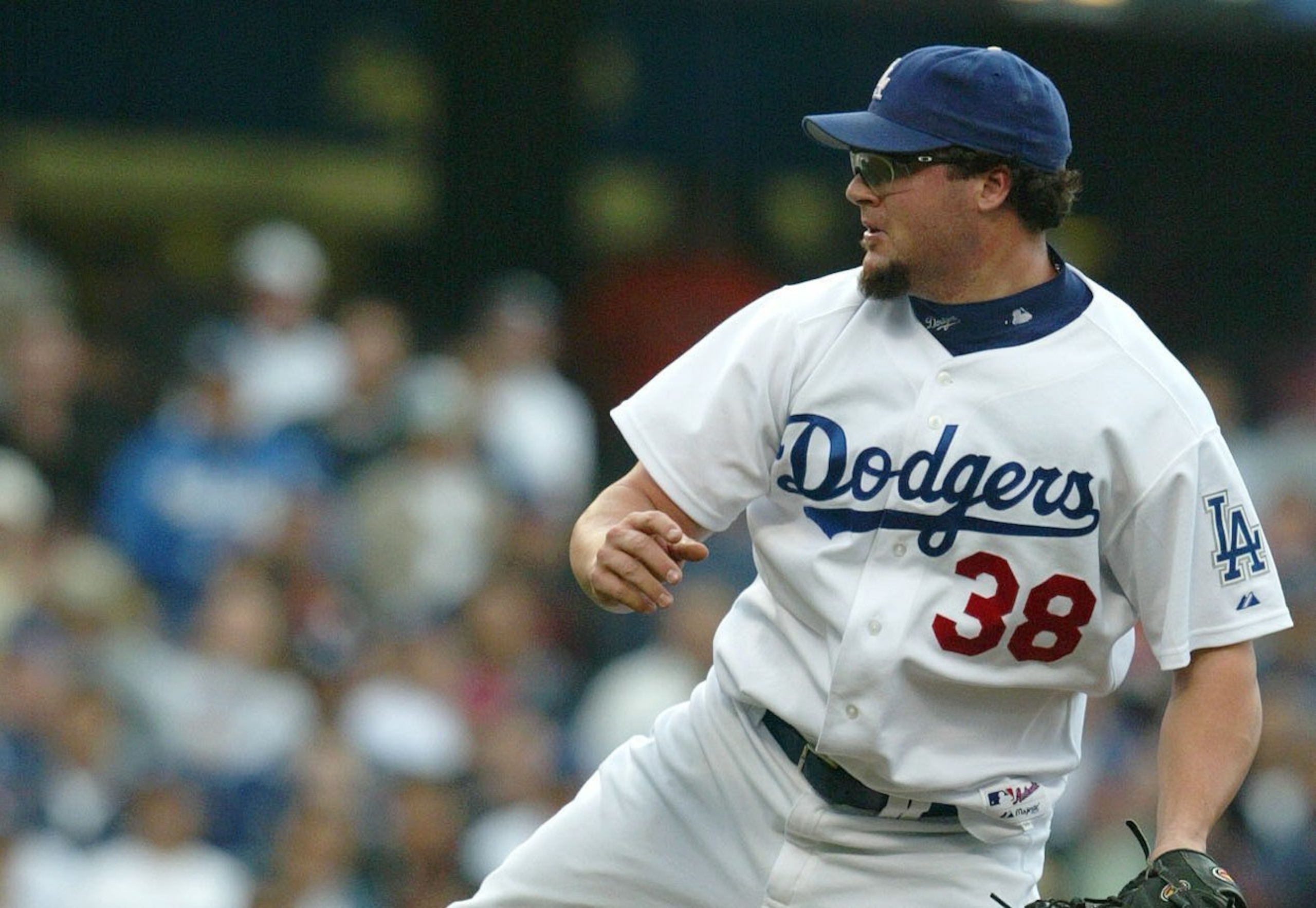
Pre-Breakout (1999-2001): 4.61 ERA, 1.375 WHIP, 7.6 K/9, 2.0 K/BB, 0 saves
Breakout Year (2002): 1.97 ERA, 0.862 WHIP, 12.5 K/9, 7.1 K/BB, 52 saves
Post-Breakout (2003-08): 2.75 ERA, 1.02 WHIP, 11.8 K/9, 4.1 K/BB, 22.5 saves
Most great closers don't hit their stride until a few seasons into their careers.
Mariano Rivera was an ineffective starter for much of his rookie season and entered year No. 3 in the big leagues with five career saves. Lee Smith had just one save in his first two seasons before finishing his career with 478 of them. Guys like Craig Kimbrel who come up and immediately thrive in the ninth inning are few and far between.
Thus, Eric Gagne pitching as a starter for the majority of his first three seasons hardly makes him an exception to the norm. Yet, his transition from mediocre back-of-the-rotation starter to untouchable anchor of the bullpen was one of the most phenomenal and meteoric rises of all time.
For Gagne's first three seasons with the Dodgers, veteran Jeff Shaw was the closer. In fact, Shaw was an All-Star in 2001, racking up 43 saves. But the 34-year-old somewhat unexpectedly retired that offseason, and the Dodgers traded away one of their primary late-inning relievers, Matt Herges. They did acquire Paul Quantrill in a trade with Toronto, but they clearly entered the year in a "Gagne or bust" type of situation.
Lucky for them, he was instantly sensational. In his first 11 appearances, Gagne pitched 12.0 scoreless innings, allowing four hits and one walk with 14 strikeouts. In 77 appearances, he allowed multiple runs just once—and that outlier came in a non-save situation in August. He finished fourth in the NL Cy Young vote.
That was just the beginning of his miniature era of dominance, though. Gagne proceeded to go 55-for-55 on save opportunities in 2003 as part of a record 84 consecutive saves streak. He won the NL Cy Young Award that year with a 1.20 ERA. He also had 45 saves with a 2.19 ERA in 2004.
Due to a series of elbow and back injuries/surgeries in 2005 and 2006, Gagne vanished almost as suddenly as he arrived. For those three years, though, he was one of the best closers ever. At any rate, he remains the only reliever to win a Cy Young Award more recently than Dennis Eckersley in 1992.


7. Jose Altuve, 2014
4 of 10
Pre-Breakout (2011-13): .285/.323/.377, 4.7 HR, 33.7 RBI, 25.0 SB, 32.0 extra-base hits
Breakout Year (2014): .341/.377/.453, 7 HR, 59 RBI, 56 SB, 57 extra-base hits
Post-Breakout (2015-Present): .323/.380/.507, 21.4 HR, 75.6 RBI, 24.6 SB, 60.4 extra-base hits
Jose Altuve has always been a good hitter. He batted a respectable .276 in 57 games as a rookie, and he has been above .280 in every season since then. In both 2012 and 2013, Altuve had at least 30 doubles and 30 stolen bases. In other words, his breakout year didn't exactly come completely out of left field.
But in 2014, he found a higher gear and transformed from "good hitter" to "one of the toughest outs in baseball."
Despite a bit of a slow start to the season—Altuve was batting just .270 after 36 games—the pint-sized second baseman led the majors with a .341 batting average and finished that year with 225 hits. Dating back to 2001, Ichiro Suzuki is the only other player with at least 222 hits in a single season (a feat he accomplished five times).
It was the first of Altuve's four consecutive seasons with at least 200 hits, during which time he blossomed into a coveted slugger who hits for average.
The home run spike didn't begin until 2015, but Altuve won the Silver Slugger award in 2014 thanks in large part to a career-best 47 doubles. He proceeded to win a Silver Slugger in each of the next four years, averaging 39.4 doubles and 16.6 home runs in those five seasons. He also batted .313 or better in each of those five years.
Altuve doesn't steal many bases anymore, but 2014 was also a career-best year in that category for him. It was the third of six consecutive years swiping at least 30 bags, leading the American League with 56 of them. So even when he wasn't getting extra-base hits, he was often turning his singles into extra bases anyway.
6. Jose Ramirez, 2016
5 of 10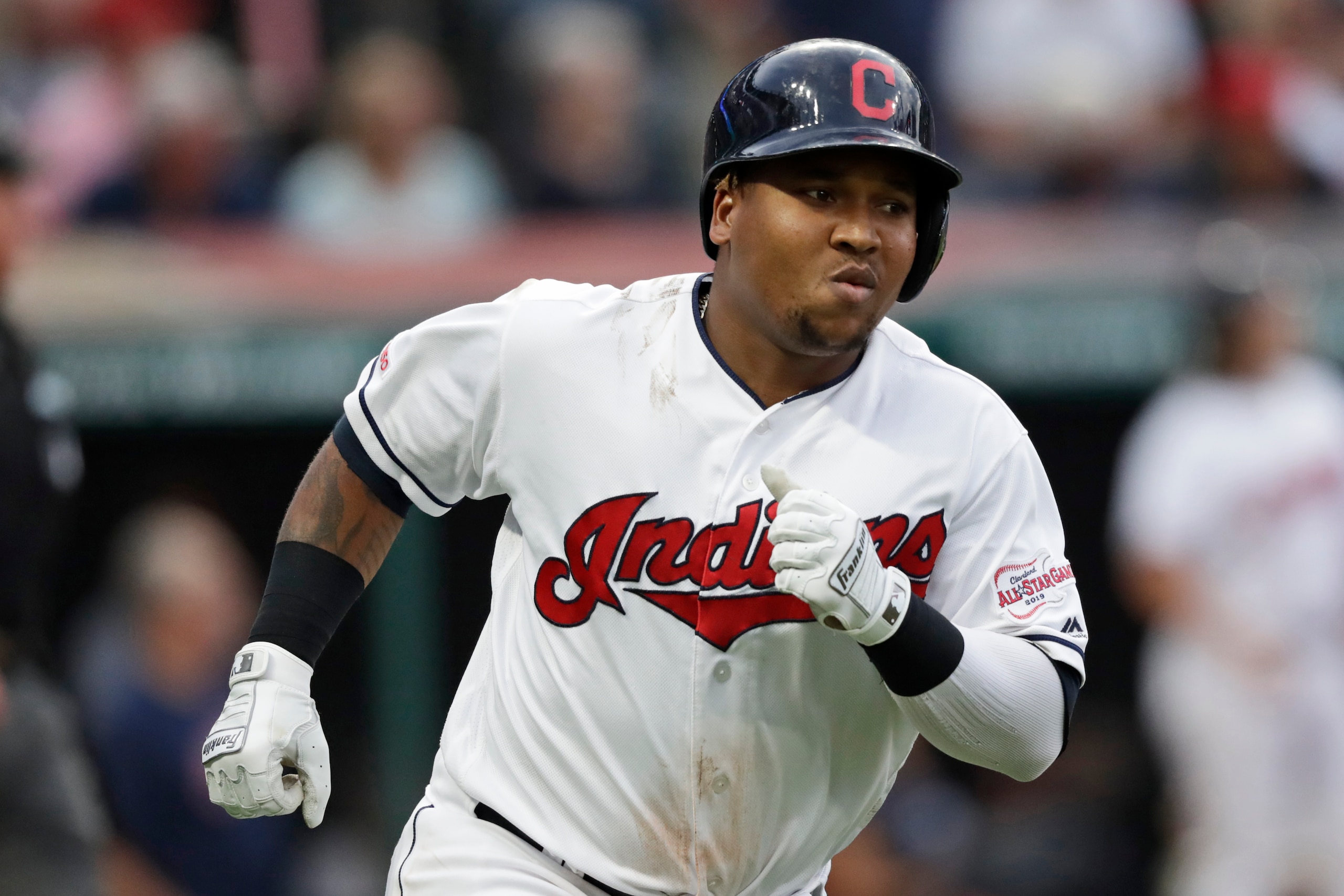
Pre-Breakout (2013-15): .239/.298/.346, 2.7 HR, 14.7 RBI, 6.7 SB
Breakout Year (2016): .312/.363/.462, 11 HR, 76 RBI, 22 SB
Post-Breakout (2017-Present): .283/.365/.542, 30.3 HR, 90.3 RBI, 25.0 SB
Jose Ramirez was a fleet-footed star in the minor leagues. He batted .325 in rookie ball in 2011, hit better than .350 in Single-A ball in 2012 and stole 38 bases at the Double-A level before making his brief September debut with the Cleveland Indians.
It took a few years for that prowess at the plate to follow Ramirez to the majors, though.
In 2014, he had almost as many sacrifice bunts (13) as extra-base hits (14) or RBI (17). And in 2015, he hit .180/.247/.240 for the first two months before getting demoted back to Triple-A. He was marginally better when he got called back up in August but still finished his third season in the majors with a .219 batting average.
Suffice it to say, heading into the 2016 campaign, no one could have imagined Ramirez was on the cusp of averaging roughly 25 home runs, 25 stolen bases and more than 40 doubles per year while becoming an annual staple in the AL MVP conversation.
The power surge didn't really begin until 2017, but Ramirez did drastically improve his batting average and slugging percentage in 2016. He had 46 doubles that year before ramping it up to an MLB-best 56 in 2017. After back-to-back years with an OPS below .650, he ended his breakout year at .825.
Ramirez also tallied 15 hits during Cleveland's postseason run, including the single that started the two-out rally in the eighth inning of Game 7 of the World Series.
5. Zack Greinke, 2009
6 of 10
Pre-Breakout (2004-08): 4.28 ERA, 1.338 WHIP, 6.9 K/9, 2.9 K/BB, 0 CGSO
Breakout Year (2009): 2.16 ERA, 1.073 WHIP, 9.5 K/9, 4.8 K/BB, 3 CGSO
Post-Breakout (2010-Present): 3.18 ERA, 1.109 WHIP, 8.5 K/9, 4.2 K/BB, 2 CGSO
Zack Greinke was the No. 6 overall pick in the 2002 MLB draft, making his MLB debut less than two years later. Big things were always expected, but it took half a decade for him to deliver on that immense potential.
In Greinke's second season in the majors (2005), he went 5-17 with a 5.80 ERA. He missed most of the following season while battling depression and social anxiety disorder, leading many to wonder if he would ever pitch again. He initially came back as a reliever in 2007 before rejoining the starting rotation for 1.5 years of adequate-but-hardly-Cy-Young-level numbers.
Things started to click late in the 2008 season, though. Greinke ended the year on a streak of six consecutive quality starts (at least 6.0 IP while allowing three earned runs or fewer) and carried that momentum over to the following April.
He did not allow an earned run until his fifth start of the 2009 season, by which time he had already tallied 38 strikeouts on the year. Three times in his first six starts, he pitched all nine innings, struck out 10 batters and did not allow an earned run. Through 10 starts, Greinke had logged five complete games, had a 0.84 ERA and was averaging 9.7 K/9. He would add a one-hit shutout in late August en route to 26 quality starts and the AL Cy Young Award—which he probably would have won unanimously if he hadn't been pitching for a team that finished 65-97.
Greinke was nowhere near that dominant over the next three seasons with Kansas City, Milwaukee and the Los Angeles Angels, but he came back with a vengeance with the Los Angeles Dodgers from 2013-15, posting a 2.30 ERA over the course of those three years and finishing top 10 in the NL Cy Young vote each year.
4. Roy Halladay, 2002
7 of 10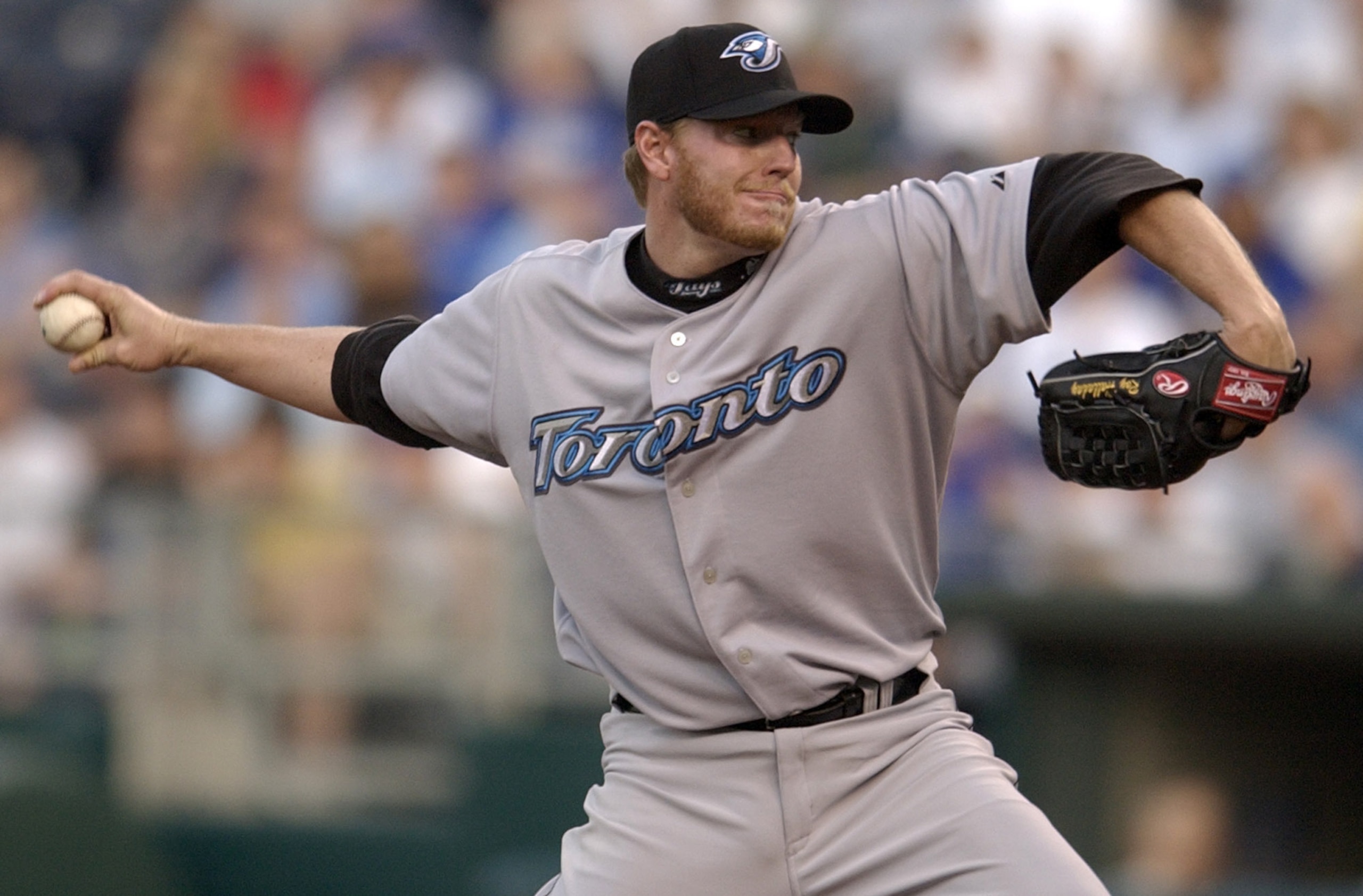
Pre-Breakout (1998-2001): 4.95 ERA, 1.537 WHIP, 6.3 K/9, 1.6 K/BB
Breakout Year (2002): 2.93 ERA, 1.191 WHIP, 6.3 K/9, 2.7 K/BB
Post-Breakout (2003-13): 3.19 ERA, 1.121 WHIP, 7.1 K/9, 4.5 K/BB
Did you know that long before he became an annual staple in the Cy Young conversation, Roy Halladay had one of the worst seasons in MLB history?
In 19 appearances during the 2000 campaign, Halladay compiled a horrendous 10.64 ERA, giving up 80 earned runs in 67.2 IP. (Just for good measure, he also allowed seven unearned runs over 0.2 innings of work in his final outing of that year.) Per FanGraphs, there have been 24,995 cases of a pitcher logging at least 50.0 innings in a season, and that 10.64 ERA was the absolute worst of the bunch.
Two years later, though, Halladay emerged as one of the best, most reliable pitchers in the business.
His strikeout numbers pale in comparison to those of the other breakout pitchers on this list, but that's partially a product of the era in which Halladay played. Aside from Pedro Martinez and Roger Clemens, the American League didn't have flamethrowers back then. Hell, renowned knuckle-baller Tim Wakefield had the fourth-best K/9 ratio (7.4) among qualified AL pitchers in 2002, per Baseball Reference.
But what Halladay lacked in the strikeout department, he made up for with longevity and an impressive ERA. After logging just 67.2 innings during that disastrous 2000 season, Halladay led the American League with 239.1 innings pitched in 2002. He only had two complete games, but he went at least six innings in 31 of 34 starts.
He became more of a master of finishing what he started over the course of the next nine years, tallying 61 complete games and 17 shutouts from 2003-11. Halladay won two Cy Young Awards and finished top five in that vote seven other times—not to mention that no-hitter he threw in the 2010 NLDS with the Philadelphia Phillies.
3. Adrian Beltre, 2004
8 of 10
Pre-Breakout (1998-2003): .262/.320/.428, 16.5 HR, 64.8 RBI
Breakout Year (2004): .334/.388/.629, 48 HR, 121 RBI
Post-Breakout (2005-18): .291/.343/.487, 23.6 HR, 85.5 RBI
Not only did Adrian Beltre have one of the biggest breakout campaigns of the past two decades, but he also had the good fortune of doing so right before hitting free agency. Thus, he parlayed his big season into a five-year, $64 million contract with the Seattle Mariners. Granted, it wasn't until after those subsequent five seasons that he became a consistent force at the plate for the Red Sox and the Rangers, but 2004 is where that breakout began.
Beltre was a respectable everyday presence in his early seasons with the Los Angeles Dodgers. He didn't really hit for power or average, but he had an above-average glove at third base and wasn't particularly hurting the team at the plate. Basically, early-career Beltre was what Asdrubal Cabrera has been for the past decade.
Then, out of nowhere, he had one of the best seasons at the dish in MLB history.
In the past 80 years, here's the full list of players to bat at least .333 while hitting at least 48 home runs: Beltre in 2004, Mickey Mantle in 1956 (.353, 52 HR), Larry Walker in 1997 (.366, 49 HR) and Todd Helton in 2001 (.336, 49 HR). Mantle's season has long been revered as one of the greatest in MLB history, and both Walker and Helton benefited from the "Coors Effect."
Incredible stuff from a guy whose previous career bests were 23 home runs and a .290 batting average.
That breakout at the plate also helped people realize how adept Beltre was in the field. He won four Gold Gloves over the course of the next eight years and added a fifth in 2016. He would also finish top 15 in the MVP vote eight times in his career, finishing runner-up to Barry Bonds in 2004.
2. Corey Kluber, 2014
9 of 10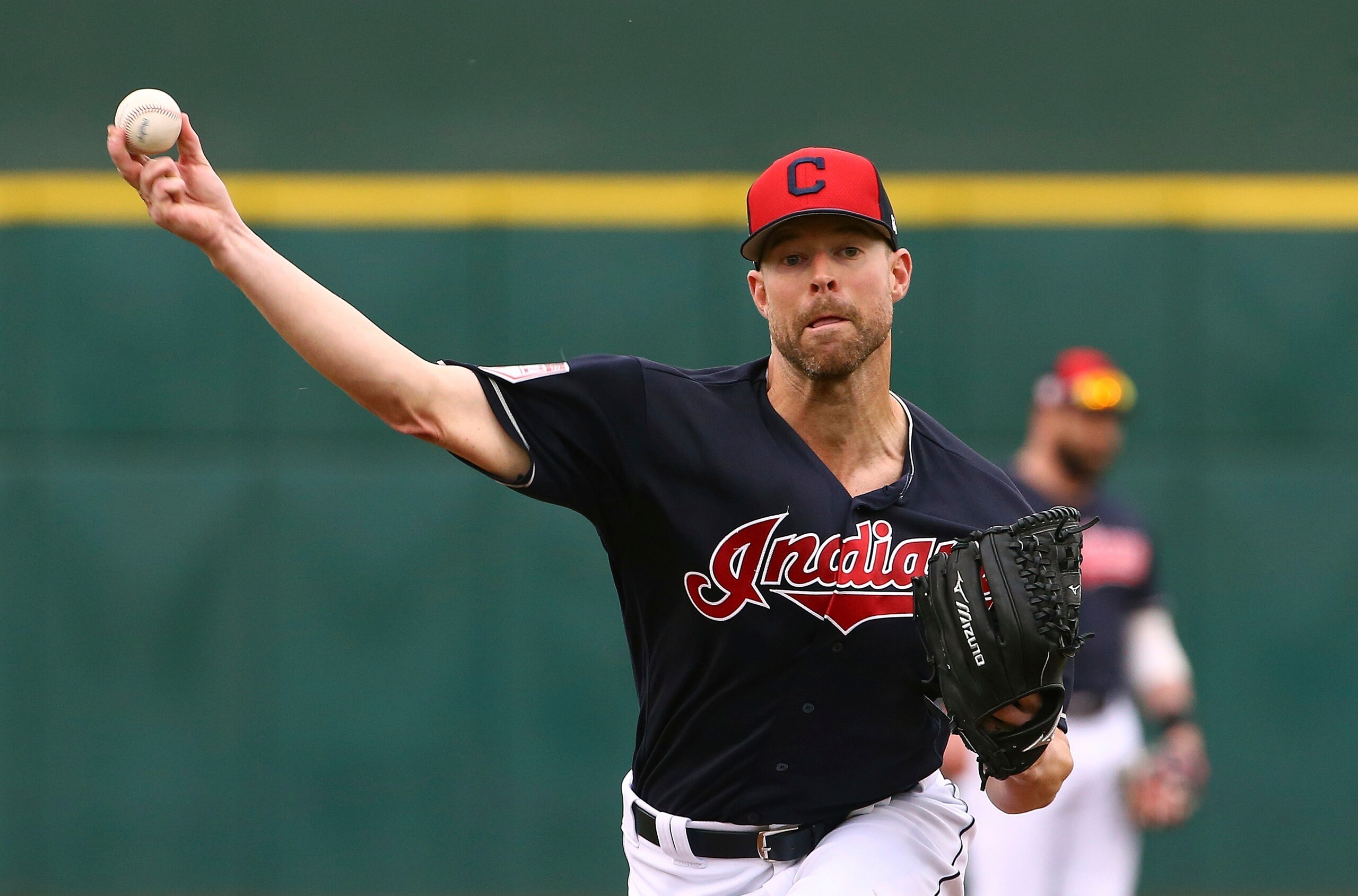
Pre-Breakout (2011-13): 4.32 ERA, 1.346 WHIP, 8.2 K/9, 3.6 K/BB
Breakout Year (2014): 2.44 ERA, 1.095 WHIP, 10.3 K/9, 5.3 K/BB
Post-Breakout (2015-Present): 3.07 ERA, 1.021 WHIP, 10.1 K/9, 5.3 K/BB
Corey Kluber was a fourth-round pick in the 2007 draft, and it would be more than four years before he made his MLB debut.
Throughout his time in the minor leagues, there was little to no reason to believe Kluber was eventually going to become a star. By the end of 2011, he had a career MILB ERA of 4.55 and struggled with control, walking 3.6 batters per 9.0 innings. The year of his brief call-up in September 2011, he had a gaudy 5.56 ERA in Triple-A thanks to 19 home runs allowed and a 2.0 K/BB ratio in 150.2 innings of work.
Frankly, it's only because Cleveland's MLB rotation was a colossal disaster in 2012 that Kluber was given the opportunity to make 12 starts that year. His 5.14 ERA in those 12 starts wasn't encouraging, and while his 3.85 ERA in 24 starts the following season was better, it wasn't great.
Kluber did not get out to the most promising start to his breakout season, either. After four appearances, he had a 5.40 ERA and was only averaging 7.3 K/9—two stats that will forever be etched in my memory, because that's when I foolishly dropped him in a keeper fantasy league.
But in his next outing, he allowed four hits and one unearned run with 11 strikeouts in a complete-game victory. It was the first of four times that season in which he logged 9.0 innings without allowing an earned run. He had a 2.12 ERA over the final 30 starts of that season, and he was especially dominant at the end. In his final five starts, Kluber logged 40.1 innings with 54 strikeouts and a 1.12 ERA.
It was the first of five consecutive seasons in which Kluber struck out at least 222 batters. He won the AL Cy Young in 2014 and 2017, finished third in 2016 and 2018 and placed ninth in 2015.
1. Jose Bautista, 2010
10 of 10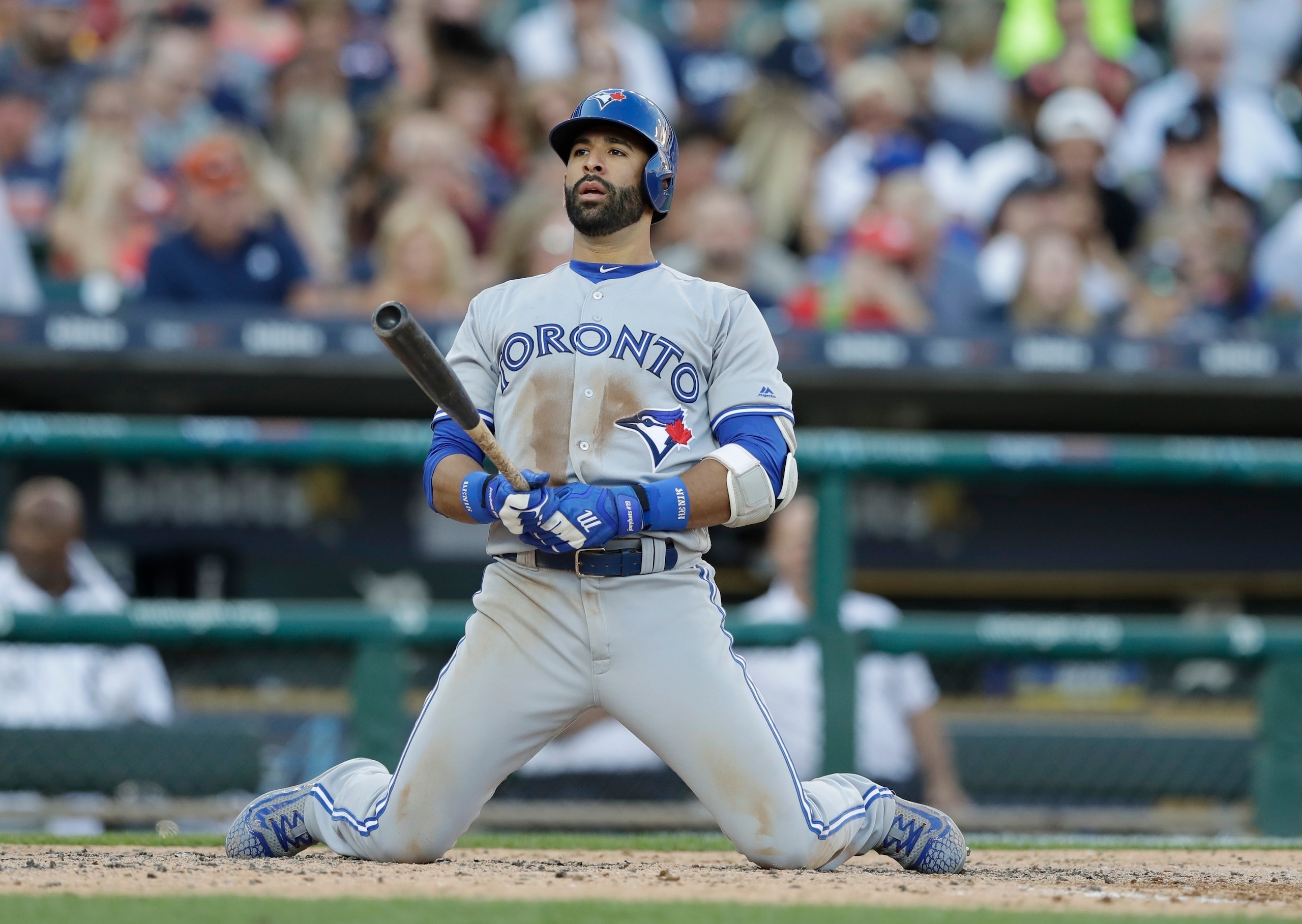
Pre-Breakout (2004-09): .238/.329/.400, 9.8 HR, 35.2 RBI
Breakout Year (2010): .260/.378/.617, 54 HR, 124 RBI
Post-Breakout (2011-18): .249/.373/.489, 28.9 HR, 80.0 RBI
Six seasons into his career, Jose Bautista was barely even a replacement-level player.
Per FanGraphs, Joey Bats had a career WAR of 0.4 prior to his breakout campaign. He received a ton of playing time from 2006-09, but that was primarily because of his positional flexibility (3B or OF, mostly) and the fact that his teams (Pittsburgh and Toronto) were in no rush for a quick-fix solution while wallowing nowhere near the playoff conversation.
But in 2010, he suddenly became a slugging phenom.
By the end of May, he had already matched his previous career high of 16 home runs. He would go on to club 11 more in July, 12 in August and another 11 in September en route to an MLB-best 54. Not only did he lead the majors, but no one else came close. Albert Pujols (42) was the only other player to reach 40 that year. He finished fourth in the AL MVP vote.
While 54 was Bautista's peak, it was the first of eight consecutive seasons with more than 20 home runs and the first of his six straight All-Star Games. He also led the majors with 43 home runs the following season, despite 24 intentional walks.

.jpg?w=2560)
.jpg?w=2560 "Cam Ward Says He's Not A Loser")
.jpg?w=2560 "Chargers Fall to 0-5 🤢")
.jpg?w=2560 "Viral Dan Campbell Presser 💙")