
The Worst NFL Free-Agency Signings at Quarterback Since 2000
Finding a franchise quarterback is exceptionally difficult. While it's the most important position in any of the major sports, the supply of excellent quarterbacks does not meet the demand.
As a result, NFL teams are constantly at risk of making a terrible and expensive mistake in free agency.
Signal-callers are the easiest to overpay—and many of the NFL's worst quarterback decisions seemed foolish at the time and remained that way. Whiffing on a one-time star is one thing, but signing a mediocre player to a massive deal looks dreadful.
This inglorious list is organized chronologically based on the year a player signed. We limited the option to quarterbacks who joined a different team through free agency.
Elvis Grbac, Baltimore Ravens (2001)
1 of 10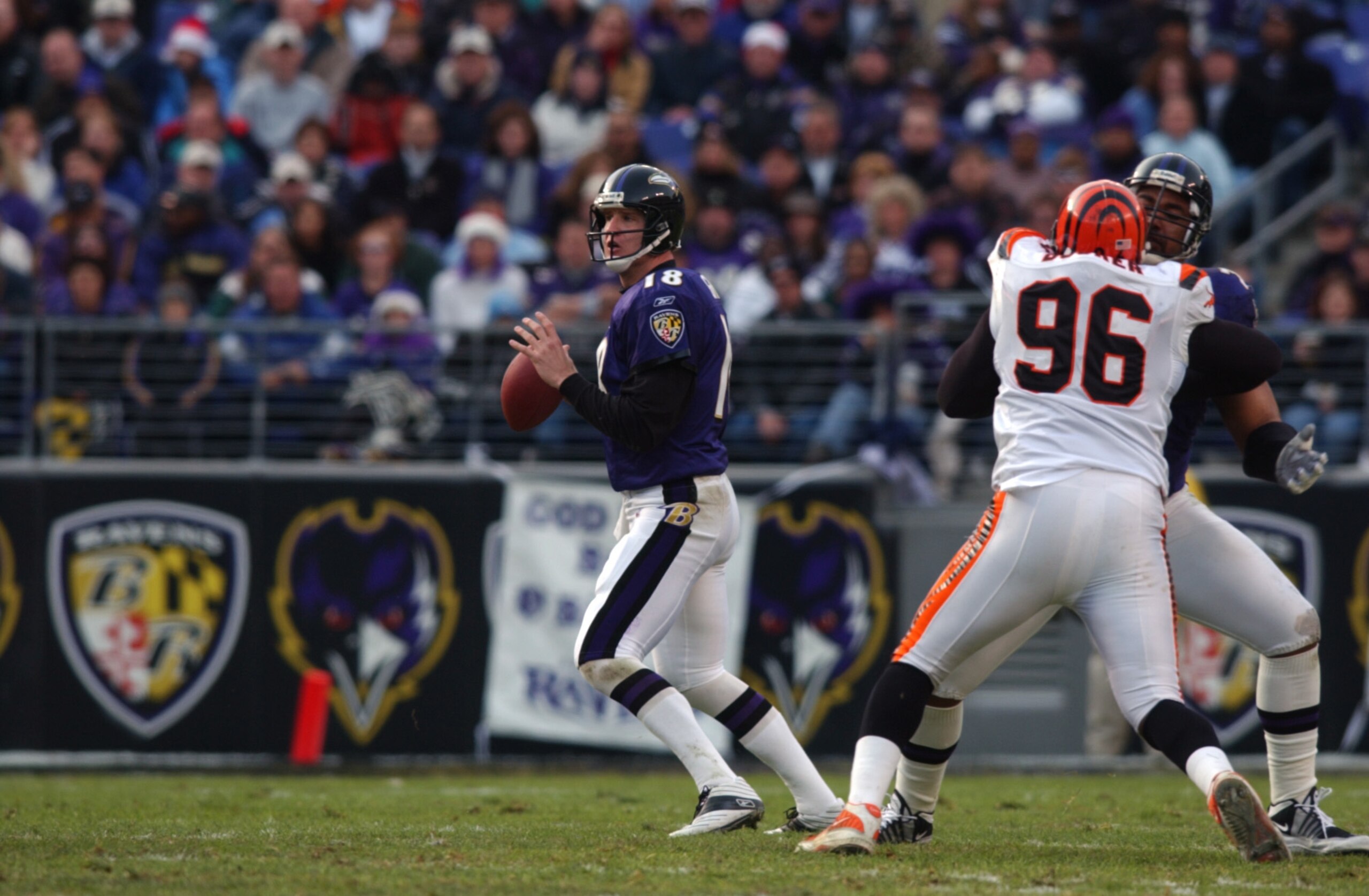
After winning the Super Bowl in 2000 because of a legendary defense, the Baltimore Ravens tried to sustain the run by improving the offense. While a logical idea, they didn't execute it.
Baltimore signed Elvis Grbac to a five-year contract for $30 million, and he barely made it through 2001.
Grbac totaled 16 touchdowns and 23 turnovers during the regular season. In the divisional-round loss to the rival Pittsburgh Steelers, he went 18-of-37 for just 153 yards and threw three interceptions. The Ravens released Grbac in the offseason, and he never played in the NFL again.
Kerry Collins, Oakland Raiders (2004)
2 of 10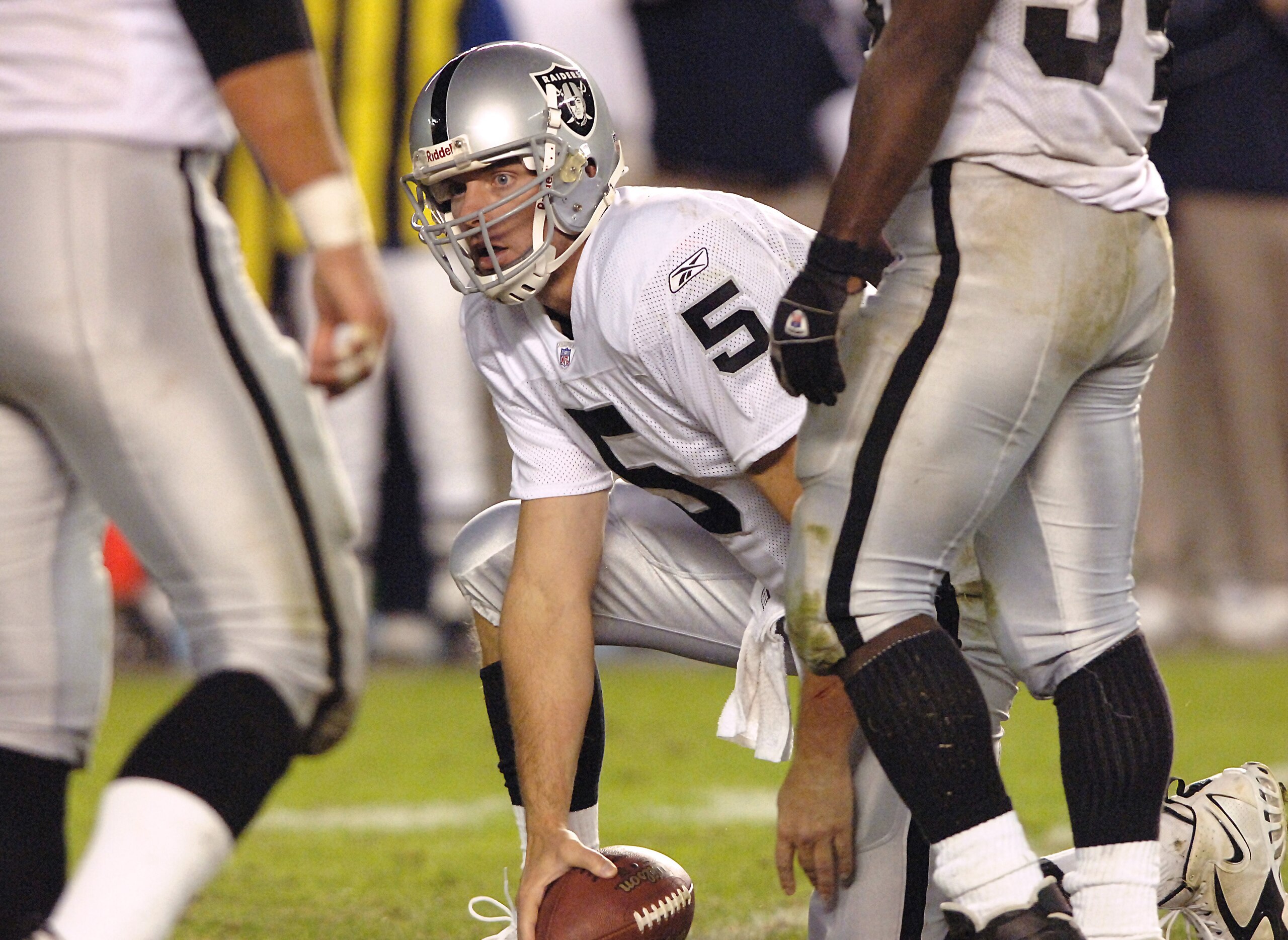
Rich Gannon led the Oakland Raiders to three straight AFC West titles and a Super Bowl appearance, but his neck injury in 2004 marked the beginning of a miserable stretch for the franchise.
When the New York Giants signed Kurt Warner and traded for Eli Manning before the 2004 season, they released Kerry Collins. He caught on with the Raiders, signing a three-year contract worth $16.8 million and taking over for Gannon after his injury.
Collins spent two seasons in the starting role, but he posted a 7-21 record with 41 touchdowns and 32 interceptions. Oakland released him before the 2006 season after it went 5-11 and 4-12.
Jeff Garcia, Cleveland Browns (2004)
3 of 10
Although he landed on three Pro Bowl teams in five seasons with the San Francisco 49ers, Jeff Garcia began trending the wrong direction in 2003, as his passing numbers dipped across the board. The 49ers released him after a 7-9 campaign.
It didn't stop the Cleveland Browns from Browns-ing.
The team signed Garcia to a four-year, $25 million deal and immediately named him the starter. He mustered a 3-7 record with 10 touchdowns and nine interceptions. Head coach Butch Davis resigned amid a disastrous season, and the 4-12 Browns released Garcia shortly after it.
.png?w=2560)
Aaron Brooks, Oakland Raiders (2006)
4 of 10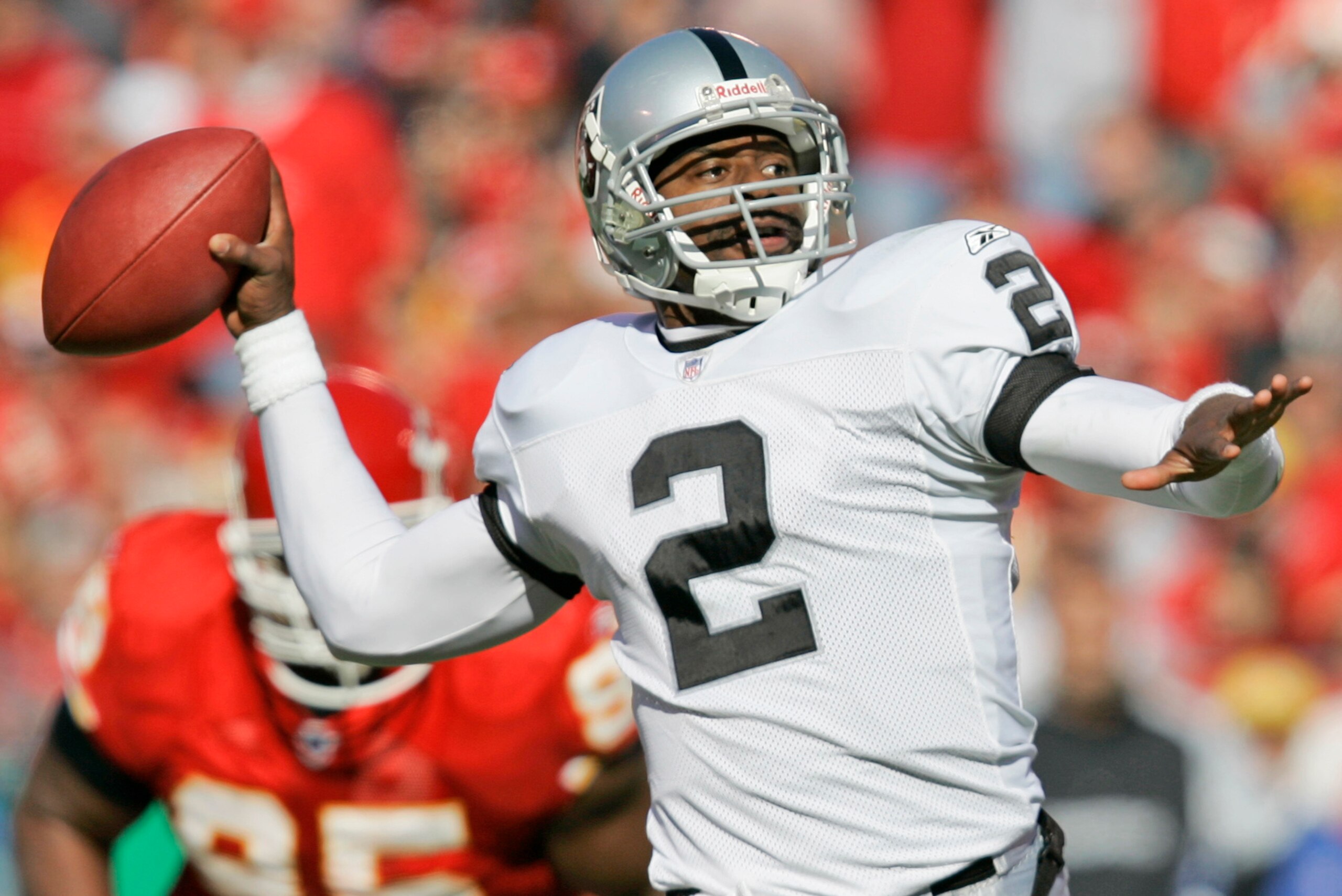
Aaron Brooks earned the full-time job in 2001, and the New Orleans Saints posted a 32-32 record over the next four seasons. After he threw more interceptions (17) than touchdowns (13) in 2005, however, the Saints replaced Brooks with Drew Brees.
You could say that decision paid off. This next one, well, less so.
Oakland signed Brooks to a two-year deal worth roughly $9 million to be the replacement for Collins. Brooks, however, went 0-8 with three touchdowns, eight interceptions and five fumbles. Released after the season, Brooks would soon retire from the NFL.
At least the frustrating year allowed the Raiders to hold the No. 1 overall pick in the 2007 NFL draft. They selected LSU quarterback JaMarcus Russell and—oh, boy.
Matt Flynn, Seattle Seahawks (2012)
5 of 10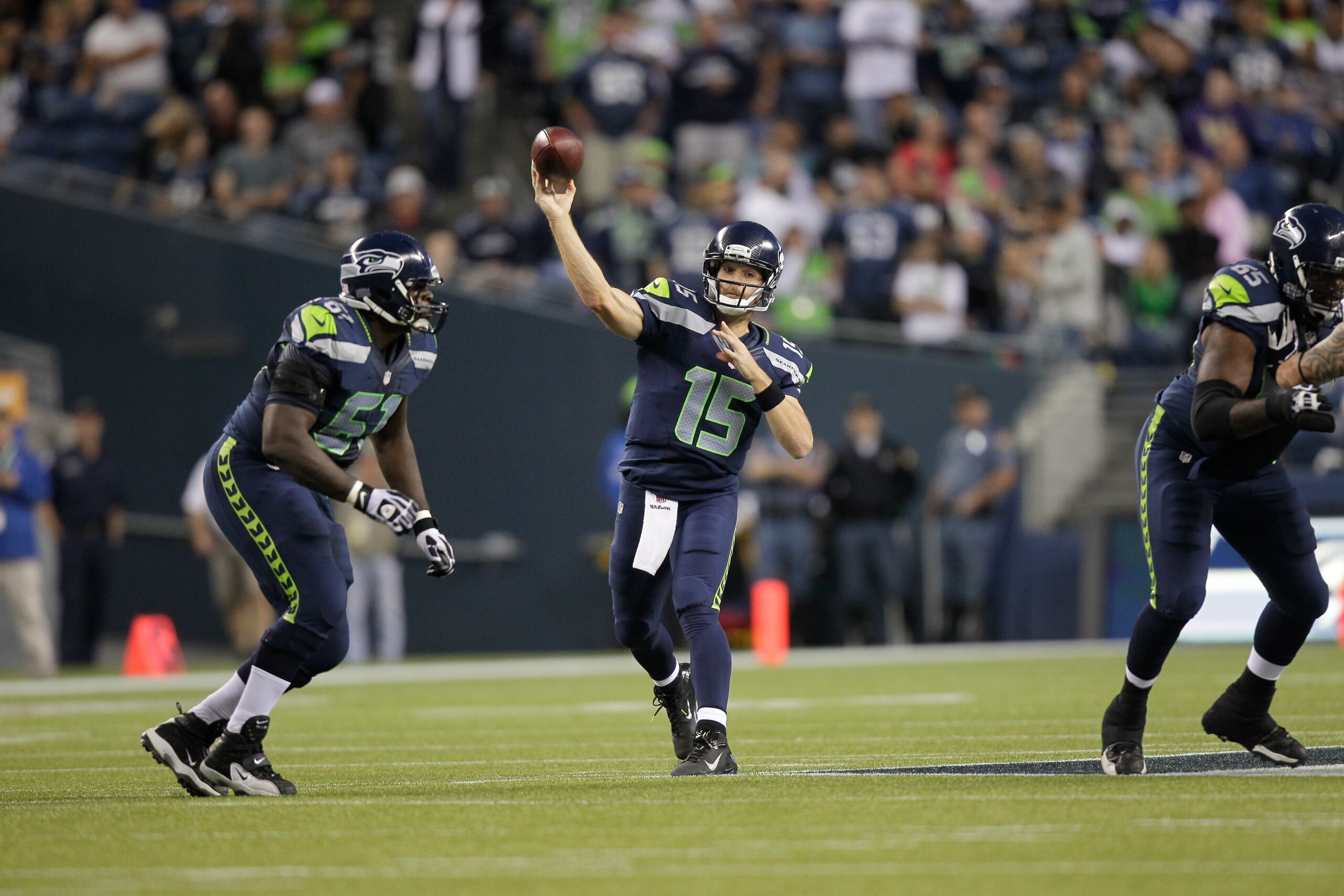
Matt Flynn turned approximately three hours of work into millions of dollars. Pretty good deal, if you can manage it.
While replacing a resting Aaron Rodgers in Week 17 of the 2011 season, Flynn torched the Detroit Lions for 480 yards and six touchdowns. Before that outburst, he had managed 535 yards with three scores and four interceptions on 88 career attempts.
So, when the Seattle Seahawks tossed $10 million guaranteed in his face as part of a three-year, $26 million contract, the Green Bay Packers waved goodbye to their backup. In that same offseason, Seattle used a third-round pick on Russell Wilson—who immediately became the starter.
Flynn threw exactly nine passes in his illustrious Seahawks career.
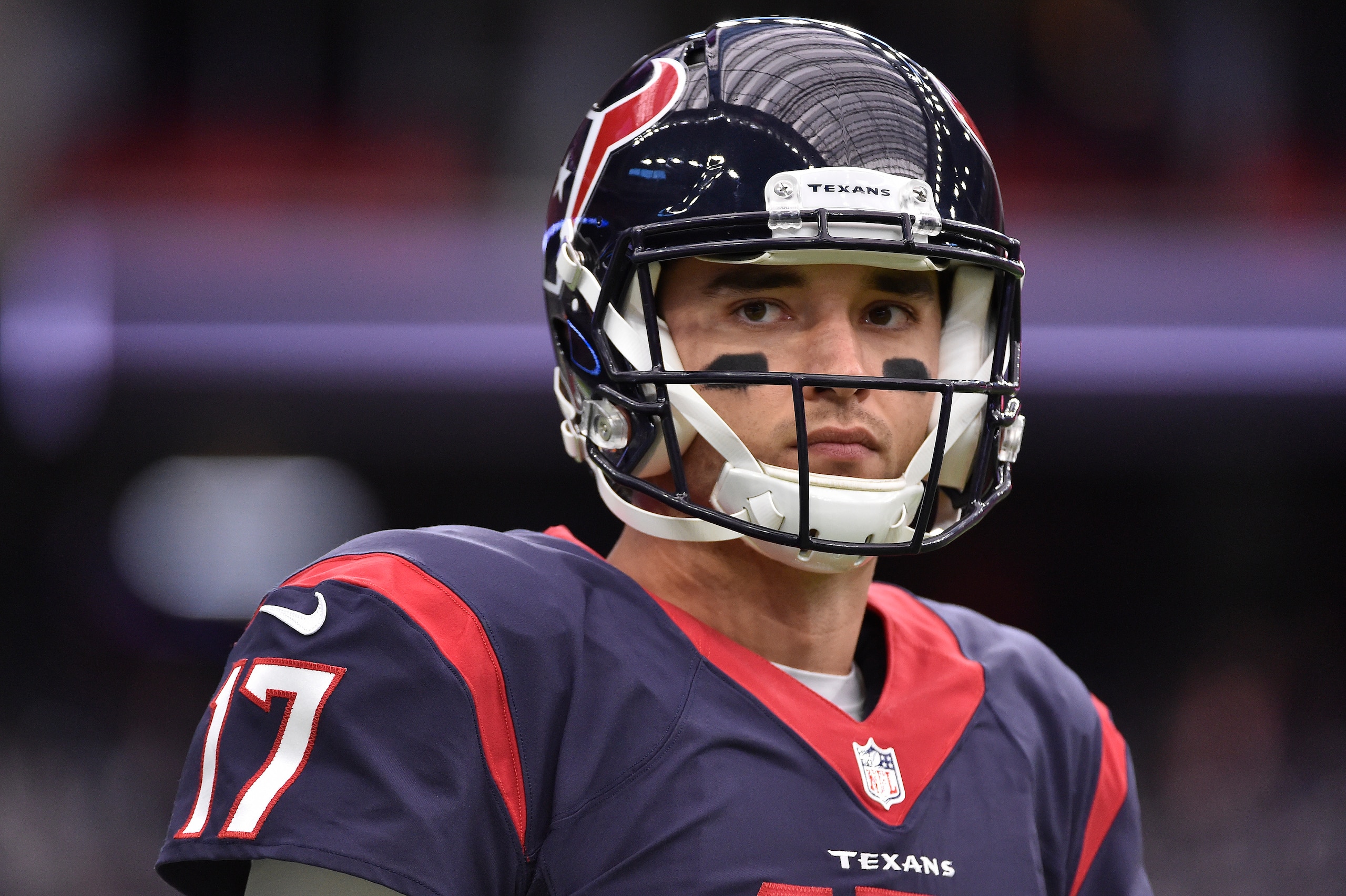
Brock Osweiler, Houston Texans (2016)
6 of 10
A second-round pick of the Denver Broncos in 2012, Brock Osweiler spent four years as Peyton Manning's backup. In that final season, Osweiler went 5-2 as the replacement for an injured Manning to help Denver stay on its Super Bowl-winning course.
That performance—decent, at the absolute best—attracted a four-year, $72 million contract from the Houston Texans. Osweiler signed for a guaranteed $37 million.
It didn't go well.
Houston won a bad AFC South in 2016 despite having a minus-49 point differential and suffering Osweiler's 16 interceptions (against 15 touchdowns). The Texans quickly moved on, attaching a second-round pick to dump his salary in a March 2017 trade with the Cleveland Browns.
Mike Glennon, Chicago Bears (2017)
7 of 10
It will never cease to be amazing that someone—paid handsomely to make these judgments, mind you—decided Mike Glennon deserved a three-year contract with $18.5 million guaranteed.
Glennon started 13 games as a rookie with the Tampa Bay Buccaneers in 2013. During the next three seasons, he made a grand total of eight appearances.
For some reason, general manager Ryan Pace and the Chicago Bears handed him a $45 million deal anyway.
Glennon tossed five interceptions in four starts during the 2017 season, then Chicago turned to first-round draft pick Mitch Trubisky. The ensuing offseason, the Bears cut Glennon.
Sam Bradford, Arizona Cardinals (2018)
8 of 10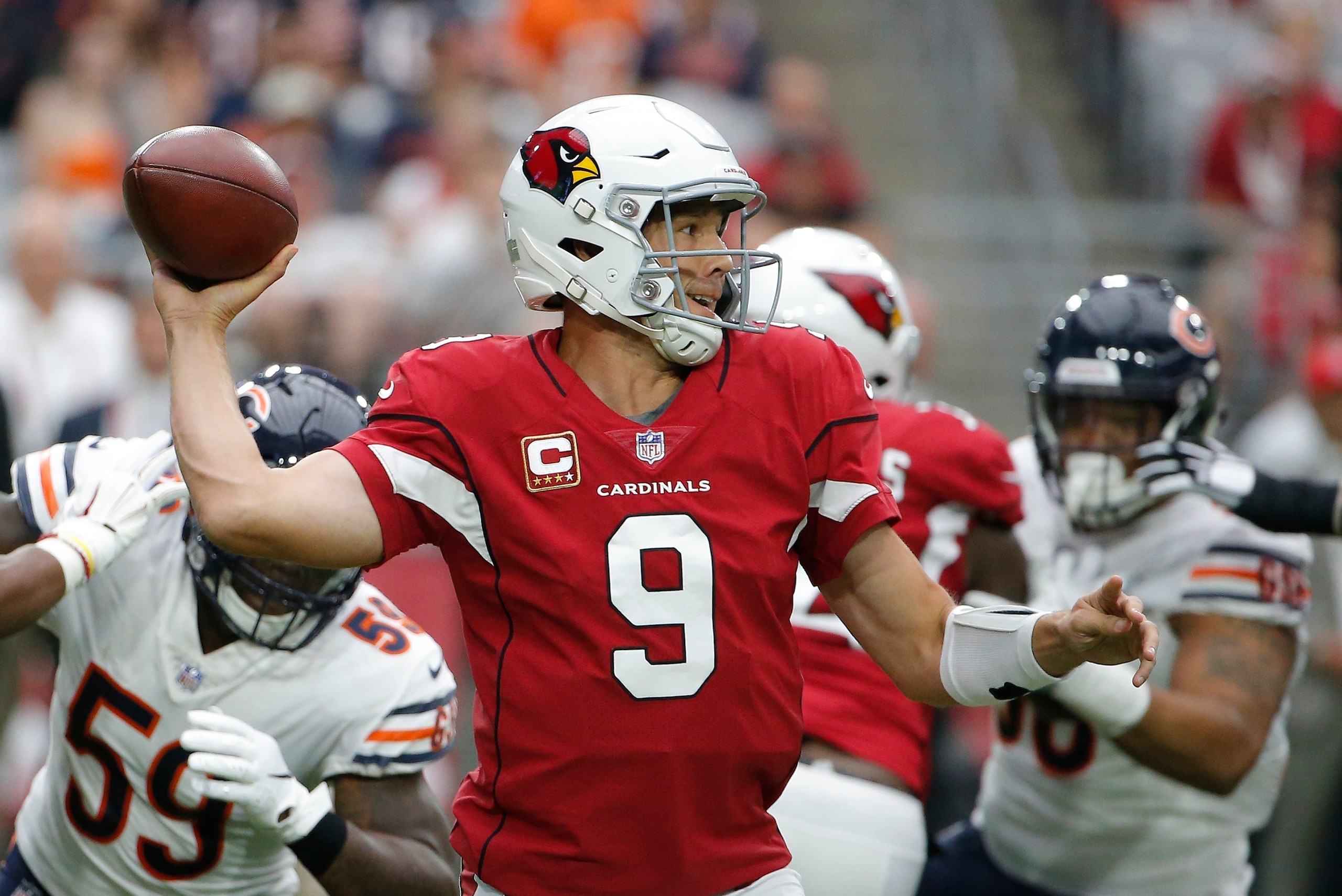
Sam Bradford is the master—the absolute, undisputed master—of signing big-money contracts. His massive six-year, $78 million rookie deal helped to usher in today's rookie wage scale.
For what production, exactly?
Sure, Bradford set an NFL record with a 71.6 completion percentage in 2016. The Minnesota Vikings also dropped from 11-5 and an NFC North title to 8-8 that season. Bradford then missed 14 games in 2017 because of knee problems, his fourth major injury.
Yet in walked the Arizona Cardinals, offering $20 million for someone who would finish 0-3 and be released in November.
Case Keenum, Denver Broncos (2018)
9 of 10
Case Keenum did an admirable job of replacing Bradford in 2017, tossing 22 touchdowns and helping the Vikings reach the NFC Championship Game. He's remembered fondly for throwing the "Minneapolis Miracle" pass to Stefon Diggs against the Saints.
This is a perfect example of the high-dollar, high-risk dilemma that quarterback-needy teams face.
Keenum had never suggested he was a franchise signal-caller, and a sensational Minnesota defense created a huge margin for error. But the Broncos had a void to fill, so they extended $25 million guaranteed in March 2018 to see if he could repeat the success.
Nope.
After a 6-10 season, Denver shipped him to Washington for a sixth-round pick and brought in Joe Flacco from the Ravens.
Nick Foles, Jacksonville Jaguars (2019)
10 of 10
As he signed an $88 million deal to join the Jacksonville Jaguars in March 2019, it was possible to both appreciate Nick Foles' contributions to the Philadelphia Eagles and know this contract was a terrible idea.
In 2017 and 2018, Foles replaced Carson Wentz after season-ending injuries. He propelled the Eagles to a ring in 2017, earning Super Bowl LII MVP. And the following year, Philadelphia wouldn't have made a late run into the postseason without Foles.
Was that worth $50 million guaranteed, though?
Foles made four appearances in 2019, leaving the opener with a shoulder injury and getting benched in favor of Gardner Minshew II after returning midseason. The Jags are already reassessing his future in Jacksonville.
.jpg?w=2560 "Bills Rams Football")

.jpg?w=2560 "Grading WWE Raw 🔠")
.jpg?w=2560 "Monday Night Raw Blog 🔴")