

Post to Post: Detroit Red Wings' Playoff Streak Will End Without Pavel Datsyuk
It isn’t news that the Detroit Red Wings are a struggling hockey club.
The 24th-ranked team in the NHL may be even worse than the standings indicate. Since opening the year 6-2-0, the Red Wings have lost nearly twice as many games as they’ve won, and even that undersells matters.
Detroit is 3-14-13 through regulation over its last 30 contests, and while the good news is that the team is keeping scores close, the bad news is that if it weren’t for three-on-three overtime/shootout, things would be even bleaker.
TOP NEWS

Grades For Every Team's Prospect Pool 🔠
Re-Ranking Top Free Agents 🛒

Coach Replacements for Tocchet
What might be a little more newsworthy is the fact that, despite the team’s streak of 25 straight playoff appearances, the Red Wings have actually been bad for a while now. The key difference is that Detroit used to be a deteriorating team that still had Pavel Datsyuk. Now it doesn’t.
| 2013-14 | 8.4 | 3.2 | 0.27 | -0.43 |
| 2014-15 | 10.8 | 0.1 | 0.59 | -0.09 |
| 2015-16 | 10.6 | -1.7 | 0.24 | -0.27 |
| 2016-17 | --- | -2.7 | --- | -0.14 |
The chart above shows the team’s hourly five-on-five performance in two key metrics with and without Datsyuk on the ice. The first stat is Fenwick differential—the team’s total hourly average of five-on-five shots and missed shots minus the same against.
With Datsyuk, the Red Wings dominated the shot clock. Without him, they used to be pretty good, then passable and finally last year, they were pretty bad. This year, they’re a step worse, which isn’t a surprise given that Datsyuk generally tended to play the best opponents even while he was putting up superhuman numbers.
The second number is hourly goal differential. Detroit has been in the red for years without Datsyuk by this metric, and this season is no exception, falling almost exactly in line with the results of the last few seasons.
Datsyuk was also vital to the power play. Over the last three seasons, Detroit’s five-on-four power play averaged about 66 unblocked shots per hour, and that number always dipped when Datsyuk left the ice. This year, the Wings are averaging about 10 shots less per hour, a major reduction, and their goal rate is less than half what it was in 2014-15.
Hockey is a cyclical game, and the Red Wings have defied the downward pull of the salary cap and aging stars admirably. Datsyuk, though, was the last irreplaceable player on the roster. Without him, Detroit’s long postponed rebuild finally seems unavoidable.
Ty Rattie on Waivers
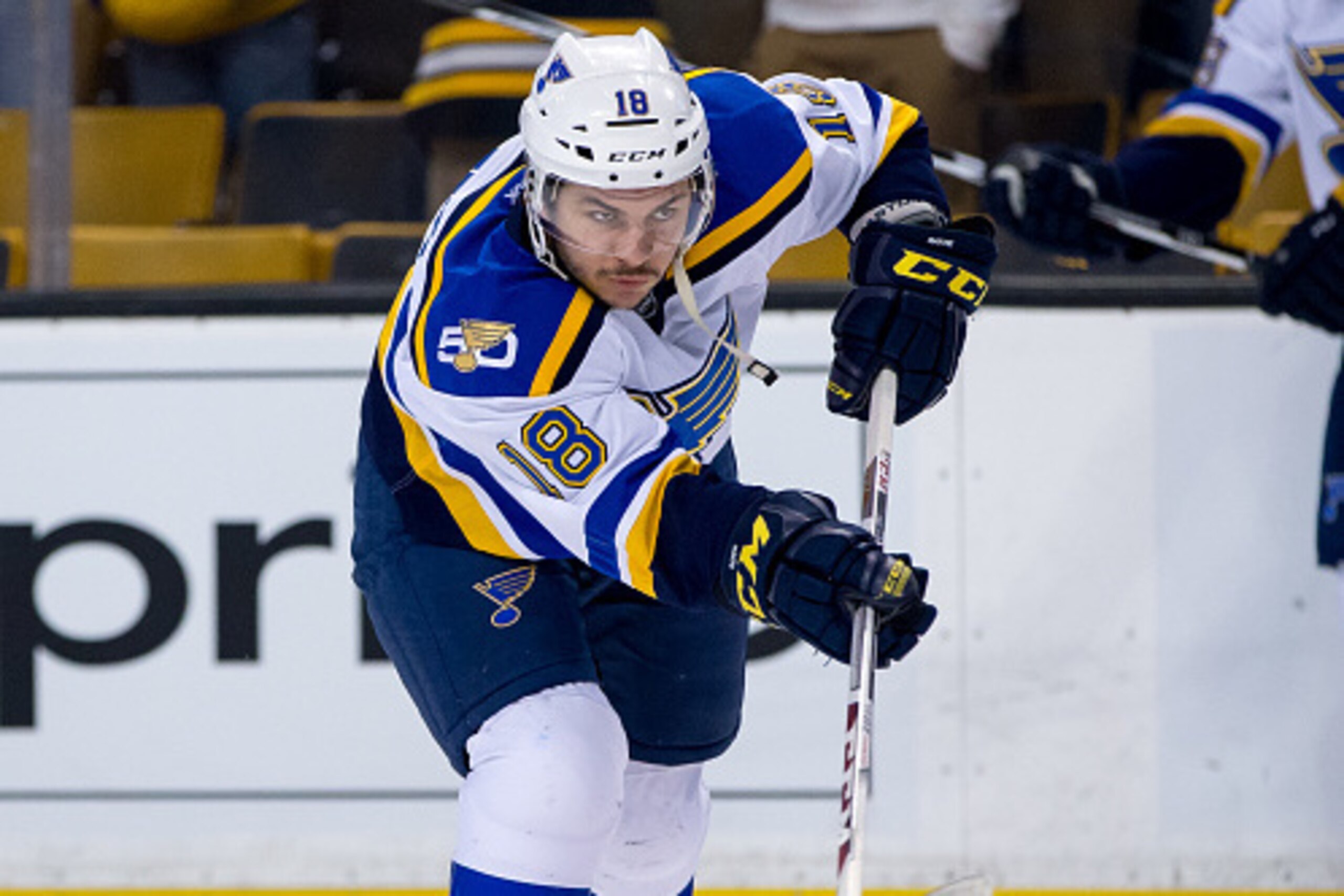
TVA’s Renaud Lavoie reported Tuesday that the St. Louis Blues waived 23-year-old winger Ty Rattie. Rattie was originally drafted 32nd overall back in 2011 on the strength of his offensive ability and hockey sense. He displayed these traits with a 121-point season in 2011-12 and a 110-point effort in 2012-13 at the WHL level.
Now he’s in that difficult stage where he has proved himself a strong AHL option but has yet to convert his play at that level to the major leagues.
Last year looked like a step forward. After another strong minor league season (62 games, 46 points), Rattie put up four goals and six points in 13 NHL games over three separate recalls. That was his last year of waiver exemption, leaving the Blues with a decision to make this season.
Until now, the team had resisted making it. Rattie has lived in the pressbox, dressing for just four NHL games and getting a three-game conditioning stint in the minors (with conditioning assignments not requiring waivers). Finally, St. Louis seems to have made up its mind to send him down and risk losing him for nothing on the waiver wire.
It is a gamble, but not much of one. Rattie was a big junior scorer, but guys who put up 40-odd points in the AHL are a dime a dozen for NHL teams. There’s no questioning that Rattie is smart or capable of shooting the puck, but he’s also undersized (6'0", 190 lbs) and has never been known as a speedster.
Add in mediocre NHL scoring totals and underwhelming shot metrics, and it’s easy to think he’ll be another big junior scorer who underperformed in the pro ranks because he didn’t have the speed or size necessary to succeed.
Sometimes those guys surprise, and a team out of the running right now wouldn’t be risking anything using a waiver claim to find out. But right now, there just isn’t much differentiating Rattie from a bunch of other tweeners around the league who got sent down through waivers at the end of training camp back in the fall.
The End of Point-Per-Game Players

It’s a good thing that the NHL is blessed with Sidney Crosby and Connor McDavid, because it’s getting harder to score all the time.
There are a lot of different ways to measure the decline in offence, but one that’s always interested me is the number of players averaging at least one point per game.
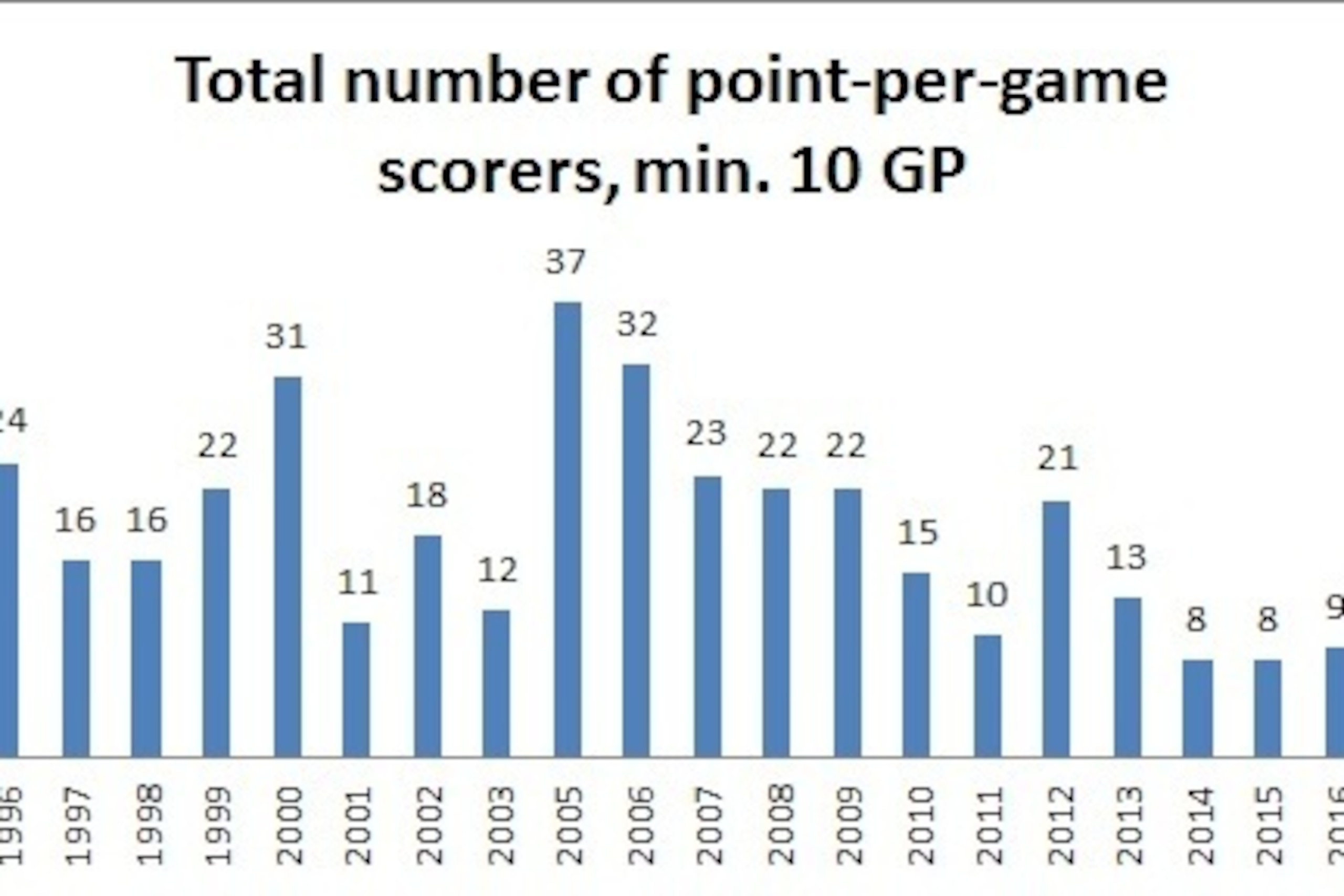
This year, nine players are scoring at that rate. If that holds, this will be the third consecutive year fewer than 10 players will hit the point-per-game threshold. That's never happened before, even at the height of what we now call the "dead puck era."
At some point, the league needs to open things up for its star players.
Statistical information courtesy of Hockey-Reference.com and Corsica.Hockey.
Jonathan Willis covers the NHL for Bleacher Report. Follow him on Twitter for more of his work.



.jpg?w=2560 "49ers LB Suspended for Headbutt")

.jpg?w=2560 "Buzz: MHJ Hired Agents for Trade")


.jpg?w=2560 "AD Trolls Bears WR on IG 😂")

.jpg?w=2560 "Report: Steelers WR to Miss 'Weeks'")