

Analysing Su-Ba-Ni: Will AC Milan's New Front 3 Prove Worthy of an Acronym?
Nowadays, footballing greatness is often validated by an acronym. Teams can be defined by as few as three letters signifying their most valuable players and the effective synergy between them.
AC Milan may possess an acronym of their own—Su-Ba-Ni—in the near future, thanks to the performances of Suso, Carlos Bacca and M'Baye Niang.
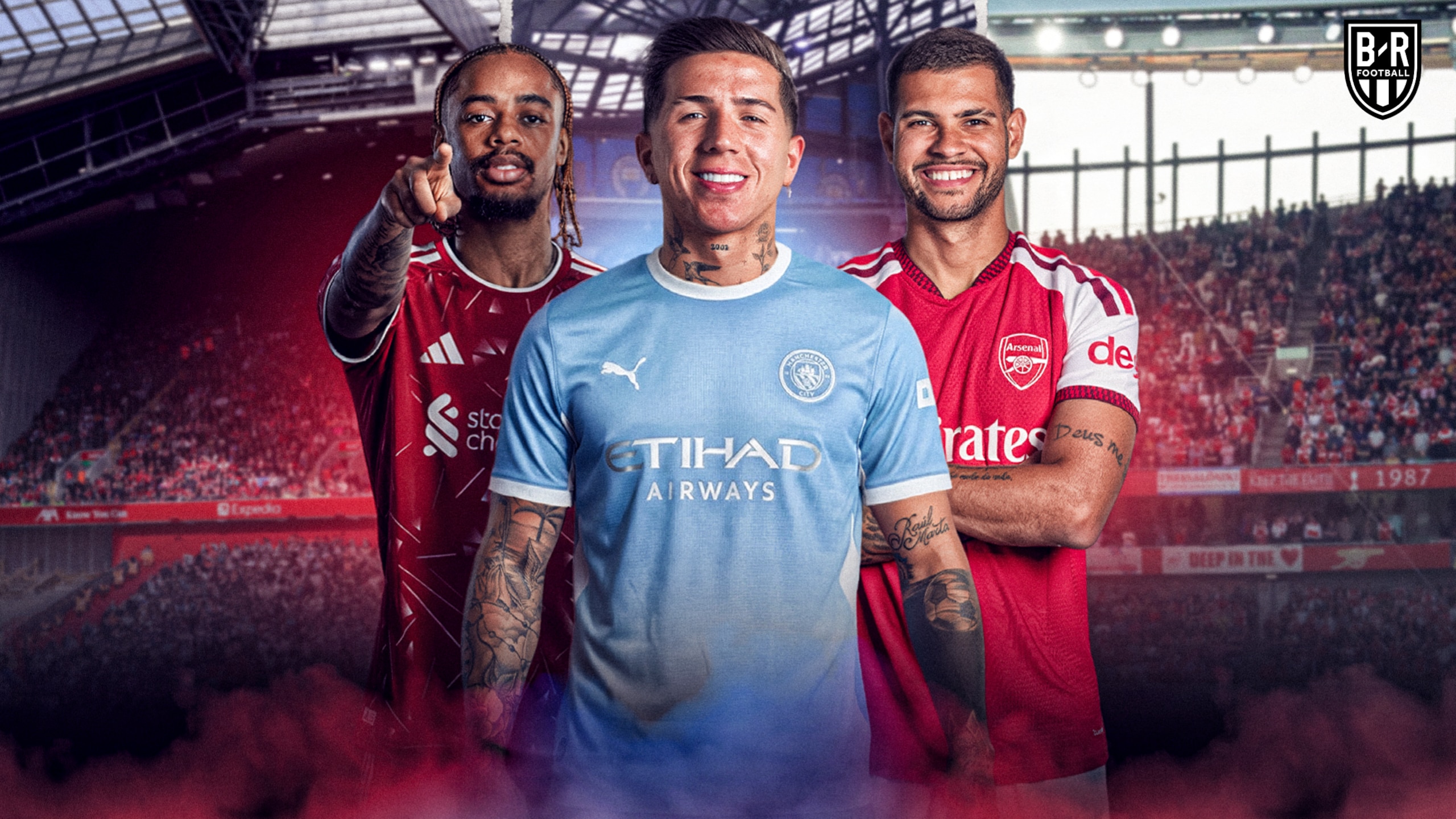
Some of football's finest teams are home to the catchiest of abbreviations. There is perhaps none more instantly recognisable, or as stunningly productive, as Barcelona's MSN, a three-lettered term that now strikes fear into Spanish defences on a frequent basis.

.jpg?w=2560)
MSN stands for the South American attacking triumvirate of Lionel Messi, Luis Suarez and Neymar. The former is, in the eyes of most, the world's best player, while the latter two are national icons and global superstars in their own right. Together, these individuals accounted for an astounding 131 goals in all competitions last season.

Barcelona's rivals, Real Madrid, have an attacking acronym of their own: the BBC, which represents the combination of Gareth Bale, Karim Benzema and Cristiano Ronaldo. The trio are perhaps less in sync than MSN, but their individual skill, pace and power has worked well in tandem over the years. Indeed, on 18 September, they reached 300 combined goals for Real Madrid, per the club's official website.
The BBC acronym doesn't belong exclusively to the Spanish side, however, as it has also been bestowed upon the Juventus back line of Andrea Barzagli, Leonardo Bonucci and Giorgio Chiellini.
The Italian champions' three-man defence is renowned for being one of the stingiest on the continent. This was confirmed last season when Massimiliano Allegri's side conceded just 20 goals in 38 league games. It was Serie A's best defensive record by far, an incredible 12 goals better than the second-best record, which belonged to Napoli.
Milan have had their greatness abbreviated in the past.
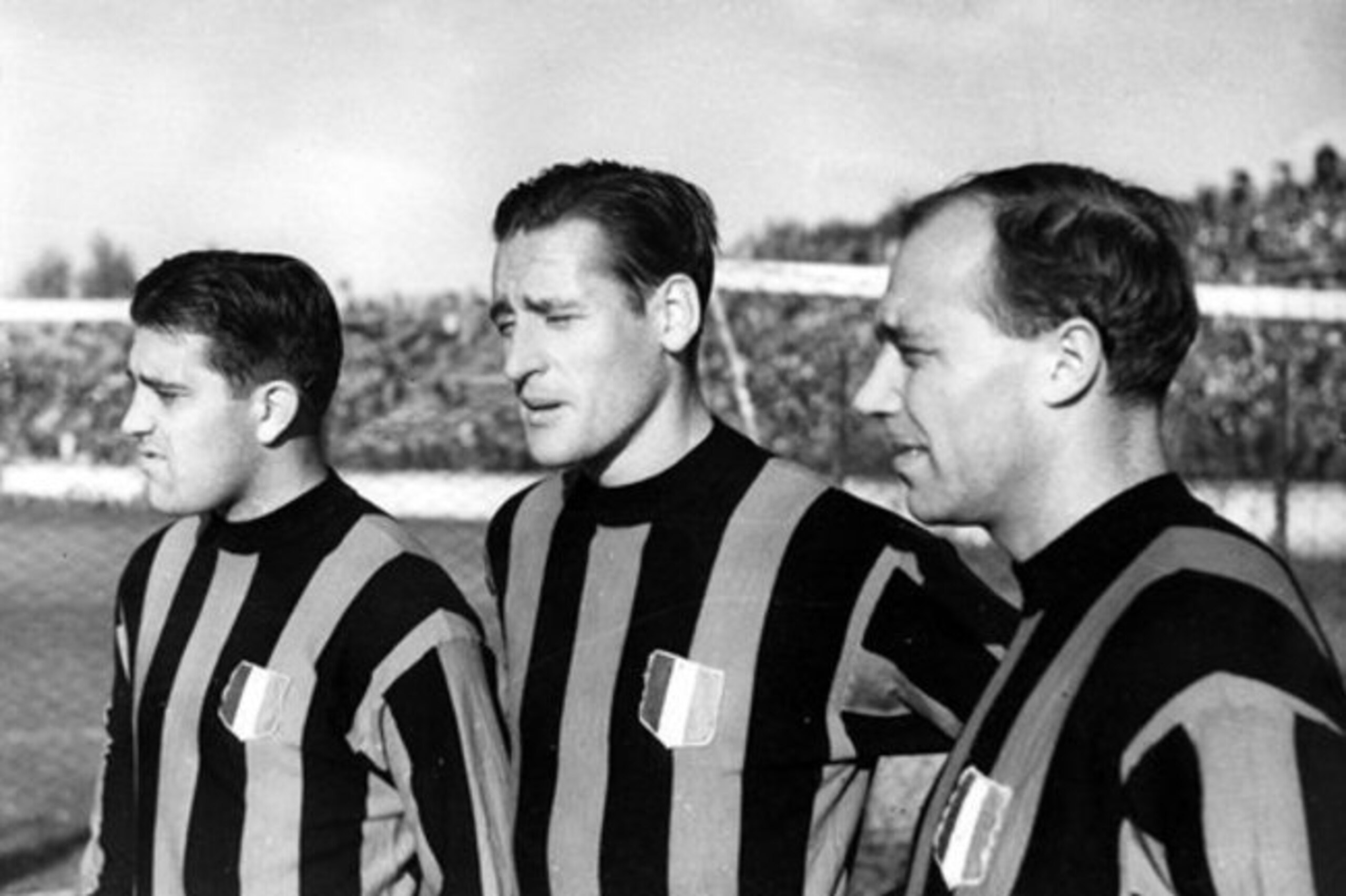
The Swedish national football team won gold at the 1948 Olympics in London with an attack that included clinical striker Gunnar Nordahl, as well as playmakers Gunnar Gren and Nils Liedholm. Within a year all three players were lining up for Milan, where their exploits in the final third became the stuff of legend.
Nordahl, having joined midway through the 1948-49 campaign, found top form upon the arrival of his compatriots. Alongside Gren and Liedholm, he hit 35 goals in one season in 1949-50, a record that stood up until last term when Napoli's Gonzalo Higuain scored 36.
The trio worked so well together that they came to be known as one, with the acronym Gre-No-Li, winning multiple titles along the way. Suso, Bacca and Niang are some way off such renown, having only struck up a working relationship this season, but early signs suggest they could become Milan's most effective attacking trident in years.
Since his appointment as the club's head coach in June, Vincenzo Montella has sought to imbue his side with the principle of controlling the game through use of the ball. Aiming to build possession with greater patience and intricacy, he has also brought in a 4-3-3 system, one in which the two wingers often move infield in order to combine with the midfielders and the striker.
On the back of Bacca's strong return of 18 goals in his debut Serie A season, Montella sensibly opted to use the Colombian as his sole striker. However, on the wings, he has made changes, bringing in Niang on the left and Suso on the right.
Niang was one of Milan's breakout stars in 2015-16, dovetailing well with Bacca in a strike partnership. His pace, strength, skill and work ethic all stood out, and his importance was only highlighted by the team's downturn in form during his absence through injury from late February to the end of the season; in this period, Milan won just two of 11 league games.

While the Frenchman's value to the team was being confirmed, Suso was following a similar career path in order to prove his worth to the Rossoneri. Like Niang, he spent six months on loan at Genoa, and like Niang, he thrived under Gian Piero Gasperini's auspices.
Upon his return to Milanello, Suso immediately showed his class, scoring twice in the opening friendly of Montella's reign against Bordeaux and establishing himself as the standout candidate for the right-wing berth. Meanwhile, due to a lack of alternatives following Jeremy Menez's sale, Niang operated on the left. And with some impressive displays of direct running, imagination and flair, he made the role his own.
While Milan experimented with a front three at times last term, the shape lacked fluidity. This has changed since Montella took charge. Now, while nominally a winger, Suso often takes up a position in the right channel, inside from the touchline.

In this space, he offers a penetrative forward pass to his central midfield team-mates, allowing Milan to break the opposition's lines. He also has greater access to the centre of the pitch, where his dribbling and exceptional close control can draw in defenders, freeing up space elsewhere in the final third for his attacking colleagues.
Speaking of his relationship with Bacca and Niang, the Spaniard told Milan TV (h/t Rossoneri Blog): "I feel good. Bacca and Niang and their movements allow me to pass them the ball. They are important players for my type of game because when I'm in possession they provide me different solutions."
As Suso alluded to in those comments, Niang's movements are just as important to his game as his dribbling is to Niang's.
The latter tends to take up a wider position on the left touchline with the aim of both stretching the opposition back line to create space for Suso and Bacca, as well as isolating himself against his marker, where his pace and skill give him an advantage in one-on-one situations.
With the speed, creativity and fluidity provided by the wide men, Milan's attack is one of much greater dynamism than before. And this, in turn, has served Bacca well.
While he is a precision finisher with unerring cool when facing down goalkeepers, the 29-year-old is not quite as subtle in building attacks or as effective when asked to drop deeper or rotate positions. He needs movement and passing to feed off, and he is receiving this as part of Montella's front three.
In an interview with La Gazzetta dello Sport (h/t Football Italia), Bacca made special mention of his personal pleasure at the new-look attack, stating: "I like the trident with Suso and Niang very much. I'm happy for Niang, we missed him when he was absent."

So the three seem very happy together, which is all fine and well, but what do the hard numbers tell us?
Well, so far, they tell us that they are as productive as they are contented. Of Milan's eight Serie A goals this season, Bacca has scored five, Niang two and Suso one. Furthermore, the trio have assisted one another entirely with the exception of two of these goals.
The synergy between the three has legs, too.
At 21 years of age, Niang has plenty of potential left to fulfil. The same could be said of Suso, who is just one year older. At 29, Bacca may be the old head of the trident, but his game isn't age-reliant; more than pace, his performance is driven by cunning, an instinctual nose for goal and a ruthless composure.
Given time together, greatness could beckon for Milan's new-fangled attacking lineup. Consequently, a new footballing acronym may be on the horizon. Indeed, we may be witnessing the dawn of the Su-Ba-Ni era.


.jpg?w=2560 "Viral Rams Coach Vid 🖕")

.jpg?w=2560 "Injury-stricken Seahawks signing veteran RB")
