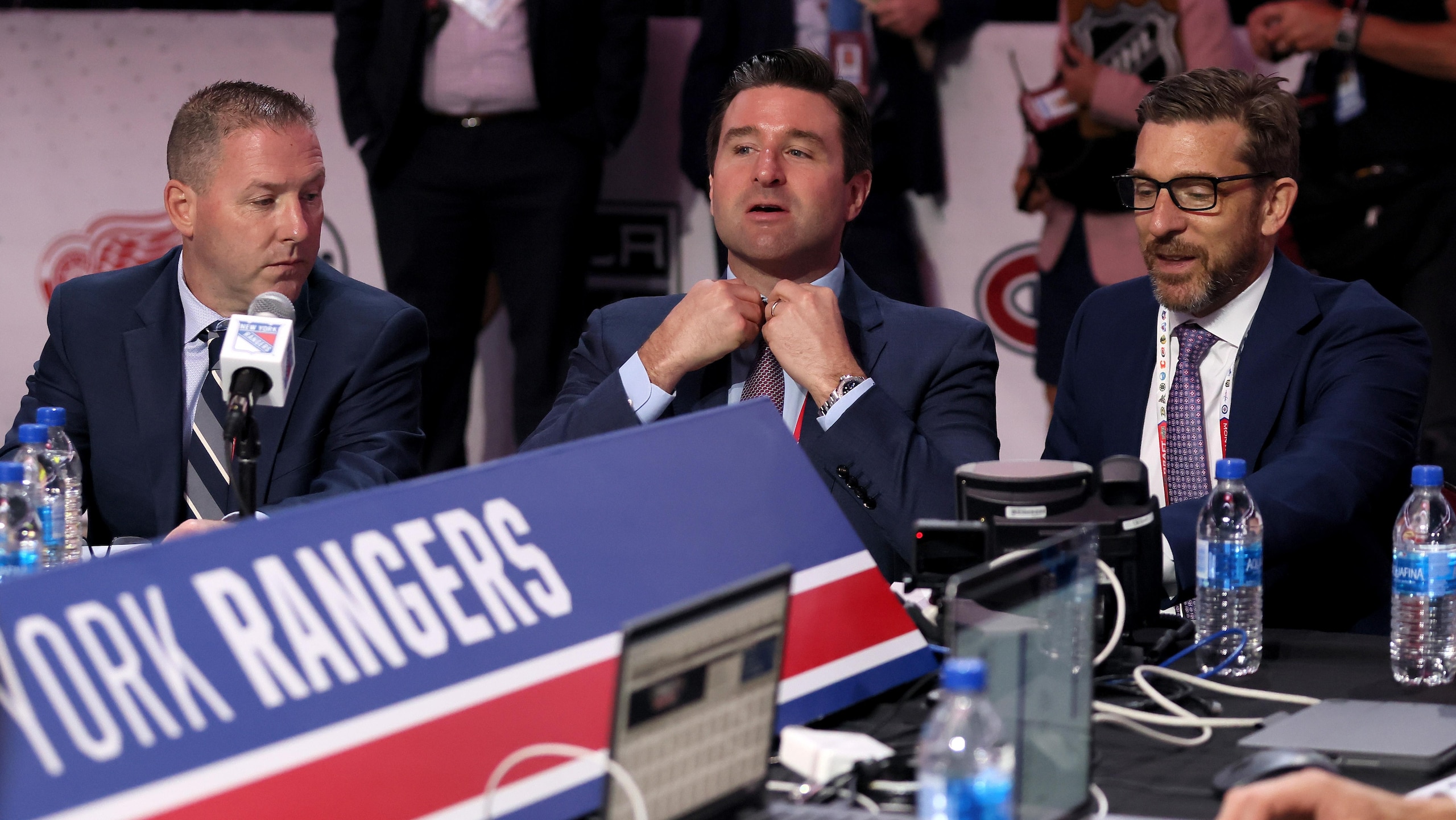

2026 NHL Mock Draft: The Best Options for the New York Rangers at Pick No. 5
The New York Rangers fell two slots as a consequence of the lottery, meaning they will draft fifth overall in the 2026 NHL Draft.
It's not quite what the organization and fans hoped for, but fifth overall still offers a massive opportunity to add a top young player to an organization that desperately needs a few.
Unfortunately, there's really no consensus in this draft after Gavin McKenna and Ivar Stenberg. One can also probably project that center Caleb Malhotra will be gone before the Rangers are on the clock. I count eight players who could plausibly be taken at fifth overall. That's a massive group that creates a lot of room for error.
Let's take a look at those eight potential selections and weigh the pros and cons of why the Rangers might eye each for the spot.
Updated 2026 NHL Mock Draft
1 of 9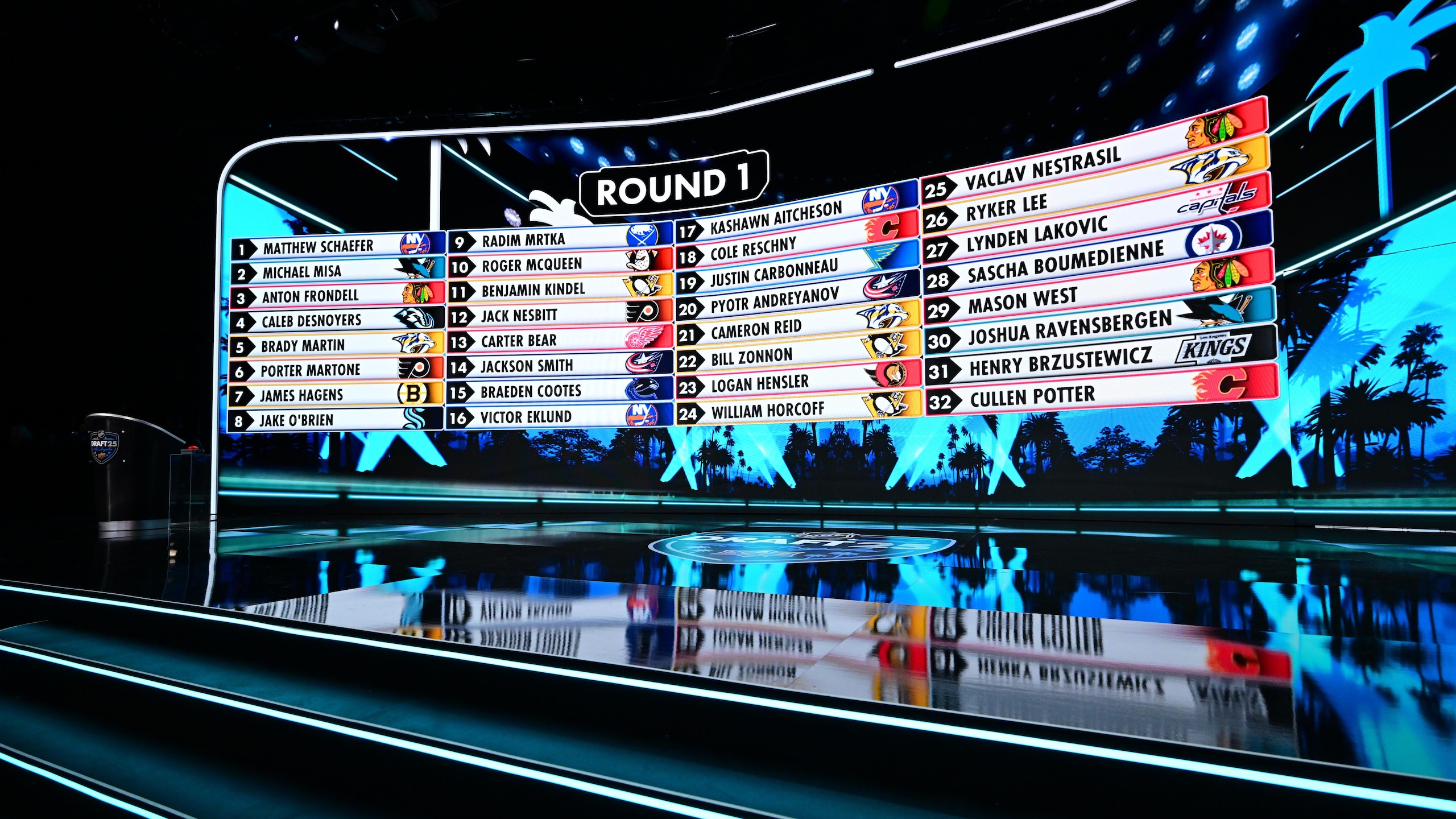
1. Toronto Maple Leafs: Gavin McKenna, LW, Penn State (NCAA)
2. San Jose Sharks: Chase Reid, D, Sault Ste Marie Greyhounds
3. Vancouver Canucks: Ivar Stenberg, LW/RW, Frolunda HC (SHL)
4. Chicago Blackhawks: Caleb Malhotra, C, Brantford Bulldogs (OHL)
5. New York Rangers: Carson Carels, D, Prince George Cougars (WHL)
6. Calgary Flames: Keaton Verhoeff, D, University of North Dakota (NCAA)
7. Seattle Kraken: Viggo Bjorck, C/RW, Djurgardens IF
8. Winnipeg Jets: Alberts Smits, D, Jukurit (Liiga)
9. Florida Panthers: Tynan Lawrence, C, Boston University (NCAA)
10. Nashville Predators: Daxon Rudolph, D, Prince Albert Raiders (WHL)
11. St. Louis Blues: Ethan Belchetz, LW, Windsor Spitfires (OHL)
12. New Jersey Devils: Oscar Hemming, F, Boston College (NCAA)
13. New York Islanders: Adam Novotny, LW/RW, Peterborough Petes (OHL)
14. Columbus Blue Jackets: Ryan Lin, D, Vancouver Giants (WHL)
15. St. Louis Blues (via DET): Oliver Suvanto, C, Tappara (Liiga)
16. Washington Capitals: Nikita Klepov, LW, Saginaw Spirit
17. Los Angeles Kings: Elton Hermansson, RW/LW, MoDo Hockey (Hockey Allsvenskan)
18. Washington Capitals (via ANA): Malte Gustafsson, D, HV71 (SHL)
19. Utah Mammoth: Ilia Morozov, F, Miami University (NCAA)
20. San Jose Sharks (via EDM): Egor Shilov, C, Victoriaville Tigres (QMJHL)
21. Philadelphia Flyers: Juho Piiparinen, D, Tappara (Liiga)
22. Pittsburgh Penguins: Xavier Villeneuve, D, Blainville-Boisbriand Armada (QMJHL)
23. Boston Bruins: JP Hurlbert, C, Kamloops Blazers (WHL)
24. Vancouver Canucks (via MIN): Marcus Nordmark, RW, Djurgardens IF U20 (U20 Nationell)
25. Montreal Canadiens: Wyatt Cullen, LW, USNTDP
26. Seattle Kraken (via TBL): Liam Ruck, RW, Medicine Hat Tigers (WHL)
27. New York Rangers (via DAL): Mathis Preston, RW, Vancouver Giants (WHL)
28. Calgary Flames (via VGK): Maddox Dagenais, C, Quebec Remparts (QMJHL)
29. Buffalo Sabres: Jack Hextall, C, Youngstown Phantoms (USHL)
30. Carolina Hurricanes: Jaxon Cover, LW, London Knights (OHL)
31. St. Louis Blues (via COL): Adam Valentini, LW, University of Michigan (NCAA)
32. Ottawa Senators: Ryan Roobroeck, C, Niagara IceDogs (OHL)
Keaton Verhoeff, D, University of North Dakota (NCAA)
2 of 9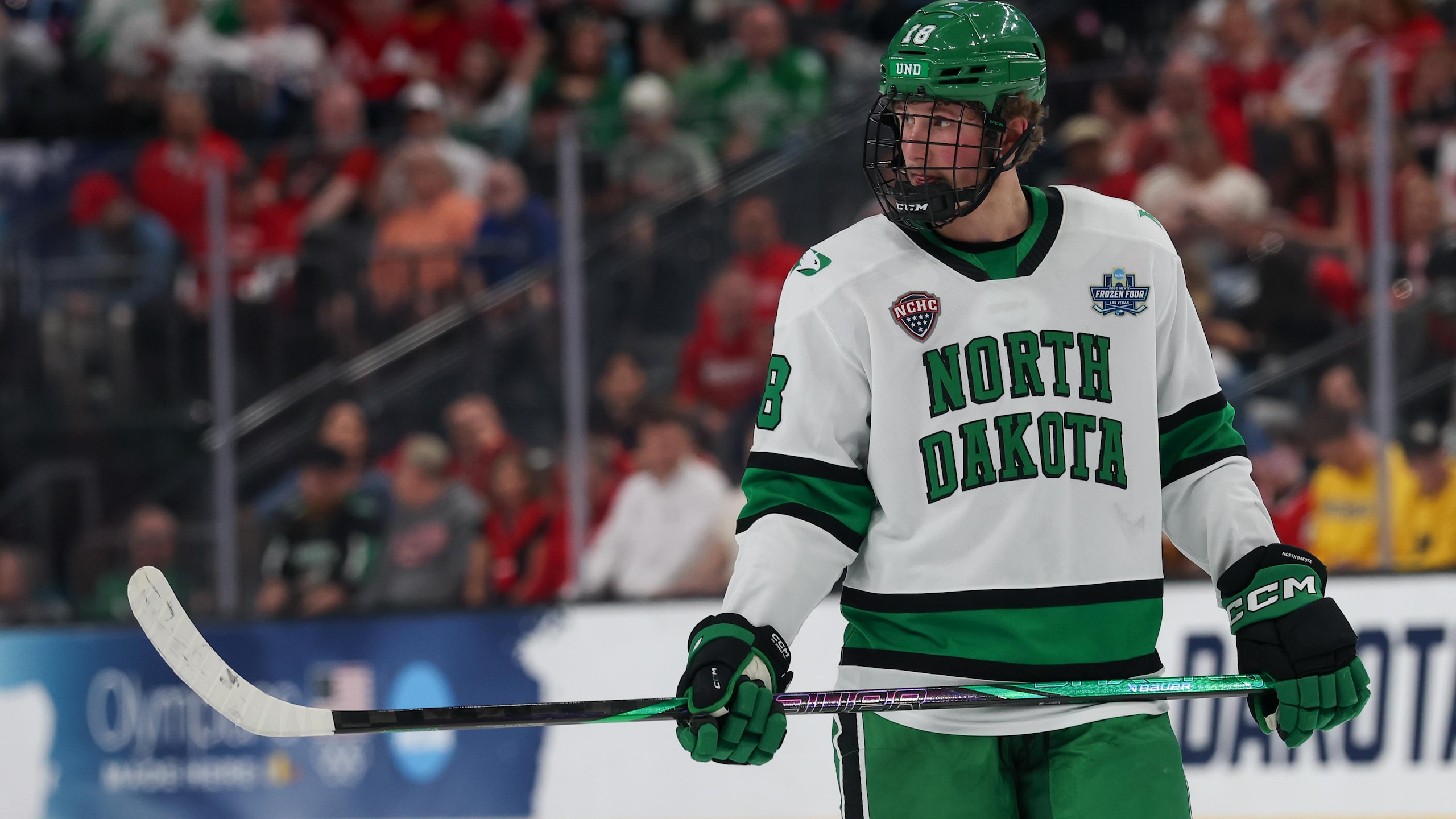
Why The Rangers Would Draft Him
Among available defensemen, Verhoeff is the best combination of size and two-way ability. He's already 6'4" and over 210 pounds. Commanding presence at the point, but also a willingness to push low in the zone offensively with a strong shot. Great use of his reach and strength defensively.
There's been an overcorrection to the misguided belief that he could challenge for first overall. Yes, he struggled in the second half of the NCAA season, but he generally showed well as a 17-year-old playing in a tough conference. His 21 goals as a 16-year-old in the WHL were the most at that age in 40 years and his college production was not too far off Owen Power and Noah Hanifin's precedent despite his being much younger than both.
Verhoeff has some work to do on his skating mechanics and other details of his game (footwork, decision-making with the puck in the D-zone), but evaluators familiar with his game believe he is extremely intelligent and professional in his demeanor and believe he will work it all out.
The other factor in his favor? He doesn't turn 18 until mid-June. His developmental runway should be longer than some of his draft rivals.
Why They Might Pass
It all comes down to skating. His stride is nice at full pace, but his pivots are weak, and the four-way mobility is clunky. These are solvable deficits, but is the Rangers the team to work him through that? Skating has been an Achilles' heel for this organization, stalling the development of a number of its prospects; Kaapo Kakko, Lias Andersson, and Vitaly Kravtsov are the most prominent examples.
Carson Carels, D, Prince George Cougars (WHL)
3 of 9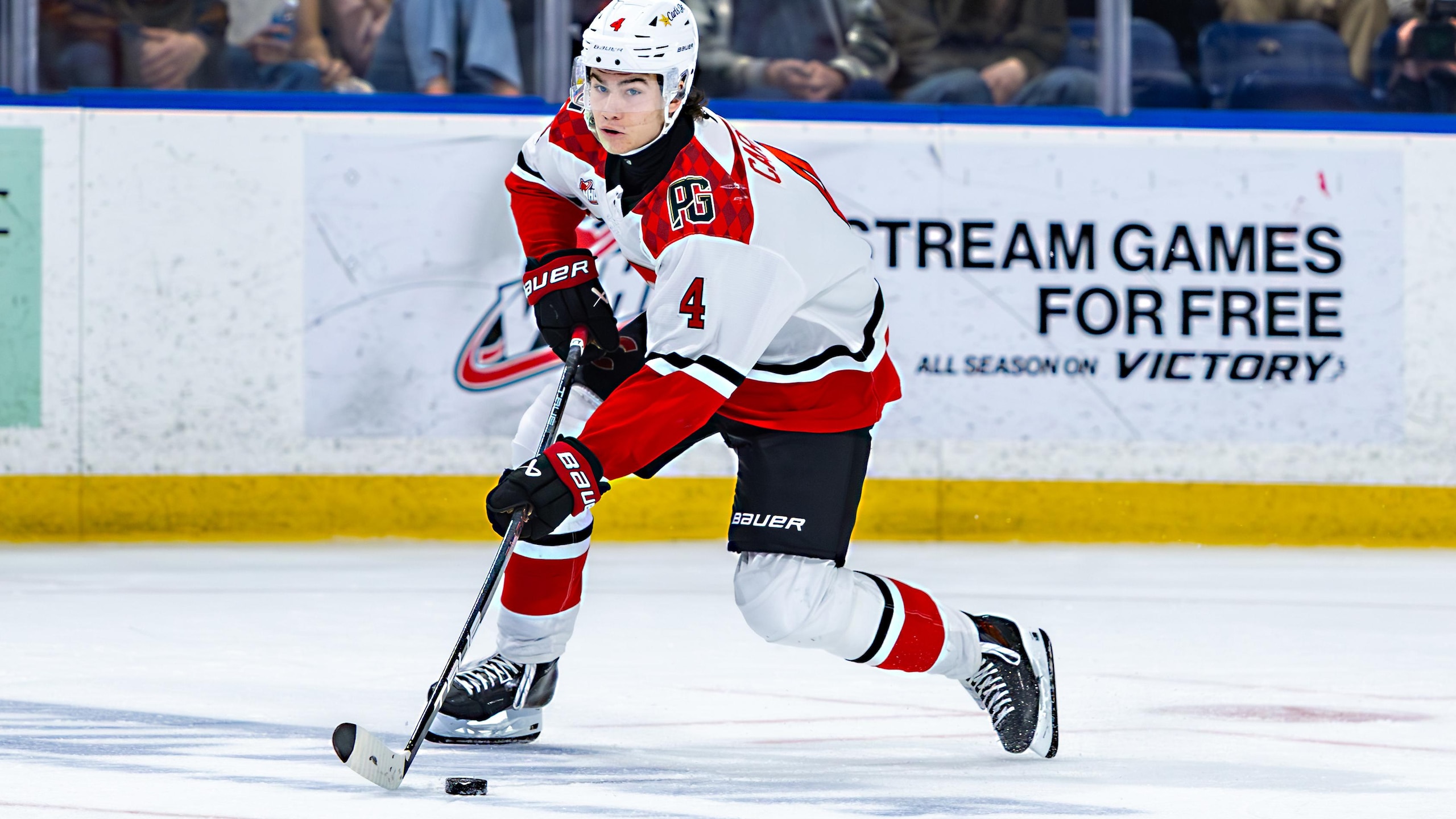
Why The Rangers Would Draft Him
Left defense is a major organizational need. Drew Fortescue and Artyom Gonchar are the only lefties in the prospect pool with palpable NHL upside and it's of the depth variety. You don't draft for need at fifth overall, but if it's a tie-breaker, Carels might have a leg up on some others.
The statistical profile is hard to ignore; 73 points in 58 WHL games. The 1.26 points-per-game is the best rate by a draft-eligible defenseman in the WHL since 2005-2006 by a wide margin.
At 6'2", his playing style is a nice blend of skill and spunk. He accelerates nicely and can beat his checks up ice. Above-average vision and a hard shot. Defensively, he is engaged with his stick but also loves to blow up puck carriers by loading in a low stance and then exploding upwards. And he'll happily block shots.
Aesthetically, there's a lot to like, and the numbers, taken at face value, suggest he is a potential No. 1 defenseman. He has a June birthday, so he still has plenty of room for growth.
Why They Might Pass
As good as Carels' numbers are, I'm not sure his abilities quite live up to what they suggest. Point production was inflated in the WHL this season — three of the five highest producing draft-eligible defensemen since 05-06 are from the 25-26 season — and the tape doesn't indicate a true architect of offense. Not yet, at least. His shot is great, but the passing and instincts grade only as above-average. You don't see a true PP QB at the NHL level. More of a second unit type on a shot-heavy unit.
Carels is also untamed defensively at times. He's very aggressive, whether that's pinching up the walls, pursuing a puck carrier to try and force a turnover, or lining up a hit. When he times it right, it's electric, but sometimes he creates more problems than he solves. Are these temporary immaturities in a 17-year-old's game, or will they hamper his ability to play against the NHL's best lines?


Chase Reid, D, Sault Ste Marie Greyhounds (OHL)
4 of 9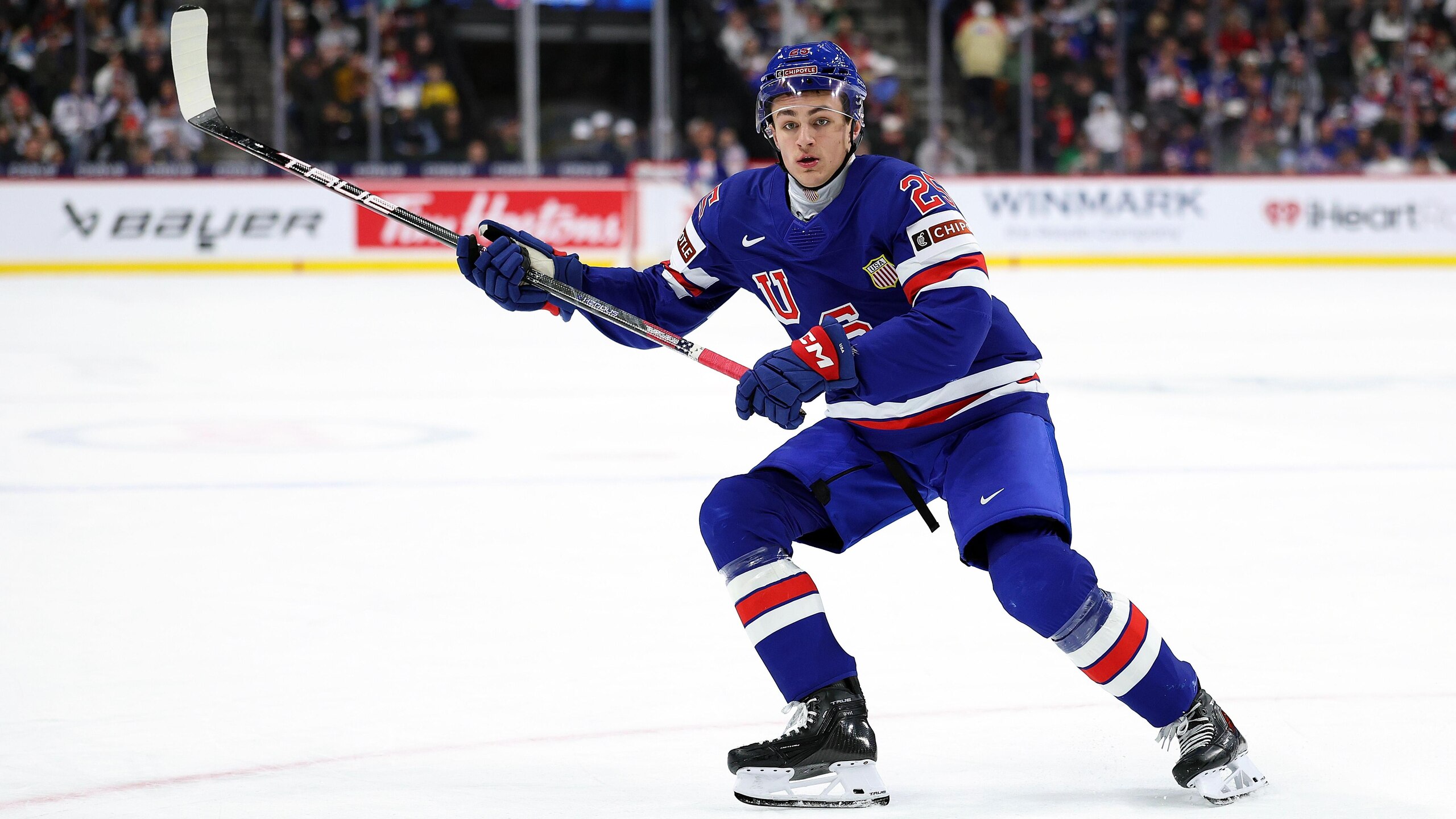
Why The Rangers Would Draft Him
A young defenseman who can skate and provide offense doesn't address every problem the Rangers have, but holding one would pave over a number of organizational deficits.
Reid is the most obvious candidate for this phenotype. He's not explosive in the way a K'Andre Miller is, short of only a select few like Cale Makar and Quinn Hughes. Watching him in the OHL is, at times, preposterous. The ease with which he navigates around the rink is a sight to behold. He navigates around players carrying the puck up the ice like they're traffic cones. He can also rip the puck. Reid had 18 goals and 30 assists in 46 games last season and he showed some pristine moments for the US at the World Junior Championship.
His defensive game has grown immensely in the last 12 months and he's gotten better at using his speed advantage along with a 6'2" frame to gap up and snuff out plays.
On pure upside, Reid is a top-three player in this draft class and I would entertain arguments that place him above Ivar Stenberg. In the "everything goes right" scenario, he's a top-ten NHL defenseman. Maybe higher.
Why They Might Pass
I have my share of questions regarding Reid. How much of his game is a visual spectacle versus a tangible product that will work at higher levels? Once you cease being mesmerized by his elite skating, his game can look hollow at times. He's awesome at maneuvering the puck into the zone, but once he's in it, he isn't really dictating play towards generating quality chances. Defensively, he can be way too passive.
In general, the Rangers may worry that his skating may be too good so as to hamper his own development. Right now, he can basically skate his way out of any problem. That won't work so easily at the NHL level, where players are more physically mature and tactics much more fine-tuned.
Another issue: He's a 2007 birthday, which puts him on the older side of the spectrum in this draft class. This isn't just about counting days on the abacus. It means he's had an extra year on the hockey calendar compared to other players in this draft class.
None of these slights will prevent him from playing in the NHL or even becoming a quality player. Other players in this draft class will mature physically and improve their skating. Can Reid add more dimensions to his game? That's the big question. He may very well do so, but I think the general population has gotten too confident in that outcome.
Alberts Smits, D, Jukurit (Liiga)
5 of 9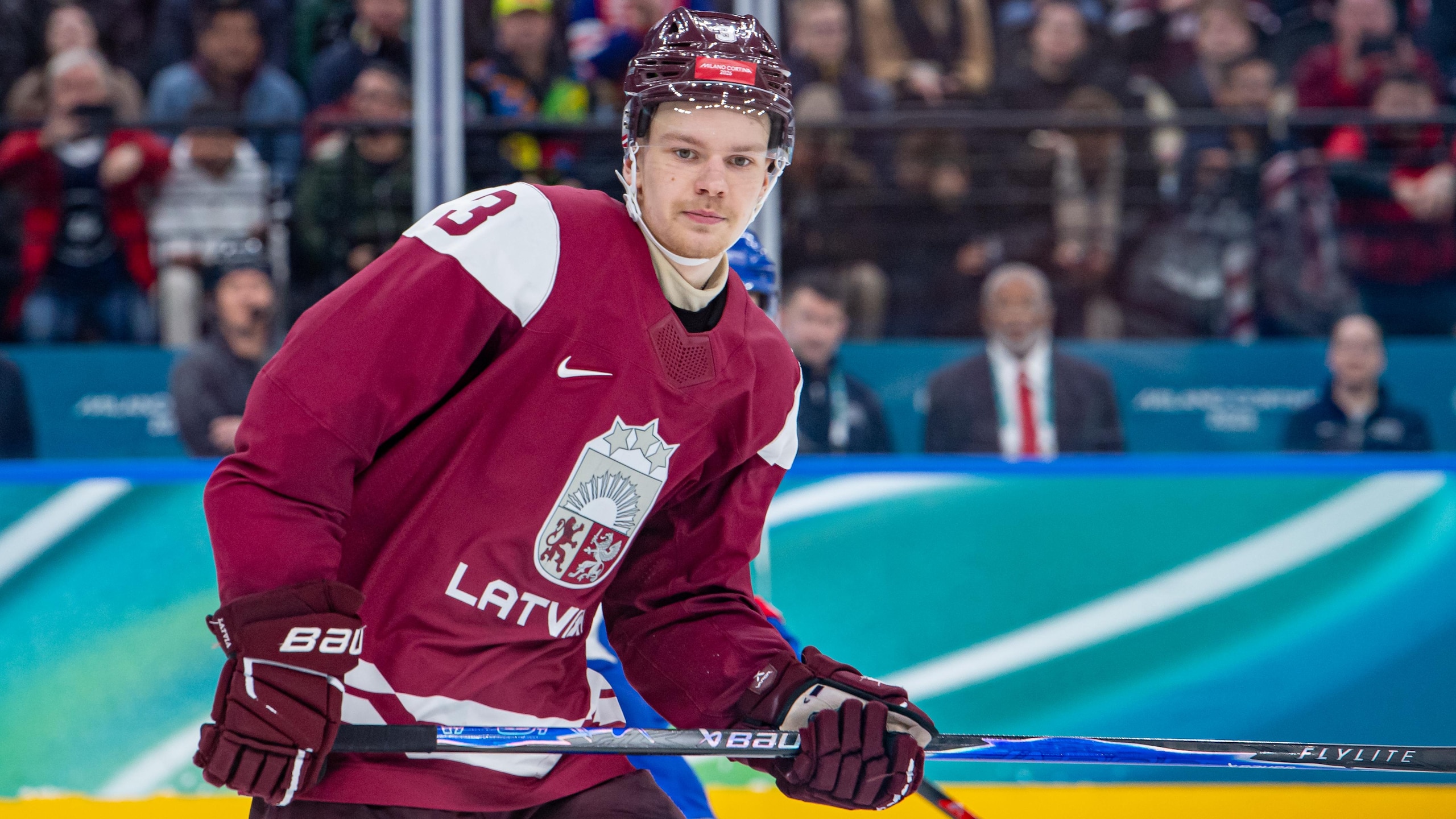
Why the Rangers Would Draft Him
Smits is a left-handed defenseman, which checks off a need, and he is a strong skater. That's also a need. He advances the puck vertically, and he is aggressive in his pinches.
The Latvian plays the north-south style that is conducive to what Rangers' head coach Mike Sullivan demands of his defensemen.
He also has some snarl. He's 6'3", 205 pounds, and has more than held his own in European professional leagues. He particularly performed well in Germany for Red Bull Munchen during a playoff run. His offensive production in the Finnish Liiga was high-end for someone his age, and the highlight reel from his time in Finnish juniors is comical to watch. He made various defenders and goaltenders look silly.
Like all of the defensemen in this draft, Smits will need some time to marinate and develop, but he's not physically far off from NHL standards. He could be a contributor fairly quickly.
Why the Rangers Might Pass
Smits showed some fancy hands at times in Finnish juniors, and there's a world where he catches lightning in a bottle and becomes an offensive dynamo, but he more realistically projects as a defensive stopper who provides supplementary offense.
In fact, his touches of the puck outside the offensive zone are concerning. Too often, he blindly throws pucks all over the ice, which not only results in turnovers but also chances for the opposition. His defensive style is rabid, which is effective at many moments, but he will need some restraint at the NHL level.
Is Smits' physical advantages at the moment something he will be able to build up even more in the next few seasons? Or has he just reached his physical peak early? The 2007 birth year will add to that worry. He's an NHLer for sure, and his upside is as high as just about any defenseman in this draft class, but the jackpot scenario may require a greater leap of faith with him than it does with some others who will be available at five.
Ryan Lin, D, Vancouver Giants (WHL)
6 of 9
Why the Rangers Would Draft Him
He is a great puck-mover in all three zones. He'll start the rush with a sublime pass to the weak side that escapes pressure and hits his teammate's tape in stride. In the offensive zone, he walks the blue line well to create space for himself and pull defenses to establish lanes of attack. He puts a good wrist shot on net that beats the layers of traffic. Lin's 57 points in 53 WHL games last season are excellent on its own, but it should really be contextualized within the limits of his own team. Outside of Cameron Schmidt, who was traded midseason, he had very little to work with.
Defensively, he has great hockey sense. He makes up for a lack of speed and size with efficient route-taking, and I've seen him extinguish dangerous situations against faster or heavier players by finding inside positioning anyway.
Lin is a really smart defenseman. His decision-making is superb. He gets all the details right in small ways that add up to a lot, making passes a fraction more quickly than others, or taking just the right route to the puck to get there first. He's undersized and his footspeed is underwhelming relative to his 5'11" frame, but the glass-half-full perspective is that his physical disadvantages have forced him to become a creative, cerebral player. If he adds some size and speed, the baked-in processing abilities will lead to exponential improvements.
Why the Rangers Might Pass
It really comes down to the size and speed. We're about a decade removed from an era in which small, mobile defensemen became en vogue compared to lumbering behemoths. The big guys can now skate and play. The few sub-six-feet defensemen in the NHL who nonetheless play heavy minutes have elite, outlier traits. It's either skating (Makar, Hughes, Hutson) or an outlier brain (Fox). Lin's mobility is good, but it isn't great, and while his ability to think the game is strong, Fox is in a class of his own.
This is where the Rangers will have to do their homework. If Lin's family tree suggests he may yet grow another inch or two or have room to add more to his frame, then he could be a sneaky pick. Fifth overall may be too optimistic even for supporters of Lin. Maybe the discussion topic is why the Rangers would trade down and grab Lin a few picks later.
Tynan Lawrence, C, Boston University (NCAA)
7 of 9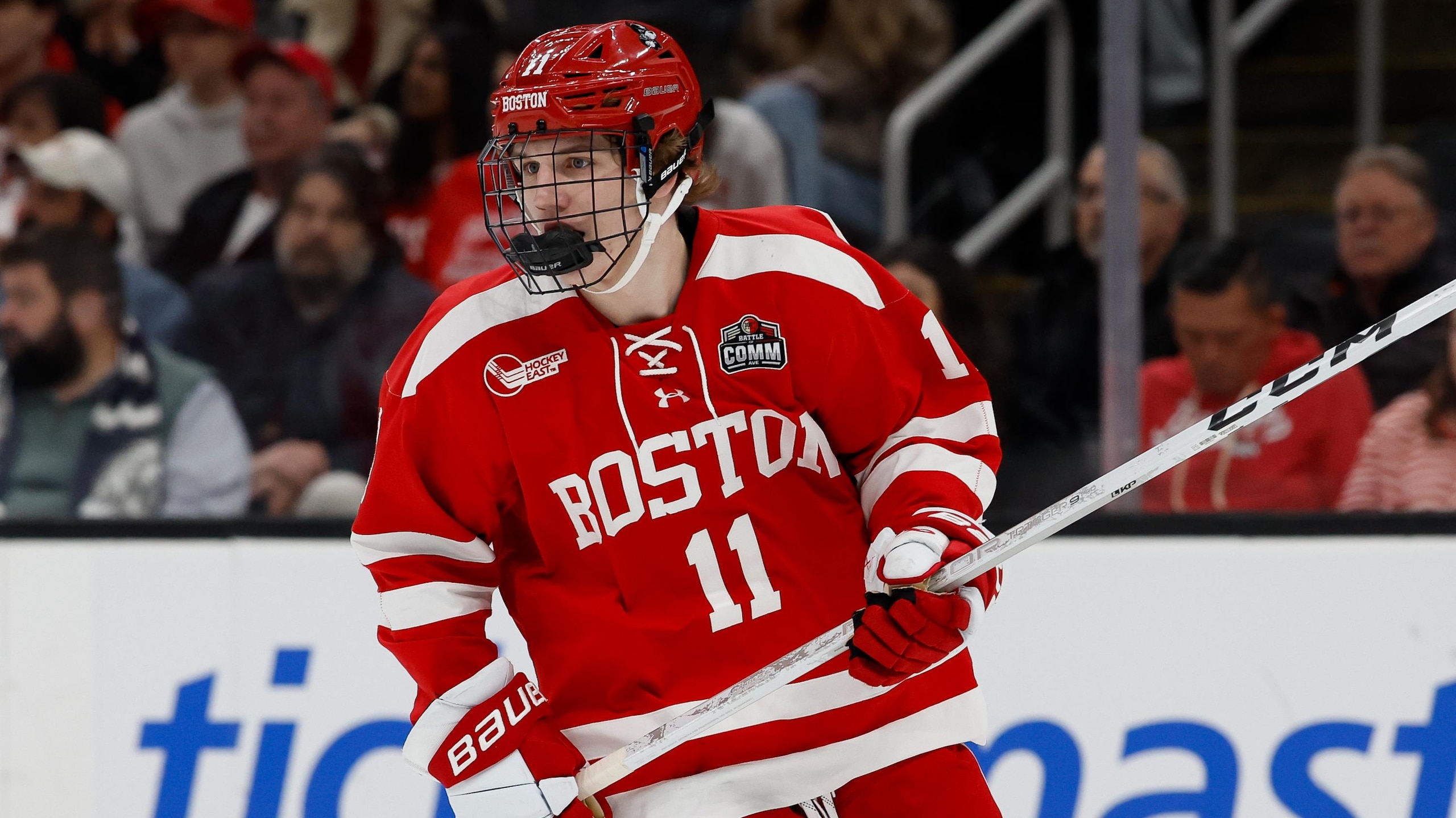
Why The Rangers Would Draft Him
Good luck winning anything without one or two load-bearing centers. The Rangers have two centers in the organization under the age of 32 who matter; Noah Laba probably tops out as a third-line center. Mikkel Eriksen has middle-six upside, but he's a long shot as a recent fourth-round pick. That's it. Yikes.
Tynan Lawrence looks like a comfortable projection for the NHL. Despite remaining 17 until August, he already boasts some nice physical attributes. He's an above-average straight-line skater. He's 6'1 and pretty strong on the puck, with a lot of room to fill out still. He has a hard release and can beat goaltenders from distance, either from a standstill or shooting off the rush. There are some solid playmaking abilities as well.
His defensive intentions are projectable, he battles hard, and he doesn't cheat the game. He comes back deep to defend or to support on breakouts, and he's fantastic as F2 on a forecheck, always seemingly predicting where pucks will squeeze loose or just taking away space as the second layer. He'd be a nice fit for Mike Sullivan's forechecking systems in particular.
Did we mention he plays at Boston University?
Why They Might Pass
There was a time when some tried to thrust Lawrence into the first-overall conversation, but it felt forced. There was a vacuum of elite talent at the top of the draft, and I think some people stretched to put a center there. Reality came crashing down when he moved from the USHL to Boston University mid-season and endured major growing pains. He finished the season with two goals and five assists in 18 NCAA games.
There are some issues with his game right now, particularly his decision-making with the puck in the D zone and a few other things, but those can be fixed. The bigger issue is that I don't see game-breaking stuff in Lawrence's arsenal. His only reliable move to beat defenders is to drive north and then try to cut inside. It's effective but limited in scope. The shot itself is good, but I don't see someone who creates a load of shooting opportunities. His passing is fine but unspectacular. He looks more like a second-line center who works in tandem with his linemates rather than being the focal point.
That's a very good player to have, but fifth overall is probably too rich for that archetype.
Viggo Bjorck, C/RW, Djurgardens IF
8 of 9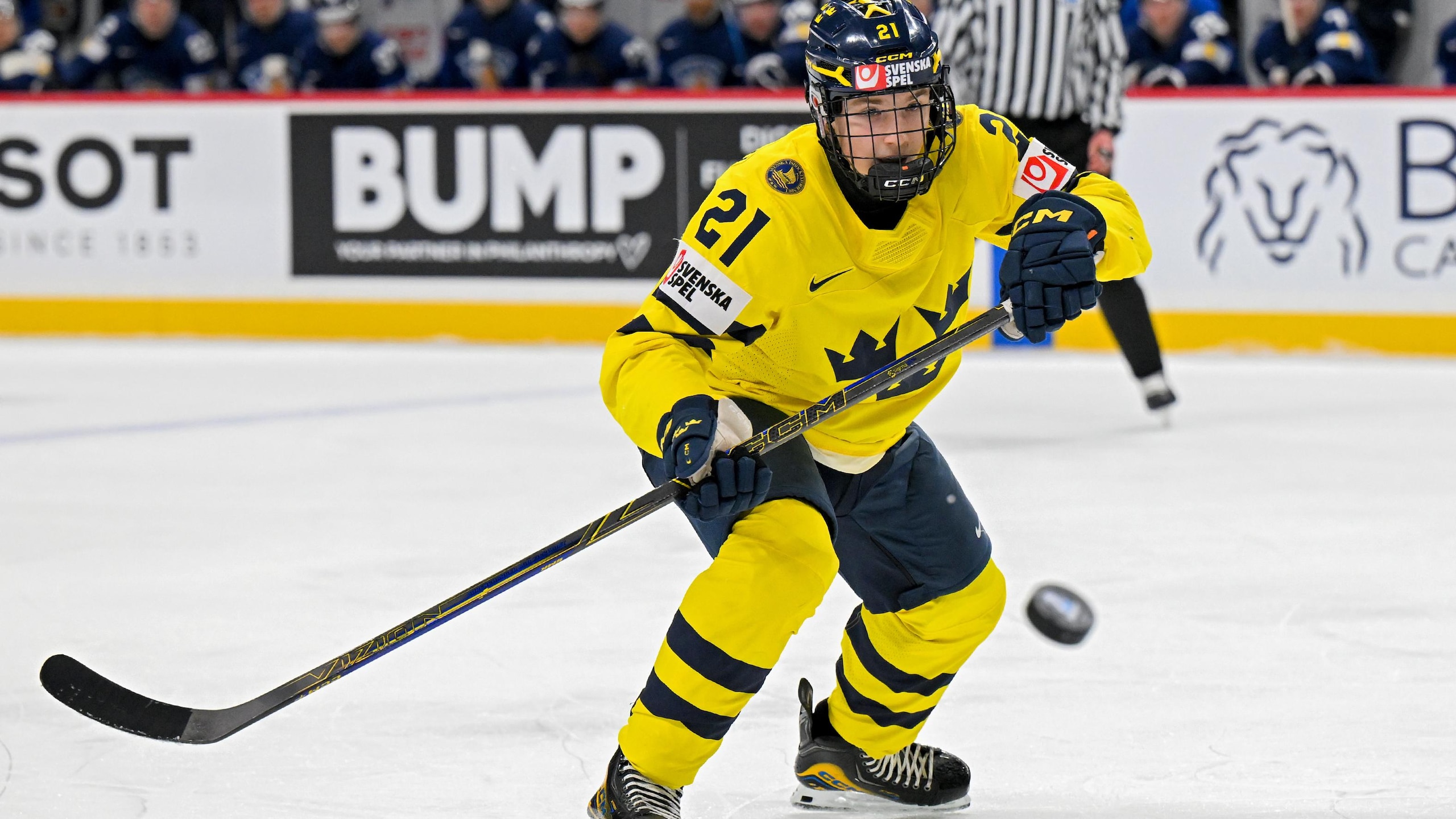
Why The Rangers Would Draft Him
The organization needs skilled centers. Bjorck is a skilled center.
His agility is phenomenal. He has a tactical brain, and he's a strong stickhandler in tight spaces. His small-area game is very good despite his diminutive size, as he anticipates and sidesteps pressure. In terms of pure skill, he ranks about the same as Lawrence and Caleb Malhotra.
Bjorck has succeeded at practically every level he's played. In the Swedish Hockey League, he played a regular role for the Djurgardens and produced a respectable 15 points in 42 games. That puts him on par with some very respectable NHLers, such as Mika Zibanejad, William Nylander, and Lucas Raymond. He was excellent at the World Juniors (nine points in seven games), and he earned a spot on Sweden's World Championship roster. Sub-six-foot or not, it hasn't deterred him from thriving against pros yet.
He also has more defensive potential than he gets credit for. Djurgardens deployed him in PK situations. He's a nag on the backcheck and creates a lot of disruptions through persistence.
The Carolina Hurricanes have a similar player in Logan Stankoven, who has been more than fine in the NHL Playoffs. Bjorck has the skill and smarts to figure out ways around his size disadvantage and become a major contributor in the NHL.
Why They Might Pass
It's the size, mainly. He's 5'10" and 172 pounds, and that may be a generous listing. To his credit, he doesn't shy away physically, but he gets nudged off pucks too often and his attempts at checks usually result in him bouncing off his target with zero damage done.
Perhaps he could play underneath a more robust center, but the Rangers definitely don't have that coming anytime soon. Will he even play center at all? One can imagine North American coaches eventually shifting him to the wing. The optimistic comparables — Logan Stankoven, Marco Rossi, and Andy MacDonald — are great players, but not ones who can be at the top of the depth chart. Bjorck may become an awesome second liner or complementary first liner rather than a focal point for a rebuild.
Daxon Rudolph, D, Prince Albert Raiders (WHL)
9 of 9Why the Rangers Would Draft Him
Rudolph may be the best defenseman in the draft in terms of offensive zone play. Twenty-eight goals as a 17-year-old defenseman in the WHL is absurd, and the offense should translate at higher levels. As a pure statistical analysis, he may be a top-five producer in this draft. He is excellent at creating his own shooting lanes, and the shot itself is a big threat. He's also a much better stickhandler than the top D in this draft. His hands are quick and dexterous. He combines it with poise to wait for passing lanes to open, or he'll feint the shot and then swing the puck weakside to a teammate who now has a scoring chance against a moving goaltender.
At 6'3" and over 200 pounds, Rudolph has a lot of room to grow his game off the puck as well. And though there are questions about his defense, the Rangers would be able to hide him on the right side behind Adam Fox, who takes on tough assignments without a problem.
The Rangers seem to like trying to grab shutdown defensemen in the later rounds of the draft. Rudolph would be a bet on pure offensive talent.
Why They Might Pass
Rudolph's defensive game currently leaves a lot to be desired. He's way too passive defending against the rush and is late to step into lanes. When his team gives up the puck, he too often watches from a standstill rather than immediately switching to a defensive mindset.
Can he improve there? Of course. The question left, though, is why take on that project when there are other defensemen who outpace him in other areas of the game while still offering high offensive upside
.jpg?w=2560 "Buzz: MHJ Hired Agents for Trade")
.jpg?w=2560 "49ers LB Suspended for Headbutt")
.jpg?w=2560 "AD Trolls Bears WR on IG 😂")
.jpg?w=2560 "Report: Steelers WR to Miss 'Weeks'")
.jpg?w=2560 "Viral Dan Campbell Presser 💙")