

Why McLaren's Problems in 2015 F1 Season Are More Than Just a Lack of Power
The results over the first eight races of the season may suggest otherwise, but McLaren's 2015 car is not as useless as it seems.
With its tightly packaged rear-end and a Red Bull-esque front wing, the MP4-30 chassis is a work of art, the most sophisticated to emerge from the team's Technology Centre for a number of years.
According to Motor Sport Magazine's Mark Hughes, the car should be in the midst of the fight between Ferrari and Williams, who have shared the best-of-the-rest tag behind world champions Mercedes since the start of pre-season testing.
TOP NEWS

J-Dub Suffers Gruesome Injury

Contenders starting to separate themselves after Week 7
.jpg?w=2560 "Rams Raiders Football")
Raiders Could Start Mendoza

But while the Prancing Horse and Williams can currently enter a given race weekend with realistic hopes of a podium finish, McLaren, in stark contrast, can only dream of a points finish.
Crippled by their new Honda engine, which lacks the three basic requirements of any motor—power, efficiency and reliability—a season that promised so much has delivered nothing of note, with the team scoring just four points thus far.
The second most successful institution in the sport's history and two of the most triumphant drivers of recent times, two-time world champion Fernando Alonso and 2009 title winner Jenson Button, have been humiliated across the opening three months of the campaign.
Alonso and Button, so accustomed to fighting at the front, have been forced to pray for rain, wait until F1 visits high-downforce circuits—where the MP4-30 has operated at its most respectable level—and hope the Honda power unit will survive a race distance in their quest for points.
The notion that, with a half-decent engine, this season could have been so much different must make their current troubles all the more frustrating for McLaren, who for the first time in a while appear to have kept their side of the bargain.
Yet despite being held back by Honda, it would be unreasonable to suggest all the issues at McLaren, a team who have failed to win a grand prix for almost three years, are down to the Japanese manufacturer's incompetence.
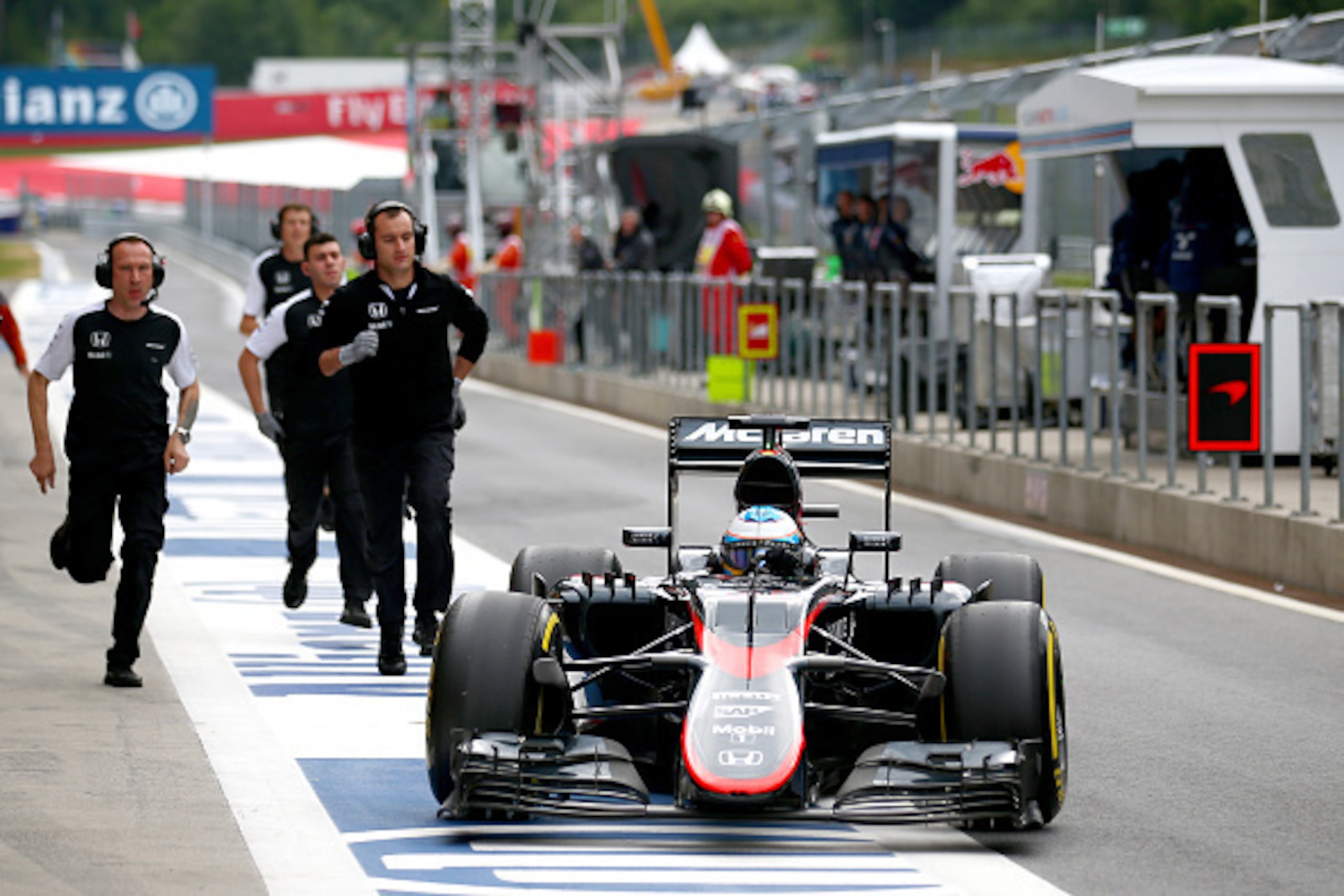
As much as Honda's lack of power has prevented progress on track, an apparent struggle for power on the pit wall has been an obstacle away from the circuit.
The return of Ron Dennis, the legendary team principal, to the front line was lauded when it was announced at the beginning of 2014, but 18 months on—and with no improvement in McLaren's results—there is an inescapable feeling that the 68-year-old has outstayed his welcome.
His headmaster-like presence is counterproductive for a team looking to rediscover their route to the top and undermines racing director Eric Boullier, a significant capture from Lotus at the start of last year, who is the team principal in all but name.

Whenever the cars of Alonso or Button have stopped on circuit this season, the television cameras have frequently cut to a reaction shot of a glum Dennis watching on from the garage, rather than Boullier studying the screens on the pit wall, confirming who is really in charge.
Dennis' control over Boullier—whom, as Dennis told Mail Online's Jonathan McEvoy, he gave "a good kick in the a--e" after May's Spanish Grand Prix—has even extended to the Frenchman's vocabulary, with Boullier communicating in the language known as "Ronspeak" with increasing regularity.
This was most evident in Spain, where Boullier told the team's official website of Button's "vexatious afternoon" and how "we’d all be more sanguine if progress could be made more expeditiously."
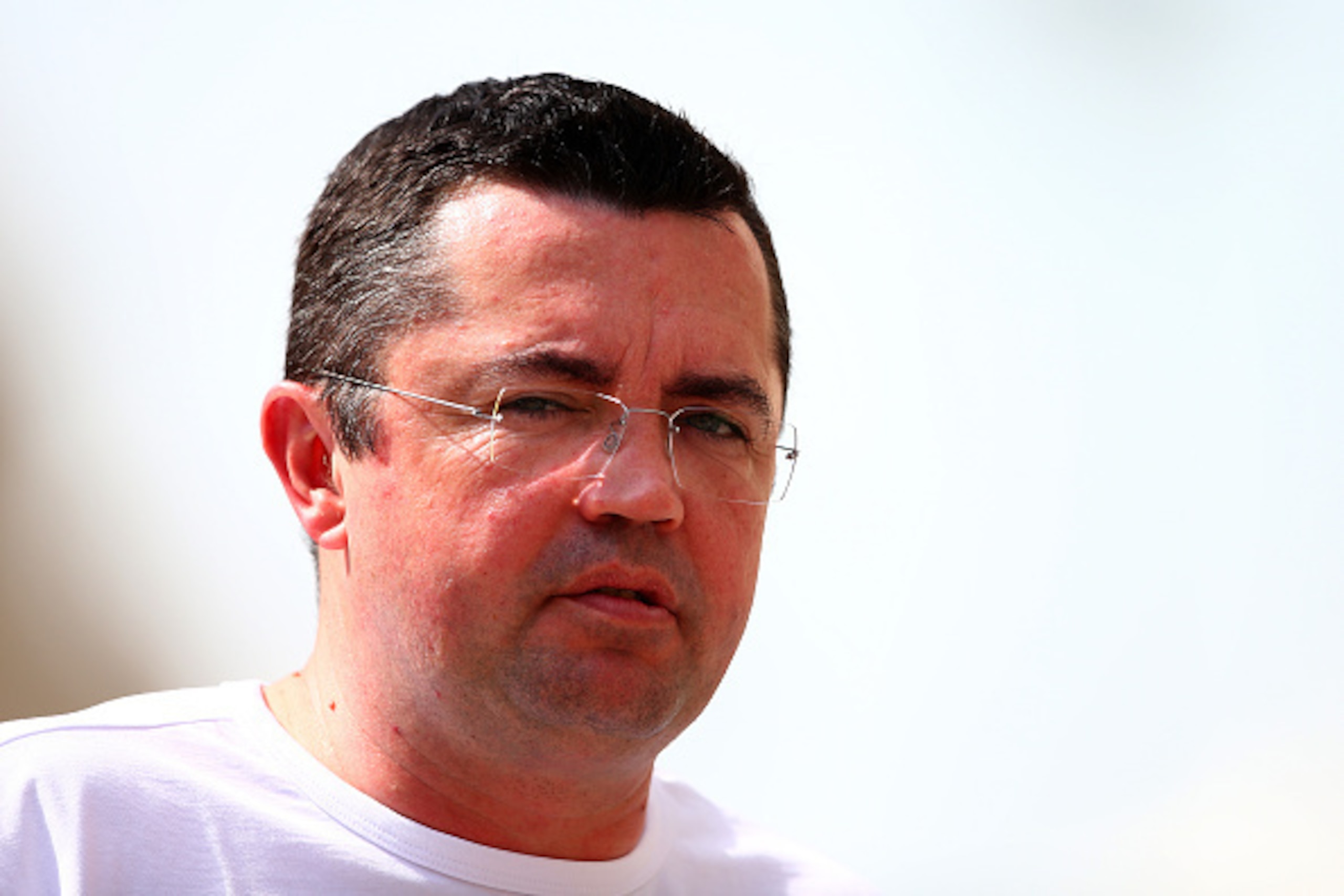
Boullier's portrayal as a mere puppet of his chairman weakens his position within McLaren and has arguably prevented him from recreating the success of his Lotus days, when he dragged a team on their knees in 2010 to podium and race-winning contention in 2012.
And while it has become fashionable for teams to operate without a specified team principal, McLaren's approach—impaired by the man who doesn't know when to walk away—lacks the cohesion of that adopted by Mercedes, who have cast Toto Wolff and Paddy Lowe in clear, defined roles.
McLaren's lack of stability has also restrained them from success, and it is possible that, come the beginning of the 2016 season, the team will have their fifth different driver lineup in as many seasons.
According to F1 journalist Andrew Benson, the contract Button signed to remain with McLaren last December only covers 2015, with the team having an option to extend the deal to 2016. Considering that the 35-year-old has arguably outperformed his illustrious team-mate so far this season, taking advantage of that option would, in normal circumstances, be the only possible outcome.
But with McLaren's latest protege, Stoffel Vandoorne, dominating the GP2 championship, the outfit are running out of reasons to ignore the Belgian, which could result in a repeat of the saga that hung over both team and driver in the latter stages of 2014.
McLaren's chop-and-change policy, a consequence of their failure to adequately replace Lewis Hamilton in 2013, has seen the team declare new eras and fresh starts containing the same, familiar problems.

It is time they began behaving like a front-running team once again in terms of choosing a pair of drivers and remaining loyal to them (and vice versa), as well as outlining a particular plan of action and committing to the cause.
The institutionalised arrogance McLaren have displayed since 2013—when they produced an entirely new car, rather than following the conventional route of evolving the successful design of the previous year, sparking this barren spell—has not been extinguished but merely concealed by Honda's failures this season.
And while the Japanese manufacturer will be blamed for the shortcomings of Alonso and Button this season, the team, as ever, remain their own worst enemies.
The engine is just the tip of the iceberg.



.jpg?w=2560 "Rodgers Iced Out on Plane 💎")
.jpg?w=2560 "🚨 Week 8 AP Top 25 Poll")
