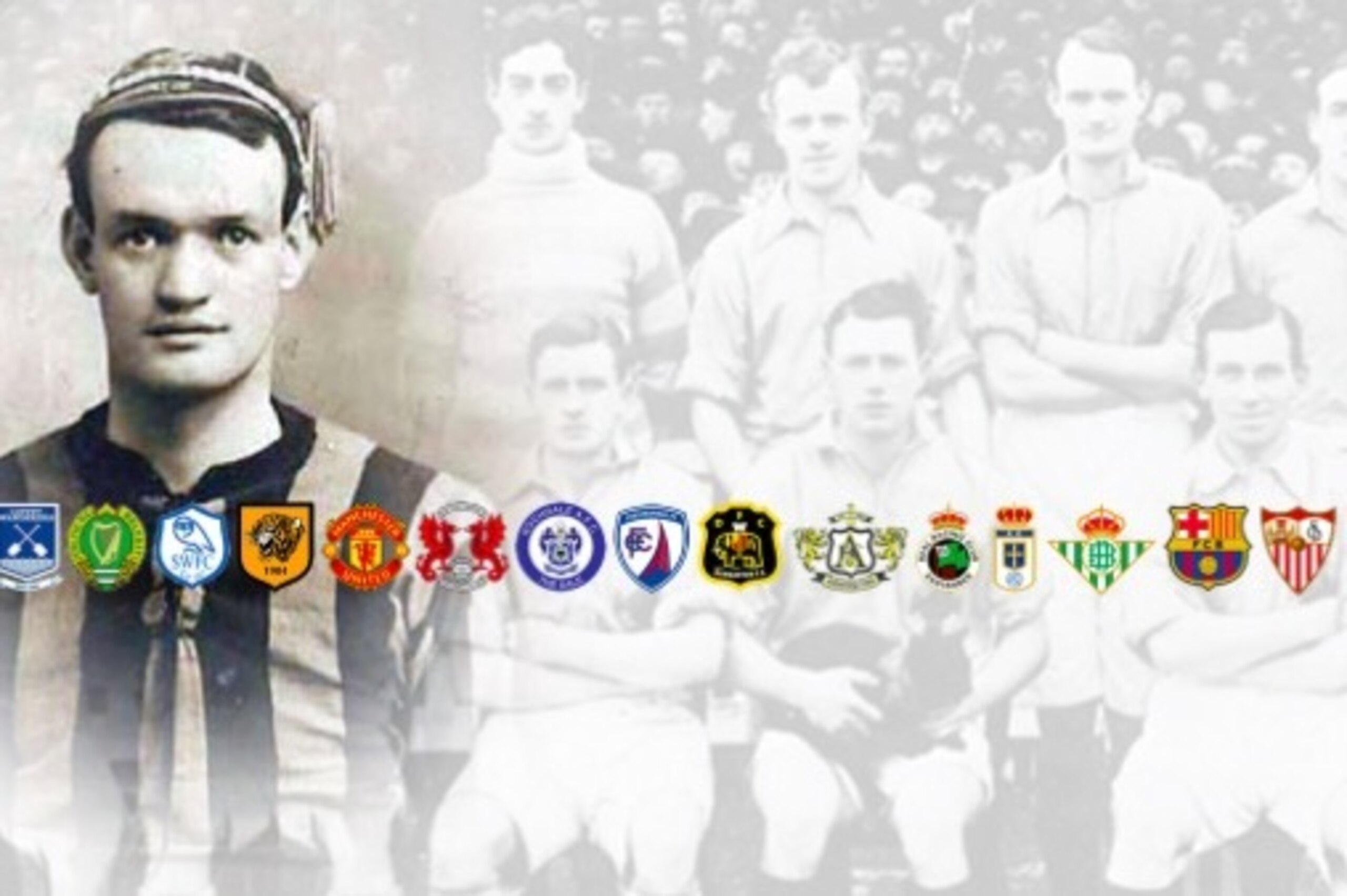

The Story of Patrick O'Connell: The Man Who Saved FC Barcelona
The first Irishman to play for and captain Manchester United. A one-time captain of Ireland.
The man who led Real Betis to their only Liga title, and the man who saved Barcelona from going out of business.
Yes, Patrick O’Connell had some resume.



“Don Patricio,” as he is fondly remembered in Spain, died destitute in London in 1959, and his story remains largely unknown.
His final resting place in St. Mary’s Roman Catholic Cemetery on Kensal Road is remarkable, but not for its ostentatiousness. Quite the opposite in fact.

A sad-looking, unkempt and relatively bare area is where one of the giants of the game of football from the early part of the last century lies.
A pauper’s grave.
It’s certainly not in keeping with the standing of O’Connell in the annals of the world’s favourite pastime.
And that’s perhaps why some of the great and the good from the football family have joined the fundraising efforts of the Patrick O’Connell Memorial Fund, in order to restore and upgrade the grave.

Johan Cruyff, Franz Beckenbauer, Luis Figo, Paolo Maldini, Andrea Pirlo, David Beckham, Gareth Bale and many more have all lent their support in one way or another.
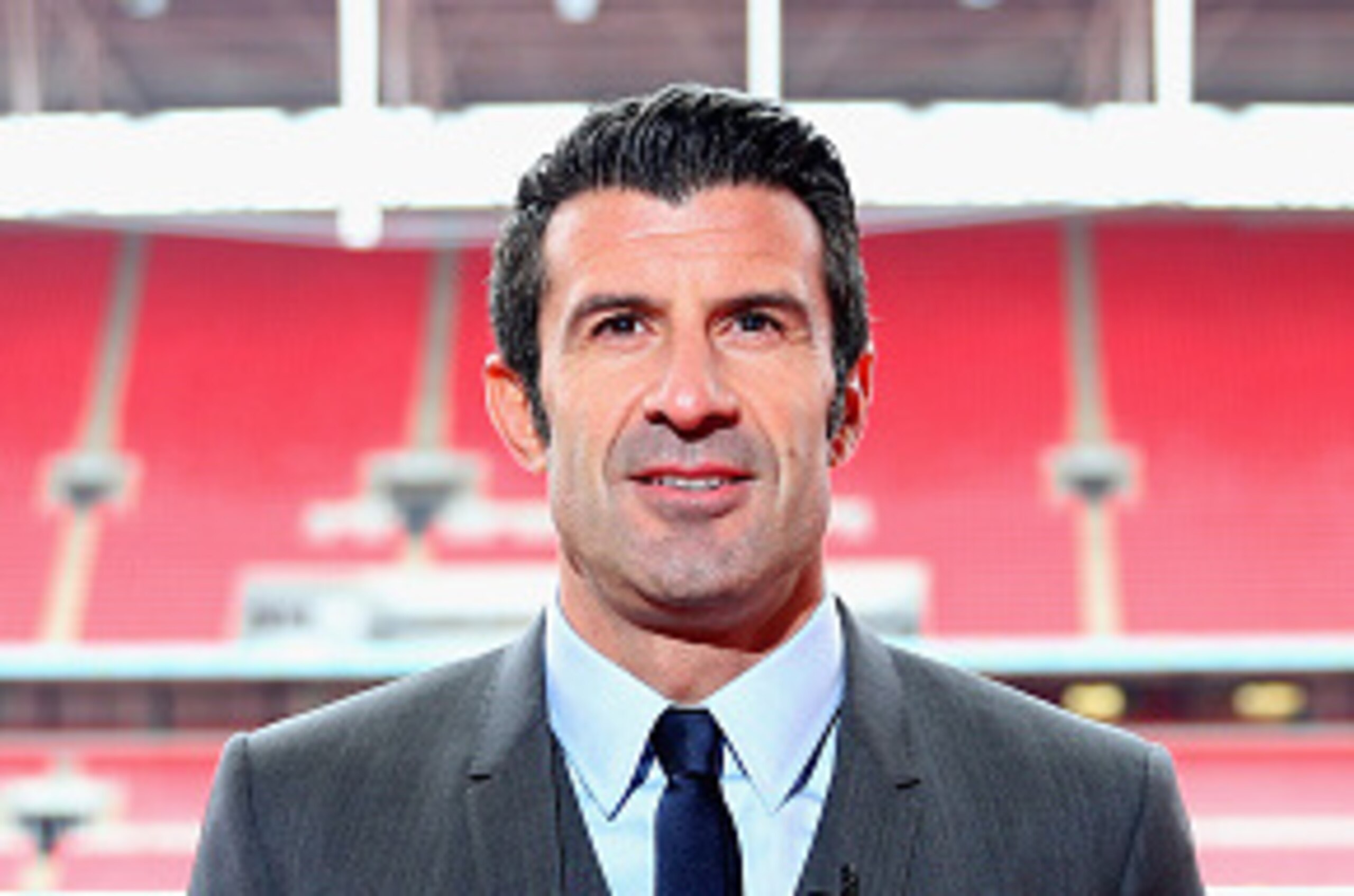
The Professional Footballers' Association was involved with the project at an early stage, donating £1,000, and PFA chief executive Gordon Taylor was delighted his organisation could be part of the campaign.

Via the PFA’s Facebook account, he noted:
"Patrick O'Connell was an early member of the PFA. He's one of our own and to remember him like this 100 years after he played for Manchester United is very special.
I think it's been particularly special that his family have found the history of a grandfather who is in an unmarked grave in Kilburn.
"
Another ex-Manchester United captain, Martin Buchan, eulogised to campaign managers Fergus Dowd and Simon Needham that: "The story of Patrick O'Connell is remarkable, and I'm sure it will be of huge interest to fans."
The National Football Museum in Manchester will be displaying artefacts from O’Connell’s career in a permanent memorial. Yet another acknowledgement of the esteem in which he is held.
In Spain, Real Betis held a fundraiser in Seville to commemorate the 80th anniversary of the Liga title win, and Barcelona have also come on board and are fully behind the campaign.
Barca president Josep Maria Bartomeu noted, via club communications director, Chemi Teres:
"Barca is more than a club because, among other things, it is a club with a great history and memory.
We like to remember all those people who made FC Barcelona what it is today. Everyone is important.
Patrick O'Connell may not be as well known to younger generations, but he was a brave and loyal coach who gave himself to the club during a very difficult time here, an epoch of civil war.
He left an indelible mark on every club he spent time with, greatly contributing to an increase in the popularity of football.
"
Patrick O’Connell’s story begins in Ireland. He was born in March 1887 and grew up in Dublin.
As a young boy, football provided Patrick with an escape from a tough and uncompromising upbringing.
Frankfort and Stranville Rovers were two teams with whom O’Connell spent his youth career, honing his skills in the wing-half and centre-half roles, positions at which he excelled.
An obvious talent was duly recognised—Belfast Celtic the grateful recipients of his signature on a first professional contract—and so began an interesting journey.
A commanding and fearsome exponent with ball-playing ability, international honours were a formality, and Sheffield Wednesday were sufficiently impressed, taking the 22-year-old O’Connell and-team mate Peter Warren to England in 1909.
The move would quickly turn sour, however, and after just a handful of appearances over a three-year period O’Connell sealed a transfer to Hull City.
O’Connell unfortunately still found regular games hard to come by, though his game time on Humberside was a significant upgrade on that he received in Sheffield.
Being recognised for international honours was a source of great pride, and winning the British Home Championship for the first time in 1914 was a particular highlight. It included victories over Wales and England and a draw against Scotland.
Manchester United, impressed by what they had seen, paid £1,000 for O’Connell’s services only for the first World War to break out a matter of months afterward.
Throughout the following season, O’Connell captained the Red Devils. Toward the end of that campaign, United visited archrivals Liverpool in a game they had to win to avoid relegation.
It was a strange match with more than a whiff of suspicion about it—a display by both teams that was unusual to say the least. Supporters were vocal and forthright in directing ire at the players.
An FA investigation eventually got to the bottom of the matter, a tawdry piece of match-fixing involving seven players, of which three were from United and four from Liverpool.
O’Connell was never charged with any underhandedness, but the bad smell around the match lingered. He made two more appearances, against Middlesbrough and Aston Villa, for the Red Devils before all footballing activity was suspended because of the onset of the war.
O’Connell turned out as a guest for Clapton Orient, Rochdale and Chesterfield until the war ended, although his registration remained in the red half of Manchester.
In 1919, when professional football resumed in earnest, O’Connell was unable to find a single English club to take him. This, despite the league expanding from 20 to 22 teams.
A dalliance at Dumbarton was a precursor to a move to Ashington.
This working-class town club in the heart of the coal-mining district would become the final stop of his playing career. It would also be where he began a hugely successful managerial journey.
During his second season, while undertaking the role of player-manager, serious problems at home began to develop.
Sue O’Connell, the wife of Patrick’s grandson Mike, told me:
"As a player-manager [at Ashington], and in the 1920s, it was a way of escaping the pits. Unfortunately, around the same time his 'difficult' marriage finally collapsed.
"
With his relationship now broken, Patrick made the life-changing decision to walk out on his family.
His wife, Ellen, had given up everything to be with him in England, and they had four children together. Patrick left no money prior to his disappearance, so the family faced a huge struggle to survive.
The impact of his leaving at that time cannot be understated.
It’s still unclear even now why a man seemingly so successful in his professional endeavours had not at the very least amassed a small nest egg for himself and his family to live from in times of hardship.
In any event, he would later resurface in Spain, and it appears, according to Needham, that the move had come about via prior discussions with contacts in the coal and iron trades in Ashington.
Against the backdrop of such misery, Patrick started the Spanish leg of his story at Racing Santander.
After adding a number of regional titles to his blossoming managerial CV, the club was invited to become one of the founding members of La Liga.
It was at this point O’Connell perhaps decided his work was done and moved on. He spent two successful campaigns with Real Oviedo before joining Real Betis, known at the time as Betis Balompie.
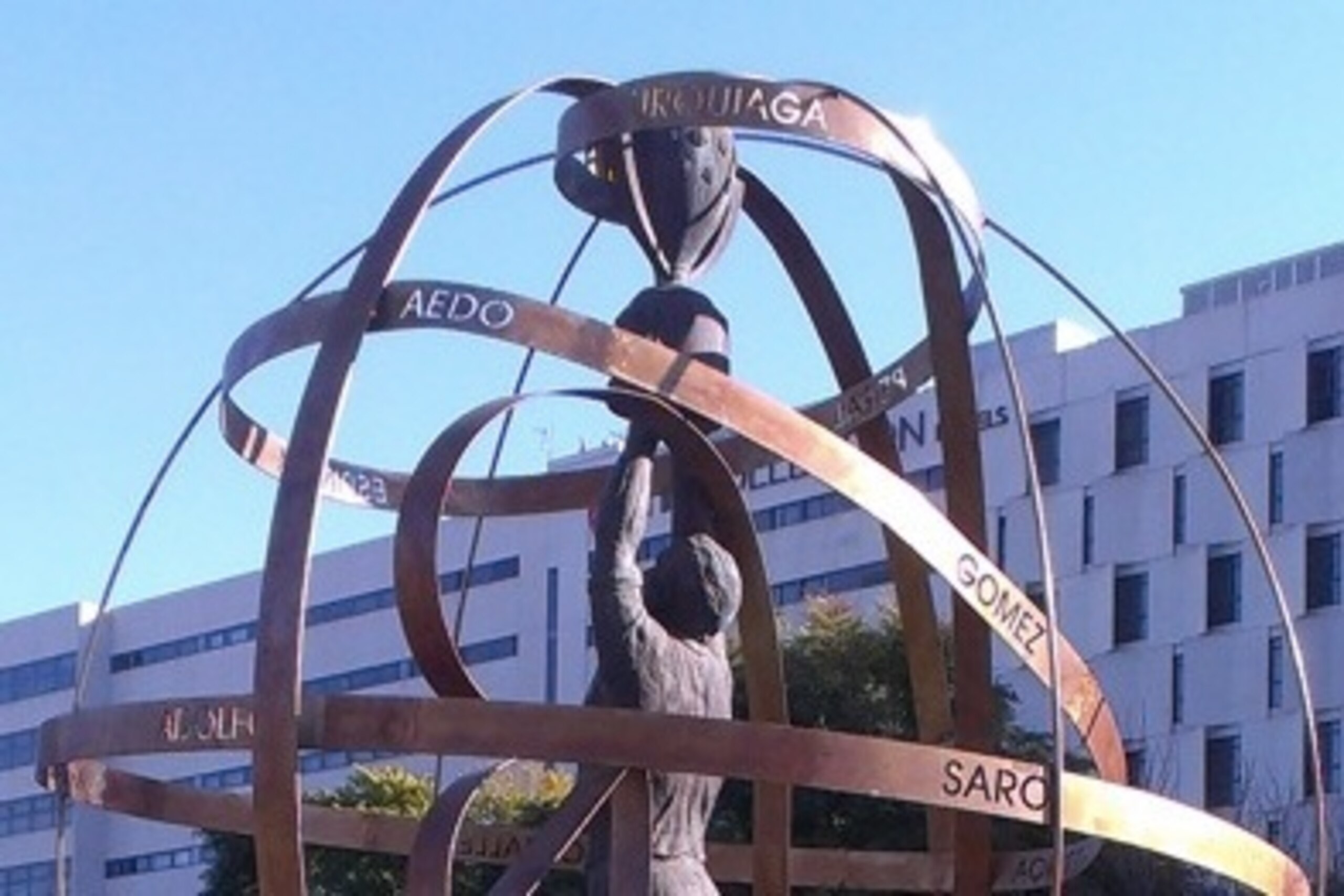
An unheralded side, the Andalusians enjoyed hitherto unprecedented success.
Promotion from La Segunda was assured almost immediately, and within three years, Betis found themselves one win away from the Liga title going into the final day of the 1935 season.
Ironically, their opponents were Racing Santander, and with Real Madrid only a point behind and primed to take advantage of any slip up, Betis needed to be professional. They were.

That the title was secured without any major stars in the side puts some sort of perspective on the achievement.
Indeed, Betis’ PR and communications manager, Julio Jimenez Heras, told me of the pride that the mention of O'Connell's name still evokes:
"We are very proud of the great Mr. O’Connell, always. He is very well known by our supporters and has a special place in our hall of fame.
He was able to make a wonderful team with 7 players from the Basque country and local players. They were a very strong and physical team, and our supporters still live that championship, even though we celebrate the 80th anniversary in 2015.
Twenty years after Mr O’Connell left us, the club were aware of his financial difficulties so we played a match, Betis against players from the other teams in Spain, to raise money for him.
He arrived to the centre circle with his hat on his head to receive an unbelievable atmosphere. The fans still loved him.
It’s so sad that he died with nothing, but we are so happy to be involved with this fundraising effort to give him the grave that he deserves.
"
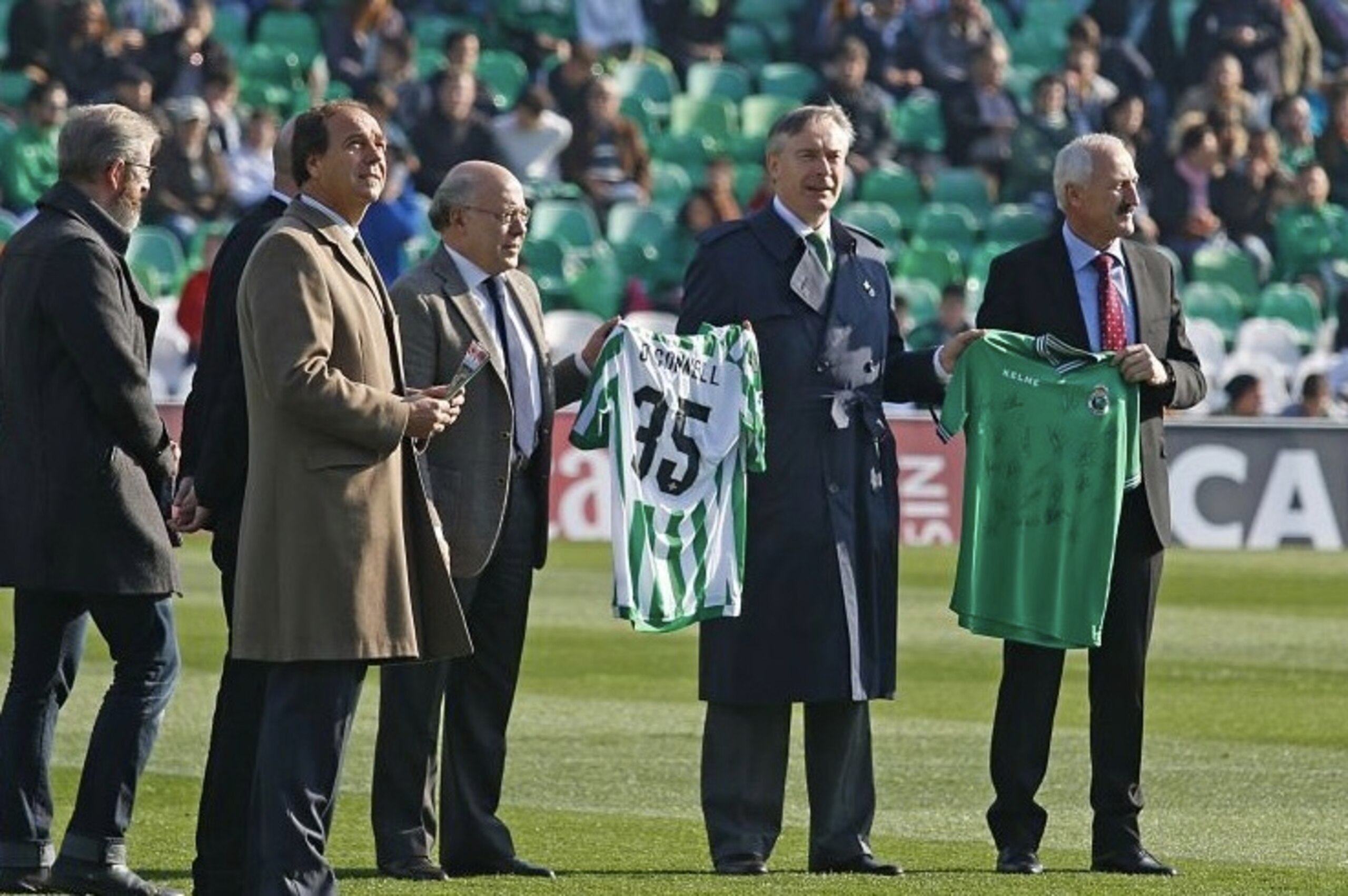
Both Real Betis and Racing Santander honoured his achievements during their recent game.

Officials of both clubs stood in the centre circle with shirts while a short address played over the loudspeaker.
While there was success in Spain, there were also off-field controversies, and O’Connell married while there despite still being married to Ellen.
Sue O’Connell recently recalled when speaking with me:
"Because he was professionally successful, if you kept your head down, you got away with [bigamy]. It’s just how it was back then.
Patrick was known as a bit of a lad by the family, so it came as no surprise.
"
With his star on the rise, it wouldn’t be long before one of the big boys came sniffing around. FC Barcelona were the grateful recipients of his signature. O’Connell naturally took up their offer of management.
As with all of the other clubs with whom he played and managed, success wasn’t too long in coming, and O’Connell’s legend was building nicely in Catalonia.
However, as the Spanish Civil War intensified and without regular fixtures, Barca’s financial position worsened.
An invitation was sent to the club out of the blue by an ex-pat Catalan businessman; O’Connell and the team were asked to travel to Mexico for a short series of games.
The Irishman would need to utilise all of his powers of persuasion and man-management skills to ensure that a sceptical squad took the venture seriously.
After all, Barca’s very existence was at stake.
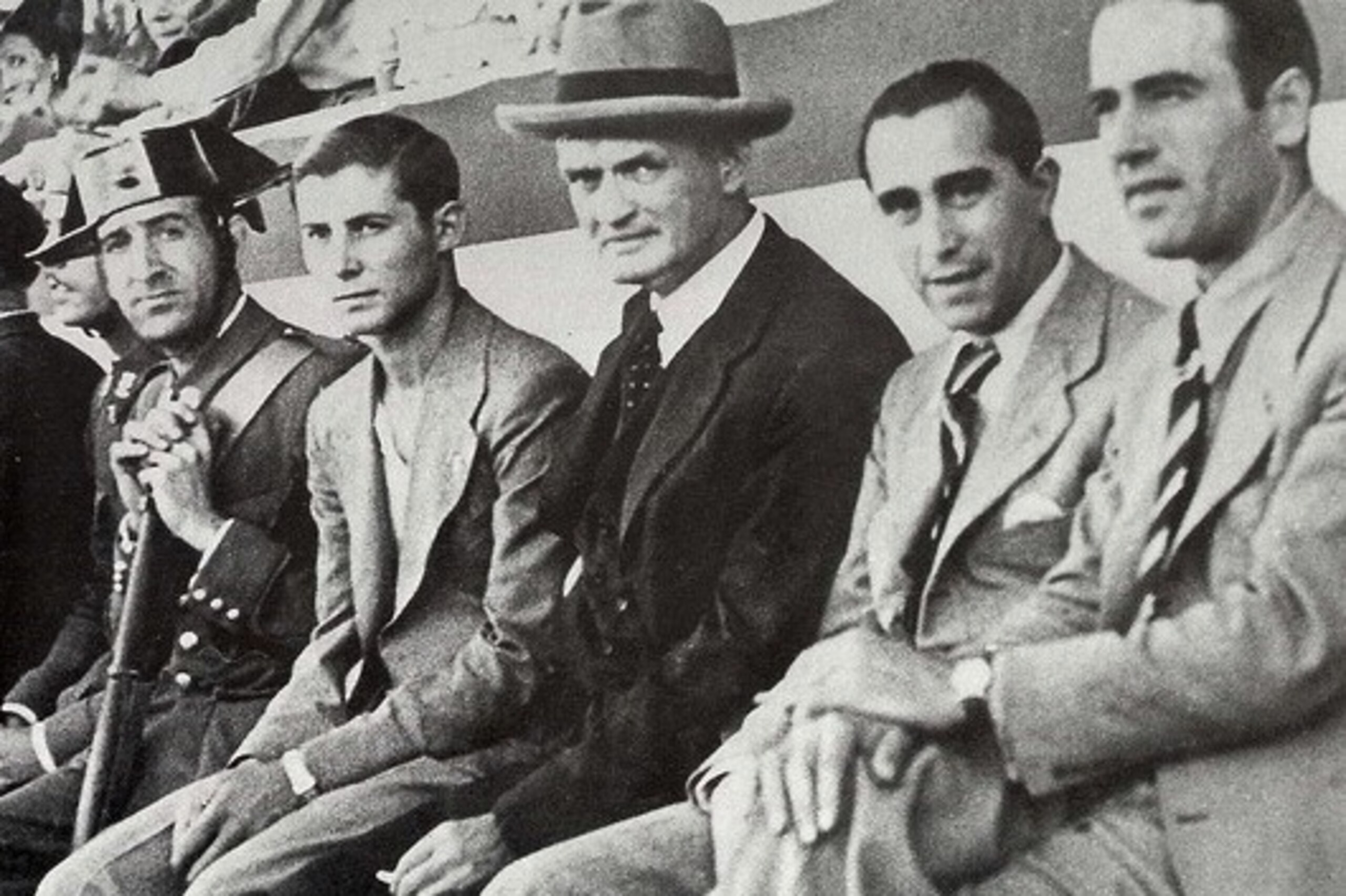
Six games in Mexico and four in New York as they made the journey home earned Barca somewhere approaching $15,000.
Not to put too fine a point on it, but it’s entirely correct to say that O’Connell’s role in overseeing the project had saved Barcelona from going out of business.
Although only a handful of players returned to Barcelona, O’Connell’s work ensured longevity for the Catalans, and they would never look back.
O’Connell would later return to Spain after spending some time back in Ireland. Betis again enjoyed the fruits of his labour, and so too did cross-town rivals Sevilla—his appointments never held against him by either club.
Racing Santander became the bookend of an incredible career in Spain, spanning a quarter of a century.
History must not forget Patrick O’Connell, and the refurbishment of his graveside is the first step to ensuring his story burns brightly for generations to come.

For more information on the Patrick O’Connell Memorial Fund, to browse the extensive signed shirt collection (available for auction at Sheffield Wednesday on Saturday, February 28, 2015) or to make a donation, please visit www.pocfund.com.
.jpg?w=2560)




.jpg?w=2560 "Viral Rams Coach Vid 🖕")
.jpg?w=2560 "2 NFL Officials Suspended")
