Tale of the Tape for NFL Week 9
Throughout the 2014 regular season, former NFL defensive back Matt Bowen will bring you an X's-and-O's look at the pro game. Here are his five key plays from the Week 9 Sunday NFL schedule.
Tom Brady, Patriots Target the Broncos’ “Box” Call
Brady and the New England Patriots continued to execute on the offensive side of the ball while utilizing personnel, formations and a variety of route concepts to produce big numbers in the 43-21 win over the Broncos.
.jpg?w=2560 "Chargers Mack")
.jpg?w=2560 "Green Bay Steelers Football")
.jpg?w=2560 "Giants Football")
Let’s go back to the Brady’s first touchdown pass to Julian Edelman and break down the concept (spot route), while discussing the coverage technique (“box” call) in the Denver Broncos secondary.
Personnel: Posse/11 (3WR-1TE-1RB)
Formation: Doubles Slot Gun Far (Bunch)
Offensive Concept: Spot Route
Defensive Scheme: Cover 4 “Box”

With the Patriots using pre-snap motion to create a bunch alignment to the closed (strong) side of the formation, the Broncos check to a “box” call. That’s a standard check for Cover 4 teams, as it allows the defense to play four-on-three while taking away combination routes.
As you can see here, the strong safety (second “in") and cornerback (second “out”) play the top of the "box" with the linebacker (first “in”) and nickel corner (first “out”) underneath.
Denver has the numbers to play the spot route (7/Seam-Curl-Flat) with the nickel corner buzzing to the flat, the linebacker driving the curl and the strong safety, T.J. Ward, matching to the seam versus Edelman.
That leaves the cornerback, Aqib Talib, at the top of the box to cushion a possible outside vertical route or “jump” an underneath concept as a free defender.
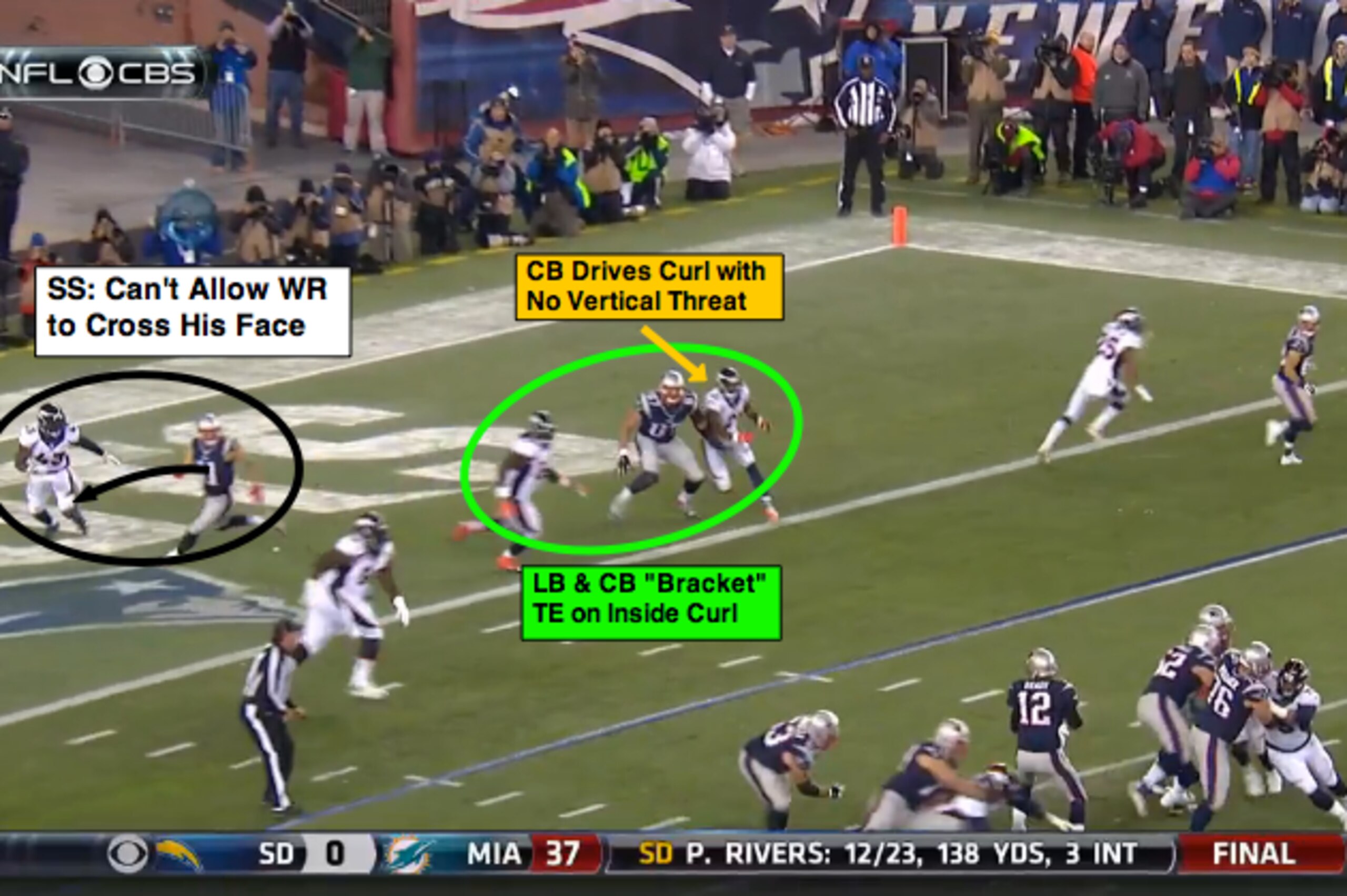
With Edelman stemming up the field and breaking this route inside on the seam, Talib (no outside vertical threat) drives downhill versus Rob Gronkowski on the quick curl route. That creates a “bracket” look for the Broncos with Talib and the linebacker squeezing the curl.
However, check out Ward at the top of the “box” call versus Edelman.
The Broncos strong safety has to maintain inside leverage versus Edelman and prevent the receiver from crossing his face. He has no help to the inside and can’t allow Edelman to push this route back to the middle of the field.
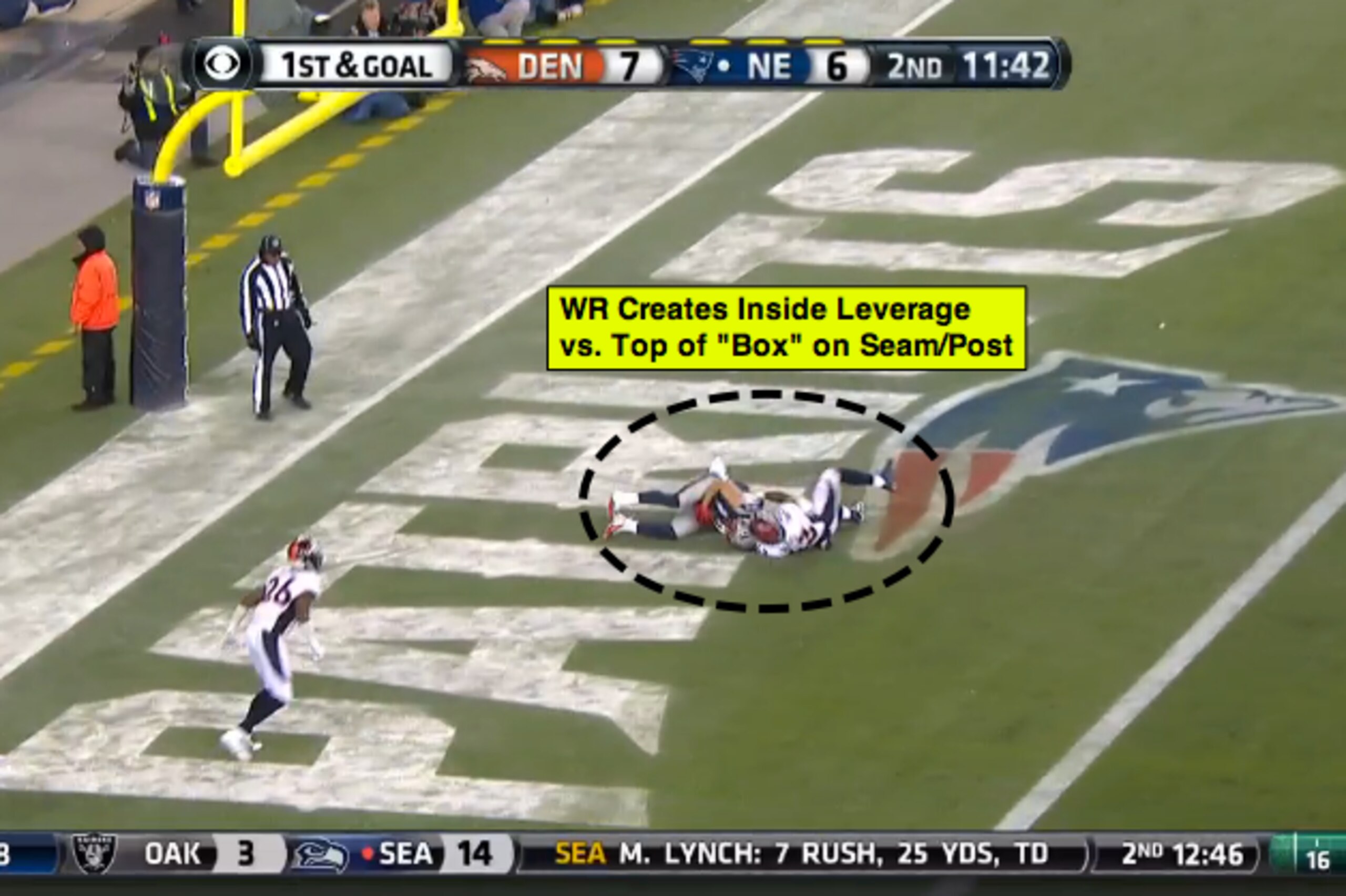
Instead of forcing Edelman to sit the route down or work over the top (allowing Ward to use the end line as his help), the Patriots receiver crosses the face of the safety, creates leverage and gives Brady an opportunity to step in the pocket and target the seam for six points.
The “box” call is a smart check versus a bunch alignment, but just like any other coverage we talk about, the technique has to be there. The Broncos had the numbers to limit Brady and keep the Patriots out of the end zone, but this is nothing more than a one-on-one matchup at the top of the “box” with Edelman winning on the inside break.
Ben Roethlisberger Lights Up the Ravens
Over the last two weeks, Roethlisberger has thrown 12 touchdown passes in wins over the Indianapolis Colts and Baltimore Ravens with wide receivers Martavis Bryant, Antonio Brown and Markus Wheaton consistently winning matchups in the secondary.
Let’s take a look at one of Roethlisberger’s six touchdown passes on Sunday night in the Pittsburgh Steelers' 43-23 win over the Ravens with Bryant widening the cornerback on the double-post concept versus Cover 3.
Personnel: Posse/11 (3WR-1TE-1RB)
Formation: Empty
Offensive Concept: Double-Post
Defensive Scheme: Cover 3
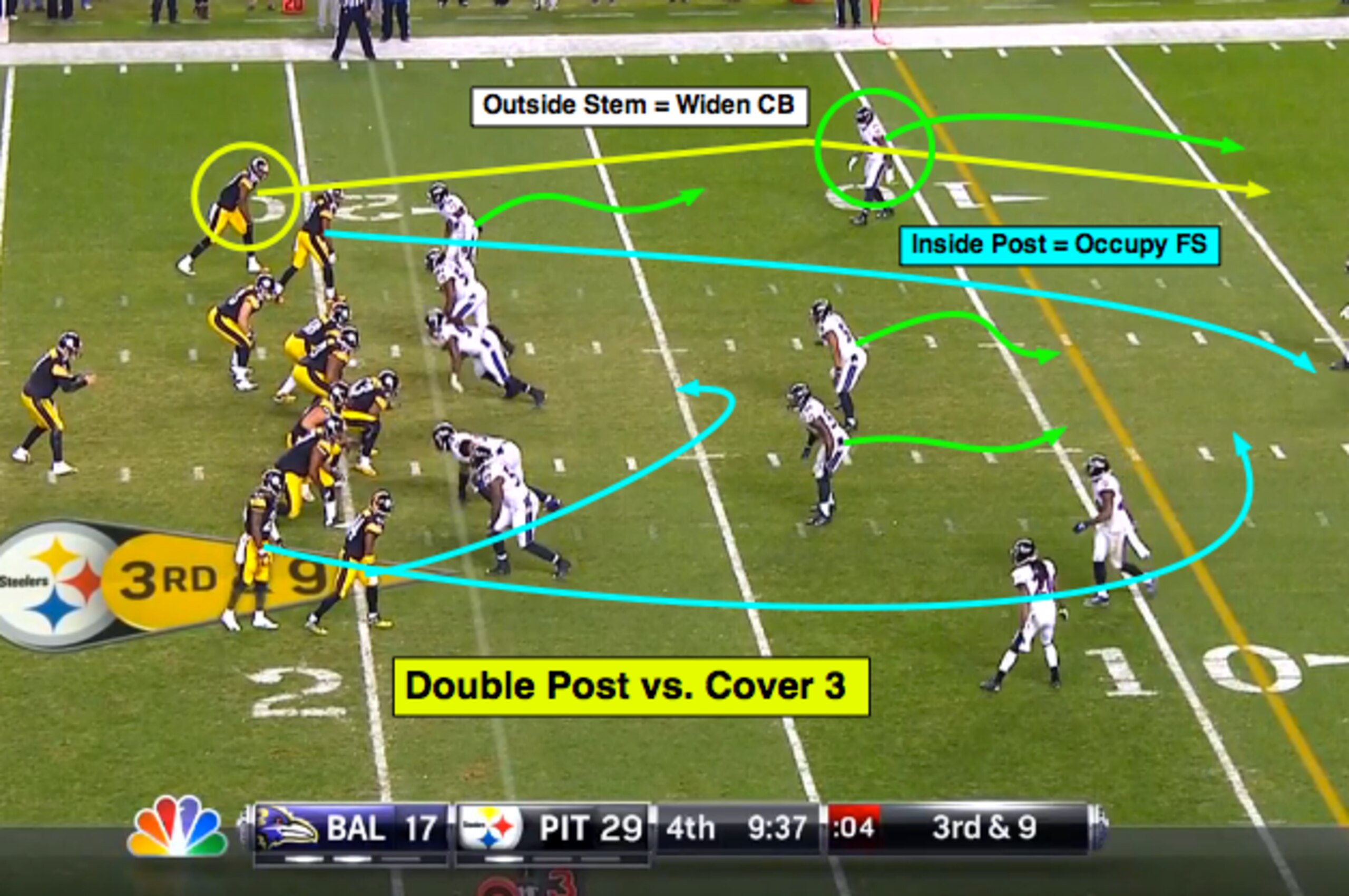
The double-post is tough on the free safety (Cover 1 and Cover 3) as it forces the middle-of-the-field defender to essentially play two routes with the cornerback in an outside-leverage position.
In this situation, the Steelers send Wheaton on the inside post to occupy the free safety (hold in the middle of the field) with Bryant taking a hard outside stem on the vertical release. That forces cornerback Dominique Franks to widen in his pedal (weave with the stem) with Bryant breaking back inside to create leverage on the route.
The idea is to develop a deep throwing lane for the quarterback with the corner trying to recover versus the wide stem off the release.
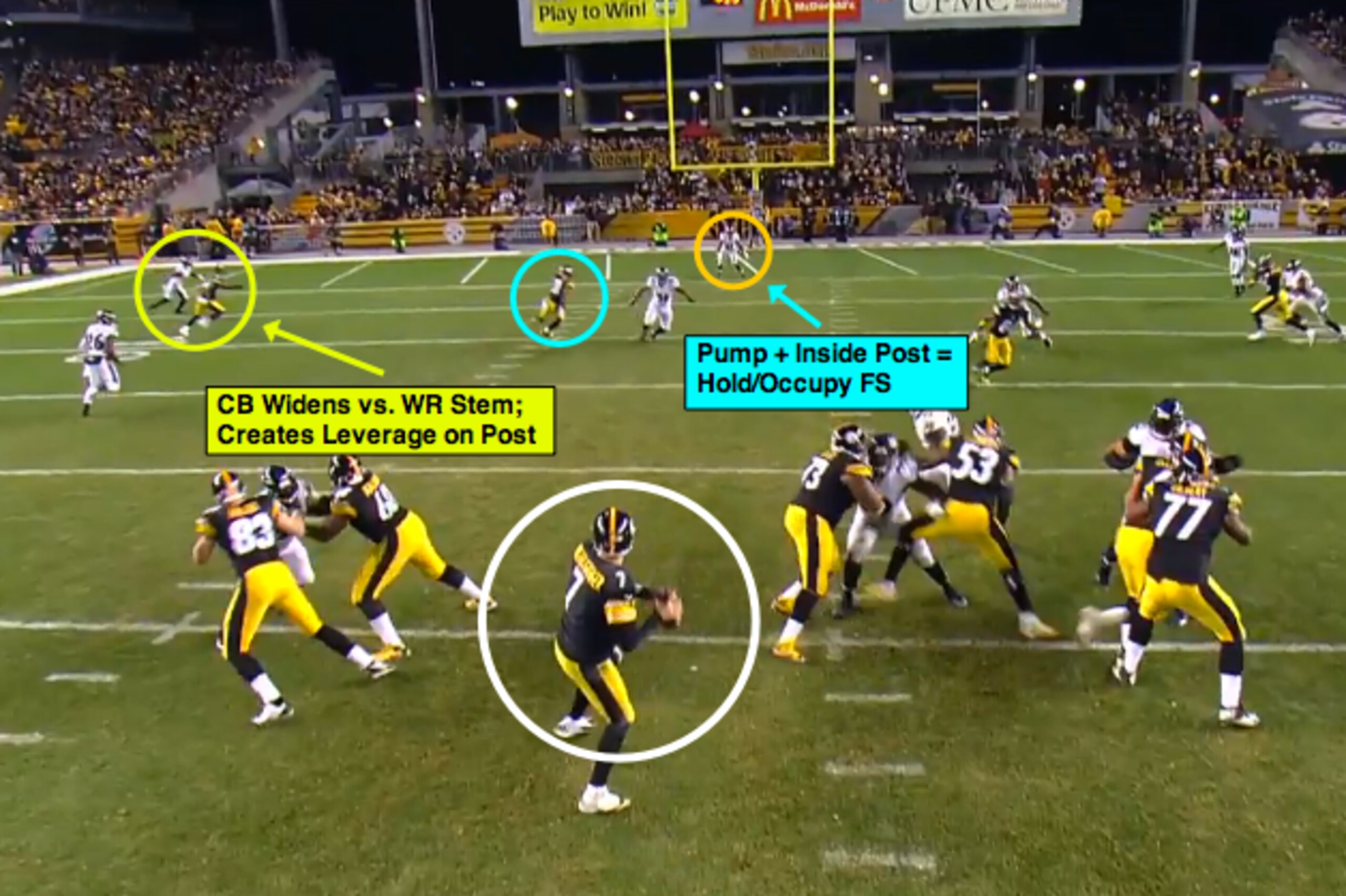
From the end-zone angle, we can see the free safety in the deep middle of the field as Roethlisberger "pumps" to the inside post with Wheaton clearing the underneath linebackers in Cover 3.
With the “pump” from Roethlisberger—plus the inside post working up the field—the free safety has to stay in the deep middle, while Bryant creates leverage back to the inside.
This allows Roethlisberger to target Bryant on the outside post with the free safety forced to break (late) on the throw.
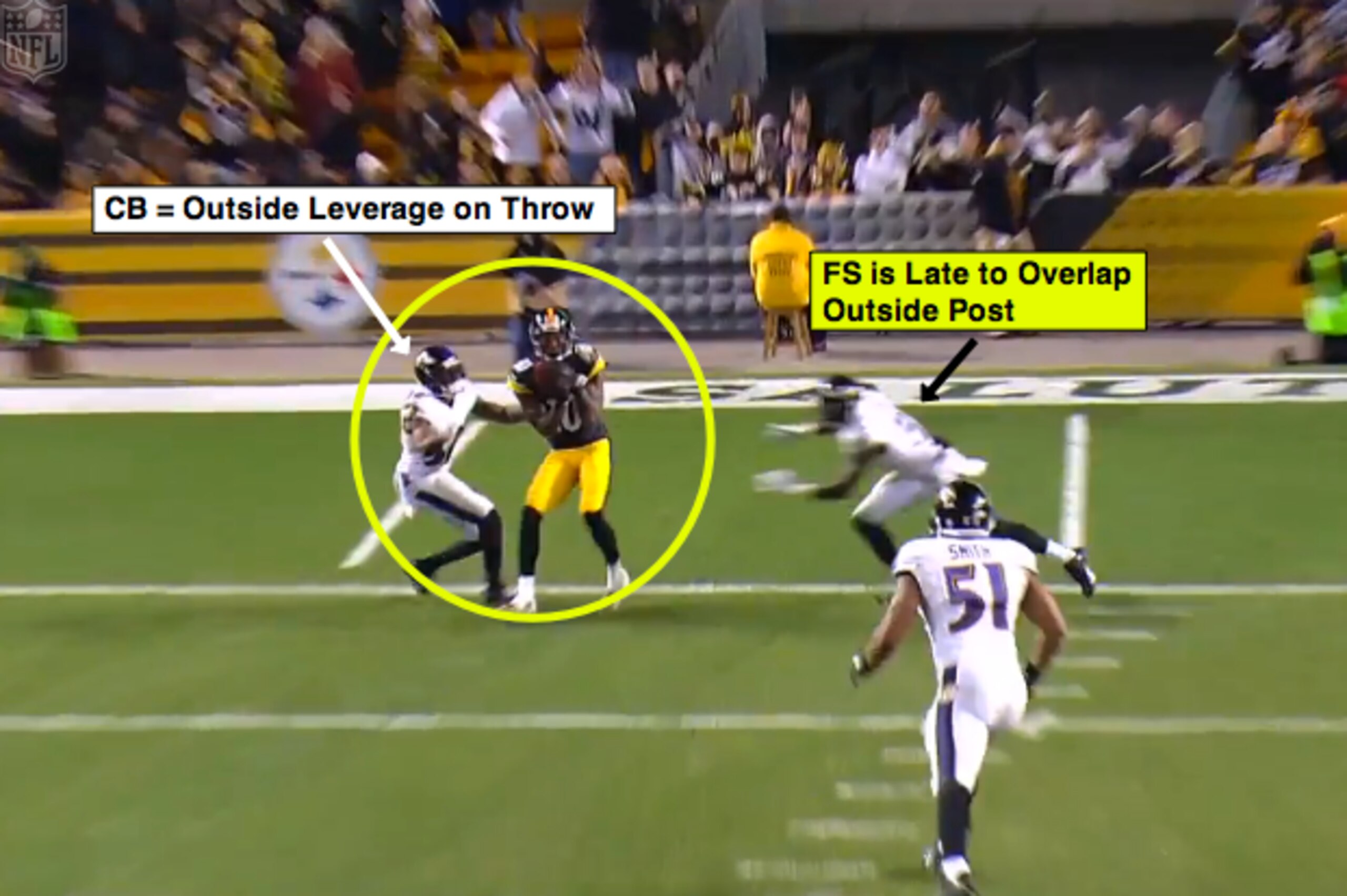
Take a look at the finish with Franks playing from an outside-leverage position. The Ravens cornerback can’t recover in time to play to the upfield shoulder, and the free safety is too late to impact the throw.
That creates the window for Roethlisberger to deliver the ball for one of his six touchdown passes off the night.
Tyrann Mathieu’s Interception vs. Brandon Weeden, Cowboys
With the ball in the red zone, Weeden and the Dallas Cowboys had an opportunity to put points on the board and take control of the football game during the third quarter versus the Arizona Cardinals.
However, this is about ball placement from Weeden (and the aggressive technique of Mathieu) that resulted in an interception on the out route to tight end Jason Witten.
Here’s a look at the offensive concept with a focus on Mathieu’s ability to undercut the route and make an impact play for the 7-1 Cardinals.
Personnel: Posse/11 (3WR-1TE-1RB)
Formation: Doubles Slot Gun Far
Offensive Concept: TE Out Route
Defensive Scheme: Cover 1 Pressure (Six-Man)
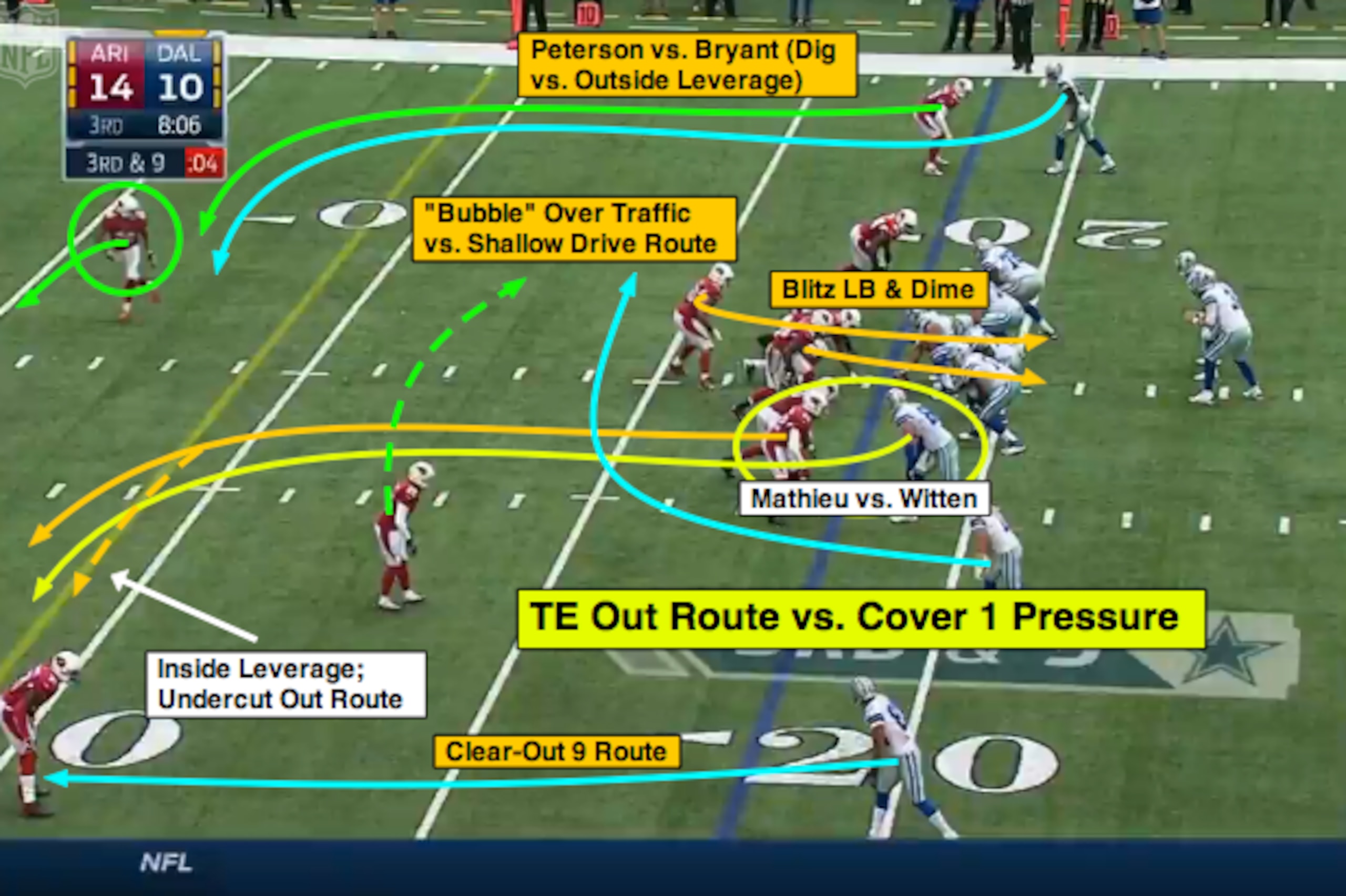
The Cardinals are very aggressive under defensive coordinator Todd Bowles when they bring dime personnel (six defensive backs) on the field. This creates opportunities for the Cardinals to use multiple fronts, bring pressure and utilize their personnel in the secondary.
That’s what we see here with the Cardinals rushing six out of the dime front with Patrick Peterson matched up to Dez Bryant and Mathieu rolling down over Witten.
The Cardinals defensive back uses a “taxi” technique (shuffle/inch-off at snap from a press alignment) and sticks to the inside hip of Witten with the Cowboys clearing out the closed side of the formation on the 9 (fade) route.
This will create space (remove the cornerback) for Witten to run the out route away from the leverage of Mathieu.
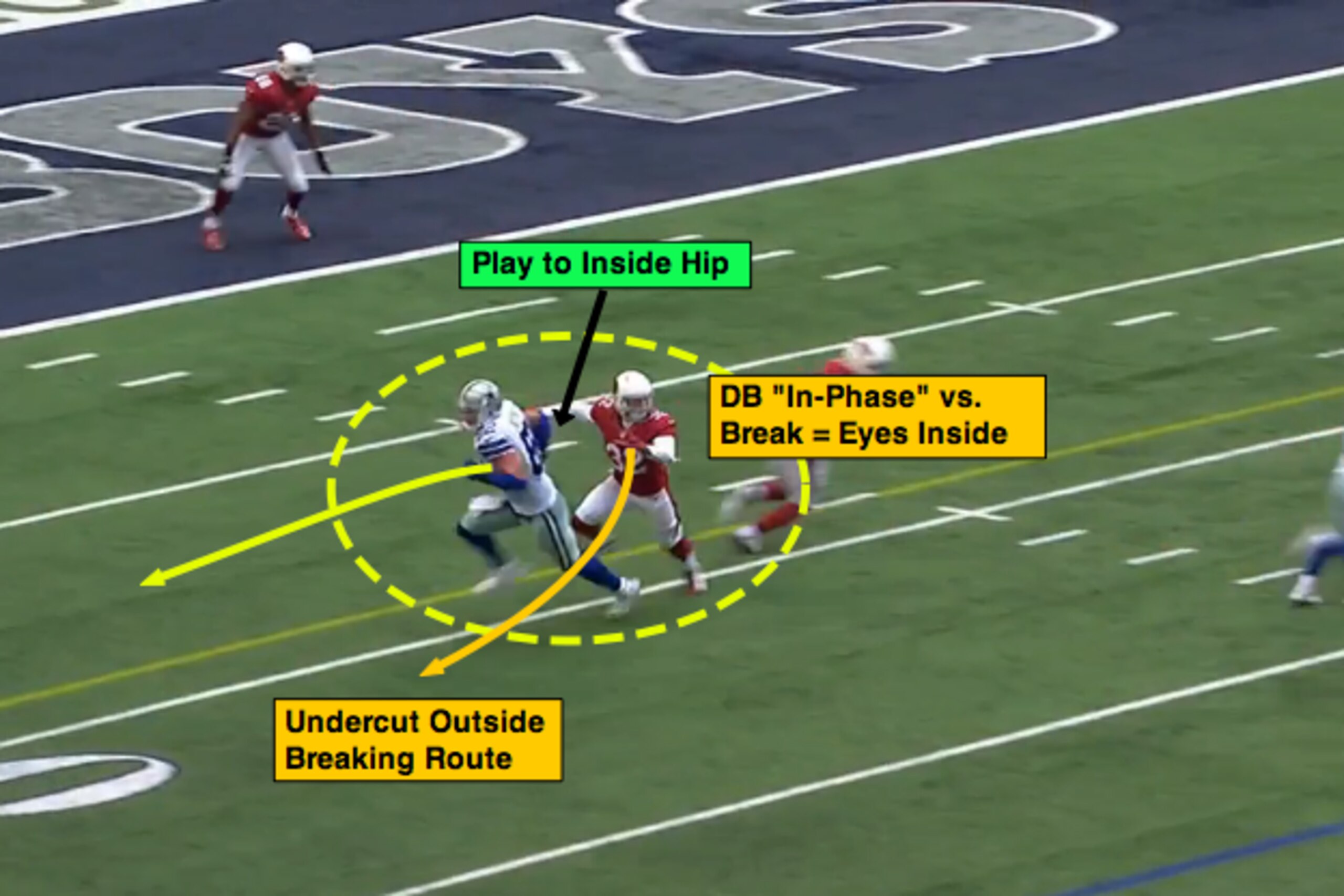
I like this angle of Mathieu at the break point because it shows the defensive back "in-phase" (on the hip) versus Witten and in a position to get his eyes back inside to the quarterback.
This allows Mathieu to play aggressively (and take some risk) by sliding low on the hip and undercutting the route to drive on the outside breaking concept.
One rule for defensive backs: If you undercut the route (instead of driving to the upfield shoulder), you better make the play.
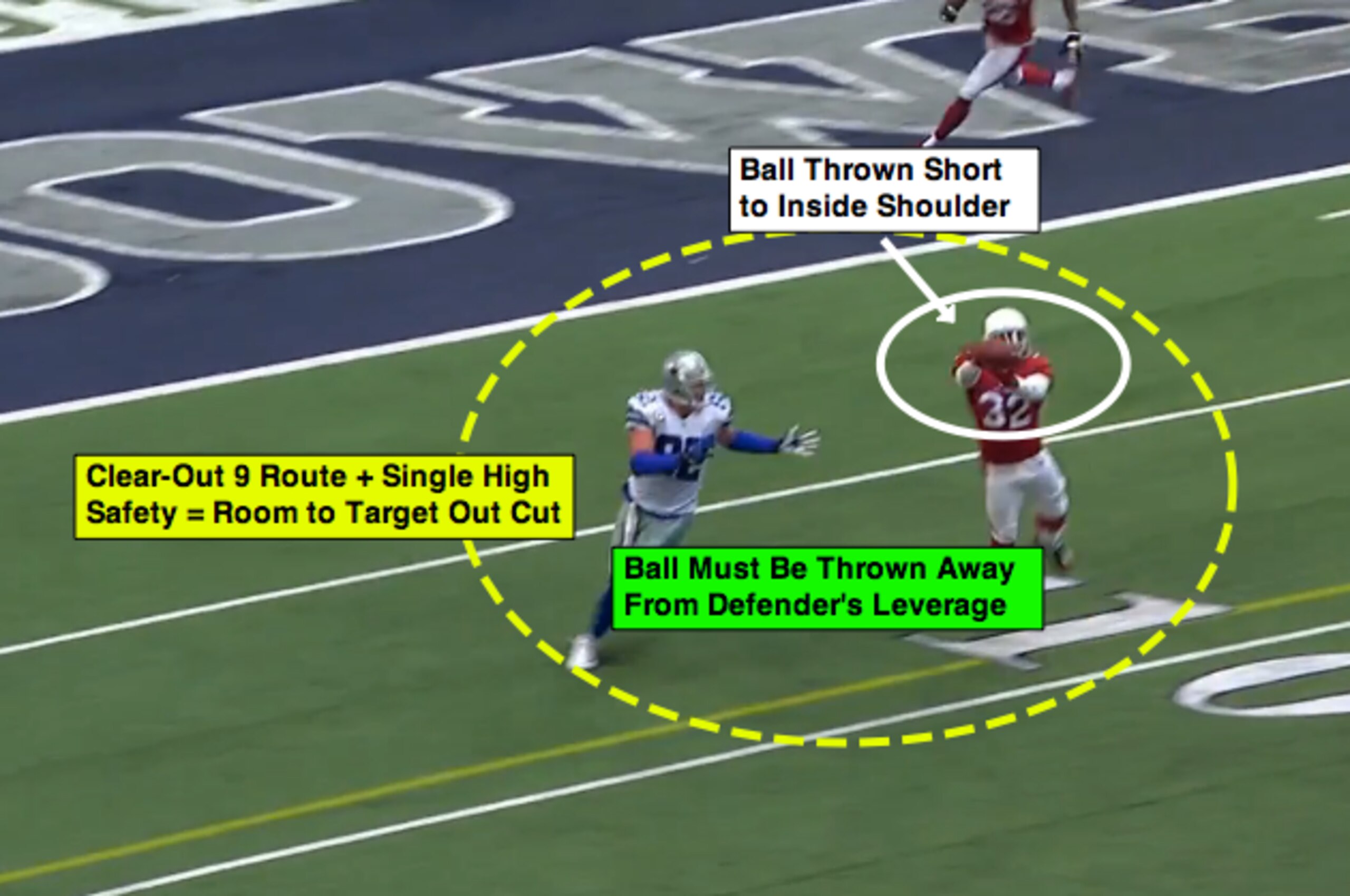
I talked about ball placement above, and that’s the issue here with Weeden leaving this throw short and to the inside. The Cowboys quarterback has to put more velocity on the throw and get the ball outside of the numbers for Witten to secure the catch away from the defender’s leverage.
Instead, Weeden brings Mathieu into play, and the Cardinals defensive back takes advantage of his aggressive technique and style to finish with an interception during the 28-17 win in Dallas.
Mark Sanchez Beats the Texans’ Red-Zone Cover 1
After starting quarterback Nick Foles was knocked out the game with a broken clavicle, Sanchez took the ball and attacked the top of the Houston Texans secondary to put the Eagles in scoring position before finishing up the drive with a touchdown pass to Jordan Matthews.
Let’s take a look at Sanchez’s ability to move the free safety in the middle of the field (four verticals) while discussing the ball placement on the inside-seam route versus the Texans’ Cover 1 defense.
Personnel: Posse/11 (3WR-1TE-1RB)
Formation: Empty
Offensive Concept: Four Verticals
Defensive Scheme: Cover 1 Pressure (Five-Man)
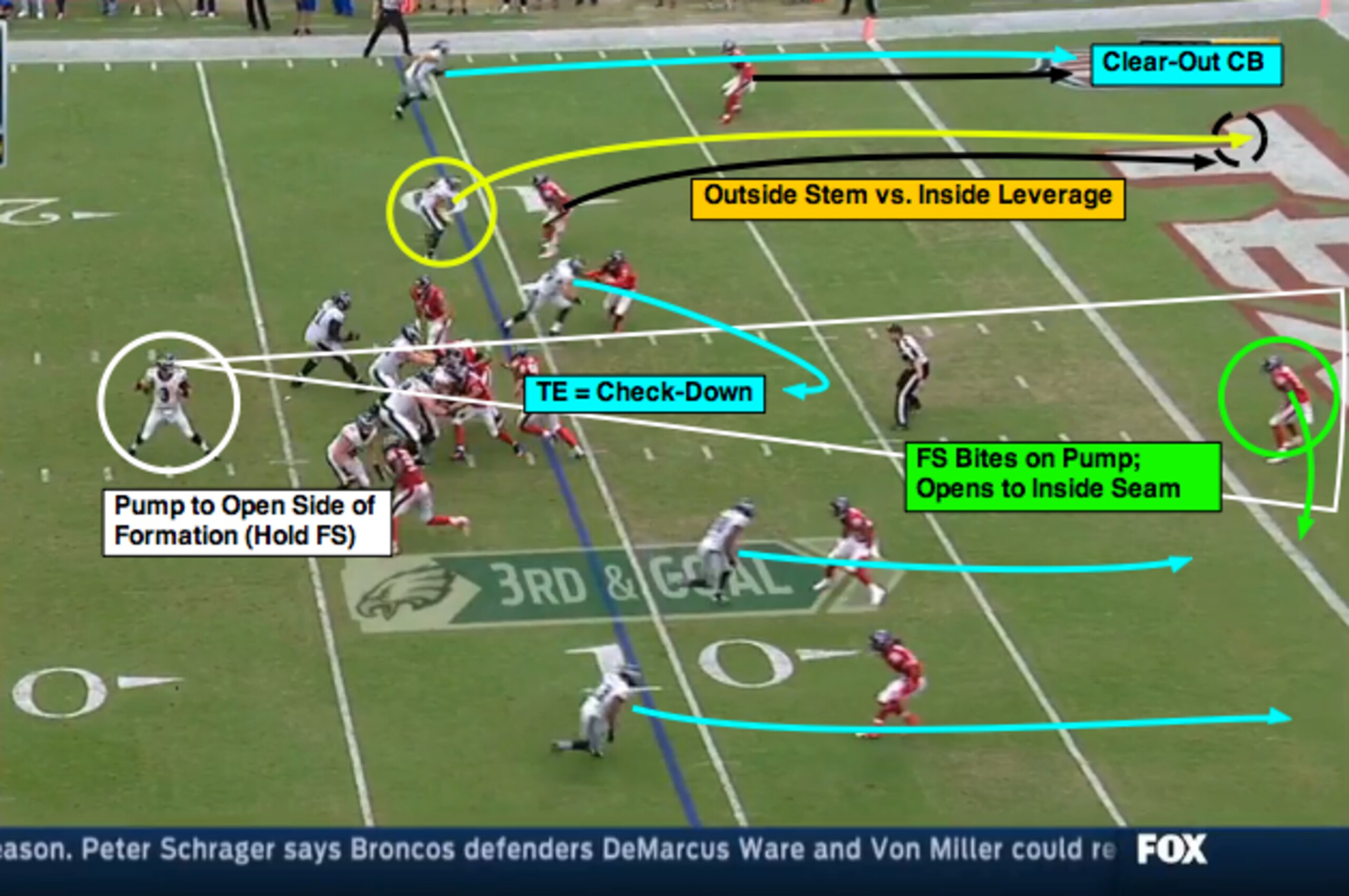
With the Philadelphia Eagles running four verticals versus a single-high safety defense, Sanchez has to hold (or move) free safety Danieal Manning to create a throwing window on the inside-seam route to the closed side of the formation.
Here, Sanchez uses the quick “pump” to the open side of the formation with Matthews stemming his route outside versus defensive back Andre Hall.
The “pump” forces Manning to open his hips (removes the free safety from the deep middle of the field) while eliminating any immediate help to the closed-side seam route.
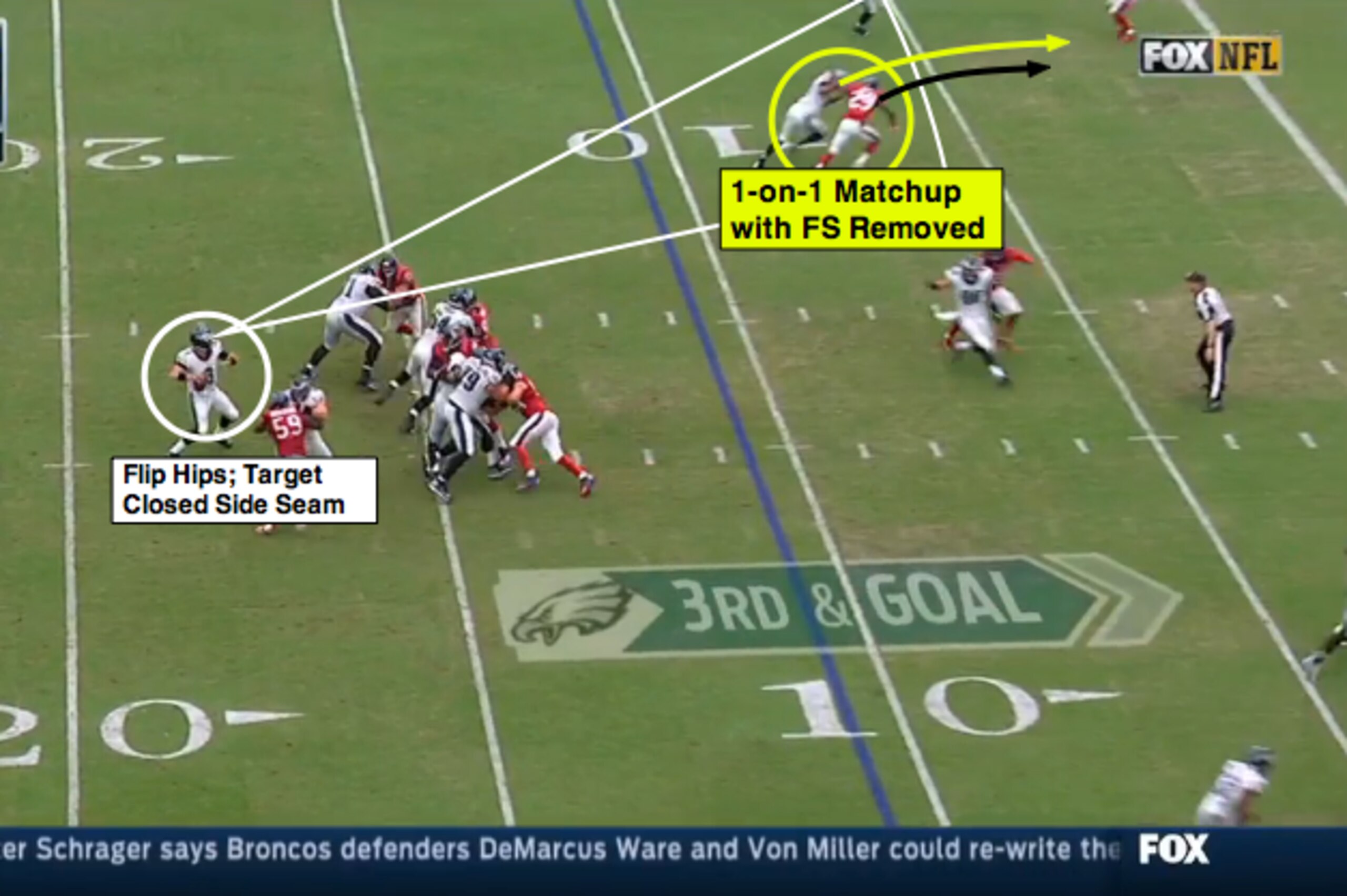
I like the mechanics and footwork from Sanchez after the “pump” as the quarterback flips the hips and quickly resets his feet before looking up Matthews on the inside-seam route.
This allows Sanchez to close his shoulder to the target and step into the throw with Matthews now in a true one-on-one matchup (no safety help) versus a defensive back playing from an inside-leverage position.
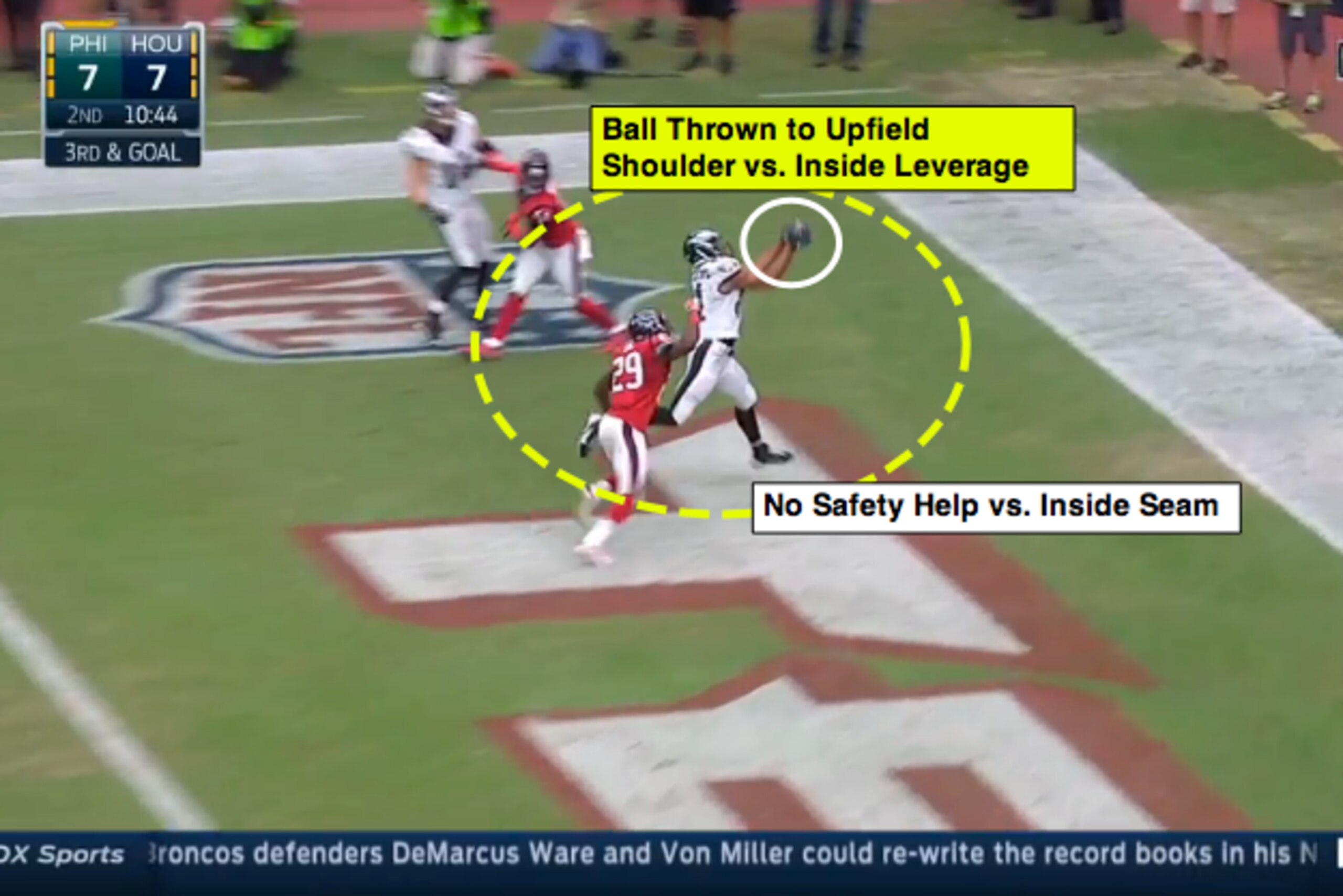
With no help over the top, the Eagles wide receiver separates on the throw and secures the catch on an excellent ball from Sanchez to the upfield shoulder on the seam route.
Given that Foles is out for at least four to six weeks, Sanchez has a great opportunity to produce in Chip Kelly’s scheme while possibly locking down the No. 1 job for the remainder of this season in Philadelphia.
Vikings Utilize the Packaged Play in the Red Zone
Matt Asiata produced three touchdowns in the Minnesota Vikings' 29-26 win over the Washington Redskins with his second score coming on a packaged play that removed the second-level defensive support on the inside-zone scheme.
Here’s a look at the multiple reads for quarterback Teddy Bridgewater off the mesh-point action that allowed Asiata to attack downhill and put this ball in the end zone.
Personnel: Ace/12 (2WR-2TE-1RB)
Formation: Doubles Slot Gun Far
Offensive Concept: Packaged Play (RB Inside Zone)
Defensive Scheme: Cover 1
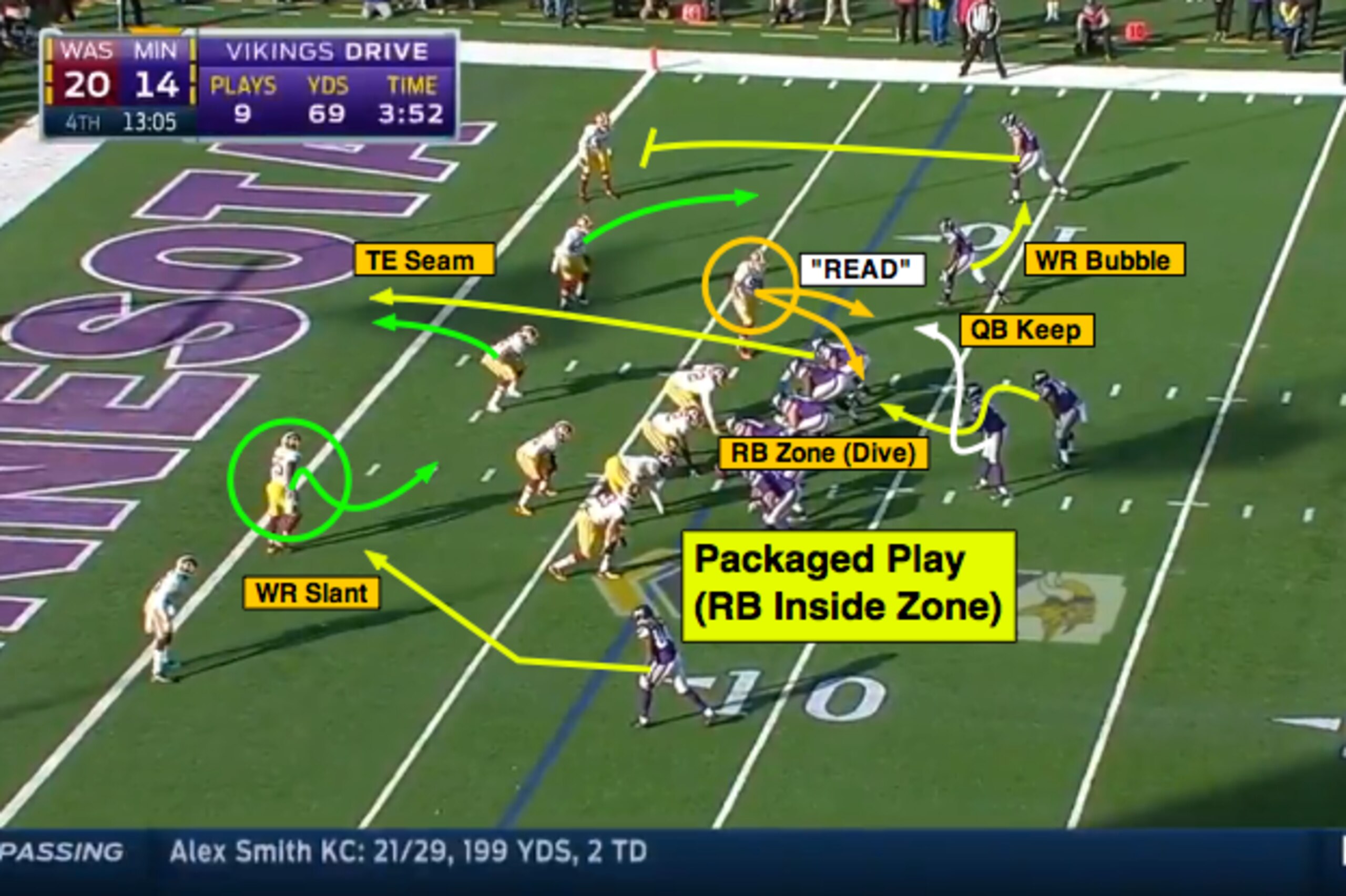
In this packaged play, Bridgewater can hand off to Asiata on the inside zone (dive), pull the ball (keep), target the tight end seam, throw the wide receiver bubble screen or come back to the "X" receiver on the slant.
Think of multiple reads for the quarterback (based on the numbers in the box) that put stress on defensive run/pass keys with zone blocking up front off the mesh point (quarterback-running back exchange).
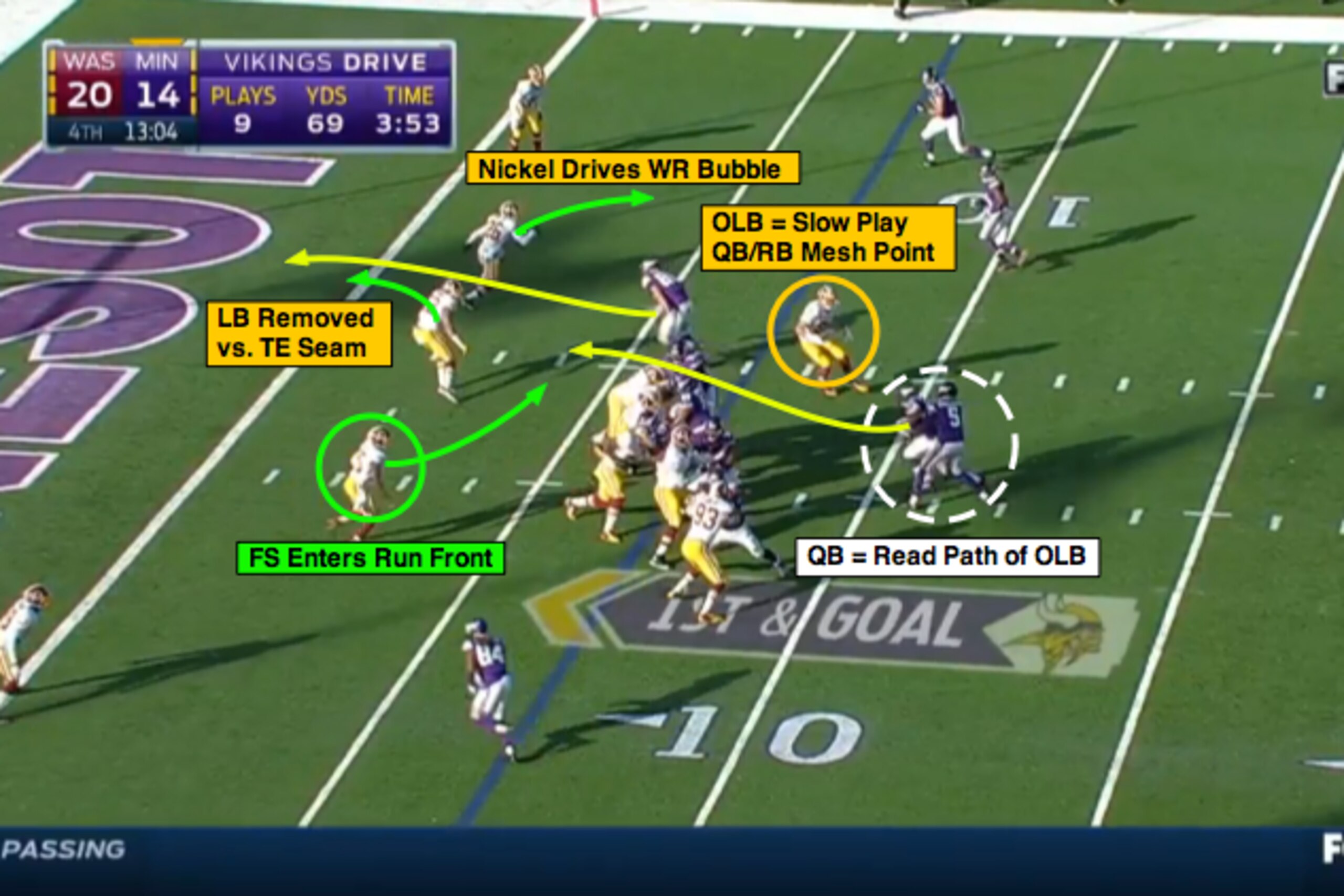
Here, Bridgewater reads the closed-side edge defender (outside linebacker Ryan Kerrigan) with the middle linebacker carrying the tight end seam and the nickel cornerback driving to the bubble screen.
With Kerrigan attempting to “slow play” the mesh-point action (play both quarterback and running back), Bridgewater gives the ball to Asiata on the inside zone as the linebacker fails to close the edge.
This creates an inside running lane with the middle linebacker removed in coverage versus the tight end seam and the free safety, Ryan Clark, dropping down into the front.
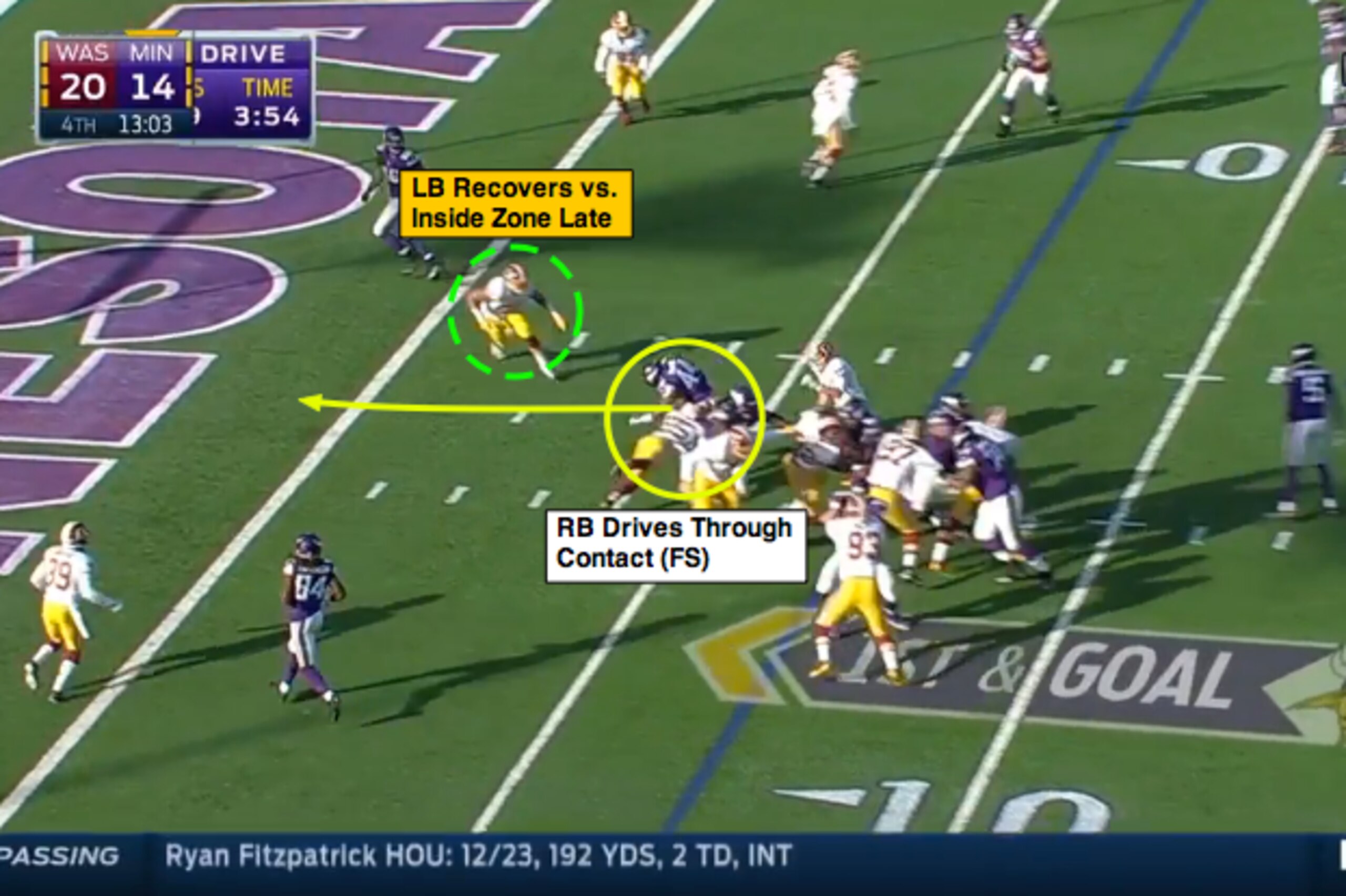
Clark has to create an inside-out angle to the ball and make a tackle versus Asiata at the second level to keep the running back out of the end zone.
The middle linebacker reacts late to the inside zone, and Clark can’t get his head across on the tackle attempt. That allows Asiata to run through the contact and take this ball in for the score.
Seven-year NFL veteran Matt Bowen is an NFL National Lead Writer for Bleacher Report.
.jpg?w=2560 "Seahawks Cardinals Football")
.jpg?w=2560 "Commanders Cowboys Football")