

What the P.K. Subban Deal Means for NHL Superstars' Contracts Going Forward
The Montreal Canadiens had two choices. They could stick to their guns, refuse to give P.K. Subban a massive contract and lose one of the five-to-10 best defenceman in the game of hockey. Or they could sign him long term at a cap hit larger than any other defenceman’s in the league.
Wisely, they chose Option B, signing the rearguard to an eight-year extension:
And while Subban’s contract may seem exorbitant, it really isn’t, and it won’t be long before even the appearance of exorbitance is a thing of the past.
TOP NEWS
Best NHL Heritage Classic Jerseys 📋
Teams That Need Goalie Trade💡
Hellebuyck Trade Takeaways 📊
On one hand, the NHL has arrived in a new era, an era of massive cap hits for true superstars. On the other, this really isn’t a new era at all; it’s simply the direct and obvious consequence of the league forcing NHL teams to stop hiding reality.
The simplest way to illustrate this is with a quick look at CapGeek.com.
Looking at the top cap hits in the NHL, Subban’s $9.0 million figure currently ranks No. 3, behind only Alex Ovechkin and Evgeni Malkin (the new deals for Jonathan Toews and Patrick Kane do not kick in until 2015-16). That sounds terrible—I think Montreal made an exceptional signing here, and even I’ll admit that Subban isn’t the third-best player in hockey.

But if, instead of looking at cap hits, we look at salary, something interesting happens: Subban disappears. He isn’t a top-five player. He isn’t a top-10 player. We have to scroll all the way to the bottom of the top 50, where Subban’s $7.0 million salary ties him with defencemen Dan Girardi, Andrei Markov, Drew Doughty and Zdeno Chara (bit of a range in talent there).
Why the disparity?
NHL teams, forced to choose between losing their superstars and losing their ability to compete (thanks to tying up all their money in individual players), found a third option under the old collective bargaining agreement: massively front-loaded deals with a bunch of cheap years tacked onto the end. Players got the money they wanted, teams got the cap hit they wanted and, thanks to escrow, a healthy chunk of actual dollars was taken off those deals.
Everybody won!
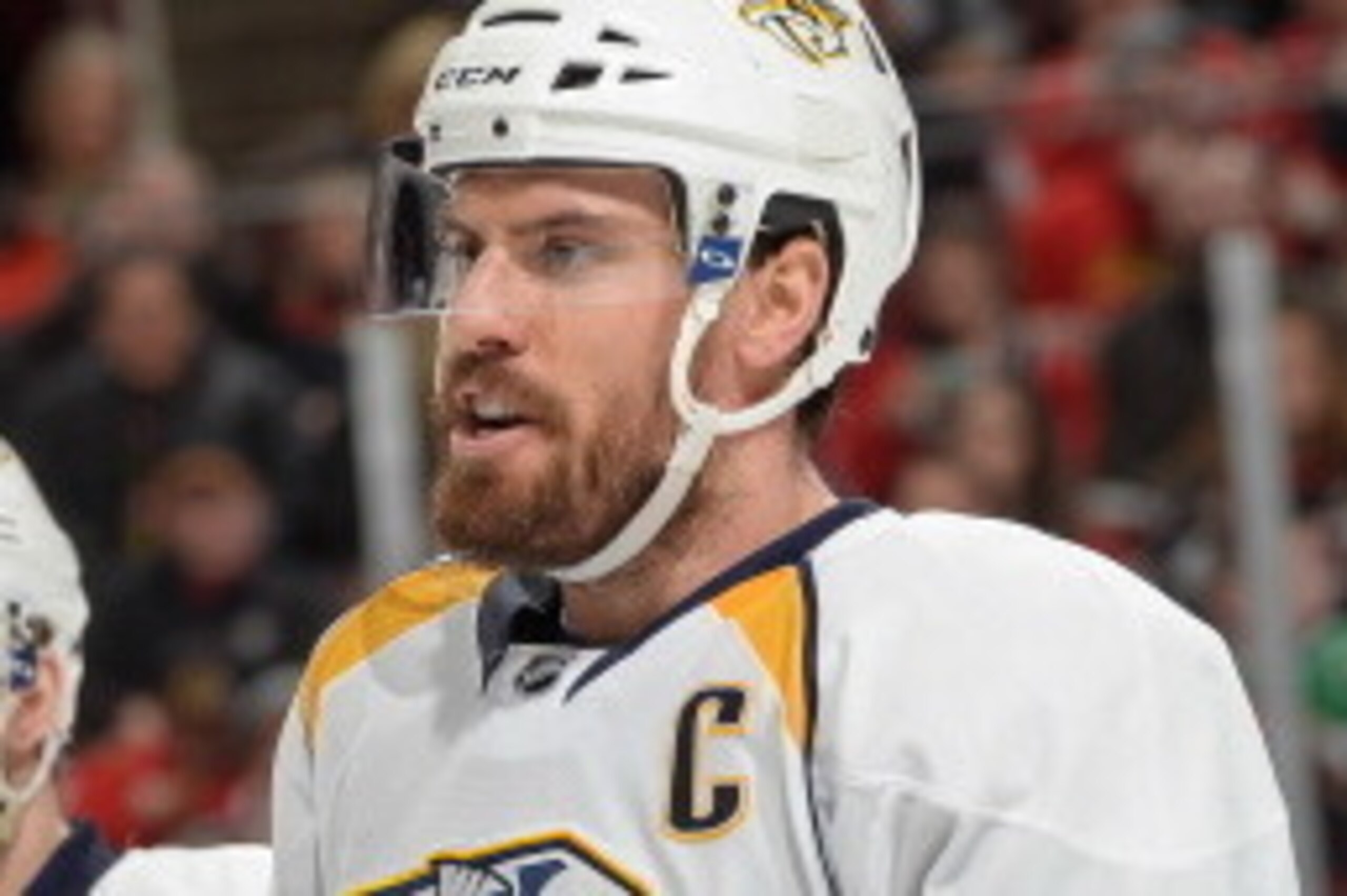
In reality, of course, this was just allowing teams that could afford it the opportunity to finagle their way around one of the desired primary effects of the salary cap—competitive balance. So when the new CBA was instituted, it limited the length of contracts and stopped deals like the one handed out to Shea Weber, which will pay him $14 million this season but only a grand total of $6 million for 2022-2026.
That sent teams and players back to the drawing board. Superstars still want to be paid big dollars, and teams still want to keep cap hits manageable.
Subban acknowledged as much.
"It was just a matter of getting something done that was fair value for myself and fair for the Montreal Canadiens,” Subban was quoted as saying afterward by Canadian Press, via the National Post. "The player always wants to be paid fairly but you also want to be able to win a Stanley Cup. It’s important to do that, and to do that you need to have good teammates."
The first real test cases were the contracts handed out to Kane and Toews by the Chicago Blackhawks, eight-year deals with a $10.5 million cap hit. But those also constituted special circumstances in some ways, because the duo had combined for two Cup rings already, and the team had already gone through something similar when the two came off of their entry-level deals.
Subban, as exceptional as he is, doesn’t have the Cup rings of a Toews or a Kane. Additionally, Montreal still had two restricted-free-agent years under its control. Those things mattered, but only enough to knock the cap hit below $10 million.
Because Subban doesn’t have the exceptional history of Toews and Kane, his new deal is proof of concept in a way their extensions were not. There is a new paradigm for superstars in the NHL, regardless of whether they are proven components of a championship team, one that will see those stars account for increasingly high percentages of their respective team’s cap space.
Jonathan Willis covers the NHL for Bleacher Report. Follow him on Twitter for more of his work.
All salary information courtesy of CapGeek.com.
.jpg?w=2560 "NHL Trade Grades Connor Hellebuyck")


.jpg?w=2560 "Raiders Could Start Mendoza")


.jpg?w=2560 "Rodgers Iced Out on Plane 💎")


.jpg?w=2560 "🚨 Week 8 AP Top 25 Poll")