

Al Bumbry Got a Bum Deal in the 1973 MVP Vote
First in an 11-part series about the vagaries of awards voting.
Al Bumbry rightfully earned American League Rookie of the Year honors in 1973. However, as arguably a division champion’s best hitter, he received not a single vote for Most Valuable Player.
Naysayers might counter that Bumbry played only 110 games; however, dozens of position players who have played as few games have received MVP consideration over the years.
TOP NEWS
Dodgers Clinch NLCS Return

Predicting the Outcome for Each Team's Top Free Agent 🔮
Guardians Force Game 4
In fact, in that same season, Bud Harrelson, who collected votes in the NL MVP race, played in only 106 games, and Dick Allen received a vote after suiting up for a mere 72 games before suffering a leg fracture.
(In a strange coincidence—and a display of Baltimore’s bottomless depth in those days—Rich Coggins, often platooning alongside Bumbry, also played in 110 contests and, enjoying a season statistically similar to Bumbry, earned a first-place vote for Rookie of the Year.)
Loaded, as usual, with pitching and defense, the Baltimore Orioles easily outpaced a hard-hitting Boston Red Sox club and won the AL East by nine games.
Lacking a booming bat, Baltimore placed eighth in the AL in home runs thanks in large part to Boog Powell’s injury-plagued season. However, the Birds still barely missed outscoring the rest of the Junior Circuit by playing smart, Earl Weaver baseball: taking pitches and swiping bases.
Baltimore led the AL in walks, on-base percentage and stolen bases. And although Orioles batters were not a constant threat to hit the long ball in 1973, they hit the ball often and all over the field enough (Baltimore also led the AL in triples) to log the third-highest OPS in the league.
Jim Palmer’s first Cy Young Award–winning season and a pitching staff that boasted the lowest ERA (including the fewest hits allowed and the second-fewest walks issued) combined with the stifling Orioles defense (four Gold Gloves, with a nearly impregnable infield of Brooks Robinson, Mark Belanger and Bobby Grich and a speedy outfield captained by Paul Blair) to strangled opponents.
Baltimore surrendered, by far, the fewest runs in the AL.
So exceptional were the Orioles in every facet of the game that it’s a wonder they didn’t tally more than 97 victories.
Used sparingly as a pinch runner throughout the beginning of the 1973 season, 26-year-old Al Bumbry soon found a spot as a corner outfielder—primarily in left field. (His trek to the Majors had been delayed by a year in Vietnam, during which time he received a Bronze Star while serving as a platoon leader.)
Like Bumbry, the Orioles started slowly out of the gate. A .500 club as late as June 13, Baltimore battled a four-team logjam led by the surprising New York Yankees—although Al warmed with the change of season, going 11-for-26 to close out June.
Playing decently but yet to fire on all cylinders, Baltimore remained in a four-team race throughout the summer, finally pushing past the sputtering Yankees on August 3. But the Detroit Tigers wrested first place from Baltimore just three days later.
Until the Birds finally turned on the jets.
Earl Weaver’s crew ran off 14 consecutive wins beginning in mid-August, quickly reclaimed top spot in the AL East and never looked back.
(The Red Sox, trailing all three of these squads, rushed past Detroit in late August and chased Baltimore into autumn—but despite playing .607 ball over the last month, Boston could never get closer than four games out.)
Bumbry heated up long before Baltimore—amassing an eye-popping OPS of 1.015 in June—and stayed hot for the rest of the season. And as the pesky Sox remained within striking distance in early September, Al shifted into overdrive, hitting .409 and slugging .570 over the season’s final month.
Bumbry was Baltimore’s catalyst in 1973. When leading off an inning, he registered an on-base percentage of .437 (not to mention hitting five of his seven home runs).
When Baltimore trailed, Bumbry slugged a near-Ruthian .654 (in 107 at-bats—not merely a handful). And in the eighth and ninth innings, Al hit .509 and slugged .649.
Perhaps even more tellingly, against Detroit and Boston—Baltimore’s summer-long rivals for the division crown—Bumbry hit a combined .410 and slugged a hefty .639.
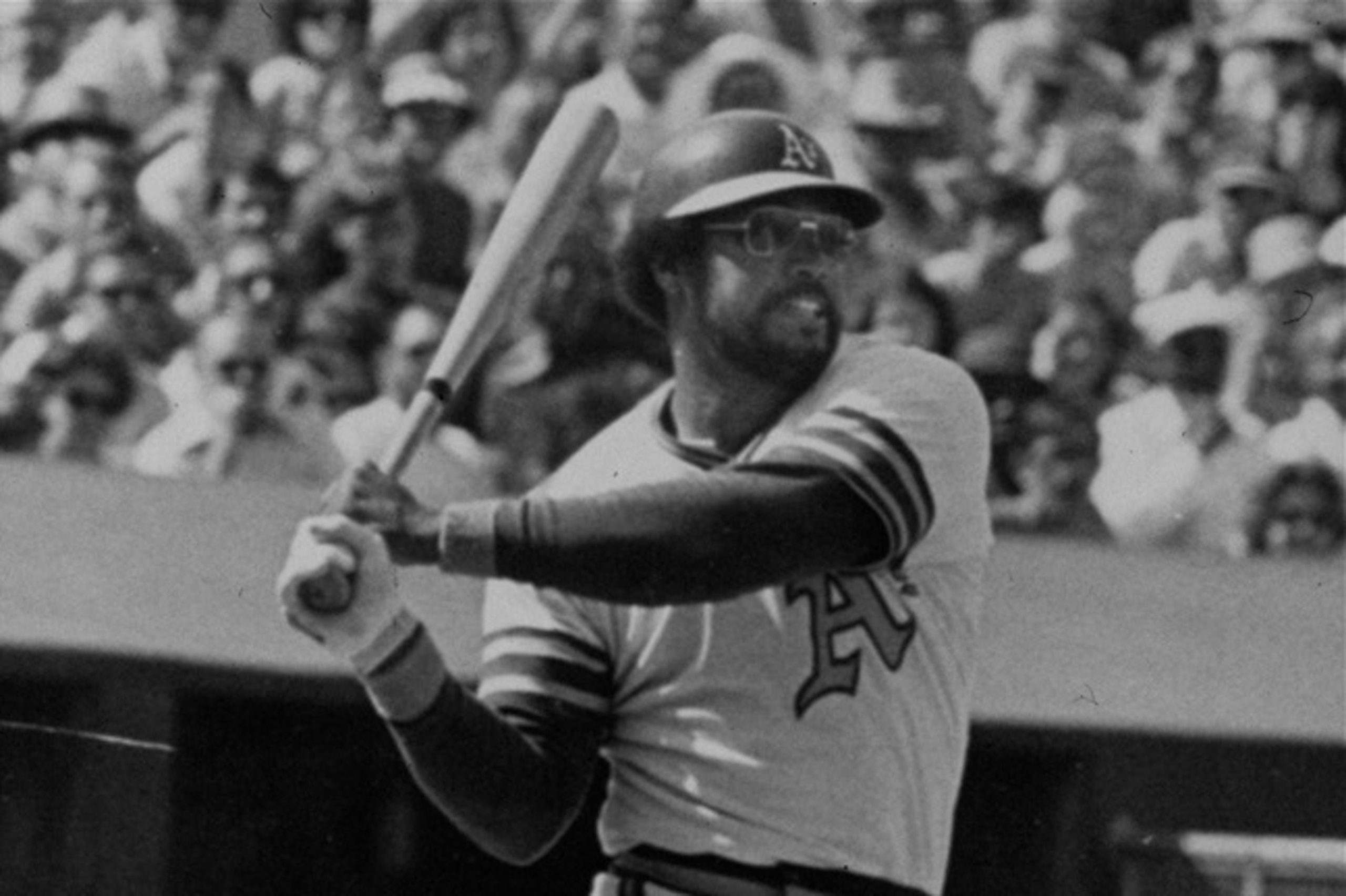
At season’s end, the rookie had hit .337 and with only seven home runs had managed to slug .500—largely on the strength of a league-best 11 triples (remember, in only 110 games). In fact, excluding Dick Allen and his less than half a season, Bumbry’s OPS of .898 stood second only to Reggie Jackson, who won the MVP vote unanimously.
Al also stole 23 bases, and his 73 runs tied for second on Baltimore with Paul Blair, who played 36 more games.
Voters rewarded Bumbry with a richly deserved Rookie of the Year Award but utterly ignored him in the MVP vote. One might be inclined to think that voters considered the MVP off-limits to a first-year player amply honored with the Rookie of the Year, but Fred Lynn took home both awards only two seasons later.
As division winners, Baltimore saw five of its players make the ballot. Jim Palmer and his AL-topping 2.40 ERA rightly earned the lion’s share of MVP votes going to Orioles. However, Tommy Davis, who enjoyed a fine comeback after playing only 41 games in 1972 due to injuries, received enough votes to tie with Catfish Hunter for 10th place—despite delivering little punch as a designated hitter.
Davis did hit .306 and drove in 89 runs, yet he slugged only .391 and scored fewer runs than Mark Belanger—whom he outhit by 80 points. Certainly a good season for the 34-year-old Davis, but nowhere near as productive as Bumbry.
And both Bobby Grich and Paul Blair, though providing Gold Glove defense, put up numbers in 162 and 146 games, respectively, that weren’t any more valuable than Bumbry’s 110-game totals. (Grich drew 107 walks yet outscored Bumbry by only nine runs.)
It is inconceivable that Deron Johnson, the Oakland A’s designated hitter, was more valuable to his team than the mercurial Bumbry. Johnson managed to collect eight vote points despite hitting an anemic .218 and a mere seven home runs after the All-Star break.
Among American Leaguers who suited up for at least 100 games in 1973, Al tied for second in runs created per game—even topping unanimous MVP Reggie Jackson.
That Al Bumbry could be a division winner’s offensive spark plug yet not make it onto any of 1973's 24 MVP ballots represents a sizable oversight by the voters.
.jpg?w=2560 "MLB playoffs")




.jpg?w=2560 "Dak to Stroud: Get Some Wins 💯")
.jpg?w=2560 "Vikings HC Called OBJ Before Release ☎️")
.jpg?w=2560 "5 NFL Players Getting Trade Buzz")
.jpg?w=2560 "NFL Won't Fine 'Beverage' Celebrations 🍻")