Hall of Famer Al Kaline Reflects on Being a Bonus Baby, Upcoming MLB Draft
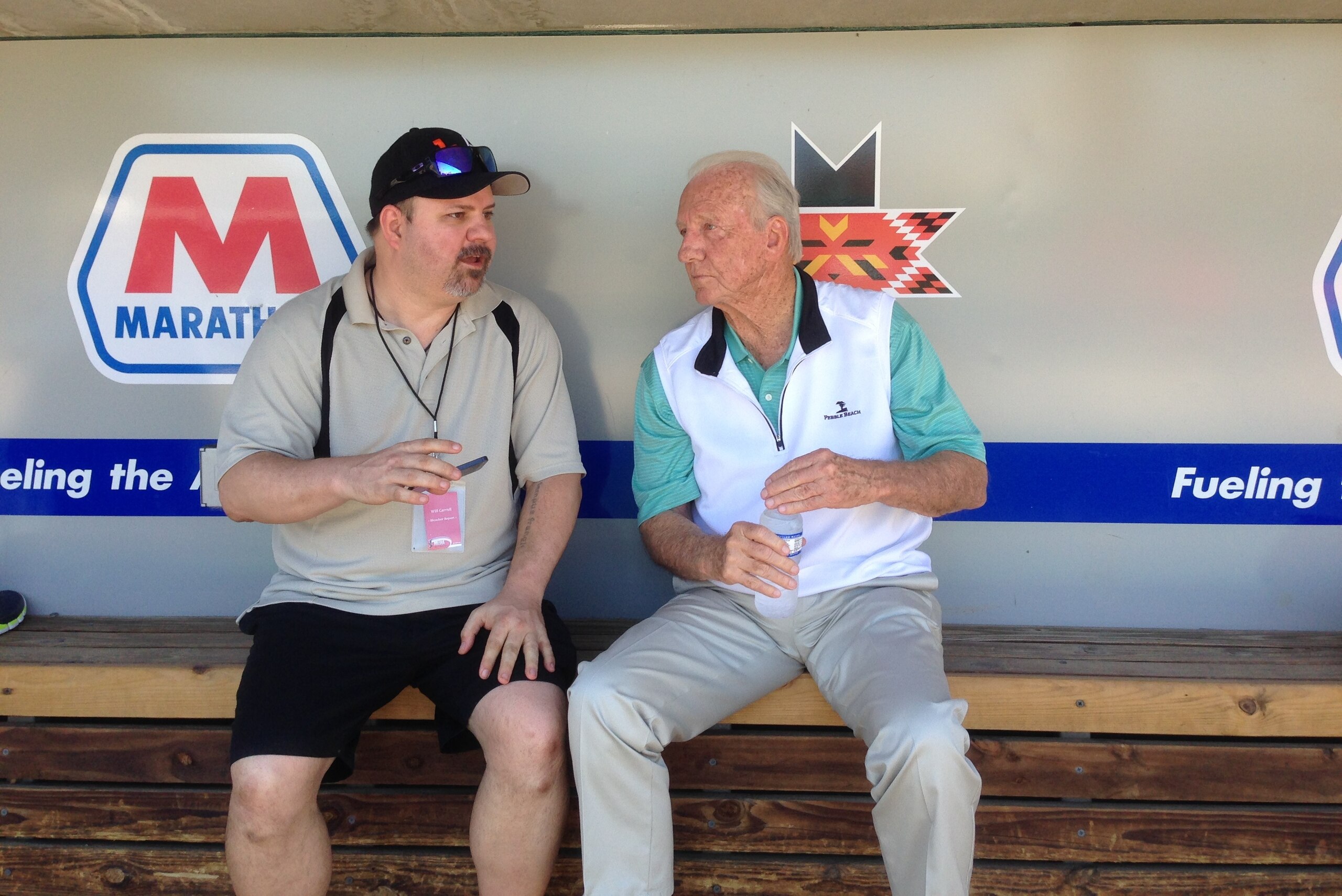
Al Kaline was in Indianapolis as part of an appearance for the Triple-A Indianapolis Indians over the weekend. I was given a chance to sit down with "Mr. Tiger," the Hall of Famer who spent 22 seasons with the Detroit Tigers and continues with the club as a special assistant to GM Dave Dombrowski.
The superlatives on his career are almost ridiculous. Three thousand hits. An All-Star 18 times. A .297 lifetime average. Three hundred and ninety-nine career home runs. He was just the 10th player voted into the Baseball Hall of Fame on the first ballot.
Kaline gave his opinions on being a "bonus baby" in the 1950s, the changes in how the game is played and his thoughts on the upcoming MLB draft. I also had to ask about players from his era, including Mickey Mantle, as well as the Tigers he loves to watch today.
TOP NEWS

Predicting the Outcome for Each Team's Top Free Agent 🔮
Dodgers Clinch NLCS Return
.jpg?w=2560 "MLB playoffs")
Live MLB Division Series Action 🍿
If you would like to hear the interview, you can click here for the audio via SoundCloud.
Will Carroll: I was mentioning earlier you were a “bonus baby,” as they referred to it. What was it like for you, having to go straight to the major leagues and perform immediately?
Al Kaline: It was certainly great to go right to the major leagues, but I have to say it was very tough emotionally on me, because here’s an 18-year-old kid coming in and taking somebody’s job who probably spend four, five, six years in the minors. I remember the first day I joined the ballclub, a veteran player grabbed me by the shirt and said, “You don’t belong up here, you took my best friend’s job.” (It) scared me to death, I’m only 18 years old and I’m only doing what they told me to do. But, you know, I joined a very bad ballclub, last place. That’s the only one that would take a bonus player, obviously, and I had a chance to play. I only got into six or seven games for the first year, because I joined the team June 20, so I was mostly a defensive outfielder and a pinch runner. The next year, I was a regular.
WC: How did you get your teammates to accept you? Was it just them seeing you working hard? Was it that you weren’t going anywhere? Or was it your talent?
AK: I think they sort of liked me because I was living downtown and I used to go to the ballpark very early and throw batting practice to the older guys, because I knew I wasn’t playing. I shagged for them, I picked up all the balls, and I was very quiet. They sort of accepted me and saw that I had some ability, but I was really thin and really small at that time. But they saw that I really appreciated the game, I respected the game and I was the type of kid who wasn’t too loud and I respected my elders.
WC: When you see places like Victory Field, these amazing facilities we have now—obviously you’ve got great facilities in the Tigers organization as well—do you think maybe we’re taking it too slow with some of these guys? Obviously you were a special talent, but when guys are taking five, six years—a level per year—do you feel like we’re holding them back, especially pitchers?
AK: Oh there’s no question there’s probably more ability in the minor leagues than ever before, but you also have to realize that the front offices have responsibility, guys can play out their options now. You would hate to bring up a guy and he struggles for four or five years and all of a sudden he becomes a great player and becomes a free agent. So you try to wait as long as you can, until you feel he can really help your ballclub. But yeah, if I could do it at 18, certainly there are hundreds of guys who can play in the big leagues right now. Back then, I was given the opportunity.
WC: You had foot problems throughout your career. How did you overcome that? You had the same condition that Mickey Mantle did.
AK: Yeah, I had osteomyelitis when I was real young and I had three operations on my foot. From all the pounding I took on the field, plus what I did in the wintertime—I played basketball a lot in the wintertime —the bones all dropped to the bottom of my foot. I was in a lot of pain, and it was before all the new gizmos about foot stuff, so all I did was cut some sponges and taped them all to the bottom of my foot to alleviate the pain. Plus the fact I played one year with a separated toe. My toe fell out of place because of all the bone movement.
WC: With the draft coming up, obviously, a couple of years ago (2011) the Tigers drafted your grandson. What was that experience like for you and for him?
AK: For me, I was in tears when the ballclub drafted him. He was just a very average player. He’s now a baseball coach at a college (Florida Southern), but to see my grandson, my name on the uniform of the Detroit Tigers organization, it was a great thrill. But he realized that he wasn’t going to go very far in baseball, and when the opportunity to become a college coach came about—because he loves the game —he jumped at the opportunity.

WC: When you look at players today—obviously you being with the Tigers, you have maybe one of the best of all time—what players do you like watching?
AK: Well, (Mike) Trout’s probably the best all-around player in the game today. He does everything: power, run, defense, speed. I mean he does it all. Miguel Cabrera’s the best hitter that I’ve ever seen, and I’m not going to talk about the National League because I’ve never seen that much of it. I’m sure there’s great players over there. But (Cabrera) is the best hitter I’ve ever seen in a Tigers uniform. Right now, if he doesn’t play another game, he’s a Hall of Fame candidate.
WC: When you see the pitchers of today and you see the kind of velocity they’re putting up, and the kind of movement, do you ever wonder what it would be like to face them?
AK: I would love to face them today. The fastball never bothered me, but I have to realize the strike zone’s a lot smaller. They don’t have to worry about a shoulder-high fastball to hit. Now it’s just above the waist. Velocity is great, but also you don’t have to worry about hitting the high fastball anymore, everything’s down.
WC: When did that switch happen?
AK: I think when the umpires moved to the side (of the catcher). Before, in the American League particularly, they had the big balloon (chest protector), so they couldn’t see the low pitch, so they called the high pitch. Now, with all the umpires off to the side, they can see the (low) pitch. So yeah, these guys are much tougher to hit, and the reason they’re tougher to hit is because the starters don’t go long. Before, when I played, the starter would always go seven innings. I mean he had to be really bad to be brought out of the game. Now, he may only go four, five, six, then you bring somebody in for one inning, then you bring somebody in for the next inning, then you bring the closer in. So you don’t really get a chance to see these pitchers very often.
WC: Do you think because of that they’re throwing harder? It’s tougher, they’re going for the strikeout instead of coasting along? Could you tell pitchers were basically throwing 80 or 90 percent, then when they needed to go back and find that hard fastball, they’d do it?
AK: Players today throw a lot harder than the guys we had. There were always a couple pitchers that threw 95 (mph). Nolan Ryan threw 99, 95. There were quite a few that threw high, but not as many guys as you bring in now. But it’s specialized now, they know they’re only going to throw one inning so they can throw as hard as they want without worrying about going two or three innings.

WC: Was there a pitcher you hated facing?
AK: (Laughs) Yeah there were a lot of pitchers I hated (facing). A lot of them, oddly enough, are not “name” players. For whatever reason, there was a guy up in Boston named Frank Sullivan, a 6-foot-7 guy who threw sidearm. He got me out just throwing his glove out there. But then I wore Jim Kaat out, I wore Whitey Ford out, I wore mostly all left-handers out. But some guys, they were able to get my number and make great pitches on me.
WC: Which pitchers do you like to watch today?
AK: Well, certainly, (the Tigers) have a couple good ones right now. Max Scherzer is really developing into, well, he was a Cy Young Award winner last year. (Justin) Verlander is having a little bit of an off year right now, but I don’t like to see guys just overpower people. I like to see pitchers that have to set up hitters and make pitches when they have to. There’s a lot of great pitching in the game today.
Special thanks to Matt Gatjka for the transcription and to Brian Bosma of the Indianapolis Indians for setting up the interview.


.jpg?w=2560 "Dak to Stroud: Get Some Wins 💯")
.jpg?w=2560 "5 NFL Players Getting Trade Buzz")
.jpg?w=2560 "Vikings HC Called OBJ Before Release ☎️")