
How Will Hiroyuki Nakajima's Game, Skills Translate from Japan to MLB?
The Oakland Athletics finally addressed their shortstop situation on Tuesday, agreeing to a two-year, $6.5 million contract with 30-year-old Hiroyuki Nakajima, as first reported by Jon Heyman of CBSSports.com.
Nakajima was first posted by the Seibu Lions last year and had his negotiating rights sold to the Yankees for $2 million, though the two sides ultimately failed to reach an agreement. Instead, the shortstop returned to Japan for the 2012 season and batted .311/.382/.451 with 13 home runs.
At face value, the signing makes sense. In the wake of the Red Sox’s signing of Stephen Drew on Monday, players such as Ronny Cedeno and Cesar Izturis highlight the list of remaining free-agent shortstops. Without making a trade, the signing of Nakajima is a less-costly alternative and seemingly a healthy gamble.
TOP NEWS
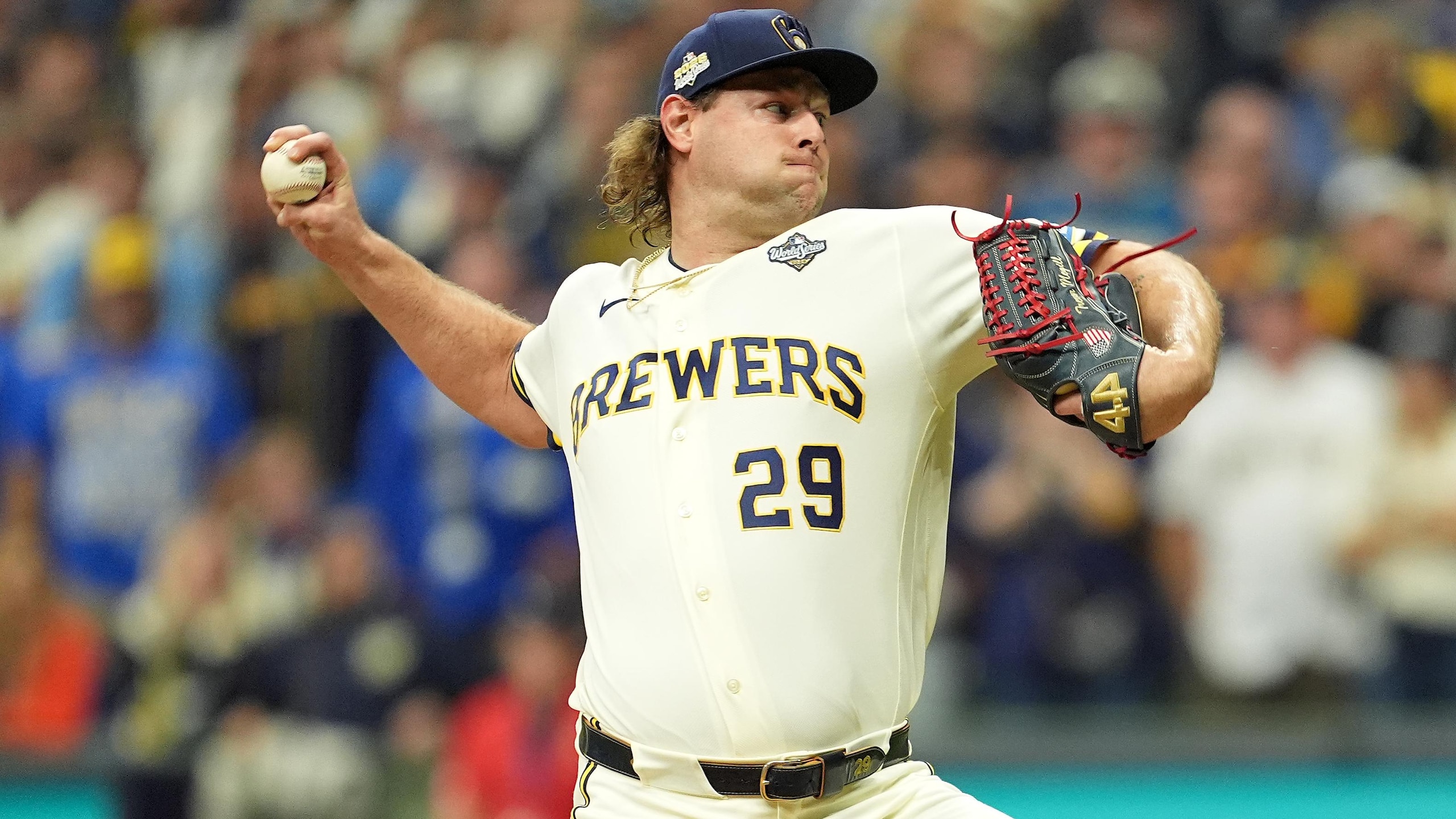
Brewers Closer Blasts Tropicana Field Roof

Latest MLB Trade Rumors 👂

Next MLB Players to Sign $200M Contracts 💰
However, that’s based entirely on Nakajima’s track record of success in Japan’s Pacific League, as well as the assumption that his skills will translate in the major leagues.
But with all Japanese hitters, there’s reason to be leery.
With swings designed to combat a deep arsenal of secondary pitches—many employ an exaggerated front leg lift to help keep their weight back—and the aptitude to foul off countless pitches in each at-bat, Japanese hitters have typically lacked the ability to barrel big-league fastballs with consistency.
That’s not a knock on them; Japan’s professional leagues are comprised of mostly command-oriented pitchers who rely on deception, which is of stark contrast to the obscene quantity of power arms represented at both the major- and minor-league levels.
Therefore, no matter how many looks one has at a player, signing a Japanese hitter has continued to be a trial-and-error process.
Recent Examples: Nishioka and Aoki
After winning the bidding rights ($5 million) to Japanese infielder Tsuyoshi Nishioka in November 2010, the Minnesota Twins signed him to three-year/$9 million contract, and he seemed poised to take over as the team’s everyday shortstop.
At the time, such expectations were justified. After all, the 26-year-old was fresh off a season in which he batted .346/.423/.482 and led the Pacific League in a host of offensive categories.
However, his success in the major leagues was scarce—and essentially the polar opposite of his 2010 campaign in Japan. Nishioka batted a paltry .215/.267/.236 in 254 plate appearances (in 71 games) with the Twins, and missed the first two-and-a-half months of the 2011 season after fracturing his fibula in early April.
In fact, the Nishioka experiment went so poorly that he opted to return to Japan following an uneventful 2012 season, a majority of which was spent in the minor leagues.
But then there’s the case of Norichika Aoki, who signed a two-year, $2.5 million contract with the Brewers—they were granted negotiating rights after submitting the highest bid ($2.5 million)—prior to the 2012 season.
Unlike Nishioka, Aoki didn’t come with lofty expectations. Playing for the Yakult Swallows in 2011, the outfielder batted .292/.358/.360 with only two home runs in his age-29 season.
However, Aoki turned out to be a pleasant surprise as a rookie, batting .288/.355/.433 with 81 runs scored, 10 home runs and 30 stolen bases in 155 games. His 2.9 fWAR ranked fourth among all rookie position players and he finished fifth in the National League Rookie of the Year voting.
Aoki’s success was a direct result of his ability square-up fastballs, which he did, a lot, in 2012. According to FanGraphs.com, the left-handed hitter registered a 22.3 wFB pitch value—the total number of runs a hitter has created off that pitch—which was good for 17th overall among all qualified big-league hitters.
Nishioka, on the other hand, posted a -8.6 wFB pitch value in his 254 plate appearances with the Twins.
Back to Nakajima
As I mentioned, Nakajima batted .311/.382/.451 with 13 home runs last season for the Siebu Lions in Japan’s NPB. Even if sabermetrics were available for his career, the nature and style associated with Japan’s top leagues would render them useless.
However, FanGraphs.com’s Jeff Sullivan offered some insight into Nakajima’s consistency over the last four seasons.
"Rather than ever looking at numbers in isolation, it’s critical to look at them in context. Here we’ll place Nakajima’s numbers in context by dividing his BA/OBP/ISO by the league BA/OBP/ISO and multiplying by 100 to create “plus” metrics. This tells a better and far more accurate story of Nakajima’s Japanese career.
His BA+ remained between 116 and 125. His OBP+ remained between 115 and 125. His ISO+ remained between 132 and 148. In 2008, Nakajima posted a .196 ISO, good for a 141 ISO+. In 2012, Nakajima posted a .140 ISO, good for a 147 ISO+. Accounting for context, you can understand that Nakajima hasn’t slipped at all, at least not at the plate. You can understand that he’s long been one of the better hitters in the whole country.
"
Considering that he plays a premium, up-the-middle position, Nakajima doesn’t have to be exceptional. I admittedly don’t know much, if anything at all, about his defense.
But if the A’s believe that he can open the season as their everyday shortstop, I assume that he’s still an average defender at 30 years old. And after the impact that Yoenis Cespedes made as a rookie last season, I think Billy Beane deserves the benefit of the doubt on this one.
The Bat Flip
While there’s no guarantee that Nakajima’s skill set will translate in the major leagues, his bat flip—which I also refer to as a “dismount”—has the potential to be legendary.

.png?w=2560)


.jpg?w=2560 "Raiders Could Start Mendoza")



.jpg?w=2560 "Rodgers Iced Out on Plane 💎")

.jpg?w=2560 "🚨 Week 8 AP Top 25 Poll")