
Novak Djokovic: How Come Fans Don't Like the Top-Ranked Serbian Star?
No. 1 ranked Novak Djokovic is the king of tennis, but not everyone is happy about it. His unique brand of personality and style is a revolution that invites both admiration and antipathy. He is late 1970s punk music invading progressive rock, stirring up mixed reactions like The Clash’s line, “phony Beatlemania has bitten the dust.”
Djokovic’s polarizing appeal runs deeper than commonly cited annoyances.
Yes, his mom has made tactless comments.
TOP NEWS

Pat Murphy on Team's Makeup 🍻

Yankees higher ups annoyed with Aaron Judge
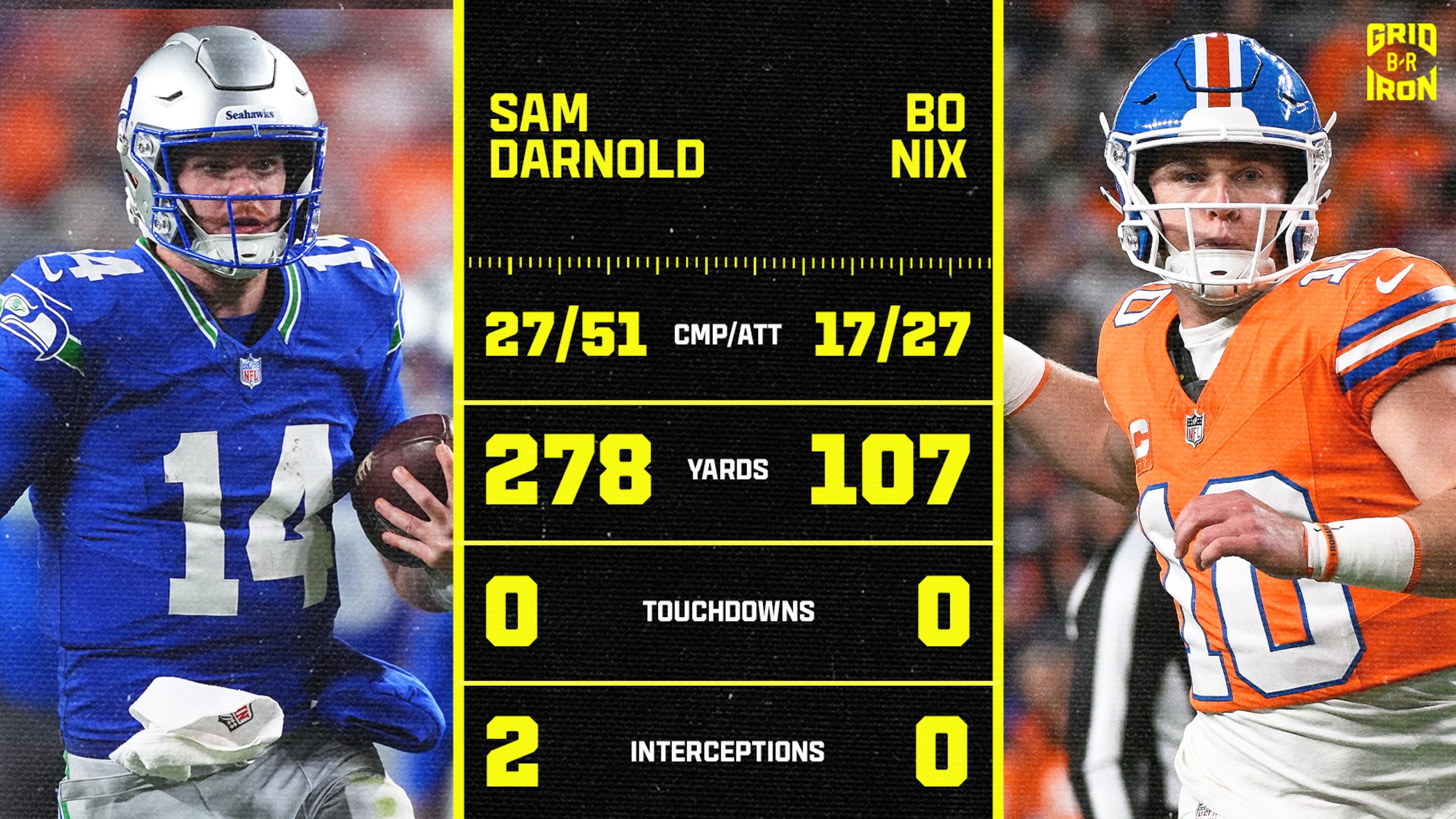
QBs Throw 0 TDs on TNF ⁉️
Sure, his friends’ box entourage seemingly stands up on every winner, screaming like overzealous soccer parents.
Certainly, his gamesmanship has been called into question. On crucial points, he sometimes exceeds time limits to bounce the tennis ball at least twenty times before winding up to serve, which can irritate his competitors.
After his 2012 Australian Open victory over Rafael Nadal, Djokovic reacted like Bruce Banner, tearing off his shirt and becoming the Incredible Hulk.
But sports fans have always rallied around controversial champions, and Djokovic is a spectacular winner in the midst of an historic run. So why does a sizable legion of tennis fans refuse to embrace this rising superstar?
Clash of Personality
It’s not that Djokovic lacks personality. He isn’t robotic Ivan Lendl or boring Peter Sampras. To many tennis fans, his mannerisms are too emotional, slightly awkward and overly brash.
A similar sort of cockiness can be perceived in Los Angeles Lakers star Kobe Bryant, who came into the NBA intent on being the best in the league. He had the audacity to place himself at the level of Chicago Bulls legend Michael Jordan. He never made deference to Jordan or anyone, and his persona shouted, “I’m just as good as MJ, maybe better.”
He can be volatile with teammates and management when he is not dominating the league. Even his smooth eloquence is an abrasive edge.
Now, Djokovic has arrived to take over tennis. He proved his fierce desire to be a champion with last month’s Aussie win over Nadal. This was especially disconcerting to Nadal fans, who have touted Nadal as the greatest fighter in tennis history.
After the match, Djokovic said to the Associated Press via ESPN, “I think it was just the matter of maybe luck in some moments and matter of wanting this more than maybe other player in the certain point.”
While the remark is merely a proud statement of self-adulation, it could also imply (to Nadal fans) that Nadal didn’t want it as bad. Djokovic could have been more diplomatic if his second comment were added as “we both wanted it so very much.”
But maybe Djokovic didn’t want to give an edge to his rival. Is this just a case of a confident person or a display of arrogant psychology? Maybe it’s just Djokovic being Djokovic.
Great success also produces character changes. Djokovic seems to be maturing with his tennis. He is less likely to abuse his racket and more likely to channel setbacks into greater concentration.
Djokovic’s more conciliatory gestures on court are still met with suspicion. During the Aussie final, he applauded Nadal after getting scorched on a winner. But ESPN color commentator Patrick McEnroe questioned if Djokovic would still be clapping if he were not winning.
Djokovic’s fun-loving personality has surfaced with impersonations of fellow tennis players, including Maria Sharapova and Nadal. For many fans, this was delightful. For others it was inappropriate. Federer has occasionally voiced his displeasure with the impersonations and with Djokovic’s antics, as explained by ESPN’s Kamakshi Tandon.
But do fans have a double standard when it comes to Federer and Djokovic? Suppose Djokovic had a commercial in which he lugged several pieces of Grand Slam hardware onto an airplane. Would fans enjoy it, or would they call it arrogance?
Grand Slams Calling
Tennis fans have long suspected Djokovic could break through and dominate tennis. Before 2011, Federer and Nadal fans carried a kind of nervous anticipation each time their hero had to defeat Djokovic to capture a Grand Slam.
Nadal’s victory over Djokovic at the 2010 U.S. Open was a clear signal the gap had closed. It was the first time Nadal fans could wonder if it were now easier to beat Federer than Djokovic. It may have been more of a relief to defeat Djokovic. He was coming. Suddenly, seemingly overnight, he became the dominator.
Djokovic wins with a demoralizing style of tennis. He is one of the toughest defensive players ever, forcing his opponents to play more impatiently, hit harder and take more risks to control a point. His aggressive precision has foiled Nadal’s slower, loopier forehand.
In the Aussie final, Nadal realized late in his desperate fourth set that he had no choice but to unleash harder, flatter forehands for some key winners.
Furthermore, Djokovic handles bullet serves and spits back forehand winners. Most of all, he seems to relish his counterattacks, turning them into a barrage of offensive bombs. This is not the Mats Wilander approach of backboard tennis. He wants to defend better than his opponents before cramming a winner past their beleaguered psyches.
Djokovic is an awesome player. He is winning Grand Slam tournaments, and is the hottest player on tour. For many fans, their dislike for Djokovic is not really a dislike of Djokovic the person, but is really their dislike of his success.
You Say You Want a Revolution?
Modern sports media means around-the-clock sports coverage. There are TV sports packages, internet sites, blogs, radio shows and Twitter. It’s increased scrutiny of superstars and their careers and a forum of judgment that does not wait for players to finish their careers before passing judgment.
Every moment in a player’s career is an ever-shifting legacy. The day-to-day pronouncements can be maddening, and it creates more vitriol from fans towards players.
For all the historic successes of Federer and Nadal, their legacy portraits are now being altered by Djokovic. Every Grand Slam tournament trophy by Djokovic is one less for Federer or Nadal. It's also one more player to share historic accolades.
There is consolation for Federer and Nadal fans to claim their respective hero had more championship contemporaries to battle in a deeper field.
But neither Federer nor Nadal wish to be upended so thoroughly. Nadal’s Grand Slam Express tour has derailed, and there is very little talk about the possibility of catching Federer’s 16 Slams.
In addition, Nadal’s special 2010 season was followed immediately by Djokovic’s even more spectacular 2011 season. It’s the biggest reason of all for Nadal supporters to despise their Serbian rival.
If Djokovic keeps raising his game and wins the 2012 calendar Grand Slam, he could conceivably move past both Federer and Nadal in the eyes of millions who are all too eager to project the next phases of shifting legacies.
Sports is created on rivalries, and fans choose sides. There are always people who don’t like the new champions.
The Beatles continue to live on, their legacy the standard of rock music. The Clash soon disappeared. But the Beatles never had to worry about Novak Djokovic.
.png?w=2560)




.jpg?w=2560 "Bleacher Report's Expert NFL Picks 🔮")