Erick Blasco's Top 30 NBA Point Guards
NBA point guard must carry out a multitude of NBA tasks vital to a team’s success, making the point guard position, arguably, the most important position in a game.
Point guards must have a complete and thorough understanding of their team’s playbooks, gameplans, and teammates in order to diagnose the easiest ways to produce points.
Point guards must also have reliable jump shots and explosive first steps to punish defenses intent on taking away the pass. And since a point guard’s opposite number has the same vital tasks to carry out, playing exceptional defense is vital to a team’s success.
This list does not take into account a player’s future prospects or past salad days. The criteria is simple: Which NBA point guard is best suited to being an integral part of a championship team this year.
Due to the way some NBA lineups are presently constructed, a handful of potential point guards will be asked to play different positions this year. For that reason, Gilbert Arenas and Jason Terry are listed as shooting guards this year.
No rookies made the list, as neither you nor I have seen them play in meaningful games against meaningful competition to know where they should be ranked.
Without further ado, the final list.
1) Chris Paul—New Orleans Hornets
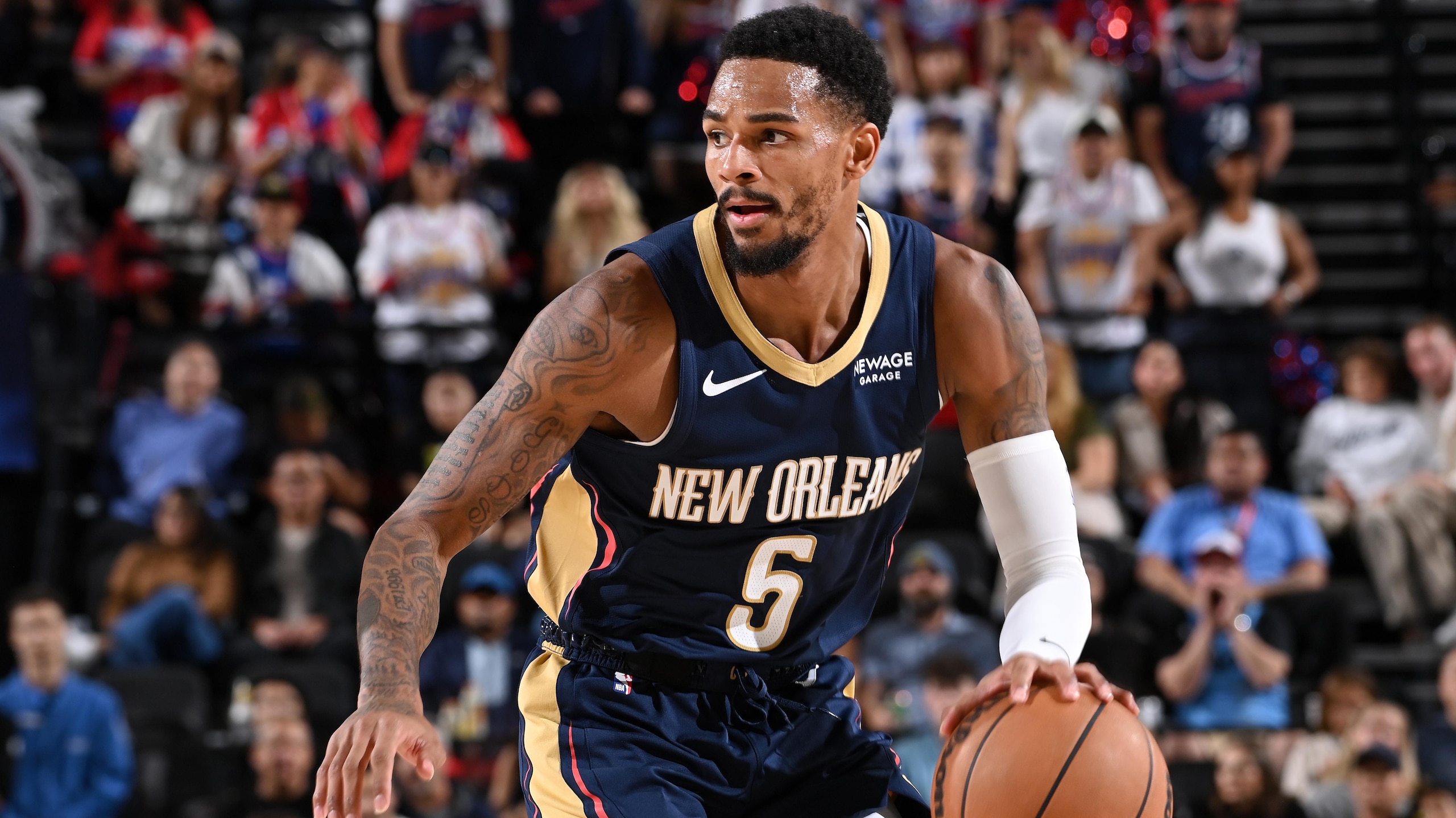
Because of his electrifying quickness, his unstoppable right hand dribble, and his precision lob passing, Chris Paul is one of the toughest covers in the game. Even more impressive is the fact that he’s gradually improved on his weak areas each year in the league. He’s become as strong as his frame will allow him to be without slowing him down, his jumper has improved, as has his post defense, and his on-ball defense. In fact, Paul has exceptional instincts when his man is trying to make entry passes—often times Paul will close out hard on his man, then sag into passing lanes to intercept errant passes to the post.
However, Paul’s left hand is non-existent, his jumper is average, he gambles too recklessly on defense, he’s susceptible to being overpowered, and when he isn’t picking off dribbles, he fails to provide much defensive resistance along the perimeter. Paul’s a flawed superstar, but his natural gifts and personal progression all show that he can someday be one of the elite point guards in history.
2) Deron Williams—Utah Jazz
Strong, smart, tenacious, disciplined, and clutch Williams possesses both the physical tools and the intangibles that make him a superstar today. Williams’ ability to come off of screen/rolls and explode to the rim, nail a jumper, or drop pinpoint bounce passes in traffic give the Jazz both a staple and a failsafe in any situation. Williams’ sheer physical strength simply allows him to bull to the rim through smaller defenders, and also allows him to set off-ball screens allowing Utah’s complex playbook to function in its entirety.
Williams’ court recognition is a tick slower on the road. He’ll either misread a play, or anticipate a teammate breaking open, and force a pass when nothing is there. He also gets too tricky in transition, and while he’s one of the best defensive point guards in the league, a relatively slow defensive first step keeps him from being a standout.
Williams is second to Paul but the gap is extremely close.
3) Steve Nash—Phoenix Suns
The premier distributor in the NBA, Nash can make any pass with either hand at any time under any situation. His court vision allows him to effortlessly spearhead any offense, while his unlimited range and exceptional pull-up jumper punish defenses intent on making Nash a scorer. He’s also a clever finisher around the basket, and one of the most dynamic offensive performers in basketball.
However, while he’s a smart and tough help defender who’s willing to take charges and fight through contact, Nash’s physical frailties leave him overpowered by all but the game’s smallest runts, and his lack of defensive explosion leaves him helpless against the premier athletes around the NBA.
While Nash is a smart enough help defender to exist on a good defensive team (something the Mavs were and the Suns are not), it’s impossible to place him above better defensive, and equally as dynamic offensive players like Chris Paul and Deron Williams.
4) Tony Parker—San Antonio Spurs
Parker has evolved into one of the most explosive offensive point guards in the NBA. Lethal at reading screens, Parker is quicker than any defender, and despite his lithe frame, is an exceptional finisher after contact. He makes good decisions, is impossible to keep out of the paint, and like every other integral member of San Antonio’s dynasty, is an astute help defender.
Parker doesn’t have great range on his jumper, and is only an average individual defender, the two characteristics that keep him from being a special player.
5) Chauncey Billups—Detroit Pistons
Billups’ physicality and clutch shooting have allowed the Pistons to perennially challenge for the Eastern Conference crown. Billups might be the strongest point guard in the league, and has a murderous arsenal of methods to score, from pulling up from deep, attacking off screens, or posting up in the pivot. Billups is also the best defensive point guard in the NBA.
However, Billups isn’t great at breaking down defenses to create for teammates and he’s lost the dynamic balance he used to possess at knowing when to drive, when to shoot, or when to pass. He’s become a tentative, reactionary player, rather than the ultra-aggressive leader he was during Detroit’s two trips to the Finals in '04 and '05.
6) Andre Miller—Philadelphia 76ers
A point guard maestro, Miller is a master at putting his teammates in the best positions to succeed offensively. His best trait is his genius-level basketball IQ which allows him to understand exactly what is happening on the court under every circumstance.
Miller knows how to elevate his teammates by delivering them the ball in their comfort zones, and by reading defenses and making the smartest pass leading to the easiest scoring opportunity. And when the offense stalls, Miller knows when to take over a game and use his own mid-range jumper to provide offense. His defense is average, as is his shooting range, but there are only a handful of point guards in the NBA better at leading a team than Miller is.
7) Allen Iverson—Denver Nuggets
Quite possibly the quickest player to ever play in the NBA, Iverson’s agility and crossover dribble are indefensible by individual defenders. He excels in transition and isolation situations, and can his any number of spectacular shots even against the best defenders.
However, Iverson has always been a ball dominator, preventing any teams he’s played for from having complex offenses. Opponents can sell out on stopping Iverson because they don’t have to worry about weak-side screens, off-ball movement, offenses reading defenses and reacting, etc.
Also, because Iverson feels that he can score against anybody, he’ll force an inordinate number of shots, and make too many reckless decisions with the ball. Jumping while passing, charging into three help defenders, launching step-back jumpers, etc, etc. Plus, Iverson is a horrific defender, and an awful jump shooter, despite his lust to force shot after shot.
Despite his prodigious highlight reels, Iverson is not a winning player.
8) Baron Davis—Golden State Warriors
Ever since his Hornets days, Davis has been a selfish loser who’s never been able to handle criticism or play team oriented basketball. Even the ultra-player-friendly Don Nelson was so aggravated with Davis’ passive play, forced jumpers, awful shot selection, unwillingness to pass, disregard for defense, and lethargic basketball when the games mattered most, that he benched Davis with their season on the line.
Of course, with his ego sufficiently bruised, Davis simply jumped ship to commandeer the Clippers where he’ll no doubt get an infinite number of opportunities to dominate the ball, pass only when the mood suits him, shoot often, defend never, and prove that despite being immensely talented, Davis isn’t worth the hype.
9) Rajon Rondo—Boston Celtics
Long, quick, agile, smart, unselfish, and at only 22 years old, the best of Rondo is yet to come. Rondo is already an aggressive playmaker with an appetite to learn the game. He generally makes good decisions, frequently makes great passes, and occasionally scores enough to keep defenses honest. If Rondo can consistently develop a jumper to keep defenses from completely ignoring him on offense, he’ll become a special point guard.
Defensively, Rondo’s length frequently disrupts what opposing point guards want to do and his quick hands make him excellent and pressuring passing lanes and bal handlers alike. Still a bit smallish, Rondo’s defense will only improve as his frame fills out.
10) Jose Calderon—Toronto Raptors
An intelligent passer with exceptional court vision and a lethal mid-range jumper going left, Calderon can run any offense efficiently. However, Calderon is too frail and too slow to be a good defender or finisher.
11) Monta Ellis—Golden State Warriors
An extremely gifted slasher and scorer, Ellis is also a surprisingly good rebounder, and a capable driver and disher. As a shooting guard, Ellis’ ability to light up scoreboards would be invaluable, but as the’s the projected point guard for the Warriors, his inability to run an offense or defend drop him on the list.
12) Derek Fisher—Los Angeles Lakers
Fisher’s savvy, mastery of the triangle, defensive toughness, and clutch shooting helped reawaken the Lakers after three years of mediocrity. He’s one of only two players in the league I’ve ever seen rip a Deron Williams crossover (Chris Paul being the other), and is one of the smartest decision makers in the entire league. Even in his advanced age, Fisher is a winner who pushes good teams over the hump.
13) Mike Bibby—Atlanta Hawks
One of the best in the game at reading screens, Bibby’s a smart point guard who’s excellent at making the right pass and knocking down clutch pull-up jumpers. His defense has always been poor, and is even more of a problem nowadays as he gets older. Also, his half-step loss makes it more difficult for him to get separation from defenders, and makes it easier for pressure defenders to hassle him. He’s smart enough to age gracefully, but expect Bibby’s effectiveness to gradually diminish from here on out.
14) Devin Harris—New Jersey Nets
Quick as a jet, Harris can get from point A to point B at warp speed, making Harris an excellent open-court player, and a perpetual pest who gets in the paint at will. However, Harris is deficient at running offenses, and still possesses an erratic jump shot. Plus his puny frame allows him to get pushed around at both ends of the floor. Perhaps a change of scenery will allow Harris’ basketball IQ to grow, but until he learns how to run an offense, he’ll only be in the middle of the pack in terms of the game’s best point guards.
15) Jason Kidd—Dallas Mavericks
Tough and wise, Kidd’s mind is still sharp, but his body has been fighting a losing battle with Father Time. A step and a half-slow, Kidd’s no longer able to defend the jet-setting point guards in the league anymore, and he lacks the explosion to beat his man off the dribble.
His jumper is money in the clutch, but unsightly during any period before the endgame. Not even his post game has been able to age gracefully. Whatever successes Kidd has from here on out are cases of mind over matter.
16) Rodney Stuckey—Detroit Pistons
A talented scorer with a powerful body, sharp instincts, and big-time confidence, Stuckey is Detroit’s ace off the bench. He already possesses the physical gifts to be a star in this league, and is already better than most point guards defensively. With more experience, and more playing time, Stuckey will evolve into a next-level guard sooner, rather than later.
17) Rafer Alston—Houston Rockets
Infinitely wiser now than any other point in his career, Alston has finally become reliable at running an offense. Few ballers can execute the passes Alston makes, and nobody has better handles.
However, Alston still makes reckless passes, is still a poor finisher, is still an inconsistent shooter, and is still too puny to avoid getting pushed around by the league’s stronger players.
18) Maurice Williams—Cleveland Cavaliers
Another ball dominator who can’t initiate a set or provide anything off the ball, Williams is an exceptional pull-up jump shooter, who’ll strictly get his assists on drives-and-dishes. He over-handles, doesn’t deal well with contact, and is an outright defensive liability. He’ll hit some threes, and play the screen/roll game well, but Williams leaves much to be desired.
19) Delonte West—Cleveland Cavaliers
If West isn’t dynamic, he’s smart and tough, able to defend, shoot, finish, run an offense, and make plays for others. While West has the mindset to be a very reliable point guard, his athleticism is lacking, keeping him from being a playmaker. Still, West’s gritty defense, and sharp offense make him a valuable inclusion on the list.
20) Kirk Hinrich—Chicago Bulls
Hinrich is a solid, if unspectacular guard who’ll pressure the ball defensively, and make the extra pass offensively. He’s not as athletic as point guards should be and has trouble creating offense when the shot clock is winding down. He’s also a poor finisher, and relies too heavily on his jumper. Hinrich tries hard, but there are better point-guard options to choose from.
21) Chris Duhon—New York Knicks
Duhon is an unselfish point guard with good athleticism and defensive skills. His shooting and finishing are inconsistent though, and he’ll miss practices because he partied too hard the night before. Duhon’s talented and has the right mindset on the court, but he needs to be more responsible.
22) T.J. Ford—Indiana Pacers
Extremely agile and extremely frail, Ford’s lightning quickness and ability to blow by his defender are mitigated by his incapacity to run an offense, his terrible defense, his questionable jumper, his inability to finish, and his unavoidable penchant of getting destroyed by any physical opponent.
23) Jameer Nelson—Orlando Magic
Not quick, not a good shooter, not possessing great playmaking skills, and subpar defensively, Nelson gets by on heart, strength, and toughness alone. His lack of natural talent would leave him best suited to being a third guard in a three-guard rotation, but Nelson has been able to make the very most out of what has been given him.
24) Steve Blake—Portland Trail Blazers
Blake’s a smart distributor with a good jumper and better athleticism than he’s given credit for. He’ll defend some, but a lack of strength or explosiveness prevents him from being more than an average defender, and keeps him from being more than an initiator and a shooter on offense.
25) Jarrett Jack—Indiana Pacers
Stocky and stodgy, Jack is one of the least athletic point guards in the league, greatly limiting him offensively. Jack is a smart decision maker though, knows how to execute an offense, and is one of the best defensive point men in the game.
26) Raymond Felton—Charlotte Bobcats
Despite being exceptionally quick, Felton is mistake prone on both ends, a poor shooter, an even worse defender, and incapable of finishing in traffic. If Larry Brown can undo the mistakes of Sam Vincent, there’s enough to Felton’s game to make him salvageable.
27) Beno Udrih—Sacramento Kings
Despite having no athleticism whatsoever, Udrih’s stabilized himself in Sacramento by being totally unselfish, being able to run an offense, and being a good help side defender. Having an accurate jumper from mid-range and beyond also helps. Udrih is a clear example of a player who uses his head to make the most out of his limited natural gifts.
28) Louis Williams—Philadelphia 76ers
Sly off the dribble, Williams is maturing nicely into an explosive sparkplug off the bench. He’s a poor shooter who still struggles with decision making, but he’s excellent at getting past his man and putting pressure on defenses. His own defense has also steadily improved, both on and off-ball. Williams has a bright present, but a much brighter future.
29) Mike Conley—Memphis Grizzlies
Conley’s long, he’s quick, he’s great in transition, he has a clever handle, and he has no refinement to his game. His athleticism alone makes him exciting, and he should eventually learn when to make what kind of pass, how to run an offense, and why defense is important. However, while Conley may have bright tomorrows, he’s certainly not capable of leading a team anywhere today.
30) Sebastian Telfair—Minnesota Timberwolves
Telfair may have made more strides than nay NBA player in 2007-2008. He started to grasp concepts of running a halfcourt offense, was much more unselfish than his previous stopovers in Portland and Boston, and is better at putting the ball in the basket.
His defense is still very problematic, as is his penchant for overhandling. But whereas Telfair was a horrible point guard before last season, he’s elevated himself into the land of mediocrity. And while that isn’t much of an accomplishment, there are much worse places to be.