
NHL News: Could the League Investigate Marc Savard's Contract?
The fallout from the League’s decision to nullify Ilya Kovalchuk’s 17-year $102-million deal may not be limited to that one contract.
It’s no secret that there have been multiple deals in recent memory with similar intent, the most notable being Marian Hossa’s, Roberto Luongo’s, Chris Pronger’s, and Marc Savard’s. And although these deals are of similar style to Kovalchuk’s, they are nowhere near the extent to which his has been constructed.
At the peak of Kovalchuk’s deal he would have been making $11.5 million annually with a $6 mil cap hit, which at first glance doesn’t raise any red flags—maybe yellow, but not red.

.jpg?w=2560 "Golden Knights Blues Hockey")
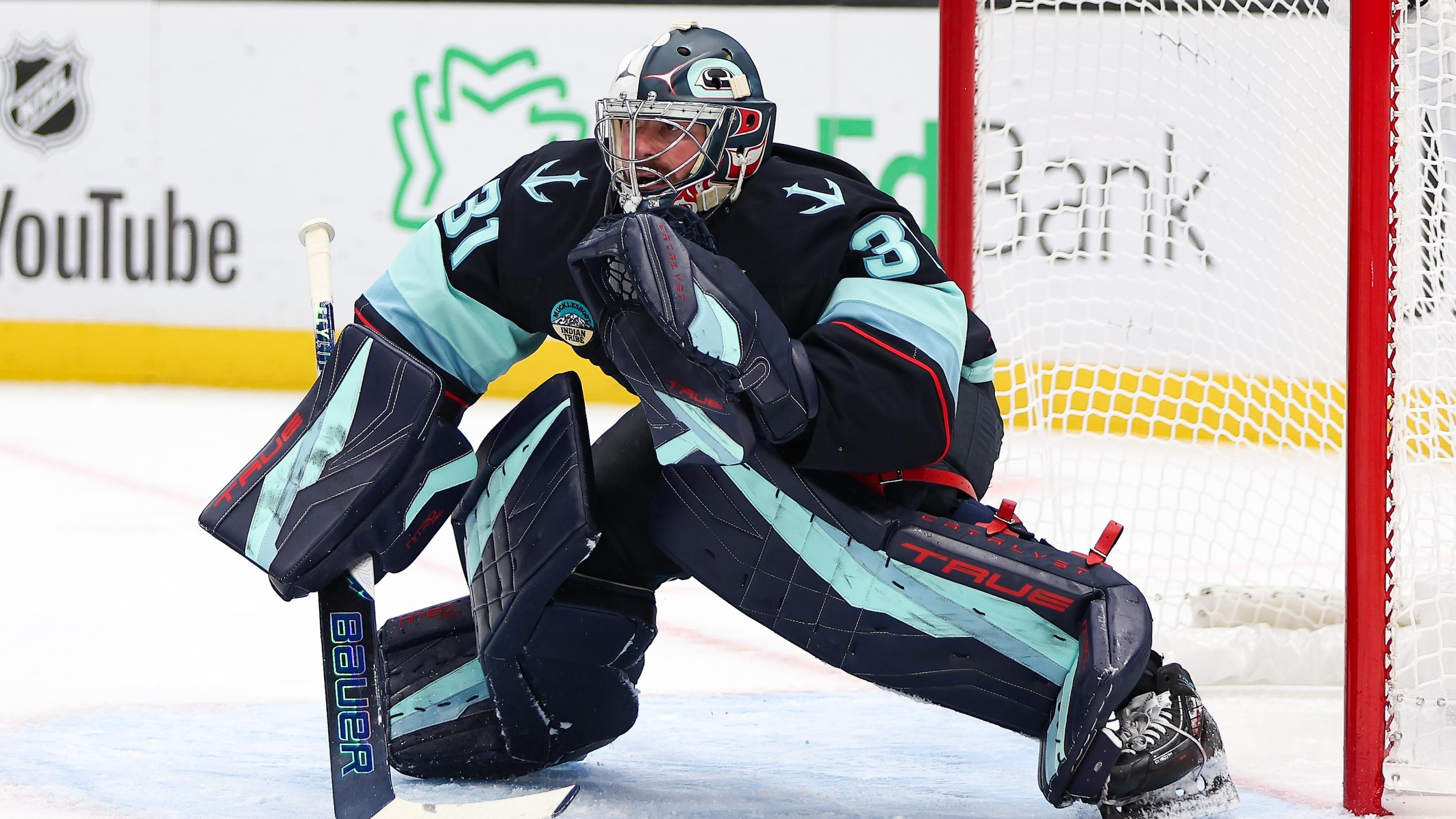
But when we begin to dissect the contract into its simplest form we find the breakdown as such: $6 million, $6 million, $11.5 million, $11.5 million, $11.5 million, $11.5 million, $11.5 million, $10.5 million, $8.5 million, $6.5 million, $3.5 million, $750,000, $550,000, $550,000, $550,000, $550,000, $550,000.
A more in-depth look reveals a clear attempt at a deal allowing the Devils to afford the services of Kovalchuk, without handcuffing themselves when it comes time to re-sign players like Zach Parise.
The deal would have locked him up until he was 42 years old, which only "six of some 3,400 players have played to.”
That isn’t even the biggest of the League’s issues with the deal...it goes to the last six years of the contract where the annual salary drops off to under $1 million a season—a clear sign that he has little intent to play when he reaches that point.
So will the NHL look at other front-loaded contracts and deem them void on the grounds of salary cap circumvention much like the case with the New Jersey Devils and Ilya Kovalchuk?
Even though there is no clear-cut rule in the Collective Bargaining Agreement (CBA) between the NHL and the NHLPA, which includes only vague outlines of such occurrences, sadly, the answer is yes.
As a Bruins fan, the deal that sticks out in my mind is the Marc Savard contract that allowed the team to lock him up for seven years at a mere $4.2 million annually, a contract that would keep him in Boston until he is 39 years old.
Here is how the deal breaks down: $7 million, $7 million, $6.5 million, $5 million, $1.5 million, $525,000, $525,000.
Unlike Kovy’s contract, at the height of Savard’s the difference between the annual cap-hit and his yearly salary is only $2.8 million, which, relatively speaking, is nothing compared to Kovalchuk’s $5.5 million and Luongo’s $4.6 million differences.
The other major factor is the length of time that the salary considerably drops off. At the end of the Kovalchuk deal, there are six years when his salary is well below $1 million, while in Savard’s there are only two.
While the NHL may look at these other deals, Bruins fans can breathe a sigh of relief, because while Savard’s contract is “front-loaded,” it is in no way to the extreme that the Kovalchuk deal pushed the League.
That deal took the idea of front-loaded contracts and salary cap circumvention to a whole new level, and left the NHL in a position where they had to take some type of action.
In the next CBA negotiated between the two parties, you can bet there will be a more specific clause regarding the salary cap and its loopholes. However, there are solutions to the circumvention art, such as making a maximum difference between the player's annual pay and their annual cap-hit, which could really minimize the general manager’s leeway with front-loaded contracts.
New systems always have their flaws, and since the salary cap was introduced to the NHL just a few years ago it has yet to be perfected, but after this whole ordeal expect a much improved system in the near future.



.jpg?w=2560 "Chiefs, Steelers Eye WR Trades")

.jpg?w=2560 "WWE Raw Live Grades 🔠")
.jpg?w=2560 "Multiple NFL Trades Predicted")


