Legendary or Just Another L? Inside Devin Booker's 70-Point Game, One Year Later
Devin Booker was fatigued. The Phoenix Suns guard didn't express it, but then-head coach Earl Watson could read it on his face before the game. The Suns arrived in Boston on the final leg of a back-to-back, the fourth stop of a six-game road trip. They had just suffered a 28-point trouncing from the Brooklyn Nets—their sixth straight loss. Nearly half of Phoenix's roster was out because of injury or "rest."
Watson, sensing Booker's exhaustion, kept his pregame message brief. "Be legendary," he said. Booker was familiar with the phrase: Lakers legend Kobe Bryant wrote those two words on a pair of Kobe 11s that he signed and gifted the Phoenix prodigy the previous season. Booker looked at Watson and nodded. "It was a tired nod, but like, I'm here to be a professional," Watson recalled.

What transpired next on TD Garden's parquet floor would generate a leaguewide buzz that is still felt a year later: Booker dropped 70. It was the most points scored by a NBA player since Bryant scored 81 on the Toronto Raptors in 2006. But unlike Bryant's outing, Booker's performance came in a loss. It was just the fifth time in NBA history that a player scored 70 points or more in a losing effort. Wilt Chamberlain did it three times. David Thompson, at 23, scored 73 points with the Denver Nuggets in a two-point loss to the Detroit Pistons on April 9, 1978.
In the year since last March 24, many have debated the performance's legacy. Booker became the youngest player in league history to reach that mark, but the game's outcome never hung in the balance. Was it a legitimate 70 points or does the performance deserve an asterisk? Was it just an exceptional offensive night or was it the arrival of a budding young star?
As those at the game tell it, Booker's 70-point effort was a moment worth celebrating. It just wasn't expected on this particular night and at this particular point in his career. Booker was in his second season and just 20 years old. His team boasted the youngest lineup in NBA—according to Elias Sports Bureau, the Suns' average age was just 21 years, 14 days. Marquese Chriss was 19. Derrick Jones Jr. was 20. Tyler Ulis was 21. Alex Len, the team's center, was the starting lineup's elder statesman, at 23 years old. "Phoenix pretty much had no other option," Doug Haller, who covered the game for the Arizona Republic, said. "It was just Devin."
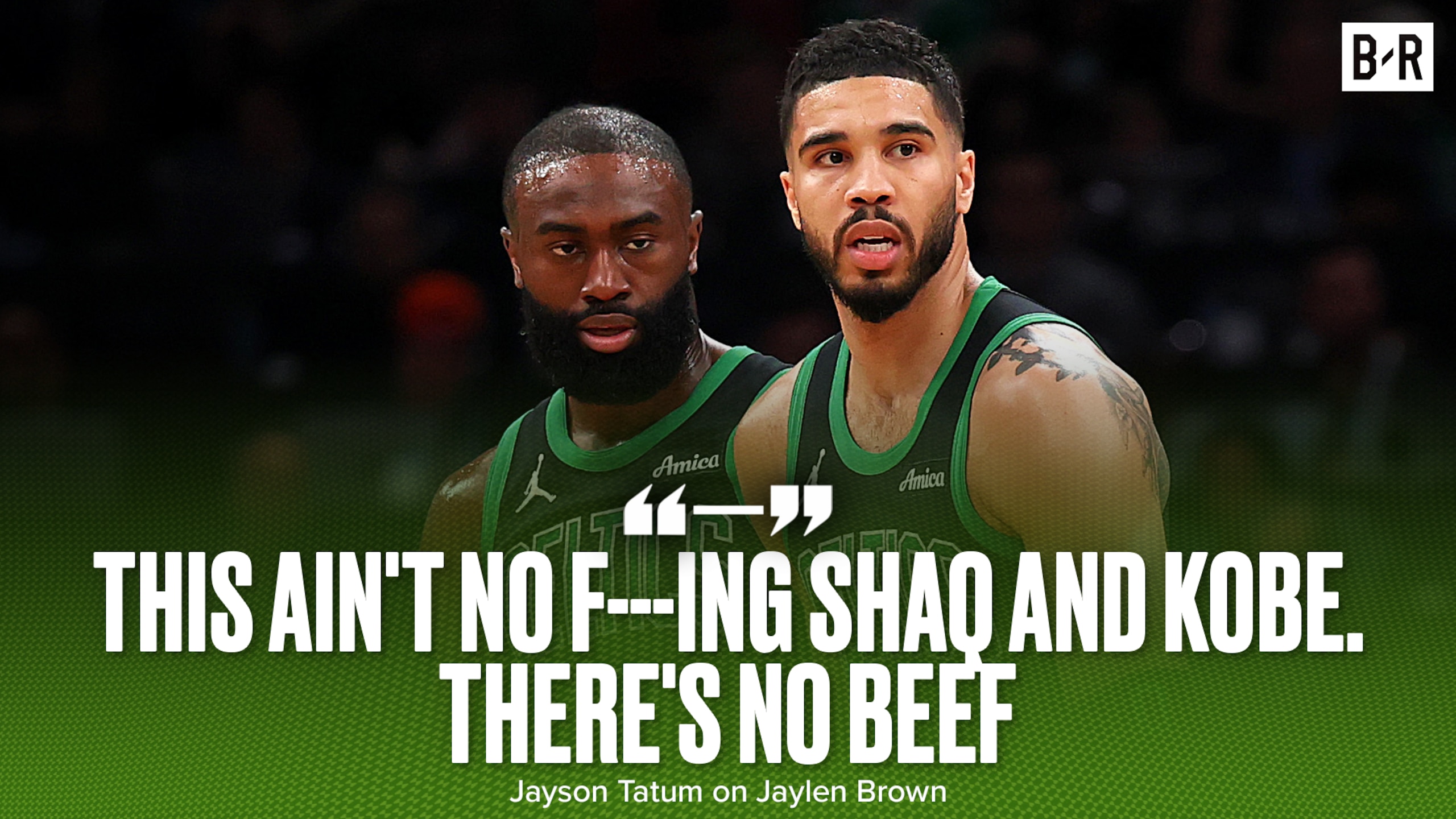
Booker got off to a slow start. He missed his first three shots and didn't convert on his first field goal until 4:40 was left in the first quarter. The Celtics made it a priority to hinder Booker's offense from the outset. They ran a steady rotation of Jaylen Brown and Marcus Smart, two of their best on-ball defenders, against Phoenix's only scoring threat, and it proved highly effective. By halftime, Boston had opened up a 23-point lead. Booker had 19 points.
Tim Kempton, the Suns' radio color analyst who also played eight years in the NBA, remembered the mood going into the half. "You're sitting there not really expecting anything," he said. "We're getting drilled by the Celtics. You're just kind of like, Uh-oh. Devin Booker is obviously our best player. He's playing well, but we're getting throttled by the Boston Celtics."

To switch it up, Watson decided to shift Booker over from shooting to point guard—a position normally occupied by Eric Bledsoe, who was sidelined with knee soreness. Phoenix ran a heavy dose of pick-and-roll action, and the Celtics' bigs—Amir Johnson and Kelly Olynyk—struggled to defend it. Booker's numbers soared. He scored 23 points on 5-of-9 shooting in the third, with 11 coming at the foul line. Suddenly, with a quarter left, he had 42 points.
But Booker had also taken a beating, physically, against Smart, an aggressive defender who can irritate the opposing team's best player. Booker showed signs of frustration. He complained to the officials that Smart was walking underneath his jumper. At one point, Booker nearly turned his ankle.
Watson was already low on bodies, and he didn't want to see Booker get hurt, down 97-80 heading into the fourth. "I kind of looked at [Booker] at the end of the third quarter—it was a look to say, You're done for the game," Watson said. "He looked at me and shook his head no. I think Marcus Smart kind of got him going. He came out in the fourth quarter, and he just went to work."
Booker took 16 of the team's 27 shots in the final period, and as his numbers climbed, the mood in the arena appeared to shift. "I remember as he's getting close to 50, I turned and looked at [Kempton] like, Where is this going?" Haller recalled.
Gary Washburn, a longtime NBA writer for the Boston Globe, was shocked when he looked at the box score during the fourth. "I saw [Michael] Jordan score 49 on the Clippers way back in the day, and he was just a one-man team," he said. "This was a little different. It was kind like it snuck up on you. All of a sudden he had 55, and you're like, Whoa! Wait a minute."
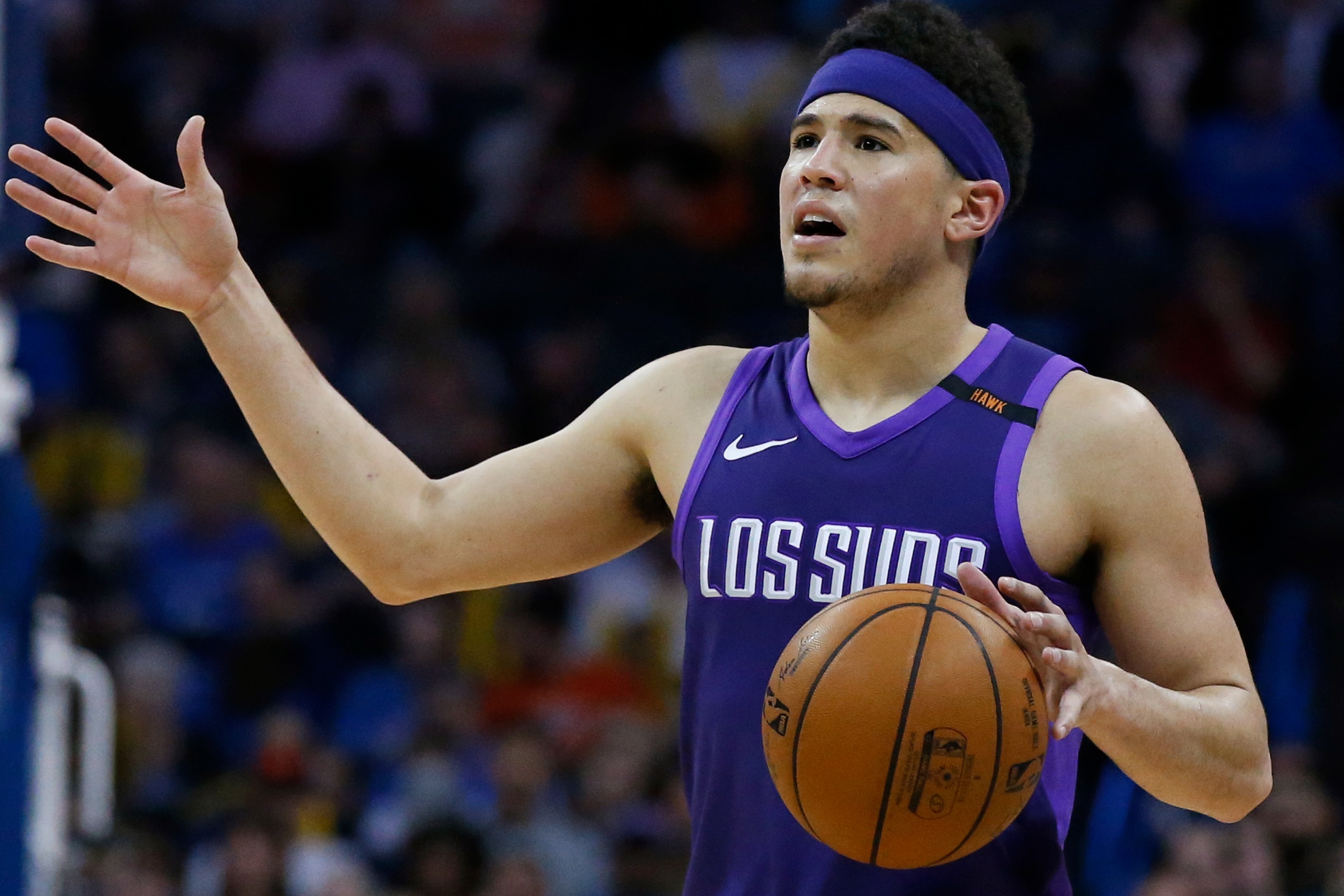
The night took a historic turn with 1:48 left, when a Booker putback gave him 61 points—a new franchise record. (Tom Chambers had set the previous mark of 60 against the Seattle SuperSonics in 1990.) The Boston crowd, normally hostile to opposing players, cheered Booker on. The entire Suns bench was on its feet.
But Watson was unaware of the individual performance taking place. During a pair of Booker free throws, Watson turned to his assistant, Nate Bjorkgren, and asked, "What are they cheering for?"
"Book has 65," Bjorkgren responded.
"No shit?!"
"Yes, coach."
"Oh shit. Stay in the game," Watson said. In the contest's final 45 seconds, the Suns began intentionally fouling and calling timeouts to stop the clock. Then Watson, during the stoppages, would draw up plays for Booker.
The Celtics weren't pleased. Players and coaching staff shouted their disapproval from the bench. The game was already decided, so what was Watson doing?
He insisted he was just trying to "keep chipping the score"—a lesson he learned from Hubie Brown, whom he considers a mentor. "If you lose with a young team, you really want those losses to be less than seven," Watson said. "So at the end of the year, you get on the board and you give them a chance to believe."
The Suns lost 130-120, but Booker's performance was at the forefront in the locker rooms. Washburn said he could feel Boston's disappointment. "[The Celtics] took it personally," Washburn said. Meanwhile, the Suns, reeling from another loss, finally found a reason to be excited. "They did celebrate after the game like they won the NCAA tournament," Washburn said. "It was like they were UMBC or something after the game. I think that kind of bothered some people."
The Phoenix players later commemorated the occasion by posing for a photo with Booker holding a sheet of paper with "70" on it—an ode to the infamous picture Chamberlain took after scoring 100 points in March 1962. Jared Dudley, the team's outspoken veteran, posted the image on his Twitter account, and it quickly went viral.
The NBA soon would repost Dudley's picture on its official Instagram account, sparking a spirited exchange in the comments section between Boston journeyman Jae Crowder and Booker:
Crowder: "NEVER SEEN SO MANY GUYS HAPPY AFTER AN 'L'."
Booker: "you can't guard me."
Crowder: "I WAS TALKING BOUT THEM DUDES AROUND YOU. BUT ILL SEE U NEXT YR.!"
Other players chimed in, too. Tyson Chandler, the Suns' then-16-year veteran center, defended Booker in a postgame tweet: "For everyone saying but it was with a L.. ok I watched a 20 year old turn The Garden around & heard them chanting his name."
Watson, for his part, expressed no remorse for his role in the controversy. "It's about letting our kids be great," he told the Boston media. "You got a problem with that? Do something. Simple as that."
Watson reasoned the intentional fouls and timeouts were justified because Phoenix could have clawed its way back into the game. "A reporter asked, 'Were you trying to get him 70?' And the truth was, no, I was trying to get into overtime and give him 80," Watson said. "I'm not really into quitting in any situation, any scenario. That's never been me. The greatest teams I've been on, you've won games like that down the stretch."
Other than a few Instagram barbs, Booker didn't dwell on his historical performance much because it came in a loss. "He never talked about it," Watson said. "The next day, it was never brought up again. No one brought it up—in practice, in the locker room, in conversation. As much as people thought it was a way to kind of showcase him, put him on a pedestal and kind of force the issue, I don't think coaches can create opportunities for players to get 70 and actually get 70."
The performance might have given Booker a new sense of confidence, judging from an impressive third season. He has career highs in points (24.9 per game), assists (4.7), rebounds (4.5) and effective field-goal percentage (.501). Booker also won the Three-Point Contest during All-Star Weekend in Los Angeles, in February, ousting Klay Thompson, who is thought to be one of the best shooters in history.
There's merit behind the belief that Booker's performance wasn't a "legitimate" 70, but those details will get lost as we get further away from the moment, like Chamberlain's and Thompson's 70-point games in defeat. What the world likely will remember 10, 15 and 20 years from now is how remarkable it was that a 20-year-old accomplished this feat on the road in just his second NBA season.
"I don't think that'll be his career high," Watson said. "I think there's more greatness to come. But that was definitely his introduction into what he is capable of doing."

.jpg?w=2560 "NFL House in Paris Closes for Protests")
.jpg?w=2560 "Trevon Diggs Cut by Seahawks")