

F1 2016 Head-to-Head: Sebastian Vettel vs. Kimi Raikkonen at Ferrari
Sebastian Vettel versus Kimi Raikkonen was supposed to have been one of the highlights of the 2015 Formula One season.
A four-time world champion had arrived at Ferrari to partner a man with a single title—but who should really have had at least two. Both had seen their abilities questioned after being beaten by their team-mates the previous year, so both had massive points to prove.
Was Vettel really as good as his four consecutive titles had suggested, or had Daniel Ricciardo exposed him as a driver who had been flattered by exceptional machinery? Was Kimi Raikkonen really past it, or had the characteristics of the 2014 Ferrari magnified a small difference between him and Fernando Alonso?


.jpg?w=2560 "Rams Eagles Football")
Pre-season testing suggested the fight between the two would be a close contest, but once the season got under way, it became increasingly clear only one of the two would be forcing his critics to eat humble pie.
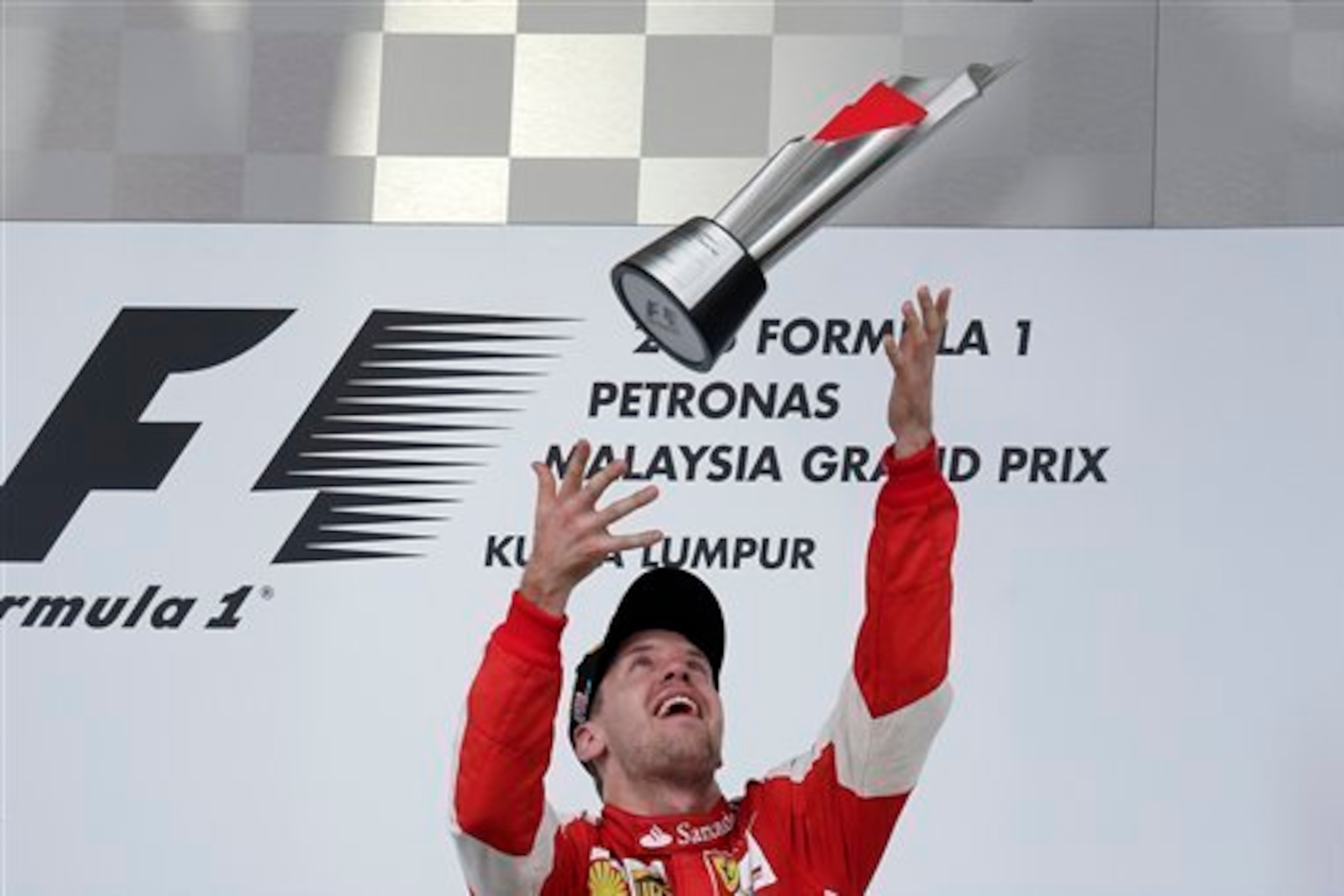
A rejuvenated Vettel convinced all but the most stubborn of fans that he is indeed one of the best of his generation. He won the second race of the season in brilliant fashion, added two more victories before the end of the year and stood on the podium a total of 13 times.
The German was third in the championship with 278 points—a respectable 44 down on second-placed Mercedes driver Nico Rosberg's total.
Raikkonen, by contrast, spent 2015 looking like a man in the twilight of his career, living off his past achievements and doing little to justify his place at a front-running team. He came close to winning the Bahrain Grand Prix when the two Mercedes hit trouble, but he was otherwise unimpressive.
The Finn only managed three podiums on his way to a distant fourth in the championship. He was closer to Vettel than he had been to Alonso, but he still scored a whopping 128 fewer points than his team-mate.
Vettel qualified ahead of Raikkonen 15 times from 19 attempts, finished ahead on 10 of the 14 occasions where both Ferraris reached the end and was the Scuderia's lead driver for 718 of the 963 laps they spent together on the track.
The two will again be partners at Ferrari for 2016—and it's difficult to see the season ahead being too different to the one just gone.
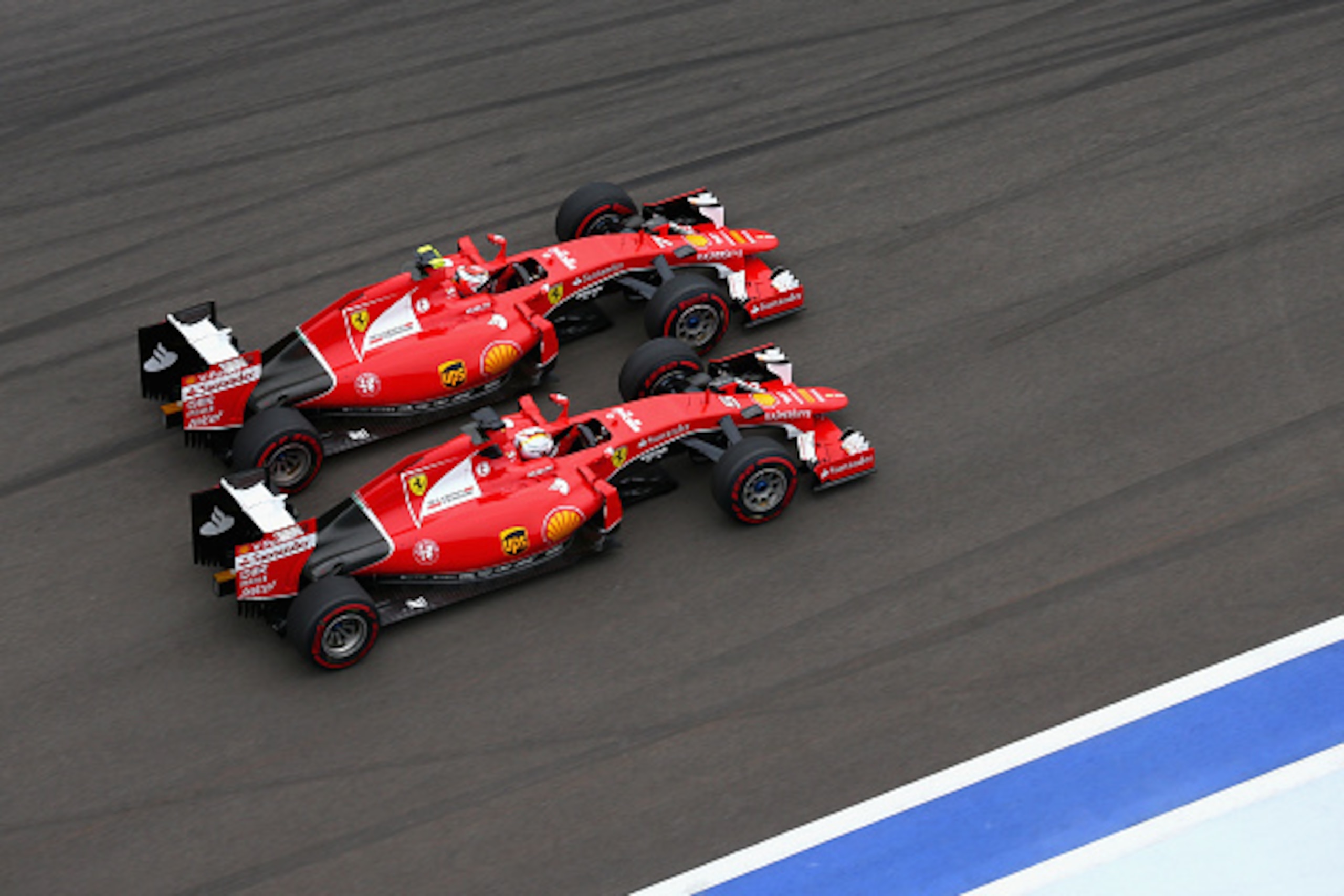
Vettel's impact on the Ferrari team was felt as soon as he arrived. The man he replaced, Alonso, had clearly become disillusioned with the team and no longer believed in their ability to build him a title-winning car.
He had so little faith that he chose to take a massive risk and joined McLaren-Honda—confidence among the Ferrari personnel cannot have been high.
But as soon as he was free of his Red Bull contract, Vettel set about trying to change that. After his first test for Ferrari—in a 2012 car—his delight at being a part of the team was clear.
He spoke to media after the run and was quoted by Sky Sports saying:
"It was fantastic today to come here. I remember coming to Maranello as a little kid and trying to look over the fence so to be here officially as part of the team felt fantastic.
Looking back to the years when I was 11 or 12 years old and looking over the years trying to see a glimpse of Michael [Schumacher] running on the track and today I was on the track and I saw the Tifosi around. There is a lot of fairy tales about Ferrari and how it feels to drive a red car and so on and I can only confirm all these fairy tales. It is a true legend that exists and it feels really, really, special to become part of that.
"

An improved atmosphere at the team from the first test onward was noted by Motorsport.com, and speaking after seeing the SF15-T in action for the first time, team boss Maurizio Arrivabene showered the ultimate praise on his new star.
He told Italian journalist Leo Turrini (h/t Crash.net):
"I was around in Michael [Schumacher]'s time and I confess that there are times when I look at Vettel and, in some ways, it really seems like a carbon copy of Schumi.
There are impressive similarities for those who have known both. We all hope that the results are the same as well.
"
Vettel had quickly immersed himself within the team and was shaping it around himself, as he had at Red Bull and as Schumacher had when he arrived at Ferrari in the mid-1990s. Success comes easier when you are seen as the focal point of the team's efforts, and even at that early stage, Vettel was establishing himself as the de facto No. 1 within Ferrari.
Raikkonen also noted the improved vibe at Maranello, telling press including F1i's Chris Medland that "everybody seems to be enjoying working here a bit more now."
The Finn had been very much the No. 2 at Ferrari in 2014, but after performing well in pre-season testing, especially over longer runs, he seemed to be in a stronger position for 2015. Autosport reported he felt the car was more suited to his style, and a significant 35 per cent of F1 Fanatic readers thought he would beat Vettel in 2015.

It was difficult to get a true idea of where the two Ferrari drivers were relative to one another in the early races. Vettel was definitely on top in qualifying, but race pace was a different story.
Raikkonen suffered first-lap contacts in both Australia and Malaysia that compromised his afternoons, and the unusual, tyre-saving-dominated Chinese Grand Prix gave few clues as to who was quicker. The Finn was definitely the better Ferrari driver in Bahrain, but it was the first time he had finished ahead all year—and he was yet to outqualify Vettel.
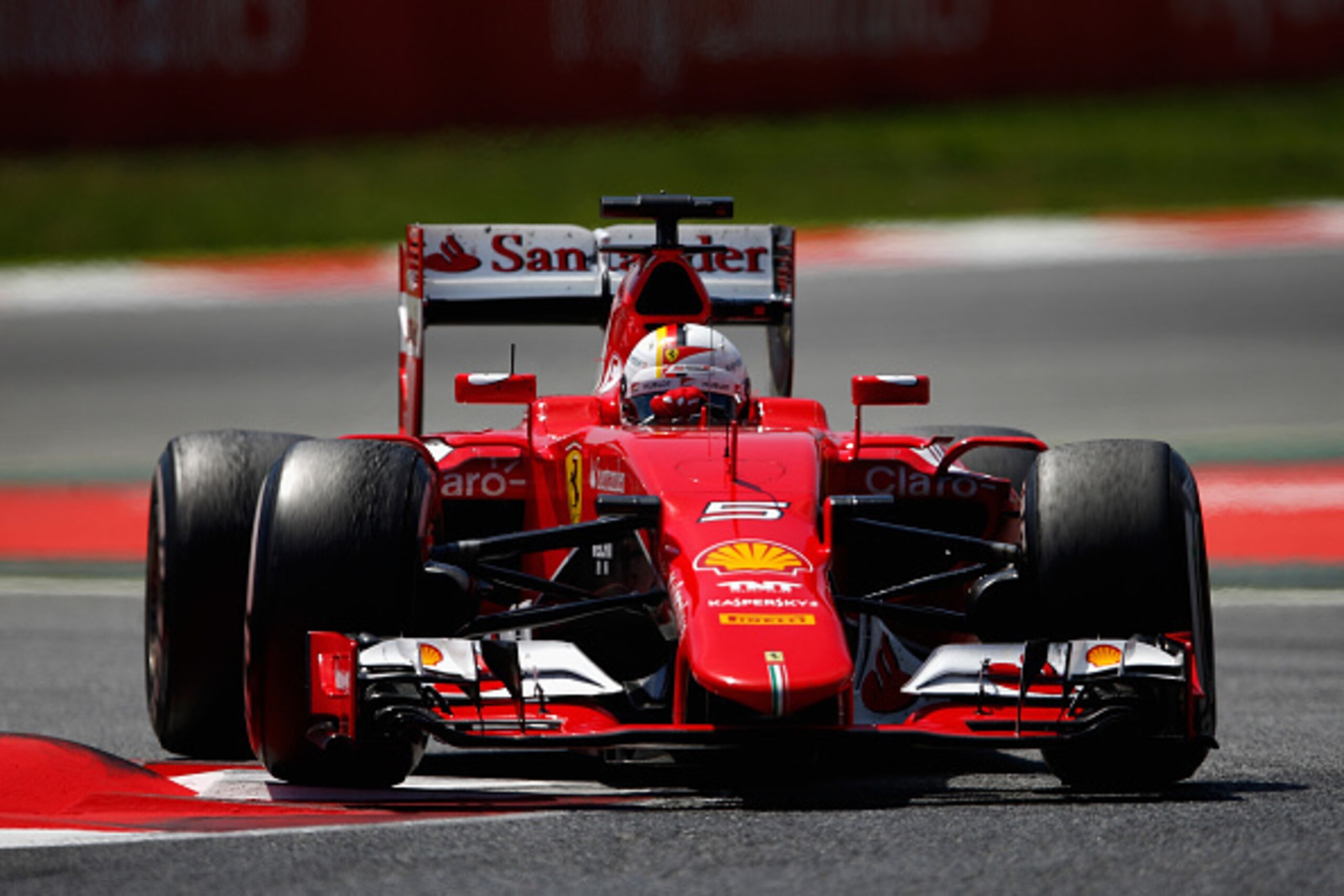
Regardless of the reasons behind his failure to shine, he was starting to look like a No. 2—and at the fifth race of the year, the Spanish Grand Prix, it became almost official.
The team had come up with a huge upgrade package, but this was only fully fitted to Vettel's car. Raikkonen revealed after the race that he had run the old specification for the benefit of the team.
He told press, including Autosport:
"I think we learned a lot from going for two separate cars following on Saturday and Sunday so I'm more confident we can see things more balanced.
In a test, it's just the one car and you have to change a few things so sometimes the only way to do this and see the difference is to run with two cars at the same time on the circuit with different things.
I was prepared to take the risk and sacrifice the result a little bit but it is what it is.
If we can learn and we can speed up our knowledge that we gain then that will help us not doubt things so much.
The result hurt a bit but it was just the one race.
"
That he and the team were willing to sacrifice his race was telling, but not especially surprising. Ferrari were doing what Ferrari always do—putting all their eggs into one basket—and Vettel was going to be top chicken.
The rest of the season confirmed that he deserved the distinction. The four-time world champion was arguably the most consistent performer of the season and without question one of the drivers of the year.
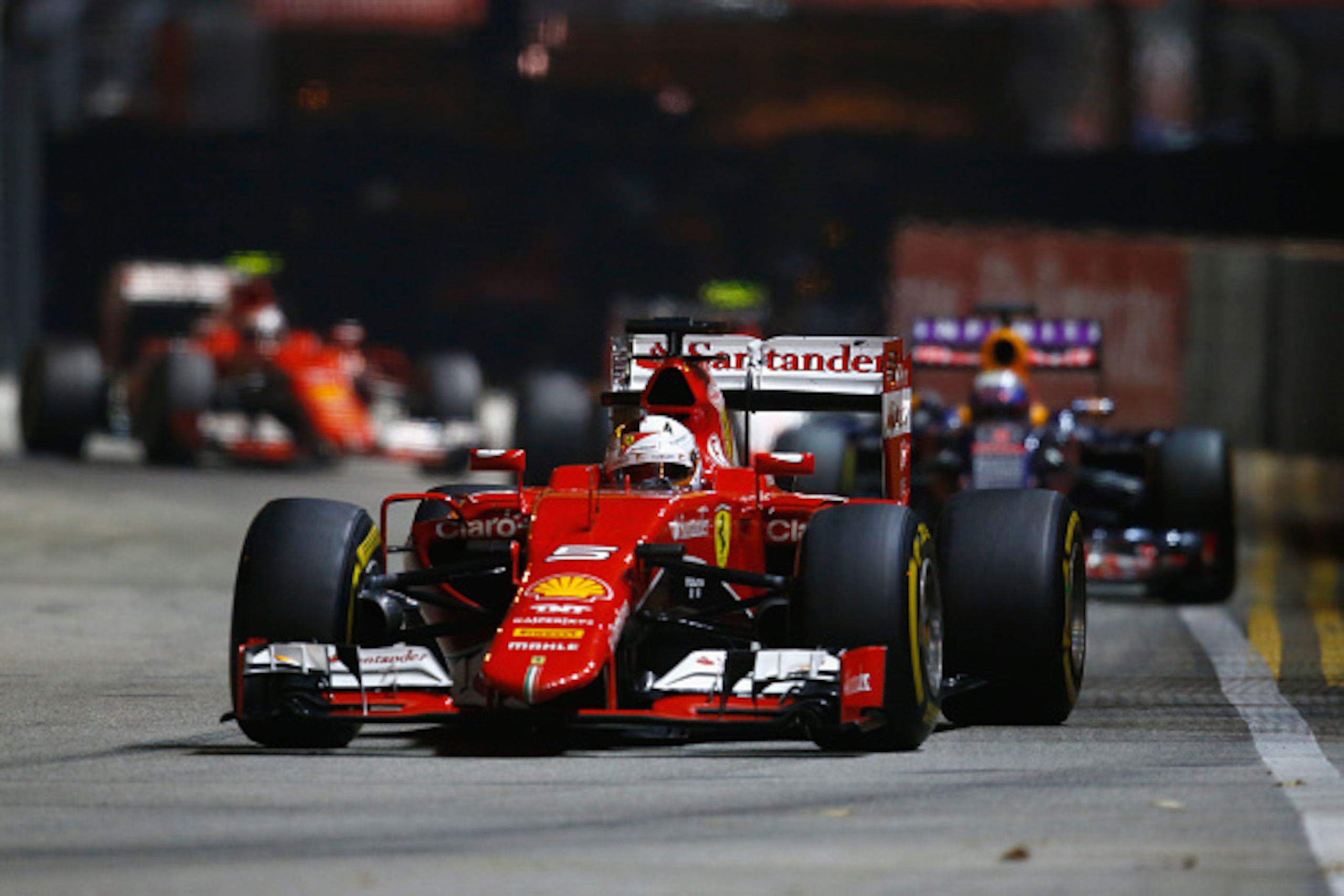
Raikkonen continued to trail in his wake, rarely coming out on top in qualifying and, though the gap was smaller, finding it difficult to live with Vettel in the races. To fans who remember the Iceman at his peak—the mid-2000s, when he proved himself to be one of the most naturally gifted drivers of the last 30 years—this outclassed, outdriven Raikkonen was hardly recognisable.
And the worst thing of all is that it doesn't seem to bother him. He appears content to be a team player—a No. 2, a Rubens Barrichello to Vettel's Schumacher.
There's a fine line between laid-back and indifferent, and he appears to have crossed it.
When Ferrari announced he would be retained for 2016, the statements on the team website said nothing about performance and instead talked about the relationship between the drivers.
"We believe that extending Kimi’s contract into the next season will provide further stability to the team. This has been our guideline, also considering the very good relationship between Kimi and Seb. On our side, this shows our great confidence in him, and I expect this confidence to be well rewarded.
"
Raikkonen was retained because Ferrari see him as a safe, capable second driver who gets on well with Vettel and will not get in his way. The German's task is to win the world title; Raikkonen's is to provide support.
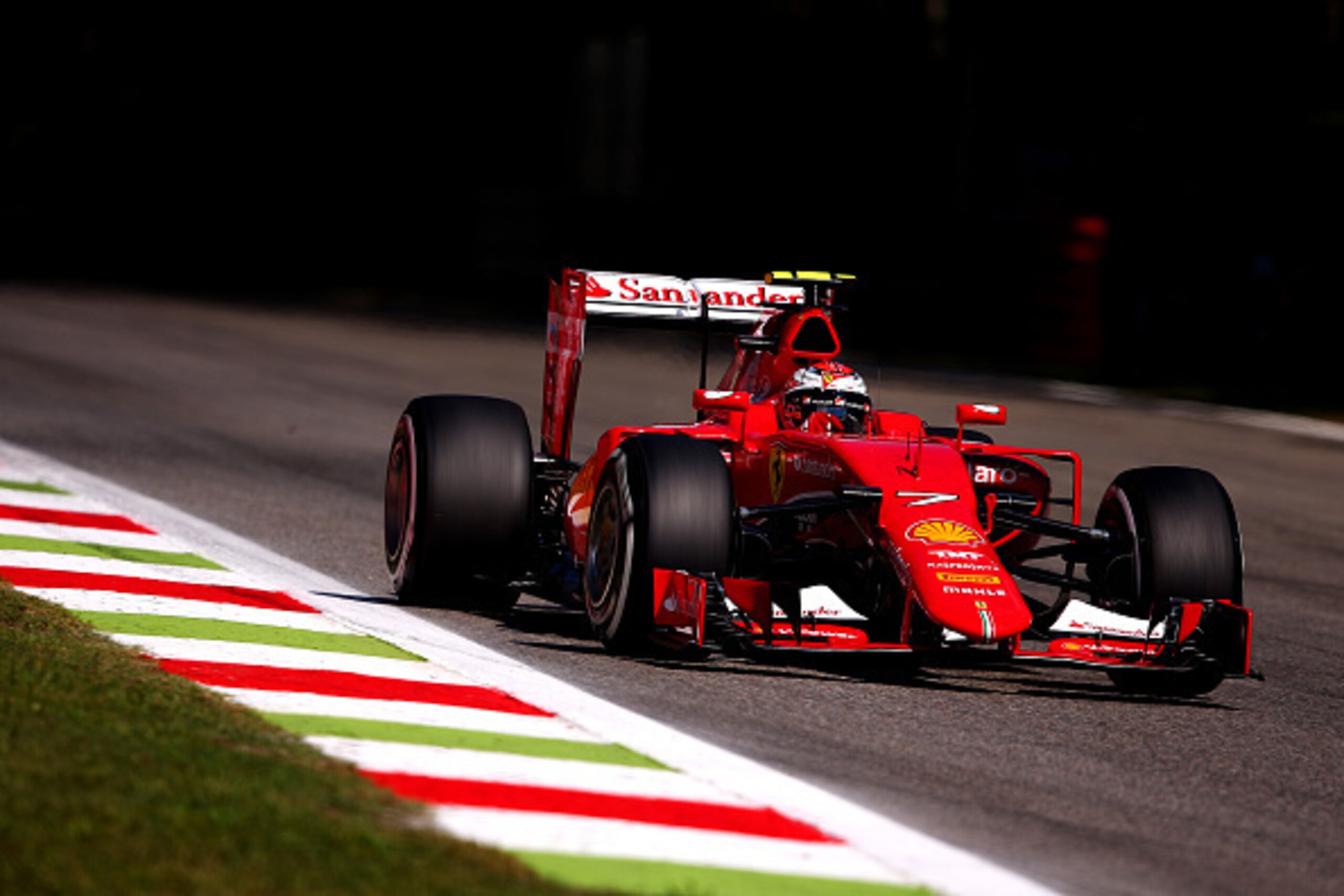
Despite everything 2015 told us, there's a possibility we'll see Raikkonen ahead on the track a little more often in 2016.
Qualifying has become his greatest weakness, but if Ferrari can find more tenths than the likes of Williams and Red Bull, the larger gap between the front two teams and the rest will mean Raikkonen should be able to start races closer to Vettel than he did in 2015.
And if he can get a better launch off the grid, he could easily be ahead going into Turn 1.
But if this happens at the wrong time, expect Raikkonen's very own version of "Fernando is faster than you" to ring out over the team radio. Vettel will remain the go-to guy for Ferrari; Raikkonen will be expected to provide covering fire and nothing more.
After around six or seven races, the annual "who'll replace the second Ferrari driver" game will begin, and Raikkonen's seat will once again be the subject of intense speculation. This time round, he'll probably jump before he is pushed.
Sky Sports F1 reported last year that Raikkonen will almost certainly retire when his Ferrari contact comes to an end, and that will happen at the end of the year.
Vettel, meanwhile, will motor on contently, knowing his own future with the Scuderia is safe and secure.
And the team will ensure that, unlike the situation at Mercedes between Lewis Hamilton and Nico Rosberg, he won't have a pesky team-mate to deal with if he is able to challenge for the title—as Ferrari will be hoping.
.jpg?w=2560 "Texans-Mixon Released Football")
.jpg?w=2560 "Commanders Eagles Football")


.jpg?w=2560 "Mahomes' Wife Trolls Kubiak 💀")

.jpg?w=2560 "Grading WWE Raw 🔠")