

Russell Wilson Must Sustain and Improve on Current Form for Seattle Seahawks
There was a time, a few years ago, when it was unfair to label Seattle Seahawks quarterback Russell Wilson as a running quarterback.
It was 2013. The Seattle Seahawks would win Super Bowl XLVIII with Wilson playing cautiously throughout the playoffs, but it was his play during the regular season that pushed them to that point. Wilson wasn't throwing the ball a lot. He averaged 25.4 attempts per game, but he was executing plays of a high degree of difficulty.
He was regularly making those plays from the pocket also.
TOP NEWS

New NFL Power Rankings 📊
The Robinsons POUND the Rock 🪨
Takeaways from Falcons' dominant MNF win
Making plays from the pocket is something that is talked about a lot. It's rarely explained why it's important, though. Making plays from the pocket matters so much because coaches design their plays to work from the pocket. For all the criticism laid at the feet of NFL coaches, they don't typically design plays that don't work.
Therefore, your best chance of exposing the defense and maximising the yards gained more often than not comes from playing in the pocket.
Being called a running quarterback is not directly an insult, but it is often used as one. Wilson has regularly been described as a running quarterback who can throw. This means he doesn't function within the design of his plays, but he is talented enough to create big plays, both running and by keeping his eyes downfield.
The distinction between a running quarterback who can throw and a mobile pocket passer is not about what you do—but rather when you do it. Quarterbacks who are reluctant runners are those who give the design of the play every chance to work before they look to run. When Wilson was at his best, he was a reluctant runner.
He made pre-snap and post-snap reads from the pocket and looked to run when he didn't have options downfield. That is the complete opposite of your traditional running quarterback who can throw.
Those quarterbacks aren't comfortable enough to hang in closing pockets. They can't set and rest their feet to always be in position to throw the ball downfield. They run out of clean pockets with open receivers downfield, making their offensive line and their receivers look worse than they actually are.
Since about Week 13 of the 2013 season, Wilson has become more of a running quarterback who can throw rather than a mobile pocket passer. He has had sporadic moments of brilliance and some games of consistent quality, but for the most part, he has transitioned from being a controlled, precise player to a reckless, uncomfortable one.
Wilson hasn't been given a huge amount of help, particularly from his offensive line, but he hasn't been consistently masking the mistakes around him either.
The quarterback can only do so much, so this isn't about Wilson winning games on his own or acting as some leader who inspires everyone around him. It's about making smart, quick decisions from the pocket and knowing when to escape to scramble and when to adjust to throw.
Over the past two weeks, there have been signs that Wilson is returning to his form of 2013. This isn't the first time these signs have emerged. The most notable example comes from the 2014 divisional playoff win against the Carolina Panthers.
Wilson completed 15 of 22 passes for 268 yards and three touchdowns.
Sustaining this play over successive weeks makes it more noteworthy, though.
Wilson has faced two defenses that didn't perform well, but the quality of his opposition was less relevant to his own actions, considering the concerns with Wilson are about how he limits himself opposed to what the defense does to him.
Against the San Francisco 49ers and Pittsburgh Steelers, Wilson completed 45 of 59 passes for 605 yards, eight touchdowns and no interceptions while being sacked just four times. He ran 13 times for a modest 44 yards.
The main issue with Wilson's play over recent times has been his hesitation to let the ball go. He regularly has open receivers in his line of vision but holds onto the ball or turns away to run too often.
Wilson is at his best when he has a good feel for the coverage at the snap and is able to get rid of the ball quickly. If he has to hold the ball for a second or two, he is more likely to lose his discipline and resort to creativity over design.
For a couple of his touchdowns, Wilson was able to diagnose the coverage quickly and get rid of the ball so that he perfectly exploited the coverages the defenses were playing.

On 3rd-and-10, the 49ers come out with just one defensive lineman and three defenders threatening to blitz. With both safeties deep, the defense is suggesting Cover 2, but because the field is tightened Wilson must still be wary of a potential corner blitz.
Wilson's main coverage read is the linebacker over the middle, who isn't pressing the line of scrimmage.
Teams typically look to blitz on 3rd-and-long. The most likely player on the field to blitz is that linebacker, especially since he isn't aligned to the same side as the running back. Wilson must be aware of what he does after the snap.

At the snap, Wilson immediately looked to his left where he had three receivers lined up tight together. This alignment made the quarterback's coverage read easier as he could recognize man coverage as soon as the slot cornerback turned with his receiver up the seam.
Because his eyeline would have allowed him to see the linebacker rushing in his peripheral vision, Wilson could be assured at this point that the 49ers weren't going to bait him into a bad throw.
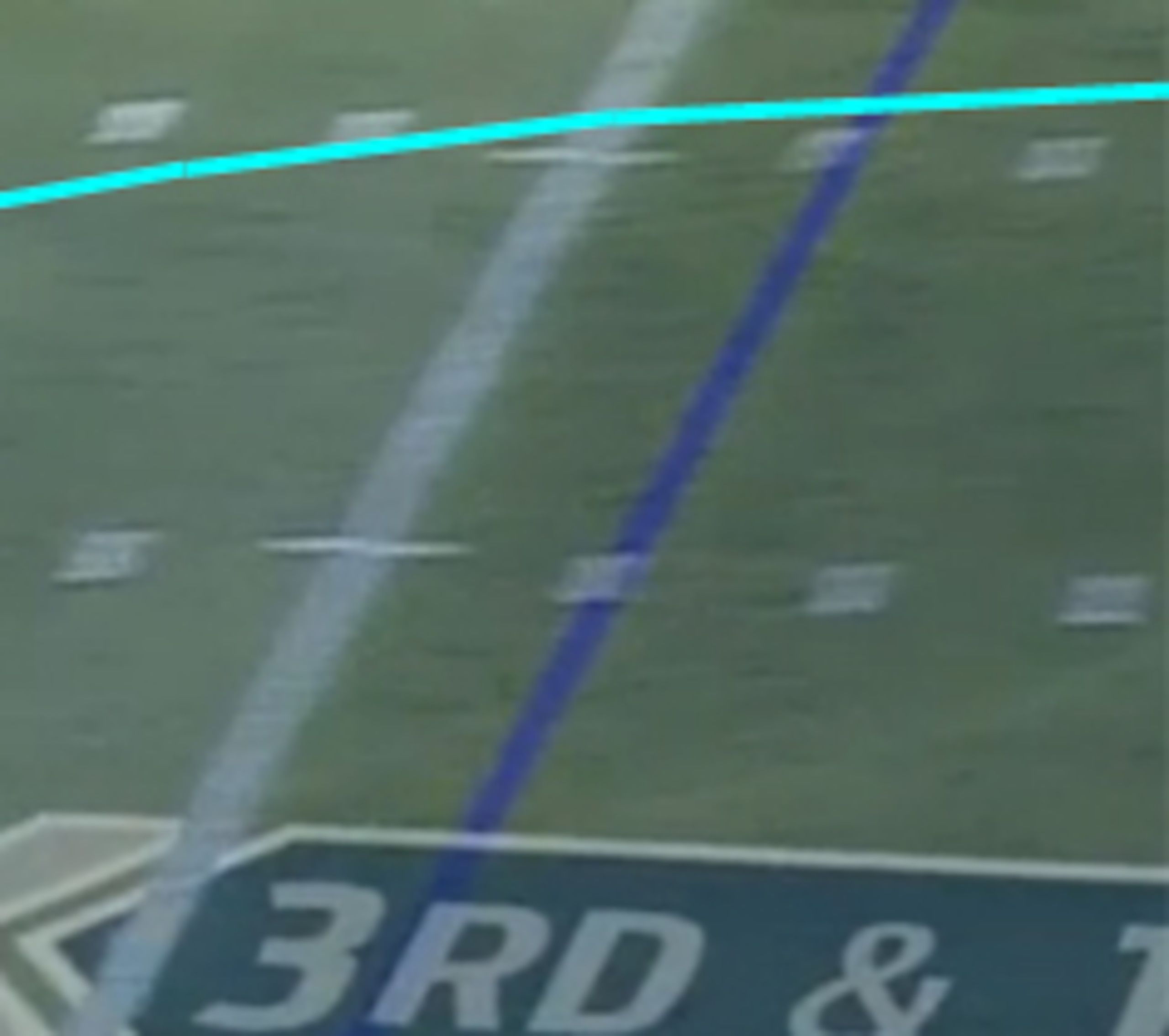
Wilson throws the ball into the space behind the blitzing linebacker. Wide receiver Tyler Lockett had lined up as the widest of the trio to the left, and the defensive back across from him lined up deep off the line of scrimmage. Lockett was running a short in route, so he was always going to be open against man coverage.
After holding the ball for a moment, just enough time to invite the pressure onto him at the top of his drop, Wilson throws the ball to a spot in front of Lockett.
Lockett caught the ball and broke two tackles before falling into the end zone for the touchdown. Even though the rookie receiver was the main protagonist in terms of forcing his way into the end zone, Wilson had to create that opportunity for him by accurately assessing the defense.
By the measure of Pro Football Focus, Wilson's average time to throw the ball (3.07 seconds) was the second most of any quarterback in the league over the first 10 weeks of the season. He was one of only three quarterbacks holding the ball for three seconds or longer.
Over the past two weeks, Wilson has dropped to No. 9 in average time to throw.
He is still holding the ball longer than most quarterbacks, but the greater prevalence of these quicker decisions in his play has brought his average down substantially. While Buffalo Bills quarterback Tyrod Taylor and Minnesota Vikings quarterback Teddy Bridgewater remain at the top, averaging over three seconds per throw, Wilson has fallen to 2.77 seconds per throw.
It isn't simply that Wilson is making more short throws to negate more blitzes—he is still looking to push the ball downfield.
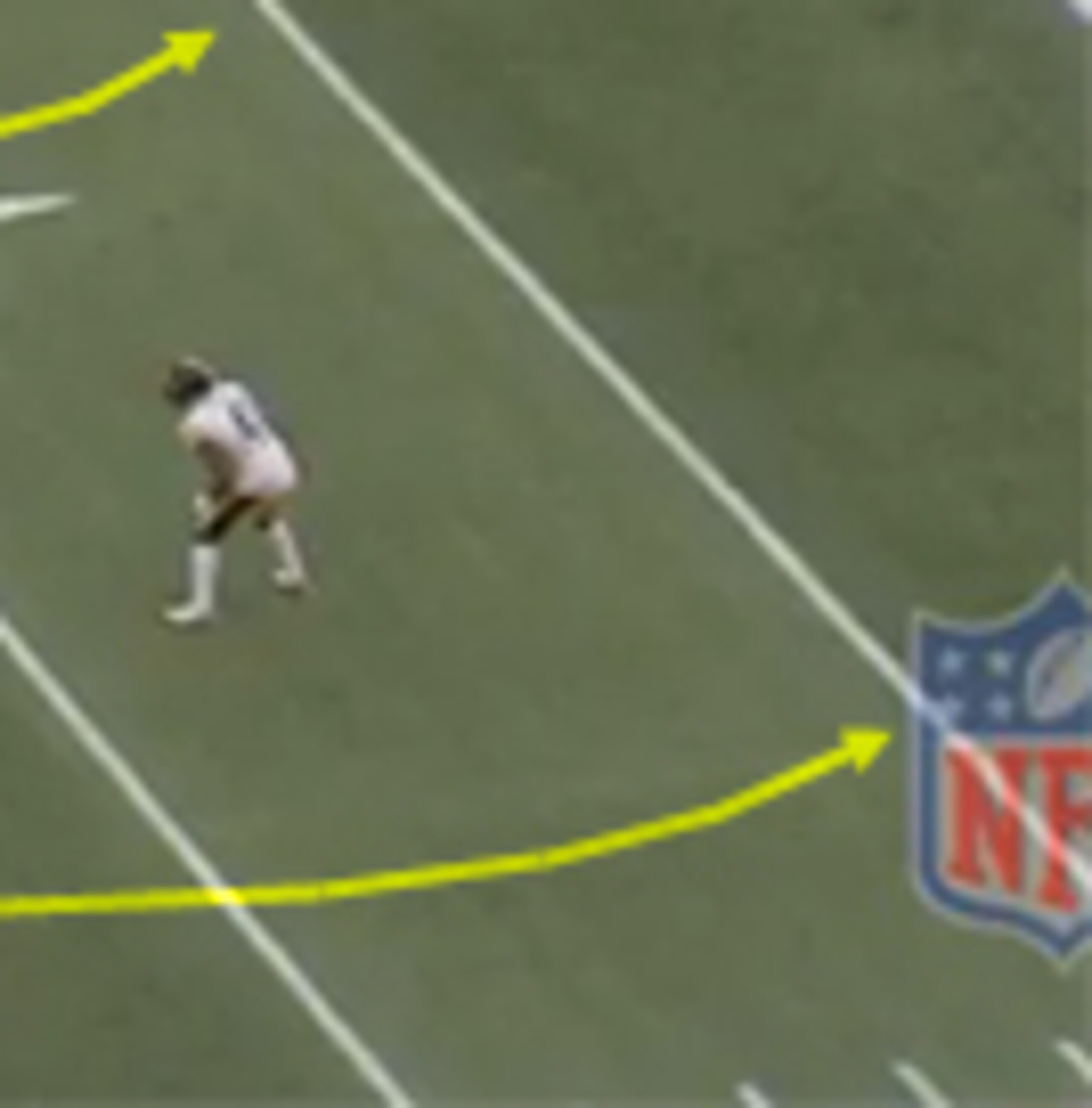
For wide receiver Doug Baldwin's touchdown against the Steelers last week, the Seahawks ran four verticals from a five-receiver set. It was 3rd-and-goal from the Steelers 16-yard line, so while this was a situation where the Steelers could blitz the quarterback or mask their coverage, they didn't show that at the snap.
The Steelers spread their linebackers deeper off the line to match the five-receiver set from the Seahawks.
Wilson would have time to react to any linebacker blitzes before they got to him if they came, so he didn't need to rush once the ball was snapped. Instead, he needed to figure out what coverage the Steelers were playing. The key to figuring that out was the alignment of the safety to the wide side of the field.
The safety to the wide side of the field holds his depth at the snap. He is still in position to drop deep if required to create a Cover 2 shell, but instead of doing that, he is drawn forward. He steps in to match the movement of Jimmy Graham running down the seam.
Graham bends his route so he crosses the field, and the safety follows him. That safety made an error because he was too aggressive moving with Graham. His mistake wasn't the biggest one, though.
The Steelers appeared to be playing Cover 3, but their other safety, Mike Mitchell, didn't take a center field position at or after the snap. Mitchell lined up in the end zone on the nearside hash mark and kept his eyes to the side of the field where the Seahawks had just two receivers.

Mitchell's positioning and the other safety's attraction to Graham running infield left Doug Baldwin wide open working down the seam. Baldwin is running to a spot where no Steelers defender can close on him quickly. Mitchell is too far away to cover because of his starting position and reactions after the snap.
Wilson releases the ball very early. He makes an anticipation throw, attempting to put the ball in a spot where Baldwin can get to it.
Baldwin is going to catch the ball just before stepping onto the 'K' in the end zone, yet Wilson releases the ball when the receiver is at the 9-yard line. By getting rid of the ball early, he can make that throw more comfortably because the safety who followed Graham doesn't have a chance to react and get in the passing lane.
Timing is hugely important for any quarterback who wants to succeed in the NFL. Releasing the ball on time allows you to hit windows that don't stay open for very long.
Against the Steelers, Wilson wasn't just extremely accurate when he threw the ball—he was throwing with perfect timing over and over again. Steelers defensive coordinator Keith Butler showed him plenty of different looks and tried to mask his coverages by rotating his safeties, but Wilson remained sharp.

On this play, it's 3rd-and-16 near midfield. Being that the Seahawks are so far away from the first-down marker, Butler feels confident, masking his coverage to send a blitz off the left side. He asks his linebacker from the right side to come across and cover Graham running down the seam from the slot.
Wilson initially looked to Graham but saw the rotating linebacker and blitz coming. By the time he had taken two steps to get to the top of his drop, his eyes had moved to the left side.

Understanding that the Steelers had rotated into Cover 1, Wilson brought his eyes back to the other side of the field to wide receiver Jermaine Kearse. The safety to that side had to rotate down to cover a potential route from his running back—while the other safety had aligned to the far side of the field to begin the play.
This meant that Kearse essentially had a one-on-one matchup.
Kearse didn't create any separation, but Wilson threw him open by throwing to a spot. Kearse was running a post route, and Wilson released the ball long before he went through his break. The receiver still had to make a tough reception, but Wilson's precision—both mental and physical—gave him the best chance to.
On the play immediately after that one, Wilson used a pump fake to draw William Gay out of position before hitting a receiver in stride down the sideline for another first down. The Steelers had kept eight defenders in coverage, but Wilson's ability to manipulate the coverage and his quick actions made that moot.
That play preceded a third straight completion—a completion that resulted in a touchdown to Kearse.
Wilson hit Kearse between the numbers with a perfect pass that sliced open the Steelers' zone coverage. Those three plays resulted in 55 yards and a score—made even more impressive by how little the Steelers could do to stop the quarterback and by the fact the first throw came on 3rd-and-16.
In the fourth quarter, Wilson made a similarly precise throw to find Kearse in the end zone for a touchdown before hitting Doug Baldwin down the right sideline for another.
With Wilson, the questions aren't about his ability to be a precise pocket passer. He can make plays under pressure and read defenses as well as most quarterbacks in the league. The problem is his consistency. He needs to find a good balance between the positive and negative plays.
Negative plays aren't just interceptions, even though we have adapted a climate in NFL coverage that too often measures how smart a quarterback is by the number of interceptions he throws. Wilson's mistakes are less obvious because they often lead to him leaving yards on the field rather than turning the ball over.
This play is systematic of Wilson's main problems. He settles at the top of his drop in a completely clean pocket and turns his eyes to the left side of the field. Wilson has three receivers to that side with the Steelers playing man coverage.
Wilson needs to hold the ball for a moment. He has plenty of time to do so, as the pocket around him is wide and well established.

Instead of standing in the pocket and delivering a relatively simple throw to Baldwin, Wilson turns away from the play too early. He attempts to escape into the far flat, completely breaking the design of this play. Had he found Baldwin on time, the receiver would have had a chance at creating a big play.
This is a simple concept and simple read for the quarterback to make, especially without any pressure on him in the pocket.
Every quarterback misses open receivers downfield at some point. The problem is that Wilson misses them a lot more than he should. That is because he often doesn't make simple reads and turns to his legs too quickly. He isn't as problematic as Colin Kaepernick—he's just maddeningly inconsistent.
Against the 49ers a week previous, he missed a potential touchdown throw with a similar mistake.

Before the ball was snapped, the 49ers rotated into a Cover 3 look. They did so early enough for Wilson to see it and read the coverage at the snap. It wasn't a bluff from the 49ers. They played Cover 3 and didn't blitz. Wilson reacted by immediately looking to his left where he had two options.
His tight end had split wide to the left, just inside the receiver to that side. He ran down the seam, with the receiver running down the sideline to the same side. Wilson should have known at this point that he would have an option to throw to on that side of the field if the linebacker underneath didn't turn quickly.

Wilson's first read here should be the tight end, who is open with a throw that leads him downfield. This would be a similar throw to the one that Wilson made for Baldwin's touchdown against the Steelers, so there is no question that he could make it from a clean pocket.
The quarterback was forced to step up slightly in the pocket from edge pressure, but once he did, he was in a clean pocket once again.
After turning down the tight end in the end zone, Wilson should have held the ball long enough for the outside cornerback to recover his position on him. That would have left the outside receiver open in the corner of the end zone for a potential touchdown.
It would have been a tougher throw to complete, but it was an opportunity that would have been worth taking.
The Seahawks don't have a dominant defense anymore. It's still a good defense, one that is giving up 20.2 points per game (No. 8 in the league) and 324.9 yards (No. 4). They are giving up just 232.0 passing yards per game (No. 9). But they have recently conceded 363 yards to Arizona Cardinals quarterback Carson Palmer and 456 yards to Steelers quarterback Ben Roethlisberger.
Against the better teams in the league, those who they will presumably face in the playoffs, the Seahawks will need Wilson to be closer to his best than his worst.

.jpg?w=2560 "Commanders Eagles Football")
.jpg?w=2560 "Grading WWE Raw 🔠")



.jpg?w=2560 "Viral Rams Coach Vid 🖕")